Ombudsman announces results of direct investigation operation into Government's work in combating cruelty to animals
The following is issued on behalf of the Office of The Ombudsman:
Click to Gallery
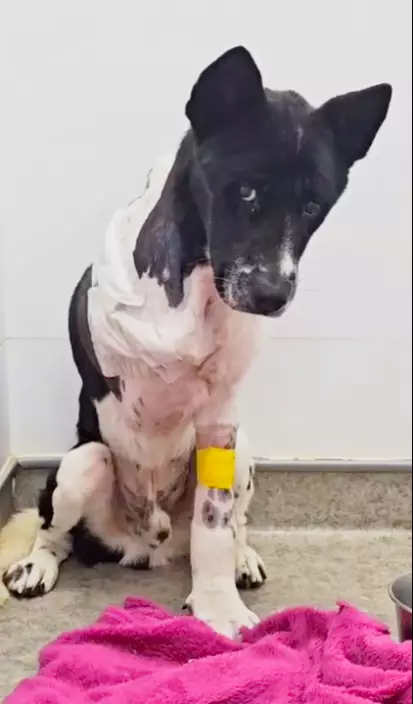
The Office of The Ombudsman today (April 16) announced the results of a direct investigation operation into the Government's work in combating cruelty to animals. Photo shows an injured dog which had been abused. Source: HKSAR Government Press Releases

The Office of The Ombudsman today (April 16) announced the results of a direct investigation operation into the Government's work in combating cruelty to animals. Photo shows an animal trap. Source: HKSAR Government Press Releases

The Ombudsman, Mr Jack Chan, today (April 16) hosted a press conference to announce the results of a direct investigation operation into the Government's work in combating cruelty to animals. Source: HKSAR Government Press Releases

The Office of The Ombudsman today (April 16) announced the results of a direct investigation operation into the Government’s work in combating cruelty to animals. Photo shows the Ombudsman, Mr Jack Chan (right), and an officer which took part in the investigation. Source: HKSAR Government Press Releases
The Ombudsman, Mr Jack Chan, today (April 16) announced the completion of a direct investigation operation into the Government's work in combating cruelty to animals by the Office of The Ombudsman (the Office), with 45 improvement recommendations made to the Government.
In recent years, animal cruelty cases have occurred from time to time in Hong Kong, shocking the community. Some cases are bloody and brutal, where helpless creatures endured extreme cruelty, with some found dead as a result of the abuse. As society advances, cruelty to animals is intolerable to our community.
Mr Chan said, "Many recent cases of animal cruelty are horrifying, leaving the public shocked and heartbroken. Atrocities of this kind amount to a deliberate trampling on the dignity of life and run wholly contrary to the very conscience of a civilised society. They must be condemned by our community. My colleagues and I firmly denounce acts of animal cruelty and urge the general public to work together and spare no effort in protecting animals. Any act or indication of suspected cruelty should be reported immediately and without hesitation, so that we may protect vulnerable lives together."
Mr Chan noted, "Against this background, I decided to conduct this direct investigation regarding the combat of cruelty to animals. Our objective is to give a voice to the voiceless animals and seek justice for them, as they are among the most vulnerable, helpless and innocent members of our community."
This direct investigation primarily focuses on examining the effectiveness of the Agriculture, Fisheries and Conservation Department (AFCD) in combating animal cruelty, including its protective measures and enforcement against suspected cruelty, publicity and promotional efforts, and in particular, regulation of animal traps. The Office thoroughly examined the AFCD's procedures for following up on animal cruelty and abuse reports, covering relevant laws and policy documents, operational guidelines, specific cases and data. The Office also conducted site inspections at the AFCD's animal management centres and at location where animal cruelty had occurred, and randomly selected 200 case files for studying.
The Prevention of Cruelty to Animals Ordinance (Cap. 169), the principal legislation that safeguards animal welfare, was enacted to prohibit and penalise acts of animal cruelty. Both the AFCD and the Hong Kong Police Force (HKPF) are tasked with investigating and prosecuting suspected acts of animal cruelty in accordance with Cap. 169. Between 2020 and 2025, there was an overall upward trend in the number of reports received by the AFCD, as well as in the number of cases registered by the HKPF after preliminary investigations that uncovered evidence. In the first six months of 2025, the AFCD received 251 reports, a figure close to the annual average of the past few years.
The Government launched earlier a public consultation on proposed amendments to Cap. 169, which included tougher penalties and enhanced enforcement powers. The Office understands that the AFCD will continue the amendment process, and considers that phased amendments should be adopted, with priority given to imposing tougher penalties and enhancing enforcement, etc.
The Office's investigation found that the AFCD's investigation has been ineffective. Some cases have shown that when AFCD staff were unable to enter a flat for investigation, or failed to check on the abused animals , they based their actions solely on the information available at the time to assess whether there was animal cruelty. The AFCD explained that under Cap. 169, its staff may only enter premises for investigation with the occupier's consent, and the ordinance does not authorise the Department to seek court warrants for enforcement.
Mr Chan said, "We consider that where AFCD staff cease follow-up actions without ascertaining the actual condition of the animals, it calls into question whether the Department has handled reports seriously and properly. The"investigative approach is ineffective against offenders intending to conceal evidence, and it directly undermines the effectiveness in pursuing prosecutions."
In one case, AFCD staff negotiated multiple times with the owner of a dog suspected of being abused for a site inspection. Although the owner appeared to agree, he kept putting the inspection off. Eventually, the inspection was not carried out. The dog owner admitted that he had not applied for a dog licence, which already amounted to an offence, yet the AFCD only reminded him to do so without taking enforcement action. Given the severity of rabies, the Office considers that the AFCD should adopt a more serious and proactive approach in following up on the case.
The Office's investigation also found that while there are guidelines for handling cases involving a large number of animals and requiring substantial manpower, the AFCD has not established guidelines for following up on general cases. Without such guidelines, AFCD staff adopt different practices, which may result in inconsistent standards in investigations and enforcement, and may undermine effectiveness. It is unsatisfactory that the AFCD only began formulating new guidelines covering all reports of suspected animal cruelty after this direct investigation was launched.
Concerning the monitoring of case follow-ups, the AFCD must intensify its efforts. The AFCD indicated that all suspected cases of animal cruelty must be reviewed and approved for closure by the case officer's supervisor. The Department's veterinary officers are also expected to periodically check the follow-up actions of frontline staff. However, the Office found in one case that AFCD staff refrained from attempting to enter the flat for inspection because of the occupier's dissatisfaction and did not adopt other feasible means to complete the investigation. Without confirming whether animal cruelty had occurred, the staff recommended ceasing follow-up action based on the findings of an investigation conducted a year earlier that had found no evidence of animal cruelty, and a single inspection conducted outside the flat. Even so, the supervisor did not question this recommendation and approved the case closure. This casts doubt on whether it was prudent, or even reasonable, for the AFCD to close the case under such circumstances.
Another focus of this direct investigation is the enforcement against the illegal use of animal traps. Such traps pose a serious threat to the safety of wild animals, stray animals and pets, inflicting horrendous pain, severe and permanent injury, or even death. They are equally dangerous to humans, posing a serious threat to hikers or members of the public who accidentally step on them, particularly children and the elderly, who may suffer injuries ranging from minor injuries to amputation, and in the worst cases, death. The maximum penalty in force for illegal possession or use of animal traps is only a fine at level 5 (i.e. $50,000), with no provision for imprisonment. By contrast, under the Wild Animals Protection Ordinance, the maximum penalty for illegal feeding of pigeons has been raised to a fine at level 6 (i.e. $100,000) and one year's imprisonment.
Mr Chan said, "Illegal pigeon feeding and illegal possession and use of animal traps are certainly offences of a different nature. However, given the severe safety risks that animal traps pose to animals and the public, the current penalties completely fail to reflect the seriousness and danger of animal trap offences and provide no deterrent effect. Traps such as gin traps, metal snare traps, netting traps, sharpened bamboo traps, cage traps and deadfall traps, by their violent nature and danger level, are in fact no different from those of ordinary offensive weapons. These traps may lead to potential injuries, permanent disability or even death. We recommend that the AFCD make reference to the current penalties for illegal possession and use of offensive weapons, and seriously consider raising the penalties for illegal possession and use of animal traps—for example, by introducing immediate imprisonment as a strong deterrent—and strengthening collaboration with relevant enforcement agencies to curb the import of animal traps."
Overall, the Office has made 45 major recommendations for improvements to the AFCD, covering handling of animal cruelty reports, case monitoring, records management, publicity and education, the tripartite collaboration mechanism with the HKPF and the Society for the Prevention of Cruelty to Animals (SPCA), as well as enforcement against the illegal use of animal traps.
The Office's major recommendations for improvement include:
• consider amending Cap. 169 by adding provisions to strengthen the enforcement powers of staff of the Department, for example, by introducing procedures that allow them to enter private premises for investigation without the occupier's consent;
• define in the New Guidelines the factors to be considered when initiating the relevant procedures for large-scale cases;
• continue to provide appropriate staff training on the New Guidelines regularly;
• continue to remind staff to remain vigilant at all times and to handle every report with a proactive, conscientious, and serious attitude;
• enhance staff training on investigation and communication skills to improve their ability and resolve when handling unco-operative residents, pet keepers or building attendants;
• review and strengthen the mechanisms currently in place for monitoring frontline staff;
• collate and analyse relevant information in detail to assess how relevant policies are being implemented and emerging trends,"adjust enforcement strategies and develop appropriate work directions and specific measures to combat animal cruelty more effectively;
• further strengthen the tripartite collaboration with the HKPF and the SPCA against animal cruelty;
• make greater efforts to detect and remove illegally deployed animal traps at an early stage through regular patrols and targeted inspections of high-risk black spots of animal traps and cruelty; and
• with reference to the penalties for the illegal possession and use of offensive weapons, consider raising those for illegal possession and use of animal traps.
The AFCD has accepted all 45 recommendations from the Office and has started to act on and implement some of them.
Furthermore, the Office is pleased to note that since 2011, the HKPF has worked with the AFCD, other government departments, the SPCA, other animal welfare organisations and veterinary bodies to launch the Animal Watch Scheme. Notably, since 2018, the HKPF has established dedicated teams in 22 police districts where criminal investigation teams are already in place, to investigate animal cruelty cases, a move that deserves recognition, support and commendation by society.
Mr Chan said, "The Police's Animal Watch Scheme has raised public awareness of animal protection through education and publicity, fostering greater respect for and protection of life across society. At the same time, it has reinforced efforts to combat animal cruelty through the establishment of dedicated criminal investigation teams. We highly commend the HKPF for its work in this regard."
The full investigation report has been uploaded to the website of the Office of The Ombudsman at www.ombudsman.hk for public information.
The Office of The Ombudsman today (April 16) announced the results of a direct investigation operation into the Government's work in combating cruelty to animals. Photo shows an injured dog which had been abused. Source: HKSAR Government Press Releases
The Office of The Ombudsman today (April 16) announced the results of a direct investigation operation into the Government's work in combating cruelty to animals. Photo shows an animal trap. Source: HKSAR Government Press Releases
The Ombudsman, Mr Jack Chan, today (April 16) hosted a press conference to announce the results of a direct investigation operation into the Government's work in combating cruelty to animals. Source: HKSAR Government Press Releases
The Office of The Ombudsman today (April 16) announced the results of a direct investigation operation into the Government’s work in combating cruelty to animals. Photo shows the Ombudsman, Mr Jack Chan (right), and an officer which took part in the investigation. Source: HKSAR Government Press Releases