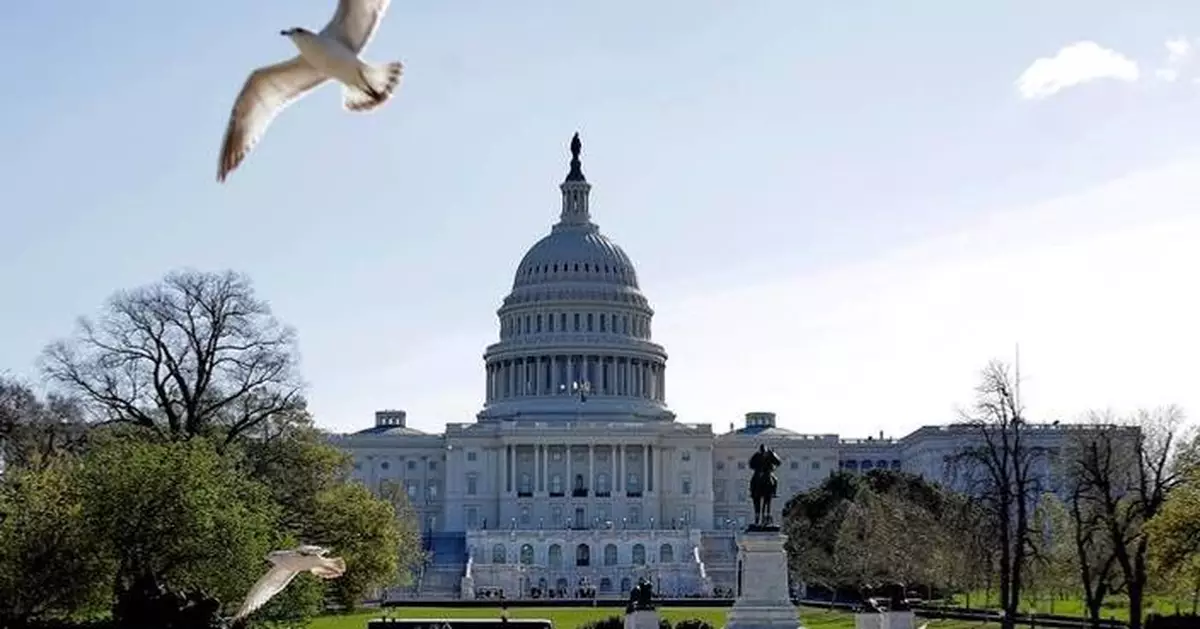
WASHINGTON (AP) — In a rare bipartisan moment, the House passed legislation Thursday that would extend temporary protections for Haitian immigrants, a long-shot effort fighting back against President Donald Trump's attempts to end the program.
The bill, pushed forward by House Democrats with a group of Republicans over the objections of the GOP leadership, would require a three-year extension of temporary protected status for Haitians by the Trump administration. That would allow hundreds of thousands of qualifying immigrants to remain in the United States without fear of deportation.
The vote was 224-204, drawing applause in the chamber. But it faces uncertainty in the Senate, and the Republican president would almost certainly seek to veto it.
“I know firsthand how important our Haitian neighbors are to our communities, to our civic life, to our culture, to our workforce, to our economy,” said Democratic Rep. Ayanna Pressley of Massachusetts, who is co-chair of the House Haiti Caucus and represents one of the largest Haitian communities in the country.
During the debate, she recounted the number of Haitian immigrants working in health care, housing construction, and other industries. Haitians with temporary legal status "are not the problem, quite the contrary, they are part of the solution,” she said.
Pressley has said deporting Haitians back to the troubled Caribbean country would be a “death sentence,” given the effects of natural disasters and gang violence. "Congress can do the right thing," she said.
Ten Republicans, many from districts with large numbers of Haitian residents, joined all Democrats and one independent in voting for passage.
The effort to help 350,000 Haitians living lawfully in the United States comes as the administration is working to end the temporary legal status for several groups, exposing them to deportation.
In less than two weeks, the Supreme Court is prepared to consider a fast-track case that would end the protected status for Haitian and Syrian immigrants in a challenge widely seen as threatening the broader program. The administration filed emergency appeals after lower courts stopped the immediate end of the program.
It is part of the administration's efforts to strip certain immigrant groups of legal status as the White House works to fulfill Trump's campaign promise of conducting the largest mass deportation operation in history. Some 1.3 million people fleeing countries around the world have been granted temporary protected status in the U.S.
The protections for Haiti, first approved after a devastating 2010 earthquake, have been extended multiple times. The State Department warns Americans not to travel to Haiti “due to kidnapping, crime, terrorist activity, civil unrest.”
Guerline Jozef, executive director of the Haitian Bridge Alliance, an advocacy organization, fought back tears as she described the fear of deportations coursing through the community.
“We are asking, where will you be on the right side of history?" she asked at a news conference outside the Capitol. “Or continuing to cause trauma to people who are asking for nothing other than safety and protection.”
Trump has described migrants from poorer countries in vulgar terms, and he has falsely accused Haitian migrants in Ohio of eating their neighbors’ cats and dogs.
The conservative majority court has allowed the end of temporary legal status for a total of 600,000 people from Venezuela while lawsuits play out, leaving them to face potential deportation.
Rep. Laura Gillen, D-N.Y., whose district includes Long Island's Haitian community, said she promised constituents she would work to protect their status. She introduced the legislation with Republican Rep. Mike Lawler of New York as soon as she took office last year.
“It's cruel to expect Haitians to be forced to return to these deadly, dangerous conditions,” she said at a news conference. “Human lives are at risk.”
Lawler said there are differences of opinion on immigration policy, but that Haitian immigrants have become vital to his community and forcing them out would be unjust and unwise.
“They are small business owners, they are nurses, they are caregivers, they participate in our economy and take care of American citizens,” he said. “Congress has a responsibility to act.”
But Rep. Jim Jordan, R-Ohio, decried the number of immigrants, including Haitians, who have entered the U.S., and cited Democratic efforts to halt funding for enforcement and deportation efforts.
“Make temporary permanent,” he said, “that's their plan.”
Rep. Brandon Gill, R-Texas, said the program was a “backdoor amnesty” for foreigners.
To Rep. Tom McClintock, R-Calif., the temporary status first granted under the Obama administration has become an “an open-ended invitation” for immigrants to enter the country, including some illegally, and remain.
"The Trump administration has heeded the cries of the American people," he said.
The vote was the latest effort by House Democrats to maneuver past the Republican majority using a discharge petition — once a rare tool, but now used increasingly to form bipartisan coalitions.
The discharge petition process forces the bill to the House floor for consideration, powering past House Speaker Mike Johnson, R-La., and GOP leaders. It was used to help pass legislation that required the Justice Department to release the files of the sex trafficking investigation of Jeffrey Epstein.
Republicans hold a slim majority in the House and are typically able to swat back such efforts from Democrats. But Democrats and Republicans have formed bipartisan alliances to reach the majority needed on the discharge petitions.
Pressley's effort to discharge the bill won support from four Republicans on the initial petition, and several more once it came to the floor vote.
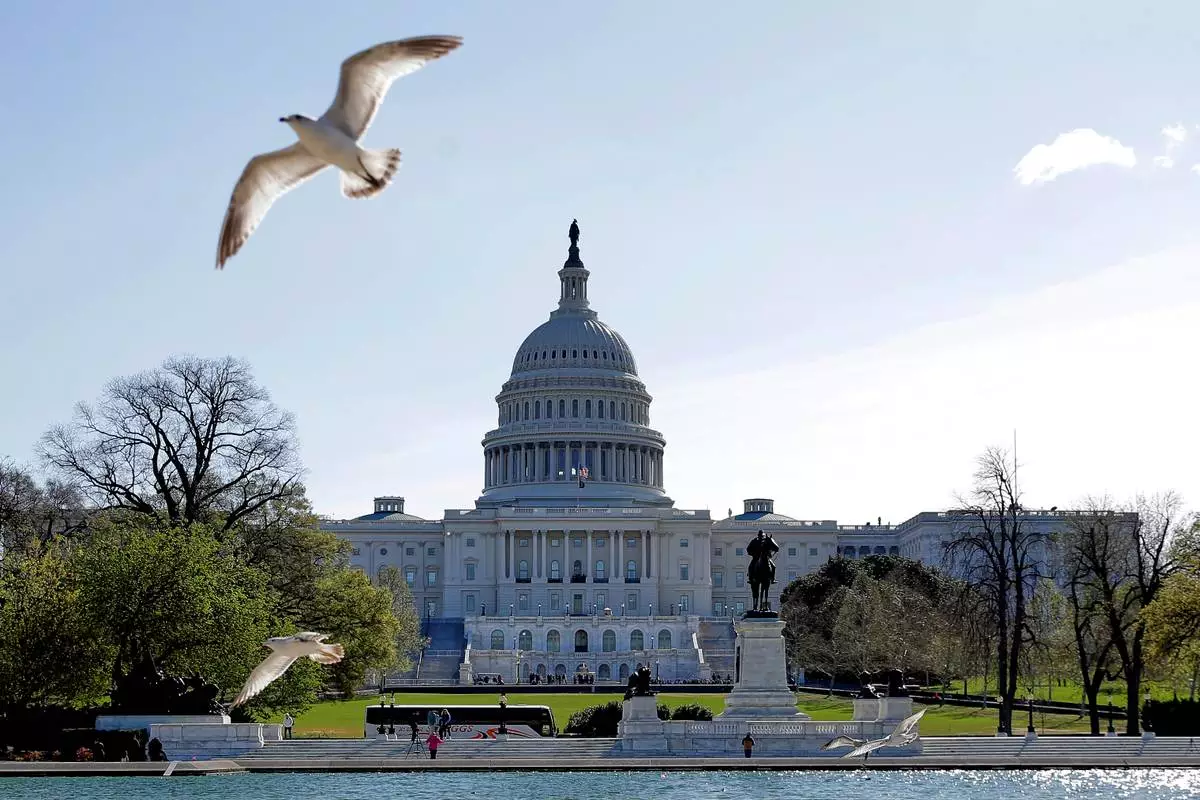
The U.S. Capitol is photographed Tuesday, April 7, 2026, in Washington. (AP Photo/Rahmat Gul)
President Donald Trump announced Thursday that Israel and Lebanon had agreed to a 10-day ceasefire, a truce that could boost attempts to extend the ceasefire between Iran, the United States and Israel after weeks of devastating war.
Israel has not been fighting with Lebanon itself, but rather with the Iranian-backed Hezbollah militant group inside Lebanon. Hezbollah said in a statement that “any ceasefire must be comprehensive across all Lebanese territory and must not allow the Israeli enemy any freedom of movement.”
The ceasefire would begin at 5 p.m. ET Thursday. Nearly 2,200 people in Lebanon have been killed by Israeli air strikes.
Meanwhile, Pakistan’s army chief met with Iranian officials in Tehran on Thursday in a bid to ease tensions in the Middle East and arrange a second round of negotiations between the United States and Iran after almost seven weeks of war.
The U.S. naval blockade of Iranian ports continued as U.S. Treasury Secretary Scott Bessent said the Trump administration would ramp up economic pain on Iran with new economic sanctions on countries doing business with it, calling the move the “financial equivalent” of a bombing campaign.
The White House said any further talks with Iran would likely take place in the Pakistani capital of Islamabad, though no decision had been made on whether to resume negotiations. Pakistan has emerged as a key mediator after it hosted direct talks between the U.S. and Iran in Islamabad.
Here is the latest:
The 10-day halt to the fighting that will begin later Thursday can be extended if there’s progress in talks to reach a lasting peace agreement and Lebanon “effectively demonstrates its ability to assert its sovereignty,” the State Department said.
President Donald Trump announced the truce following talks held in Washington this week. Israel hasn’t been fighting with Lebanon itself but rather with the Iranian-backed Hezbollah militant group inside Lebanon.
In the statement that the U.S. says was agreed to by Lebanon and Israel, there is a provision to allow Israel to defend itself against any further attacks.
But otherwise, Israel “will not carry out any offensive military operations against Lebanese targets, including civilian, military, and other state targets,” the statement says.
The president once again claimed progress is being made in talks with Iran and suggested he could be involved in the signing of a peace agreement, if one is reached.
“If the deal is signed in Islamabad, I might go,” said Trump, who heaped praise on Pakistani Prime Shehbaz Sharif and Pakistani Army Gen. Asim Munir for their role as mediators in the U.S.-Iran talks.
“The field marshal has been great. The prime minister has been really great in Pakistan, so I might go. They want me.”
Foreign Minister Paulo Rangel said on Thursday his country’s prime minister will participate in a conference on Friday co-hosted by the French and British leaders on setting up a mission to ensure freedom of navigation through the strait after the Iran war ends.
But Rangel said a decision on Portugal’s contribution to such a mission won’t be taken “before we know exactly what is at stake” because the mission plan is still unclear.
He said the Portuguese “fully understand the value of freedom of navigation” because they have been “navigators for centuries.”
“So let’s go to the meeting, let’s see what are the plans,” Rangel said after talks with Cypriot counterpart Constantinos Kombos.
Trump isn’t worried that his taunting of Pope Leo XIV might offend his voters.
“I have to do what’s right — the pope has to understand that,” Trump told reporters. “I have nothing against the pope. His brother is MAGA all the way.”
The U.S. president has maintained that the Iran war is about stopping that country from developing a nuclear weapon and he criticized that country’s leadership for killing its own people as he objected to the papal emphasis on peace.
The president added that he’s “sure the pope is a great guy,” yet he suggested Pope Leo XIV was naive about geopolitics.
“The pope has to understand that this is the real world,” Trump said.
The 14-day ceasefire is set to expire April 22, but Trump said it’s possible that the deadline to make a deal could be pushed out further.
“If we’re close to a deal would I extend?” Trump said in an exchange with reporters. “Yeah, I would do that”
Israel’s Netanyahu says Israeli troops will remain in an expanded security zone in south Lebanon despite a ceasefire.
He said troops will remain in a10-kilometer deep zone, “much stronger, more extensive and more continuous than before.”
“That is where we are, and we are not leaving.”
Hezbollah, in commenting on the ceasefire, had said continuing Israeli occupation grants Lebanon the right to resist.
“I had a great talk with both of them today,” Trump said of this conversations with Aoun and Netanyahu. “They’re going to be having a ceasefire, and that’ll include Hezbollah.”
Trump in an extended exchange with reporters said also that he expected that Aoun and Netanyahu would meet in the next week or two, before saying the White House meeting between the Mideast leaders could happen in the next four or five days.
The president added that he was open to visiting Lebanon “at the right time.”
The U.S. president played down prices at the pump averaging $4.09 a gallon nationwide, saying the cost wasn’t so great relative to the risk of evening higher prices tied to keeping Iran from getting a nuclear weapon.
“Well, they’re not very high, if you look at what they were supposed to be in order to get rid of a nuclear weapon,” Trump told reporters about gas prices before a planned trip to Las Vegas.
The president repeated a past claim that he thought the war with Iran would have driven energy costs much higher.
Gas prices are up roughly 29% from a year ago, according to AAA.
Israeli Prime Minister Benjamin Netanyahu says he has agreed to a 10-day ceasefire in Lebanon.
In a video statement, Netanyahu said he was taking the step in an attempt “to advance” peace efforts with Lebanon.
Israel and Lebanon opened negotiations this week in Washington aimed at forging a peace agreement. The Hezbollah militant group, which has been fighting Israel for six weeks, has said it opposes the dialogue.
“We have an opportunity to make a historic peace agreement with Lebanon,” Netanyahu said.
Italian Premier Giorgia Meloni greeted the announcement of a ceasefire between Israel and Lebanon as “excellent news,” achieved “thanks to the mediation of the United States.”
She added that the ceasefire must be fully respected, singling out Hezbollah “for having started this conflict,” and expressed hope that it would create conditions for talks leading “to a full and lasting peace” between Israel and Lebanon.
Italy has the second-largest contingent of U.N. peacekeepers serving in southern Lebanon.
Hezbollah said in a statement that “any ceasefire must be comprehensive across all Lebanese territory and must not allow the Israeli enemy any freedom of movement.”
Israel offered no official comment on Trump’s announcement.
Hezbollah added that “Israeli occupation on our land grants Lebanon and its people the right to resist it, and this matter will be determined based on how developments unfold,” a stance that could complicate the ceasefire.
Israel has staged a ground invasion in southern Lebanon, where its forces have been engaged in fierce battles with Hezbollah militants in the border area. It is unclear whether Israel would withdraw some or all of its forces as part of the truce.
▶ Read more
Two local leaders in northern Israel criticized a proposed ceasefire with Lebanon, warning it would leave communities vulnerable.
Moshe Davidovich, head of the Mateh Asher Regional Council, said agreements may be signed in Washington but “the price is paid here in blood, in destroyed homes and shattered communities.”
He warned that a ceasefire without strict enforcement against Hezbollah and a buffer zone up to the Litani River, some 30 kilometers (18.64 miles) north of the Israeli border, would amount to “waiting for the next massacre.”
Eitan Davidi, head of the Margaliot moshav, called the move “a surrender” and “a political defeat.” He told the N12 news site it was made without coordination with northern residents and contradicts the stated goal of dismantling Hezbollah’s capabilities.
Ambassador Fu Cong said the strait “should be safeguarded” for international navigation and called on Iran to take ‘proactive measures’ to open the waterway, used to ship about 20% of the world’s oil.
“The issue of navigation in the Strait of Hormuz is a spillover effect of the conflict in Iran,” he said. “Only a complete ceasefire can fundamentally create conditions for easing the situation.”
Fu told the U.N. General Assembly on Thursday that Beijing is engaged “in intensive mediation with all parties to actively promote talks for peace”’ and an end to the war in Iran.
The 193-member world body was meeting to hear China and Russia explain why they vetoed a Security Council resolution backed by the U.S. and Gulf nations aimed at opening the Strait of Hormuz.
Fu claimed the resolution would have given “a carte blanche for the continuation of aggressive actions and further escalation” rather than de-escalate the conflict and promote negotiations.
Prime Minister Nawaf Salam said the ceasefire was Lebanon’s first goal in landmark talks that took place with Israel in Washington on Tuesday between the country’s ambassadors to the U.S.
“While I congratulate all Lebanese on this achievement, I offer my condolences to the families of the martyrs who fell, and I affirm my solidarity with their families, with the wounded, and with the citizens forced to flee their cities and villages,” Salam said.
Trump said it would be “the first meaningful talks between Israel and Lebanon since 1983.”
“Both sides want to see PEACE, and I believe that will happen, quickly,” Trump wrote on his Truth Social platform.
Lebanon and Israel signed an agreement in 1983 saying Lebanon would formally recognize Israel and Israel would withdraw from Lebanon. The deal fell apart during Lebanon’s civil war and was formally rescinded a year later.
Iran’s foreign ministry spokesperson Esmail Baghaei criticized economic threats by U.S. Treasury Secretary Scott Bessent, saying they harm “innocent people” and reflect an “inhumane mindset.”
“These are nothing short of economic terrorism and state-sponsored extortion,” he wrote on X, referring to Bessent’s Wednesday remarks about potentially carrying out the “financial equivalent” of a bombing campaign.
The U.S. military has released an expansive lists of goods it considers contraband as part of its blockade of Iran and declares it will seize from merchant vessels “regardless of location.”
In a notice published Thursday, the U.S. military says any “goods that are destined for an enemy and that may be susceptible to use in armed conflict” are “subject to capture at any place beyond neutral territory.”
The list includes items like arms, ammunition and military equipment that are classified as “absolute contraband.” However, it also lists items like oil and iron, steel, and aluminum as well as some civilian goods, as “conditional contraband” and argues these items can be put to military use.
The notice says that otherwise innocuous items like electronics or heavy machinery can be seized if “circumstances indicate intended military end-use.”
U.S. Central Command says those vessels have turned around in the first three days of the blockade on Iranian ports at the direction of American forces.
At a Pentagon news briefing earlier Thursday, U.S. defense leaders said more than 10,000 American troops are helping enforce the blockade on Iranian ports and that no ships have yet needed to be boarded.
He said it followed “excellent” conversations he had with Lebanese President Joseph Aoun and Israeli Prime Minister Benjamin Netanyahu.
Lebanon and Israel held their first direct diplomatic talks in decades Tuesday in Washington after more than a month of war between Israel and the Iran-backed Hezbollah militant group.
Trump said he’s directed U.S. Vice President JD Vance others to work with Israel and Lebanon to “achieve a Lasting PEACE.” He added: “so let’s, GET IT DONE.”
The office of Lebanon’s President Joseph Aoun said President Trump was thanked by the Lebanese head of state to reach a ceasefire in the devastating war.
Aoun earlier spoke to U.S. Secretary of State Marco Rubio where he refused to have a direct call with Israeli Prime Minister Benjamin Netanyahu and has insisted on achieving a ceasefire ahead of continued direct talks. Israel hasn’t made a decision regarding a ceasefire.
The statement said Trump stressed “his commitment to fulfilling the Lebanese request for a ceasefire as soon as possible.”
Neither the State Department nor the White House immediately issue a statement on the calls with the Lebanese president.
A second Lebanese official said Aoun explained to U.S. Secretary of State Marco Rubio that direct talks with Netanyahu at this point would be inappropriate given the ongoing airstrikes and destruction in Lebanon and the lack of a ceasefire in place.
The official also spoke on condition of anonymity because of the sensitivity of the situation.
— Kareem Chehayeb
Lufthansa said Thursday that labor disputes and high fuel prices are forcing it to immediately shut down its feeder airline CityLine earlier than planned and take its 27 older, less fuel efficient planes out of service. The decision accelerates a shutdown that had been expected for next year.
CityLine’s primary role was bringing passengers to Lufthansa’s mid- and long-haul hubs in Frankfurt and Munich, Germany. Fuel prices have soared since the outbreak of the Iran war in February and the blocking by Iran of the Strait of Hormuz, a key passage way for crude oil and fuel products from Persian Gulf producers.
CityLine will halt operations Saturday.
Abdul Malik al-Houthi, leader of the Iran-backed Yemeni rebel group, said that in negotiations with Iran, the U.S. is making “impossible demands for any independent country to accept.”
During a video speech Thursday, he said the ongoing two-week ceasefire was a result of “failures” by the U.S. and Israel to achieve their goals in the Iran war.
“If negotiations succeed, it will either result in a longer period of stability or an end to the aggression,” he said, adding that the U.S. entered negotiations based on their own terms built on “arrogance and pride.”
Lebanon’s Health Ministry says that among the killed are 260 women and 172 children since the latest war between Israel and Hezbollah began March 2. Another 7,185 have been wounded.
Israel’s latest military escalation started after Hezbollah fired rockets towards northern Israel in solidarity with its key ally and patron Iran.
Lebanon and Israel started direct talks Tuesday, the first of their kind since 1993. Lebanon hopes those talks can end the war.
“There are no dates yet,” Pakistan’s Foreign Ministry spokesperson Tahir Andrabi told reporters Thursday.
“We will announce the timing of these talks as and when it is decided,” he said, urging the media to avoid speculation.
Andrabi said Pakistan’s role as a mediator and facilitator did not end when the first round of talks concluded over the weekend.
“It continued,” he said.
He said Pakistan’s army chief, Field Marshal Asim Munir, is visiting Iran with a delegation, while Prime Minister Shehbaz Sharif is also traveling to regional countries to promote peace.
“We will continue to advocate for peace, prosperity and stability,” he said.
Asked about the first round of talks, Andrabi said there was “certainly not a major breakthrough in terms of any concrete document emanating from these talks, but there was no breakdown as well.”
Germany’s largest shipping company Hapag-Lloyd says it’s feeling the impact of the blockade of the Strait of Hormuz as 150 sailors are trapped there on six of its vessels.
“Five and a half weeks in a war zone — that’s something relatively new. And of course, these are difficult days and weeks for our colleagues,” Hapag Lloyd spokesperson Nils Haupt told The Associated Press.
“We’ve been able to rotate some of them in the meantime, but you can easily imagine that after such a long time, monotony naturally sets in on board and the most important thing now in this situation is to maintain that team spirit,” he added.
Hapag-Lloyd is in contact with the captains and crews at least once a day asking how the crew is doing and what they can do to help.
It’s helpful, Haupt says, that thanks to modern satellite technology, the sailors are able to keep up communication with their families.
U.S. Defense Secretary Pete Hegseth told reporters at the Pentagon that “ultimately, they need to come to the table and make a deal.”
He said the U.S. will ensure Iran never has a nuclear weapon.
“We’d prefer to do it the nice way through a deal led by our great vice president and negotiating team. Or we can do it the hard way,” Hegseth said.
Iran has repeatedly insisted that it doesn’t seek a nuclear weapon and that its program is for peaceful purposes.
Later in the news briefing, Hegseth said to Iran’s government: “I pray you choose a deal, which is within your grasp for the betterment of your people and for the betterment of the world.”
That’s according to a government official familiar with the developments.
The official, who spoke on condition of anonymity in line with regulations, said the remarks were made during a call with U.S. Secretary of State Marco Rubio and that Washington was “understanding of Lebanon’s position.”
Aoun’s office acknowledged a call with Rubio in a public statement, but did not mention the possibility of talks with Netanyahu. Netanyahu’s office did not do so either.
— Kareem Chehayeb
The minister, Israel Katz, warned Tehran it could opt “between a bridge to the future and an abyss of isolation and destruction.”
If Iran chooses the latter, it will “quickly discover that the targets we have not yet struck until now are even more painful than what we have already struck.”
Katz sought to frame Israel’s campaign against the militant group Hezbollah in Lebanon as part of a wider confrontation with Iran.
He was speaking at a memorial ceremony at the ministry Thursday.
Europe has “maybe six weeks or so (of) jet fuel left,” the head of the International Energy Agency said Thursday in a wide-ranging Associated Press interview, warning of possible flight cancellations “soon” if oil supplies remain blocked by the Iran war.
IEA Executive Director Fatih Birol painted a sobering picture of the global repercussions of what he called “the largest energy crisis we have ever faced,” stemming from the pinch-off of oil, gas and other vital supplies through the Strait of Hormuz.
“In the past there was a group called ‘Dire Straits.’ It’s a dire strait now, and it is going to have major implications for the global economy. And the longer it goes, the worse it will be for the economic growth and inflation around the world,” he said.
The impact will be “higher petrol (gasoline) prices, higher gas prices, high electricity prices,” Birol told the AP, speaking in his Paris office looking out over the Eiffel Tower.
▶ Read more
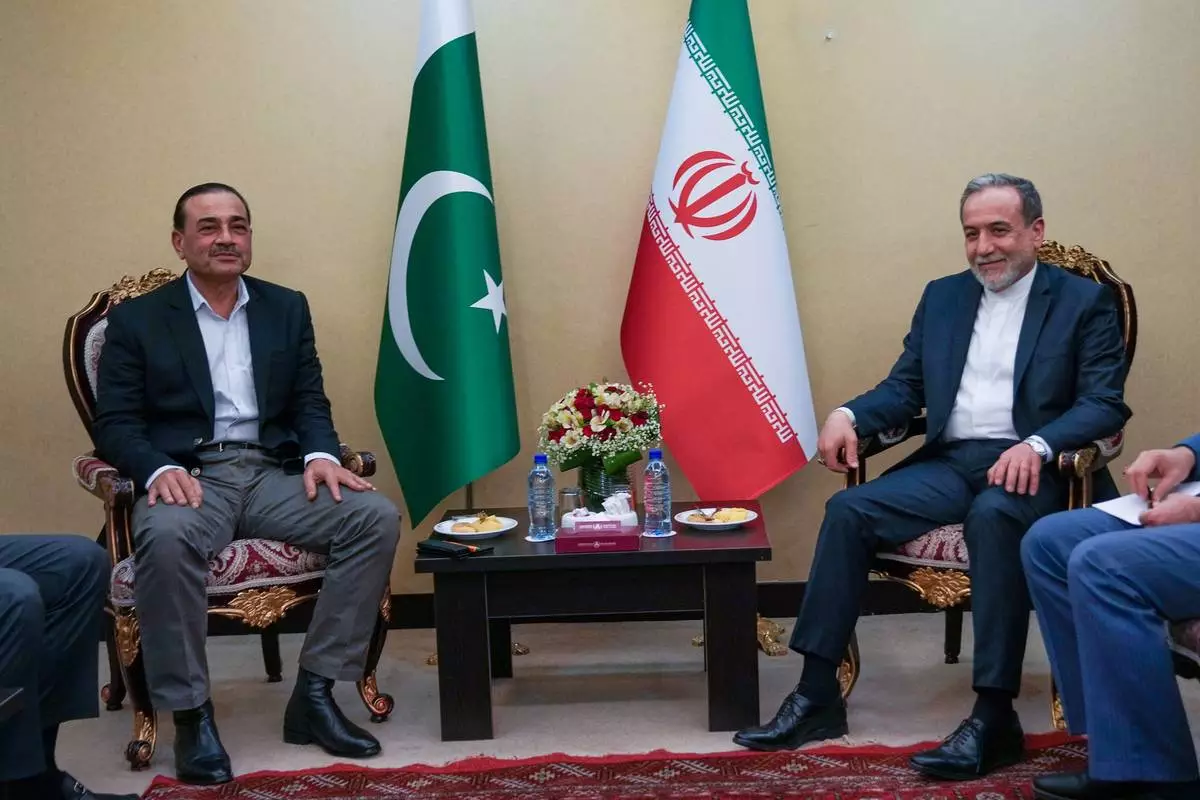
In this photo released by the Iranian Foreign Ministry, Iranian Foreign Minister Abbas Araghchi, right, meets with Pakistan's Army Chief Field Marshal Gen. Asim Munir in Tehran, Wednesday, April 15, 2026. (Iranian Foreign Ministry via AP)
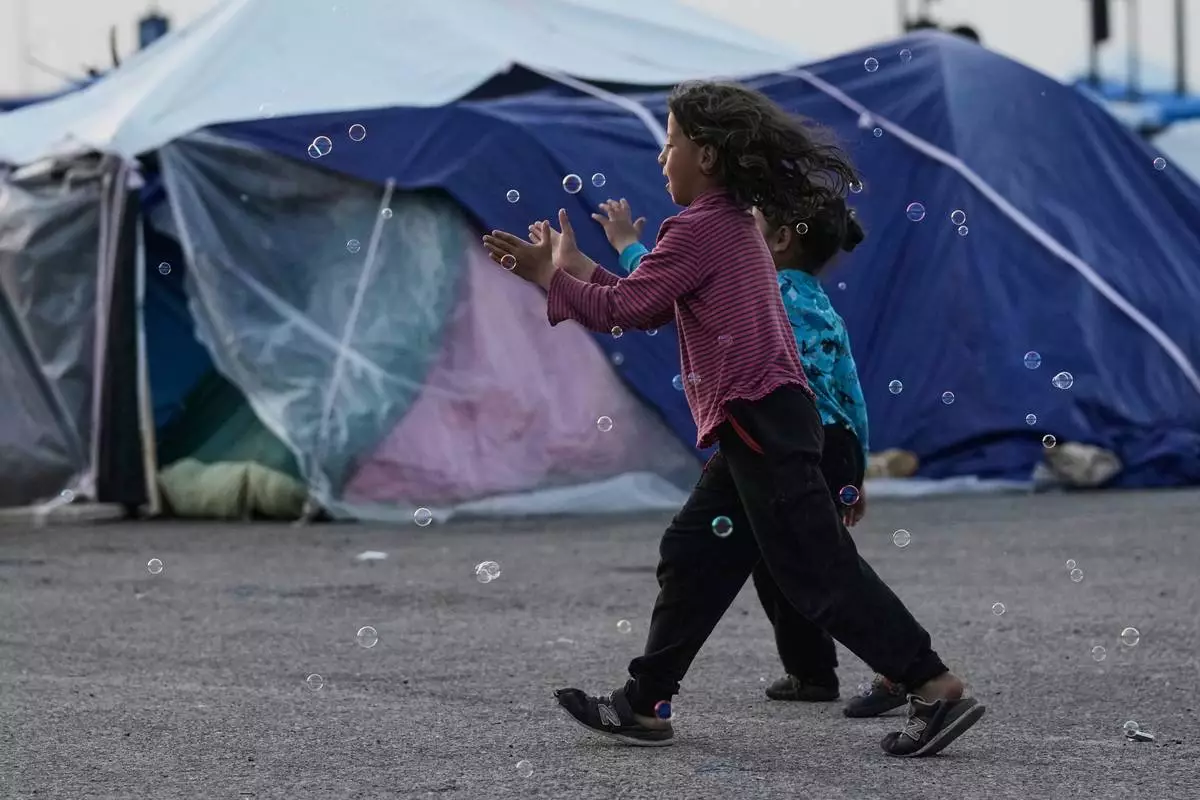
Girls chase bubbles next to their family's tents used as shelter after fleeing Israeli bombardment in Dahiyeh, Beirut's southern suburbs, in Beirut, on Wednesday, April 15, 2026. (AP Photo/Bilal Hussein)
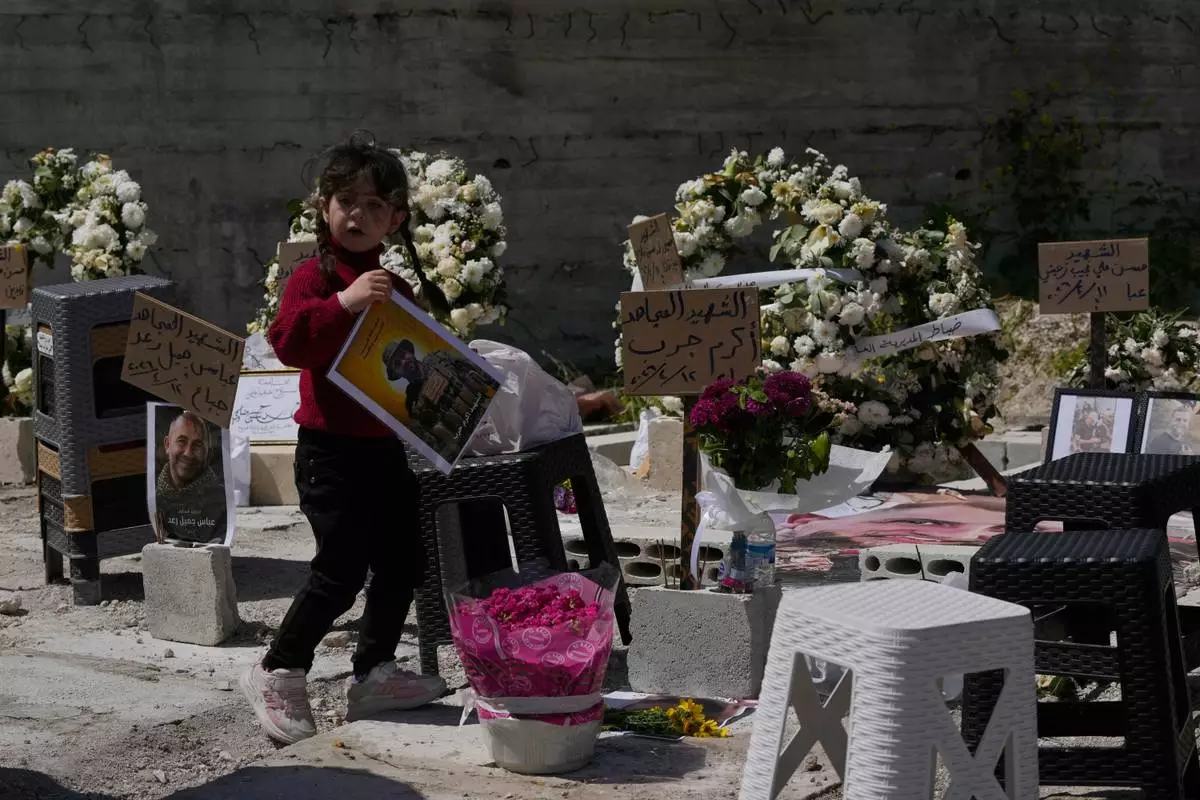
A young girl carries a portrait of a killed Hezbollah fighter at a mass grave where civilians and Hezbollah fighters killed in Israeli airstrikes are temporarily buried in the southern port city of Sidon, Lebanon, Tuesday, April 14, 2026. (AP Photo/Mohammed Zaatari)
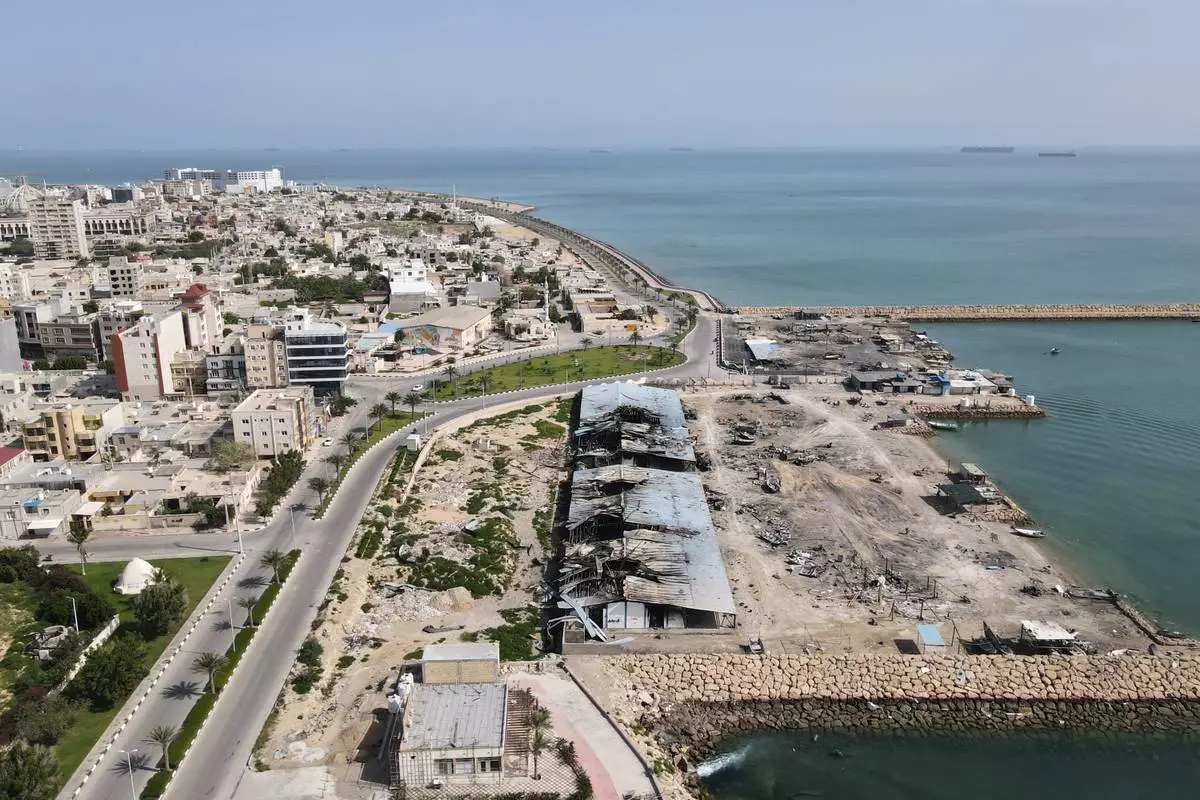
Backdropped by ships in the Strait of Hormuz, damage, according to local witnesses caused by several recent airstrikes during the U.S.-Israel military campaign, is seen on a fishing pier in the port of Qeshm island, Iran, Monday, April 13, 2026. (AP Photo/Asghar Besharati)
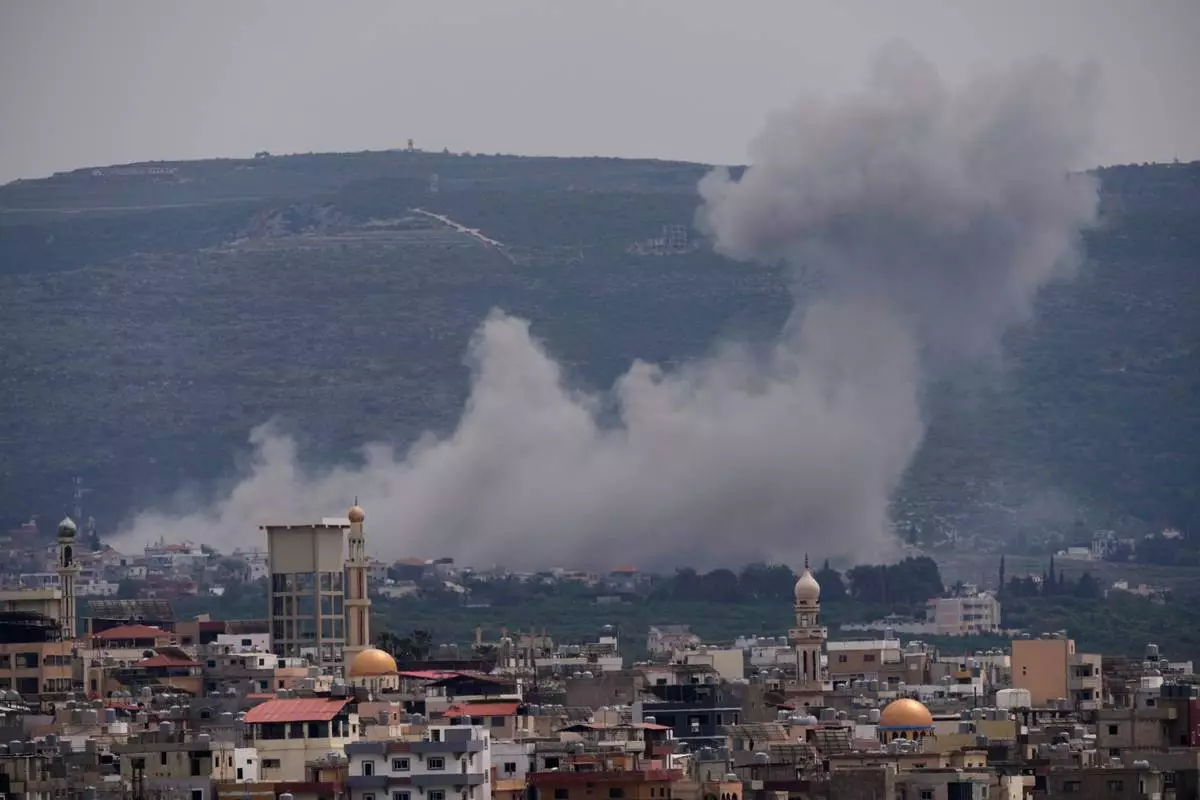
Smoke rises following an Israeli airstrike on the village of Qlaileh, as seen from the southern port city of Tyre, Lebanon, Wednesday, April 15, 2026. (AP Photo/Hussein Malla)