Working Group on Public Transport Service Special Applications convenes first meeting
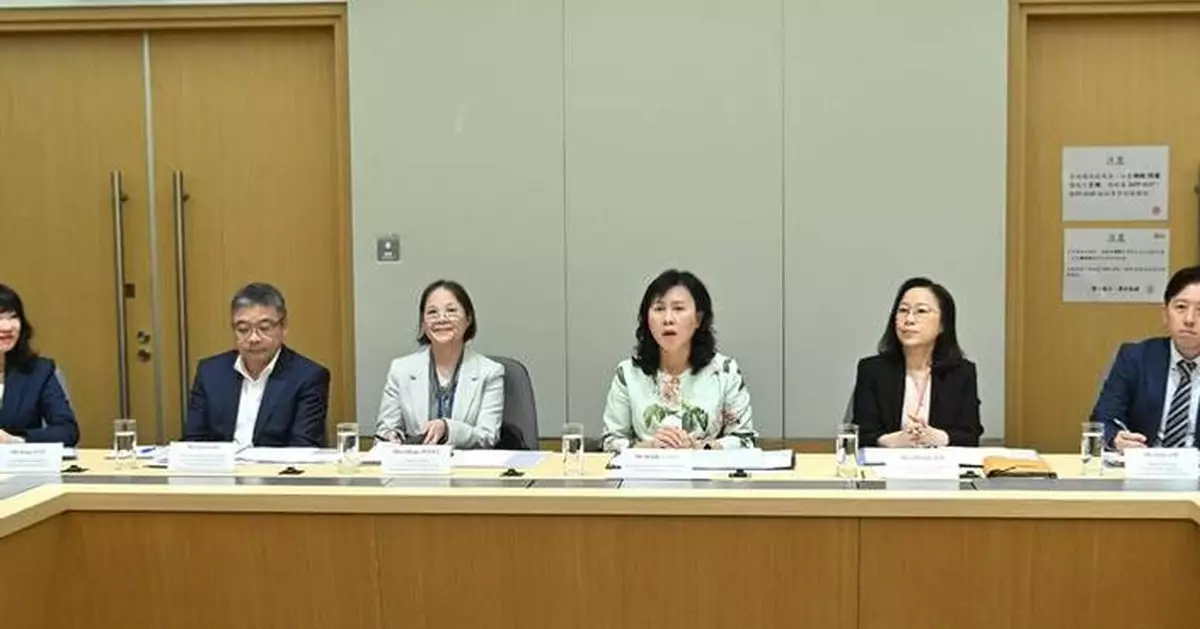
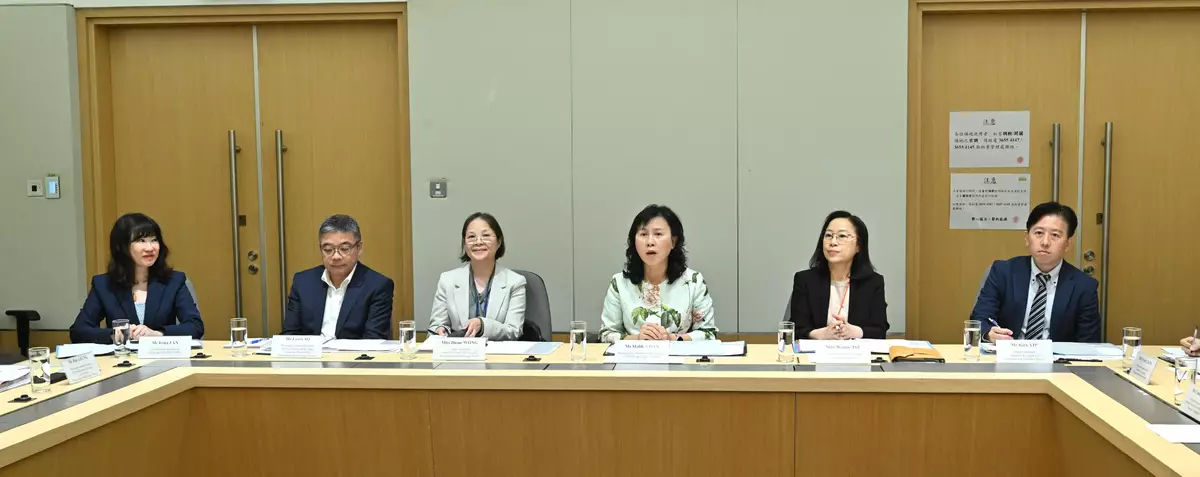
The Working Group on Public Transport Service Special Applications (Working Group), under the Inter-departmental Task Force on Monitoring Fuel Supply, convenes the first meeting today (April 16).
Led by the Secretary for Transport and Logistics, Ms Mable Chan, the Working Group has listened to the three franchised bus operators (i.e. The Kowloon Motor Bus Company (1933) Limited / Long Win Bus Company Limited, Citybus Limited and New Lantao Bus Company (1973) Limited) on their current business environment and operation situation as well as the measures they have taken to address the rising fuel costs. The Under Secretary for Environment and Ecology, the Commissioner for Transport and the Government Economist also attended the meeting. During the meeting, the Working Group conducted dialogues in a frank and exchanged manner with the operators, and expressed appreciation for their continued dedication to providing stable public transport services despite the challenging operating environment.
The Government will continue to monitor changes in fuel costs and the latest developments, and maintain communication with public transport service operators. Taking into account the overall operating environment, operators' costs, and public affordability, while maintaining the stability and normal operations of public transport services, the Working Group will consider targeted temporary measures to help operators save energy and enhance operational efficiency in response to oil price fluctuations.
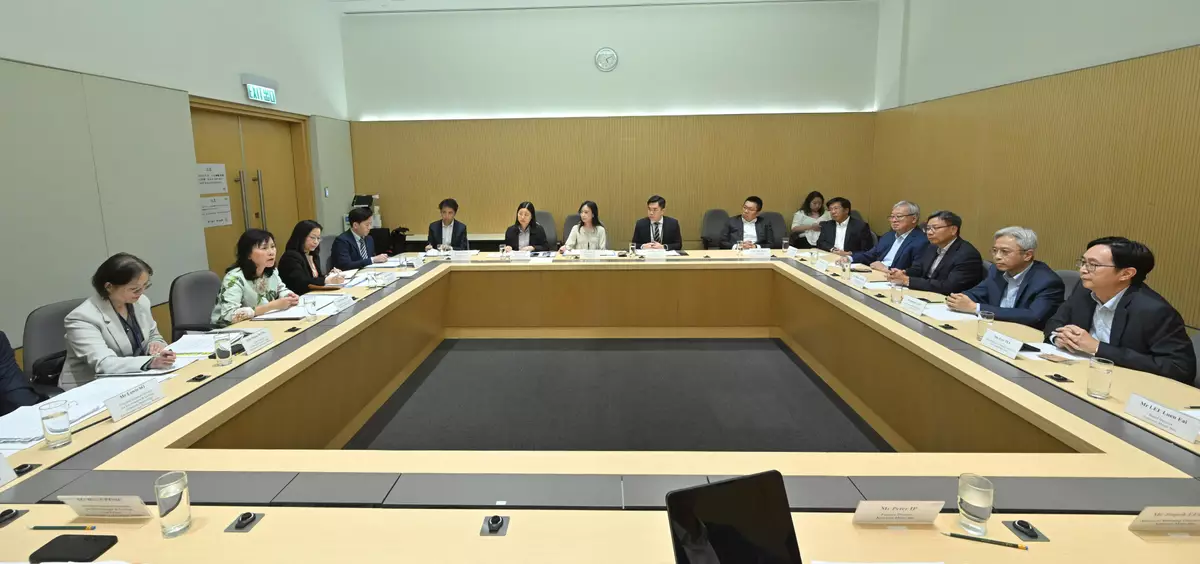
Working Group on Public Transport Service Special Applications convenes first meeting Source: HKSAR Government Press Releases
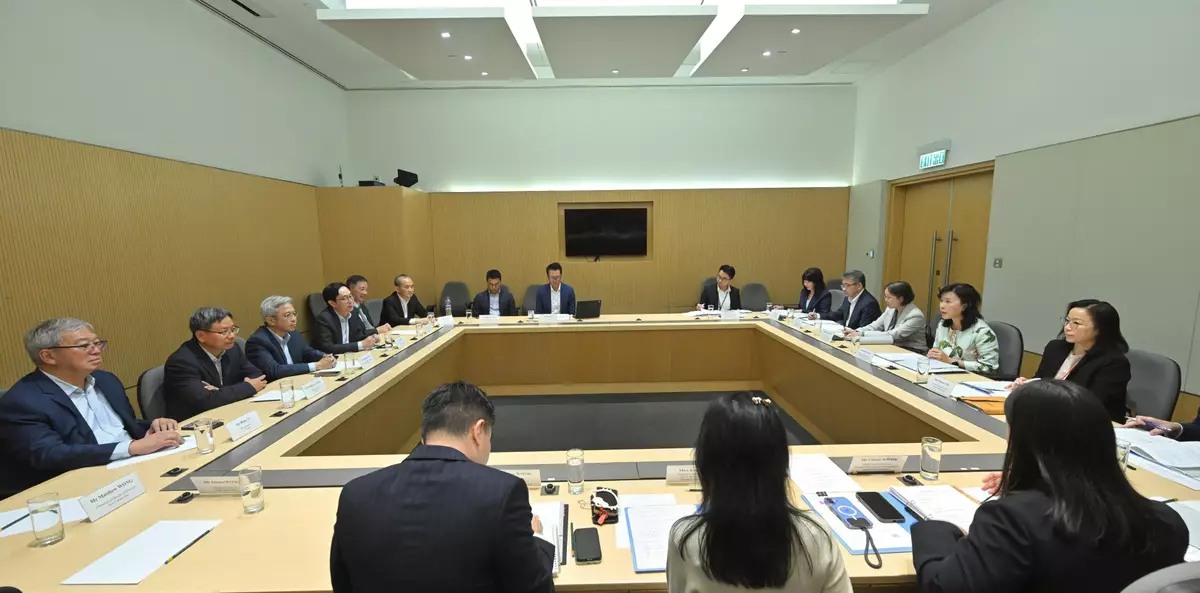
Working Group on Public Transport Service Special Applications convenes first meeting Source: HKSAR Government Press Releases
Working Group on Public Transport Service Special Applications convenes first meeting Source: HKSAR Government Press Releases
Opening remarks by SDEV on works policy areas at LegCo Finance Committee special meeting
Following are the opening remarks (English translation) by the Secretary for Development, Ms Bernadette Linn, on works policy areas at the special meeting of the Legislative Council (LegCo) Finance Committee today (April 16):
Chairman and Honourable Members,
In 2026-27, the total estimated expenditure of the Works Branch of the Development Bureau (DEVB) and its departments is about $24.47 billion, comparable to the revised estimate for the previous year. There is a decrease of 397 civil service posts, representing a reduction of about 2.5 per cent. Next, I will highlight the work of the DEVB in the works portfolio, particularly several initiatives involving additional funding in the Budget.
New quality productive forces in the construction industry: Leveraging innovative technologies to seize development opportunities
The first part concerns how to enhance the construction industry as new quality productive forces. Infrastructure projects are a crucial investment for Hong Kong's long-term and sustainable development. Our capital works expenditure is estimated to be about $128 billion for this financial year, which will remain at a similarly high level annually until 2030-31. While continuously investing resources in land and infrastructure development, the Government is committed to reducing construction costs. We are driving reforms on four fronts on construction costs, including optimising the project procurement model; applying advanced technologies; streamlining the approval process; and reviewing the design standards and requirements. All these initiatives will be implemented once they are ready.
In addition, the Government has been supporting innovation, and injected $2.2 billion into the Construction Innovation and Technology Fund (CITF) in 2018 and 2022. The Budget this year has proposed earmarking $1 billion for further injection into the CITF, together with the Construction Industry Council's contribution of $400 million, bringing a new allocation of $1.4 billion to promote wider adoption of innovative technologies, including promoting the application of new technologies such as robots, artificial intelligence and digital construction technologies in the industry and organising relevant training programmes. Furthermore, it is mentioned in the Budget that $100 million will be earmarked for commissioning the Building Technology Research Institute, a wholly Government-owned entity, to conduct various studies, including reviewing construction standards and exploring AI applications, so as to promote applied research and development and strengthen control over construction costs. The commitments and annual cash flows for the above two allocations have been included in the annual estimates of the Works Branch.
In addition to benefitting from integration into the overall national development, the construction industry must actively contribute to the development of our motherland. To this end, we will maintain close communication with relevant ministries of the Chinese Mainland to further deepen the alignment of construction standards and regulations between the two places, and bring the strengths of Hong Kong's construction industry into the Guangdong-Hong Kong-Macao Greater Bay Area.
The Construction Industry Council last week released the Construction Expenditure Forecast and the Manpower Forecast for Hong Kong Construction Industry for the next five years. With the gradual commencement of the Northern Metropolis and various development projects, the forecasts indicate a progressive resurgence in the private sector construction volume, and the manpower demand of the construction industry will remain keen in the next five years. The Budget has proposed an allocation of $65 million to increase the number of training places under the Government's Graduate Training Scheme to 260 this year, so as to support more construction graduates in gaining relevant work experience in order to obtain professional qualifications, thereby helping the industry to retain talent.
Built heritage conservation
Another part concerns built heritage conservation. We have long attached importance to this area of work, and established for such purpose, the Built Heritage Conservation Fund (BHCF) has received injections of $3.6 billion in the past years. To date, projects involving a total funding of over $3.4 billion have been approved under the BHCF, and the remaining balance is close to depletion. The Budget this year proposes an additional allocation of $1 billion to the BHCF to continue taking forward the initiatives related to revitalisation of historic buildings, of which $700 million will be used to continue to implement the Revitalising Historic Buildings Through Partnership Scheme. We will invite non-profit-making organisations to submit revitalisation proposals for individual historical projects in accordance with the established mechanism, and seek funding approval from the Finance Committee of the LegCo for the revitalisation works required on a project-by-project basis. The remaining $300 million will be used to continue the implementation of the other three schemes under the BHCF, and most of that amount will be earmarked for the Financial Assistance for Maintenance Scheme on Built Heritage to subsidise owners or users of graded historic buildings to carry out basic maintenance works for the relevant buildings. We will set aside the necessary funds in the annual head expenditure estimates according to actual needs.
Utilising technologies proactively to address extreme weather
The last part concerns how we will make proactive use of technology to address extreme weather. To meet the challenges posed by extreme weather, various works departments under the DEVB have set up emergency response and monitoring mechanisms. We endeavour to continuously enhance the effectiveness of the mechanisms with proactive use of technologies. Through promoting digital intelligence management, we will leverage AI technology to strengthen the alert systems, allowing us to respond early to flooding and landslides and to alert the public to take shelter in a timely manner. Moreover, to prevent disruptions to fresh water supply caused by water mains bursts, we are currently expanding and upgrading the Water Intelligent Network to strengthen the detection of leakage in the water distribution network, and planning to adjust water pressure with AI to reduce the risk of water mains bursts.
Conclusion
Chairman, the details of other tasks of the works portfolio have been provided in the Controlling Officer's Reports. My team and I shall be happy to respond to further questions from Members.

Source: AI-found images