NEW YORK--(BUSINESS WIRE)--Apr 16, 2026--
American Express today announced that it has entered into an agreement to acquire Hypercard (Hyper), an agentic expense management company, adding to Amex’s AI expertise and capabilities across its commercial services business. Hyper’s team of AI experts will help American Express continue to build agentic tools and AI-powered solutions that help businesses automate processes and simplify operations.
This press release features multimedia. View the full release here: https://www.businesswire.com/news/home/20260415433431/en/
“Our customers want smarter, more efficient ways to manage expenses so they can focus on what's next for their business, and AI has the potential to transform the way businesses get things done,” said Raymond Joabar, Group President of Global Commercial Services at American Express. “We’re thrilled to welcome Hyper, a team with deep expertise in designing and deploying AI agents, as we build next-generation AI capabilities into our products and services, including our expense management platform launching later this year.”
“We’re excited to join the team at American Express and work together to help businesses reduce friction in the expense process through AI technology,” said Marc Baghadjian, CEO and Co-Founder of Hyper. “Hyper was founded with the ambition to better automate expenses, and we’re excited to continue this mission as a part of the Amex team.”
Founded in 2022, Hyper has focused on transforming expense management from a manual process into more autonomous workflows, successfully developing native AI agents that auto-categorize and file expenses, check them against budget and policy, and send reminders that submissions are due. In 2024, American Express and Hyper partnered to launch the Hypercard Rewards American Express card with embedded AI-powered expense agents leveraging the Agile Partner Platform. Since then, Hyper has continued to focus and refine its agentic expense management capabilities.
Amex Business Membership brings together award-winning service, best-in-class card products, intelligent software and next-generation AI tools. Last month, Chairman and CEO Stephen J. Squeri outlined the company’s strategy and how AI is transforming the way we operate in his annual letter to shareholders, and the company announced plans to integrate the latest AI technology into products and services to help businesses automate processes and operate more efficiently. The acquisition of Hyper builds on these plans by bolstering the company’s AI talent and capabilities.
The acquisition is expected to close within the second quarter of 2026, subject to closing conditions.
ABOUT AMERICAN EXPRESS
American Express (NYSE: AXP) is a global payments and premium lifestyle brand powered by technology. Our colleagues around the world back our customers with differentiated products, services and experiences that enrich lives and build business success.
Founded in 1850 and headquartered in New York, American Express’ brand is built on trust, security, and service, and a rich history of delivering innovation and Membership value for our customers. We seek to provide the world’s best customer experience every day to a broad range of consumers, small and medium-sized businesses, and large corporations, and we build and manage relationships with millions of merchants across our global network.
For more information about American Express, visit americanexpress.com, americanexpress.com/en-us/newsroom/, and ir.americanexpress.com.
Cautionary Note Regarding Forward-Looking Statements
This release includes forward-looking statements within the meaning of the Private Securities Litigation Reform Act of 1995, which are subject to risks and uncertainties. The forward-looking statements, which include American Express’ expectations regarding the transaction and plans for launching new and enhanced products, benefits and capabilities, among other matters, contain words such as “expect,” “intend,” “plan,” “aim,” “will,” “may,” “should,” “could,” “would,” “continue,” and similar expressions. Readers are cautioned not to place undue reliance on these forward-looking statements, which speak only as of the date on which they are made. Factors that could cause actual results to differ materially from these forward-looking statements include, but are not limited to: the parties’ ability to satisfy the closing conditions and consummate the transaction; the underlying assumptions related to the transaction proving to be inaccurate or unrealized; and American Express’ ability to integrate Hyper and benefit from its talent and technology, which will depend in part on management’s decisions regarding future operations, strategies and business initiatives. A further description of these and other risks and uncertainties can be found in American Express’ Annual Report on Form 10-K for the year ended December 31, 2025 and its other reports filed with the SEC. American Express undertakes no obligation to update or revise any forward-looking statements.
Location: U.S.

American Express to Acquire Hyper, Adding to Its AI Expertise and Expense Management Capabilities
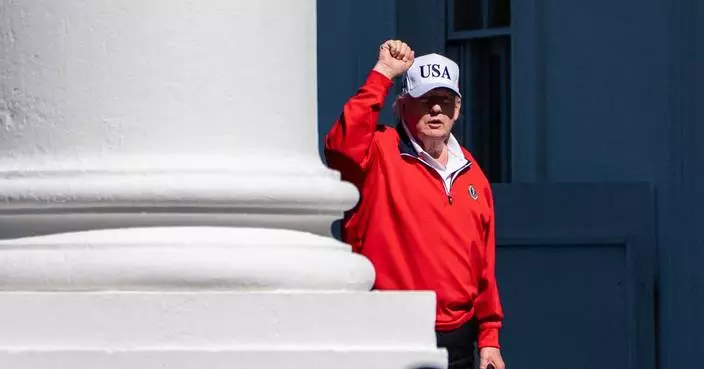
BEIRUT (AP) — President Donald Trump said Monday that Israel and Hezbollah have agreed to dial back fighting after he held talks with Israeli Prime Minister Benjamin Netanyahu and communicated with the Lebanon-militant group through mediators.
Trump announced the development in a social media post following his call with Netanyahu.
THIS IS A BREAKING NEWS UPDATE. AP’s earlier story follows below.
BEIRUT (AP) — Israel’s government ordered strikes on the southern suburbs of Beirut on Monday, a day after its ground forces reached their deepest point in Lebanon in 26 years and as Hezbollah fired rockets at northern Israel, including the outskirts of the coastal city of Haifa.
A joint statement by Israeli Prime Minister Benjamin Netanyahu and Defense Minister Israel Katz said the orders to attack targets in Beirut’s southern suburbs followed what they called repeated violations of the ceasefire by Hezbollah and “attacks against our cities and citizens.”
The Israeli military's Arabic spokesman later posted on X that residents should leave the suburbs, adding that if Hezbollah continues attacking Israeli communities, Israel will launch attacks on the area known in Arabic as Dahiyeh, where Hezbollah enjoys wide support.
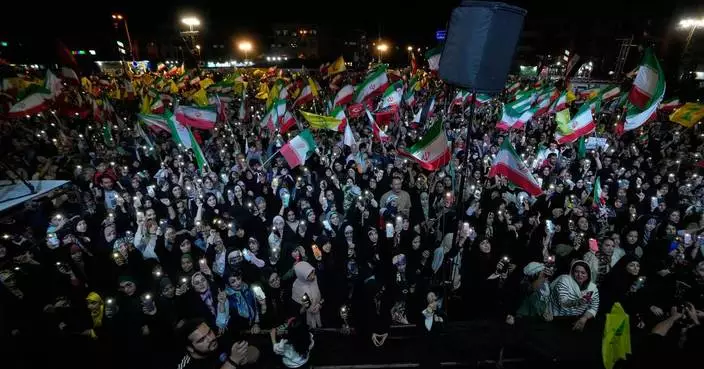
Hezbollah agreed to halt attacks on Israel when the ceasefire was signed in mid-April, but the militant group resumed the assaults after Israeli strikes in Lebanon that Israel characterized as self-defense. The fighting also presents a major obstacle in the emerging deal to extend the ceasefire in the Iran war. Tehran wants any agreement to include Lebanon.
After Monday's warning, large numbers of people were seen fleeing Dahiyeh, jamming roads leading out of the suburb.
Mohammed Farhat, 23, fled with his brother and parents from Beirut’s southern suburb of Haret Hreik and was heading with his mother on a motorcycle to stay with relatives in another neighborhood.
“We are worried. I am used to it but left for my parents,” the university student said.
Israeli airstrikes overnight on southern Lebanon left six people dead, including a Syrian citizen in a village near the city of Nabatiyeh, the state-run National News Agency said. Israel struck other towns and villages near the major city, close to the strategic Beaufort Castle and other towns the Israeli military captured in recent days.
An airstrike Monday afternoon in the port city of Tyre caused heavy damage to the Jabal Amel Hospital, the Health Ministry said. A video released by the ministry showed shaken women and children inside the hospital, where windows were blown out.
The Israeli military, meanwhile, said its air force had intercepted two projectiles launched from Lebanon toward Israeli territory, as well as a suspicious aerial target in the area where Israeli soldiers operate in southern Lebanon. No injuries were reported, the military said.
Hezbollah said it carried out rocket and missile attacks on northern Israel on Sunday. It said early Monday it attacked Israeli troops in Zawtar al-Sharqieh, just north of the Litani River, and struck what they said was Israeli military infrastructure in Tiberius, a few dozen miles south of the border.
The latest attacks came despite a nominal ceasefire that has been in place since April 17 and just before Lebanon and Israel hold their next round of direct talks in Washington starting Tuesday. Hezbollah has rejected direct talks, counting on pressure from Iran, which has demanded an end to the war in Lebanon in its talks with Washington.
The talks between officials from Israel and Lebanon, which began in April in Washington, were the first in more than three decades between the countries, which have no formal diplomatic relations.
Lebanese officials have been scrambling in diplomatic calls, including with Washington, in a desperate bid to push back Israel’s military escalation after Netanyahu’s announcement, a Lebanese diplomatic official said. Beirut is still committed to holding talks to end the conflict despite the boiling tensions, said the official, who spoke to The Associated Press on condition of anonymity in line with regulations.
Iranian Foreign Minister Abbas Araghchi asserted Monday that any ceasefire agreement between Washington and Tehran is a “ceasefire on all fronts, including Lebanon."
“Its violation on one front is a violation of the ceasefire on all fronts," Iran's top diplomat said in a post on X.
Beirut, the Lebanese capital, has been mostly spared from airstrikes since the ceasefire went into effect, apart from two targeted attacks on the city's southern suburbs in May.
The German development minister, Reem Alabali Radovan, had planned to visit Beirut on Monday to meet with Lebanese President Joseph Aoun and other officials, but she called off the visit while traveling to the city, citing the possibility of Israeli strikes in the suburbs.
Saudi Arabia condemned Israel’s attacks on Lebanon, saying it “categorically rejects” Israel’s movement into the small Mediterranean nation. The Saudi Foreign Ministry called on the international community to prevent Israel from going deeper into Lebanon.
A U.S. official said late Sunday that Secretary of State Marco Rubio had spoken to Aoun and Netanyahu to propose a fresh path to continue ongoing negotiations, as President Donald Trump weighs a tentative ceasefire extension with Iran.
Under the proposal, Hezbollah would halt all attacks on Israel, and Israel would refrain from escalating military operations in Beirut, according to the official who spoke on condition of anonymity to discuss private diplomatic conversations.
The official said Aoun was open to the idea but that Lebanese parliament chief Nabih Berri had responded by demanding that Israel first stop all military action.
The official said the Trump administration does not expect Israel to give up retaliating for Hezbollah strikes on its territory.
Berri, a key Hezbollah ally, said in a statement Sunday that he can guarantee the militant group’s “full, comprehensive and immediate commitment to a ceasefire.” Berri added: “But who will force Israel to stop its aggression?”
Aoun on Monday said in comments released by his office that Lebanon faces "a fierce and condemned Israeli aggression.” Aoun added that his government continues work to end “the suffering of the Lebanese in general and the southerners in particular.”
Later, the president issued a statement reiterating Beirut's commitment to negotiations, saying it is “safer” than war."
“It will not solve the problem within moments, but it is a process that needs time," he said. “And we have no other choice.”
Elsewhere, the United Nations Security Council scheduled an emergency meeting on Lebanon for Monday afternoon.
The latest round of fighting between Israel and Hezbollah has killed 3,433 people in Lebanon and displaced more than 1 million people.
Israel’s military said a soldier was killed in southern Lebanon overnight in a drone attack by Hezbollah. Hezbollah’s use of hard-to-detect fiber-optic drones has been deadly for the Israeli military, which is struggling to respond.
According to Netanyahu’s office, at least 26 Israeli soldiers and a defense contractor have been killed in or near southern Lebanon. Two civilians have also been killed in northern Israel.
Melzer reported from Tel Aviv, Israel. Associated Press writers Matthew Lee in Washington and Geir Moulson in Berlin contributed to this report.

A person walks past the site struck by a rocket fired from Lebanon on Saturday in Kiryat Shmona, northern Israel, Sunday, May 31, 2026. (AP Photo/Ariel Schalit)
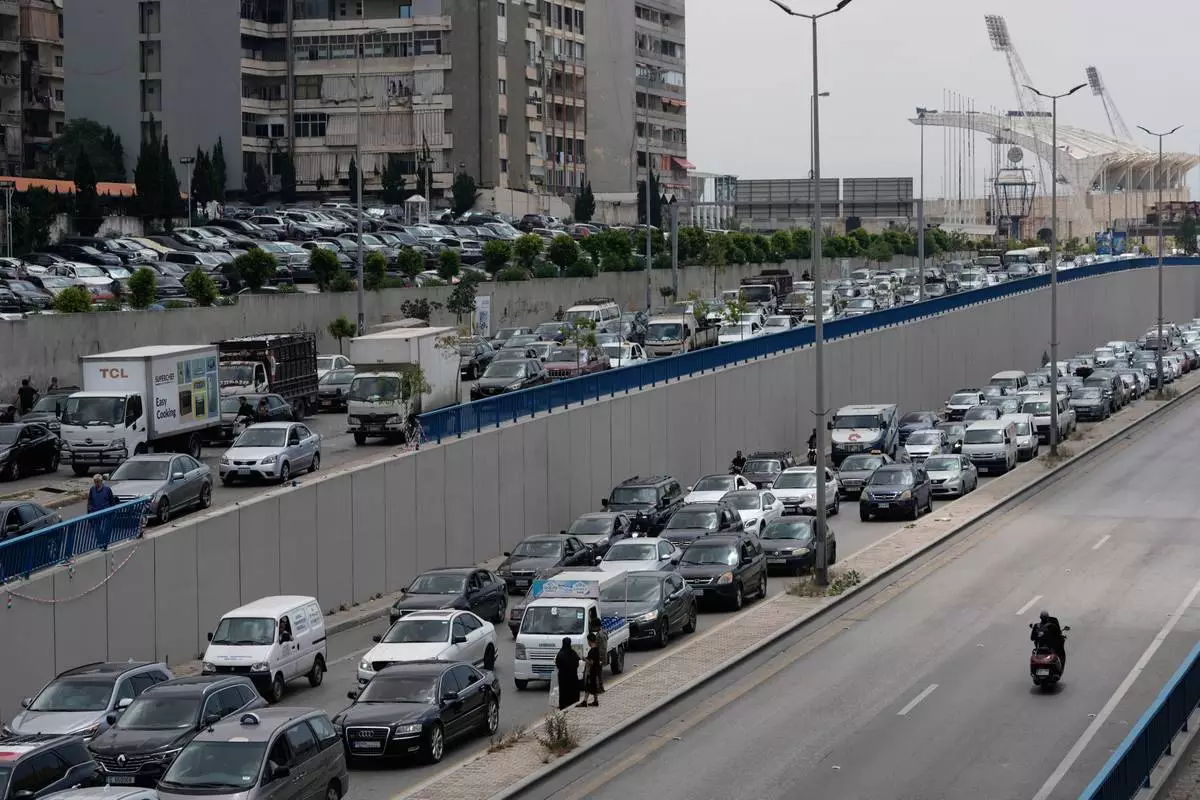
Cars sit in traffic on a highway as residents flee following an Israeli threat to strike Dahiyeh, Beirut's southern suburbs, Lebanon, Monday, June 1, 2026. (AP Photo/Bilal Hussein)

Cars sit in traffic on a highway as residents flee following an Israeli threat to strike Dahiyeh, Beirut's southern suburbs, Lebanon, Monday, June 1, 2026. (AP Photo/Bilal Hussein)

Cars sit in traffic on a highway as residents flee following an Israeli threat to strike Dahiyeh, Beirut's southern suburbs, Lebanon, Monday, June 1, 2026. (AP Photo/Bilal Hussein)

A family flees following an Israeli threat to strike Dahiyeh, Beirut's southern suburbs, Lebanon, Monday, June 1, 2026. (AP Photo/Bilal Hussein)

A view of he Beaufort Castle in southern Lebanon as seen from northern Israel, Sunday, May 31, 2026. (AP Photo/Ariel Schalit)