New York will lose more than $73.5 million in federal money because the Transportation Department said Thursday that state has refused to revoke nearly 33,000 questionable commercial driver's licenses for immigrants since an audit uncovered problems last year.
The department said that more than half of the 200 licenses reviewed during the audit had significant problems such as remaining valid long after an immigrant was authorized to be in the country. So the state was ordered to review all of this type of licenses and revoke illegal ones.
The federal government has reviewed records related to these non-domiciled CDLs in every state since Transportation Secretary Sean Duffy put a spotlight on this issue after an August crash in Florida that killed three people. Most states have either complied or are in negotiations with the Federal Motor Carrier Safety Administration, but California has lost $200 million. Several other states — including Pennsylvania, Minnesota and North Carolina — have been warned they are at risk of losing some funding.
“I promised the American people I would hold any state leader accountable for failing to keep them safe from unvetted, unqualified foreign drivers. I’m delivering on that promise today,” Duffy said.
Duffy has said that immigrants account for about 20% of all truck drivers nationwide, but these non-domiciled licenses immigrants can receive only represent about 5% of all commercial driver’s licenses or about 200,000 drivers. New York issued 32,606 of them.
New York officials have defended their licensing practices and said they are complying with federal law and that audits done during the first Trump administration supported that. This action related to the licenses for immigrants is just the latest in a series of battles between the federal government and officials in New York and New Jersey over transportation funding. Duffy put a hold on $18 billion in funding for a subway extension and tunnel beneath the Hudson River in August. He has also threatened to pull federal funding from New York if it does not abandon a congestion pricing fee in New York City and if crime on the subway system is not addressed.
Gov. Kathy Hochul's spokesman Sean Butler said the action related to commercial driver's licenses seems to be part of broad effort to attack blue states.
“This continues a yearlong pattern of Secretary Duffy threatening to withhold money that keeps our roads, subways, and other infrastructure safe for New Yorkers. We will fight back, and once again we will win,” Butler said.
Trucking industry groups have praised the Transportation Department's efforts to get unqualified drivers off the road, crack down on questionable trucking schools and go after trucking companies that violate the rules and then just change their names and keep operating. The industry said that too often unqualified drivers who shouldn’t have licenses or can’t speak English have been allowed to get behind the wheel of an 80,000-pound (about 39,916 kilograms) truck.
But immigrant groups say that some drivers are now being unfairly targeted. The spotlight has been on Sikh truckers because the driver in the Florida crash and the driver in another fatal crash in California in October are both Sikhs.
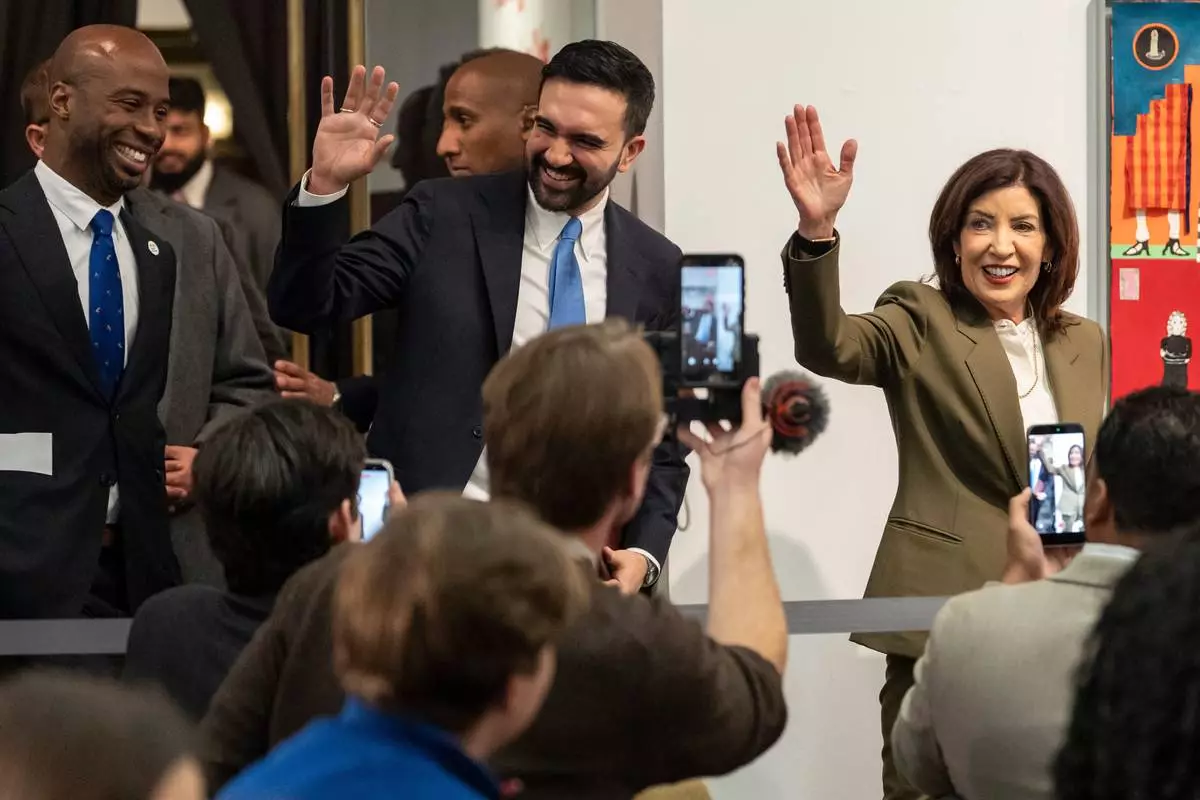
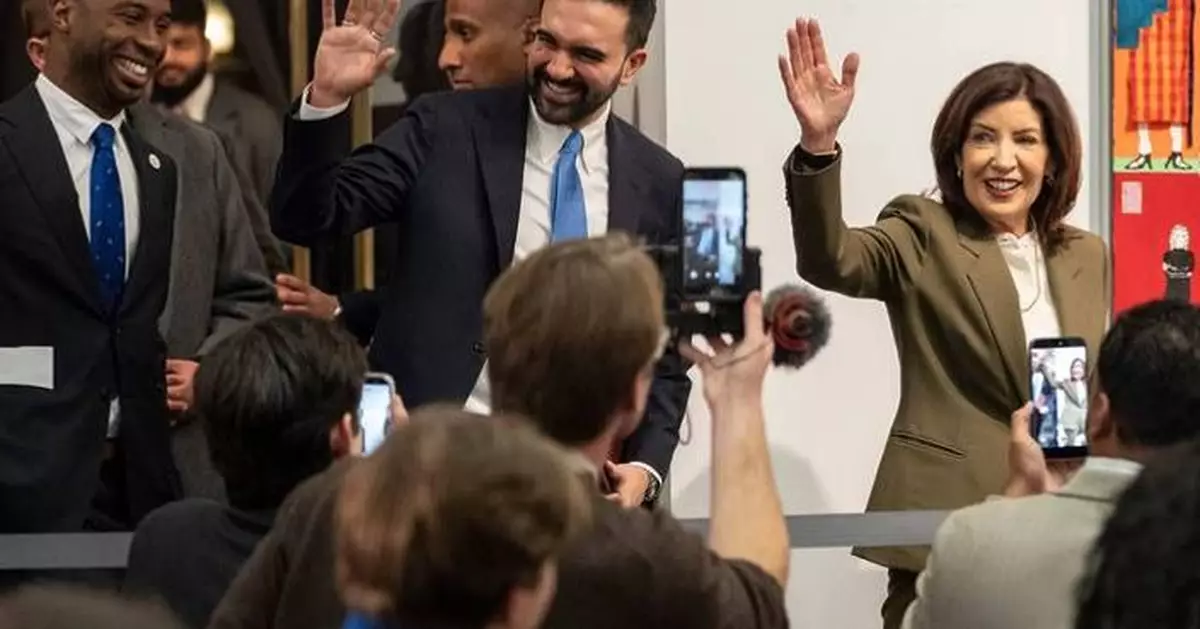
FILE - New York Mayor Zohran Mamdani and New York Governor Kathy Hochul arrive at a press conference at Sugar Hill Children's Museum of Art & Storytelling, March 3, 2026, in New York. (AP Photo/Yuki Iwamura, File)
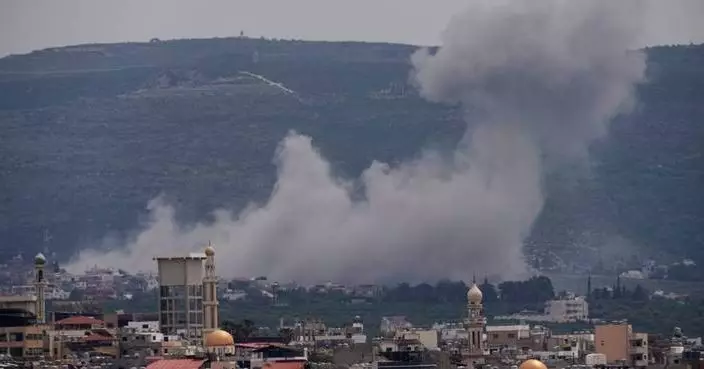
BEIRUT, Lebanon (AP) — Israel agreed Thursday to a 10-day ceasefire in Lebanon, a truce that could pause fighting with the Hezbollah militant group and boost attempts to extend the ceasefire between Iran, the United States and Israel after weeks of devastating war.
U.S. President Donald Trump announced the agreement as a ceasefire between Israel and Lebanon. However, Israel has not been fighting with Lebanon itself, but rather with the Iranian-backed militants inside the country.
Hezbollah said in a statement that any truce must apply "across all Lebanese territory and must not allow the Israeli enemy any freedom of movement.”
Israeli Prime Minister Benjamin Netanyahu said he agreed to the ceasefire “to advance” peace efforts with Lebanon. “We have an opportunity to make a historic peace agreement with Lebanon,” he said in a video message.
Israeli forces have engaged in fierce battles with Hezbollah in the border area. Israeli troops have pushed into southern Lebanon to create what officials have called a “security zone,” which Netanyahu has said will extend at least 8 to 10 kilometers (5 to 6 miles) into Lebanon.
Hezbollah said that “Israeli occupation on our land grants Lebanon and its people the right to resist it, and this matter will be determined based on how developments unfold,” a stance that could complicate the ceasefire.
Netanyahu said Israeli troops will stay in an expanded security zone in southern Lebanon “much stronger, more extensive and more continuous than before.”
“That is where we are, and we are not leaving,” he said.
Trump posted the ceasefire announcement on his Truth Social platform, saying it was to begin at 5 p.m. Eastern time (9 p.m. GMT). The announcement comes two days after the countries held their first direct diplomatic talks in decades in Washington. Hezbollah had opposed direct talks between Lebanon and Israel.
Lebanon has insisted on a ceasefire to stop the fighting between Israel and Hezbollah before engaging in more talks, while vowing to commit to disarming the group.
Israel and Lebanon have technically been at war since Israel was established in 1948, and Lebanon remains deeply divided over diplomatic engagement with Israel.
Trump also invited the leaders of Israel and Lebanon to the White House for what he said would be “the first meaningful talks" between the countries since 1983.
“Both sides want to see PEACE, and I believe that will happen, quickly,” Trump wrote.
Lebanon and Israel signed an agreement in 1983 saying Lebanon would formally recognize Israel, and Israel would withdraw from Lebanon. The deal fell apart during Lebanon’s civil war and was formally rescinded a year later.
Trump said the pause in fighting followed “excellent” conversations with Lebanese President Joseph Aoun and Netanyahu.
A Hezbollah official said the ceasefire was a result of Iran’s negotiations with the U.S., in which Iran had insisted Lebanon be included in its own ceasefire, and came about through efforts by mediator Pakistan. The official spoke on condition of anonymity because he was not authorized to speak publicly.
Meanwhile, Pakistan’s powerful army chief met Thursday with Iran’s parliament speaker as part of international efforts to press for an extension to a ceasefire that has paused almost seven weeks of war between Israel, the U.S. and the Islamic Republic.
It was unclear whether the frantic diplomacy could lead to a lasting deal as the two-week ceasefire passes the halfway mark. The Iran war has killed thousands of people and upended global markets by disrupting the flow of oil.
Iranian state television did not provide details on the meeting between Pakistani Army Gen. Asim Munir and Iranian Parliament Speaker Mohammad Bagher Qalibaf, who has emerged as his country’s chief negotiator.
There was no immediate comment from Pakistan, which has become a key mediator after hosting direct talks between the U.S. and Iran that authorities said helped narrow differences between the sides. Mediators are seeking a new round before the ceasefire expires next week.
The White House said any further talks regarding Iran would likely take place in the Pakistani capital of Islamabad, though no decision had been made on whether to resume negotiations. The fragile ceasefire is holding despite a U.S. naval blockade of Iranian ports and Iranian counter-threats to target regional ports across the Red Sea.
The 14-day ceasefire expires on April 22, but Trump suggested it could be extended.
“If we’re close to a deal, would I extend?” Trump said in an exchange with reporters. “Yeah, I would do that.”
The war has jolted markets and rattled the global economy as shipping has been cut off and airstrikes have pounded military and civilian infrastructure. Oil prices have fallen amid hopes for an end to fighting, and U.S. stocks on Wednesday surpassed records set in January.
Even as the U.S. blockade on Iranian ports and renewed Iranian threats strained the ceasefire, regional officials reported progress, telling AP the United States and Iran had an “in-principle agreement” to extend it to allow for more diplomacy. They spoke on condition of anonymity to discuss sensitive negotiations.
But tensions simmered.
The commander of Iran’s joint military command, Ali Abdollahi, threatened to halt trade in the region if the U.S. does not lift its naval blockade, and a newly appointed military adviser to Iranian Supreme Leader Mojtaba Khamenei said he does not support extending the ceasefire.
Mediators are pushing for a compromise on three main sticking points: Iran’s nuclear program, the Strait of Hormuz and compensation for wartime damages, according to a regional official involved in the mediation efforts.
Iranian Foreign Ministry spokesman Esmail Baghaei said Iran is open to discussing the type and level of its uranium enrichment, but his country “based on its needs, must be able to continue enrichment,” Iranian state media reported.
The Pentagon urged Iran to make a deal, with U.S. Defense Secretary Pete Hegseth telling reporters at the Pentagon that “ultimately, they need to come to the table.”
He said the U.S. will ensure that Iran never has a nuclear weapon.
“We’d prefer to do it the nice way through a deal led by our great vice president and negotiating team. Or we can do it the hard way,” Hegseth said.
Iran insists it does not seek a nuclear weapon and its nuclear program is for peaceful proposes.
The fighting has killed at least 3,000 people in Iran, more than 2,100 in Lebanon, 23 in Israel and more than a dozen in Gulf Arab states. Thirteen U.S. service members have also been killed.
U.S. Treasury Secretary Scott Bessent said the Trump administration would ramp up economic pain on Iran with new economic sanctions on countries doing business with it, calling the move the “financial equivalent” of a bombing campaign.
Chinese Foreign Minister Wang Yi said the window of peace was opening during a phone call with his Iranian counterpart Abbas Araghchi, the Chinese Foreign Ministry said.
Since the war began, Iran has curtailed maritime traffic through the strait, which a fifth of global oil transited through in peacetime. Tehran’s effective closure of the strait sent oil prices skyrocketing, raising the cost of fuel, food and other basic goods far beyond the Middle East, and the U.S. has responded with a blockade on Iranian shipping.
U.S. Central Command said Wednesday that no ships had made it past the blockade since it was imposed two days earlier, while 13 merchant vessels complied with direction from U.S. forces to turn around and reenter Iranian waters.
Becatoros contributed from Athens, Greece. Samy Magdy in Cairo, Melanie Lidman in Tel Aviv, Israel, Munir Ahmed in Islamabad, and Ben Finley in Washington contributed to this report.
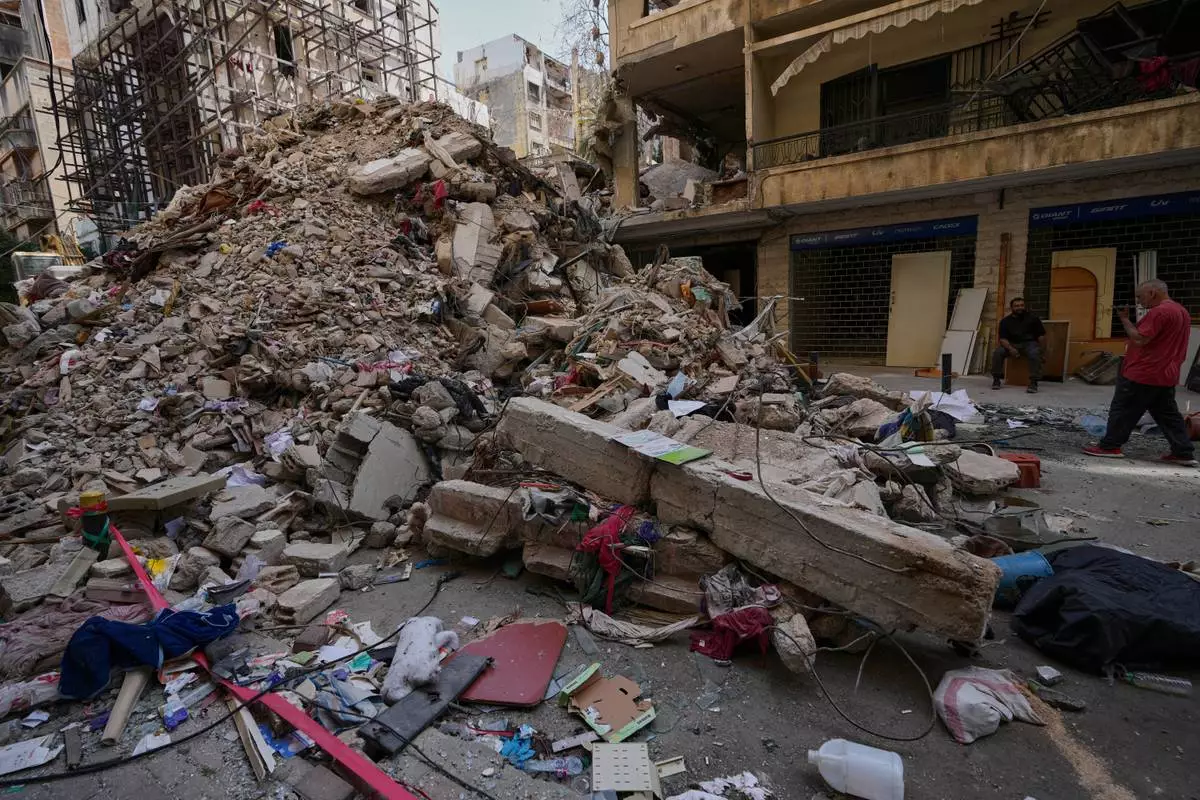
Residents stand next to the rubble of a destroyed building that was hit a week ago in an Israeli airstrike in central Beirut, Lebanon, Thursday, April 16, 2026. (AP Photo/Hussein Malla)
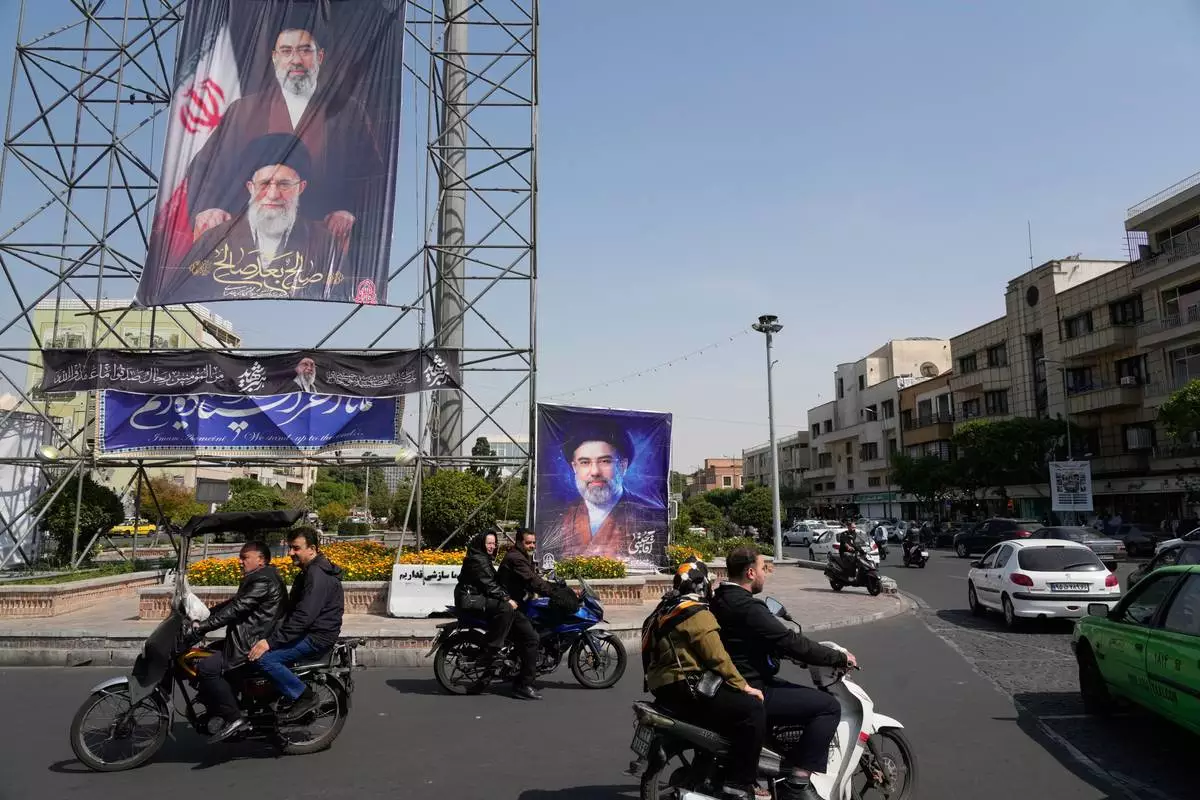
People drive their motorbikes past billboards showing the Iran's Supreme Leader Ayatollah Mojtaba Khamenei, top and right, and his father, the slain Supreme Leader Ayatollah Ali Khamenei, who was killed in U.S. and Israeli strikes on Feb. 28, in downtown Tehran, Iran, Thursday, April 16, 2026. (AP Photo/Vahid Salemi)
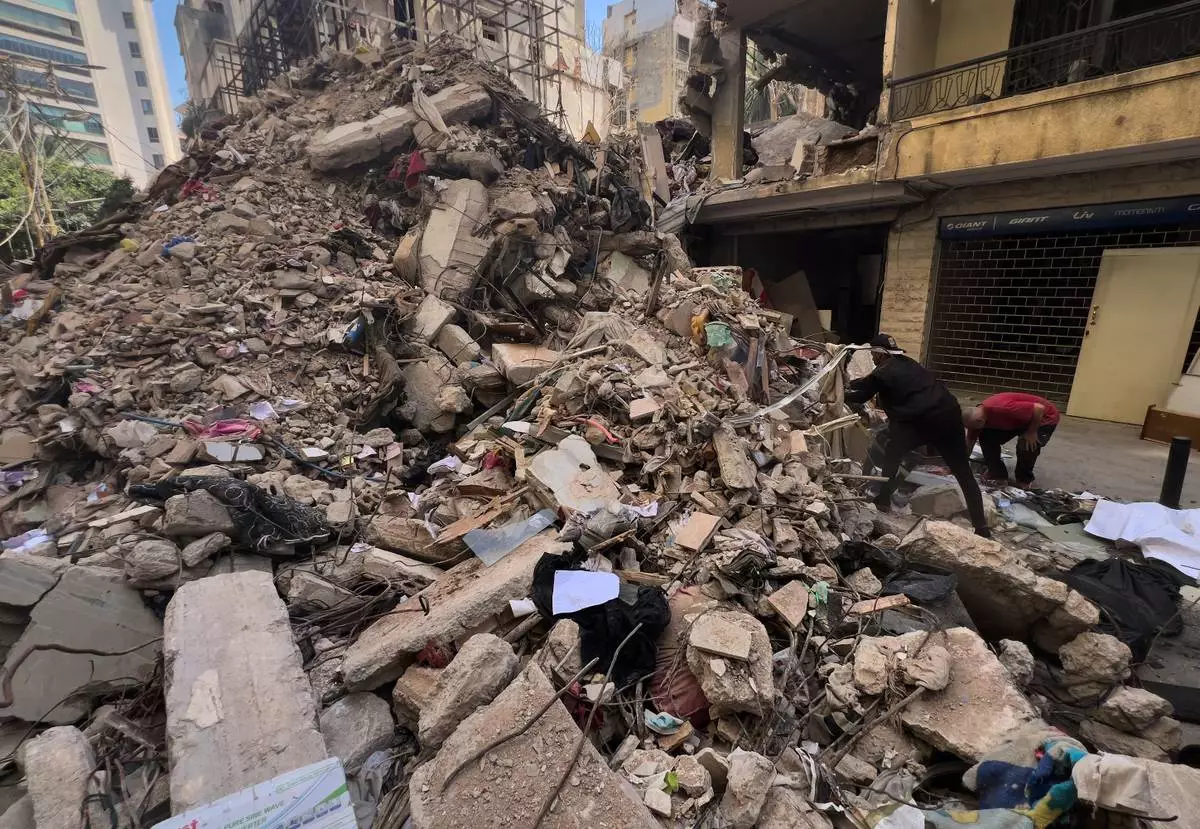
Workers search amongst the rubble of a destroyed building that was hit a week ago in an Israeli airstrike in central Beirut, Lebanon, Thursday, April 16, 2026. (AP Photo/Hussein Malla)
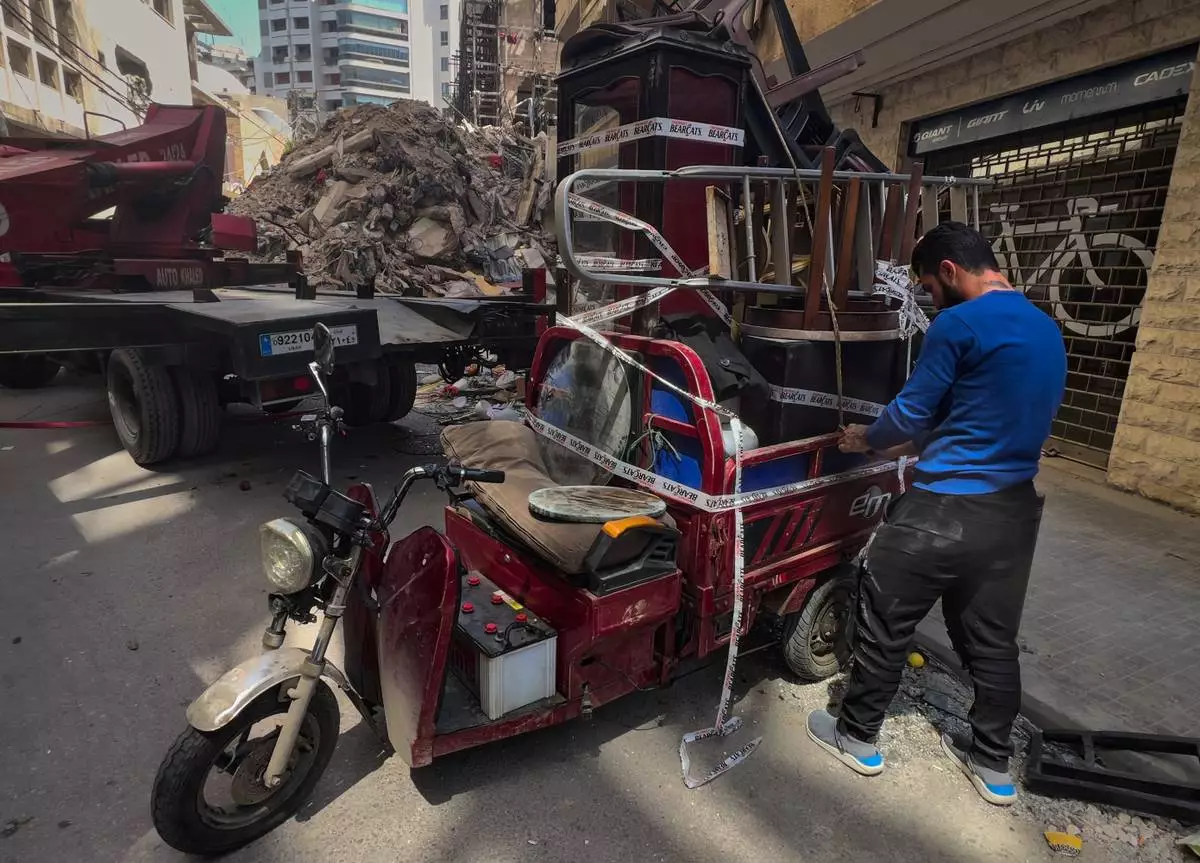
A worker arranges furniture from an apartment of a destroyed building that was hit a week ago in an Israeli airstrike in central Beirut, Lebanon, Thursday, April 16, 2026. (AP Photo/Hussein Malla)
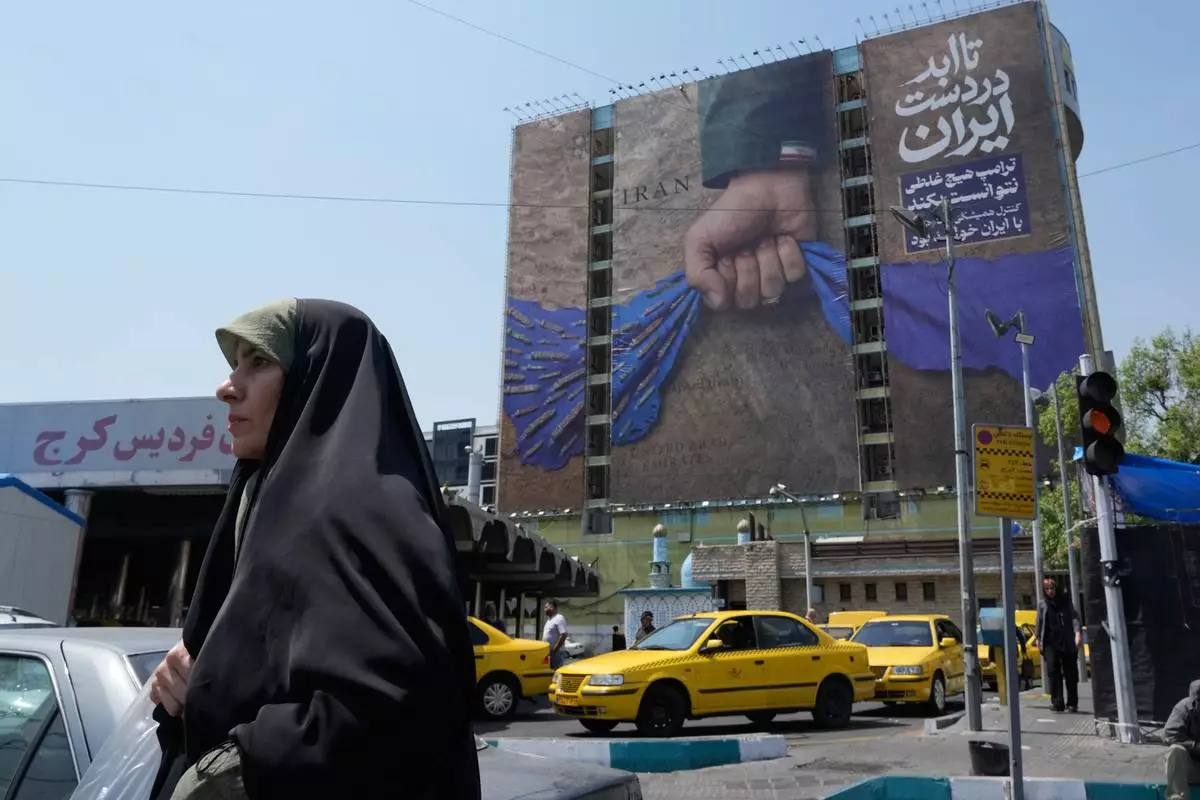
A woman walks past a billboard that shows a graphic depicting a military personnel's hand holding the Strait of Hormuz in his fist with signs which read in Farsi: "In Iran's hands forever," "Trump couldn't do a damn thing," " The control of Strait of Hormuz will be Iran's forever," in Vanak Square, in northern Tehran, Iran, Thursday, April 16, 2026. (AP Photo/Vahid Salemi)
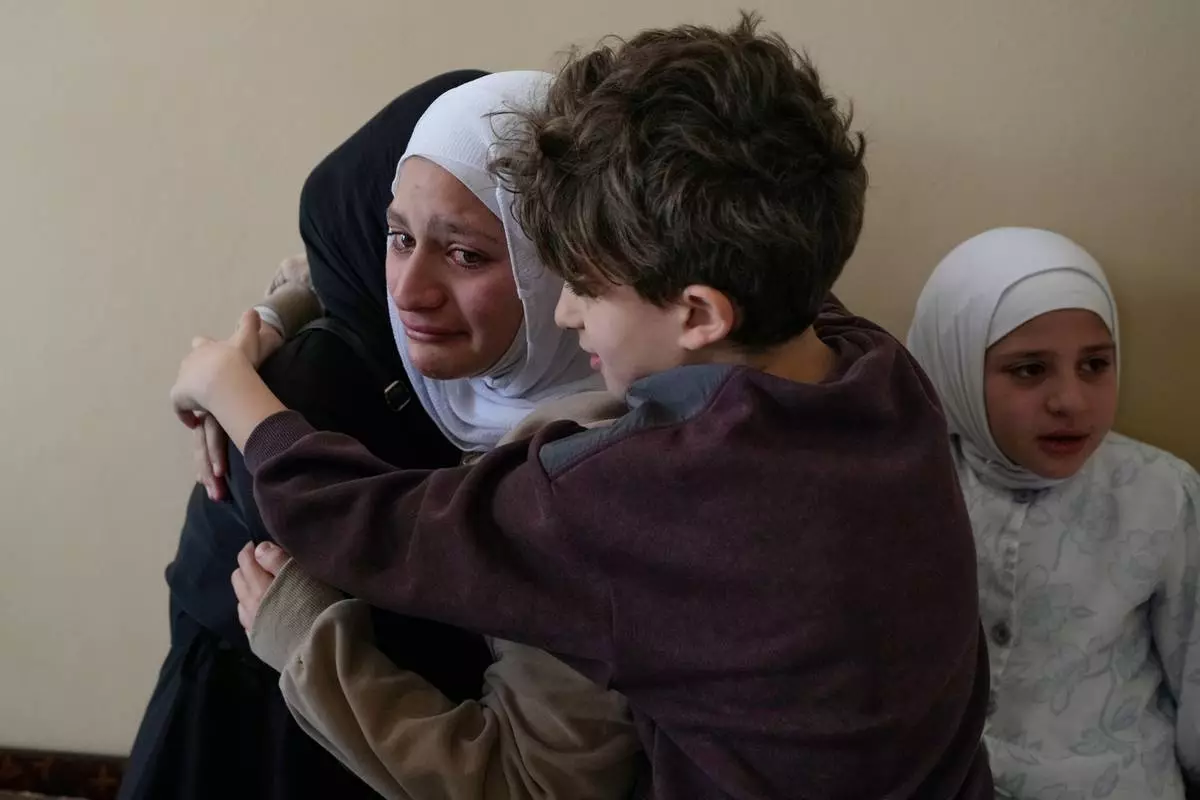
Relatives of Ghadir Baalbaki, 19, who was killed on Tuesday in an Israeli airstrike, mourn during her funeral in the southern port city of Tyre, Lebanon, Wednesday, April 15, 2026. (AP Photo/Hussein Malla)
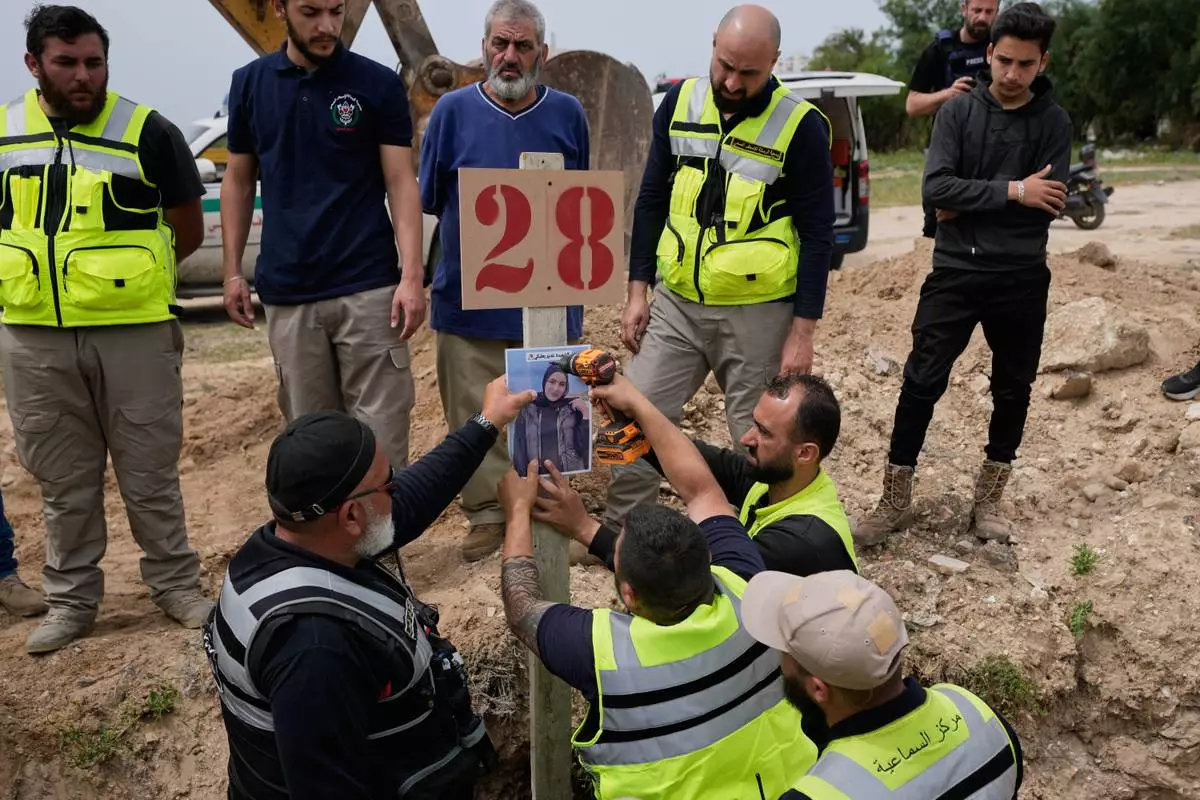
Paramedics attach a portrait over the grave of Ghadir Baalbaki, 19, who was killed on Tuesday in an Israeli airstrike, at a temporary mass grave in the southern port city of Tyre, Lebanon, Wednesday, April 15, 2026. (AP Photo/Hussein Malla)
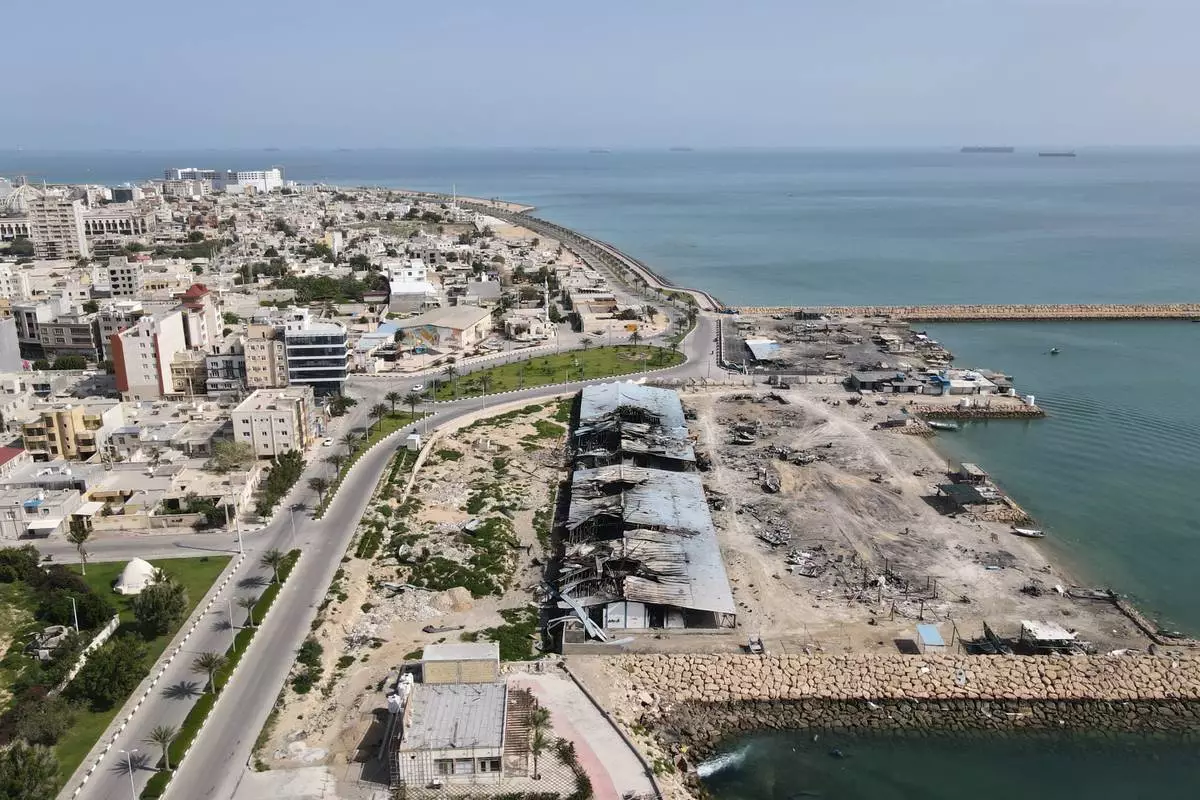
Backdropped by ships in the Strait of Hormuz, damage, according to local witnesses caused by several recent airstrikes during the U.S.-Israel military campaign, is seen on a fishing pier in the port of Qeshm island, Iran, Monday, April 13, 2026. (AP Photo/Asghar Besharati)
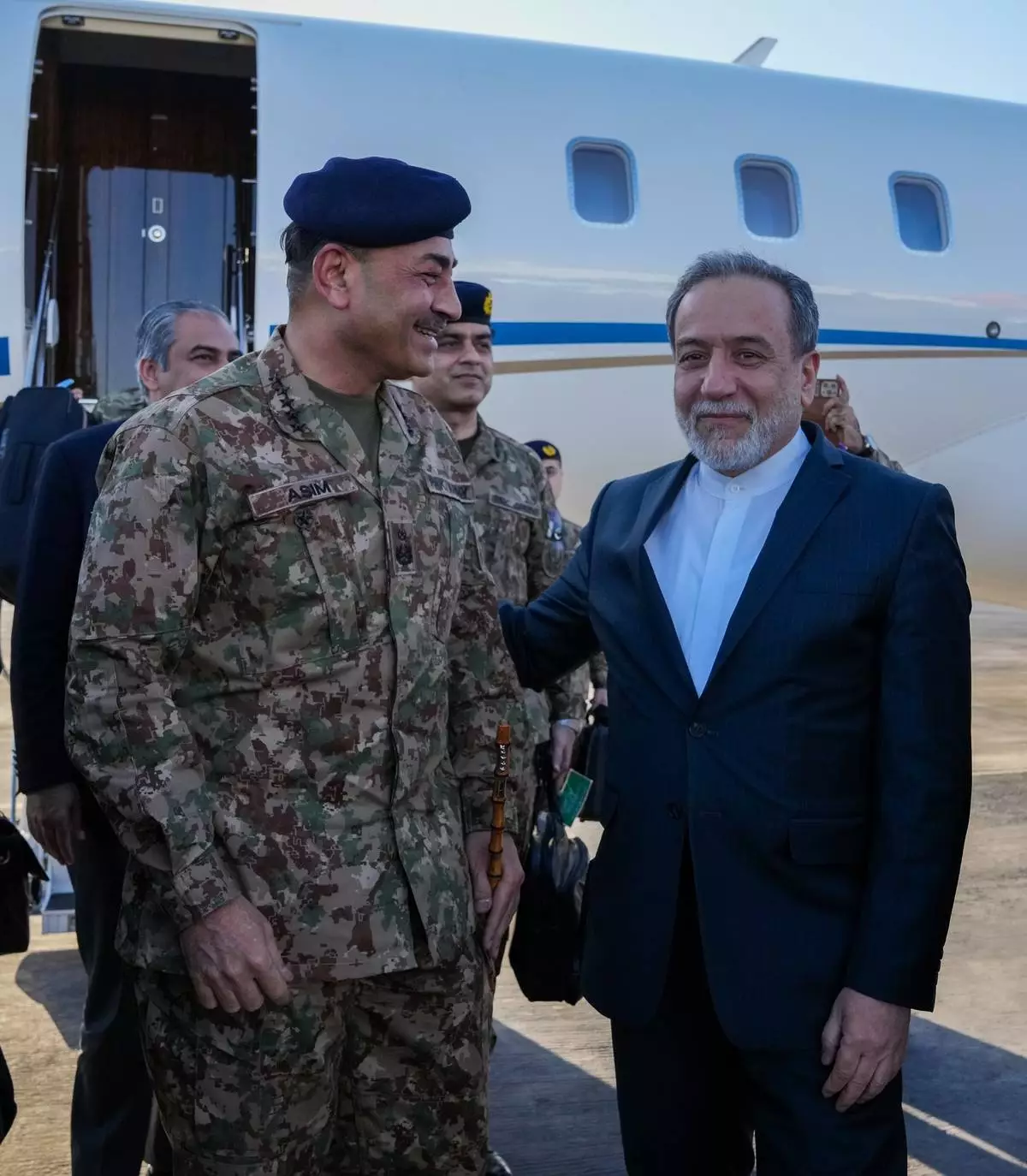
In this photo released by the Iranian Foreign Ministry, Pakistan's Army Chief Field Marshal Gen. Asim Munir, left, is welcomed by Iranian Foreign Minister Abbas Araghchi upon his arrival in Tehran, Wednesday, April 15, 2026. (Iranian Foreign Ministry via AP)
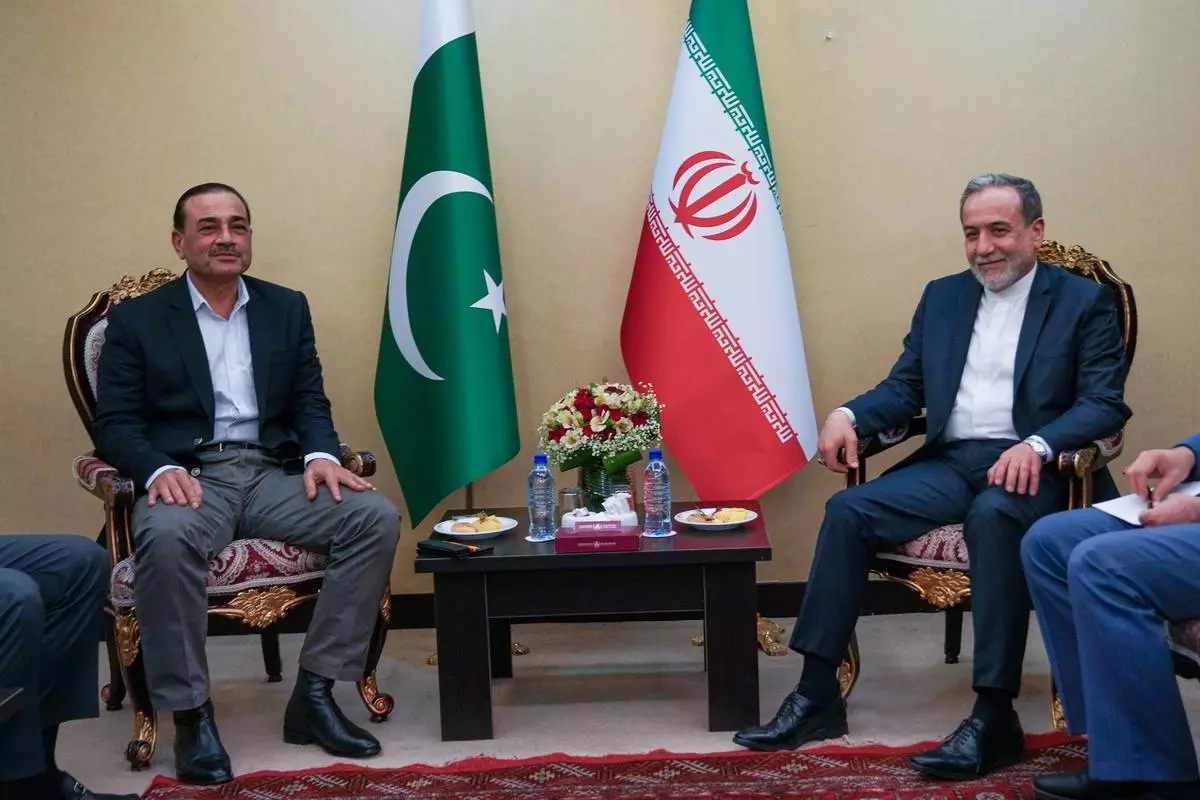
In this photo released by the Iranian Foreign Ministry, Iranian Foreign Minister Abbas Araghchi, right, meets with Pakistan's Army Chief Field Marshal Gen. Asim Munir in Tehran, Wednesday, April 15, 2026. (Iranian Foreign Ministry via AP)