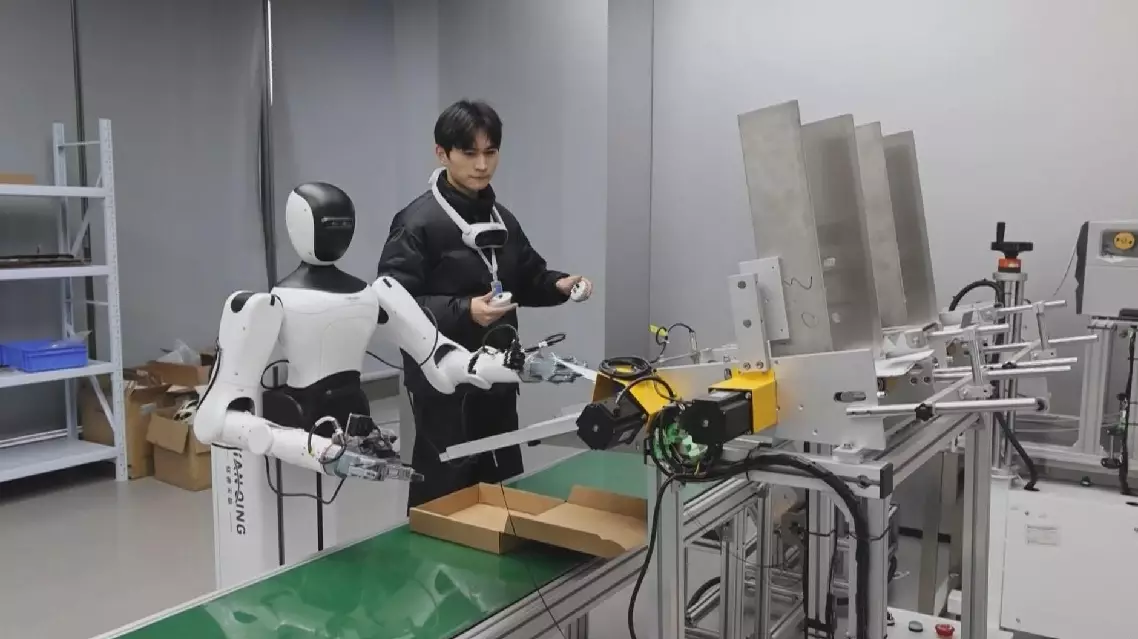
China has successfully initiated the world's first international standard in the field of embodied intelligence - Humanoid Robot Datasets, in the International Organization for Standardization (ISO), said Standardization Administration of China (SAC) on Friday.
In the meantime, China also saw the establishment of the first working group within the organization convened by a Chinese expert, according to SAC.
Wang Zhenlin, head of the China Mirror Committee of the ISO Technical Committee 299 (Robotics), highlighted the significance of the two milestones for China.
"Most of the discourse power in the field of robotics is in the hands of developed countries. In the past, we often followed other countries' standards and remained in a passive position, simply adapting to international rules. This time, we have achieved two historic breakthroughs. The first breakthrough is filling the gap in formulating international standards for humanoid robots. The second is helping establish a working group for international robot standards," he said.
The newly approved international standard project draws on the content of China's standard for humanoid robot datasets, which is currently under development.
Experts from major countries around the world will join hands to participate in the development of this standard as well as other standards in the field of humanoid robots.
"If we compare humanoid robots to humans in the learning process, then datasets serve as their 'textbooks' and 'exercise banks.' Robots are not born with the ability to work or walk; all their skills are acquired through learning. Only through thousands of demonstration cases can they gradually master skills. In essence, a dataset records various multimodal data from the robot's or a human's learning and task-performing processes," said Wang. These data mainly include environmental perception data, ontology state data, and demonstration data from human beings. In the development of humanoid robots, the datasets play the key role of foundation and underlying rules.
"We want to inform research and development institutions around the world how to collect, store, and label datasets for humanoid robots. We often boast of advanced algorithms and excellent hardware, but without strong data support, everything is mere empty talk," said Wang.
China initiates world's first ISO international standard for humanoid robot datasets
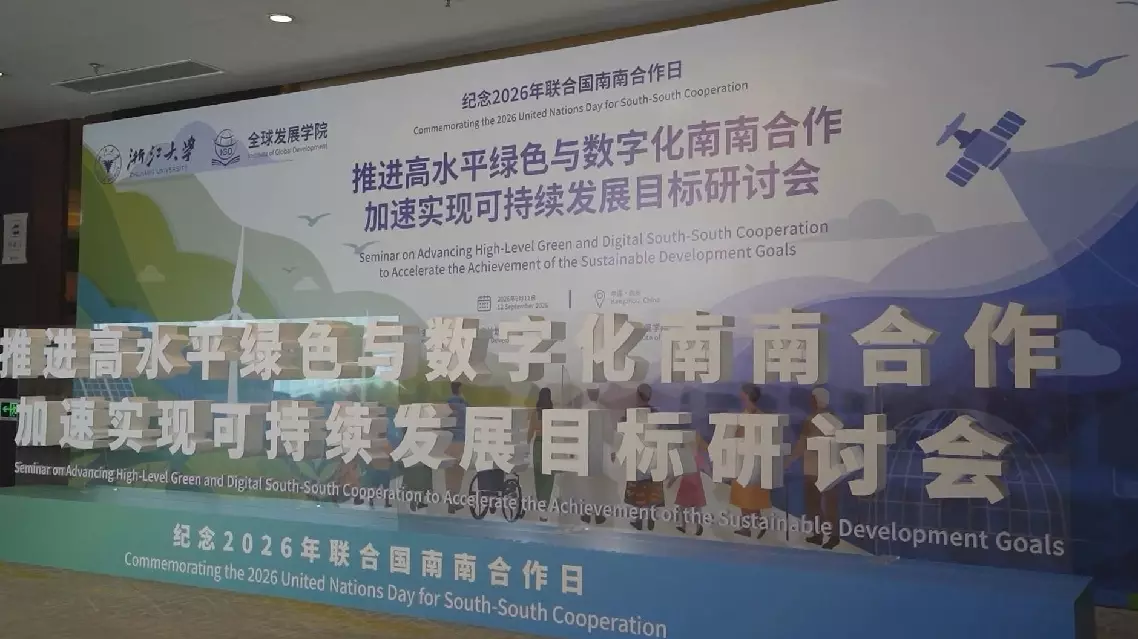
The United Nations Development Program (UNDP) and China have implemented 39 South-South cooperation projects since 2011, benefiting nearly 20 million people across 26 countries, the UNDP China office said at an event marking the UN Day for South-South Cooperation.
The progress was released on Saturday in Hangzhou City, east China's Zhejiang Province, at a seminar attended by about 100 representatives from government agencies, academia and private sector. Participants discussed new pathways for sustainable development under the principle of "leaving no one behind."
Supported by Chinese funding, including the Global Development and South-South Cooperation Fund, the projects have helped rebuild homes and schools in climate-disaster-hit areas, helped children return to school, provided vocational training in multiple countries, offered targeted assistance to poor families, and promoted green technology for sustainable development in the Global South.
"Through cooperation, countries can collectively respond to global challenges that no one country can navigate alone. Notably, this spirit of cooperation has been reflected in China's increasing international development engagements. UNDP is proud to be a partner on this journey, working with China to advance international development cooperation that builds a more sustainable future while benefiting the most vulnerable," said Stefan Liller, UNDP's Resident Representative in China, in his address.
Participants at the seminar noted that cooperation with China focuses on concrete practice rather than abstract theories or concepts. They said China's rich experience and expertise in poverty reduction, industrial upgrading and digital transformation are increasingly being shared internationally through various forms of cooperation.
Addressing digital divide and other new challenges, participants called for ensuring that artificial intelligence and digital transformation create opportunities for all, rather than exacerbating or breeding inequality.
"China's is so recent and so vivid and so very much understood by its own people and its government and that gives it, I think, a unique platform from which to share with the rest of the world the climate transition, the energy transition, education, jobs and social protection. Each of these are areas where we are already working in that triangularity between a partner country, China, and the United Nations. And we really want to double down on that now," said Stephen Jackson, United Nations Resident Coordinator in China.
UNDP, China mark South-South Cooperation Day