DELTA, British Columbia--(BUSINESS WIRE)--Apr 17, 2026--
Mangrove Lithium announced the opening of its first commercial lithium refining facility in Delta, British Columbia – the first of its kind in North America – marking a major milestone in establishing a secure, domestic lithium supply chain for Canada and the North American market.
This press release features multimedia. View the full release here: https://www.businesswire.com/news/home/20260416569633/en/
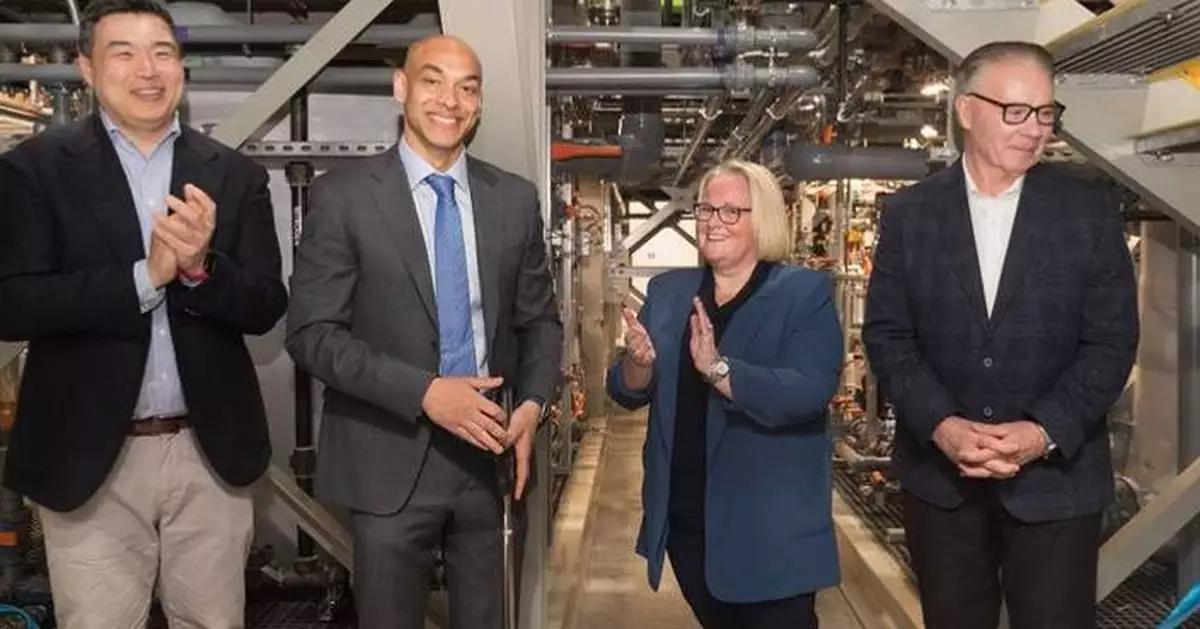
Mangrove marked the milestone with a ribbon cutting at its new headquarters and site of the Single Stack Plant (SSP), in Delta, British Columbia. Speakers included Mangrove Lithium CEO and Founder Dr. Saad Dara, Federal Minister and Member of Parliament for Delta Jill McKnight, InBC Chief Investment Officer Thomas Park, and Delta Mayor George Harvie, with BC Premier David Eby providing a video message recognizing the achievement and the importance of domestic lithium processing in Canada’s energy transition.
A First for North America and a Milestone for Canadian Energy Security
The commissioning of the plant represents a critical step in establishing a Canadian-based, scalable refining pathway that can support the continent’s electrification goals.
Mangrove’s facility uses the company’s proprietary electrochemical technology to convert extracted lithium into battery-grade material more economically, flexibly, and sustainably than incumbent chemical methods. With a 1,000 tonne-per-year (1 ktpa) nameplate capacity, the plant can produce enough battery-grade lithium to support approximately 25,000 electric vehicles per year.
Today, the majority of global lithium refining takes place overseas, creating bottlenecks and adding volatility to supply chains. This reliance poses significant challenges to North American energy security as EV adoption accelerates and jurisdictions race to localize battery and critical mineral supply.
Foundation for Canada’s First Mine-to-Cathode Lithium Supply Chain
The Delta facility's commercial launch is the foundation for a more ambitious step: Mangrove has announced plans for a facility in Eastern Canada that will expand Canada’s lithium supply through a spodumene processing and lithium refining operation. The new facility will be able to supply 500,000 EVs annually. To advance the Eastern Canada facility, engineering and spodumene piloting studies are being supported by a conditionally approved contribution funding of up to $21.88 million CAD from Natural Resources Canada (NRCan) through its Critical Minerals Research, Development and Demonstration (“CMRDD”) Program.
As part of this expansion, Mangrove has signed a Memorandum of Understanding with Élévra to secure spodumene feedstock from the North American Lithium (NAL) mine in Quebec, creating a clear pathway towards Canada’s first mine-to-cathode lithium supply chain. This integration allows Canada to capture more value from its natural resources, strengthens domestic battery production capabilities, and enhances national energy resilience.
“This is a landmark moment not just for Mangrove, but for Canada,” said Dr. Saad Dara, CEO and Founder of Mangrove Lithium. “By commissioning the first commercial electrochemical lithium refinery in North America, we are proving that lithium can be refined domestically, sustainably, and competitively. This facility is an important step towards a fully Canadian lithium supply chain, one that strengthens our energy security, accelerates the transition to EVs, and positions Canada as a global leader in critical mineral processing.”
“Canada is leveraging our critical mineral resources – including our lithium – to unlock supply chain security, job creation, and clean energy innovation,” said the Honourable Tim Hodgson, Minister of Energy and Natural Resources. “Mangrove Lithium’s new headquarters will house North America’s first commercial electrochemical lithium refining facility – exactly the type of cutting-edge, sovereign Canadian project we need. By supporting projects like these, our new government is advancing Canada’s low-carbon potential, creating new careers, strengthening our security, and creating reliable Canadian jobs in an uncertain time.”
“Across the country, we are seeing the results of Canada’s commitment to building a world‑class critical minerals ecosystem,” said the Honourable Jill McKnight, Minister of Veterans Affairs and Associate Minister of National Defence. “Mangrove Lithium’s new facility positions Canada as a hub for refining battery‑grade materials right here in Delta, reinforcing our economic security and supporting Canadian innovation. Canada has what the world wants, and we are making strides to use our mineral wealth as a basis to diversify our clean energy opportunities and create stable, long-term careers in British Columbia and beyond.”
“Today’s opening marks a turning point for Canada’s critical minerals value chain,” said the Honourable Jill McKnight, Minister of Veterans Affairs and Associate Minister of National Defence and Member of Parliament for Delta. “By commissioning North America’s first commercial electrochemical lithium refining facility, Mangrove Lithium is helping Canada move from raw potential to real production—here at home. This project strengthens our energy security, supports good Canadian jobs, and advances a Made-in-Canada battery supply chain that will power the clean economy and deliver lasting benefits for Canadians.”
About Mangrove Lithium
Mangrove Lithium is a lithium refining technology company headquartered in Delta, British Columbia, Canada, with a mission to build scalable, battery-grade lithium production across North America and beyond. The Company has developed a patented electrochemical refining technology that converts diverse feedstocks into high-purity battery-grade lithium hydroxide and carbonate. Mangrove’s platform enables economic lithium production and is designed to integrate seamlessly into upstream and downstream supply chains. Backed by Canada Growth Fund, Breakthrough Energy Ventures, BMW i Ventures, Mitsubishi Corporation, Asahi Kasei, Orion Industrial Ventures, Export Development Canada and BDC Capital, Mangrove Lithium is advancing lithium infrastructure to meet the global demand for secure, domestic battery production. Learn more at www.mangrovelithium.com.
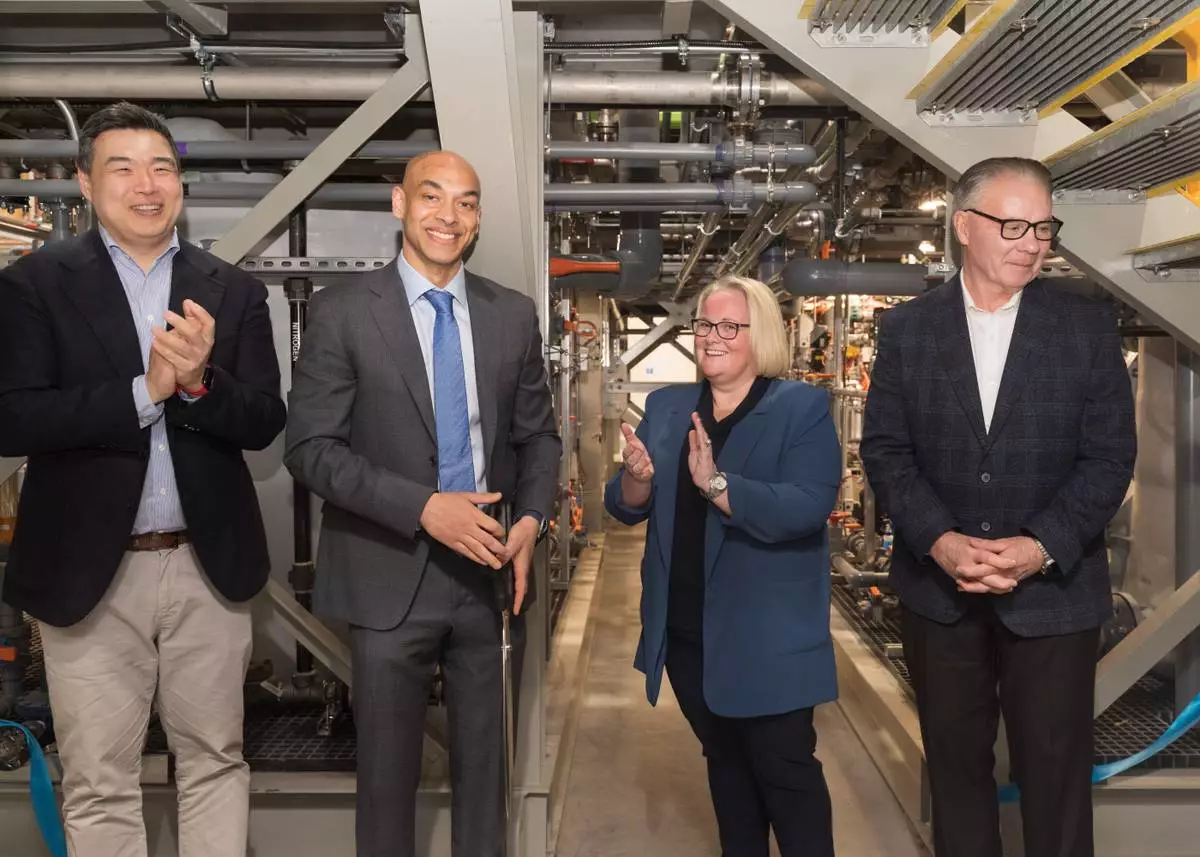
Mangrove's electrochemical lithium refining facility ribbon cutting ceremony in Delta, B.C. Pictured from L to R: InBC Chief Investment Officer Thomas Park, Mangrove Lithium CEO Saad Dara, Delta MP Jill McKnight, and Delta Mayor, George V. Harvie. Photo by Avrinder Dhillon/Mangrove Lithium