JOHANNESBURG (AP) — A son of former Zimbabwean President Robert Mugabe avoided being charged with attempted murder on Friday after reaching a plea deal in which he admitted to pointing a gun and breaking immigration laws in South Africa.
Bellarmine Chatunga Mugabe and his co-accused, Tobias Mugabe Matonhodze, have been detained since mid-February, facing attempted murder charges following the shooting of Sipho Mahlangu, whom the police identified as an employee at the home. He was hospitalized for his injuries.
Mugabe, 28, pleaded guilty to “the offense of pointing anything which is likely to lead a person to believe it is a firearm” in a separate incident and to illegally entering and staying in South Africa. He is the youngest son of the former leader of Zimbabwe, who died in 2019, and Grace Mugabe, his second wife.
Matonhodze pleaded guilty to five charges, including attempted murder, possession of an unlawful firearm and ammunition, defeating ends of justice and illegal immigration.
The pair’s legal representative, Sinenhlanhla Mnguni, told reporters outside court that the state and the defense had entered into a Section 112 plea deal after initial plea and sentence negotiations collapsed. Under South Africa's Criminal Procedure Act, this kind of deal avoids a full trial.
Defense lawyer Advocate Laurence Hodes argued for mercy in sentencing, pointing out that both Mugabe and Matonhodze, who are cousins, had no prior convictions, had compensated their victim financially, and were able to pay any fine imposed by the court.
However, a police investigator brought in as a witness told the court that the police were still looking for the gun used in the incident and that the accused, who "were there at that time when the firearm was fired and injured the victim,” were not assisting them.
“The accused shows no remorse in assisting the police in any way to point out the firearm. They know where the firearm is," Lt. Col. Raj Ramchunder told the court.
The court accepted the guilty pleas and set the sentencing for April 24.
In 2017, Grace Mugabe allegedly attacked Gabriella Engels, a young model, with an extension cord that cut her forehead at a Johannesburg hotel. The government awarded her diplomatic immunity, which was strongly criticized by opposition parties and human rights organizations, allowing her to depart South Africa despite calls for her prosecution.

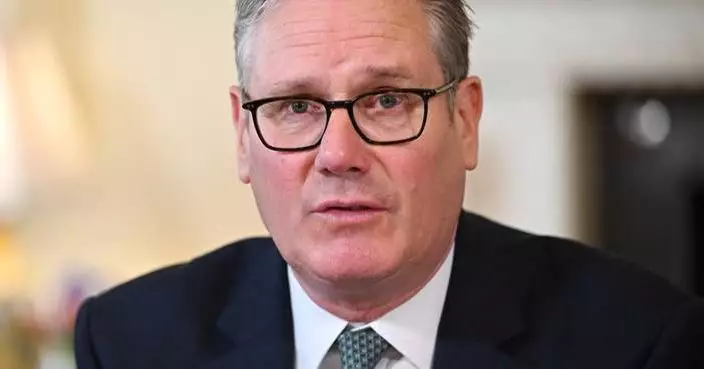
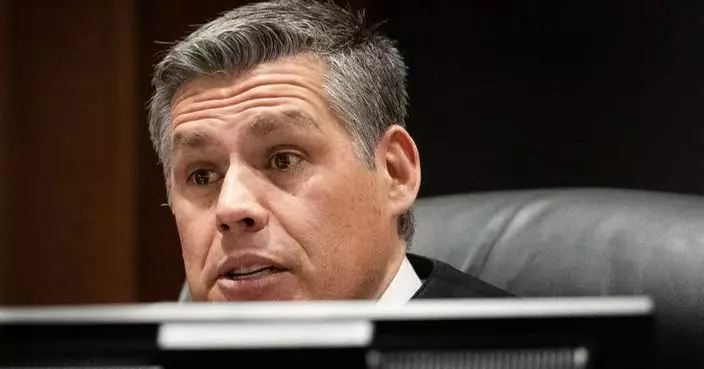
Bellarmine Chatunga Mugabe, left, son of former Zimbabwe President Robert Mugabe, appears with co-accused Tobias Mugabe Matonhodze at the Alexandra Magistrates Court in Johannesburg, South Africa, Friday, April 17, 2026, after submitting partial guilty pleas on separate charges linked to a February shooting at his home. (AP Photo/Kayleen Morgan)
NEW YORK (AP) — Oil prices dropped more than 10% Friday, and U.S. stocks raced toward another record after Iran said the Strait of Hormuz is open again for commercial tankers carrying oil from the Persian Gulf to customers worldwide.
The S&P 500 leaped 1.5% as Wall Street rallied to the finish of a third straight week of big gains, its longest streak since Halloween. A freer flow of oil would take pressure off prices not only for gasoline but also for groceries and all kinds of other products that get moved by vehicles. It could even ultimately help people pay less on credit-card interest or mortgage bills.
The Dow Jones Industrial Average climbed 1,130 points, or 2.3%, as of 12:52 p.m. Eastern time, while the Nasdaq composite was 1.7% higher
The U.S. stock market has jumped more than 12% since hitting a bottom in late March on hopes the United States and Iran can avoid a worst-case scenario for the global economy despite their war. Friday’s reopening of the Strait of Hormuz, which may only be temporary, is the clearest signal yet for optimism, and President Donald Trump said late Thursday that the war “should be ending pretty soon.”
The price for a barrel of benchmark U.S. crude plunged immediately after Iran’s foreign minister, Abbas Araghchi, posted on X that the passage for all commercial vessels through the strait “is declared completely open” as a ceasefire appears to be holding in Lebanon. He said it would stay open for the remaining period of the ceasefire, and U.S. oil tumbled 12.2% to $83.18 per barrel.
Brent crude, the international standard, dropped 10.4% to $89.01 per barrel. To be sure, it remains above its $70 price from before the war, indicating some caution is still embedded in financial markets.
Several times since the war began, optimism on Wall Street has quickly swung to doubt about a possible end to the fighting. That in turn has caused vicious and sudden swings of prices for everything from stocks to bonds to oil.
Minutes after the Iranian foreign minister’s announcement of the reopening of the Strait of Hormuz, Trump said on his social media network that the U.S. Navy’s blockade of Iranian ports remains “in full force” until both sides reach a deal on the war. He, though, also said that “should go very quickly in that most of the points are already negotiated” and emphasized it by using all capital letters.
Companies with big fuel bills soared to some of Wall Street’s biggest gains following the easing of oil prices.
United Airlines surged 9.2%. On Thursday, the head of the International Energy Agency had said that Europe has “maybe six weeks or so” of remaining jet fuel supplies.
Operators of cruise ships, which guzzle fuel, also steamed higher. Norwegian Cruise Line jumped 8.1%, and Royal Caribbean Group gained 10.3%.
Housing and auto-related companies also got some relief from the drop in oil prices.
With less threat of high inflation hurting the economy, a sustained drop in oil prices could convince the Federal Reserve to resume its cuts to interest rates to invigorate the economy. The yield on the 10-year Treasury sank to 4.23% from 4.32% late Thursday, and lower yields can bring down rates for mortgages and other loans going to U.S. households and businesses.
Builders FirstSource, a supplier of windows and other products, rose 7.8%, and homebuilder Lennar gained 6.1% on hopes that lower mortgage rates will spur more people to buy houses. Carvana climbed 8.2% because lower loan rates can get more customers into new autos.
A strong start to the earnings reporting season for big U.S. companies has also helped to support the U.S. stock market, and several more financial companies joined the list of companies delivering bigger profits for the start of 2026 than analysts expected.
State Street rose 4.7%, and Fifth Third Bancorp added 3% after both reported better results for the latest quarter than expected.
They helped offset a 9.7% drop for Netflix, which fell even though it likewise delivered a better profit than expected. It did not raise its forecast for revenue growth for the full year, which analysts said may have disappointed some investors.
It also said Reed Hastings, cofounder and chairman of the streaming company, will step down from its board of directors in June when his term expires.
In stock markets abroad, stock indexes leaped in Europe following Iran’s announcement about the Strait of Hormuz. France’s CAC 40 jumped 2%, and Germany’s DAX returned 2.3%.
In Asia, where trading finished for the day before the announcement, indexes were weaker. Japan’s Nikkei 225 lost 1.8%, and Hong Kong’s Hang Seng fell 0.9% for two of the bigger losses.
AP Business Writers Chan Ho-him and Matt Ott contributed to this report.
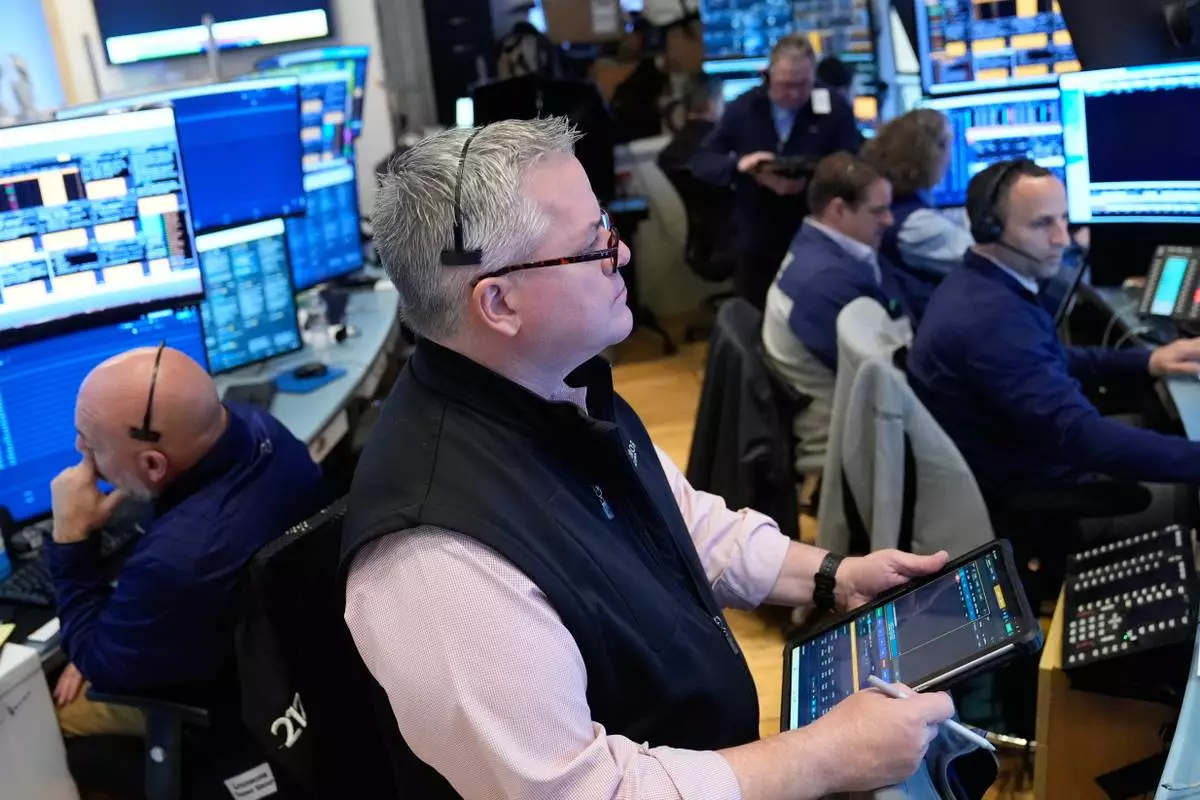
People work on the floor at the New York Stock Exchange in New York, Monday, April 13, 2026. (AP Photo/Seth Wenig)
People work on the floor at the New York Stock Exchange in New York, Monday, April 13, 2026. (AP Photo/Seth Wenig)

People work on the floor at the New York Stock Exchange in New York, Monday, April 13, 2026. (AP Photo/Seth Wenig)
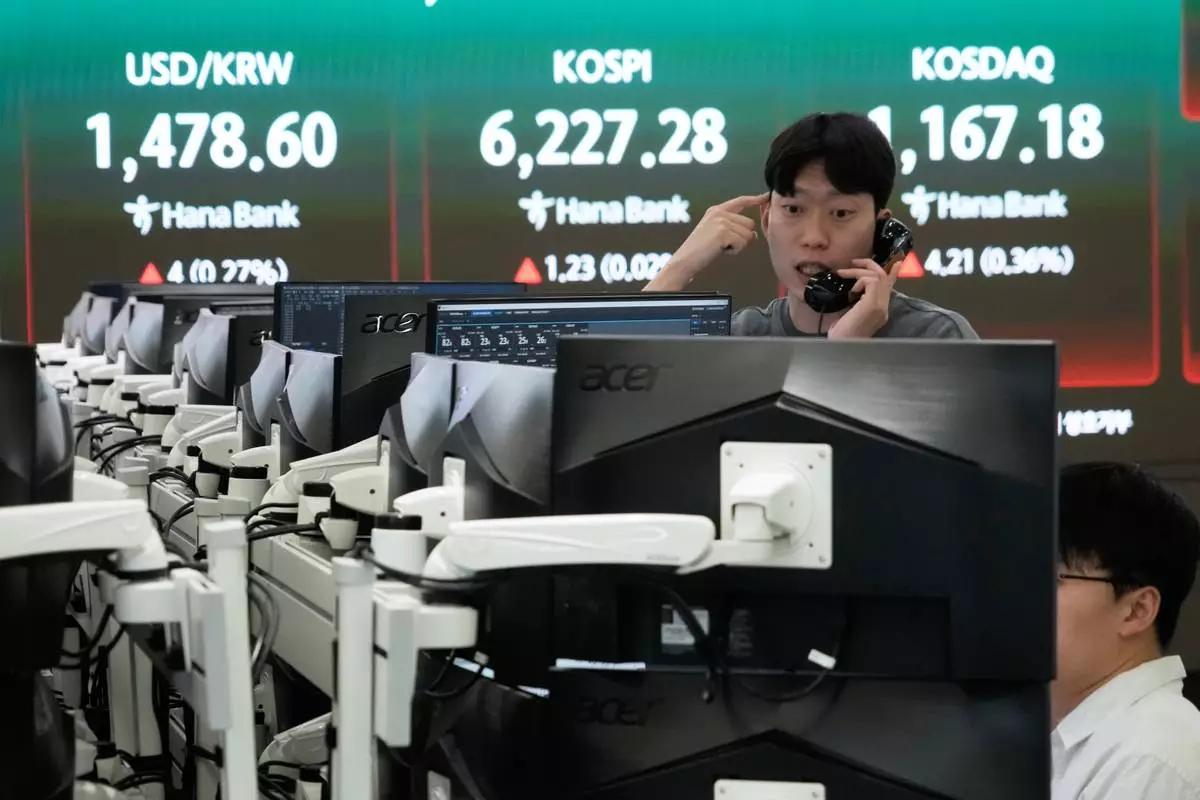
A currency trader talks on the phone near a screen showing the Korea Composite Stock Price Index (KOSPI), top center, and the foreign exchange rate between U.S. dollar and South Korean won, top center left, at the foreign exchange dealing room of the Hana Bank headquarters, in Seoul, South Korea, Friday, April 17, 2026. (AP Photo/Ahn Young-joon)
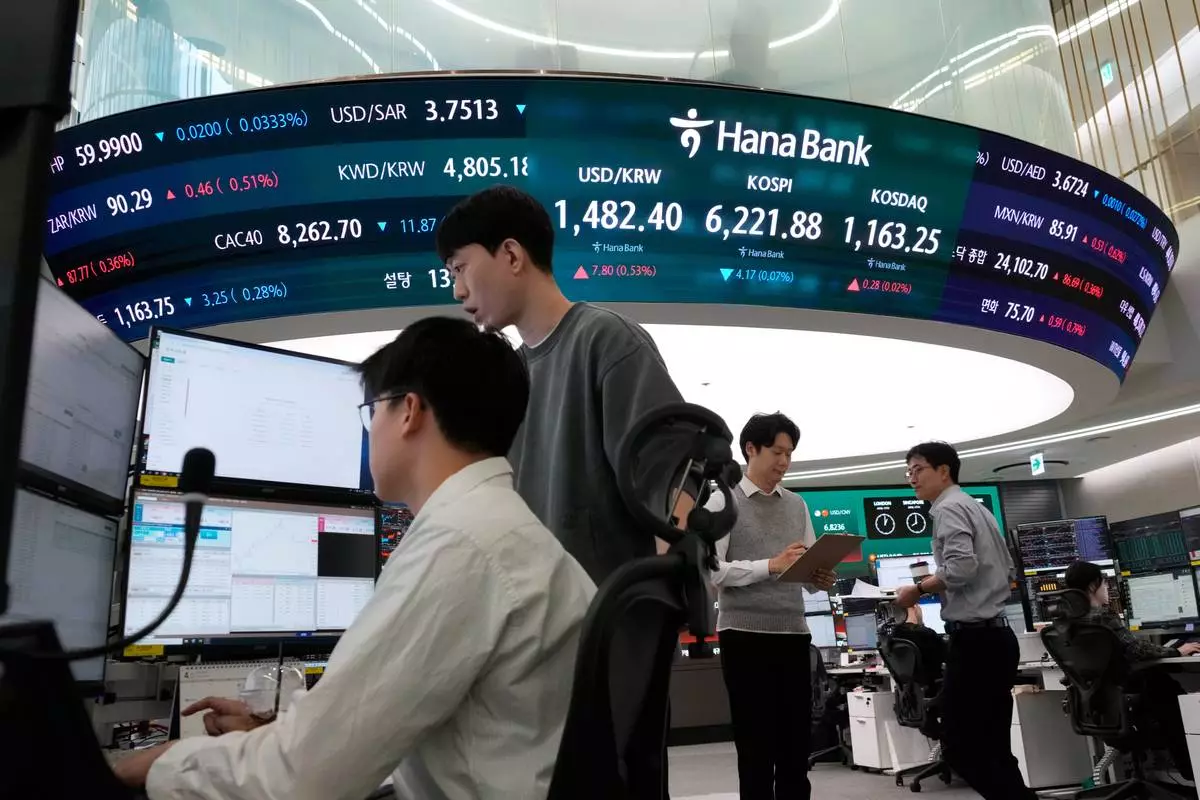
Currency traders work near a screen showing the Korea Composite Stock Price Index (KOSPI), top center, and the foreign exchange rate between U.S. dollar and South Korean won, top center left, at the foreign exchange dealing room of the Hana Bank headquarters, in Seoul, South Korea, Friday, April 17, 2026. (AP Photo/Ahn Young-joon)
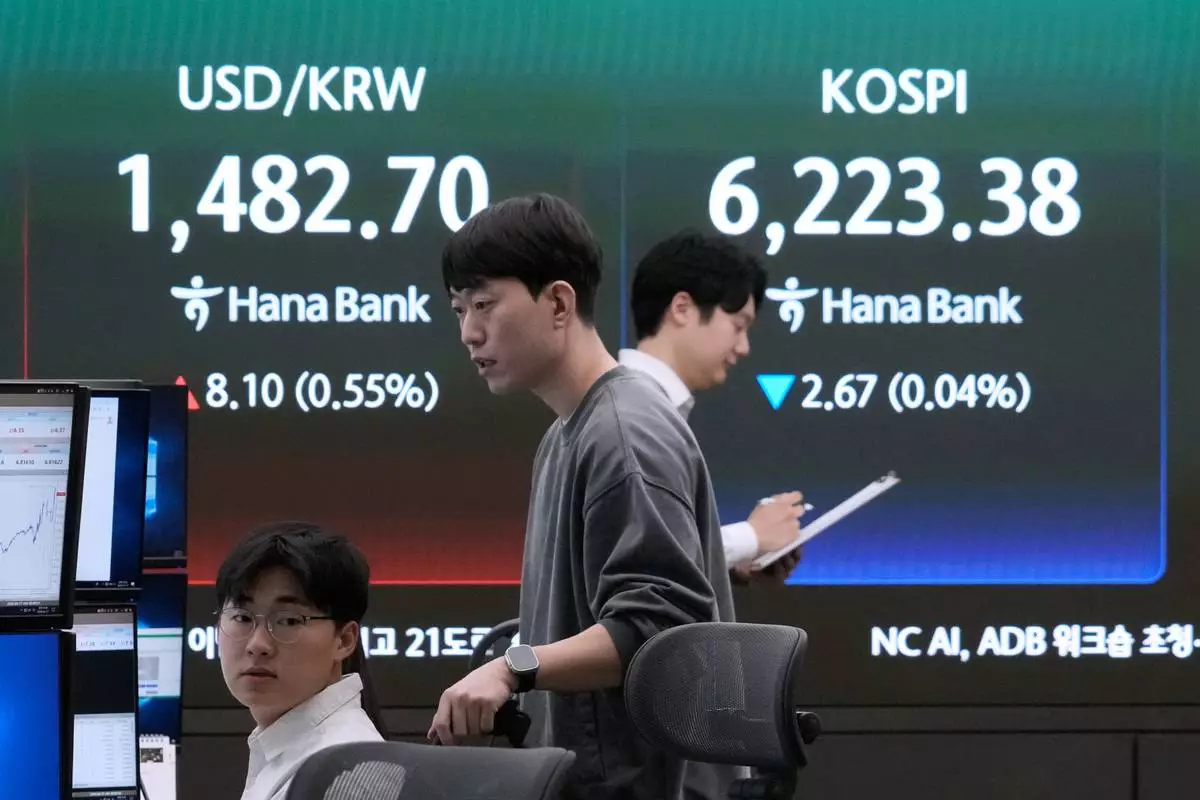
Currency traders work near a screen showing the Korea Composite Stock Price Index (KOSPI), right, and the foreign exchange rate between U.S. dollar and South Korean won at the foreign exchange dealing room of the Hana Bank headquarters, in Seoul, South Korea, Friday, April 17, 2026. (AP Photo/Ahn Young-joon)