Skip to Content Facebook Feature Image

A country-by-country glance at Pope Leo XIV's trip to Africa

News

A country-by-country glance at Pope Leo XIV's trip to Africa
News

News

A country-by-country glance at Pope Leo XIV's trip to Africa

2026-04-10 13:08 Last Updated At:13:20

Pope Leo XIV’s four-nation, 11-day trip to Africa is so dizzying in its complexity it recalls some of the globetrotting odysseys of St. John Paul II in his early years.

Themes Leo is expected to raise include Christian-Muslim coexistence, the over-exploitation of the region's natural and human resources, corruption and migration.

Here’s a country-by-country look at each destination and highlights of the itinerary:

The Algeria stop clearly carries the most personal importance for Leo, given his ties to St. Augustine, the inspiration of his religious order who lived and died there. Leo will visit Annaba, the modern-day Hippo where the 5th century saint was a bishop.

Migration and Christian-Muslim coexistence are expected to be other top themes in Algeria, a former French colony which is a majority Sunni Muslim nation on North Africa’s Mediterranean coast. Leo will pay homage to migrants killed in shipwrecks trying to reach Europe and will visit the Great Mosque in Algiers.

Last year, Algerian legislators voted to declare France’s colonization of the North African country a crime, approving a law that calls for restitution of property taken by France during its 130-year rule, among other demands seeking to redress historical wrongs.

One of the highlights of Leo’s visit to Cameroon will be a “peace meeting” he will lead in the north-west city of Bamenda on April 16, featuring testimony of a Mankon traditional chief, a Presbyterian moderator, an imam and a Catholic nun.

Cameroon’s western regions have been plagued by fighting since English-speaking separatists launched a rebellion in 2017 with the stated goal of breaking away from the French-speaking majority and establishing an independent English-speaking state. The conflict has killed more than 6,000 people and displaced over 600,000 others, according to the International Crisis Group, a think tank.

The country is also plagued by fighting involving Boko Haram militants in the north, as the Islamic extremist group’s insurgency in neighboring Nigeria has spilled over into Cameroon.

Cameroon sits atop significant reserves of oil, natural gas, cobalt, bauxite, iron ore, gold and diamonds. The extractive sector accounts for nearly a third of the country’s exports, according to the Extractive Industries Transparency Initiative.

But rights groups and the Catholic Church have raised alarms that revenues from extraction rarely reach the rural and indigenous communities that live closest to mining and drilling operations, while foreign companies and a small national elite capture most of the profits.

While French and English companies have long dominated the extraction industry in Cameroon, Chinese companies have moved heavily into the country in recent years, particularly in the gold mining regions of the east.

Last year, United Nations experts reported severe human rights and environmental harms resulting from mercury use in gold mining operations in eastern Cameroon.

The gold mining rush in eastern Cameroon has also led hundreds of children to abandon school to dig for gold, risking their lives at makeshift mines for a dollar’s worth of ore sold on the local black market, according to UNICEF.

In Angola, where around 58% of the population is Catholic, Leo will pray at the Sanctuary of Mama Muxima, a Marian shrine that has become one of the most important Catholic pilgrimage sites in Angola.

The church was first built around the end of the 16th century by the Portuguese after they established a fortress at Muxima. It became a key point in the Portuguese trans-Atlantic human trade as a place where enslaved people were baptized before they were sent on ships to the Americas.

Angola today is the fourth largest oil producer in Africa and among the world’s top 20 producers, according to the International Energy Agency. It’s also the world’s third biggest diamond producer and has significant deposits of gold and highly sought after critical minerals.

But despite its varied natural resources, the World Bank estimated in 2023 that more than 30% of the population lived on less than $2.15 a day.

The country of around 38 million gained independence from Portugal in 1975, but still bears the scars of a devastating civil war that began straight after independence and raged on and off for 27 years before finally ending in 2002. More than half a million people are believed to have been killed.

In Angola, Leo will address young people especially to offer a message of hope and healing, the Vatican said.

The discovery of offshore oil in the mid-1990s transformed Equatorial Guinea’s economy virtually overnight, with oil now accounting for almost half of its GDP and more than 90% of exports, according to the African Development Bank.

Yet more than half of the authoritarian petrostate’s population still live in poverty, the World Bank reported last year.

The former Spanish colony is run by Africa’s longest-serving president, Teodoro Obiang Nguema Mbasogo, who has been in power since 1979 and is accused of widespread corruption and authoritarianism.

Several rights groups, including Human Rights Watch, have documented how revenues have enriched the ruling Obiang family rather than the broader population, where at least 70% of the country’s nearly 2 million people live in poverty.

The country’s government also faces rampant accusations of harassment, arrest and intimidation of political opponents, critics and journalists.

In addition to the negative impacts of the extraction industries, Vatican spokesman Matteo Bruni said Leo would raise issues of corruption and the proper role of governing authorities during the trip.

Associated Press religion coverage receives support through the AP’s collaboration with The Conversation US, with funding from Lilly Endowment Inc. The AP is solely responsible for this content.

Pope Leo XIV attends the Celebration of the Passion of the Lord in St. Peter's Basilica at the Vatican on Catholic Good Friday, Friday, April 3, 2026 (AP Photo/Andrew Medichini)
Pope Leo XIV attends the Celebration of the Passion of the Lord in St. Peter's Basilica at the Vatican on Catholic Good Friday, Friday, April 3, 2026 (AP Photo/Andrew Medichini)
OTREBUSY, Poland (AP) — On rainy spring nights in a forest near the Polish capital, a citizen “Frog Patrol” springs into action — humans helping amphibians survive dangerous road crossings for a chance to enjoy millennia-old mating rituals.

As warmer weather comes to Mlochowski Forest, 30 kilometers (19 miles) west of Warsaw, thousands of toads and frogs wake up from their winter slumber and begin their meticulous spawning journey to the marshes, a few kilometers away.

The females carry the burden of the journey. Male toads here don't really give off princely vibes but travel on the backs of their much larger female partners, tightly holding on to ensure they are not dumped in favor of a rival upon reaching the waters.

While generations of toads and frogs have traveled to these marshes to mate, a road built in the last decade right across their route made the spring journey much more dangerous.

What followed was sheer amphibian slaughter — when the mating season started and the frogs were on the move, thousands would get run over.

Łukasz Franczuk, coordinator of the “Frog Patrol” initiative, recounted the sad scenes from four years ago.

“The frogs were being run over in the hundreds or thousands,” he said. “When you were driving on this road, you could see the decomposing corpses of the frogs. People going to collect the surviving ones were crying, they couldn’t stand to watch what was happening.”

Franczuk and his friends responded by helping locals organize, starting three years ago.

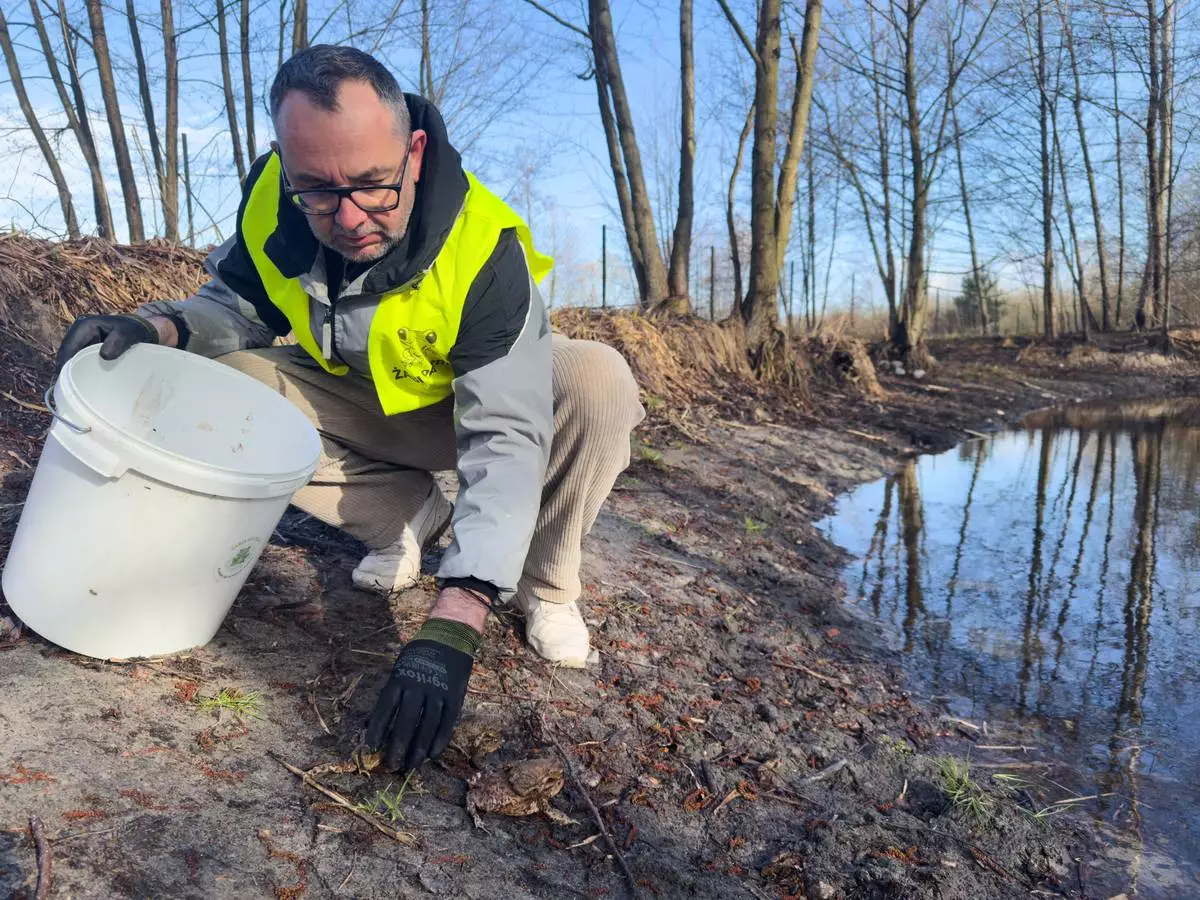
Volunteers would meet every wet, rainy evening as soon as spring starts, fan out along the road by the forest and collect frogs from the roadside, then carry them safely across to the marshes. Frogs breathe through their skin, which must stay humid, so they only move and migrate when it rains.

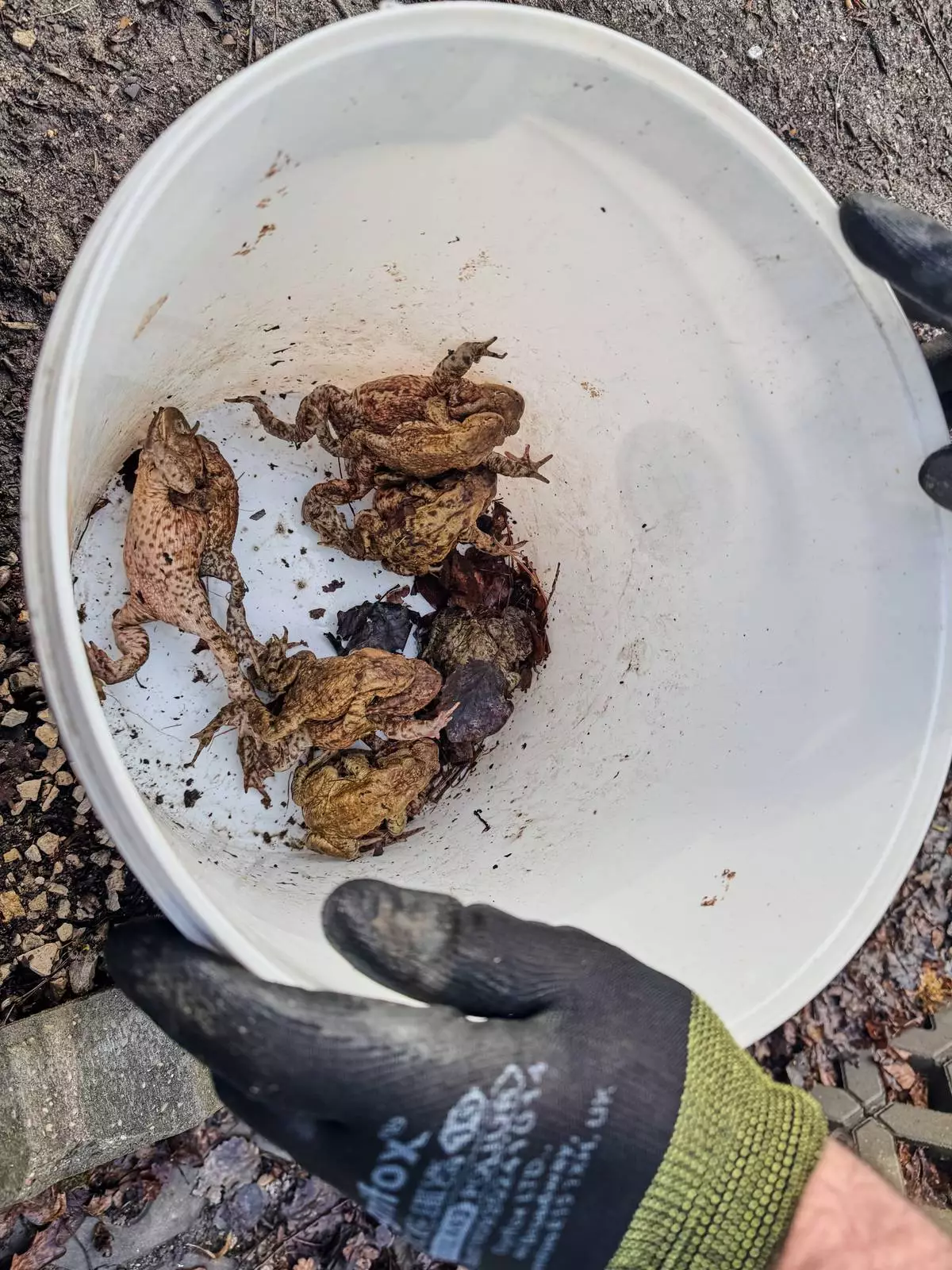
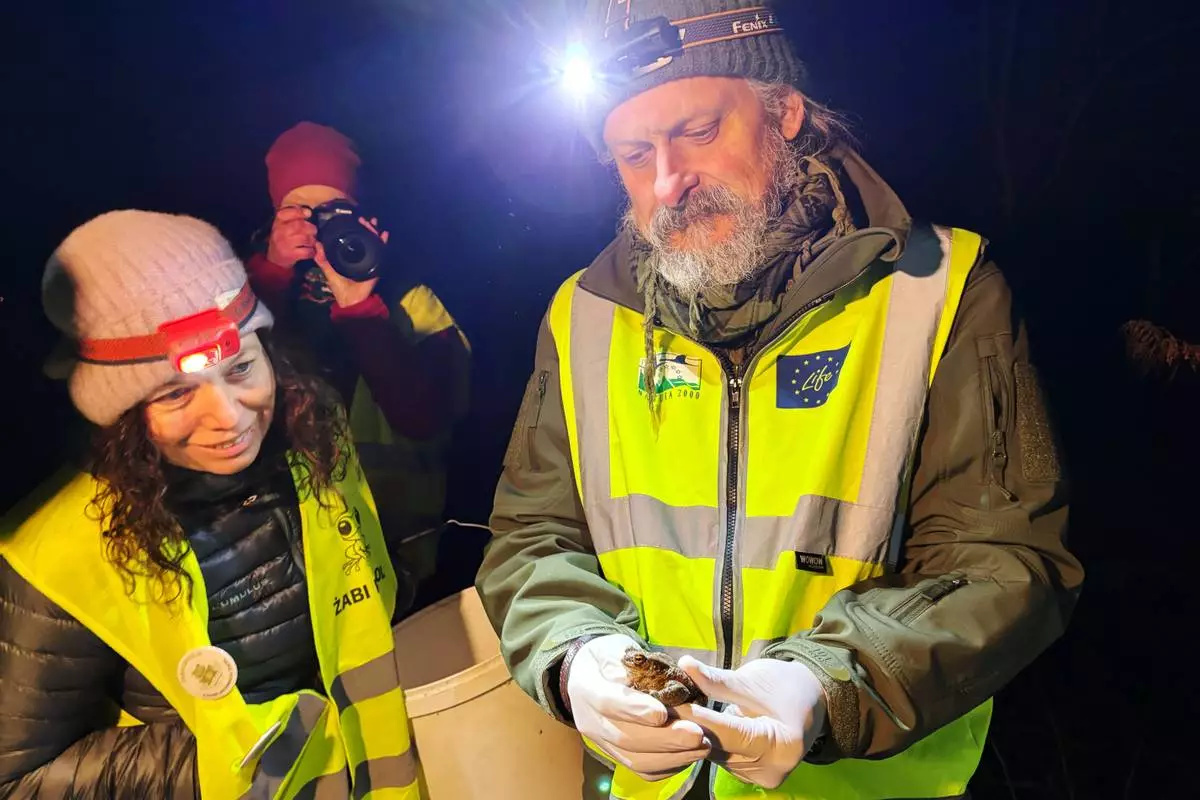
Wearing reflective yellow vests emblazoned with the words “Frog Patrol” and armed with head lamps and buckets, hundreds of volunteers can now be routinely seen out in the evenings during migration season.

Locals, including children, have also started carrying gloves with them during the day, so they can pick up the amphibians if they see them in distress at any time.

“It's really impressive to see whole families with kids walking in the rain, with buckets, in these lovely jackets to make them visible because it's pretty unsafe, this road is narrow, and they carry the frogs from one side of the road to the other,” said Katarzyna Jacniacka, one of the participants.

“When the frogs are migrating, there are a lot of people here,” she added.

For Aleksandra Tkaczyk, another volunteer, this is “the kind of connection with nature about which some of us care deeply.”

Locals say they have saved about 18,000 amphibians since their initiative started.

Biologist Krzysztof Klimaszewski from the Institute of Animal Sciences at the Warsaw SGGW University, who took part in a few of the frog patrols, said that what the locals are doing here is very important because “it actually allows this local population of amphibians to survive.”

Such citizen initiatives to help toads and frogs cross roads built through their natural habitats are not unique to Poland.

In New Hampshire, U.S. volunteers from the Harris Center for Conservation Education save all sorts of amphibians, including salamanders, from being run over by cars. In Bavaria, in southeastern Germany, volunteers from BUND Naturschutz say they rescue up to 700,000 frogs, toads, newts and salamanders every year.

Even in France, where frog legs are a culinary delicacy, local volunteers help the suffering amphibians. In the southern French region of Provence-Alpes-Côte d’Azur, people have installed nets on the roadside to collect the frogs before they head into the dangerous traffic.

And in the Estonian capital of Tallinn, authorities announced in early April the construction of additional frog fences on Tahetorni Street — right on the frogs' springtime migrating route — to guide the amphibians and other animals safely into underground tunnels and avoid getting them killed by traffic.

Toads collected in a bucket after rainy weather before they are transferred to a pond in Otrebusy, Poland, Monday, April 6, 2026. (AP Photo/Rafal Niedzielski)

Toads collected in a bucket after rainy weather before they are transferred to a pond in Otrebusy, Poland, Monday, April 6, 2026. (AP Photo/Rafal Niedzielski)

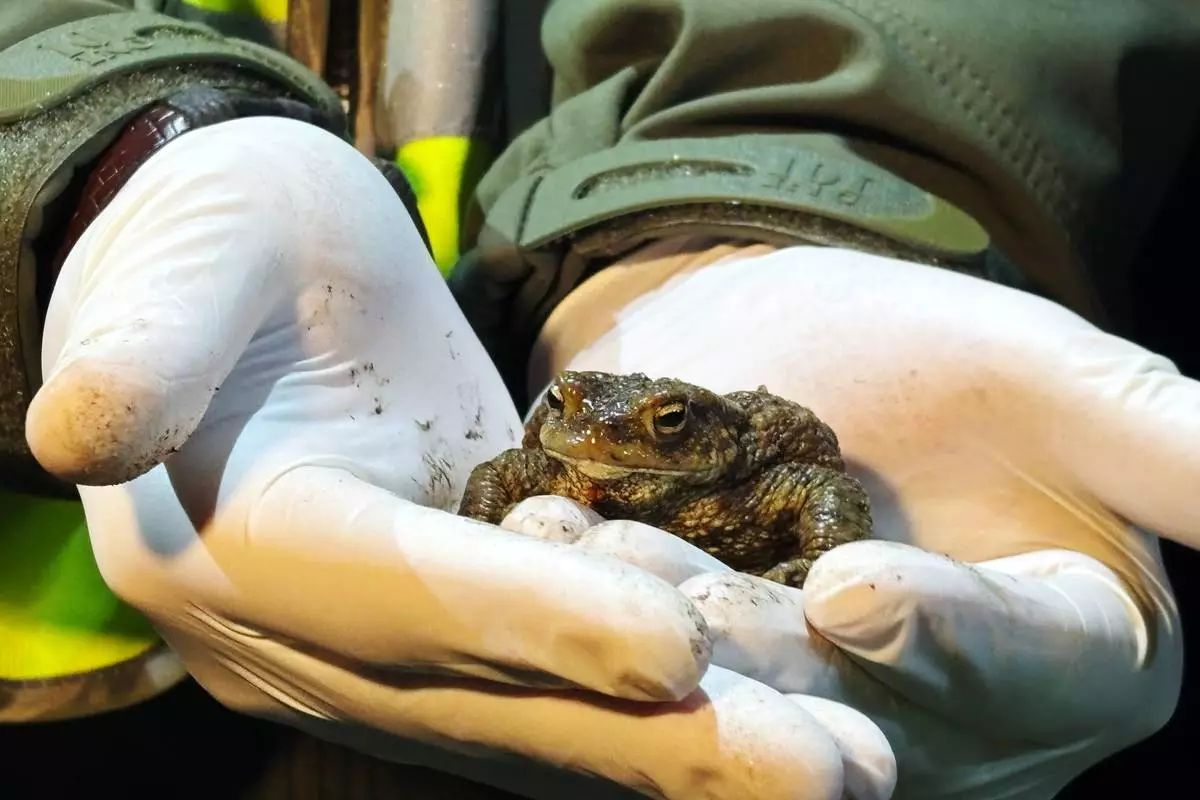
Katarzyna Jacniacka, left, and biologist Krzysztof Klimaszewski examine a common toad during a 'Frog Patrol' in Otrebusy, Poland, Monday, March 30, 2026. (AP Photo/Claudia Ciobanu)

Katarzyna Jacniacka, left, and biologist Krzysztof Klimaszewski examine a common toad during a 'Frog Patrol' in Otrebusy, Poland, Monday, March 30, 2026. (AP Photo/Claudia Ciobanu)

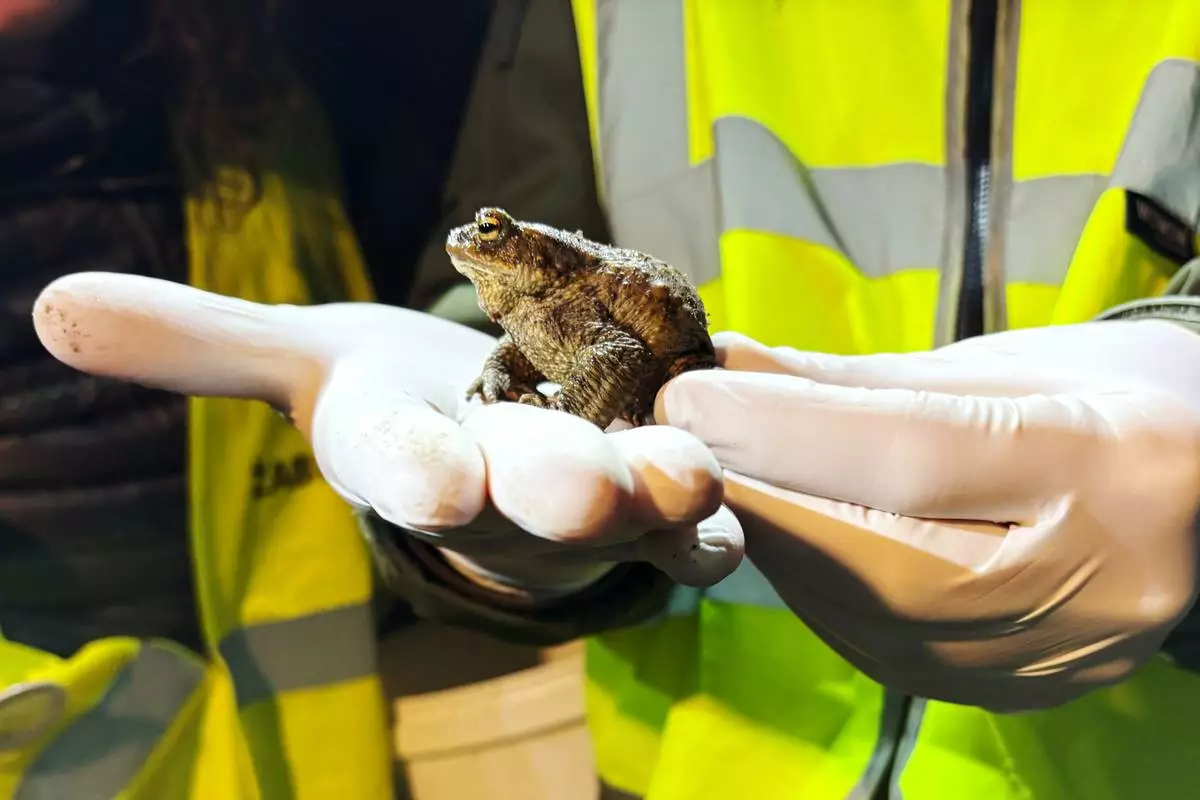
Biologist Krzysztof Klimaszewski holds a common toad during a 'Frog Patrol' in Otrebusy, Poland, Monday, March 30, 2026. (AP Photo/Claudia Ciobanu)

Biologist Krzysztof Klimaszewski holds a common toad during a 'Frog Patrol' in Otrebusy, Poland, Monday, March 30, 2026. (AP Photo/Claudia Ciobanu)

Lukasz Franczuk, a local Frog Patrol coordinator, releases toads into a pond in Otrebusy, Poland, Monday, April 6, 2026. (AP Photo/Rafal Niedzielski)

Lukasz Franczuk, a local Frog Patrol coordinator, releases toads into a pond in Otrebusy, Poland, Monday, April 6, 2026. (AP Photo/Rafal Niedzielski)

A biologist holds a female common toad in Otrebusy, Poland, Monday, March 30, 2026. (AP Photo/Claudia Ciobanu)

A biologist holds a female common toad in Otrebusy, Poland, Monday, March 30, 2026. (AP Photo/Claudia Ciobanu)

Recommended Articles