Skip to Content Facebook Feature Image

Citizen 'Frog Patrol' helps amphibians survive a dangerous road journey in Poland

News

Citizen 'Frog Patrol' helps amphibians survive a dangerous road journey in Poland
News

News

Citizen 'Frog Patrol' helps amphibians survive a dangerous road journey in Poland

2026-04-10 13:05 Last Updated At:13:20

OTREBUSY, Poland (AP) — On rainy spring nights in a forest near the Polish capital, a citizen “Frog Patrol” springs into action — humans helping amphibians survive dangerous road crossings for a chance to enjoy millennia-old mating rituals.

As warmer weather comes to Mlochowski Forest, 30 kilometers (19 miles) west of Warsaw, thousands of toads and frogs wake up from their winter slumber and begin their meticulous spawning journey to the marshes, a few kilometers away.

More Images
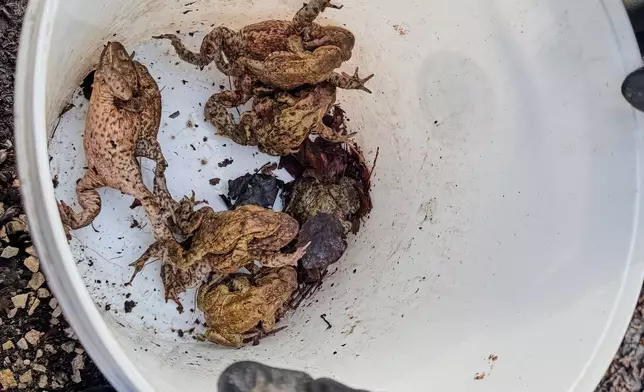
Toads collected in a bucket after rainy weather before they are transferred to a pond in Otrebusy, Poland, Monday, April 6, 2026. (AP Photo/Rafal Niedzielski)
Toads collected in a bucket after rainy weather before they are transferred to a pond in Otrebusy, Poland, Monday, April 6, 2026. (AP Photo/Rafal Niedzielski)

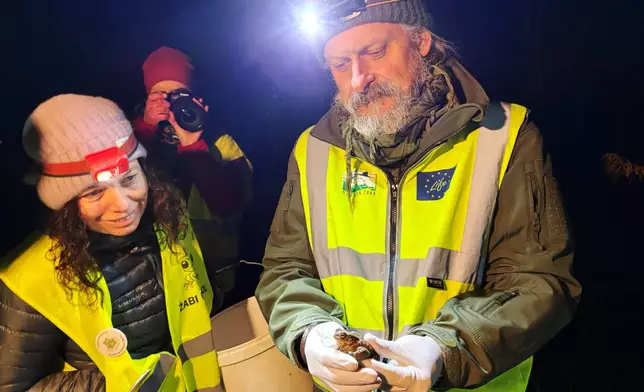
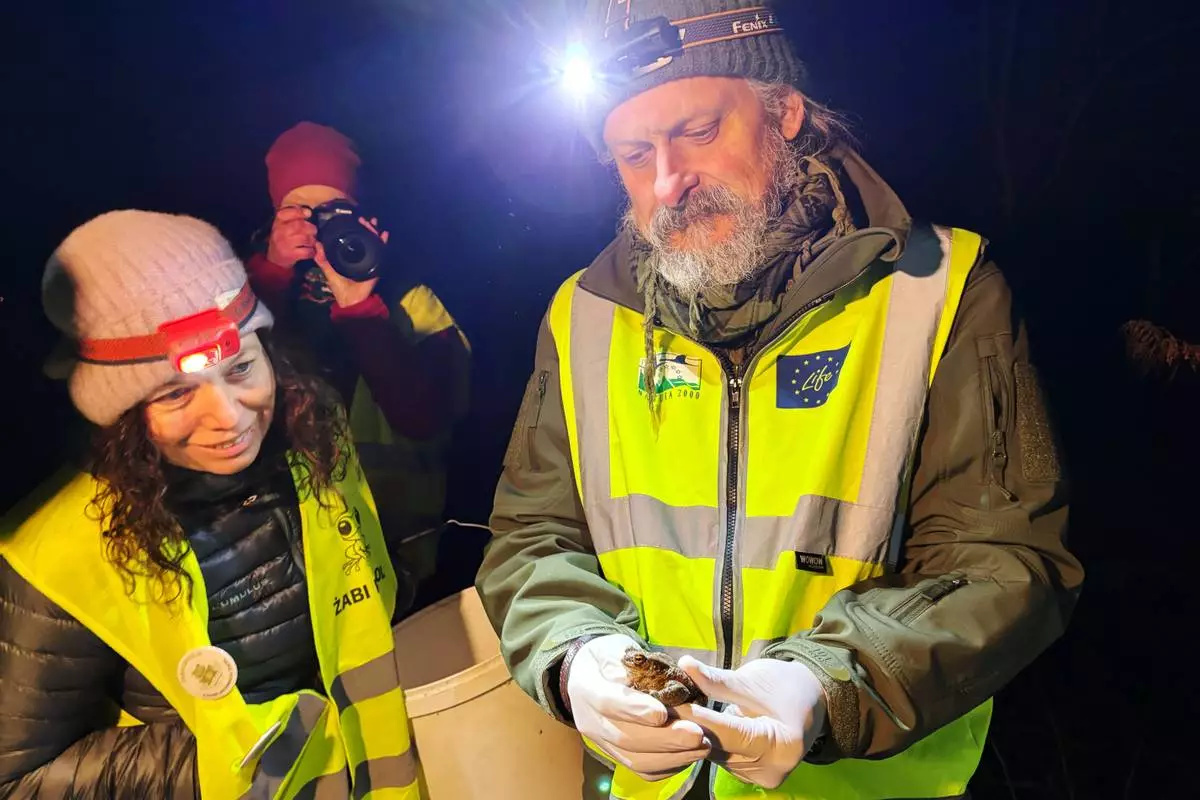
Katarzyna Jacniacka, left, and biologist Krzysztof Klimaszewski examine a common toad during a 'Frog Patrol' in Otrebusy, Poland, Monday, March 30, 2026. (AP Photo/Claudia Ciobanu)
Katarzyna Jacniacka, left, and biologist Krzysztof Klimaszewski examine a common toad during a 'Frog Patrol' in Otrebusy, Poland, Monday, March 30, 2026. (AP Photo/Claudia Ciobanu)
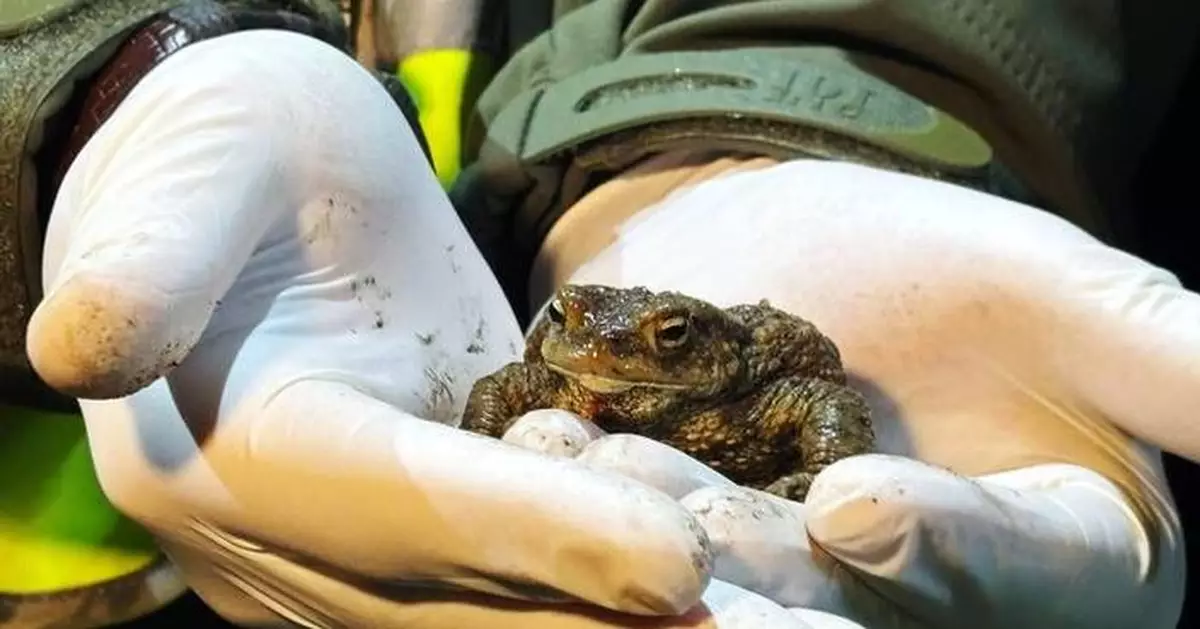
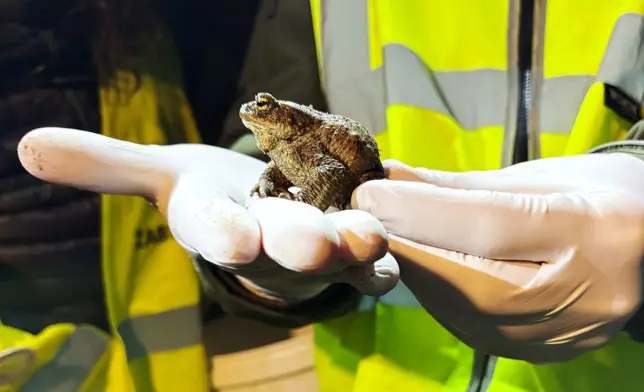
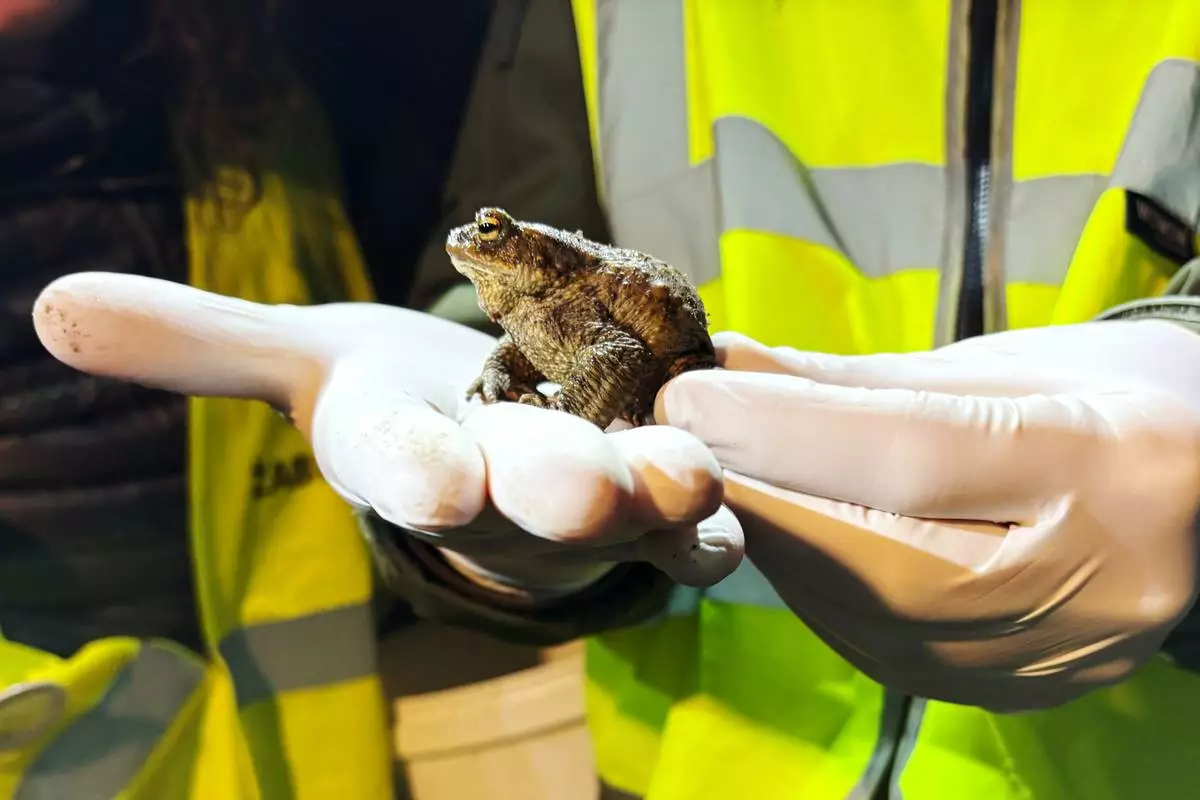
Biologist Krzysztof Klimaszewski holds a common toad during a 'Frog Patrol' in Otrebusy, Poland, Monday, March 30, 2026. (AP Photo/Claudia Ciobanu)

Biologist Krzysztof Klimaszewski holds a common toad during a 'Frog Patrol' in Otrebusy, Poland, Monday, March 30, 2026. (AP Photo/Claudia Ciobanu)

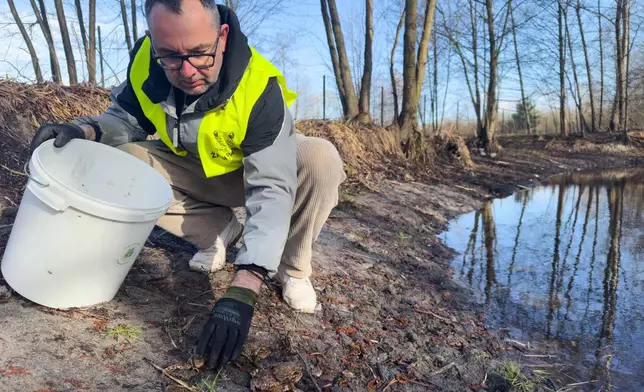
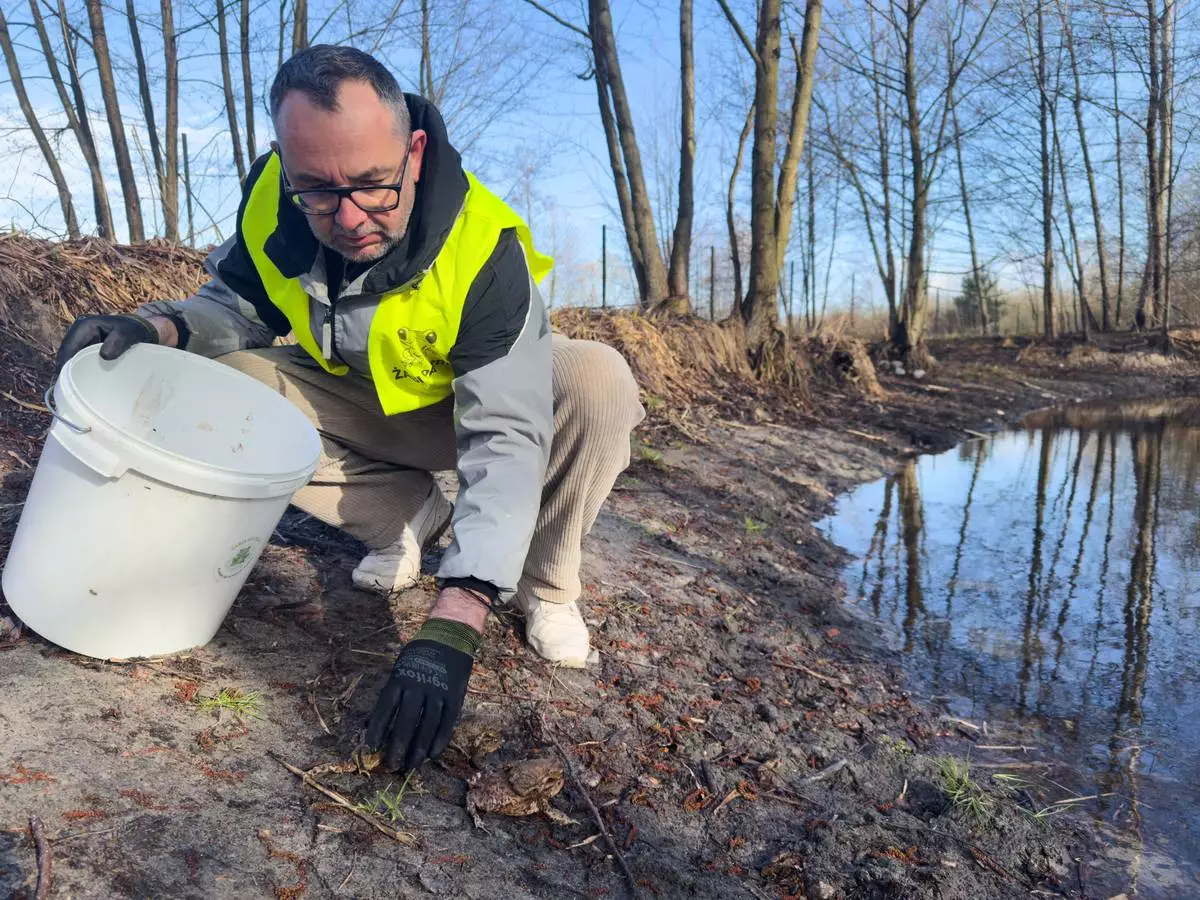
Lukasz Franczuk, a local Frog Patrol coordinator, releases toads into a pond in Otrebusy, Poland, Monday, April 6, 2026. (AP Photo/Rafal Niedzielski)
Lukasz Franczuk, a local Frog Patrol coordinator, releases toads into a pond in Otrebusy, Poland, Monday, April 6, 2026. (AP Photo/Rafal Niedzielski)

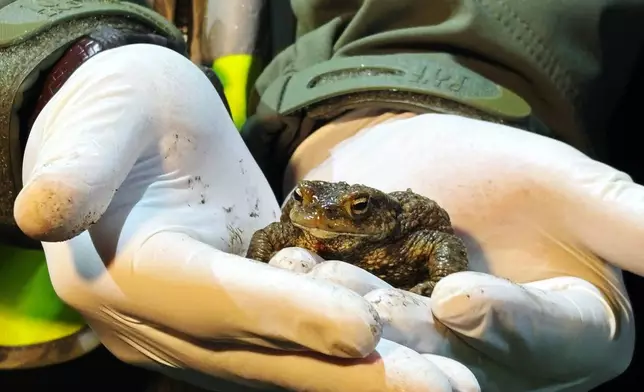
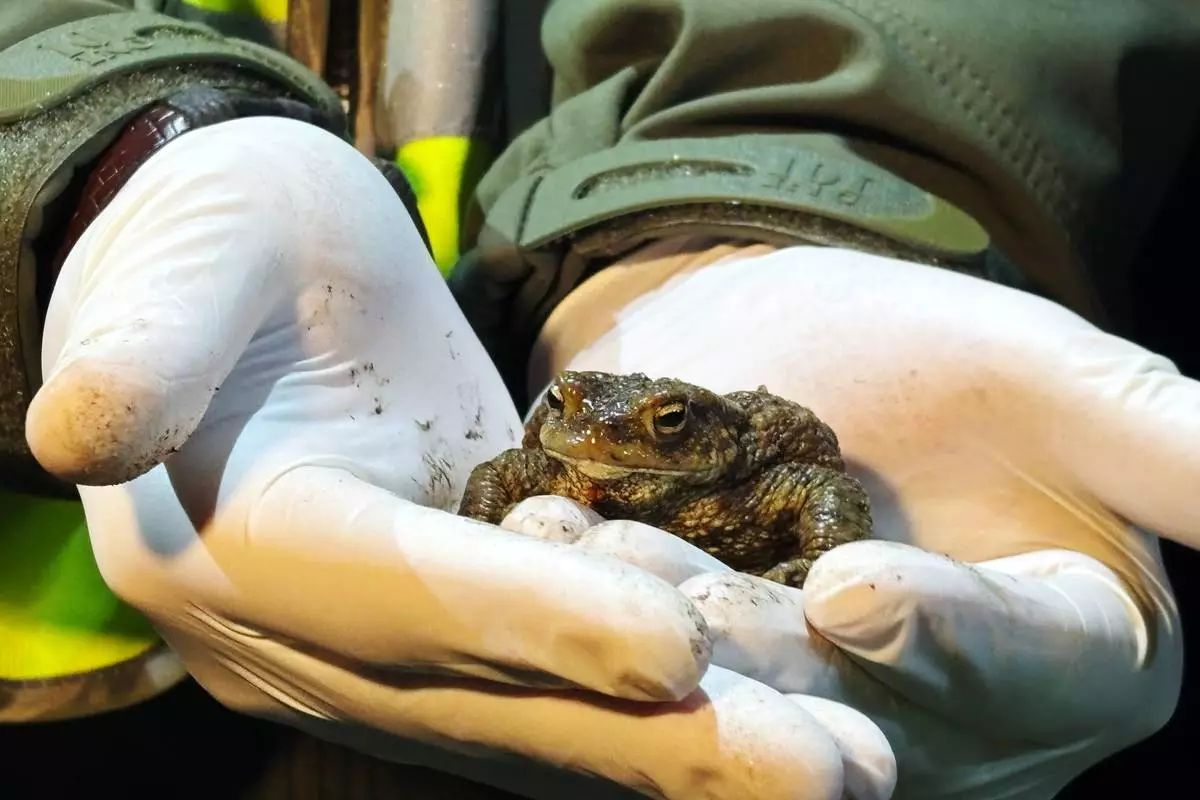
A biologist holds a female common toad in Otrebusy, Poland, Monday, March 30, 2026. (AP Photo/Claudia Ciobanu)

A biologist holds a female common toad in Otrebusy, Poland, Monday, March 30, 2026. (AP Photo/Claudia Ciobanu)

The females carry the burden of the journey. Male toads here don't really give off princely vibes but travel on the backs of their much larger female partners, tightly holding on to ensure they are not dumped in favor of a rival upon reaching the waters.

While generations of toads and frogs have traveled to these marshes to mate, a road built in the last decade right across their route made the spring journey much more dangerous.

What followed was sheer amphibian slaughter — when the mating season started and the frogs were on the move, thousands would get run over.

Łukasz Franczuk, coordinator of the “Frog Patrol” initiative, recounted the sad scenes from four years ago.

“The frogs were being run over in the hundreds or thousands,” he said. “When you were driving on this road, you could see the decomposing corpses of the frogs. People going to collect the surviving ones were crying, they couldn’t stand to watch what was happening.”

Franczuk and his friends responded by helping locals organize, starting three years ago.

Volunteers would meet every wet, rainy evening as soon as spring starts, fan out along the road by the forest and collect frogs from the roadside, then carry them safely across to the marshes. Frogs breathe through their skin, which must stay humid, so they only move and migrate when it rains.

Wearing reflective yellow vests emblazoned with the words “Frog Patrol” and armed with head lamps and buckets, hundreds of volunteers can now be routinely seen out in the evenings during migration season.

Locals, including children, have also started carrying gloves with them during the day, so they can pick up the amphibians if they see them in distress at any time.

“It's really impressive to see whole families with kids walking in the rain, with buckets, in these lovely jackets to make them visible because it's pretty unsafe, this road is narrow, and they carry the frogs from one side of the road to the other,” said Katarzyna Jacniacka, one of the participants.

“When the frogs are migrating, there are a lot of people here,” she added.

For Aleksandra Tkaczyk, another volunteer, this is “the kind of connection with nature about which some of us care deeply.”

Locals say they have saved about 18,000 amphibians since their initiative started.

Biologist Krzysztof Klimaszewski from the Institute of Animal Sciences at the Warsaw SGGW University, who took part in a few of the frog patrols, said that what the locals are doing here is very important because “it actually allows this local population of amphibians to survive.”

Such citizen initiatives to help toads and frogs cross roads built through their natural habitats are not unique to Poland.

In New Hampshire, U.S. volunteers from the Harris Center for Conservation Education save all sorts of amphibians, including salamanders, from being run over by cars. In Bavaria, in southeastern Germany, volunteers from BUND Naturschutz say they rescue up to 700,000 frogs, toads, newts and salamanders every year.

Even in France, where frog legs are a culinary delicacy, local volunteers help the suffering amphibians. In the southern French region of Provence-Alpes-Côte d’Azur, people have installed nets on the roadside to collect the frogs before they head into the dangerous traffic.

And in the Estonian capital of Tallinn, authorities announced in early April the construction of additional frog fences on Tahetorni Street — right on the frogs' springtime migrating route — to guide the amphibians and other animals safely into underground tunnels and avoid getting them killed by traffic.
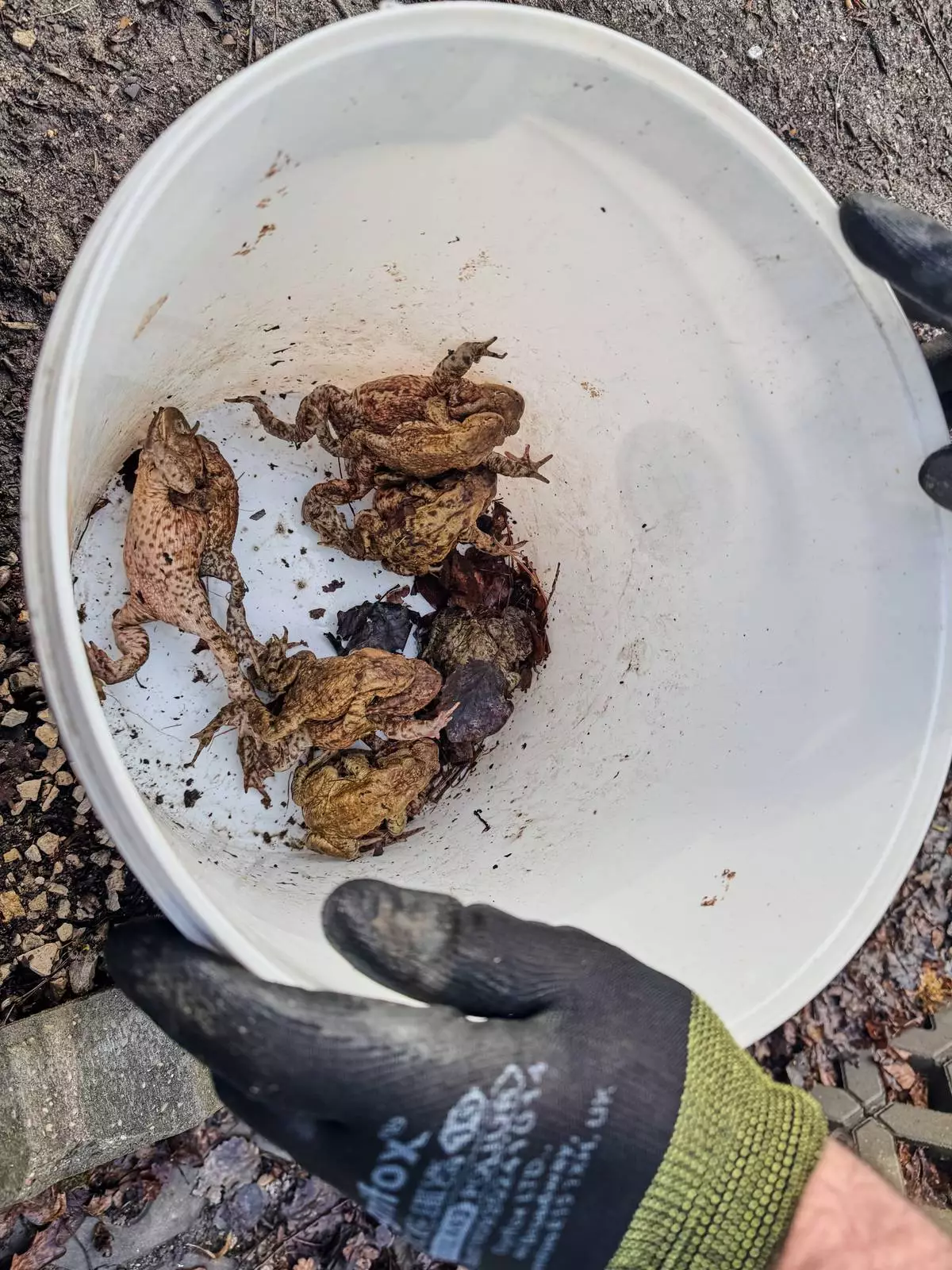
Toads collected in a bucket after rainy weather before they are transferred to a pond in Otrebusy, Poland, Monday, April 6, 2026. (AP Photo/Rafal Niedzielski)
Toads collected in a bucket after rainy weather before they are transferred to a pond in Otrebusy, Poland, Monday, April 6, 2026. (AP Photo/Rafal Niedzielski)

Katarzyna Jacniacka, left, and biologist Krzysztof Klimaszewski examine a common toad during a 'Frog Patrol' in Otrebusy, Poland, Monday, March 30, 2026. (AP Photo/Claudia Ciobanu)
Katarzyna Jacniacka, left, and biologist Krzysztof Klimaszewski examine a common toad during a 'Frog Patrol' in Otrebusy, Poland, Monday, March 30, 2026. (AP Photo/Claudia Ciobanu)
Biologist Krzysztof Klimaszewski holds a common toad during a 'Frog Patrol' in Otrebusy, Poland, Monday, March 30, 2026. (AP Photo/Claudia Ciobanu)

Biologist Krzysztof Klimaszewski holds a common toad during a 'Frog Patrol' in Otrebusy, Poland, Monday, March 30, 2026. (AP Photo/Claudia Ciobanu)

Lukasz Franczuk, a local Frog Patrol coordinator, releases toads into a pond in Otrebusy, Poland, Monday, April 6, 2026. (AP Photo/Rafal Niedzielski)
Lukasz Franczuk, a local Frog Patrol coordinator, releases toads into a pond in Otrebusy, Poland, Monday, April 6, 2026. (AP Photo/Rafal Niedzielski)

A biologist holds a female common toad in Otrebusy, Poland, Monday, March 30, 2026. (AP Photo/Claudia Ciobanu)

A biologist holds a female common toad in Otrebusy, Poland, Monday, March 30, 2026. (AP Photo/Claudia Ciobanu)
VATICAN CITY (AP) — When Pope Leo XIV pronounced himself a “son of St. Augustine” the night of his election, some Algerians took that to mean his ancestors hailed from the North African country where the 5th century saint lived and died.

Leo’s line, of course, referred to his Augustinian spirituality. But his connection to the Algerian-born St. Augustine, the towering figure of Christianity who is known well to Algeria’s Sunni Muslim majority, served at the very least to favorably introduce Leo to a country that will welcome him Monday for the first-ever papal visit.

Leo’s two-day stay kicks off an ambitious odyssey across four African countries — Algeria, Angola, Cameroon and Equatorial Guinea — that is so dizzying in its logistical complexity that it recalls the globe-trotting journeys of St. John Paul II in his early years.

The 70-year-old Leo will cover more than 17,700 kilometers (about 11,000 miles) on 18 flights over 11 days starting Monday and will deliver speeches and homilies in French, Spanish, Portuguese and English. He's prioritizing a part of the world that is crucial for the continued growth of the Catholic Church, but poses unique challenges as well.

With such a variety of cultures and histories, the themes he’ll raise run the gamut, including migration and the exploitation of natural and human resources in a region that produces much of the world’s oil, but where significant proportions of the population live in poverty. The Vatican says Leo will also speak about corruption in oftentimes authoritarian regimes and the role of political leaders in countries where two of the presidents have been in power for decades.

Huge crowds are expected in Cameroon, where 29% of the population is Catholic and 600,000 people are due to attend one of Leo’s Masses. Leo will preside over a “peace meeting” in Cameroon’s north-west city of Bamenda, which has has been plagued by separatist violence.

“To see His Holiness Pope Leo XIV arrive in Cameroon, for us who are Catholic Christians, it further strengthens our faith, it further strengthens our ties with our God,” said Simon Pierre Ngombo, a Catholic Cameroonian. “It is a perfect moment to touch each other’s hearts.”

Algeria will give the American pope a chance to promote peaceful coexistence between Christians and Muslims, at a time of global tensions over the U.S.-Israeli war in Iran. Despite the war, no extra security measures are planned, the Vatican said.

Leo, who has already positioned himself as an American counterweight to U.S. President Donald Trump, will visit the Great Mosque in Algiers, and interfaith dialogue is expected to be raised, said the archbishop of Algiers, Cardinal Jean-Paul Vesco.

On Africa’s northern coast, Algeria fought a brutal civil war in the 1990s that is known locally as the “black decade,” when some 250,000 people were killed as the army fought an Islamist insurgency. As recently as last year, Algeria was still addressing the wounds of its colonial legacy, with legislators voting to declare France’s colonization of the North African country a crime and calling for restitution of property taken by France during its 130-year rule.

The visit “acts as a bridge between the Christian and Muslim worlds, while reflecting the richness of the country’s history,” Vesco told the official Algerian news agency, APS.

However, Algerian authorities turned down the Vatican request for Leo to visit to Médéa (50 kilometers/30 miles south of Algiers) to pray at the Tibhirine monastery, where seven French Trappist monks were kidnapped and killed May 21, 1996, by Islamic fighters during the civil war.

“Algeria has no intention of reopening a painful chapter of its history,” the government daily El Moudjahid wrote in support of the government’s decision.

Leo is expected to refer to the sacrifice of the monks, who were among 19 priests, nuns and other Catholics killed during the war. They were beatified in 2018 as martyrs for the faith in what was then the first such beatification ceremony in the Muslim world.

Africa as a whole contributed more than half of the 15.8 million new Catholics who were baptized in 2023, or 8.3 million new African Catholics, according to the latest Vatican statistics.

The continent also contributes thousands of men to the priesthood and women to religious orders each year, turning a continent that was long on the receiving end of Western missionaries into one that exports its priests and nuns abroad.

According to Vatican statistics, Angola and Cameroon consistently produce some of the largest number of seminarians on the continent each year. As of December 2024, for example, Angola had 2,366 priestly candidates in major seminaries and Cameroon had 2,218, just behind the African vocation powerhouses of Nigeria, Congo and Tanzania.

But the exponential growth has brought challenges, as well. When past popes addressed African clergy, they often reminded them of the need to adhere to vows of celibacy. When Pope Benedict XVI visited Angola and Cameroon in 2009, his trip was overshadowed by his comments en route that condoms could make the AIDS crisis worse, drawing condemnation from a host of public health experts.

A big issue confronting the Holy See now is the ethnic rivalries that permeate church life. That is especially true in the nomination of bishops, who oftentimes are responsible for swaths of territory covering various ethnic groups, and find themselves rejected by priests or faithful, said the Rev. Fortunatus Nwachukwu, No. 2 in the Vatican’s missionary evangelization office.

The problem is known as the “son of the soil syndrome,” when the Holy See insists “the church should speak of the ‘son of the church,’” he said.

Another question facing the African church is the practice of polygamy, which has been raised so insistently by African bishops as a critical issue over the years that the Holy See last year published an entire doctrinal document on the value of monogamy and created a special study group on it.

Catholic doctrine holds that marriage is a monogamous, lifelong union between one man and one woman. That position creates tension and incompatibility with cultural norms in parts of Africa, especially in agrarian and nomadic societies where multiple wives who can produce numerous children are considered a necessity for survival.

Leo will have plenty of meetings with Catholic clergy, bishops and ordinary faithful in which he can emphasize the value of the Catholic family, said Vatican spokesman Matteo Bruni.

Some of the countries Leo will visit, all former European colonies, are among the world’s biggest producers of oil and minerals, including gold, diamonds and iron, the extraction of which has transformed their economies in recent years.

But Leo is expected to highlight negative effects of exploitation of Africa’s natural and human resources that have benefitted only a few while harming the environment.

That's especially true in Equatorial Guinea, where President Teodoro Obiang Nguema Mbasogo has been in power since 1979 and, along with his family, is accused of widespread corruption and authoritarianism.

It’s an issue that Pope Francis prioritized during his pontificate and articulated in his 2015 environmental encyclical, “Praised Be,” which Leo has strongly endorsed and promoted.

Associated Press religion coverage receives support through the AP’s collaboration with The Conversation US, with funding from Lilly Endowment Inc. The AP is solely responsible for this content.

Pope Leo XIV greets the faithful at the end of Easter Mass he presided over in St. Peter's Square at the Vatican, Sunday, April 5, 2026. (AP Photo/Andrew Medichini)

Pope Leo XIV greets the faithful at the end of Easter Mass he presided over in St. Peter's Square at the Vatican, Sunday, April 5, 2026. (AP Photo/Andrew Medichini)

Pope Leo XIV talks to journalists as he leaves his residence in Castel Gandolfo, on the outskirts of Rome, to return to the Vatican, Tuesday, March 31, 2026. (AP Photo/Gregorio Borgia)

Pope Leo XIV talks to journalists as he leaves his residence in Castel Gandolfo, on the outskirts of Rome, to return to the Vatican, Tuesday, March 31, 2026. (AP Photo/Gregorio Borgia)

Recommended Articles