WASHINGTON (AP) — The Trump administration said Tuesday that it will admit an additional 10,000 white South Africans into the U.S. as refugees this year, increasing its historically low annual cap but still blocking people from other countries from entering through the program.
Trump suspended the refugee program on his first day in office and, since then, has turned it into a vehicle to allow Afrikaners — a group of white South Africans descended mainly from Dutch settlers — into the U.S. Advocates say the decision to focus a decades-old program on one group has left people around the world fleeing war and strife stranded and with few options.
The administration says Afrikaners are subject to persecution in their home country, a charge the government in South Africa denies.
In the announcement Tuesday on the Federal Register, President Donald Trump said that because of “an unforeseen emergency refugee situation” he was raising the refugee cap. He blamed the South African government for “recent increases in the incitement of racially motivated violence" but gave no specific information.
“I hereby determine that the admission to the United States of Afrikaners from South Africa in response to this emergency is justified by the grave humanitarian concerns and is otherwise in the national interest,” Trump said in the announcement.
The administration indicated last year that it would admit up to 7,500, mostly Afrikaners, during the fiscal year stretching from October 2025 through September 2026, but last week, in a notice to Congress informing it of the increase, the administration said that “unforeseen developments in South Africa created an emergency refugee situation.” The change raises the limit to 17,500.
The State Department has already admitted more than 6,000 people through the refugee program since the beginning of the fiscal year in October, according to official data. All of those were from South Africa except for three people from Afghanistan.
Presidents set the cap on how many refugees the U.S. will admit each year, and historically, they’ve allocated those numbers across various geographic regions while factoring in wars or conflicts that spark humanitarian needs around the globe.
The refugee program, administered by the State Department and the Department of Homeland Security, is distinct from asylum. People hoping to come through the refugee program must be living abroad and undergo vetting and other checks before being admitted to the U.S., whereas those seeking asylum are already on U.S. soil.
During his first administration, Trump slashed the number of refugees he admitted every year. Then the Biden administration built the system back up, setting a goal of admitting 125,000 refugees in his last year in office.
Groups that have for decades helped resettle refugees in the U.S. have sued to allow people who were in the refugee application process but are now stranded to be allowed to come to the U.S.
“For nearly half a century, the U.S. Refugee Admissions Program embodied a simple but powerful, bipartisan idea: that the United States would offer safety to the world’s most vulnerable refugees,” said Beth Oppenheim, President & CEO of HIAS, in a statement. “This administration is now dismantling that legacy in plain sight."
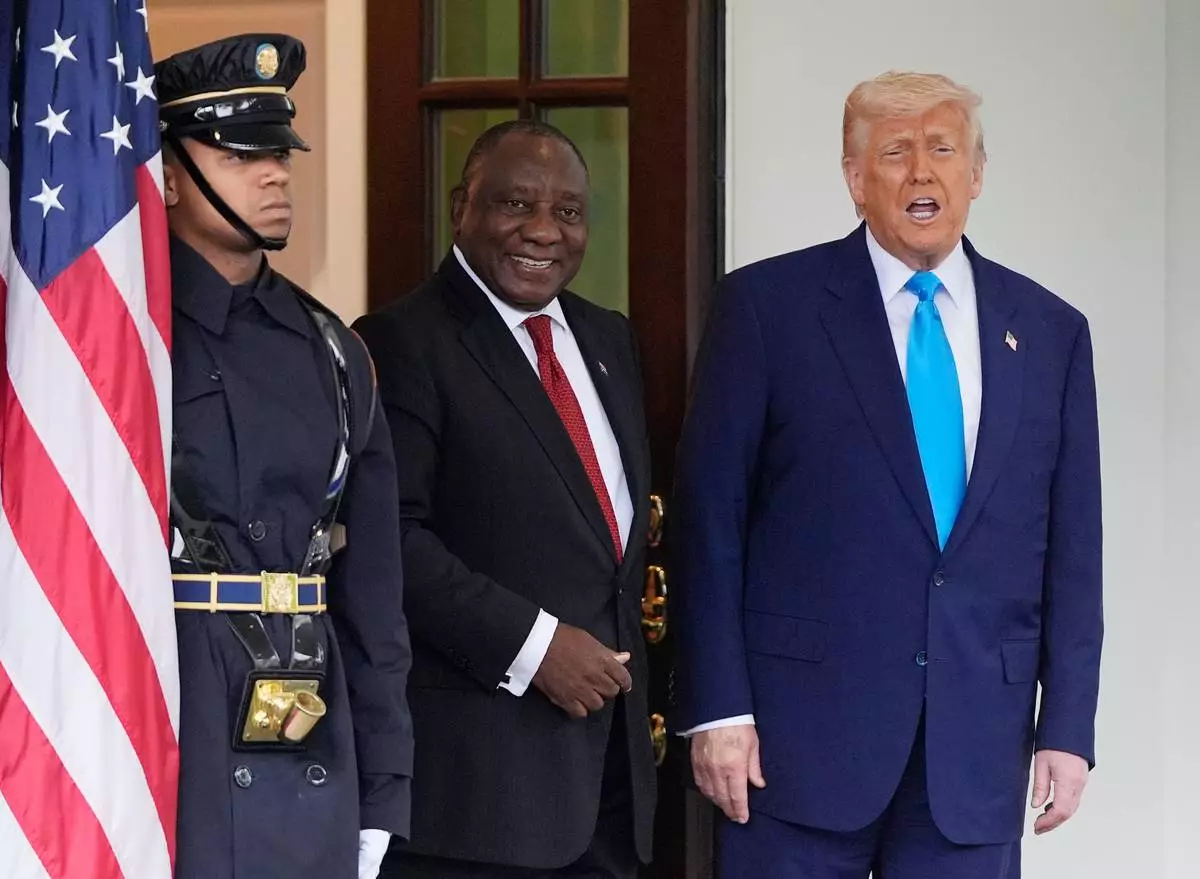
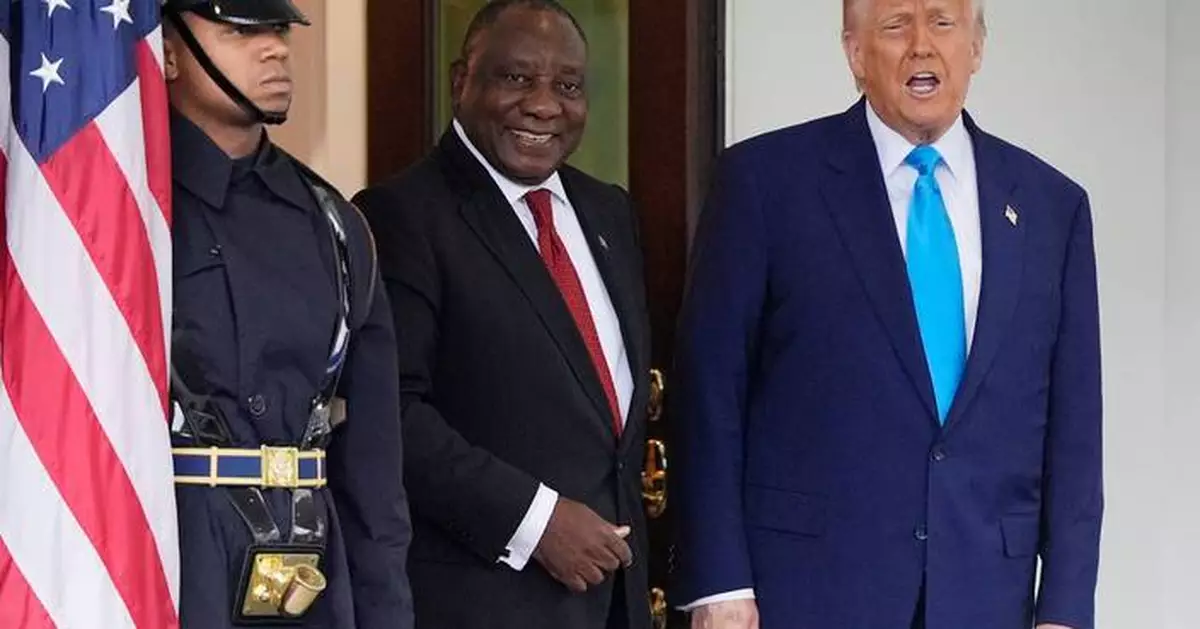
FILE - President Donald Trump greets South African President Cyril Ramaphosa, center, at the White House, May 21, 2025, in Washington. (AP Photo/Julia Demaree Nikhinson, File)
ARAFAT, Saudi Arabia (AP) — Muslim pilgrims from around the world congregated on Mount Arafat in Saudi Arabia on Tuesday, the second official day of the annual Islamic pilgrimage, considered the pinnacle of the Hajj.
Despite the sweltering heat, the pilgrims gathered on the rocky hill and surrounding plain for intense prayers and worship that often mark a spiritual peak for them. They fervently murmured prayers and poured their hearts out in supplications. Many raised their hands in worship. It is common for pilgrims on that day, some with tears streaming down their faces, to ask God for forgiveness, mercy, blessings and good health.
The Hajj, one of the Five Pillars of Islam, is required once in a lifetime for every Muslim who can afford it and is physically able to perform it.
For pilgrims, the Hajj, performed over several days, can be a deeply moving spiritual experience and a chance to seek God’s forgiveness and the erasure of past sins. As they brave the intense heat to perform religious rituals, many pilgrims have been using umbrellas for shade.
A Saudi official said on Friday that more than 1.5 million pilgrims have arrived in the country from abroad.
This year, Muslims have been pouring into Saudi Arabia for the Hajj against the backdrop of a tenuous ceasefire in the Iran war and related uncertainty in the region.
The U.S. military said Monday that it carried out “self-defense” strikes in southern Iran, including on missile launch sites and boats used to lay mines, even as President Donald Trump said on social media that negotiations with Tehran were “proceeding nicely." Iran on Tuesday denounced the most recent U.S. strikes as a sign of “bad faith and unreliability” as negotiations pressed on toward a possible deal to end the war.
For many, performing the Hajj can be a realization of a lifelong dream as they spend years hoping and praying to one day be able to undertake the pilgrimage or saving up money and waiting for a permit to embark on the trip.
“This happens once in a lifetime,” Mohammad Asal, an Egyptian pilgrim, said. “People here have prepared their prayers, hoping that God will respond to them, because we know that ... the most important ritual of the Hajj is being in Arafat.”
The Hajj brings together large numbers of Muslims of diverse races, ethnicities, languages and socioeconomic classes, creating a sense of unity for many. It’s a mass, communal experience, with Muslims performing rituals together. But it is also deeply personal, as every pilgrim brings their own yearnings and experiences.
“It was incredible,” Ahmed Sufyan, a pilgrim from the United States, said on Tuesday. “The unity and peace that we feel is something I’ve never experienced before,” he added via WhatsApp.
“Our wishes are many,” Mohammad Obaid, a Sudanese pilgrim, said, adding he was praying for Sudan and Muslims everywhere.
Fam reported from Winter Park, Florida.
Associated Press religion coverage receives support through the AP’s collaboration with The Conversation US, with funding from Lilly Endowment Inc. The AP is solely responsible for this content.
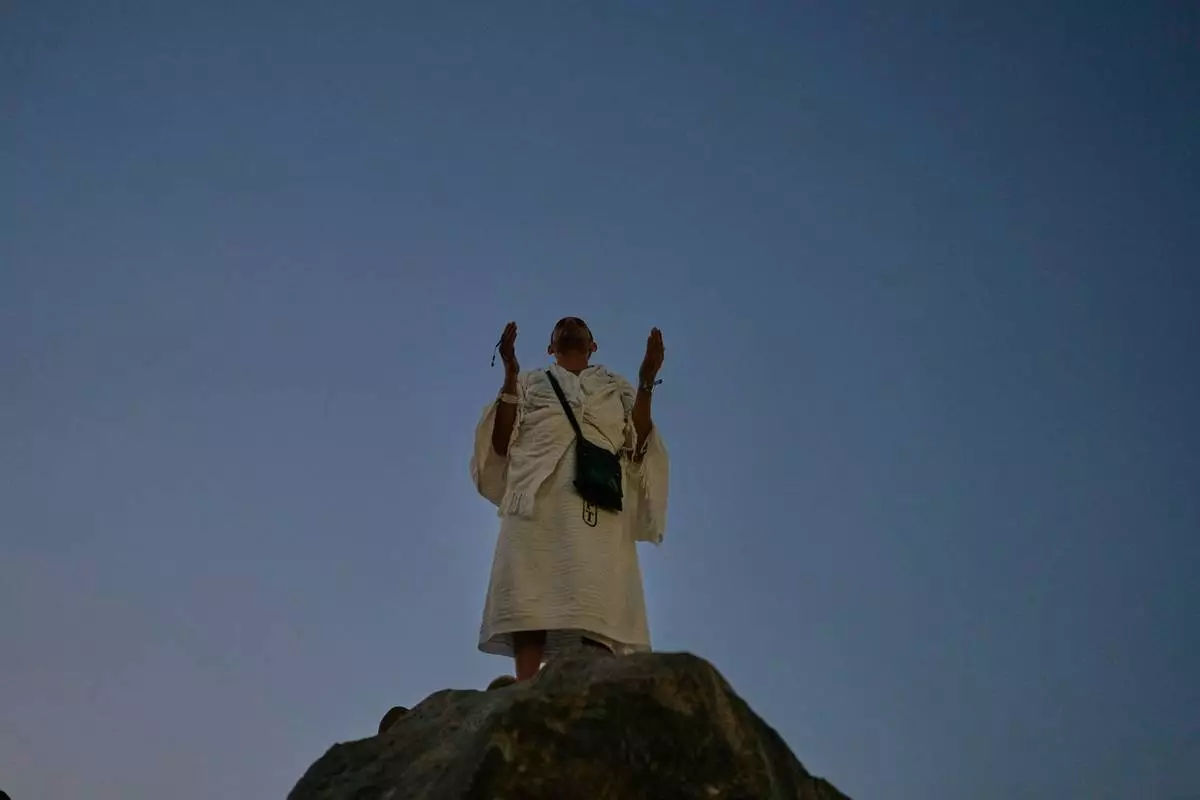
A Muslim pilgrim pray atop of the rocky hill known as the Mountain of Mercy, on the Plain of Arafat, during the annual Hajj pilgrimage near the holy city of Mecca, Saudi Arabia, Tuesday, May 26, 2026. (AP Photo/Altaf Qadri)
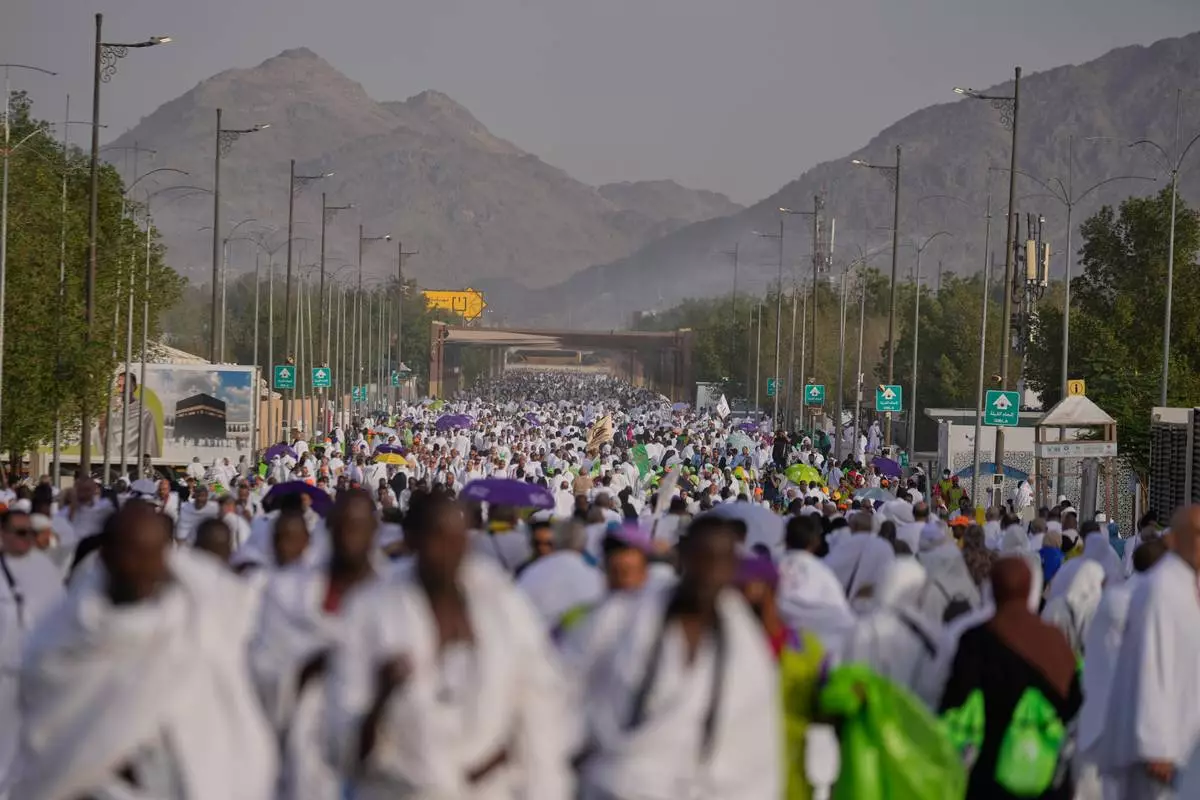
Muslim pilgrims walk towards the rocky hill known as the Mountain of Mercy, on the Plain of Arafat, during the annual Hajj pilgrimage near the holy city of Mecca, Saudi Arabia, Tuesday, May 26, 2026. (AP Photo/Altaf Qadri)
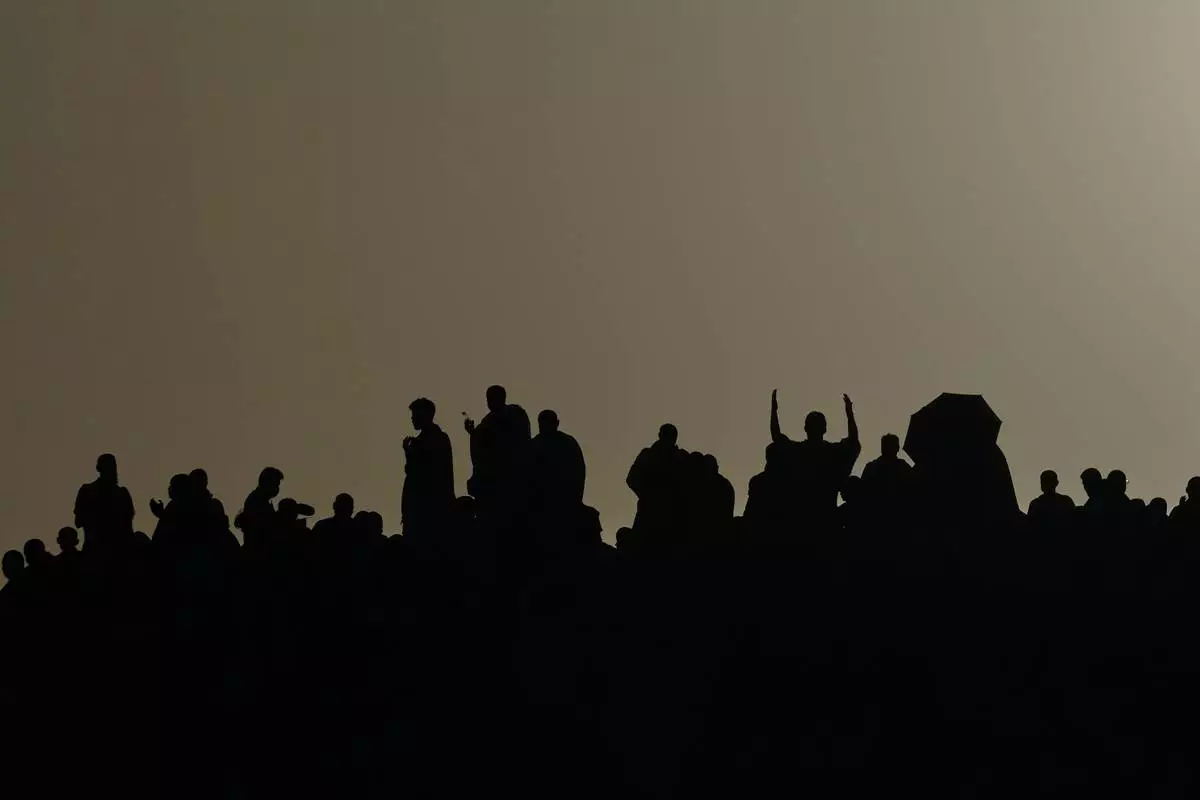
Muslim pilgrims are silhouetted as they pray at top of the rocky hill known as the Mountain of Mercy, on the Plain of Arafat, during the annual Hajj pilgrimage near the holy city of Mecca, Saudi Arabia, Tuesday, May 26, 2026. (AP Photo/Altaf Qadri)
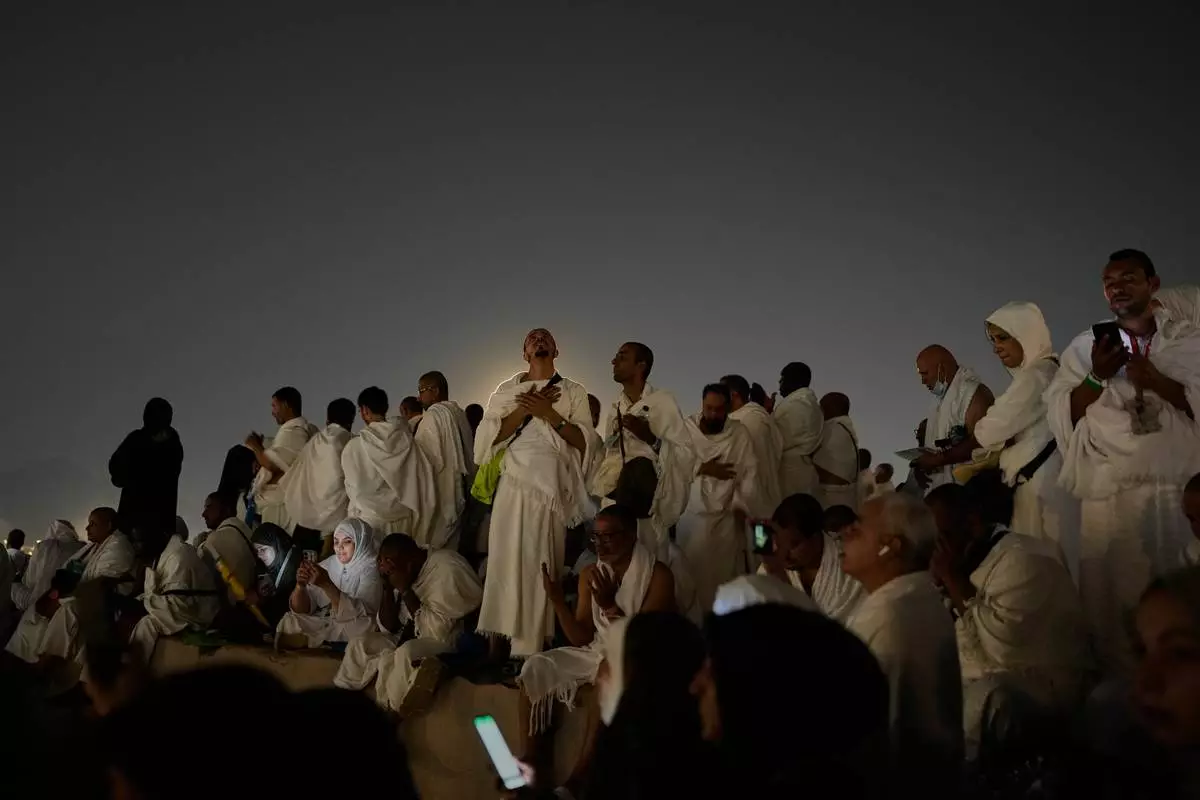
Muslim pilgrims pray at top of the rocky hill known as the Mountain of Mercy, on the Plain of Arafat, during the annual Hajj pilgrimage near the holy city of Mecca, Saudi Arabia, Tuesday, May 26, 2026. (AP Photo/Altaf Qadri)
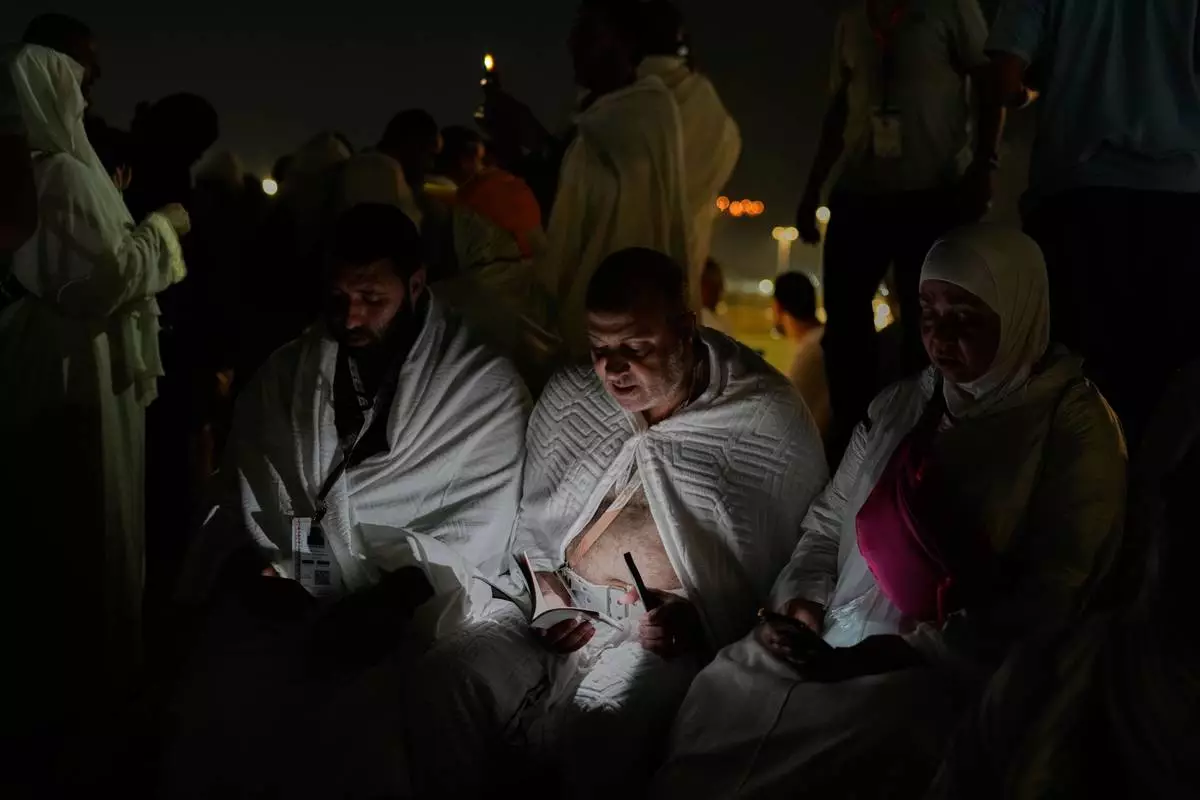
Muslim pilgrims read a copy of Islam's holy book Quran atop of the rocky hill known as the Mountain of Mercy, on the Plain of Arafat, during the annual Hajj pilgrimage near the holy city of Mecca, Saudi Arabia, Tuesday, May 26, 2026. (AP Photo/Altaf Qadri)