Skip to Content Facebook Feature Image

Pope Leo XIV's visit to an African church linked to slavery reflects on his own complex heritage

News

Pope Leo XIV's visit to an African church linked to slavery reflects on his own complex heritage
News

News

Pope Leo XIV's visit to an African church linked to slavery reflects on his own complex heritage

2026-04-18 09:16 Last Updated At:09:41

CAPE TOWN, South Africa (AP) — The Church of Our Lady of Muxima was built by Portuguese colonizers in Angola at the end of the 16th century as part of a fortress complex and became a hub in the slave trade. It remains a reminder of the inextricable link hundreds of years ago between Catholicism and the exploitation of the African continent.

Pope Leo XIV’s planned visit to the church in the town of Muxima on Sunday as part of his Africa tour is in recognition of it becoming a popular Catholic shrine after believers reported an appearance by the Virgin Mary around 1833.

But before that, the white-walled church on the edge of the Kwanza River was a point where enslaved Africans were gathered to be baptized by Portuguese priests before being forced to walk the last 145 kilometers (90 miles) to Angola’s main port of Luanda to be put on ships to the Americas.

The Portuguese colonizers were emboldened by 15th-century directives from the Vatican that authorized them to enslave non-Christians.

Ultimately, more than 5 million people left from Angola on the trans-Atlantic slave route, more than any other country and nearly half of the roughly 12.5 million African slaves sent across the ocean.

It’s unclear if Leo will address slavery on his Africa trip, as St. John Paul II did on papal visits to Cameroon in 1985 and Senegal in 1992. Joe Biden visited Angola in the last months of his presidency in 2024 and spoke about slavery as America’s “original sin.”

But some African Catholics see a highly symbolic moment when the head of the Catholic Church — who is himself an American — recites the Rosary on the riverside esplanade next to the fortress and the centuries-old chapel in Muxima, as Leo plans to do.

“For me, the pope going there to pray the Rosary ... he will give that place a new significance,” said Rev. Celestino Epalanga, a priest with the Catholic Bishops’ Conference of Angola. “We have to give it a new sense. To make this place sacred instead of being a place of evil.”

The moment might resonate even more after revelations around Leo’s own heritage.

Last year, a genealogist in the U.S. discovered that the first American pope — whose name is Robert Prevost — has Creole heritage and his maternal great-grandparents were described as people of color in Louisiana census records. The research uncovered that Leo had Black and white ancestors who included both enslaved people and slave owners.

Some of the first slaves to arrive in Louisiana were sent from Angola, according to historians.

Leo has not spoken publicly about his heritage. But Mariana Candido, a professor of history at Emory University in Atlanta, said she sees a fascinating complexity in how a place linked to such an immoral act like Muxima became a pilgrimage site for Angolans and how Leo might be cognizant of that when he goes there to reach out to a new generation of African Catholics.

“I can see how this is a way of connecting to Catholics in Angola, and making the Church more in sync with how people are practicing Catholicism in Angola and in African countries,” she said.

Candido said Leo is well-placed to do that, given his history serving people in his hometown of Chicago, with its large African American population.

Rev. Stan Chu Ilo, a Nigerian priest and professor at DePaul University in Chicago, said he has seen evidence that the pontiff is developing connections to Africa by elevating African figures in the church, including with the recent promotion of Monsignor Anthony Ekpo of Nigeria to a high-ranking position at the Vatican.

“This pope is actively cultivating African presence within the church and trying to, I think, heal this policy or program of seeing Africa as just making up the numbers,” said Chu Ilo.

Leo said at the start of his trip that he had decided in May of last year, soon after his election, that Africa would be his first trip as pope. Other trips intervened in the meantime, but he said this particular visit to Africa was “very special for several reasons.”

Angola bears especially deep scars from slavery and colonialism. It was a Portuguese colony until 1975. Immediately after independence, it slipped into a bloody civil war that pitted Angolans newly freed from colonialism against each other. The conflict lasted on and off for 27 years and killed more than half a million people.

African priests Epalanga and Chu Ilo both recognize colonialism’s impact but said it’s also important that Leo invigorates a Catholic Church in Angola — originally brought by colonial oppressors — to be an agent for good confronting modern-day problems.

The Vatican has said that some of the themes Leo will raise in Africa are the exploitation of natural and human resources, corruption and authoritarian regimes.

That resonates with Olivio Nkilumbo, an opposition lawmaker in Angola’s Parliament who said the country is still not a democracy that delivers for its 37 million people more than a half-century after independence. Nkilumbo cited decades of authoritarian governments and an economic inequality that has left millions in poverty despite Angola’s oil, diamonds and other resources.

“We still don’t have democracy, don’t have freedom,” said Nkilumbo, who added he wanted the pope to be a pilgrim for peace and reconciliation but to also bring a forceful message calling for social justice. “In my view, the pope knows the real situation of Angola.”

Nkilumbo said he was not a Catholic but praised the Catholic Church in Angola, the country’s dominant religious denomination, for being at the forefront of that fight for equality.

Epalanga plays that role. Alongside his work as a priest, he is executive secretary of the Catholic Commission for Justice and Peace in Angola, which actively works to promote democracy and ease poverty and inequality, often challenging authorities.

Epalanga said he was one of many members of the church invited to an audience with Pope Leo in Angola. If he has the chance to speak to the pope, Epalanga said he would “thank him for coming and ask him to tell the bishops they should be more committed to the poor and to social justice.”

For more on Africa and development: https://apnews.com/hub/africa-pulse

The Associated Press receives financial support for global health and development coverage in Africa from the Gates Foundation. The AP is solely responsible for all content. Find AP’s standards for working with philanthropies, a list of supporters and funded coverage areas at AP.org.

Associated Press religion coverage receives support through the AP’s collaboration with The Conversation US, with funding from Lilly Endowment Inc. The AP is solely responsible for this content.
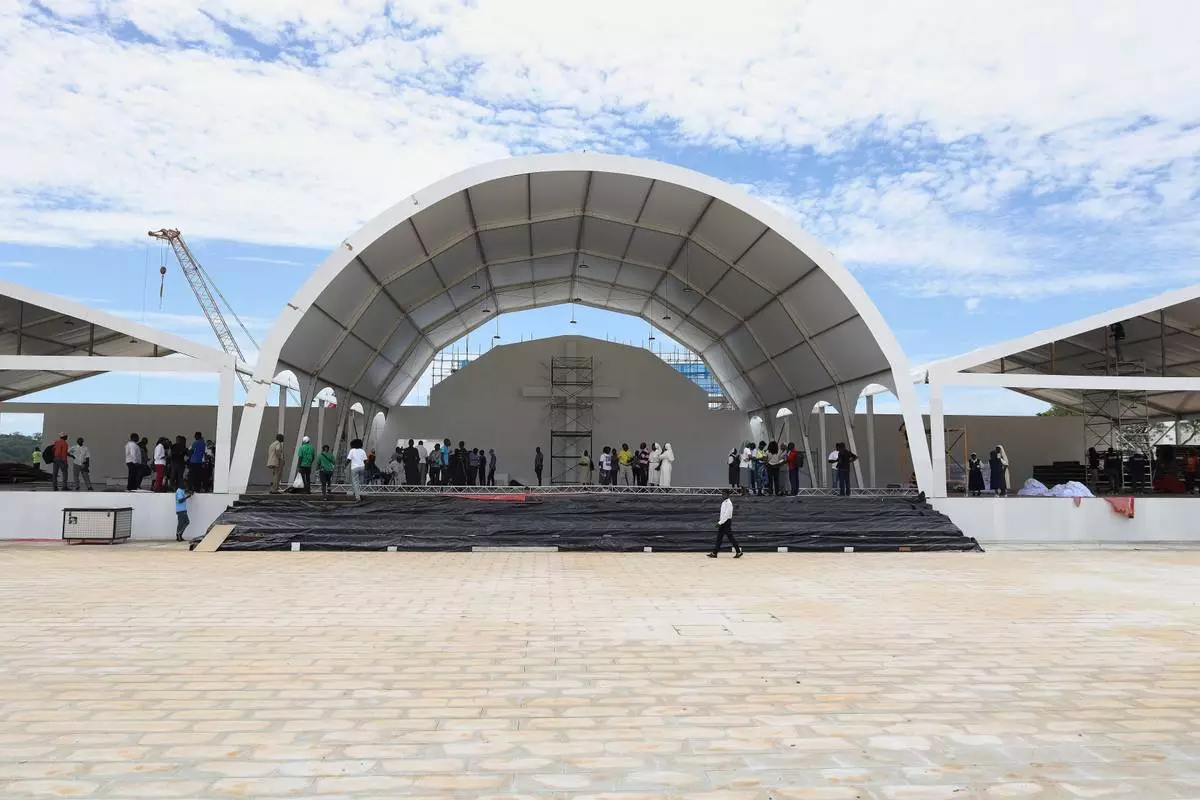
People walk on a stage set by the Church of Our Lady of Muxima in Muxima, Angola, Saturday, April 11, 2026 which Pope Leo XIV will visit during his 11-day pastoral visit to Africa. (AP Photo)
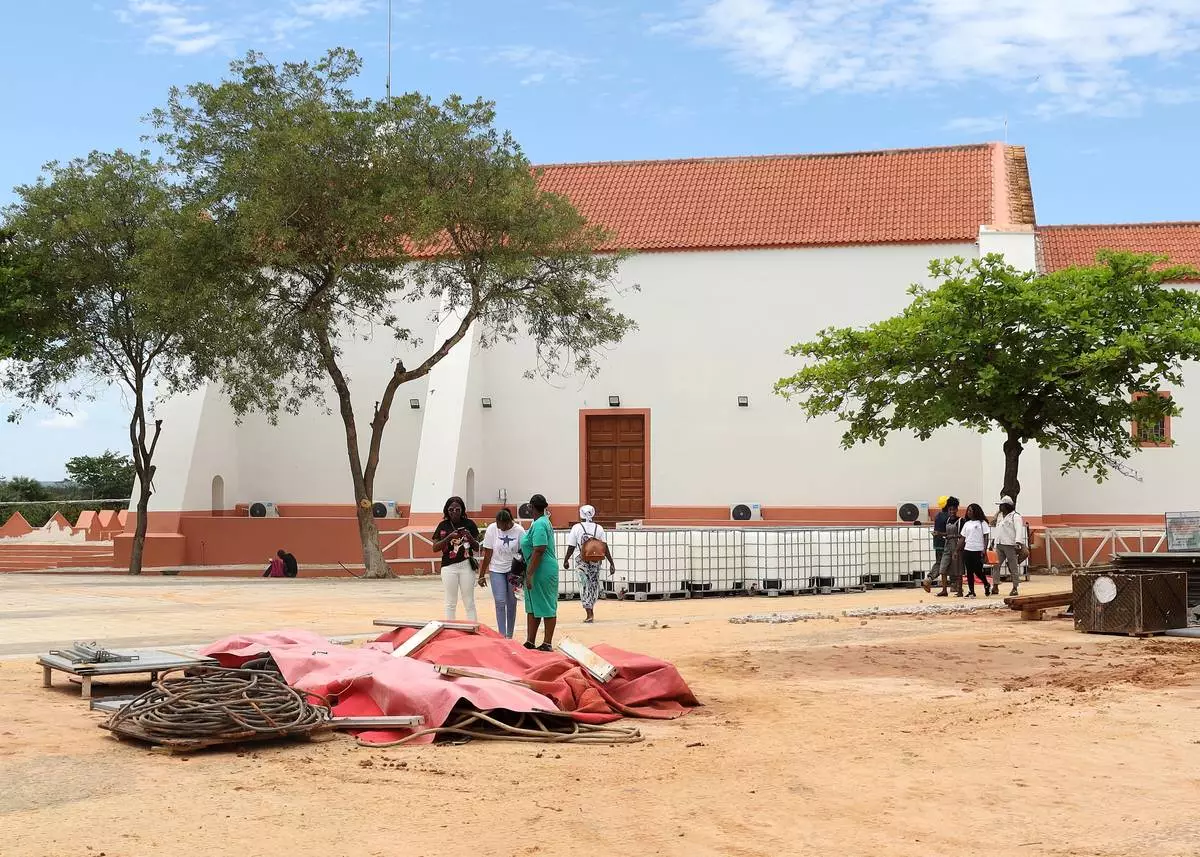
People walk on a stage set by the Church of Our Lady of Muxima in Muxima, Angola, Saturday, April 11, 2026 which Pope Leo XIV will visit during his 11-day pastoral visit to Africa. (AP Photo)
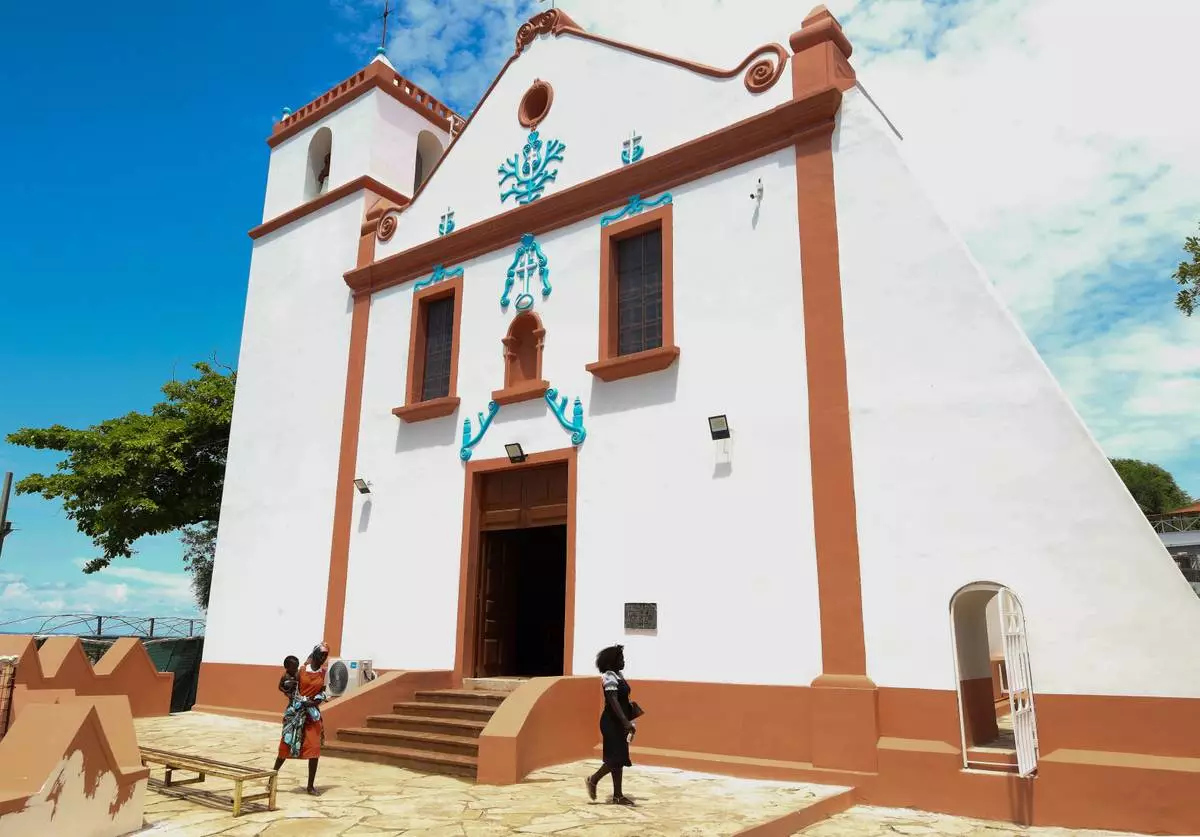
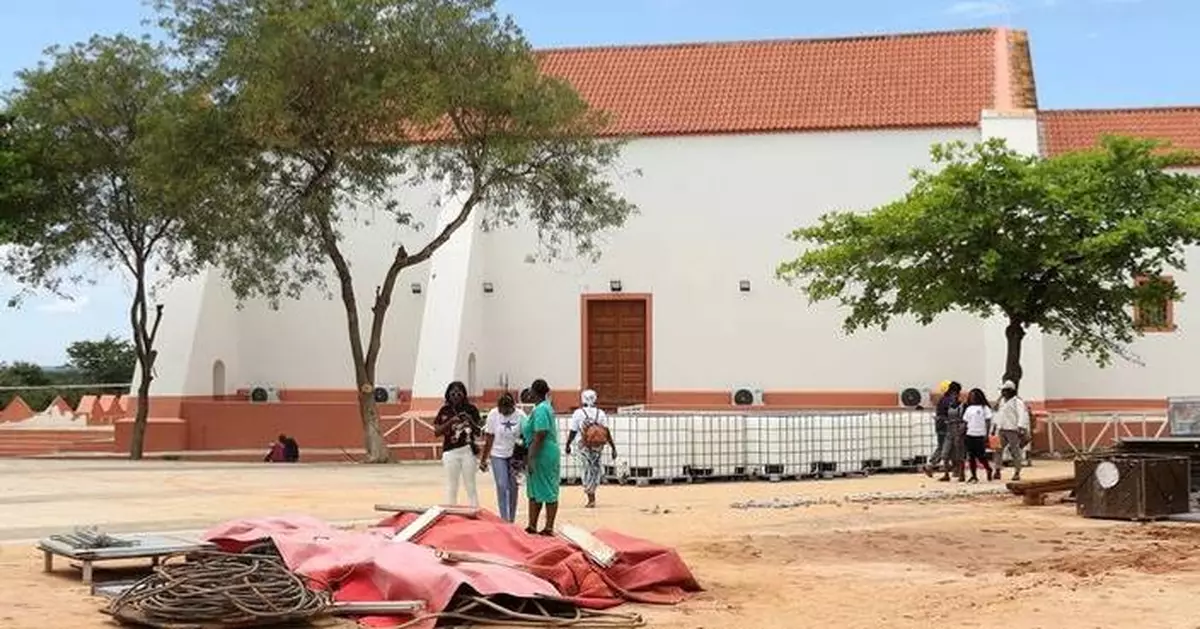
People walk by the Church of Our Lady of Muxima in Muxima, Angola, Saturday, April 11, 2026 which Pope Leo XIV will visit during his 11-day pastoral visit to Africa. (AP Photo)

People walk by the Church of Our Lady of Muxima in Muxima, Angola, Saturday, April 11, 2026 which Pope Leo XIV will visit during his 11-day pastoral visit to Africa. (AP Photo)

People walk by the Church of Our Lady of Muxima in Muxima, Angola, Saturday, April 11, 2026, which Pope Leo XIV will visit during his 11-day pastoral visit to Africa. (AP Photo)
People walk by the Church of Our Lady of Muxima in Muxima, Angola, Saturday, April 11, 2026, which Pope Leo XIV will visit during his 11-day pastoral visit to Africa. (AP Photo)
SAO PAULO (AP) — Oscar Schmidt, the Basketball Hall of Famer known to his Brazilian compatriots as the “Holy Hand,” died Friday. He was 68.

Schmidt’s family said in a statement that he fought a brain tumor for 15 years “with courage, dignity and resilience . . . while remaining a role model of determination, generosity and love of life. Oscar leaves a legacy that transcends sport and inspires generations of athletes and admirers in Brazil and worldwide.”

Schmidt is beloved in Brazil for committing to the national team for 19 years and becoming one of the most prolific scorers in basketball history. He also starred in a historic victory over the United States in the final of the 1987 Pan American Games.

“The biggest player of Brazilian basketball history bids farewell as an absolute symbol of sport, the holder of a trajectory that redefined the boundaries of what was possible in a court,” the Brazil Basketball Confederation said in a statement. “His death closes an era. But his greatness remains.”

Schmidt, who never played in the NBA, began his professional career in 1974 and most of it was at home and Italy, where he became a childhood idol of future great Kobe Bryant.

In 1984 the NBA’s New Jersey Nets drafted him in the sixth round and he trained with them but declined a contract. At the time NBA players were not allowed to play for national teams. Schmidt said he had no regrets at his Hall of Fame induction.

“I was the choice (No,) 144,” he said. His idol Larry Bird laughed next to him. “They came to offer me a no-cut contract to play for the New Jersey Nets. I said thank you very much but if I play one game here I will never again play for my national team.

“Three years later we beat the Americans here in the U.S. Sorry, that was the greatest thing I did in basketball.”

Bird released a statement Friday, saying: “I always admired Oscar and considered him a friend. He was, without a doubt, one of the greatest players to ever play the game. It was an honor of a lifetime when Oscar asked me to present him at his well deserved induction into the Naismith Memorial Basketball Hall of Fame. My sincere condolences to Oscar’s family.”

Portland Trail Blazers coach Tiago Splitter and NBA champion Anderson Varejao, two Brazilians in the league, praised Schmidt while passing along their condolences on social media.

Standing 2.03 meters (6-foot-8), he was a keen 3-point shooter in the 1980s when many coaches advised against it. That earned him the nickname “Mão Santa” (Holy Hand). Schmidt didn’t believe he was worthy of the tag.

“I don’t have a holy hand. I have a trained hand,” Schmidt used to say in interviews.

He debuted for Brazil at 19 in 1977 and made 326 appearances, averaging 23.6 points per game.

He played in a record-tying five Olympics and four World Cups. He’s the all-time leading scorer in both tournaments. He still has seven of the 10 highest scoring games in Olympic history and he holds the single-game records for points scored in the Olympics (55 vs. Spain in 1988) and World Cup (52 vs. Australia in 1990).

“More than results and medals, Oscar represented values that define the Olympic spirit; dedication, resilience and respect to the opponents,” Brazil’s Olympic committee said in a statement.

The 1987 Pan Am Games victory in Indianapolis marked the first time a U.S. team lost a major international tournament on home soil. Brazil won 120-115 and Schmidt led with 46 points.

Schmidt retired in 2003 at 45. He passed Kareem Abdul-Jabbar to be the unofficial career highest scorer and his known tally of 49,737 points for club and country was eclipsed by LeBron James in 2024.

“For decades, he united the country around the courts with unforgettable shots and indisputable leadership,” Brazil President Luiz Inácio Lula da Silva said on social media. “His dedication elevated the name of the country and made him an inspiration for generations of athletes and sports lovers.”

Schmidt was inducted into the FIBA Hall of Fame in 2010, the Naismith Memorial Basketball Hall of Fame in 2013, and the Italian Basketball Hall of Fame in 2017.

After retirement, Schmidt became one of his country’s most popular motivational speakers. He often talked about his battle with the brain tumor diagnosed in 2011, his love for Brazil and basketball.

Schmidt is survived by wife Maria Cristina Victorino, whom he married in 1981, and two children. One of them, Filipe, spoke about his father’s death on social media.

“Now you rest in peace, dad. You are in the hall of fame of life,” he said.

AP sports: https://apnews.com/sports

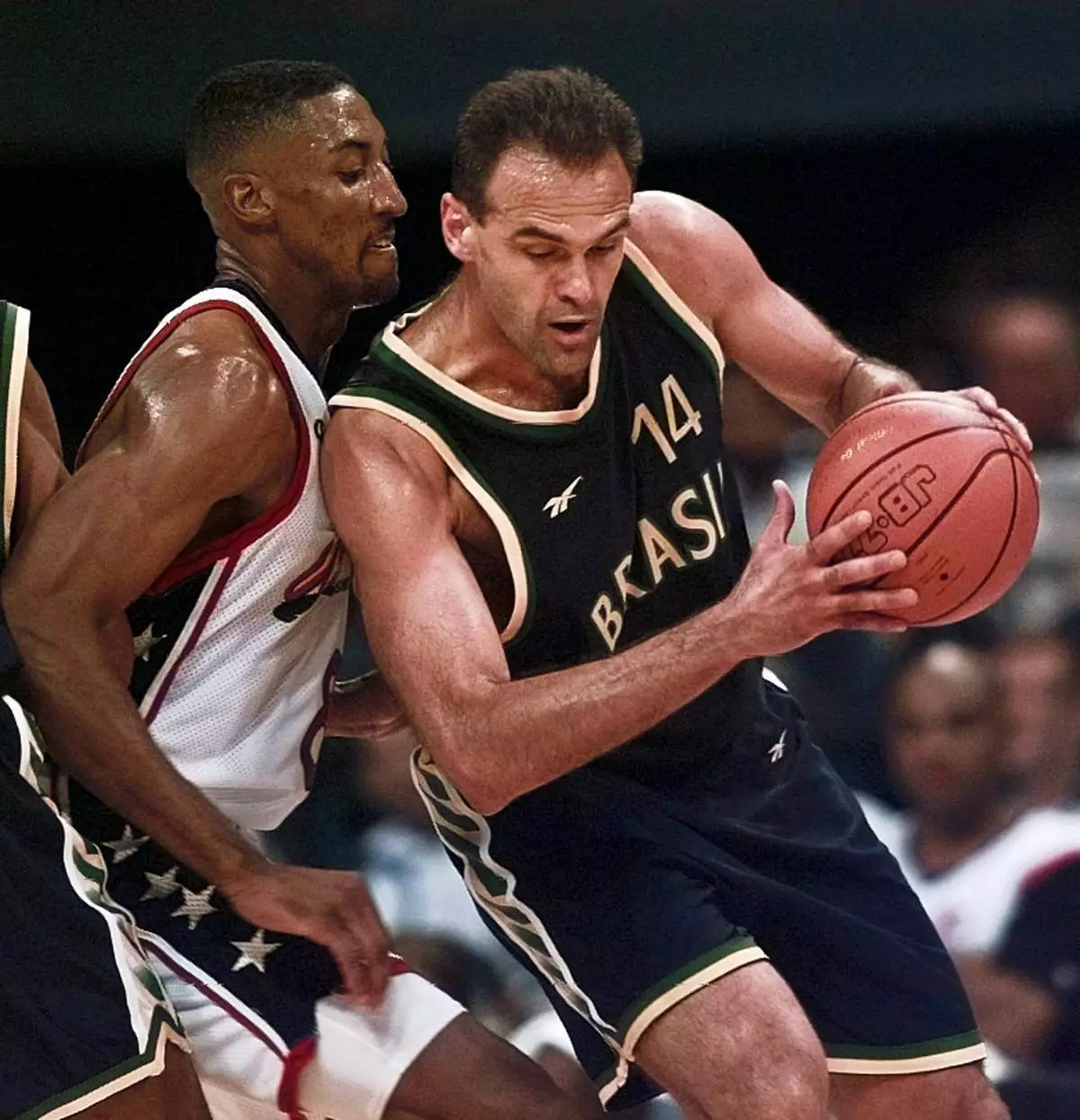
FILE - Brazil's Oscar Schmidt (14) drives past Scottie Pipen (8) of the United States during the quarterfinals of basketball competition at the Centennial Summer Olympic Games in Atlanta, July 30, 1996. Schmidt, whom his Brazil compatriots know as the “Holy Hand,” died. Friday, April 17, 2026. He was 68. (AP Photo/Hans Deryk, File)

FILE - Brazil's Oscar Schmidt (14) drives past Scottie Pipen (8) of the United States during the quarterfinals of basketball competition at the Centennial Summer Olympic Games in Atlanta, July 30, 1996. Schmidt, whom his Brazil compatriots know as the “Holy Hand,” died. Friday, April 17, 2026. He was 68. (AP Photo/Hans Deryk, File)

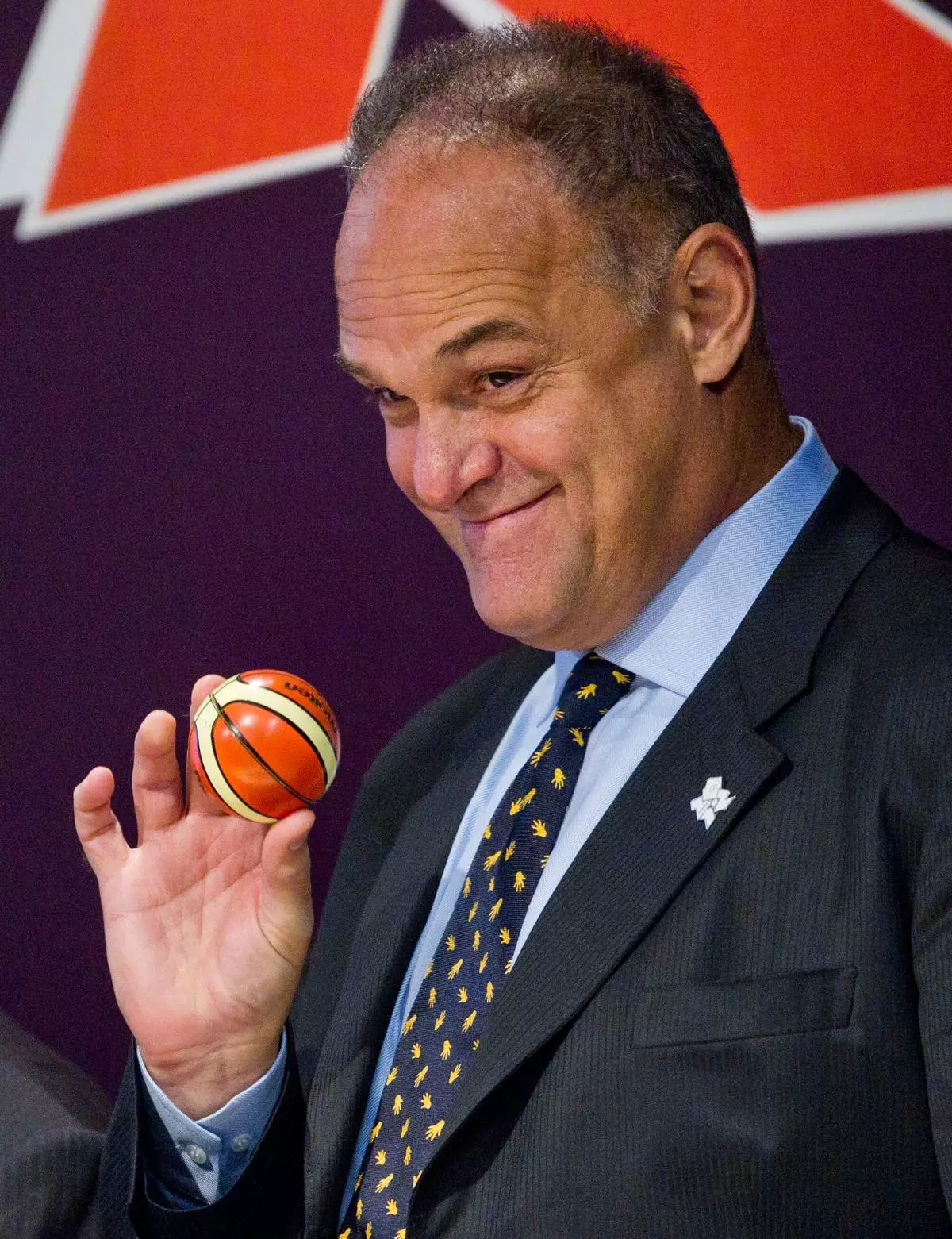
FILE - Brazil's former basketball player Oscar Schmidt shows a miniature basketball containing the name of a country during the draw for the London 2012 Olympic men's basketball tournament in Rio de Janeiro, April 30, 2012. Schmidt, whom his Brazil compatriots know as the “Holy Hand,” died. Friday, April 17, 2026. He was 68. (AP Photo/Victor R. Caivano, File)

FILE - Brazil's former basketball player Oscar Schmidt shows a miniature basketball containing the name of a country during the draw for the London 2012 Olympic men's basketball tournament in Rio de Janeiro, April 30, 2012. Schmidt, whom his Brazil compatriots know as the “Holy Hand,” died. Friday, April 17, 2026. He was 68. (AP Photo/Victor R. Caivano, File)

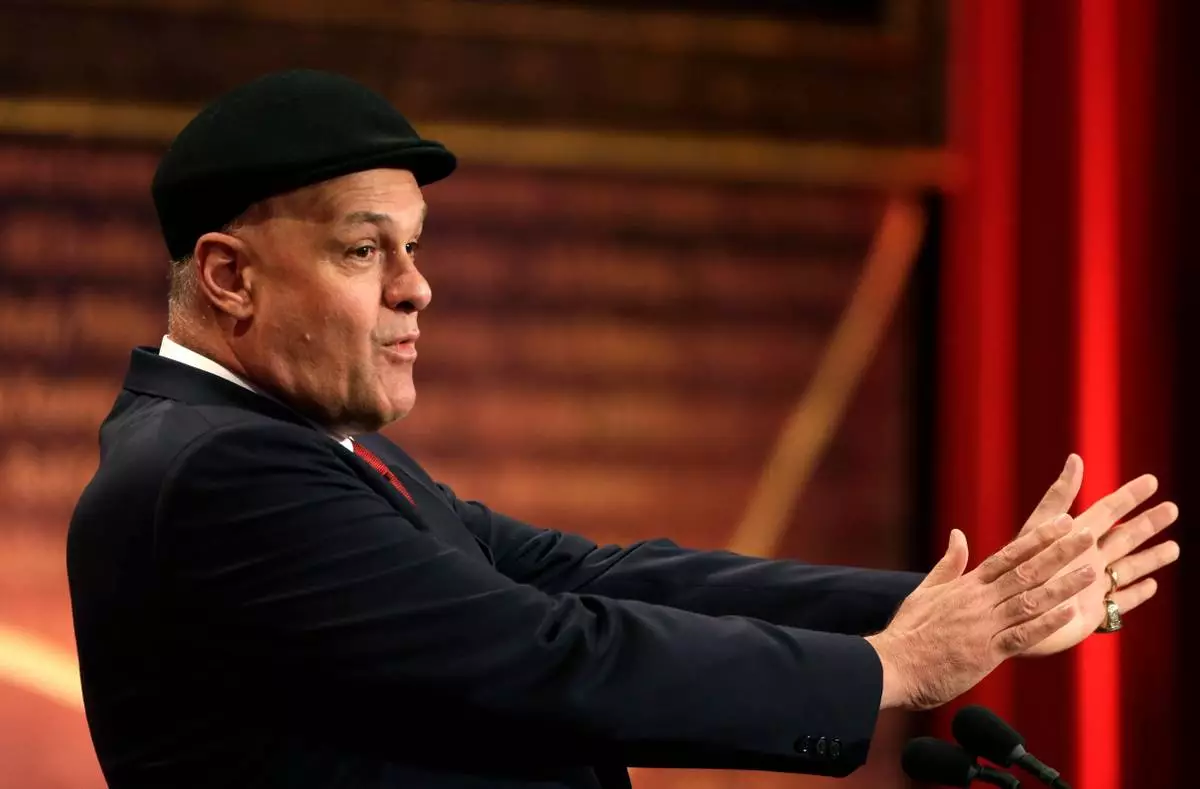
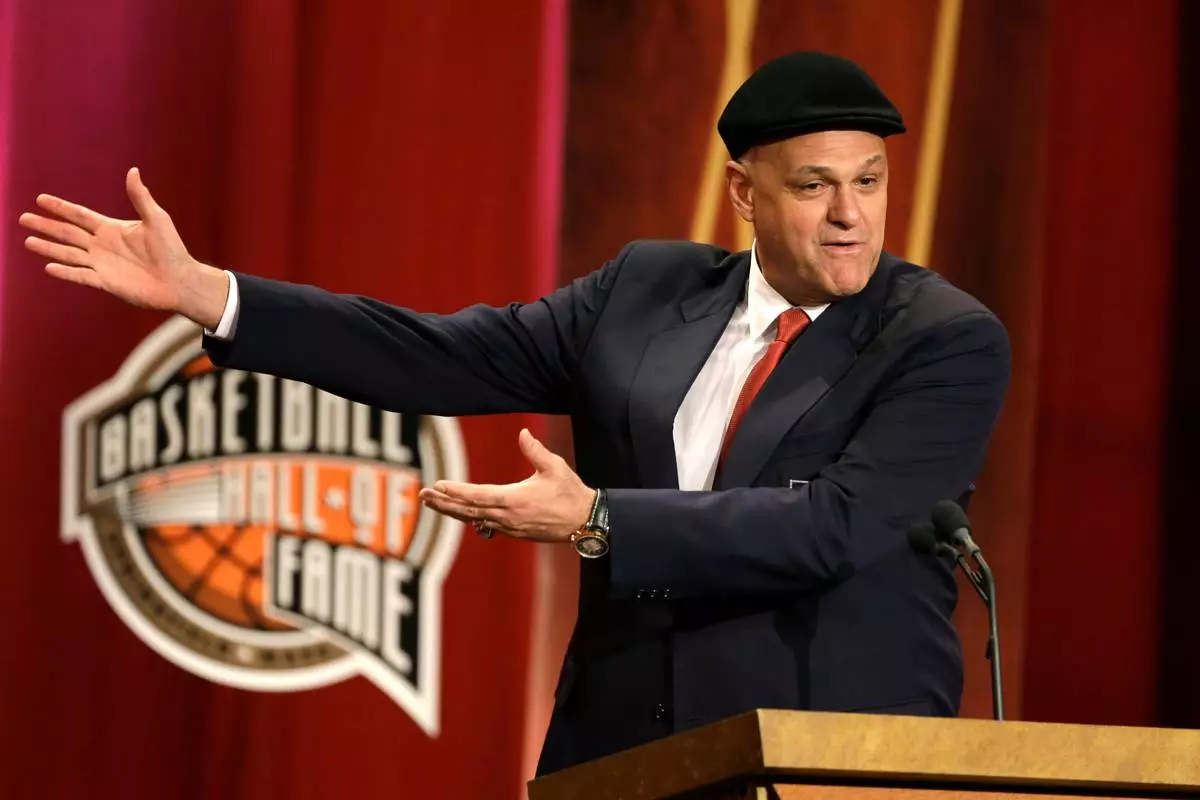
FILE - Inductee Oscar Schmidt, of Brazil, speaks during the enshrinement ceremony for this year's class of the Basketball Hall of Fame, at Symphony Hall in Springfield, Mass., Sept. 8, 2013. Schmidt, whom his Brazil compatriots know as the “Holy Hand,” died. Friday, April 17, 2026. He was 68. (AP Photo/Steven Senne, File)

FILE - Inductee Oscar Schmidt, of Brazil, speaks during the enshrinement ceremony for this year's class of the Basketball Hall of Fame, at Symphony Hall in Springfield, Mass., Sept. 8, 2013. Schmidt, whom his Brazil compatriots know as the “Holy Hand,” died. Friday, April 17, 2026. He was 68. (AP Photo/Steven Senne, File)

FILE - Inductee Oscar Schmidt, of Brazil, speaks during the enshrinement ceremony for the 2013 class of the Naismith Memorial Basketball Hall of Fame at Symphony Hall in Springfield, Mass., Sept. 8, 2013. Schmidt, whom his Brazil compatriots know as the “Holy Hand,” died. Friday, April 17, 2026. He was 68. (AP Photo/Steven Senne, File)

FILE - Inductee Oscar Schmidt, of Brazil, speaks during the enshrinement ceremony for the 2013 class of the Naismith Memorial Basketball Hall of Fame at Symphony Hall in Springfield, Mass., Sept. 8, 2013. Schmidt, whom his Brazil compatriots know as the “Holy Hand,” died. Friday, April 17, 2026. He was 68. (AP Photo/Steven Senne, File)

Recommended Articles