Fuel price hikes and electricity shortages are reshaping daily life in Pakistan, as uncertainty from the war in the Middle East continues to ripple through the economy.
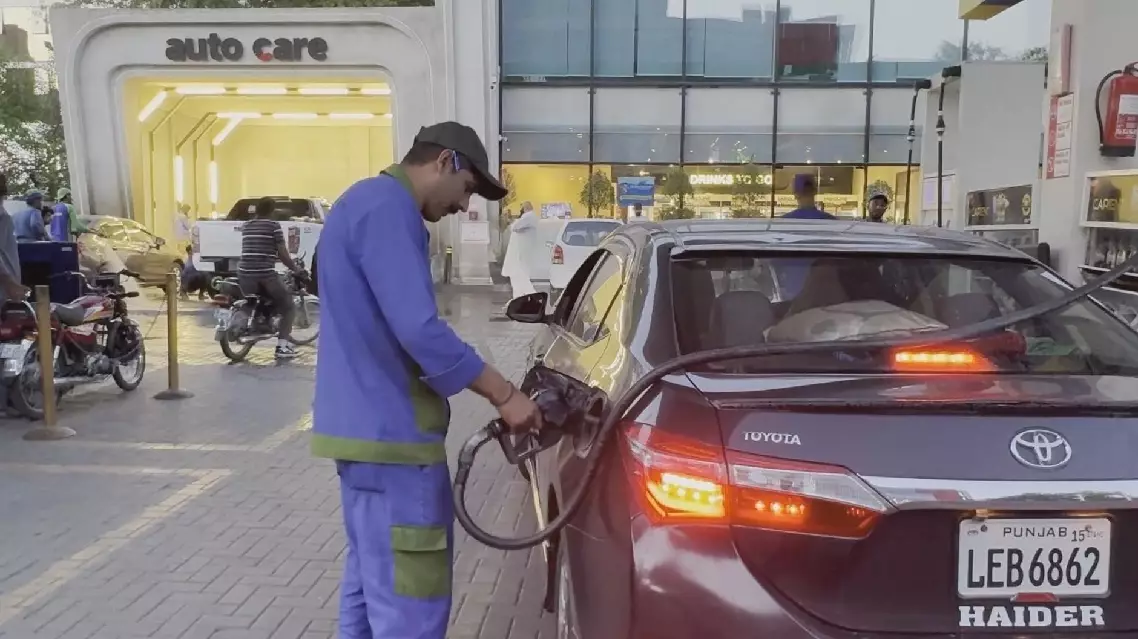
In Islamabad, petrol now costs 368 rupees (about 1.32 U.S dollars) per liter, up from 287 rupees in February and nearly 40 percent higher than before the war. The sharp rise has left households struggling to cover basic expenses as it begins to impact general inflation.
"In terms of percentage, it has increased approximately 30 to 40 percent more. That's a big amount because everything, all the pricings are proportional to the prices of petroleum," said Hisham, a local resident.
In early March, about one week after the U.S.-Israel joint military strikes on Iran, Pakistan's federal government increased the prices of petrol and high-speed diesel by 55 rupees per liter. Under the revised rates, petrol was priced at 321.17 rupees per liter, up from 266.17 rupees, while the price of high-speed diesel has been raised to 335.86 rupees per liter from 280.86 rupees.
Electricity shortages have deepened the crisis, with mandatory conservation measures requiring shops to close by 20:00, and restaurants by 22:30. The restrictions have hit small businesses hard, eroding their customer base.
"Due to shortage of power, we are closing down the shop by the government regulation around 8 o'clock. Before this, we were closing around 10:30 [at night]. We are losing customers because they can't come before 08:00 [at night]," said Idris, a shop owner in Rawalpindi City.
With energy supplies under strain, maintaining steady electricity has become a major challenge. Shops, restaurants and guesthouses are turning to generators or installing large batteries to cope with frequent blackouts.
"In Islamabad, power outages happen frequently. When the electricity goes out, the hotel loses Wi-Fi and security monitoring, and everything falls into darkness, causing huge inconvenience for guests. To keep operations running, I had large-capacity batteries brought from Rawalpindi and installed, which now ensure the hotel can function normally," said a Chinese businesswoman living in Pakistan, managing a guesthouse in the capital city.
On March 10, Pakistani Prime Minister Shehbaz Sharif announced a number of austerity and fuel-saving measures to deal with the fuel crisis.
Under the measures, the government would reduce fuel allocations for vehicles used by government departments by 50 percent for the next two months, adding that 60 percent of the vehicles used by government departments would be stopped, the prime minister said while addressing the nation.
In addition, he said 50 percent of staff in both public and private sectors would work from home, except in essential services, underlining that government offices would operate four days a week.
All schools in the country would be closed for two weeks starting at the end of the current week as part of the energy conservation measures.
Sharif also warned traders against hoarding essential commodities to exploit the situation, urging the nation to demonstrate unity and responsibility in dealing with the crisis.
Fuel hikes, power cuts put strain on Pakistanis
Fuel hikes, power cuts put strain on Pakistanis