PRAGUE (AP) — Countries across Central Europe pulled baby food off the shelves Monday after rat poison was discovered in some jars of the HiPP brand over the weekend.
Austria 's health minister told parents, kindergartens and day care centers to use utmost caution when feeding young children HiPP. The company recalled some of its baby food jars because samples there as well as in Slovakia and the Czech Republic tested positive for rat poison.
Authorities believe tampering occurred in 190-gram (6.7-ounce) jars of baby food made with carrots and potatoes for 5-month-old children that were sold at SPAR supermarkets in Austria. The first sample tested positive on Saturday.
On Monday, Austrian authorities said they were searching for a second jar of baby food that may have poison. It may have been sold at a Spar supermarket in the eastern town of Eisenstadt, Austrian news agency APA reported.
“It is deeply disturbing that someone is apparently willing to endanger the health of babies for criminal motives,” Health Minister Korinna Schumann told APA.
In the Czech Republic, two jars of HiPP baby food that tested positive for the poison were found in a store in the city of Brno. The state prosecution in Brno confirmed the find but did not give further details, citing a police investigation.
The Germany-based HiPP said that besides Czechia, contaminated jars were discovered in Slovakia. The company said that “retail partners in both countries have already removed all jars of HiPP baby food from sale as a precaution.”
Slovak police said they were investigating suspicious jars from a store in the city of Dunajska Streda.
Slovenia began preemptively withdrawing all HiPP products from shelves of Spar and other supermarkets, its health inspectorate said.
Austrian authorities also reached out to Hungarian officials, saying a poisoned jar may have been purchased by people living in the border region near Eisenstadt.
Burgenland Police in Austria said the suspicious products likely have a white sticker with a red circle on the bottom of the jar. Other warning signs include a damaged or opened lid and an unusual or spoiled smell. There might not be a popping noise when the jar is first opened.
The Burgenland public prosecutor’s office was investigating the case as “intentional endangerment of the public.”
HiPP last week said the recall “is not due to any product or quality defect on our part. The jars left our HiPP facility in perfect condition.”
HiPP said it was recalling all of its baby food jars sold at Austria's SPAR supermarkets — which include SPAR, EUROSPAR, INTERSPAR and Maximarkt stores — in Austria as a precaution.
Rat poison typically includes bromadiolone, which prevents blood from clotting, according to the Austrian Agency for Health and Food Safety. Ingesting rat poison could lead to bleeding gums and nosebleeds as well as bruising and blood in the stool.
Symptoms could appear two to five days after ingestion, the agency said.
In Prague, Ester Svetlik Danelova, who is currently on maternity leave, told The Associated Press that “the situation is worrying,” for her family.
“I have three kids, and we definitely use this (baby food) throughout their lives,” she said, adding that “on the bright side, it means I cook more at home now.”
———
Grieshaber reported from Berlin. Associated Press journalist Stanislav Hodina contributed from Prague.
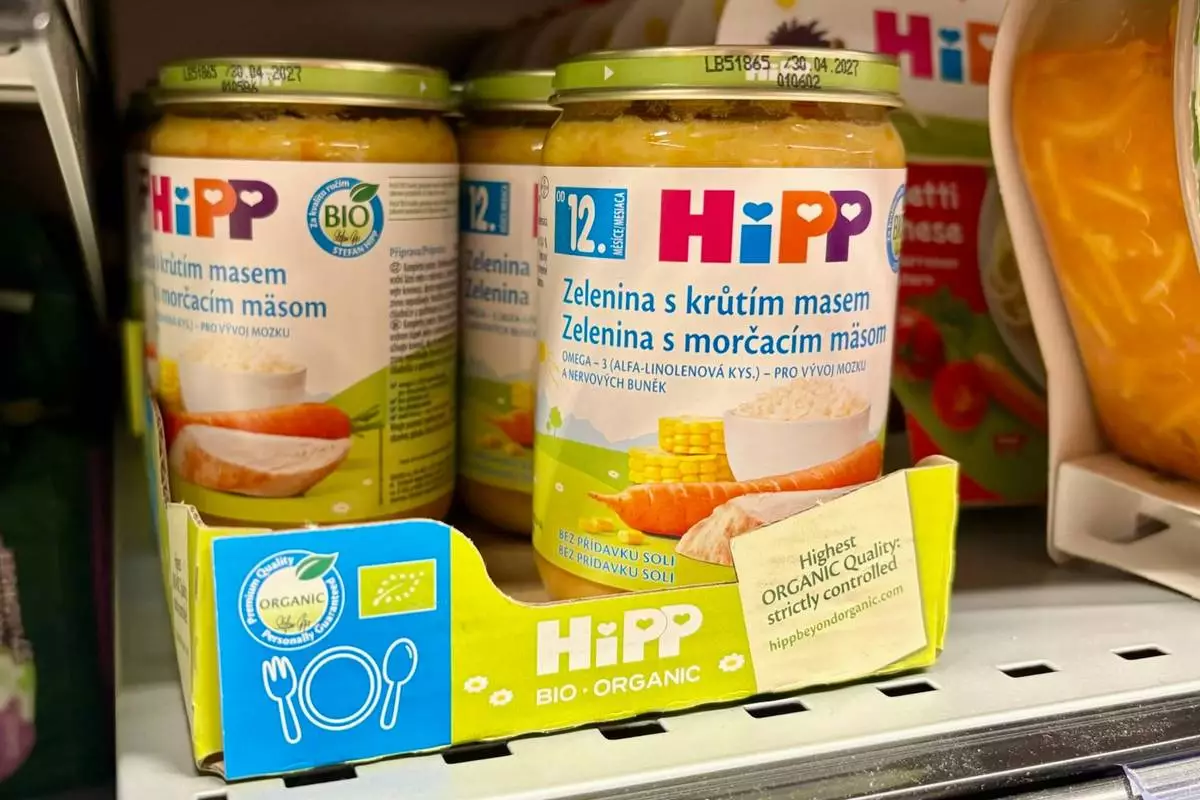
A view of HIPP baby food on a shelf, in Ceske Budejovice, Czech Republic, Sunday, April 19, 2026. (AP Photo/Stanislav Hodina)
ISLAMABAD (AP) — Pakistan moved ahead Monday with preparations for a new round of talks between the United States and Iran two days before a tenuous ceasefire is set to expire, even as renewed conflict around the Strait of Hormuz raised questions about whether the meeting would take place.
Over the weekend, the U.S. attacked and seized an Iranian-flagged cargo vessel that it said had tried to evade its blockade of Iranian ports. Iran’s joint military command vowed to respond, and its Foreign Minister Abbas Aragchi told his Pakistani counterpart that American threats to Iranian ships and ports were “clear signs” of Washington’s disingenuousness ahead of the planned talks, Iran state media reported.
With tensions flaring and the ceasefire due to expire midweek, Pakistan has intensified diplomatic contacts with both Washington and Tehran over the past 24 hours with the goal of resuming the talks on Tuesday as planned, according to two Pakistani officials involved in the preparations. Two additional Pakistani officials said Iran has expressed a willingness to send a delegation to Islamabad. They all spoke on condition of anonymity because they were not authorized to speak to the press.
U.S. President Donald Trump has said American negotiators would head to the Pakistani capital on Monday, but it was not immediately clear whether those plans would now change.
Iran’s Foreign Ministry spokesperson Esmail Baghaei told reporters in Tehran on Monday that there were no plans yet to attend the talks with the U.S. But at the same time, he did not rule it out.
“We have no plans for the next round of negotiations and no decision has been made in this regard,” Baghaei said.
Iran on Saturday said it had received new proposals from the United States but suggested a wide gap remained between the sides. It was unclear whether either side had shifted stances on issues that derailed the last round of negotiations, including Iran’s nuclear enrichment program, its regional proxies and the Strait of Hormuz.
Iran throttled traffic through the Strait of Hormuz, which connects the Persian Gulf to the open seas, shortly after the U.S. and Israel attacked Iran on Feb. 28 to start the war. The U.S. has also instituted a blockade of Iranian ports.
Roughly one-fifth of the world’s oil trade normally passes through the strait, along with critical supplies of fertilizer for the world’s farmers, natural gas and humanitarian supplies for places in dire need like Afghanistan and Sudan.
Since the war started, at least 3,375 people have been killed in Iran, according to a new toll released Monday in official Iranian media by Abbas Masjedi, the head of Iran’s Legal Medicine Organization. He did not break down casualties among civilians and security forces, instead just saying that 2,875 were male and 496 were female. Masjedi said 383 of the dead were children 18 years old and under.
More than 2,290 people have also been killed in Lebanon, 23 in Israel and more than a dozen in Gulf Arab states. Fifteen Israeli soldiers in Lebanon and 13 U.S. service members throughout the region have been killed.
Iran’s grip on the Strait of Hormuz has also sent oil prices skyrocketing and given rise to one of the worst global energy crises in decades.
Oil prices recovered slightly following Iran’s announcement that the strait was being reopened a 10-day truce between Israel and the Iranian-backed Hezbollah militant group in Lebanon took hold on Friday.
But then Trump said the U.S. blockade “will remain in full force” until Tehran reaches a deal with the U.S. and on Sunday the military seized the Iranian cargo ship, the first interception since the blockade began last week.
Iran’s joint military command called the armed boarding an act of piracy and a ceasefire violation, the state broadcaster said, and vowed to again enforce restrictions imposed early in the war. Already on Saturday, Iran fired at ships trying to transit.
Oil prices were up again in early trading on Monday, with Brent crude, the international standard, at about $95 a barrel — up more than 30% from the day the war started.
Iran early Monday warned it could keep up the global economic pain as ships remained unable to transit the strait, with hundreds of vessels waiting at each end for clearance.
Security of the strait is not free and “the choice is clear: either a free oil market for all, or the risk of significant costs for everyone,” Mohammad Reza Aref, first vice president of Iran, said in a social media post calling for a lasting end to military and economic pressure on Tehran.
Israeli Prime Minister Benjamin Netanyahu condemned the defacing of a statue of Jesus Christ by an Israeli soldier in Lebanon, saying he was “stunned and saddened.”
Photos surfaced over the weekend of an Israeli soldier using a sledgehammer to smash the head of a toppled Jesus statue. The Israeli military confirmed the images were genuine, setting off a wave of condemnation.
A ceasefire began Friday in Lebanon, where fighting between Israel and Iran-backed Hezbollah militants broke out two days after the U.S. and Israel launched their war on Iran. Mediators said the fighting in Lebanon was undermining efforts to end the conflict between Iran and the U.S.
Gambrell reported from Dubai, United Arab Emirates, and Rising from Bangkok. Associated Press journalists Melanie Lidman in Tel Aviv, Israel, and Russ Bynum in Savannah, Georgia, contributed to this report.
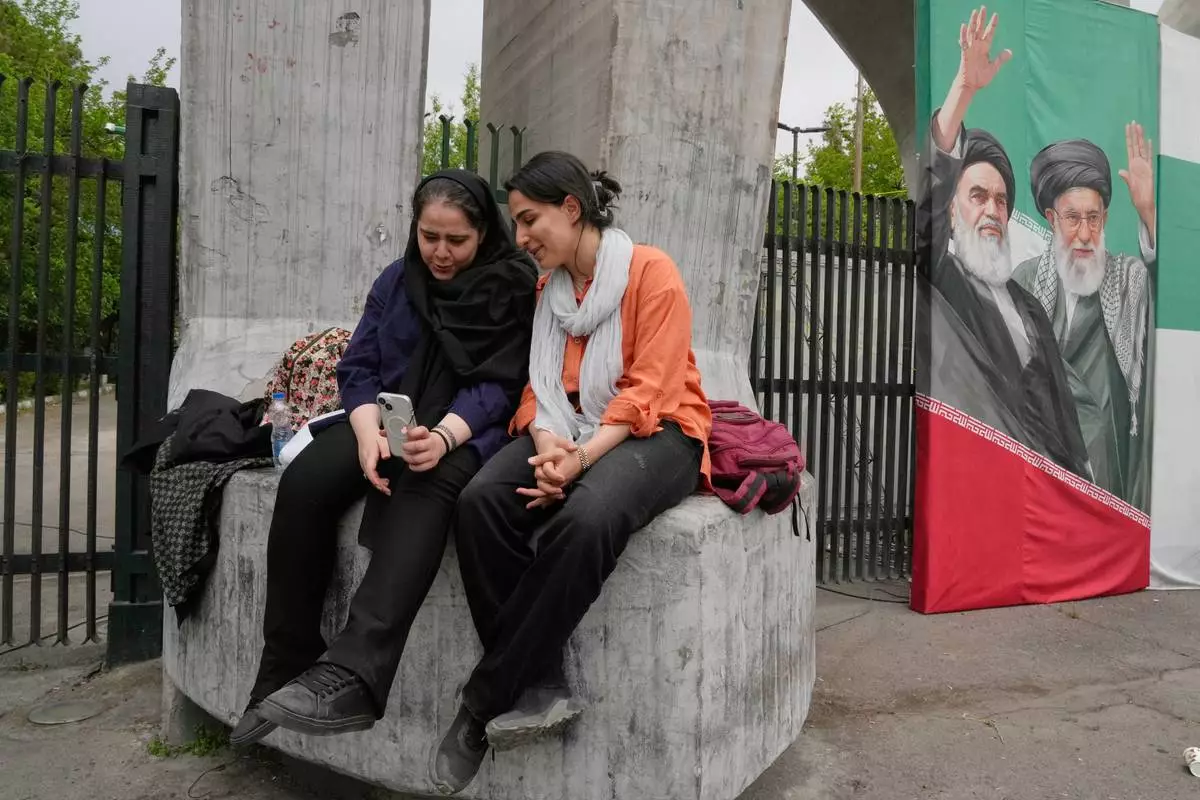
Women share a moment as they look at a smartphone at the main gate of the Tehran University as a banner shows portraits of the late Supreme Leader Ayatollah Ali Khamenei, right, and the late revolutionary founder Ayatollah Khomeini in Tehran, Iran, Sunday, April 19, 2026. (AP Photo/Vahid Salemi)
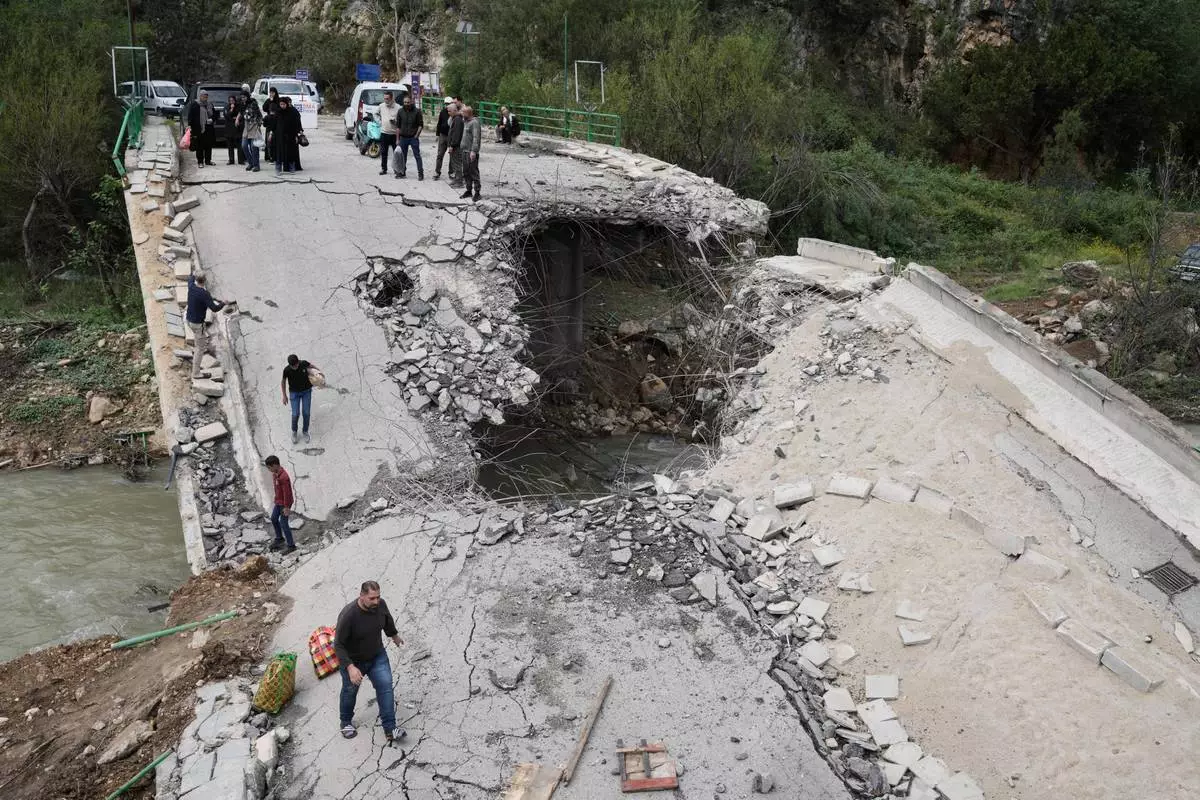
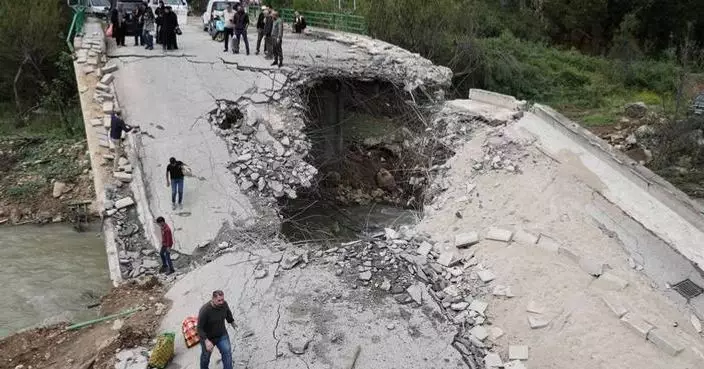
Displaced people cross a destroyed bridge as they return to their villages, following a ceasefire between Hezbollah and Israel, in Tayr Felsay village, southern Lebanon, Sunday, April 19, 2026. (AP Photo/Bilal Hussein)
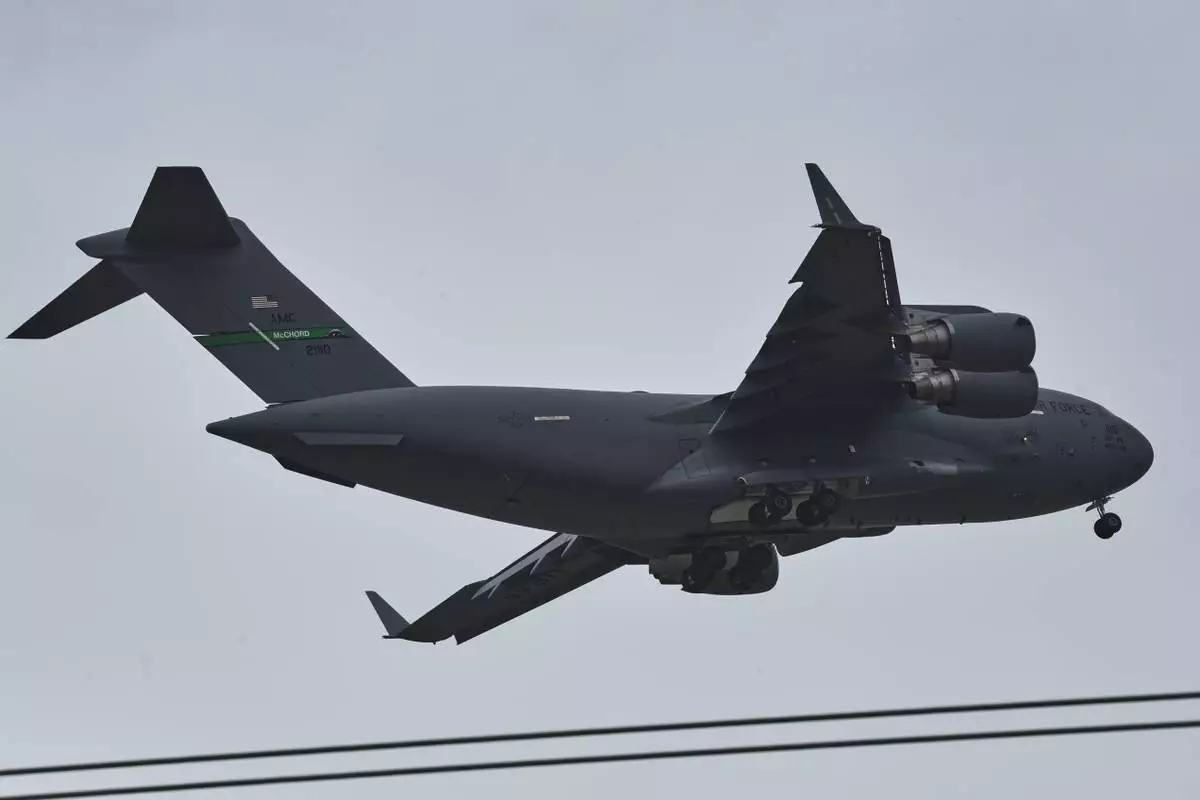
A U.S. Air Force Boeing C-17 Globemaster III transport aircraft prepares to land at Nur Khan airbase, ahead of second round of negotiations between the U.S. and Iran, in Rawalpindi, Pakistan, Monday, April 20, 2026. (AP Photo/Ehsan Shahzad)
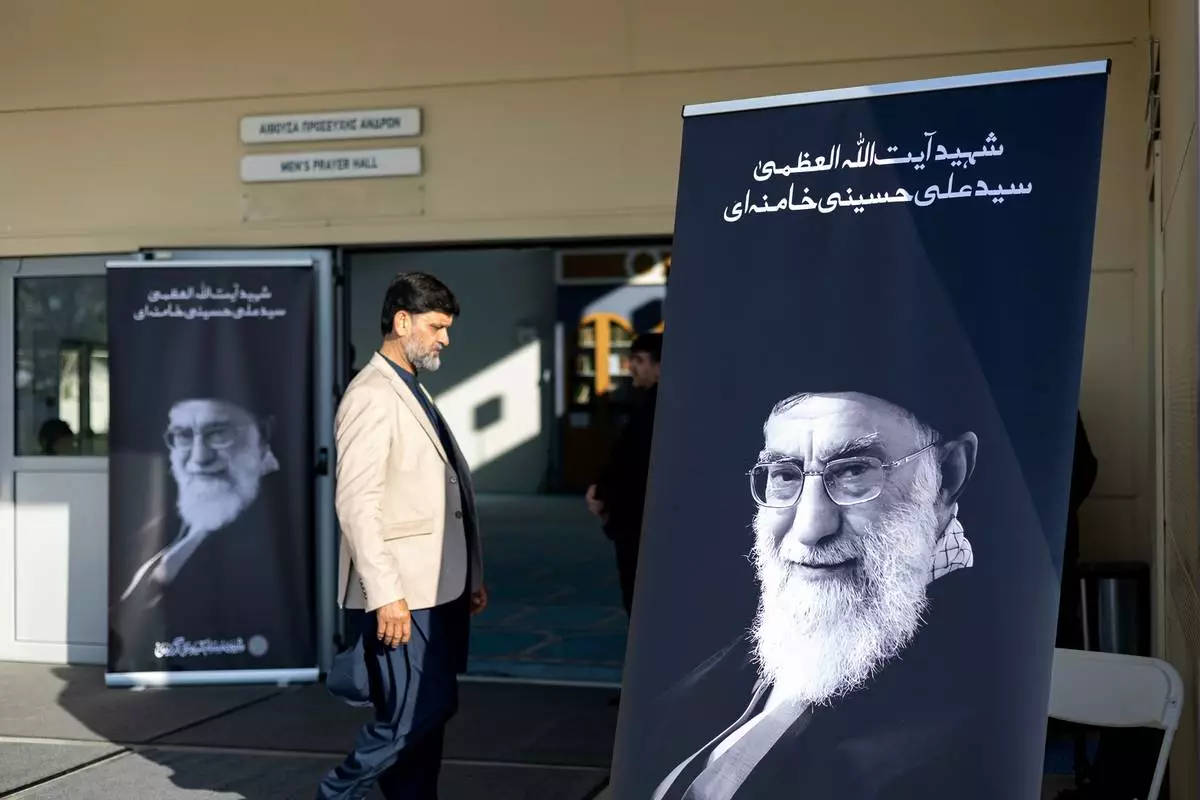
A muslim walks outside a mosque where a commemorative religious event in honor of late Supreme Leader Ayatollah Ali Khamenei is taking place, organized by the Shiite Muslim Community of Greece in Athens, on Sunday, April 19, 2026. (AP Photo/Yorgos Karahalis)
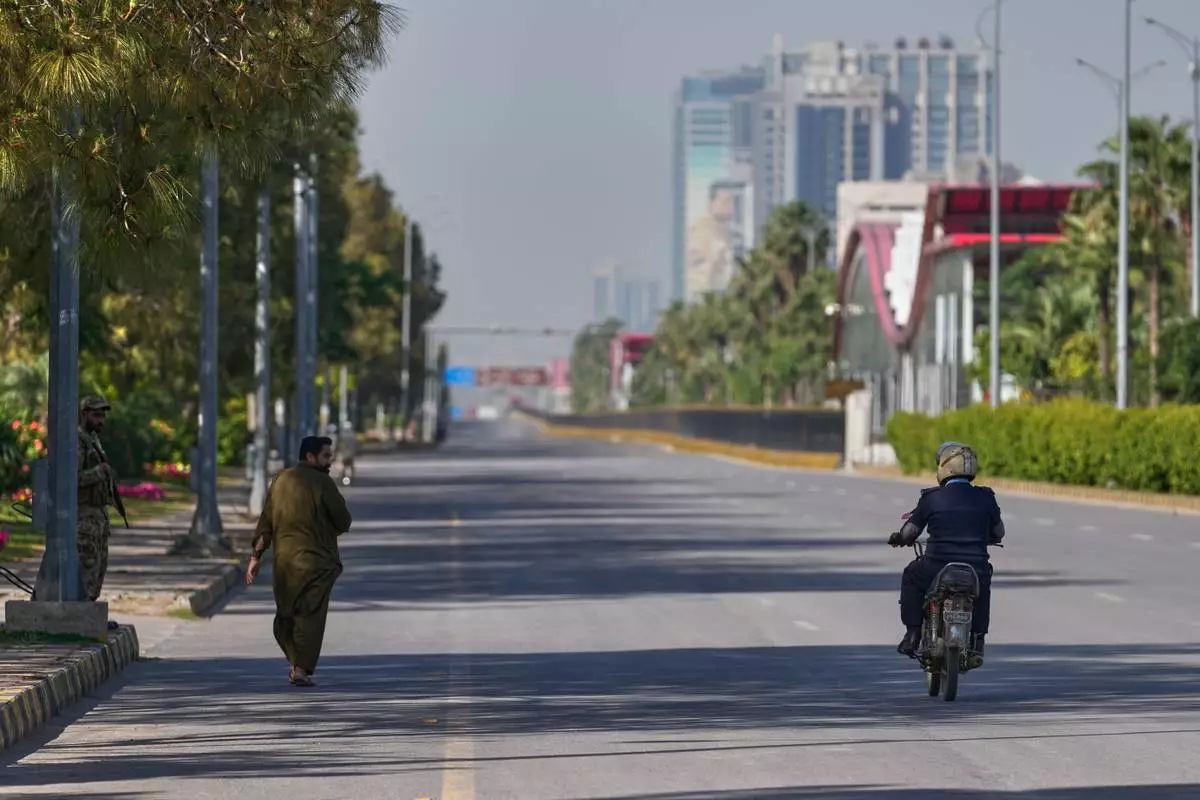
An army soldier, left, walks as police officer drives motorcycle on an empty road ahead of second round of negotiations between the U.S. and Iran, in Islamabad, Pakistan, Monday, April 20, 2026. (AP Photo/Anjum Naveed)