SINGAPORE, April 20, 2026 /PRNewswire/ -- Most builders do not fail because they lack ideas. They fail because there is always a gap between the idea and the thing that actually ships, and closing that gap has traditionally required a team.
Today, Verdent announced a major update to its AI-native software platform, expanding its capabilities beyond code generation to support planning, execution, validation, and delivery in a more unified workflow. The update reflects the company's view that the next phase of AI in software development will not be defined by better copilots alone, but by AI engineering teams that can help carry work from intent to outcome.
A photographer in Europe built a custom e-commerce platform and parent-facing CRM from scratch, with no engineering background. An equipment supplier in India shipped a multi-role workflow system and billing app for his factory floor. A consultant in West Africa delivered three client projects in parallel: an education platform, a bank CRM, and a corporate intranet. Together, they reflect what early Verdent users around the world are already doing: building real software without hiring engineers.
That is the opportunity Verdent is built around.
AI coding tools changed how software gets written. They made code generation faster, cheaper, and more accessible. But they did not solve the hardest part of software development: deciding what to build, coordinating how it gets built, validating what changed, and carrying work all the way through to something teams can actually ship.
Verdent starts from that premise. The company believes the next chapter of AI in software development will not be defined by isolated assistants or better autocomplete. It will be defined by AI engineering teams—systems that take on planning, execution, validation, and delivery as a unified workflow.
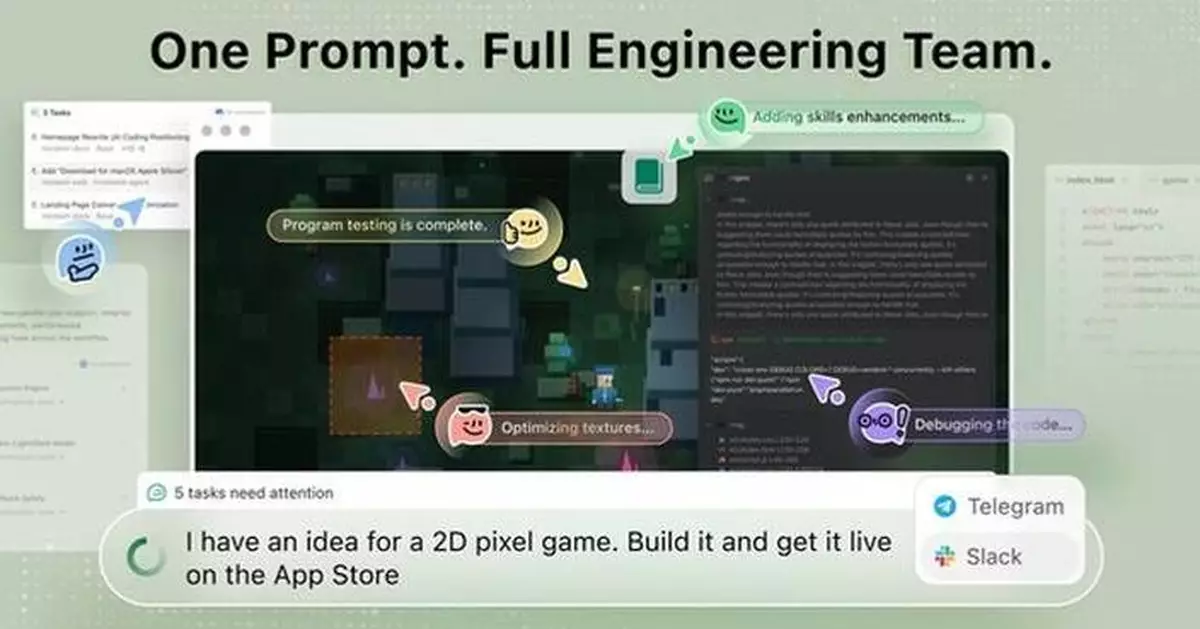
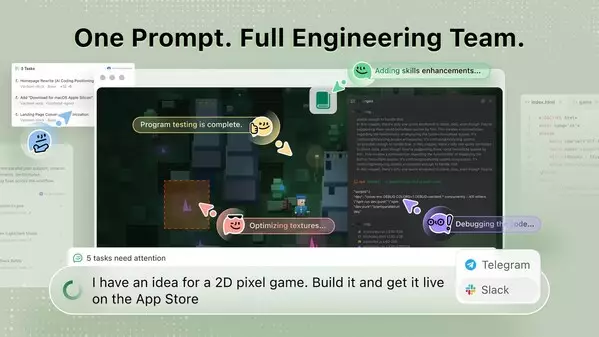
Rather than answering isolated prompts or generating one-off snippets, Verdent is designed to carry software work across the full path from intent to outcome. Describe what you want to build—a dashboard, a CI/CD pipeline, a feature rollout, or an internal tool—and Verdent gets to work. It breaks the goal into tasks, selects the right tools, writes and modifies code, runs tests and checks, and returns working output teams can review and ship.
Where other tools stop at the prompt, Verdent operates more like an AI engineering team. It carries work across complete workflows, retains context across projects, and keeps moving forward without forcing users to start from scratch every time. Instead of treating each request as a cold start, Verdent keeps track of codebase structure, conventions, prior decisions, and user preferences, allowing work to progress with greater continuity and consistency.
That continuity extends beyond the desktop. Verdent works asynchronously through tools like Slack and Telegram, allowing teams to trigger and monitor work outside a traditional development environment. Progress does not stop when you step away from your computer. It continues while founders and small teams are focused on product decisions, customer conversations, operations, or go-to-market work.
This is what makes the AI engineering team metaphor meaningful. The value is not just in generating code. It is in helping move software delivery forward across planning, execution, validation, and deployment—even when no traditional engineering team is there to carry the load.
"Code generation is abundant," said Zhijie Chen, founder and CEO of Verdent and former Head of Algorithms at ByteDance. "What remains scarce is completion—software that is planned, executed, verified, and shipped. We believe the industry is moving beyond copilots. Verdent is built around an AI engineering team model for software delivery."
Verdent's product direction is also informed by research into how AI systems make decisions across real engineering workflows. The company's work on SEAlign received a Distinguished Paper Award at ICSE 2026, one of the leading conferences in software engineering. That research focuses on aligning AI systems with the decision-making demands of real engineering work—reasoning through multi-step tasks, incomplete information, and practical constraints rather than optimizing only for code generation in isolation.
"Agent success is not just about stronger models," said Huangzhao Zhang. "It is about making better decisions across the plan-code-verify cycle. That is the direction that shaped Verdent."
Software development is entering a new phase. The copilot era taught AI how to assist. The next phase will demand systems that can take on more of the path from intent to outcome.
Verdent is built for founders, indie developers, and small teams with more backlog than bandwidth—teams constrained less by ideas than by the effort required to turn those ideas into working, reliable software.
Not another AI coding assistant.
An AI engineering team for builders.
About Verdent
Verdent AI is an AI-native software company building tools that help developers move from idea to shipped product. Designed around chat-first workflows, parallel work, and trusted review, Verdent supports desktop development as well as VS Code and JetBrains environments. The company's mission is to help developers focus on creation while AI takes on more of the work across the software lifecycle.
Media Contact
Eileen Li
Verdent AI
eileen@verdent.ai
** This press release is distributed by PR Newswire through automated distribution system, for which the client assumes full responsibility. **
Verdent: The World's First AI Engineering Team for Builders
|
- The company highlights its approach to integrating real-time data analytics with automated PCR infrastructure
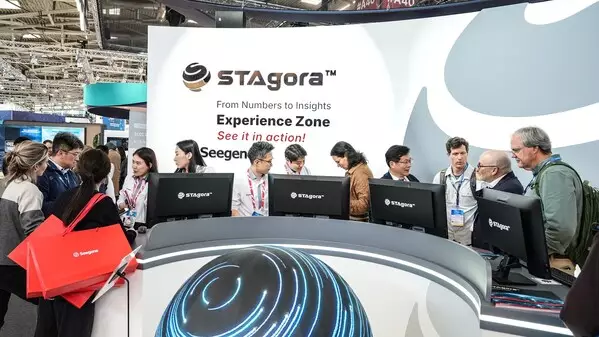
- The standalone booth features STAgora simulation and an interactive touchscreen experience
- An enhanced CURECA model is presented, illustrating next-generation automated laboratory workflows
- Strong on-site engagement from global healthcare and laboratory professionals, researchers, and industry stakeholders
SEOUL, South Korea, April 20, 2026 /PRNewswire/ -- Seegene, a global molecular diagnostics company, announced that it introduced STAgora™, a real-time data analytics platform based on aggregated statistical testing data, and presented an enhanced model of its automated PCR workflow concept CURECA™ at ESCMID Global 2026 (formerly ECCMID), held April 17–21 in Munich, Germany, drawing interest from healthcare professionals attending the event.
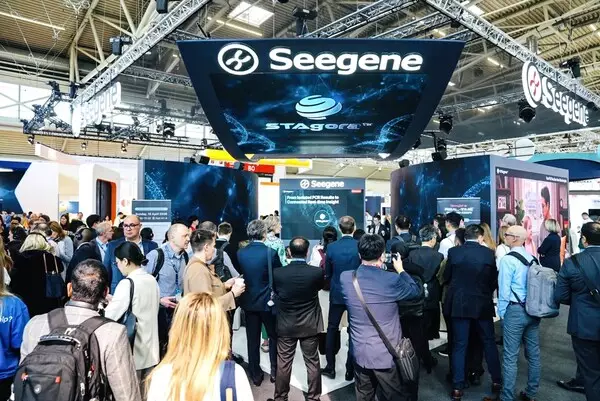
Throughout the exhibition, Seegene's booth drew strong on-site interest from healthcare professionals, laboratory specialists, academic researchers, and industry stakeholders worldwide. Visitors explored the automated PCR workflow at the CURECA station and engaged in discussions about its potential applications. At the STAgora station, attendees experienced live simulations of the platform, demonstrating strong interest in its intuitive interface and aggregated data visualization capabilities.
At the conference, Seegene presented its key message, "From Numbers to Insights", highlighting how automated testing infrastructure and real-time data analytics can work together to support a better understanding of population-level and public health-related trends.
"STAgora is designed to connect PCR testing data generated around the world in real time and provide a clearer view of infectious disease trends based on aggregated statistics," said Young Seag Baeg, New Business Officer at Seegene. "We are continuing to explore how real-time data analytics, combined with automated testing infrastructure, can help laboratories better understand infection patterns and expand the practical use of aggregated testing data."
At the booth, visitors explored real-time dashboards presenting comparative data between single-target and syndromic PCR testing outputs, regional infection trends over time, pathogen-specific positivity rates and co-infection patterns. The ability to analyze aggregated test results alongside regional epidemiological data drew particular attention from attendees.
Seegene also showcased an enhanced model of CURECA. Visitors examined the system's modular structure and automation workflow, which integrates preprocessing, nucleic acid extraction, amplification, and result processing. Many attendees engaged in in-depth discussions about the system's architecture and its applicability in real laboratory environments.
A clinician from a university hospital in Germany who experienced the STAgora demonstration commented that the platform provided a more intuitive way to explore and visualize aggregated testing data trends. The clinician noted that the ability to view regional infection trends alongside aggregated test results in real time was particularly impactful.
"Interest in STAgora's real-time data capabilities and practical applications was strong throughout the event," said Daniel Shin, Executive Vice President and Chief Global Sales and Marketing Officer at Seegene. "We plan to expand pilot programs and collaborative evaluations with healthcare and laboratory institutions to further evaluate the platform and support its potential future adoption."
This approach was also noted to align with syndromic PCR testing, which enables the simultaneous detection of multiple pathogens, supporting broader analysis of aggregated infection patterns across different settings.
Seegene previously introduced STAgora and CURECA to the global diagnostics community at major international conferences including ADLM and ESCMID Global 2025. At ESCMID 2026, the company featured an expanded standalone booth where visitors engaged with STAgora through an interactive touchscreen demonstration zone. An enhanced model of CURECA was also displayed, illustrating the company's vision for future workflow automation.
During the conference, Seegene held discussions with global partners and leading laboratories on the adoption and validation of STAgora and CURECA. The company also hosted dedicated sessions for healthcare and laboratory professionals, particularly in Europe, to present use cases and potential applications of its technologies.
Seegene stated that it plans to further expand collaboration with clinical, academic, and research partners to support the implementation and validation of its data-driven diagnostics platform, with the goal of accelerating real-world adoption across global healthcare settings.
About Seegene
Seegene is a global molecular diagnostics company with more than 25 years of expertise in research, development and manufacturing of syndromic real-time PCR technologies. The company is widely recognized for its proprietary multiplex PCR technology, which enables the simultaneous detection of multiple pathogens in a single test.
A core feature of Seegene's syndromic real-time PCR technology is its ability to detect up to 14 pathogens that cause similar signs and symptoms in a single tube while providing quantitative information to support more efficient clinical decision-making.
Seegene's technological capabilities were demonstrated during the COVID-19 pandemic, when the company supplied more than 340 million COVID-19 tests to over 100 countries worldwide.
Building on its molecular diagnostics expertise, Seegene is expanding beyond assay-based diagnostics to develop an integrated diagnostic ecosystem. The company is advancing new technologies including STAgora™, a real-time diagnostic data analytics platform, and CURECA™, a fully automated PCR system designed to streamline the entire molecular testing workflow.
Through its Technology Sharing Initiative and global partnerships, Seegene aims to broaden access to molecular diagnostics technologies and strengthen global preparedness for infectious diseases.
- The company highlights its approach to integrating real-time data analytics with automated PCR infrastructure
- The standalone booth features STAgora simulation and an interactive touchscreen experience
- An enhanced CURECA model is presented, illustrating next-generation automated laboratory workflows
- Strong on-site engagement from global healthcare and laboratory professionals, researchers, and industry stakeholders
SEOUL, South Korea, April 20, 2026 /PRNewswire/ -- Seegene, a global molecular diagnostics company, announced that it introduced STAgora™, a real-time data analytics platform based on aggregated statistical testing data, and presented an enhanced model of its automated PCR workflow concept CURECA™ at ESCMID Global 2026 (formerly ECCMID), held April 17–21 in Munich, Germany, drawing interest from healthcare professionals attending the event.
Throughout the exhibition, Seegene's booth drew strong on-site interest from healthcare professionals, laboratory specialists, academic researchers, and industry stakeholders worldwide. Visitors explored the automated PCR workflow at the CURECA station and engaged in discussions about its potential applications. At the STAgora station, attendees experienced live simulations of the platform, demonstrating strong interest in its intuitive interface and aggregated data visualization capabilities.
At the conference, Seegene presented its key message, "From Numbers to Insights", highlighting how automated testing infrastructure and real-time data analytics can work together to support a better understanding of population-level and public health-related trends.
"STAgora is designed to connect PCR testing data generated around the world in real time and provide a clearer view of infectious disease trends based on aggregated statistics," said Young Seag Baeg, New Business Officer at Seegene. "We are continuing to explore how real-time data analytics, combined with automated testing infrastructure, can help laboratories better understand infection patterns and expand the practical use of aggregated testing data."
At the booth, visitors explored real-time dashboards presenting comparative data between single-target and syndromic PCR testing outputs, regional infection trends over time, pathogen-specific positivity rates and co-infection patterns. The ability to analyze aggregated test results alongside regional epidemiological data drew particular attention from attendees.
Seegene also showcased an enhanced model of CURECA. Visitors examined the system's modular structure and automation workflow, which integrates preprocessing, nucleic acid extraction, amplification, and result processing. Many attendees engaged in in-depth discussions about the system's architecture and its applicability in real laboratory environments.
A clinician from a university hospital in Germany who experienced the STAgora demonstration commented that the platform provided a more intuitive way to explore and visualize aggregated testing data trends. The clinician noted that the ability to view regional infection trends alongside aggregated test results in real time was particularly impactful.
"Interest in STAgora's real-time data capabilities and practical applications was strong throughout the event," said Daniel Shin, Executive Vice President and Chief Global Sales and Marketing Officer at Seegene. "We plan to expand pilot programs and collaborative evaluations with healthcare and laboratory institutions to further evaluate the platform and support its potential future adoption."
This approach was also noted to align with syndromic PCR testing, which enables the simultaneous detection of multiple pathogens, supporting broader analysis of aggregated infection patterns across different settings.
Seegene previously introduced STAgora and CURECA to the global diagnostics community at major international conferences including ADLM and ESCMID Global 2025. At ESCMID 2026, the company featured an expanded standalone booth where visitors engaged with STAgora through an interactive touchscreen demonstration zone. An enhanced model of CURECA was also displayed, illustrating the company's vision for future workflow automation.
During the conference, Seegene held discussions with global partners and leading laboratories on the adoption and validation of STAgora and CURECA. The company also hosted dedicated sessions for healthcare and laboratory professionals, particularly in Europe, to present use cases and potential applications of its technologies.
Seegene stated that it plans to further expand collaboration with clinical, academic, and research partners to support the implementation and validation of its data-driven diagnostics platform, with the goal of accelerating real-world adoption across global healthcare settings.
About Seegene
Seegene is a global molecular diagnostics company with more than 25 years of expertise in research, development and manufacturing of syndromic real-time PCR technologies. The company is widely recognized for its proprietary multiplex PCR technology, which enables the simultaneous detection of multiple pathogens in a single test.
A core feature of Seegene's syndromic real-time PCR technology is its ability to detect up to 14 pathogens that cause similar signs and symptoms in a single tube while providing quantitative information to support more efficient clinical decision-making.
Seegene's technological capabilities were demonstrated during the COVID-19 pandemic, when the company supplied more than 340 million COVID-19 tests to over 100 countries worldwide.
Building on its molecular diagnostics expertise, Seegene is expanding beyond assay-based diagnostics to develop an integrated diagnostic ecosystem. The company is advancing new technologies including STAgora™, a real-time diagnostic data analytics platform, and CURECA™, a fully automated PCR system designed to streamline the entire molecular testing workflow.
Through its Technology Sharing Initiative and global partnerships, Seegene aims to broaden access to molecular diagnostics technologies and strengthen global preparedness for infectious diseases.
** This press release is distributed by PR Newswire through automated distribution system, for which the client assumes full responsibility. **
Seegene Introduces STAgora at ESCMID Global 2026, Highlighting Real-Time Data with Automated PCR Workflows
Seegene Introduces STAgora at ESCMID Global 2026, Highlighting Real-Time Data with Automated PCR Workflows