ALEXANDRIA, Va. (AP) — U.S. authorities “got the wrong man” when they charged an alleged Islamic State militant in a deadly suicide bombing at a Kabul airport during the American military’s chaotic withdrawal from Afghanistan in 2021, a defense attorney said Monday at the start of the man's trial in Virginia.
Mohammad Sharifullah is accused of scouting the bomber's route to the airport before the attack that killed nearly 200 people, including 13 U.S. service members, at the end of America’s longest war. FBI agents interviewed him for hours over the course of several days after his capture.
But one of Sharifullah's lawyers said he had no role in the bombing plot and suggested that the Afghan national gave a false confession.
“The U.S. government got the wrong man,” defense attorney Geremy Kamens said during the trial's opening statements. “That is why we are proud to represent Mohammad Sharifullah in this trial.”
Justice Department prosecutor John Gibbs said Sharifullah, also known as Jafar, spoke to a journalist about killing American “crusaders” who invaded his home country after the Sept. 11 terrorist attacks on the U.S.
“The feeling was just to catch the crusaders and kill them,” Sharifullah told the journalist, according to Gibbs.
Sharifullah told FBI agents that he joined an Islamic State regional branch known as ISIS-K around 2016. Although he denied having a planning role in the Kabul airport bombing, he told the agents that he had done “a lot of other things” on behalf of ISIS-K, Gibbs said.
President Donald Trump announced Sharifullah’s capture during his State of the Union address in March 2025. Sharifullah arrived in the U.S. a day later to face prosecution and faces a maximum sentence of life in prison if convicted.
Twelve jurors and three alternates were picked Monday in Alexandria, Virginia, for Sharifullah's federal trial on one count of providing material support to a designated foreign terrorist organization resulting in death. The trial is expected to last about a week.
U.S. troops were conducting an evacuation operation at the Kabul airport on Aug. 26, 2021, when a lone suicide bomber detonated an improvised explosive device near an entry point known as Abbey Gate. Approximately 160 Afghans were killed in the attack along with the 13 U.S. service members.
A review by U.S. Central Command found that the Abbey Gate bomber was Abdul Rahman al-Logari, an Islamic State militant who had been released from an Afghan prison by the Taliban. Sharifullah recognized the alleged bomber as an operative he had known while incarcerated, according to an FBI affidavit.
A former Marine testified to Congress that he and others had spotted two possible suspects behaving suspiciously on the morning of the bombing but didn't get permission to act. However, the Central Command review concluded that the snipers hadn't seen the actual bomber and that the attack was not preventable.
Still, the carnage led to sharp criticism of how Democratic President Joe Biden's administration handled the U.S. withdrawal from Afghanistan after a war spanning two decades. On the campaign trial, before he won a second term in the White House, Trump repeatedly condemned Biden’s role in the chaotic Afghanistan withdrawal and blamed him for the Abbey Gate attack.
One of the prosecutors assigned to the Abbey Gate case was fired by the Justice Department last year after a right-wing commentator publicly criticized him over his work during the Biden administration. Michael Ben’Ary's ouster was part of a broader purge of Justice Department veterans deemed to be insufficiently loyal to Trump, a Republican.
Sharifullah is accused of participating in other attacks linked to ISIS-K. The FBI said he provided instructions on the proper use of firearms before other ISIS-K members carried out a March 2024 attack at a Moscow concert hall that killed roughly 140 people.
Kamens suggested that Sharifullah gave a false confession under duress while in Pakastani custody. The defense lawyer told jurors that the airport bombing was likely an “inside job” aided by sympathetic Taliban extremists who were in power and helping with airport security that day.
“The Pakistanis wanted him to confess, and their intelligence service tortures people,” Kamens said.
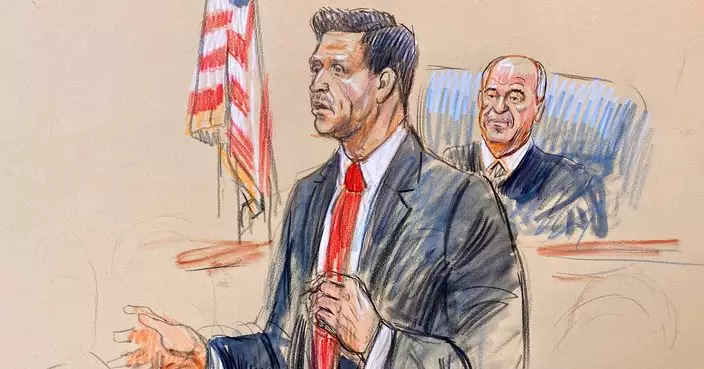
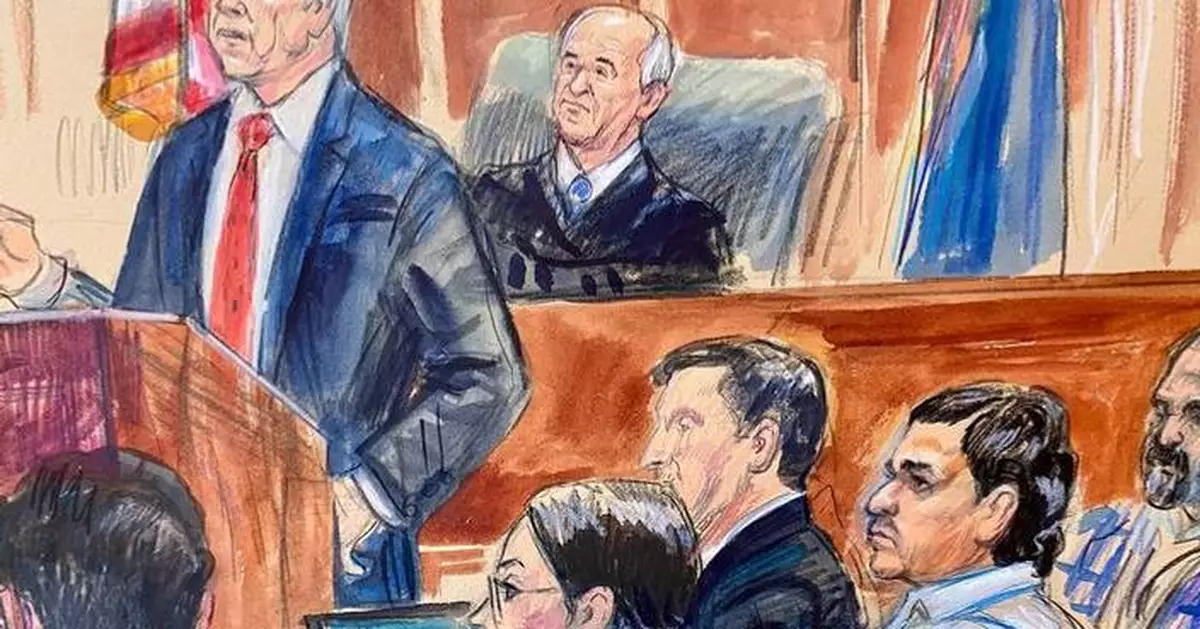
This courtroom sketch depicts defense attorney Geremy Kamens speaking as Judge Anthony J. Trenga listens during the opening day of the trial for alleged Islamic State militant Mohammad Sharifullah in federal court in Alexandria, Va., Monday, April 20, 2026. (Dana Verkouteren via AP)
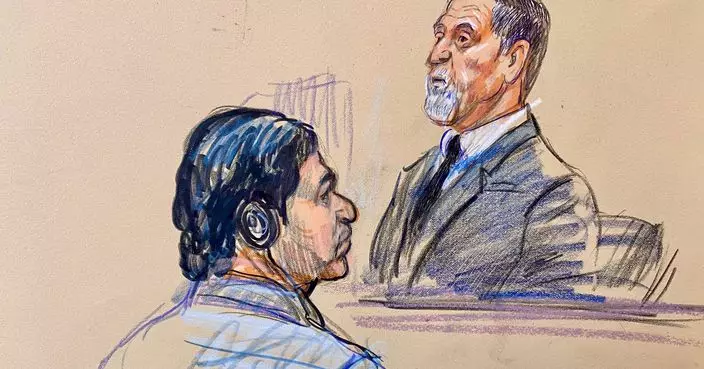
This courtroom sketch depicts government witness Bruce Hoffman testifying as defendant Mohammad Sharifullah, seated left, listens during the opening day of the trial for Sharifullah in federal court in Alexandria, Va., Monday, April 20, 2026. (Dana Verkouteren via AP)
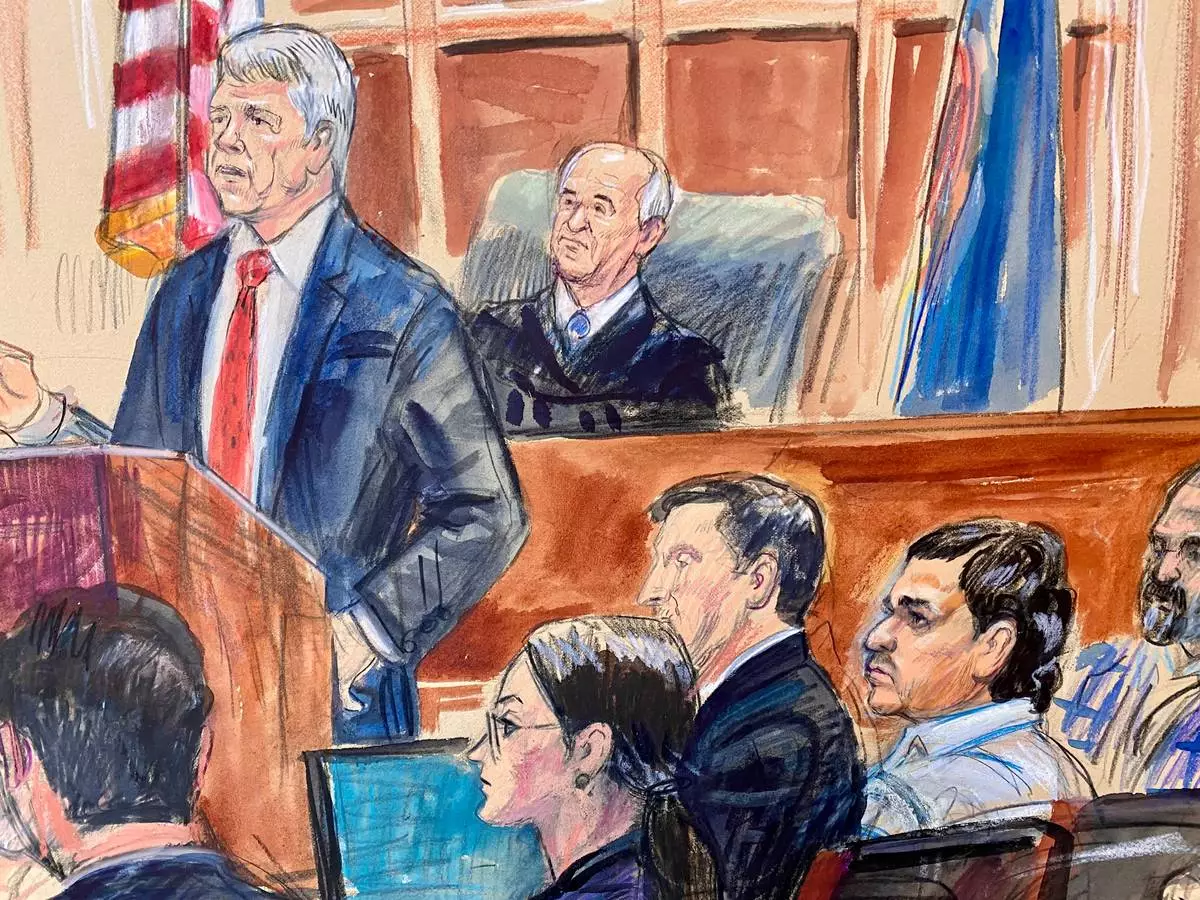
This courtroom sketch depicts Justice Department prosecutor John Gibbs speaking as defense attorneys Lauren Rosen, Geremy Kamens, from center middle seated, defendant Mohammad Sharifullah, and an interpreter, listen along with Judge Anthony John Trenga during the opening day of the trial for Sharifullah in federal court in Alexandria, Va., Monday, April 20, 2026. (Dana Verkouteren via AP)
WASHINGTON (AP) — President Donald Trump offered mixed messages on Monday about the path ahead for the U.S. war against Iran, declaring that he was in no rush to end the conflict while also expressing confidence that further negotiations with Tehran will soon take place in Pakistan.
With the 14-day ceasefire to expire Wednesday, Trump whipsawed in telephone interviews and social media posts between measured optimism that a deal could soon be reached and warning that “lots of bombs” will “start going off” if there's no agreement before the ceasefire deadline.
Trump indicated that he still expects to dispatch his negotiating team, led by Vice President JD Vance, to Pakistan's capital of Islamabad for a second round of talks, even as Iran insisted it would not take part until Trump dialed back his demands.
Iran’s chief negotiator and parliament speaker, Mohammed Bagher Qalibaf, accused the United States of wanting Iran to surrender and added that on the contrary, Iran has been preparing “to reveal new cards on the battlefield."
“We do not accept negotiations under the shadow of threats,” Qalibaf wrote in a post on X early Tuesday.
Trump insisted he feels no pressure to end the war until Iran agrees to his terms.
“I am under no pressure whatsoever,” Trump said on his Truth Social platform, “although, it will all happen, relatively quickly!”
Pakistani officials moved ahead with preparations for a new round of talks between the U.S. and Iran as the tenuous ceasefire was further strained over the weekend by renewed conflict around the Strait of Hormuz.
Trump told Bloomberg News he was “highly unlikely” to renew the ceasefire.
Tensions flared after the U.S. Navy attacked and seized a ship on Sunday that it said was trying to evade its blockade of Iranian ports. On Saturday, Iran fired at vessels and abruptly stopped traffic in the strait, abandoning its promise to allow some ships to pass and claiming the U.S. was not holding up its side of the ceasefire.
The U.S. actions are “incompatible with the claim of diplomacy,” Iranian Foreign Minister Abbas Araghchi said Monday in a social media post.
He gave no indication what Iran will do after the ceasefire expires or whether Iran will return to a second round of negotiations with the U.S.
Over the weekend, Iran said it had received new proposals from the U.S. but suggested that a wide gap remains between the sides. Issues that derailed the last round of negotiations included Iran’s nuclear enrichment program, its regional proxies and the strait.
Iran has throttled traffic through the strait, which connects the Persian Gulf to the open seas, since shortly after the U.S. and Israel attacked Iran on Feb. 28 to start the war. The U.S. has also instituted a blockade of Iranian ports. Roughly one-fifth of the world’s oil trade normally passes through the strait.
The U.S. president lashed out at war critics at home who are urging him to wrap up the conflict that began more than seven weeks ago.
“How bad is it that when you are in the middle of negotiations and you have got the Iranians in a perfect position, including being militarily defeated, and you have Democrats and some Republicans asking to settle it now?” Trump told the New York Post.
Even as Trump bristled at his detractors, he sought to soothe jittery investors as U.S. stocks slipped modestly Monday, following the chaotic weekend in the Persian Gulf.
The president found himself remonstrating his energy secretary, Chris Wright, who on Sunday said American motorists might not see gas prices fall back into the $3 per gallon range until late this year or next year.
“I disagree with him totally. I think it’ll come roaring down if it ends,” Trump told PBS. “If we end it, if Iran does what they should do, it will come roaring down.”
Meanwhile, historic diplomatic talks between Israel and Lebanon were set to resume Thursday in Washington, an Israeli, a Lebanese and a U.S. official said. All three spoke on condition of anonymity to discuss the behind-the-scenes negotiations.
The Israeli and Lebanese ambassadors met last week for the first direct diplomatic talks in decades. Israel says the talks are aimed at disarming Hezbollah and reaching a peace agreement with Lebanon.
A 10-day ceasefire began Friday in Lebanon, where fighting between Israel and Iranian-backed Hezbollah militants broke out two days after the U.S. and Israel launched their war on Iran. Fighting in Lebanon has killed more than 2,290 people.
In two separate encounters on Monday, the Israeli air force struck and killed Hezbollah militants that the military said approached its troops in a threatening way. Israel has carried out several airstrikes since the ceasefire went into effect.
Hezbollah said it detonated explosives Sunday in an Israeli convoy inside Lebanon.
Since the war started, at least 3,375 people have been killed in Iran, according to a new toll released Monday in official Iranian media by Abbas Masjedi, the head of Iran’s Legal Medicine Organization.
He did not break down casualties among civilians and security forces, saying instead that 2,875 were male and 496 were female. Masjedi said 383 of the dead were children 18 years old and younger.
Additionally, 23 people have died in Israel and more than a dozen in Gulf Arab states. Fifteen Israeli soldiers in Lebanon and 13 U.S. service members throughout the region have been killed.
Iran’s grip on the strait has sent oil prices skyrocketing and given rise to one of the worst global energy crises in decades.
Oil prices were up again Monday, with Brent crude, the international standard, at just over $95 a barrel — up from about $70 a barrel before the war started.
Iran said it had reopened the strait to ships Friday, but traffic halted after Trump refused to lift the U.S. blockade.
Sunday's U.S. seizure of the Iranian cargo was the first such interception under the blockade. Iran’s joint military command called the armed boarding an act of piracy and a ceasefire violation.
Trump said the blockade will remain “in full force” until Tehran agrees to a deal. The U.S. military said on Monday that it has directed 27 ships to return to Iranian ports since the blockade began last week.
Ahmed reported from Islamabad, and Bynum reported from Savannah, Georgia. Associated Press journalists Jon Gambrell in Dubai, United Arab Emirates; David Rising in Bangkok; Melanie Lidman in Tel Aviv, Israel; Josef Federman in Jerusalem; Joshua Boak and Matthew Lee in Washington; and Giovanna Dell'Orto in Minneapolis contributed to this report.
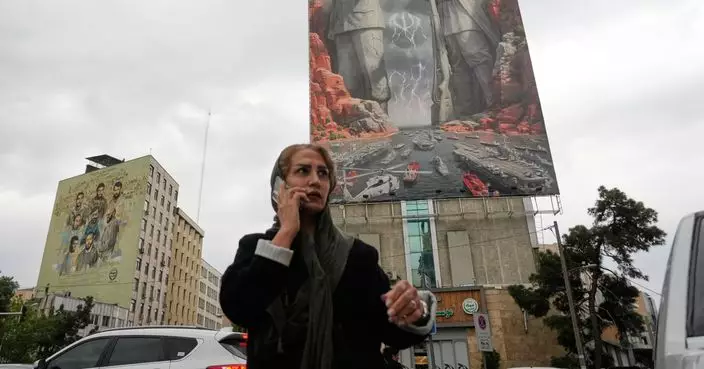
A woman talks on her cellphone as she walks past a billboard showing Rais Ali Delvari, a national hero in an early 1900 uprising against British forces in southern Iran in the Persian Gulf, right, and the late Revolutionary Guard's navy chief Alireza Tangsiri, who was killed in the U.S.-Israeli strike in late March 2026, commanding the closure of the Strait of Hormuz, on a building at a square in downtown Tehran, Iran, Monday, April 20, 2026. (AP Photo/Vahid Salemi)
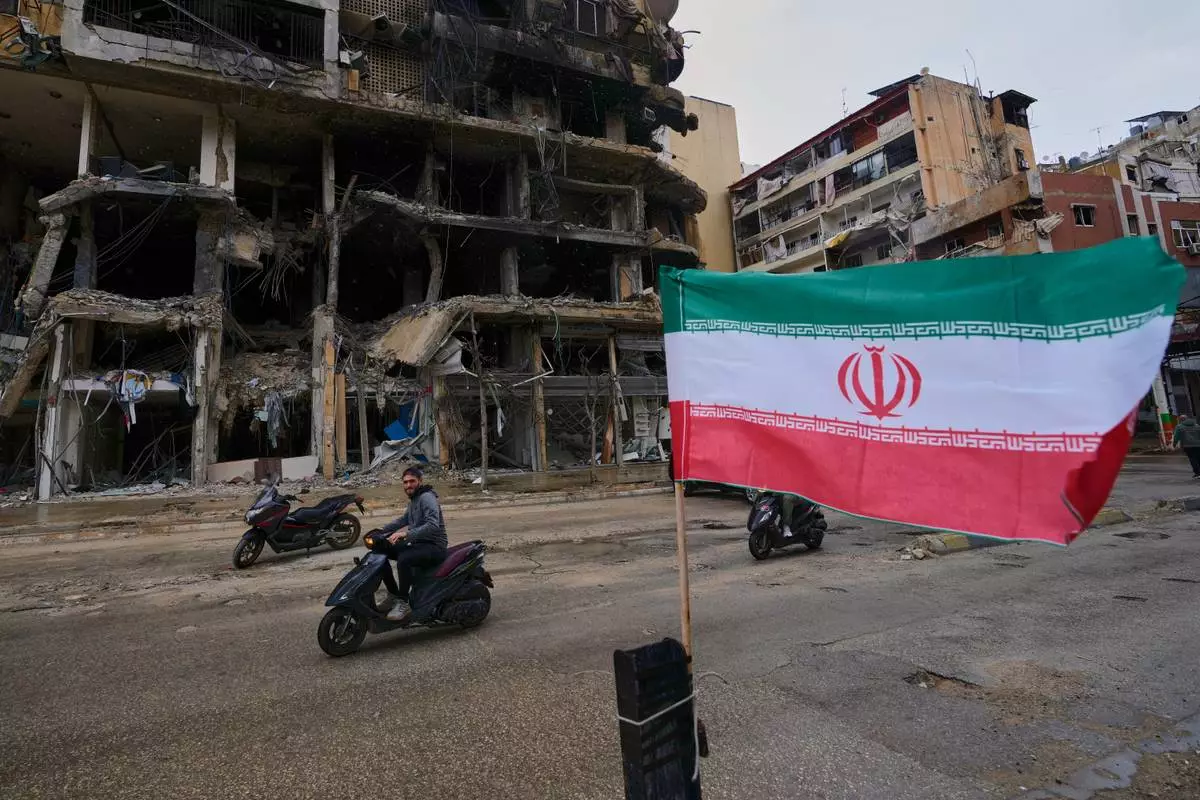
A man on his scooter passes next to an Iranian flag placed in front of a destroyed building, following a ceasefire between Hezbollah and Israel, in Dahiyeh, Beirut's southern suburbs, Lebanon, Monday, April 20, 2026. (AP Photo/Hussein Malla)
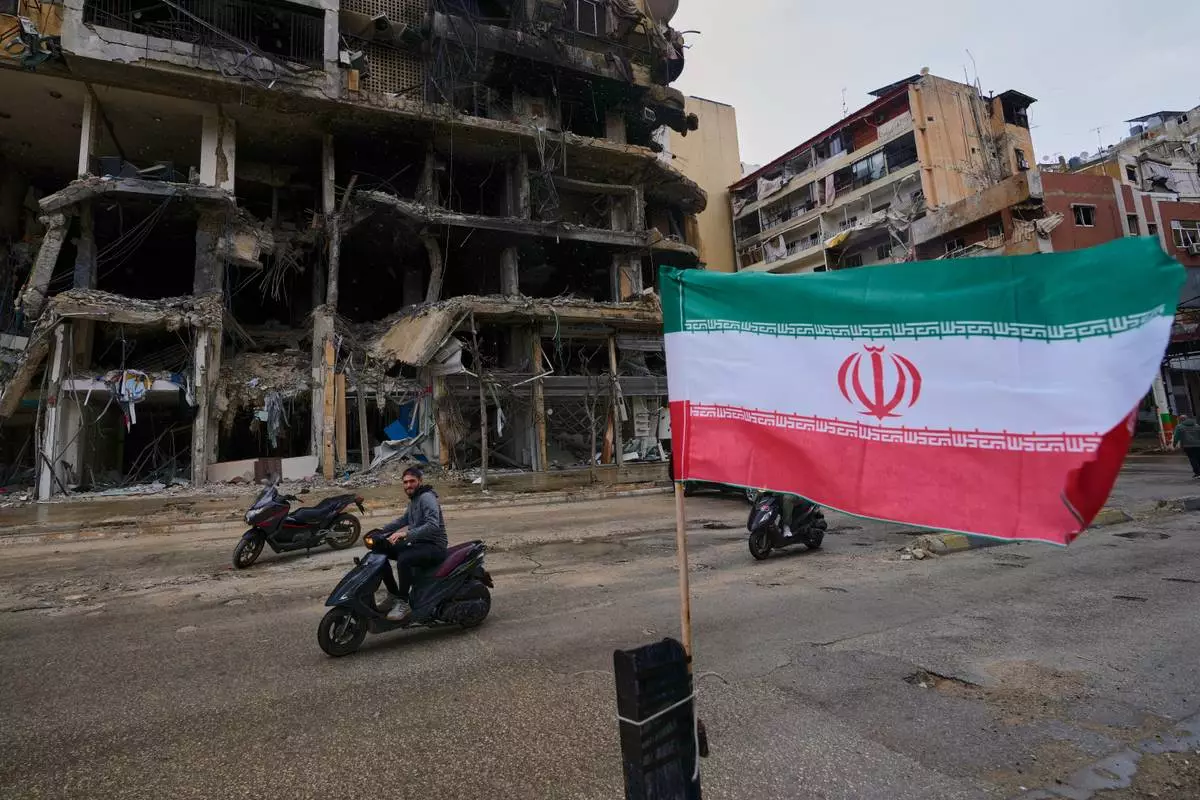
A man on his scooter passes next to an Iranian flag placed in front of a destroyed building, following a ceasefire between Hezbollah and Israel, in Dahiyeh, Beirut's southern suburbs, Lebanon, Monday, April 20, 2026. (AP Photo/Hussein Malla)
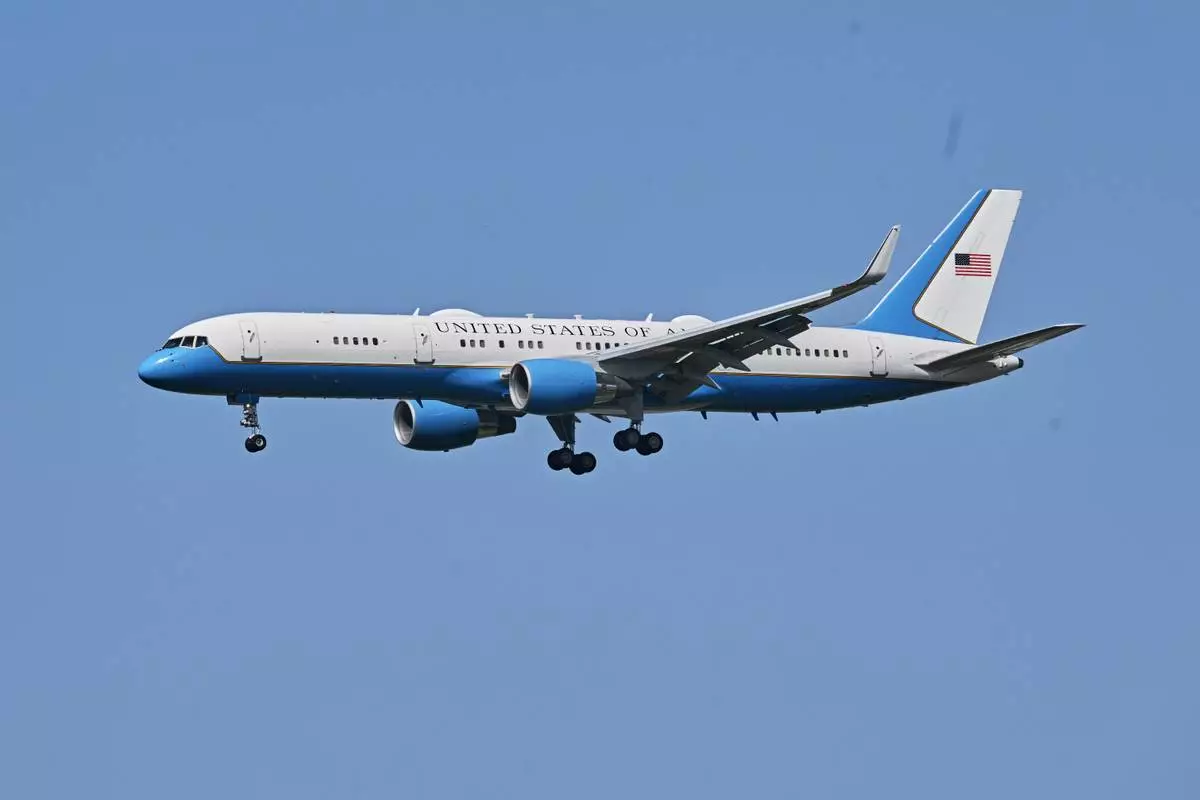
A U.S. Air Force Boeing C-32 plane approaches landing at Nur Khan airbase ahead of second round of negotiations between the U.S. and Iran, in Rawalpindi, Pakistan, Monday, April 20, 2026. (AP Photo/Ehsan Shahzad)
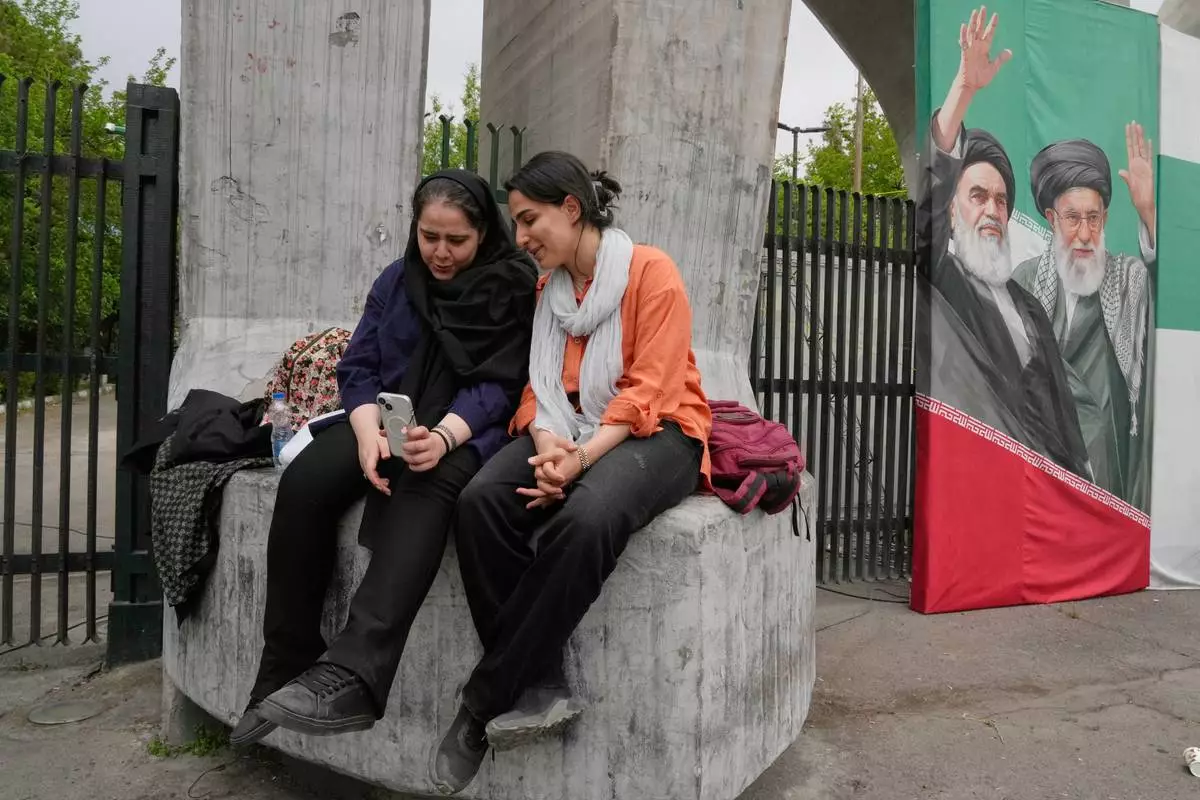
Women share a moment as they look at a smartphone at the main gate of the Tehran University as a banner shows portraits of the late Supreme Leader Ayatollah Ali Khamenei, right, and the late revolutionary founder Ayatollah Khomeini in Tehran, Iran, Sunday, April 19, 2026. (AP Photo/Vahid Salemi)
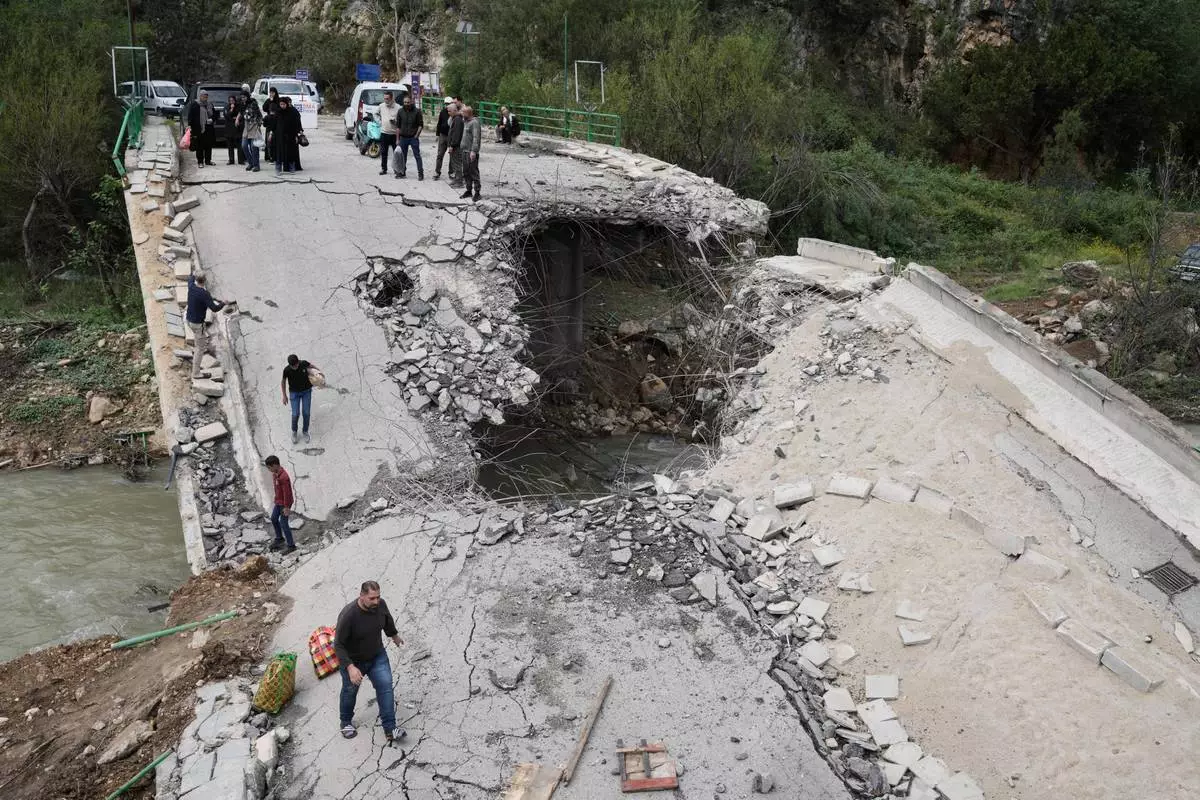
Displaced people cross a destroyed bridge as they return to their villages, following a ceasefire between Hezbollah and Israel, in Tayr Felsay village, southern Lebanon, Sunday, April 19, 2026. (AP Photo/Bilal Hussein)
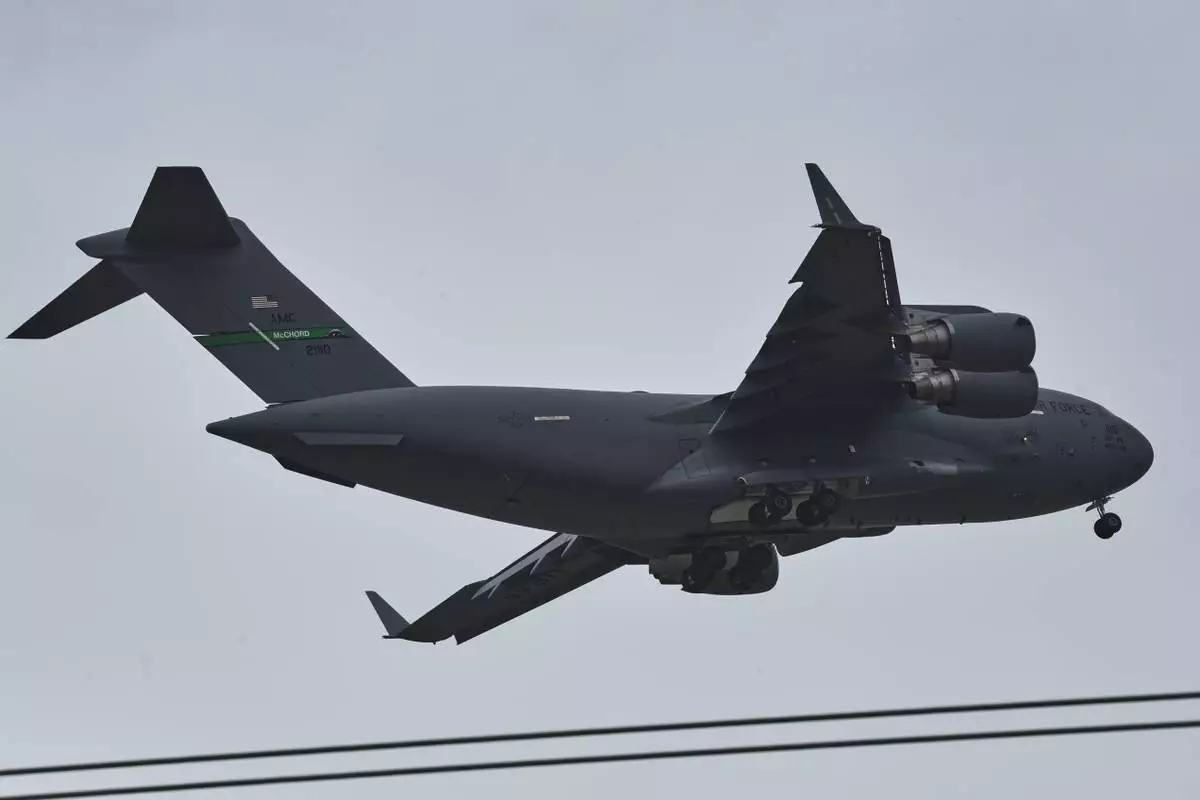
A U.S. Air Force Boeing C-17 Globemaster III transport aircraft prepares to land at Nur Khan airbase, ahead of second round of negotiations between the U.S. and Iran, in Rawalpindi, Pakistan, Monday, April 20, 2026. (AP Photo/Ehsan Shahzad)
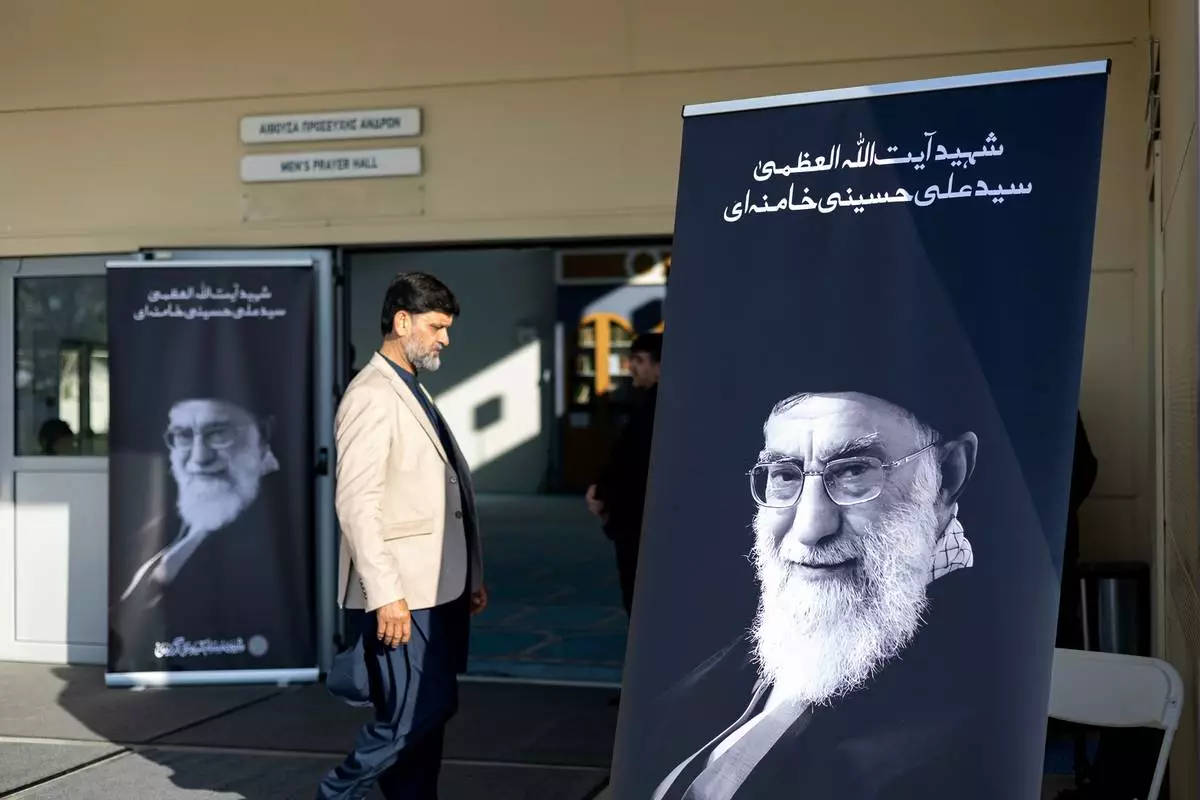
A muslim walks outside a mosque where a commemorative religious event in honor of late Supreme Leader Ayatollah Ali Khamenei is taking place, organized by the Shiite Muslim Community of Greece in Athens, on Sunday, April 19, 2026. (AP Photo/Yorgos Karahalis)
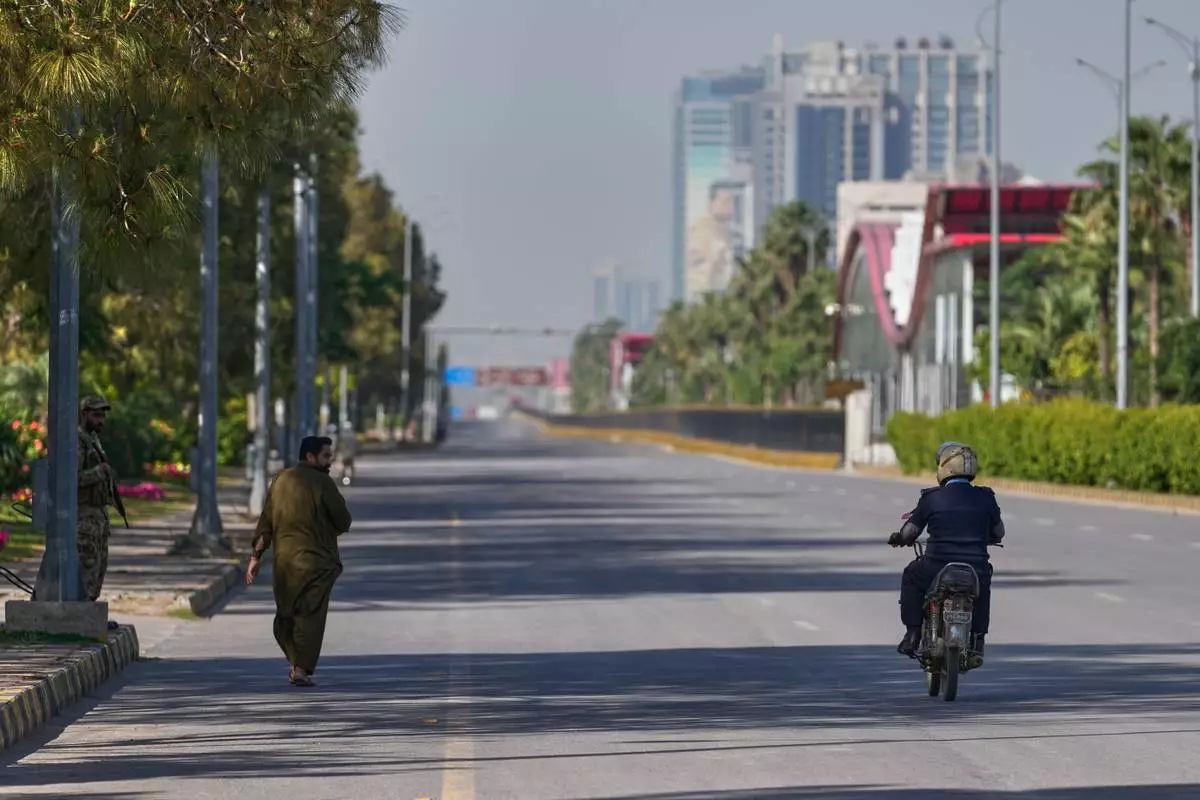
An army soldier, left, walks as police officer drives motorcycle on an empty road ahead of second round of negotiations between the U.S. and Iran, in Islamabad, Pakistan, Monday, April 20, 2026. (AP Photo/Anjum Naveed)