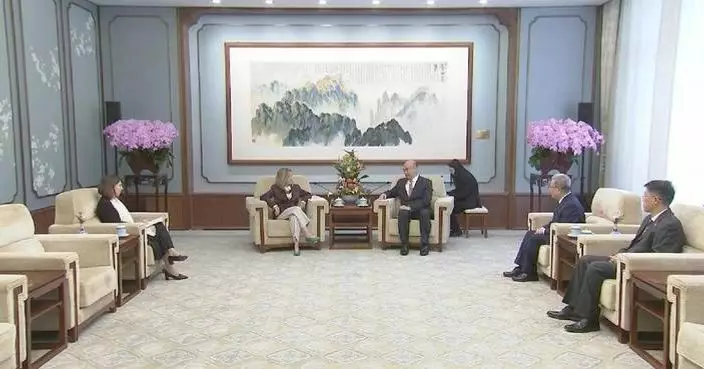
Experts from China, Cambodia and Thailand gathered in Beijing on Monday to exchange insights on consolidating a peace deal reached by Cambodia and Thailand that put their 2025 border clashes on pause.
In its second session, the China-Cambodia-Thailand Track II dialogue aims to build on a ceasefire deal reached last December at Fuxian Lake in southwest China's Yunnan Province, and to help foster a public environment conducive to lasting peace along the Cambodia-Thailand border.
Hosted by the China Foreign Affairs University (CFAU), the event, under the theme "Implementing the Fuxian consensus and fostering a peaceful public opinion environment," brought together experts on international affairs, representatives from social organizations and media professionals from China, Cambodia and Thailand.
Participants shared case studies and recommendations on issues including combating disinformation, the resumption of cross-border trade, and public health cooperation.
"We must actively challenge the sensationalism that often dominates regional headlines. As a media professional, it is our duty to provide our public with objective reporting rather than reactive provocation that treat complex border dispute as zero-sum game," said Im, an advisor at the Club of Cambodian Journalists, in a speech at the dialogue.
Despite close cooperation across multiple sectors in the past, border clashes in 2025 plummeted people-to-people exchanges and mutual trust between Cambodia and Thailand to an historic low.
Large-scale boycotts of Thai companies and products took place in Cambodia, while many Cambodian workers returned home from Thailand over safety concerns.
Border crossings between the two countries were shut, sharply reducing civilian interaction.
Although Cambodia and Thailand reached a ceasefire agreement last December, peace in the border areas remains fragile.
"The humanitarian and socioeconomic challenges posed by the border conflict have to be reassessed and then have to be discussed further in order for intervention by the Cambodian government, by other government with the support of China. So I can say that this second dialogue signify greater importance and necessary as well as urgency," said Chheng Kimlong, president of the Asian Vision Institute (AVI).
"I think the most important thing is the channels of communication, because official communications at the moment is quite difficult, so China provides the platform without any cohesive force or pressure," said Kavi Chongkittavorn, senior researcher at the Institute of Security and International Studies (ISIS).
Since the escalation of the Cambodia-Thailand border conflict, China, as a friendly neighbor to both countries, has actively promoted peace talks and mediation.
China has on four occasions dispatched its special envoy for Asian affairs to conduct shuttle diplomacy and facilitate multiple trilateral meetings, helping the two sides reach a ceasefire.
"Together with countries in the region, we are seeking ways to resolve the issue, which also reflects our fundamental diplomatic principles -- our commitment to peace and our emphasis on development. In today's international practice, the use of force may seem capable of toppling a government or even bringing a country to its knees in a single day, but in the long run it often creates even greater trouble for the region. So, how can we achieve more durable and sustainable peace? I think our efforts today are a practical step toward achieving this goal," said Gao Fei, president of CFAU.
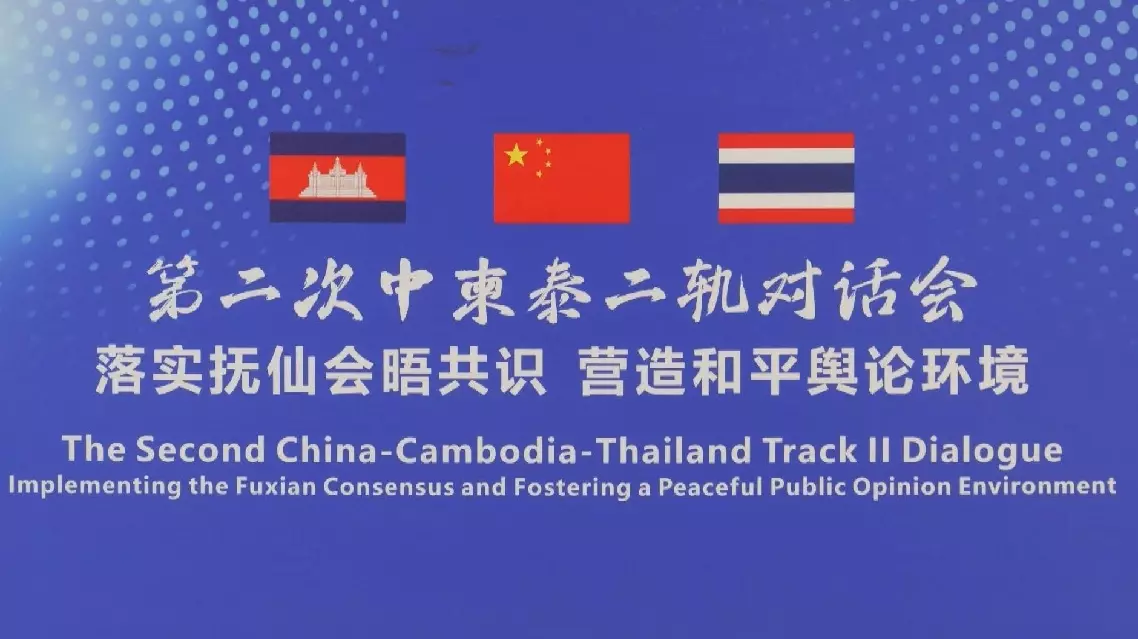
Experts gather in Beijing to exchange insights on consolidating peace along Cambodia-Thailand border