The global aviation industry is bracing for severe turbulence as more airlines around the world are being forced to cut flights as they face potential jet fuel shortages amid the U.S.-Israel war against Iran.
The sector was already dealt a severe blow when the conflict erupted in late February, forcing airspace closures across the Middle East and leading to widespread delays and cancellations, but now more longer term concerns are mounting over key fuel supplies.
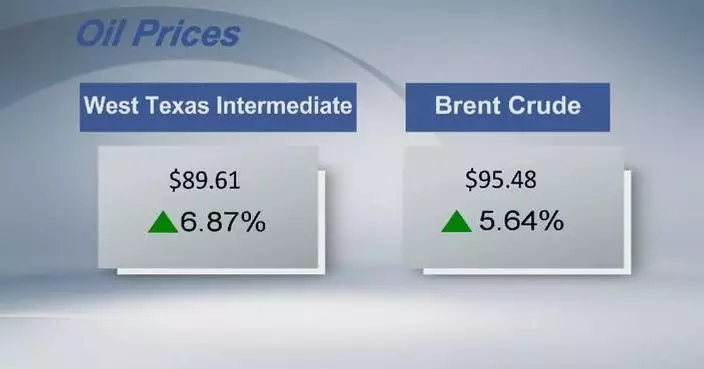
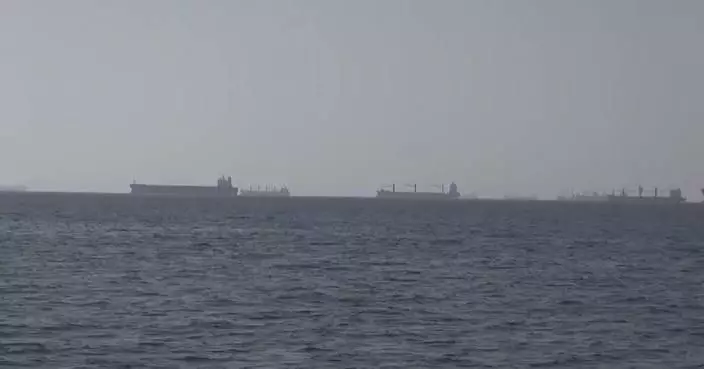
The war has caused unprecedented disruption to shipping through the Strait of Hormuz, a vital waterway through which one-fifth of global oil trade passes.
Global airline capacity for May has fallen by around 3 percent, with 19 out of the world's 20 largest airlines cutting flights, according to aviation analytics firm Cirium.
In Ireland, Aer Lingus plans to cancel or reschedule 2 percent of its flights in the coming weeks, Irish media reported on Sunday. This would result in over 500 flights being canceled, which would have a damaging effect on transatlantic and European routes.
Meanwhile, the Netherlands' flag carrier KLM Royal Dutch Airlines also announced it would be forced to cancel some European flights in May, citing rising kerosene costs, which it said meant numerous flights were "currently no longer financially viable to operate."

Global airlines forced to cut flights as jet fuel shortages escalate
Pakistan on Monday continued to tighten security in its capital Islamabad ahead of the expected second round of U.S.-Iran talks despite no indication that Iran has changed its mind about staying out of the negotiations with the United States.
Pakistan has placed the capital city and the neighboring garrison city of Rawalpindi on high security alert. On Sunday evening, the Pakistani government announced that ministries, government offices, and related agencies inside the Red Zone would shift to remote work on Monday.
According to police sources, some 20,000 police personnel, supported by hundreds of elite commandos, including snipers, have been deployed on security duty across the twin cities. Similar arrangements were made before the first round of peace talks.
Authorities have also suspended all public and goods transport in Rawalpindi and Islamabad as part of the security plan, while most entry points to the Red Zone have been sealed.
Major hotels, including Serena Hotel and Marriott Hotel, have asked guests to vacate after the government requisitioned the properties for the talks. Hostels and guest houses in the capital were also directed to close until further notice.
Analysts say Pakistan is still working in an effort to bring Washington and Tehran back to the negotiation table.
Pakistan on Sunday abruptly cleared potential venues for the next round of talks, including the Serena Hotel -- a five-star property in the Red Zone -- where the first round was held. Later that evening, Pakistani Prime Minister Shehbaz Sharif held a 45-minute phone call with Iranian President Masoud Pezeshkian.
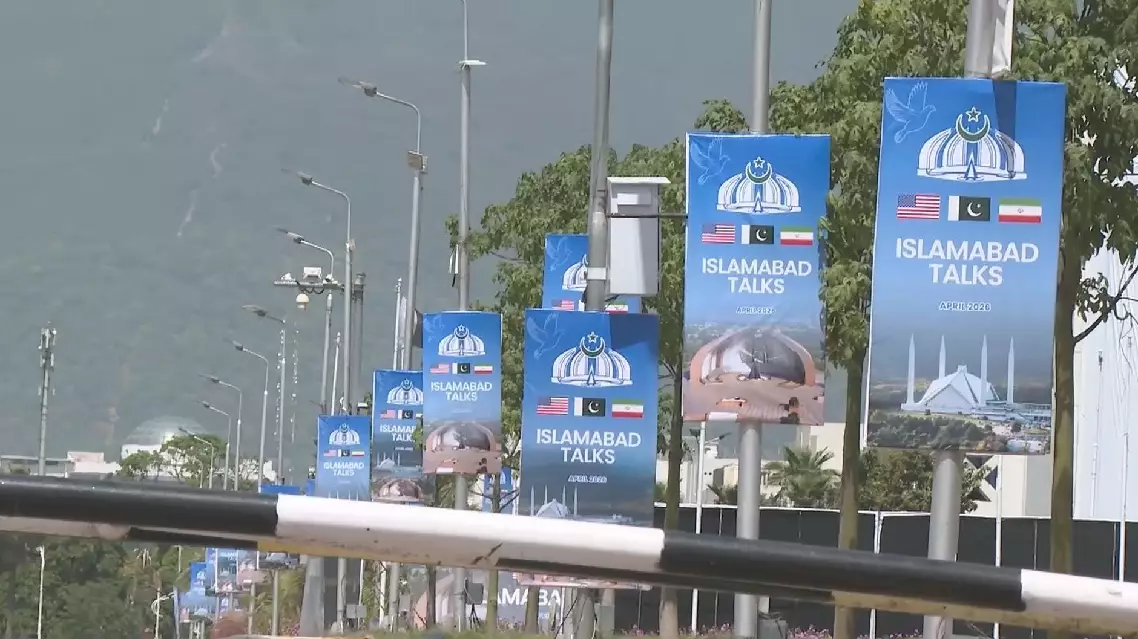
Outside the Jinnah Convention Centre, which served as the media center for the first round of U.S.-Iran talks, the official backdrop for the negotiations has been put up again. Security personnel at the entrance confirmed that the media center is being rebuilt.
All signs suggest that Pakistan is making maximum preparations for the new round of diplomatic talks.
However, compared to the high-profile approach before the first round of talks, Pakistan's latest security measures, while more extensive, have been accompanied by a notably lower public profile. As of now, there has been no further word on the approval of press credentials.
According to Iranian media, this contrast sends a clear message: Pakistan's role has shifted from "enthusiastic host" to "cautious gatekeeper." Its goal now is to create a tightly controlled, secure, and media-free space where the main protagonists -- the United States and Iran -- can focus on building mutual trust.
On Feb. 28, Israel and the United States launched joint attacks on Tehran and other Iranian cities, killing Iran's then-Supreme Leader Ali Khamenei, senior commanders, and civilians. Iran responded with waves of missile and drone strikes targeting Israel and U.S. bases and assets in the Middle East.
A ceasefire between the United States and Iran took effect on April 8. Iranian and U.S. delegations then held talks in Islamabad on April 11 and 12, but no progress was reported.
Pakistan tightens security in capital ahead of expected 2nd round of US-Iran talks