LONDON (AP) — The ex-civil servant behind the decision to approve Peter Mandelson 's appointment as British ambassador to Washington says he felt political pressure from Prime Minister Keir Starmer's office to rush through the appointment despite security concerns.
The testimony by former Foreign Office head Olly Robbins turns up the heat on Starmer, who is facing calls to resign over the appointment of a scandal-tainted former politician and friend of Jeffrey Epstein to one of the U.K.'s most important diplomatic posts.
Click to Gallery
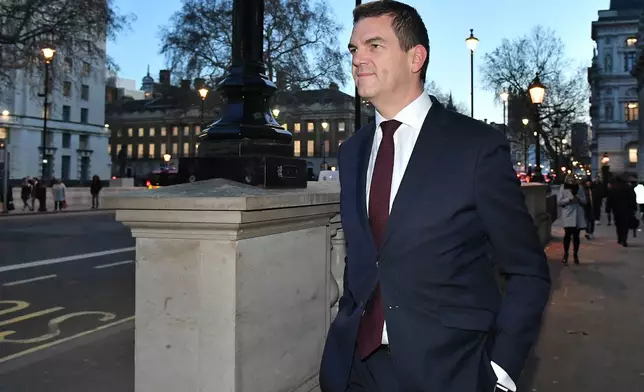
FILE - Olly Robbins walks on Whitehall in Westminster, London, Jan. 17, 2019. (Dominic Lipinski/PA via AP, File)
FILE - Olly Robbins walks on Whitehall in Westminster, London, Jan. 17, 2019. (Dominic Lipinski/PA via AP, File)
Peter Mandelson is seen with his dog outside his home in London, Monday, April 20, 2026 as Britain's Prime Minister Keir Starmer is facing a showdown in Parliament over the appointment of Peter Mandelson as ambassador to Washington.(AP Photo/Kin Cheung)
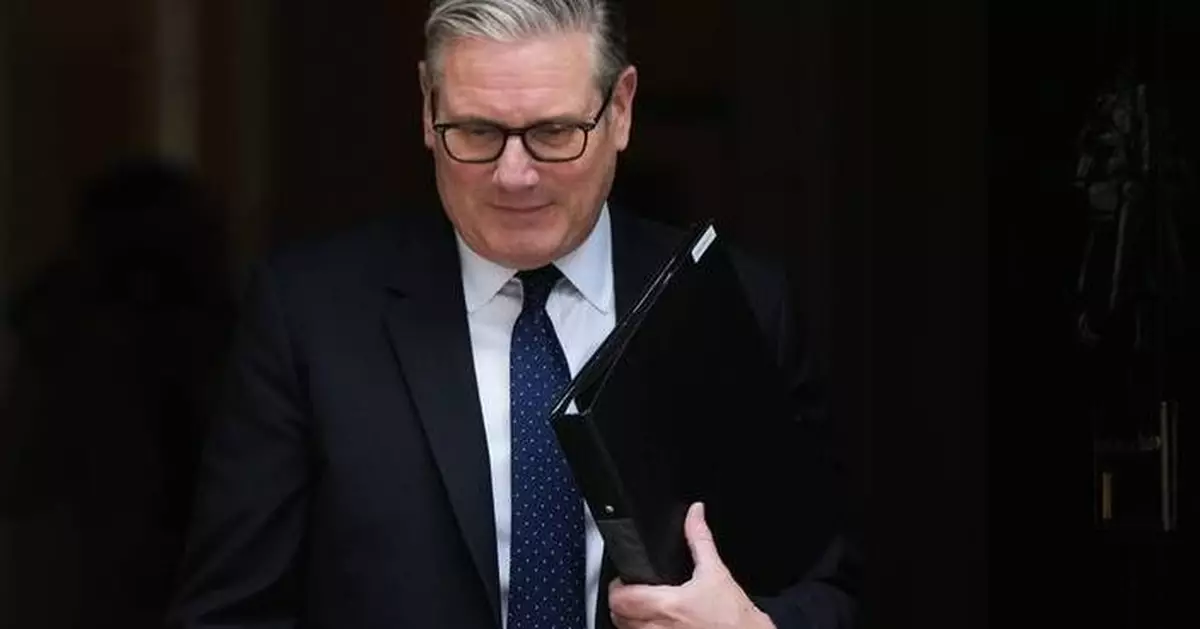
Britain's Prime Minister Keir Starmer leaves 10 Downing Street in London, Monday, April 20, 2026 to face a showdown in Parliament over the appointment of Peter Mandelson as ambassador to Washington.(AP Photo/Alastair Grant)
The prime minister fired Robbins last week after the revelation that Mandelson was approved for the job against the recommendation of the government's security vetting agency.
Robbins said the security concerns about Mandelson did not relate to his relationship with Epstein. He declined to say when questioned by lawmakers what led the government's vetting agency to flag Mandelson as a potential security risk.
Robbins said the vetting agency considered Mandelson a “borderline case” and was “leaning toward recommending against” giving him security clearance. Robbins decided to clear him anyway.
Starmer has called it “staggering” that Foreign Office officials failed to tell him about the security concerns, which he says he only found out about last week.
But Robbins said the rules bar details of the sensitive vetting process from being shared except in “exceptional circumstances.”
Robbins told the House of Commons Foreign Affairs Committee on Tuesday that there was an “atmosphere of pressure” coming from Starmer’s office to approve the appointment in January 2025, so Mandelson could be in post at the start of President Donald Trump's second term.
He said there was “a very, very strong expectation” that Mandelson “needed to be in post and in America as quickly as humanly possible.”
Robbins said there was “a generally dismissive attitude” to the security vetting in January 2025, before Mandelson went to Washington.
However, Robbins insisted his department “did not bow to that pressure." He said his decision to grant Mandelson clearance was based on security advice that the risks could be managed.
Starmer acknowledged on Monday that he made the wrong judgment when he picked Mandelson for the job. But he said he would have withdrawn the appointment if he’d known about the security vetting.
Starmer fired Mandelson in September, nine months into the job, when new details emerged about his friendship with Epstein, a convicted sex offender who died in prison in 2019.
He has ordered a review into any security concerns arising from Mandelson’s access to sensitive information while ambassador.
Critics say the Mandelson appointment is more evidence of bad judgment by a prime minister who has made repeated missteps since he led Labour to a landslide election victory in July 2024.
He picked Mandelson as ambassador despite being warned by his staff that Mandelson’s friendship with Epstein exposed the government to “reputational risk.”
Mandelson’s business links to Russia and China also set off alarm bells. But his expertise as a former European Union trade chief and contacts among global elites were considered assets in dealing with the Trump administration.
The scandal has caused gloom among lawmakers in Starmer’s center-left Labour Party, already anxious about its dire poll ratings. Starmer already defused one potential crisis in February, when some Labour lawmakers urged him to resign over the Mandelson appointment.
Mandelson is under police investigation for suspected misconduct in public office after a trove of Epstein-related documents released by the U.S. Department of Justice in January included emails suggesting Mandelson had passed on sensitive — and potentially market-moving — government information to Epstein in 2009, after the global financial crisis.
British police launched a criminal probe and arrested Mandelson in February. Mandelson has previously denied wrongdoing and hasn’t been charged. He does not face allegations of sexual misconduct.
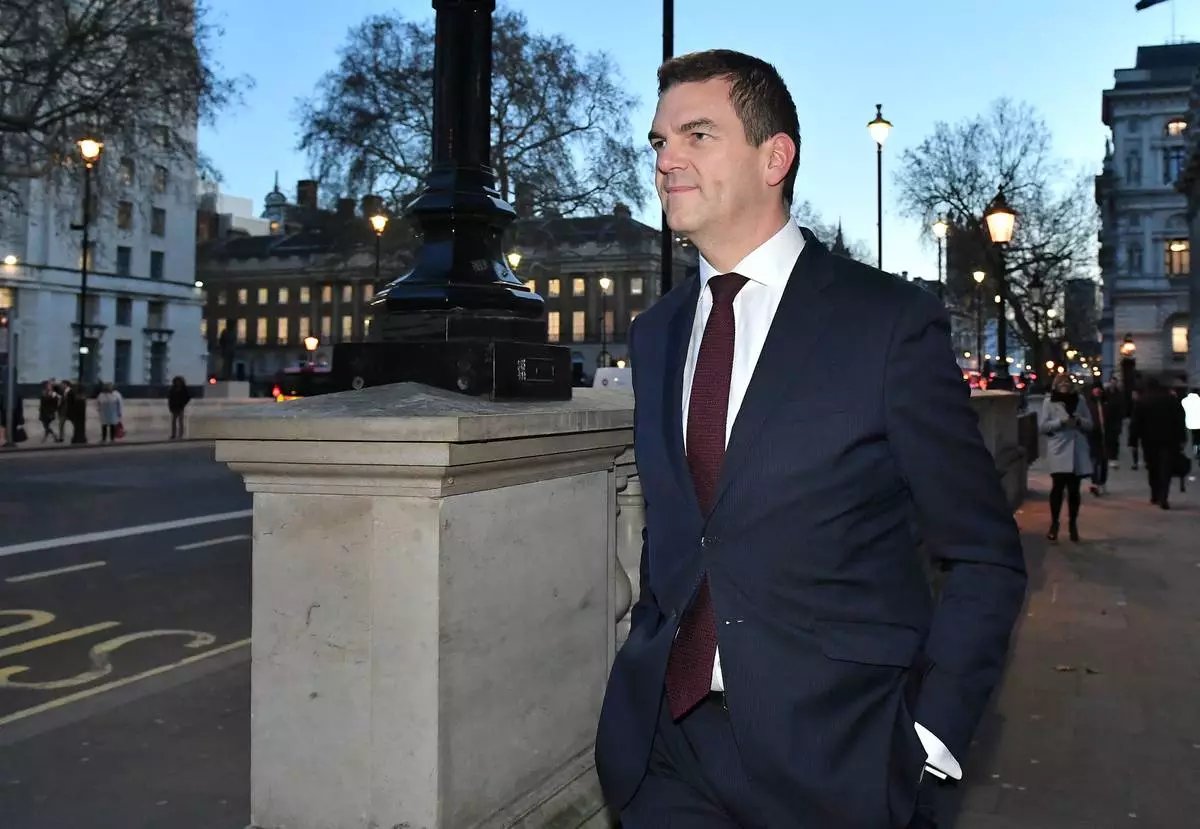
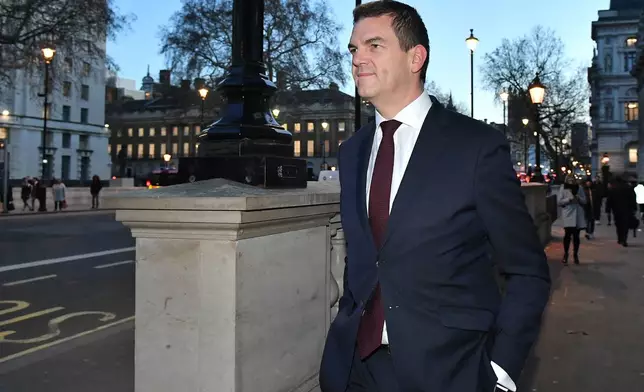
FILE - Olly Robbins walks on Whitehall in Westminster, London, Jan. 17, 2019. (Dominic Lipinski/PA via AP, File)
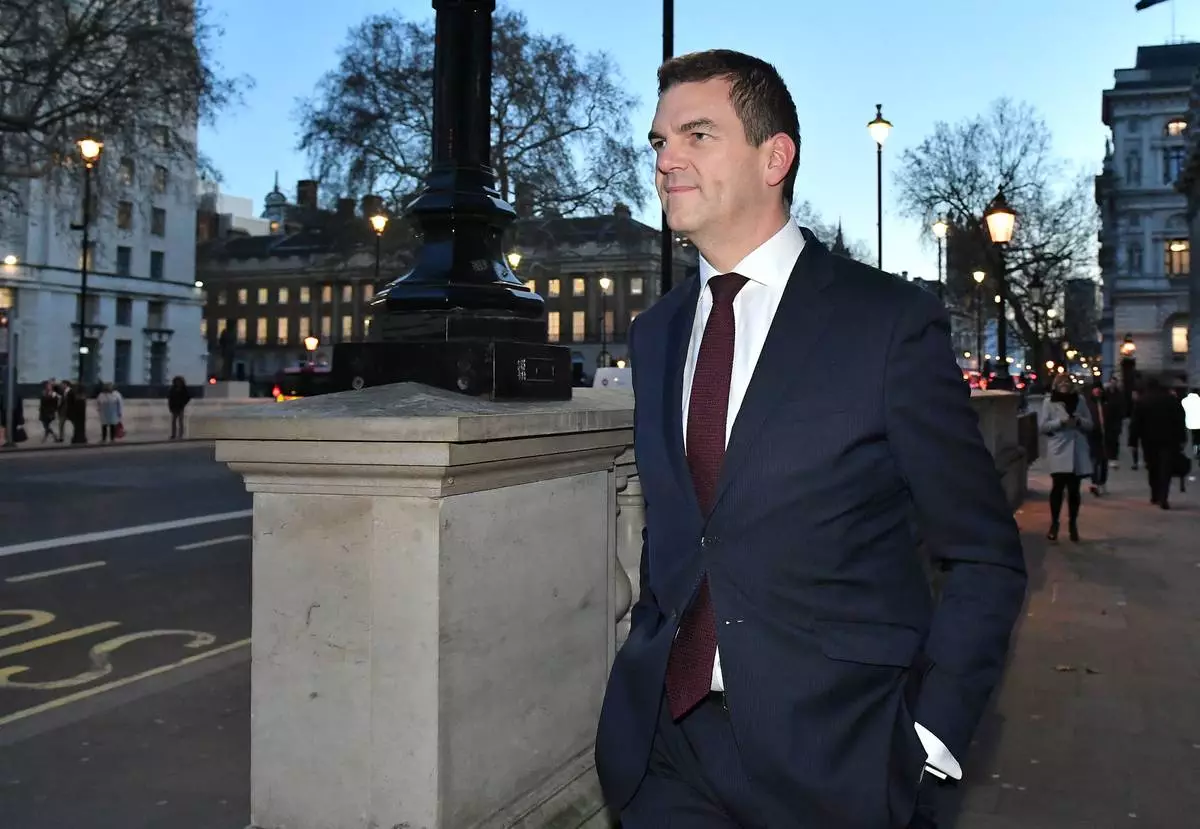
FILE - Olly Robbins walks on Whitehall in Westminster, London, Jan. 17, 2019. (Dominic Lipinski/PA via AP, File)

Peter Mandelson is seen with his dog outside his home in London, Monday, April 20, 2026 as Britain's Prime Minister Keir Starmer is facing a showdown in Parliament over the appointment of Peter Mandelson as ambassador to Washington.(AP Photo/Kin Cheung)
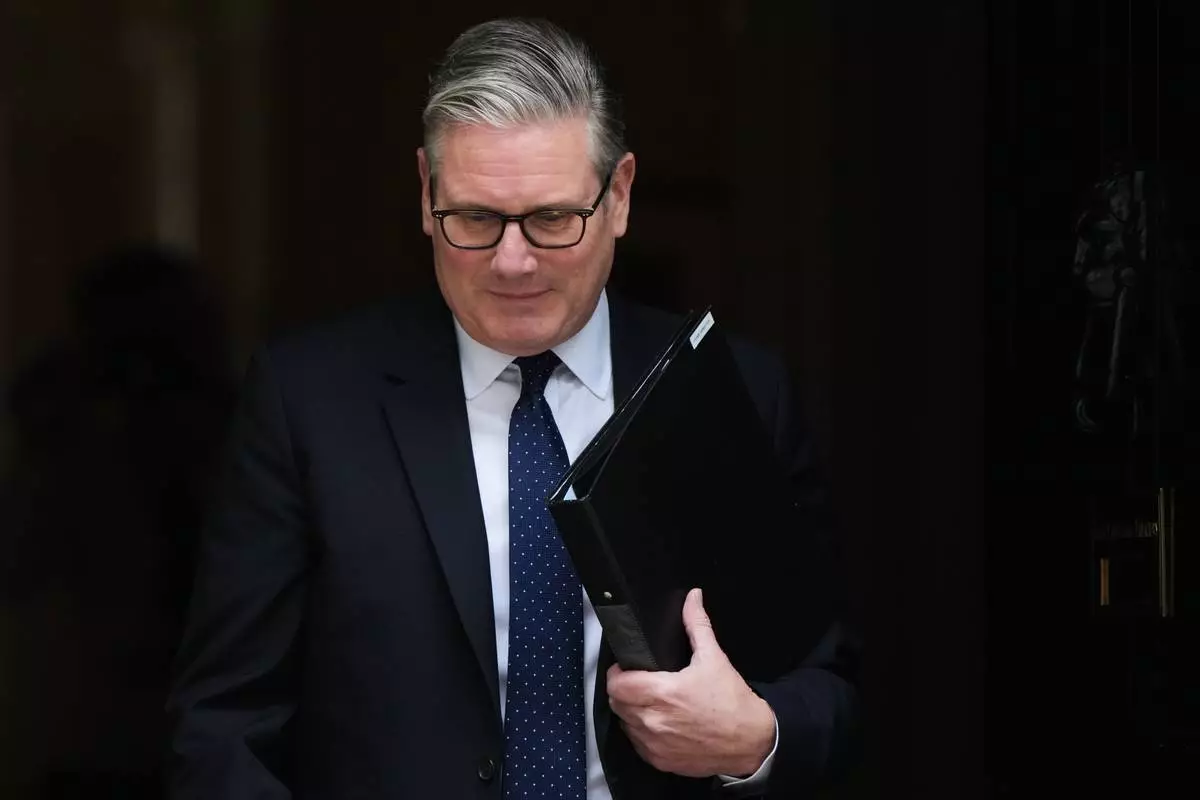
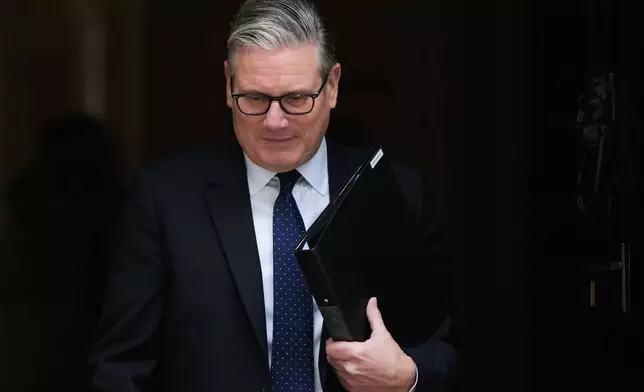
Britain's Prime Minister Keir Starmer leaves 10 Downing Street in London, Monday, April 20, 2026 to face a showdown in Parliament over the appointment of Peter Mandelson as ambassador to Washington.(AP Photo/Alastair Grant)
ISLAMABAD (AP) — Pakistan pressed ahead Tuesday with the groundwork for a second round of talks between Iran and the United States in Islamabad as a fragile ceasefire hung in the balance, even though it remained unclear whether Tehran would send a delegation.
Both sides remain dug in rhetorically, with U.S. President Donald Trump warning that “lots of bombs” will “start going off” if there’s no agreement before the ceasefire deadline, which he put as Wednesday, and Iran’s chief negotiator saying that Tehran has “new cards on the battlefield” that haven't yet been revealed.
The two-week ceasefire began on April 8, and seemed likely to be extended if talks resume as planned. White House officials have said that U.S. Vice President JD Vance would lead the American delegation, but Iran hasn't said who it might send, and Iranian state television on Tuesday broadcast a message saying that “no delegation from Iran has visited Islamabad... so far.”
Iranian state TV long has been controlled by hard-liners within Iran’s theocracy, and the on-screen alert likely reflects the ongoing internal debate within Iran’s theocracy as it weighs how to respond to the U.S. Navy’s seizure of an Iranian container ship over the weekend.
The U.S. has instituted a blockade of Iranian ports to pressure Tehran into ending its stranglehold on the Strait of Hormuz, a key shipping lane through which 20% of the world’s natural gas and crude oil transits in peacetime.
Iran’s iron grip on the strait has sent oil prices soaring, and Brent crude, the international standard, was trading at close to $95 per barrel on Tuesday, up more than 30% from Feb. 28, the day that Israel and the U.S. attacked Iran to start the war.
Before the war began, the Strait of Hormuz had been fully open to international shipping, and Trump has demanded that vessels again be allowed to transit unimpeded through the waterway.
European Union transportation ministers were meeting in Brussels on Tuesday to discuss how to protect consumers after the head of the International Energy Agency warned that Europe has “ maybe six weeks ” of jet fuel supplies remaining.
Over the weekend, Iran said that it had received new proposals from Washington, but also suggested that a wide gap remains between the sides. Issues that derailed the last round of negotiations included Iran’s nuclear enrichment program, its regional proxies and the strait.
Iran’s chief negotiator and parliamentary speaker, Mohammed Bagher Qalibaf, accused the United States on Tuesday of wanting Iran to surrender and said that on the contrary, Iran has been preparing “to reveal new cards on the battlefield.”
“We do not accept negotiations under the shadow of threats,” Qalibaf wrote in an X post.
Despite the rhetorical skirmishing between the two sides, Pakistani officials have expressed confidence that Iran will also send a delegation late Tuesday so that the talks could resume.
Pakistani Foreign Minister Ishaq Dar on Tuesday spoke with his Egyptian counterpart, Badr Abdelatty, to discuss the latest regional developments, as part of diplomatic preparations before the planned talks, Pakistan’s Foreign Ministry.
Dar also met with the ambassador from China, which is a key trading partner with Iran, as the Foreign Ministry in Beijing said that the conflict was at a “critical stage of transition between war and peace.”
"At such a moment, it is all the more necessary for all parties to show the utmost sincerity, remain committed to a political solution, maintain the momentum of the ceasefire and negotiations,” ministry spokesman Guo Jiakun said.
Security has been tightened across Pakistan’s capital, where authorities have deployed thousands of personnel and increased patrols along routes leading to the airport.
The arrangements appear stricter than those put in place during the first round of talks held in Islamabad on April 11 and 12, suggesting the possibility of high-level participation, if negotiations make progress, said Syed Mohammad Ali, an Islamabad-based security analyst.
“Pakistan appears to be preparing for the possibility of visits by top U.S. and Iranian leaders if the talks advance to a stage where an agreement could be signed,” he told The Associated Press.
Meanwhile, historic diplomatic talks between Israel and Lebanon were set to resume on Thursday in Washington, an Israeli, a Lebanese and a U.S. official said. All three spoke on condition of anonymity to discuss the behind-the-scenes negotiations.
The Israeli and Lebanese ambassadors met last week for the first direct diplomatic talks in decades. Israel says the talks are aimed at disarming Hezbollah and reaching a peace agreement with Lebanon.
A 10-day ceasefire began on Friday in Lebanon, where fighting between Israel and Iranian-backed Hezbollah militants broke out two days after the U.S. and Israel launched joint strikes on Iran to start the war. Fighting in Lebanon has killed more than 2,290 people.
Since the war started, at least 3,375 people have been killed in Iran, according to authorities. Additionally, 23 people have died in Israel and more than a dozen in Gulf Arab states. Fifteen Israeli soldiers in Lebanon and 13 U.S. service members throughout the region have been killed.
Rising reported from Bangkok, and Gambrell from Dubai, United Arab Emirates. Sam McNeil in Brussels, and Huizhong Wu in Bangkok, contributed to this story.
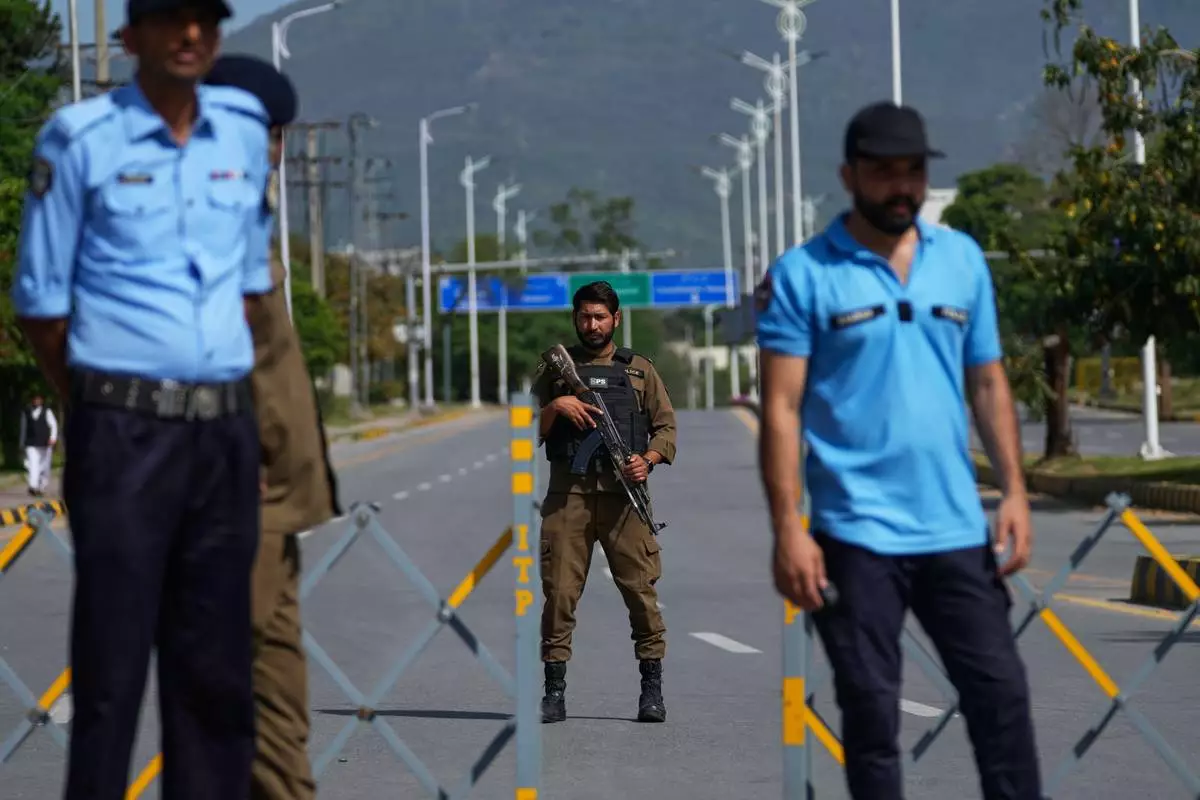
Police officers stand guard at a checkpoint on a barricaded to ensure security ahead of the second round of negotiations between the U.S. and Iran, in Islamabad, Pakistan, Tuesday, April 21, 2026. (AP Photo/Anjum Naveed)
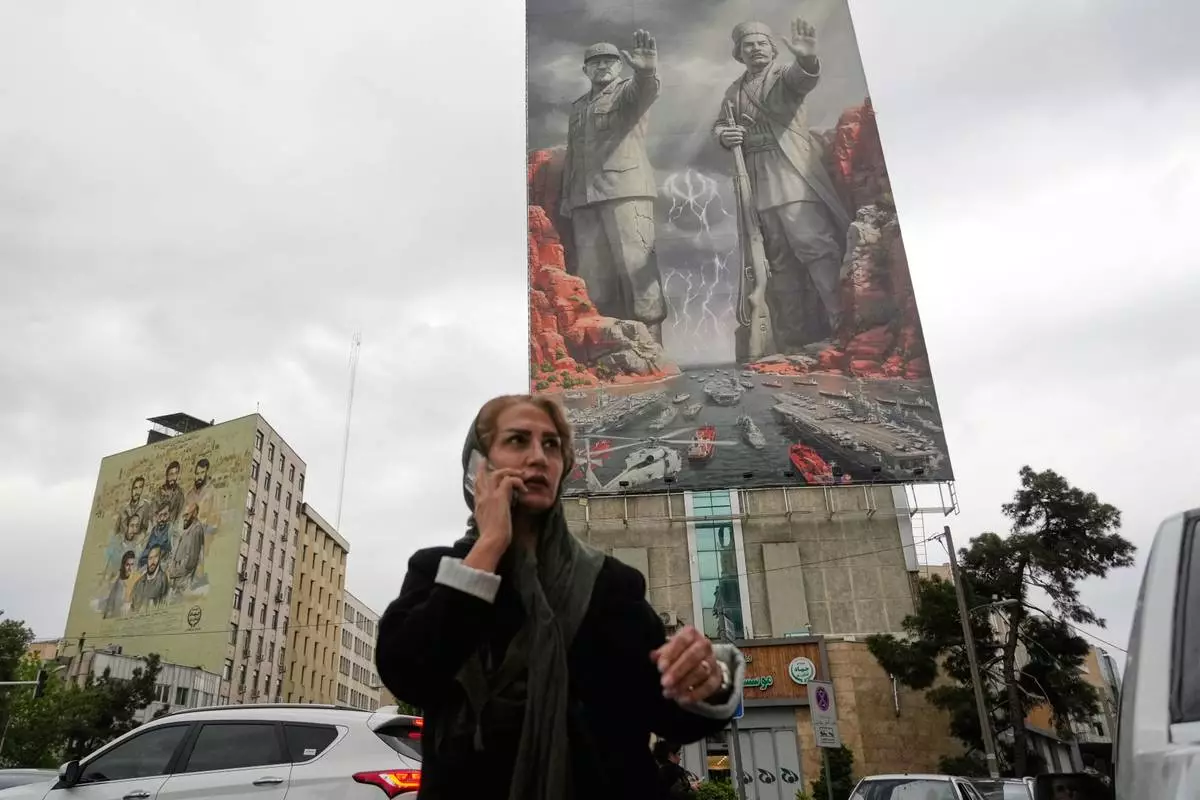
A woman talks on her cellphone as she walks past a billboard showing Rais Ali Delvari, a national hero in an early 1900 uprising against British forces in southern Iran in the Persian Gulf, right, and the late Revolutionary Guard's navy chief Alireza Tangsiri, who was killed in the U.S.-Israeli strike in late March 2026, commanding the closure of the Strait of Hormuz, on a building at a square in downtown Tehran, Iran, Monday, April 20, 2026. (AP Photo/Vahid Salemi)
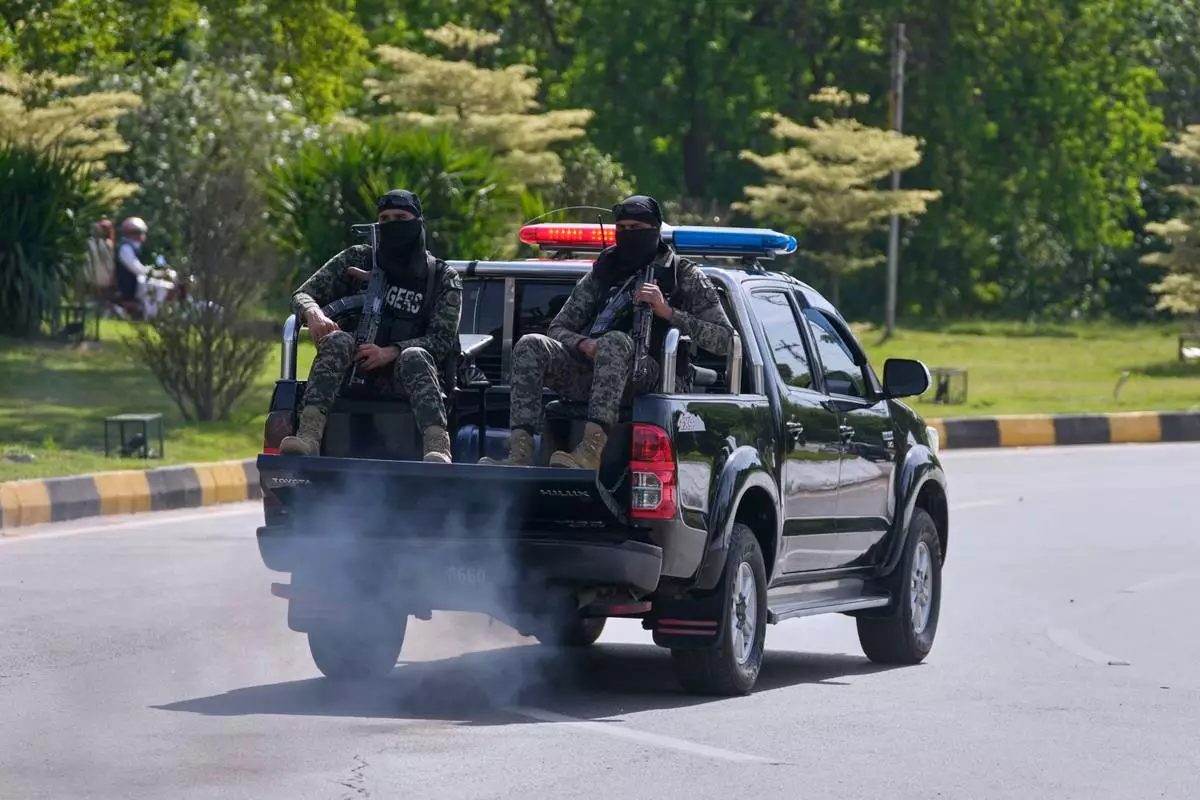
Paramilitary soldiers patrol to ensure security ahead of the second round of talk between the U.S. and Iran, in Islamabad, Pakistan, Tuesday, April 21, 2026. (AP Photo/Anjum Naveed)
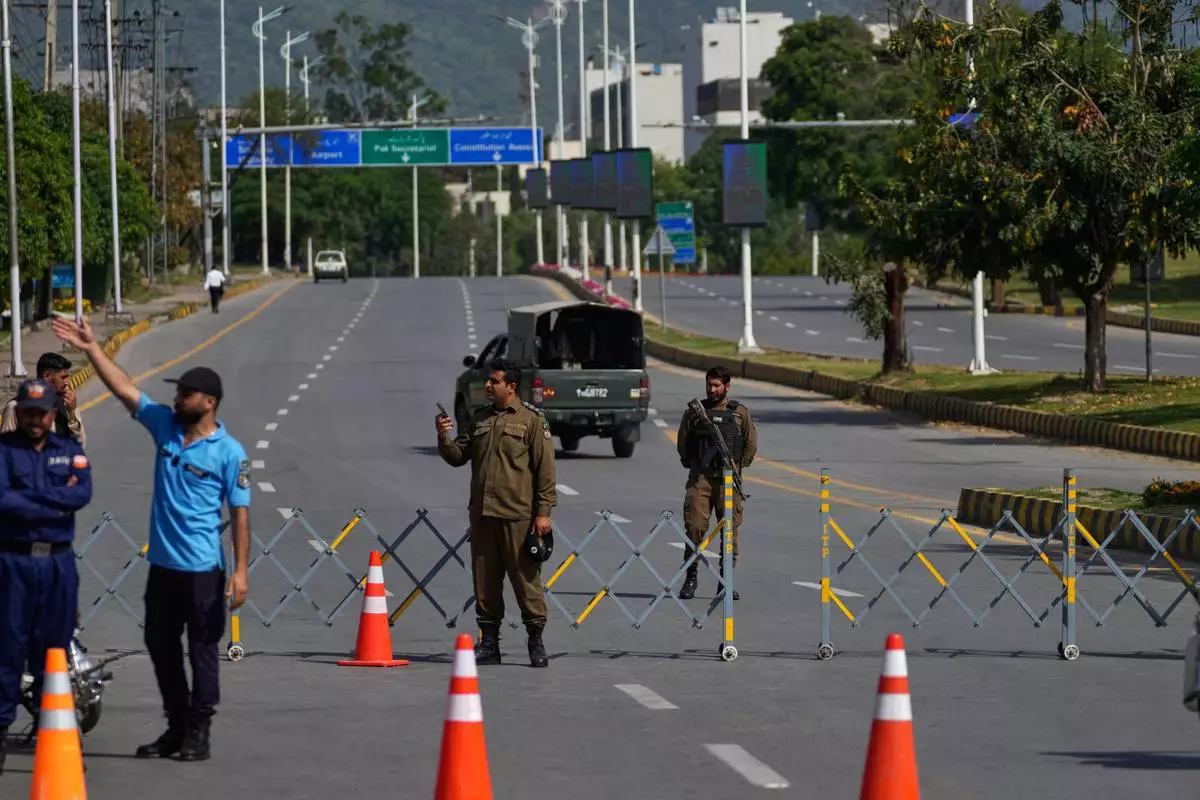
Police officers stand guard at a checkpoint ahead of the second round of negotiations between the U.S. and Iran, in Islamabad, Pakistan, Tuesday, April 21, 2026. (AP Photo/Anjum Naveed)