BERLIN--(BUSINESS WIRE)--Apr 21, 2026--
Synthflow AI, an enterprise AI agent platform that automates customer conversations, has formed a strategic partnership with 8x8, Inc. (NASDAQ: EGHT), a leading global business communications platform provider, to bring Synthflow next-generation AI agents to enterprise contact centers.
This press release features multimedia. View the full release here: https://www.businesswire.com/news/home/20260421904109/en/
This collaboration integrates Synthflow into the 8x8 Contact Center, automating self-service while enhancing agent support across AI calls, chat, and digital channels. The new technology helps joint customers avoid missing calls, ultimately converting more leads, empowering customers to increase their CSAT scores, and reducing operational costs. Additionally, customers can set up Al answering assistants without developer support.
The global voice AI market is expected to grow to $54 billion by 2033, and this partnership addresses the growing need for modern, enterprise-ready conversational AI. By replacing legacy point solutions, Synthflow enables joint customers to avoid long implementation cycles and complex setups. The platform delivers natural, human-like conversations with low latency, advanced interruption handling, memory capabilities, and support for over 30 languages. These features allow businesses to achieve faster resolution times and higher containment rates.
Hakob Astabatsyan, CEO of Synthflow, said: "Our partnership with 8x8 validates the strength of our agentic AI capabilities and the sophisticated framework we use. Having handled over 65 million voice interactions, we've seen firsthand the significant impact that transformative AI has on businesses in driving efficiency, satisfaction, and lowering costs.
“We give 8x8 and Synthflow customers an agile, innovation-focused alternative to legacy systems, making it easier than ever to transform customer interactions with intelligent automation at scale."
The integration provides a distinct competitive advantage in the cloud contact center market. The long-term strategic alignment also includes future roadmap initiatives, such as enabling 8x8 and its channel partners to resell Synthflow directly, alongside offering the platform to small and medium businesses through the 8x8 App Store.
Victor Belfor, Global Vice President, Business Development and Strategic Partnerships at 8x8, Inc., said: “As consumers become increasingly comfortable engaging with AI agents, it's vital that our customers recognize this channel as a priority for seamless, effective customer engagement. By partnering with Synthflow, we’re providing joint customers with the modern capabilities they need to help improve their satisfaction scores and quickly implement advanced voice automation."
To learn more about the partnership, read 8x8’s blog post “From Enterprise AI to Everyone: Why We Partnered with Synthflow.”
About Synthflow AI
Synthflow AI is an enterprise AI agent platform that automates customer conversations across phone and chat. Built for production environments, it combines agent orchestration with its own telephony infrastructure to deliver reliable performance, fast deployment, and full control over the end-to-end conversation flow. A G2 Grid Leader for AI Agents, Synthflow has processed over 65 million customer calls for more than 100 enterprise customers, including Freshworks and Thryv.
About 8x8, Inc.
8x8, Inc. (NASDAQ: EGHT) connects people and organizations through seamless communication on one of the industry's most integrated platforms for Customer Experience – combining Contact Center, Unified Communications, and CPaaS solutions. The 8x8® Platform for CX integrates AI to enable personalized customer journeys, drive operational excellence and insights, and facilitate team collaboration. As a business communications leader, the company helps customer experience and IT leaders around the world become the heartbeat of their organizations, empowering them to unlock the potential of every interaction. For additional information, visit www.8x8.com, or follow 8x8 on LinkedIn, X, and Facebook.
Caution Concerning Forward-Looking Statements
This press release contains forward-looking statements within the meaning of the Private Securities Litigation Reform Act of 1995. These statements include, but are not limited to, statements regarding the expected capabilities and benefits of the Synthflow AI and 8x8 partnership, anticipated improvements in customer engagement and satisfaction through AI-powered voice automation, the expected growth of the global voice AI market, the advantages of integrating Synthflow into the 8x8 Contact Center, and future roadmap initiatives including channel partner resale programs and the 8x8 App Store. All statements other than statements of historical fact are forward-looking statements. Forward-looking statements involve known and unknown risks, uncertainties, and other factors that may cause actual results to differ materially. For a discussion of these risks and uncertainties, please refer to 8x8’s filings with the Securities and Exchange Commission, including its most recent Annual Report on Form 10-K and Quarterly Reports on Form 10-Q. 8x8 assumes no obligation to update any forward-looking statements to reflect events that occur or circumstances that exist after the date on which they were made.
Copyright 2026 8x8, Inc. 8x8 and associated brand assets are trademarks of 8x8, Inc. All rights reserved.
Synthflow AI and 8x8 Enter Strategic Partnership to Deliver Next-Generation Agentic AI
OBBUERGEN, Switzerland (AP) — U.S. Vice President JD Vance and senior Iranian officials arrived in Switzerland on Sunday to formally launch negotiations over Tehran’s nuclear program and build out the fragile interim deal to end the war in Iran.
The framework was signed last week, and now top U.S. and Iranian negotiators are in a 60-day sprint to reach an agreement on the technical details that hold massive implications for the world economy and global security.
Yet only days after signing the agreement, it’s being stress-tested after fighting escalated in Lebanon earlier this week between Israel and the Iranian-backed militant group Hezbollah — and by the subsequent announcement by Iran’s military that it had closed the Strait of Hormuz, the vital waterway that transits a fifth of the world’s traded oil and natural gas. A renewed ceasefire in Lebanon, brokered on Saturday, appeared to be holding up.
Vance first sat down for talks with Pakistani Prime Minister Shehbaz Sharif and Staff Field Marshall Asim Munir, who has served as a key intermediary between the United States and Iran throughout the conflict.
“What’s up, man! Good to see you,” Vance said as he warmly greeted Munir, who serves as Pakistan's army chief.
Mediators from Qatar were also on hand at the picturesque mountainside resort near Lake Lucerne on Sunday morning.
Rafael Grossi, chief of the U.N. nuclear watchdog — the International Atomic Energy Agency — met with Swiss Foreign Minister Ignazio Cassis on the sidelines of the gathering.
The agency had monitored the 2015 nuclear deal negotiated between the U.S. and Iran under the Obama administration. Trump withdrew the U.S. from the agreement in 2018.
Iran’s main focus during negotiations on Sunday will be the ongoing war between Israel and Lebanon, Iranian Foreign Ministry spokesman Esmail Baghaei told Iran’s state news agency on Sunday.
Iran is insisting that the deal’s implementation start with the part of the deal that calls for a cessation of all wars, including between Israel and Hezbollah. Baghaei said the U.S. “has been unable or unwilling” to hold Israel to the ceasefire.
Iranian officials were to hold their own meetings with Pakistani and Qatari mediators before a planned four-way meeting that would include the U.S. negotiating team.
Iran is cautiously approaching the negotiations given its previous experience with the U.S. negotiations on the nuclear issue, which twice in the past year have been interrupted by massive strikes against the country. “The implementation of any document is more important than its signing,” Baghaei said Sunday.
But Iran’s president added that Iran will maintain its right to a nuclear program.
“What is certain is that we will never back down from the right to enrich uranium, and the other side is also forced to accept it,” Iranian President Masoud Pezeshkian said on Sunday, according to Iran’s state media.
Vance had originally been slated to be on the ground at the picturesque Bürgenstock resort near Lucerne on Friday, but his departure from the United States was delayed after fighting escalated in Lebanon and Iranian officials canceled plans to attend the talks.
U.S. Central Command disputed Iran’s claim that it had once again shuttered the strait and said U.S. forces continued to monitor the situation to ensure traffic continues to flow through the waterway. Vance has said that millions of barrels of oil have moved through the strait in recent days.
Vance departed the U.S. just after Iranian state TV said Iran’s negotiators had arrived in Switzerland. Tehran’s negotiators include parliamentary speaker Mohammad Bagher Qalibaf and Foreign Minister Abbas Araghchi, along with central bank and oil officials.
The vice president by special envoy Steve Witkoff and Jared Kushner, President Donald Trump's son-in-law, for Sunday's talks. Witkoff and Kushner were on the ground in Switzerland ahead of Vance to begin sifting through the technical details of the nuclear talks.
Vance and his wife, second lady Usha Vance, arrived at Emmen Air Base outside Lucerne just before 6 a.m. local time, according to his office.
While Vance said he planned to be in Switzerland for just “a day or two,” leaving much of the detailed negotiations to be spearheaded by Witkoff and Kushner, his role in the talks has heightened scrutiny of the vice president at a time when he’s actively considering a 2028 presidential campaign.
Trump and Vance have come under searing criticism from parts of their own party for the deal, with Republican hard-liners unfavorably likening it to a nuclear agreement signed by the Obama administration that Trump and the GOP have insisted did nothing to actually terminate Iran’s nuclear program.
The agreement signed by Trump and Iranian President Pezeshkian immediately allows Tehran to sell its oil freely and paves the way for Iran to tap into billions of dollars in assets that are currently frozen. It also calls for Iran to dilute its stockpile of highly enriched uranium, believed to be buried under nuclear sites that were targeted in U.S. strikes last summer.
The agreement says commercial vessels can pass through the Strait of Hormuz for 60 days without a charge, but does not preclude future fees imposed by Iran. Trump made his own threat on Saturday to levy U.S. tolls on the strait if there is no deal with Iran in 60 days, insisting in a social media post that the money would be for “services rendered as the Guardian Angel to the countries of the Middle East.”
The Trump administration has been working to reassure global markets that the Iran war has been merely a blip on oil prices, as Americans have complained the conflict resulted in hiking gasoline prices ahead of peak summer travel months. After the White House announced the deal a week ago, oil futures dropped almost 8% — and markets are expected to closely track the progress of talks when they open for trading on Sunday evening.
Further complicating matters, neither Israel nor Hezbollah is a signatory to the deal between the U.S. and Iran, and Israeli Prime Minister Benjamin Netanyahu has vowed to keep his forces in southern Lebanon until any threat to Israel is eliminated. Hezbollah has refused to halt its attacks unless Israel commits to withdrawing from Lebanon.
Fighting between Israel and Hezbollah in the initial days after the agreement between the U.S. and Iran killed 47 people in Lebanon, as well as four Israeli soldiers.
Kim reported from Washington. Associated Press writers Munir Ahmed in Islamabad, Amir Vahdat in Tehran, Iran, and Melanie Lidman in Tel Aviv, Israel, contributed to this report.
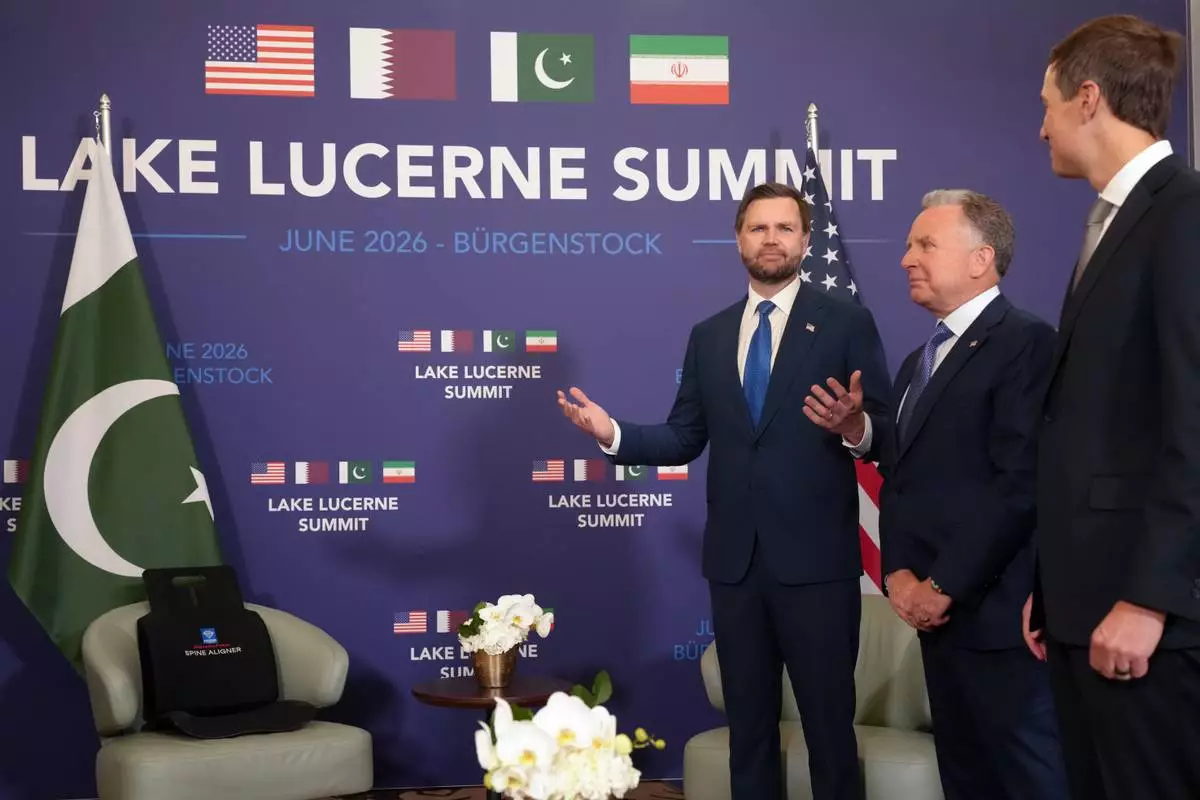
U.S. Vice President JD Vance, left, reacts next to U.S. President Donald Trump's envoys Steve Witkoff, second right, and Jared Kushner, right, while waiting to meet with Pakistan's Prime Minister Shehbaz Sharif for high-level talks aimed at advancing a deal to end the Middle East conflict, at the Bürgenstock Resort in Obbuergen, near Lucerne, in Switzerland, Sunday, June 21, 2026. (Nathan Howard/Pool Photo via AP)
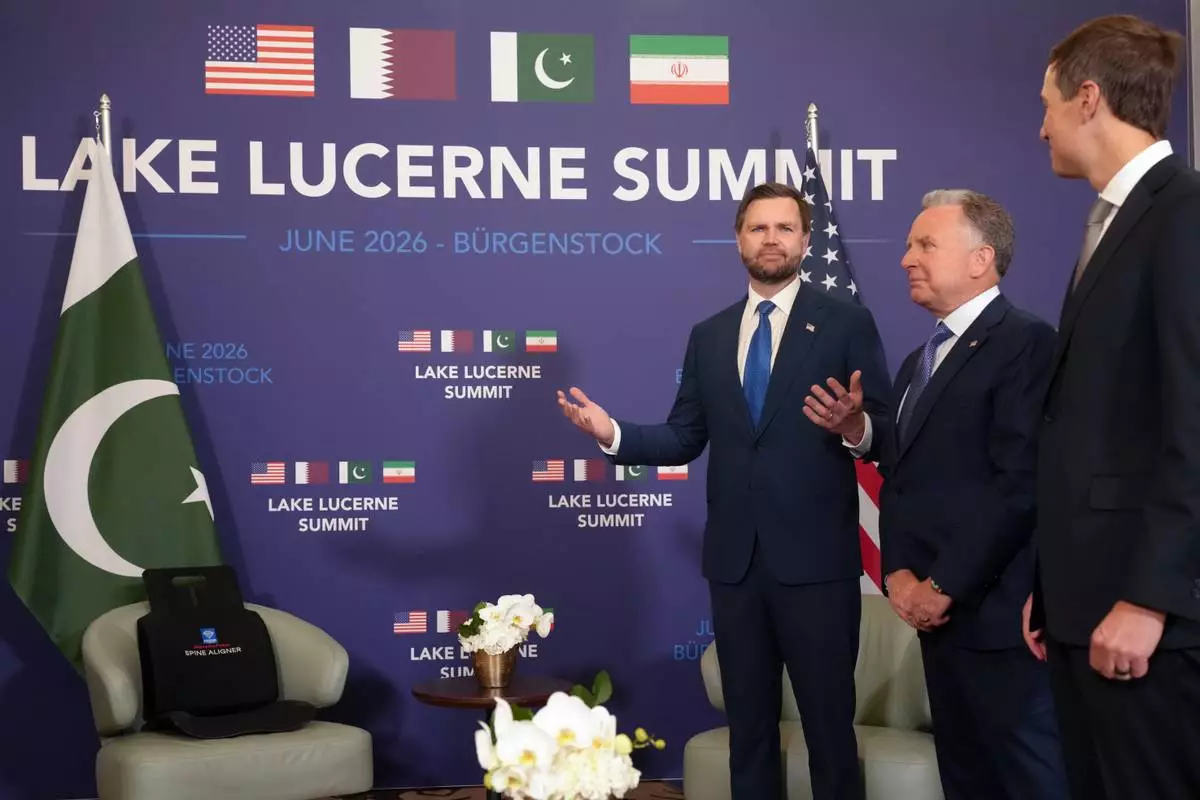
U.S. Vice President JD Vance, left, reacts next to U.S. President Donald Trump's envoys Steve Witkoff, second right, and Jared Kushner, right, while waiting to meet with Pakistan's Prime Minister Shehbaz Sharif for high-level talks aimed at advancing a deal to end the Middle East conflict, at the Bürgenstock Resort in Obbuergen, near Lucerne, in Switzerland, Sunday, June 21, 2026. (Nathan Howard/Pool Photo via AP)
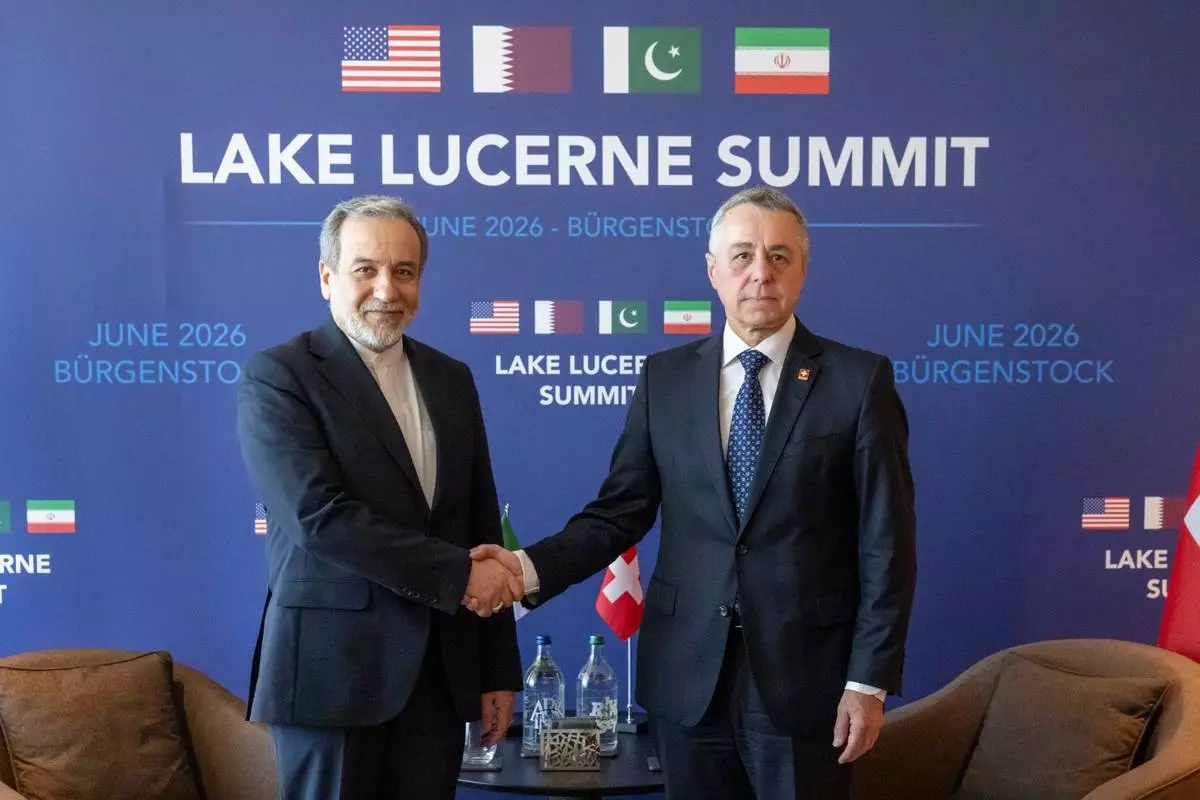
Iran’s Foreign Minister Abbas Araghchi, left, and Switzerland's Foreign Minister Federal councillor Ignazio Cassis, right, shake hands at bilateral discussions at the Buergenstock resort in Obbuergen, near Lucerne, Switzerland, Sunday, June 21, 2026. (Urs Flueeler/Keystone via AP)
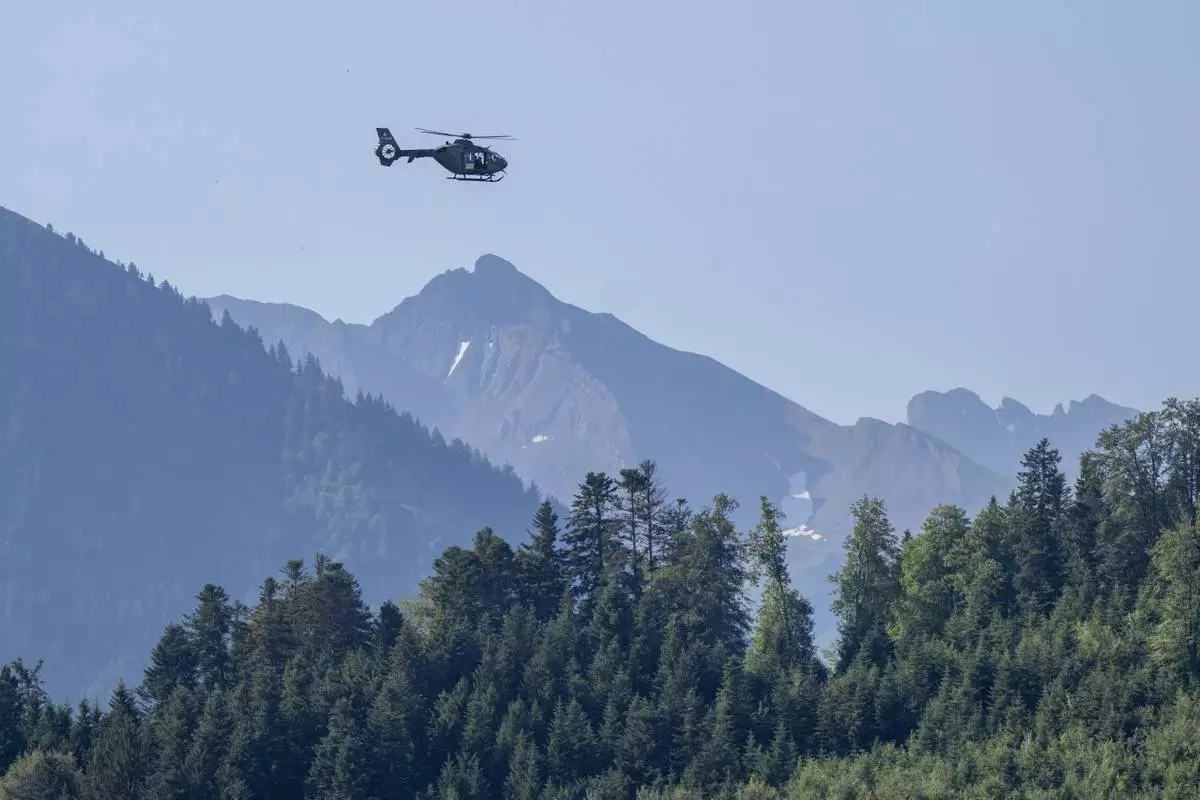
A Swiss Army Helicopter flies around the Buergenstock resort in Obbuergen, near Lucerne, Switzerland, Sunday, June 21, 2026. (Urs Flueeler/Keystone Pool via AP)
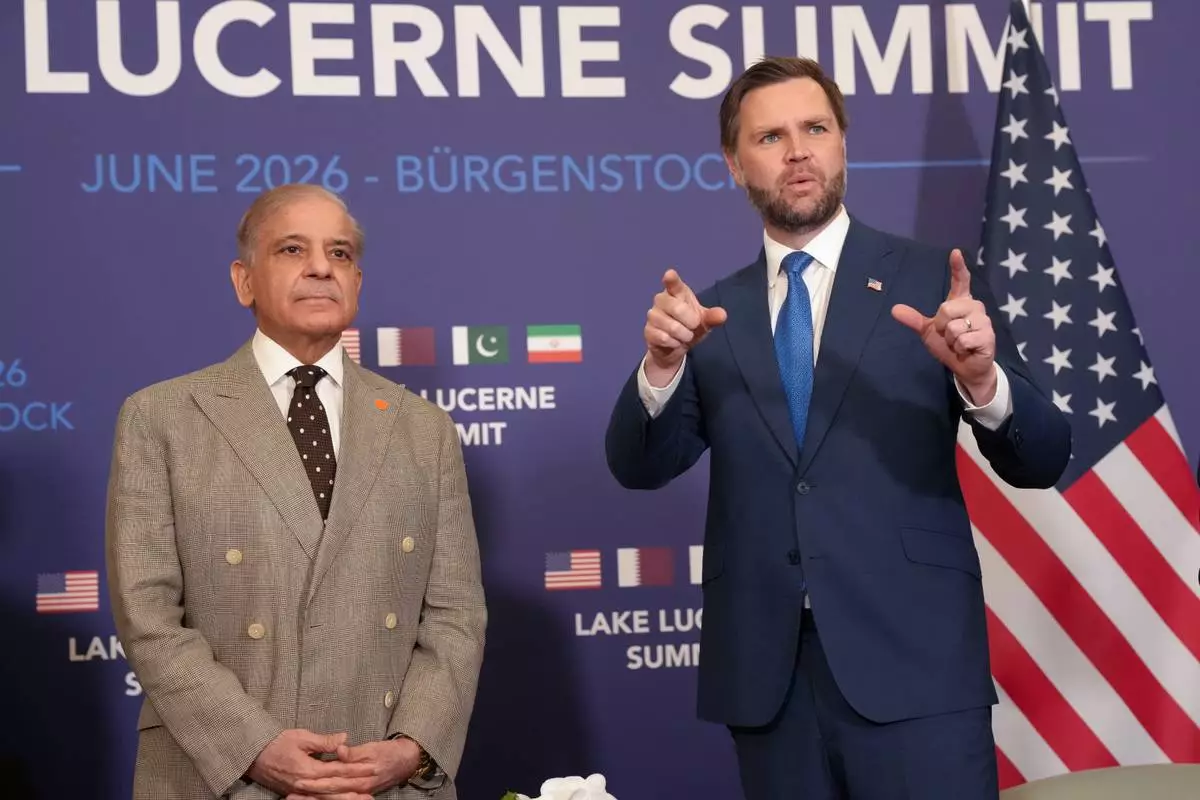
U.S. Vice President JD Vance, right, meets with Pakistan's Prime Minister Shehbaz Sharif, during high-level talks aimed at advancing a deal to end the Middle East conflict, at the Bürgenstock Resort in Obbuergen, near Lucerne, in Switzerland, Sunday, June 21, 2026. (Nathan Howard/Pool Photo via AP)
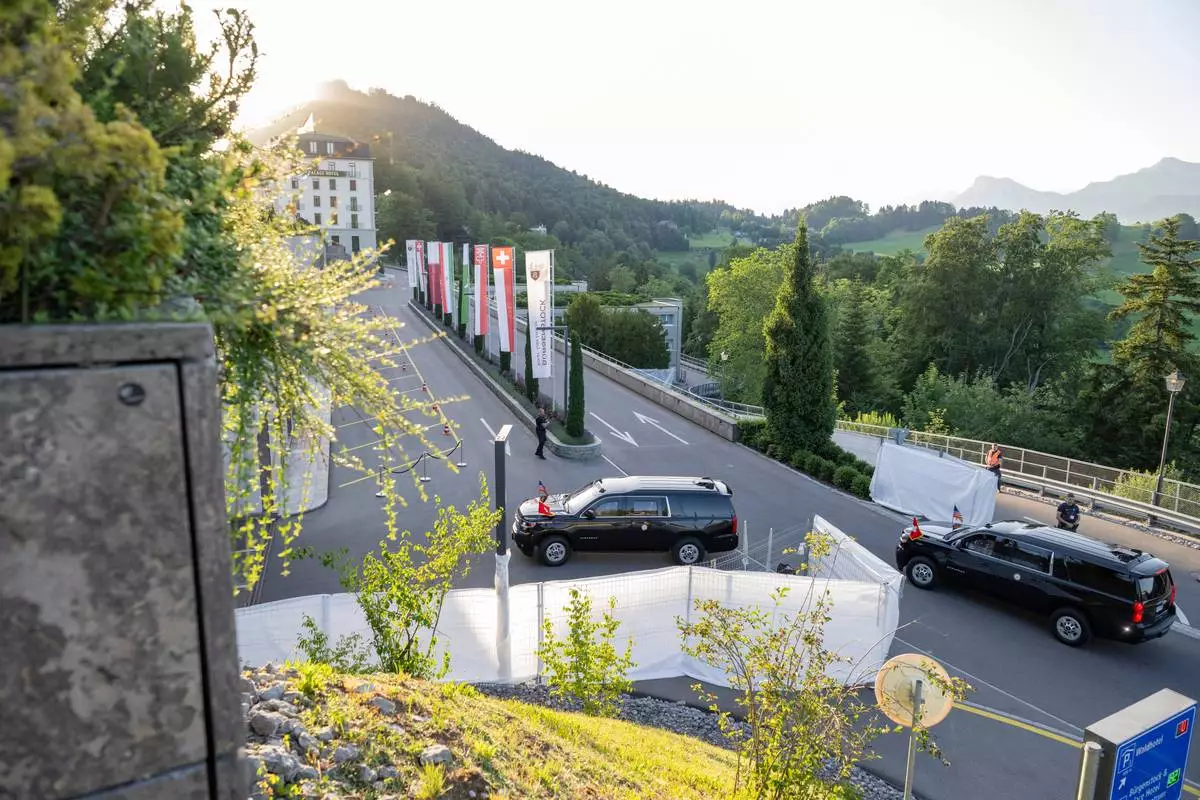
A convoy with U.S. Vice President JD Vance arrives at the Bürgenstock Resort in Obbuergen, near Lucerne, in Switzerland Sunday, June 21, 2026. (Urs Flueeler/Keystone, Pool Photo via AP)
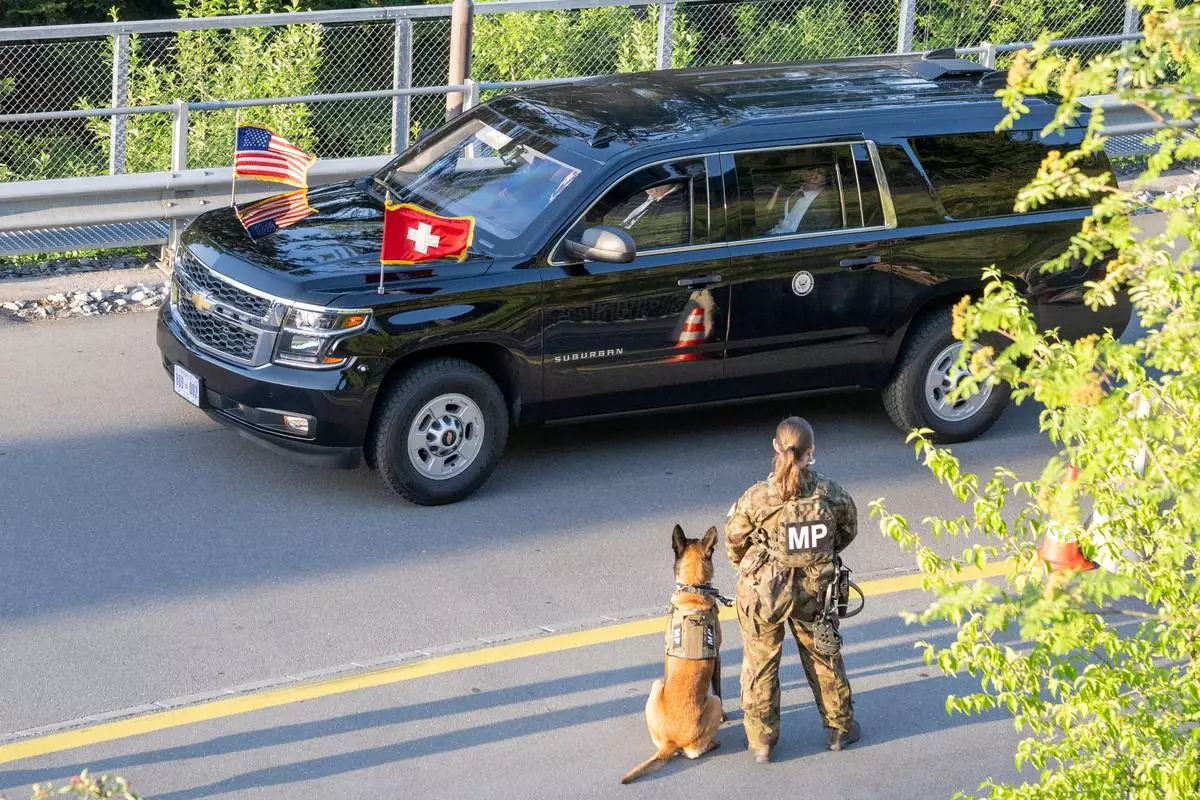
A convoy with U.S. Vice President JD Vance arrives at the Bürgenstock Resort in Obbuergen, near Lucerne, in Switzerland Sunday, June 21, 2026. (Urs Flueeler/Keystone, Pool Photo via AP)
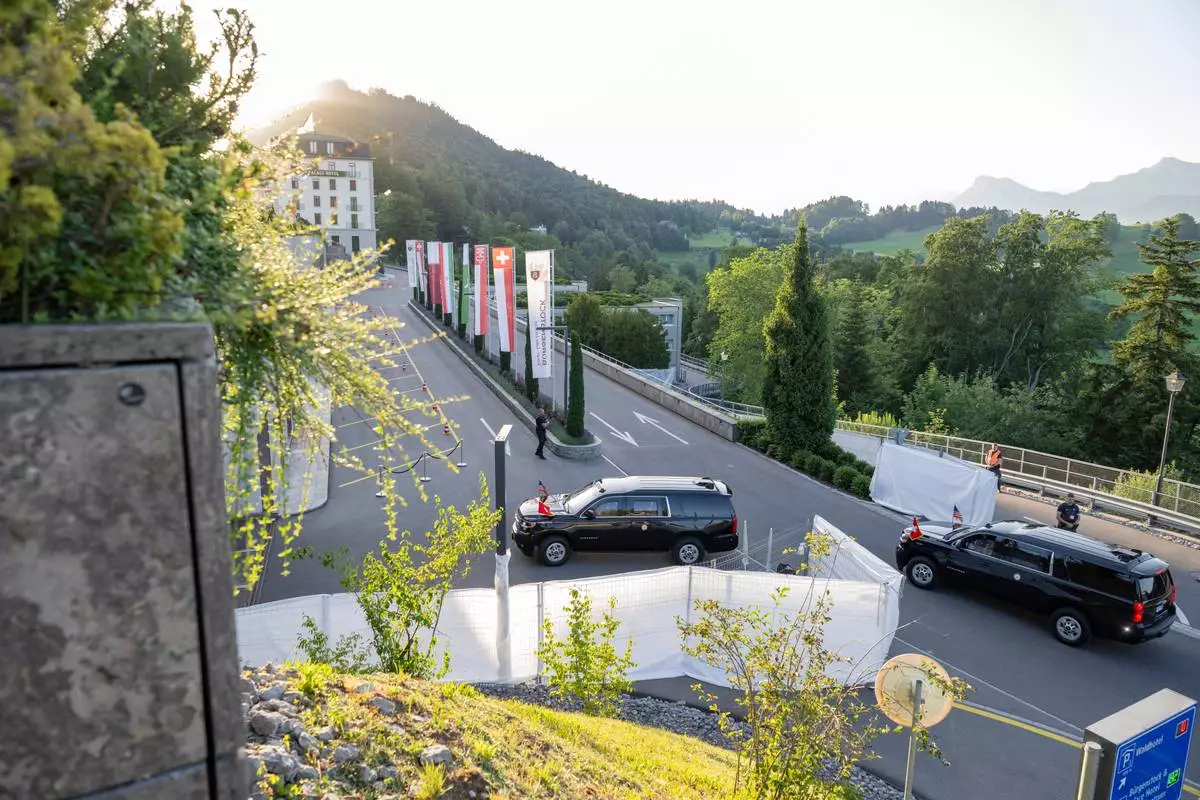
A convoy with U.S. Vice President JD Vance arrives at the Bürgenstock Resort in Obbuergen, near Lucerne, in Switzerland Sunday, June 21, 2026. (Urs Flueeler/Keystone, Pool Photo via AP)
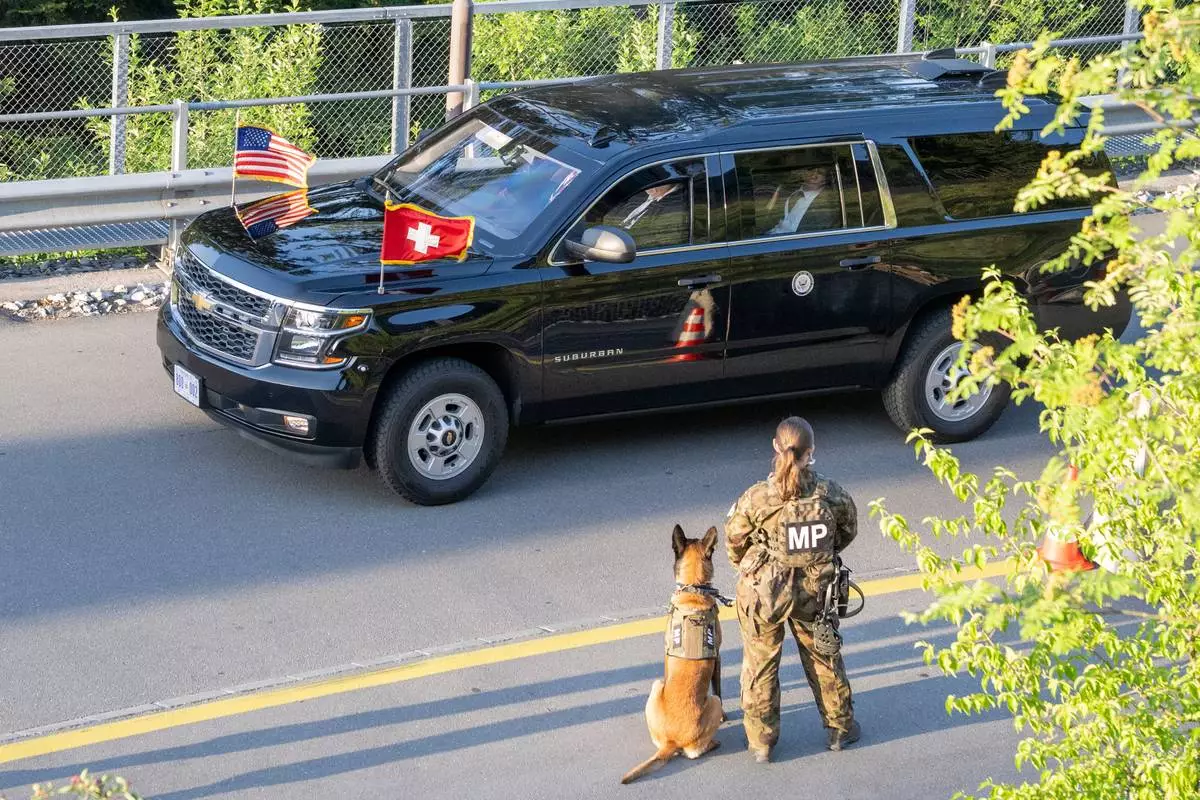
A convoy with U.S. Vice President JD Vance arrives at the Bürgenstock Resort in Obbuergen, near Lucerne, in Switzerland Sunday, June 21, 2026. (Urs Flueeler/Keystone, Pool Photo via AP)
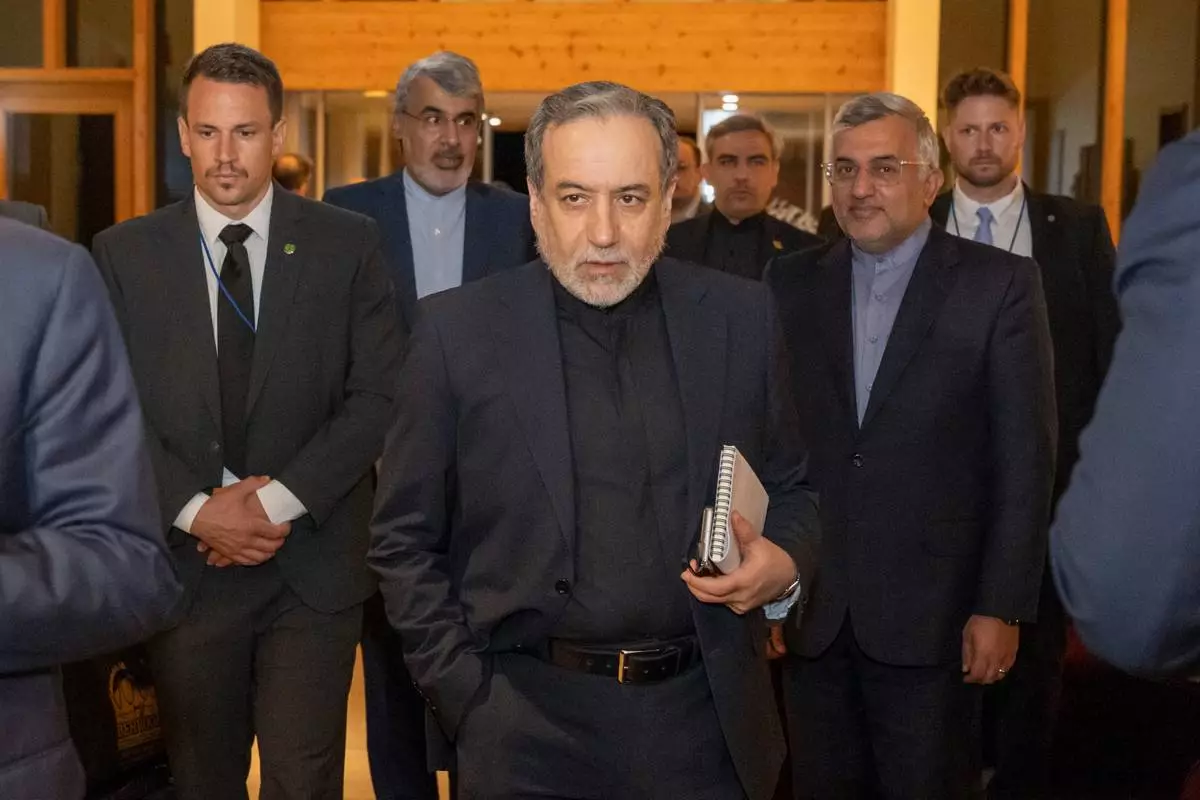
Iranian Foreign Minister Seyyed Abbas Araghchi, center, arrives at the Buergenstock resort in Obbuergen, near Lucerne, Switzerland, early Sunday, June 21, 2026. (Urs Flueeler/Keystone, Pool via AP)
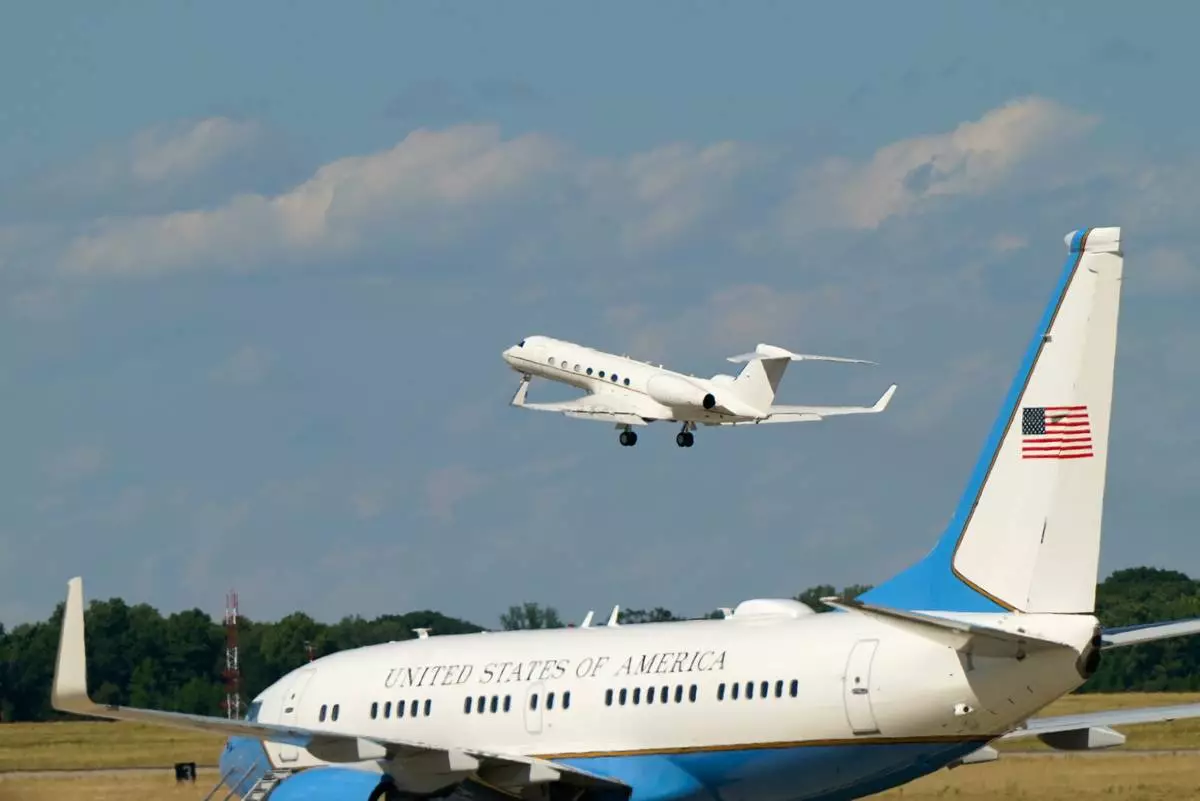
Air Force Two, with Vice President JD Vance and second lady Usha Vance on board, departs Joint Base Andrews, Md., Saturday, June 20, 2026, en route to Switzerland. (Elizabeth Frantz/Pool Photo via AP)
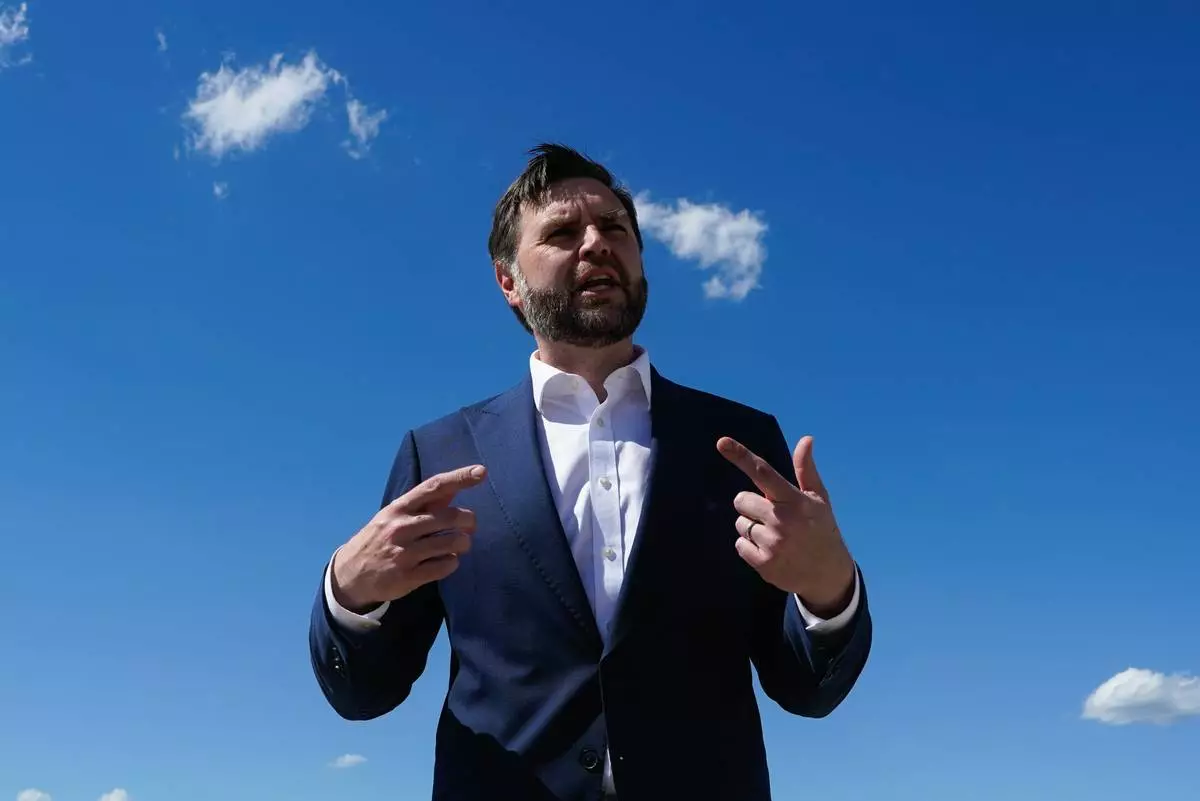
Vice President JD Vance speaks to reporters at Joint Base Andrews, Md., Saturday, June 20, 2026, en route to Switzerland. (Elizabeth Frantz/Pool Photo via AP)