Kuqa City in northwest China's Xinjiang Uygur Autonomous Region has reopened its historic old town after a government-led restoration launched in 2023, drawing visitors and new businesses into the district.
Once a fading district of crumbling walls and deserted alleys, the area is now bustling again, with 287 shops and 386 photo spots showcasing traditional woodcarvings and brightly painted doors.
For longtime residents, the revival has been deeply personal, restoring memories of a once-vibrant community.
"I grew up in Kuqa. As a child, the old town was so vibrant. But when I returned after college, it had grown quiet and empty. Then in 2023, the government began a renovation project. Now during tourist season, visitors from all over the country fill the streets. It's as lively as it was when I was young," said Sun Jiaoni, a guesthouse owner.
That resurgence has not only rekindled pride among residents but also reshaped the local economy, bringing new businesses, jobs and opportunities to Kuqa's old town.
More than 120 newcomers from across China have settled in Kuqa, opening cafes, guesthouses, and photography studios. Today, over 2,000 people work in the district's tourism industry, benefiting more than 20,000 residents.
"At the beginning, I'm the first one who came here [to start a business]. And then lately, in four years, there are more stores, more restaurants, more coffee shops, more bars," said Zhang Yuanyuan, a coffee shop owner from Shanxi.
Kuqa's old town has become a showcase for China's rural revitalization drive, blending cultural preservation with economic renewal through tourism and job growth.
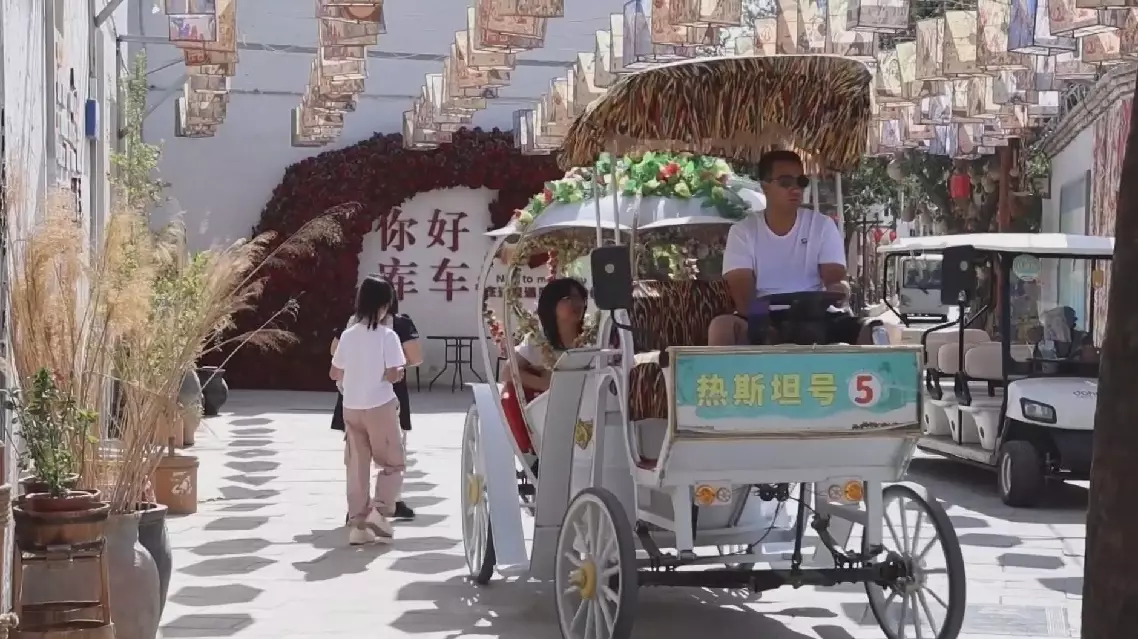
Heritage restoration in Xinjiang's Kuqa "old town" fuels tourism, rural revitalization
The year 2026 marks the 65th anniversary of diplomatic relations between China and Laos as well as the Year of China-Laos Friendship, presenting important opportunities for the development of bilateral relations, Chinese Foreign Minister Wang Yi said on Tuesday.
Wang, also a member of the Political Bureau of the Communist Party of China Central Committee, made the remarks when meeting with Lao Deputy Prime Minister Saleumxay Kommasith, who is visiting China as special envoy of Thongloun Sisoulith, general secretary of the Lao People's Revolutionary Party (LPRP) Central Committee and president of Laos.
Wang welcomed Saleumxay to visit China, saying the visit fully reflects the high level of the China-Laos community with a shared future and will further enhance the strategic mutual trust between the two sides.
Wang called on both sides to strengthen inter-governmental institutional dialogues, enhance the quality and efficiency of China-Laos railway connectivity, jointly build an upgraded version of the China-Laos Economic Corridor, and deliver more tangible outcomes in advancing regional connectivity.
China will leverage its strengths to align development strategies with Laos, boost whole-industry-chain cooperation in minerals, electricity and other sectors, deepen human resources development, and support Laos in economic transformation and industrial growth, he said.
Saleumxay, also a member of the Political Bureau of the LPRP Central Committee, said Laos is willing to maintain close high-level exchanges with China, jointly hold successful celebration activities for the 65th anniversary of diplomatic relations, and deepen cooperation in areas such as connectivity, energy and minerals.
Saleumxay expressed appreciation for China's stance and role in major international and regional affairs, saying Laos is ready to strengthen coordination and cooperation with China.
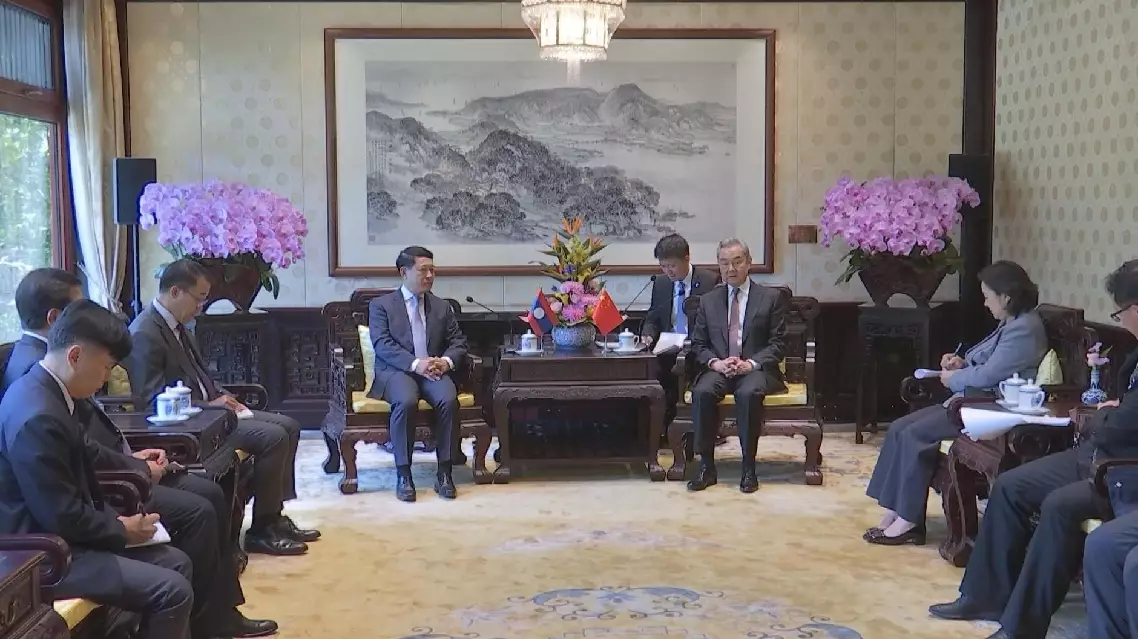
China-Laos ties face important opportunities in 2026: Chinese FM