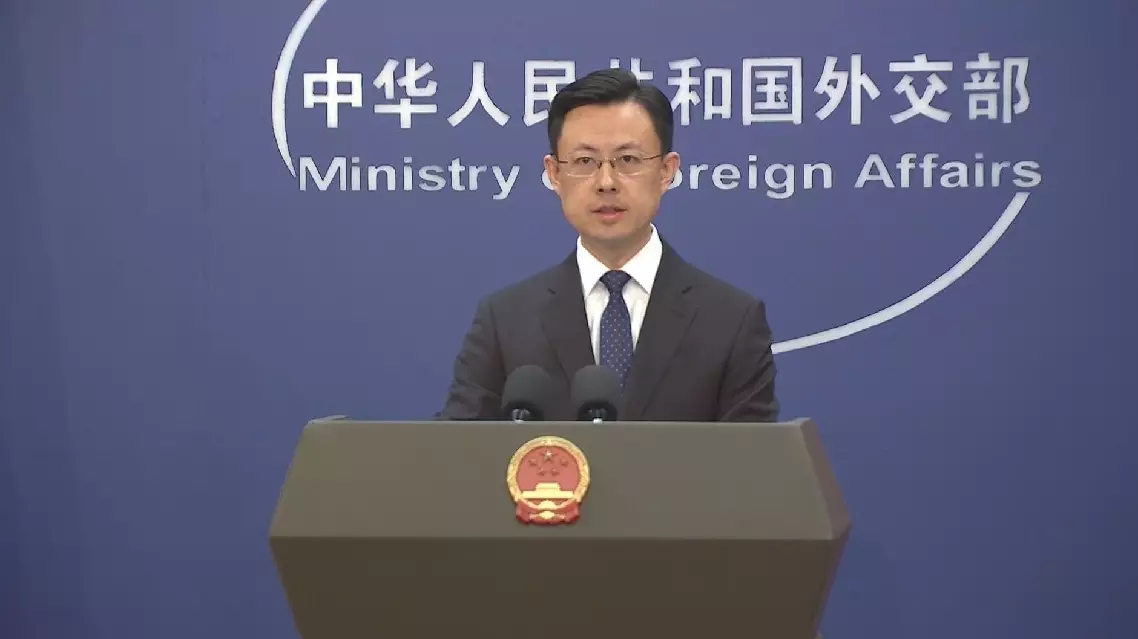
China firmly opposes and strongly condemns Japan's latest negative moves related to Yasukuni Shrine and has lodged strong representations and protests with the Japanese side, Foreign Ministry spokesman said at a press briefing in Beijing on Tuesday.
Guo made the remarks after Japanese Prime Minister Sanae Takaichi on Tuesday sent a ritual offering to the notorious Yasukuni Shrine, a symbol of Japanese militarism and wartime aggression.
"China firmly opposes and strongly condemns Japan's latest negative moves related to the Yasukuni Shrine and has lodged serious and strong protests with the Japanese side," the spokesman said.
"The Yasukuni Shrine is a spiritual tool and symbol of Japanese militarists responsible for the war of aggression. It is in fact a shrine for war criminals. This year marks the 80th anniversary of the beginning of the Tokyo trials. For over two and a half years, judges from 11 countries heard the cases, and with undeniable evidence and in strict accordance with law, exposed horrendous crimes committed by Japanese fascists and militarists in their war of aggression, which laid the foundation for the post-war international order. However, to our indignation, 80 years on, the notorious Yasukuni Shrine still honors convicted Japanese Class-A war criminals with direct responsibilities for the war crimes committed during that war of aggression, and Japanese officials and politicians still make visits or send ritual or cash offerings to the war shrine. Japan's negative moves related to the Yasukuni Shrine is in nature an attempt to evade war responsibilities, an affront to justice, a provocation against Japan's war victims, and a challenge to the outcome of WWII victory. Such moves have been widely condemned and firmly rejected by the international community," he said.
Guo warned that Japan's repeated actions at the Yasukuni Shrine, combined with its expanding military budget and moves to loosen restrictions on weapons exports, reveal deeper neo-militarism tendencies. Against this backdrop, he urged Japan to reflect sincerely on its wartime crimes rather than distort history, stressing that the international community must remain vigilant.
"Japan must do serious soul-searching. Will it continue to let the specter of militarism spread, distort historical facts and whitewash its crimes during the war of aggression? Or will it deeply and sincerely reflect on its war crimes, foster a right view of history, and earn trust from its Asian neighbors and the international community? With massive increase in military budget, the deployment of intermediate-range offensive missiles, relaxed restrictions on weapon export, proposed revision of its pacifist Constitution and the idea of abandoning the three non-nuclear principles, how can Japan profess itself as a 'peace-loving country?' What's Japan really up to? What Japan needs to see clearly is that all peace-loving forces for justice in the world will never allow neo-militarism to spread and threaten regional peace, and will instead make a firm response. Amnesia of history means betrayal, and denial of responsibility spells repetition of crimes. The international community needs to be vigilant against Japan's historical revisionism, stand firmly against its neo-militarist tendencies and work together to keep the region and the world peaceful and stable," Guo said.
China deplores Japan for honoring war criminals at Yasukuni Shrine