DISTRIBUTED-WORKFORCE/OAKLAND, Calif.--(BUSINESS WIRE)--Apr 21, 2026--
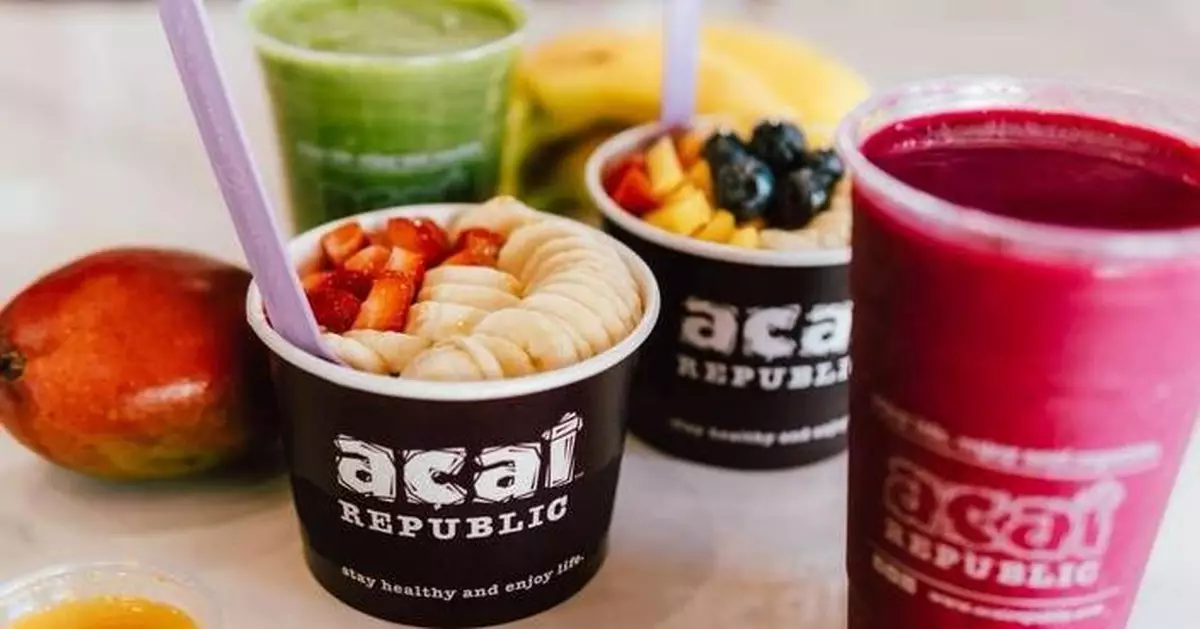
Açaí Republic, the quick-service restaurant (QSR) franchise known for its organic açaí bowls and smoothie menu, has selected Square as its unified commerce platform powering 36 locations across California, Hawaii, Arizona, and Florida. As the brand nationally expands with 8+ locations currently under construction, Açaí Republic is investing in modern, flexible infrastructure to streamline growth, improve operational consistency, and deliver a seamless customer experience across every touchpoint.
This press release features multimedia. View the full release here: https://www.businesswire.com/news/home/20260421556380/en/
Founded in Southern California with the mission of making clean, high-quality açaí accessible nationwide, Açaí Republic has built a loyal following around a simple promise: no added sugars or shortcuts in order to keep communities healthy and enjoying life. Rooted in Amazonian tradition, the business sources its ingredients directly from sustainable farms in Para, Brazil – and this commitment to bringing the Amazon to American bowls stood out. Within months of opening the first Açaí Republic location in 2012, its menu of fresh flavors drew lines stretching beyond the front door. As demand steadily increased, Açaí Republic’s franchise footprint boomed to 36 locations, prompting the company to find a more scalable and integrated technology platform.
“There’s a natural synergy between what we believe in, and what Square enables our business to achieve,” said Adriano Nasal, Founder of Açaí Republic. “We care about the health of our communities, and need a solution to drive the health of our business. We uphold sustainable practices, and are focused on achieving sustainable, long-term growth. Square stood out because it aligns what we put on the menu with the technology behind our operations. We’re able to manage our franchises across states, scale our specialized menu, and ensure the same vibrant experience our customers love at every location.”
A Flexible Platform Built for Franchise Innovation
As a multi-state franchise, Açaí Republic needed a system that could support both centralized oversight and local operator independence. Square’s comprehensive commerce ecosystem – including Square for Franchises, Square Register, and Square Terminal – enables the QSR to standardize menus, streamline reporting, and give owners the tools to run efficient day-to-day operations. Ease of implementation and intuitive design were key factors in the switch, as Square enables new Açaí Republic locations to onboard quickly and rollout omni-channel ordering touchpoints without added complexity.
Square’s open API platform enabled Açaí Republic to take a tailored approach to meeting its operational needs. Rather than relying on third-party vendors, the company utilizes a custom kiosk solution with software powered by Square Terminal to take payments. Working in tandem with its custom mobile ordering app – which powers order-ahead, loyalty rewards like ‘Açaí Coins,’ branded merchandise, and exclusive member offers – Square serves as the foundation for a cohesive experience that strengthens Açaí Republic’s interactions with its customers.
Ambitious Growth on The Horizon
As Açaí Republic looks ahead, the company remains focused on expanding to new markets while staying true to its core values: quality ingredients, transparency, and a lifestyle centered around wellbeing. With Square as its technology partner, the brand now has the infrastructure to efficiently scale, further innovate, and deliver a consistent, high-quality experience whether customers are ordering in-store, through a kiosk, or on mobile.
“Quick-service restaurants are inherently complex businesses, and franchising adds another layer of coordination across operators, systems, and customer experiences,” said James Schonzeit, Head of Food & Beverage at Square. “Square was built to solve that in a single destination, giving brands like Açaí Republic the tools to easily run, innovate, and scale. Whether that’s standardizing operations or building custom experiences that set them apart, we’re here to help them grow from neighborhood favorites to nationally recognized names.”
For more information about Square’s solutions for food & beverage sellers, visit https://squareup.com/us/en/restaurants.
About Açaí Republic
Açaí Republic was founded with the mission of bringing the authentic taste of Brazilian açaí to the world. We use organic açaí sourced directly from the Amazon, combined with high-quality ingredients to deliver a consistent, healthy, and premium experience in every bowl.
More than just an açaí shop, we represent a lifestyle, connecting energy, wellness, and community. With an innovative model and a strong commitment to excellence, Açaí Republic continues to expand globally, sharing the best of Brazil with every new location. For more information, visit acairepublic.com.
About Square
Square helps businesses turn transactions into connections and businesses into neighborhood favorites.
In 2009, Square started with a simple invention – the first mobile card reader, which changed how the entire financial system thinks about small businesses. Square has since grown into a global business platform helping millions of sellers of all sizes participate and thrive in their communities.
Whether independently run or a global chain, Square understands that sellers succeed when they have the freedom to focus on the experiences that keep customers coming back. From point of sale and payments to online commerce, staff management, cash flow tools, and more, Square brings together the tools sellers need to run and grow on one intelligent platform. For more information, visit squareup.com.
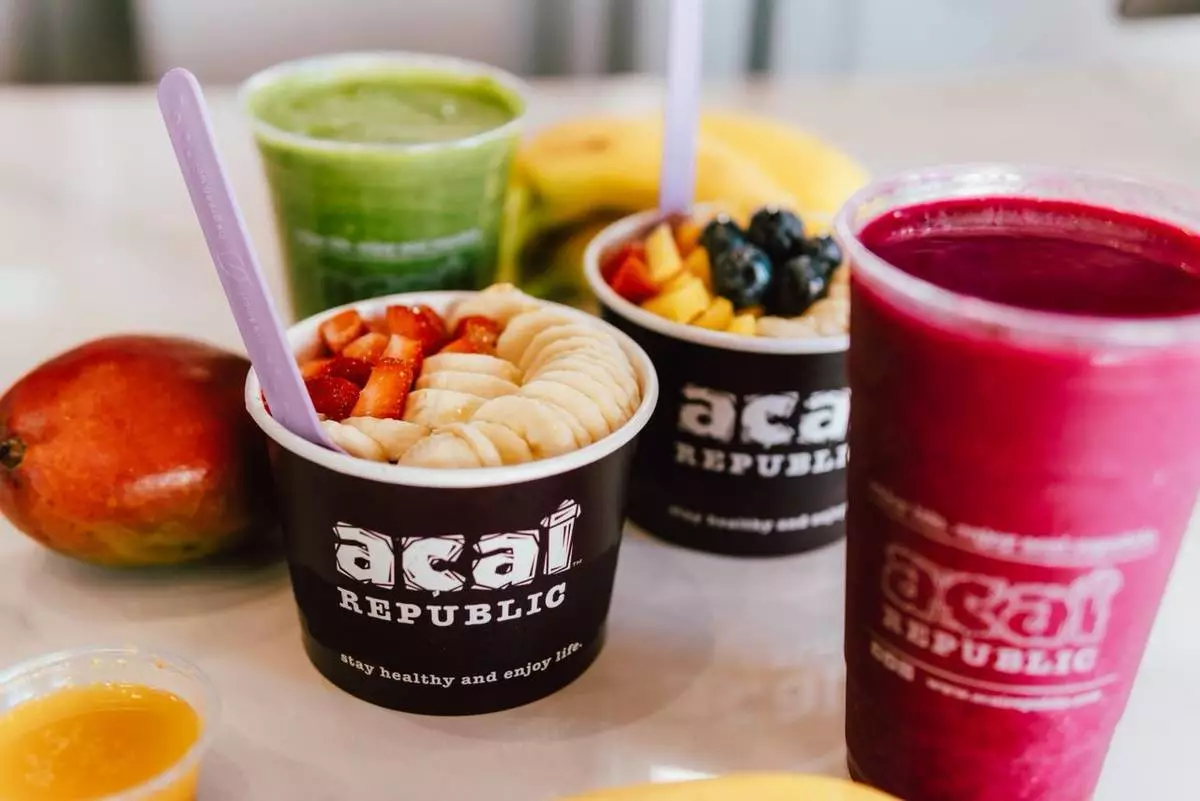
Photo courtesy of Açaí Republic
MALABO, Equatorial Guinea (AP) — Pope Leo XIV arrived in Equatorial Guinea on Tuesday on the fourth and final leg of his Africa journey, and denounced the “colonization” of Africa's minerals and the “lust for power” in a country whose repressive leader has been in office since 1979.
Adoring crowds in the largely Catholic country lined the road from the airport into the capital, Malabo, cheering the first pope to visit since St. John Paul II in 1982. Wearing his formal red mozzetta cape, Leo thrilled the flag-waving masses by arriving at the presidential palace in his open-sided popemobile.
“There is a lot of joy today because we waited 44 years for the pope to come,” said Diosdao Marques, a senior Catholic official in the country. “It’s a blessing for the country, we hope many things will change and we will deepen our faith.”
The former Spanish colony on Africa’s western coast is run by Africa’s longest-serving president, Teodoro Obiang Nguema Mbasogo, who has been accused of widespread corruption and authoritarianism.
The discovery of offshore oil in the mid-1990s transformed Equatorial Guinea’s economy virtually overnight, with oil now accounting for almost half of its GDP and more than 90% of exports, according to the African Development Bank.
Yet more than half of the country’s nearly 2 million people live in poverty. And rights groups including Human Rights Watch — as well as court cases in France and Spain — have documented how revenues have enriched the ruling Obiang family rather than the broader population.
Leo, who arrived from Angola, met with Obiang at the presidential palace and then addressed government authorities, diplomats and civil service representatives. Noting that the encounter occurred on the first anniversary of Pope Francis’ death, Leo quoted the late pope in denouncing income inequalities that he said had been exacerbated by a global economy focused on the pursuit of profit at all cost.
“Such an economy kills,” Leo said. “In fact, it is even more evident today than in years past that the proliferation of armed conflicts is often driven by the colonization of oil and mineral deposits, occurring with no regard for international law or the self-determination of peoples.”
He said all public authorities must “dismantle the obstacles” to sustainable and human development, “a mission grounded in the fundamental principles of solidarity and the universal destination of goods,” he said.
The meetings took place in the old presidential palace. The government has built a new capital on the mainland, named Ciudad de la Paz, or City of Peace, but the transfer of government buildings hasn’t been completed yet.
Authorities have said the decision to build the new capital was strategic, given the potential for expansion of the city carved out in the middle of a tropical forest. But critics said the relocation of the capital would exacerbate existing inequalities and give further opportunities for the presidential circle to enrich themselves
Leo referred to the new capital by citing to the famous work of St. Augustine, “City of God,” in which the 5th-century philosopher interpreted humanity through two models: The “earthly city” where people live temporarily, and the eternal “city of God,” characterized by God’s unconditional love and love of one another, especially the poor.
Leo didn't call out the corruption associated with the Obiang family or the criticism of the new capital. But he suggested Equatorial Guinea should look to the “City of God” as a model for its new capital.
“The earthly city is centered upon the proud love of self, on the lust for power and worldly glory that leads to destruction,” he said. “It is essential to discern the difference between that which lasts and that which passes, remaining free from the pursuit of unjust wealth and the illusion of dominion."
Equatorial Guinea is officially a secular country, but the Catholic Church is at the center of its political and social systems.
Church leaders “are very much interconnected intrinsically with the government,” said Tutu Alicante, a U.S.-based activist who runs the EG Justice rights group. “Part of it is the fear the government has instilled in everyone, including the church, and part of it is the monetary gains that the church derives from this government.”
The Rev. Fortunatus Nwachukwu, No. 2 in the Vatican’s missionary evangelization office, said the Catholic Church is present in difficult civil spaces and knows how to operate in them to carry out its mission.
“Should the church go to war against the government? Surely no,” Nwatchukwu said. “Should the church swallow everything as if it were normal? No. The church has to continue preaching justice, always in defense of life, human dignity and the common good.”
That is particularly challenging in Equatorial Guinea, which with about 75% of its population Catholic is one of the most Catholic countries in Africa.
But it’s also one of the most oppressed. In addition to official corruption, the country’s government also faces rampant accusations of harassment, arrest and intimidation of political opponents, critics and journalists.
Equatorial Guinea is also one of several African nations that have been paid millions of dollars in controversial deals with the Trump administration to receive migrants deported from the U.S. to countries other than their own.
AP reporting shows that at least 29 such migrants with no ties to the country have been deported there. Some remain in detention in Malabo with restrictions on legal and medical support, while others have been forcibly returned to their countries where they face persecution.
Leo, who will visit a prison in the port city of Bata on Wednesday, has criticized the Trump administration’s overall migration deportation policy as “extremely disrespectful.”
The country has consistently ranked among the bottom 10 countries in Transparency International’s annual corruption perception index, though the government has in recent years taken some steps to improve the situation with a new anti-corruption law, said Transparency International’s regional advisor for Africa, Samuel Kaninda.
Kaninda said he hoped the pope’s visit would draw attention to such shortcomings, and give the people of Equatorial Guinea hope. Even if the government exploits the visit to signal a papal endorsement of its rule, historically pope trips to even authoritarian regimes have ended up as a net positive experience for the people, he said.
“The risk is there, but at the same time, we see more of the opportunity to shed more light on a lot more that is happening there,” he said.
Associated Press writers Monika Pronczuk in Malabo, Equatorial Guinea and Ope Adetayo in Lagos, Nigeria, contributed to the reporting.
Associated Press religion coverage receives support through the AP’s collaboration with The Conversation US, with funding from Lilly Endowment Inc. The AP is solely responsible for this content.
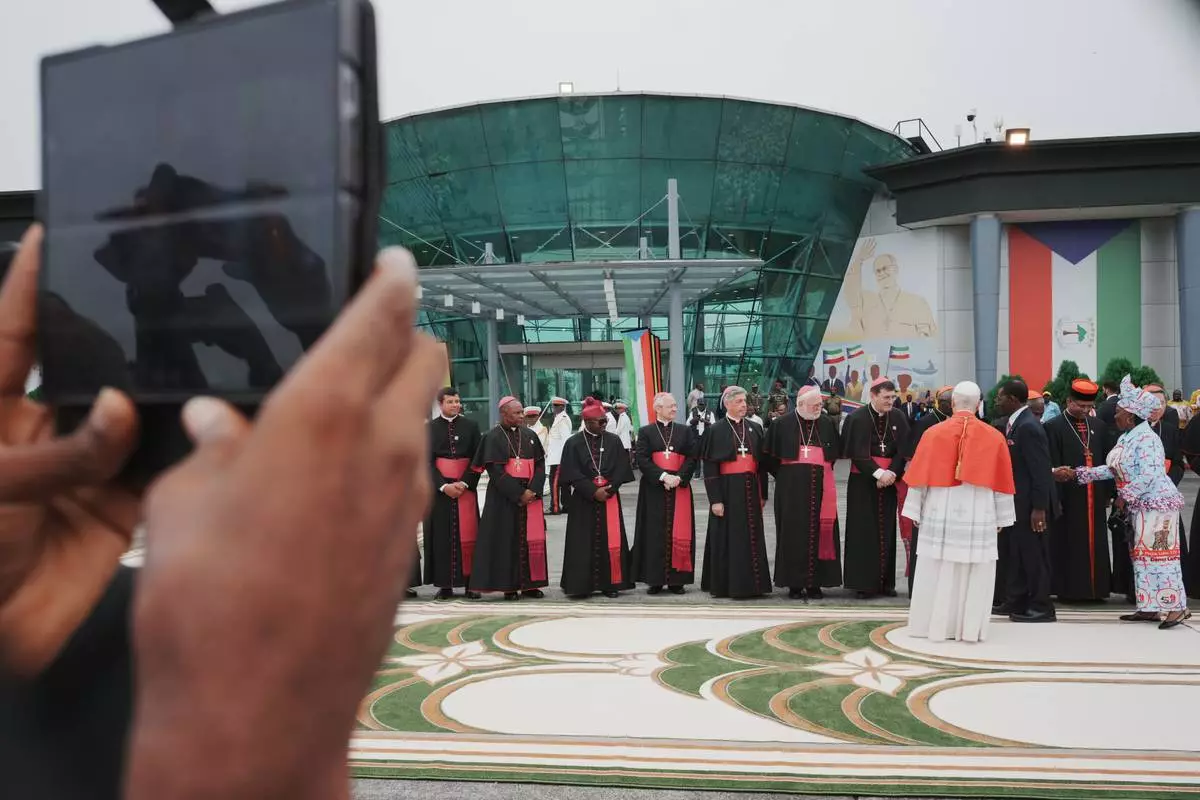
Pope Leo XIV is welcomed by Equatorial Guinea's President Teodoro Obiang Nguema Mbasogo, fifth from right, and his wife, second from right, Constancia Mangue de Obiang, upon his arrival at Malabo International Airport in Malabo, Equatorial Guinea, Tuesday, April 21, 2026, on the ninth day of his 11-day pastoral visit to Africa. (AP Photo/Andrew Medichini)
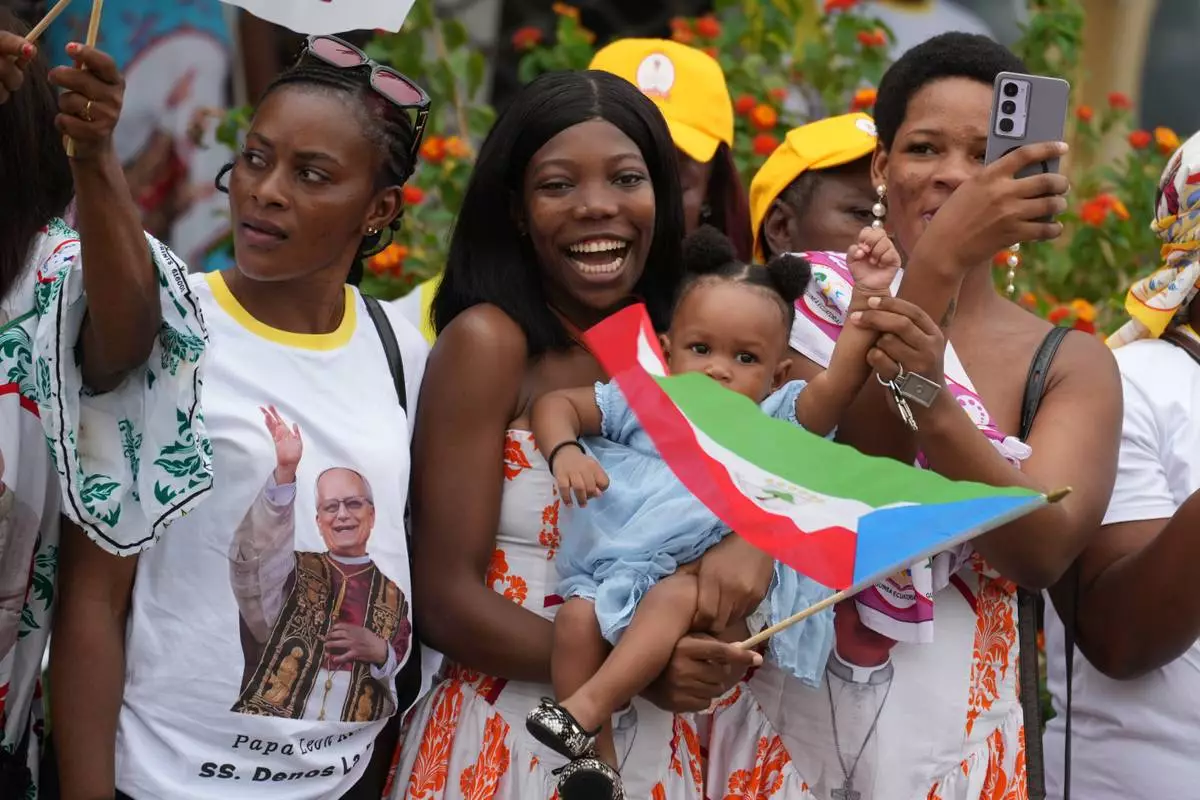
People wait for Pope Leo XIV in Malabo, Equatorial Guinea, Tuesday, April 21, 2026, on the ninth day of his 11-day pastoral visit to Africa. (AP Photo/Andrew Medichini)
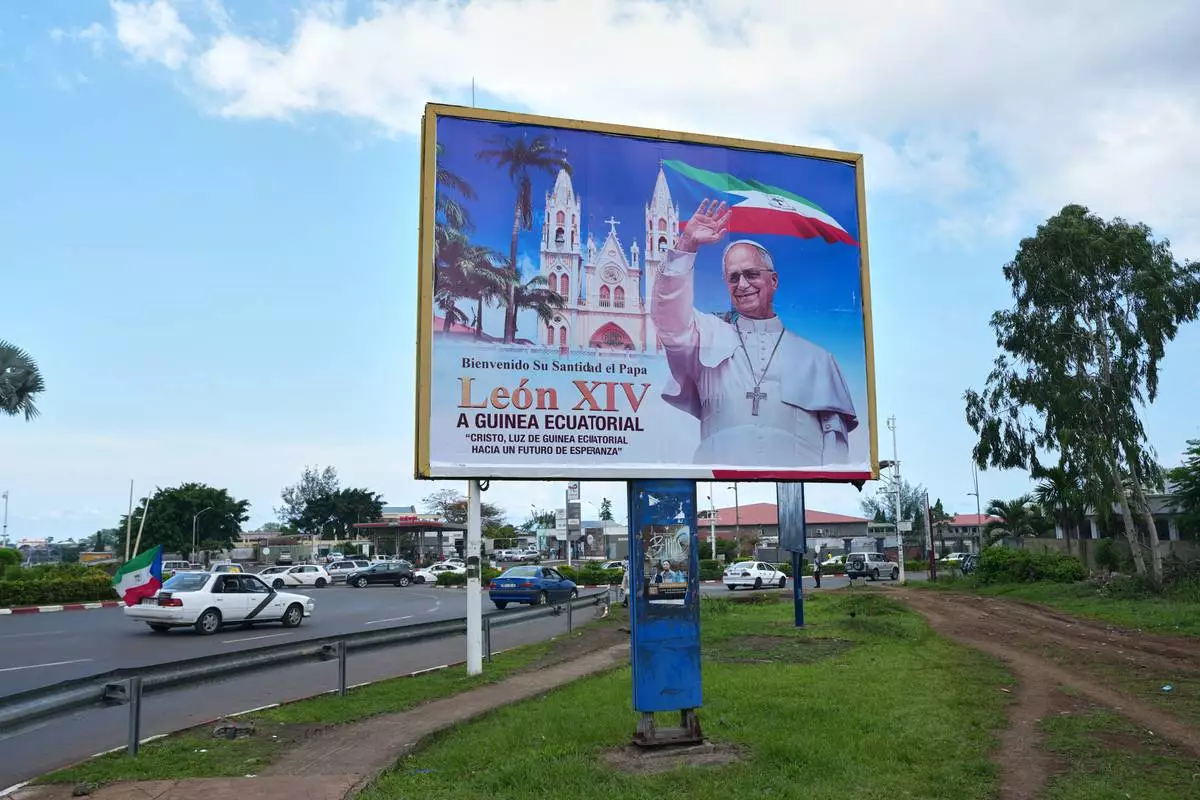
A billboard featuring Pope Leo XIV is seen ahead of his visit in Malabo, Equatorial Guinea, Friday, April 17, 2026. (AP Photo/Misper Apawu)
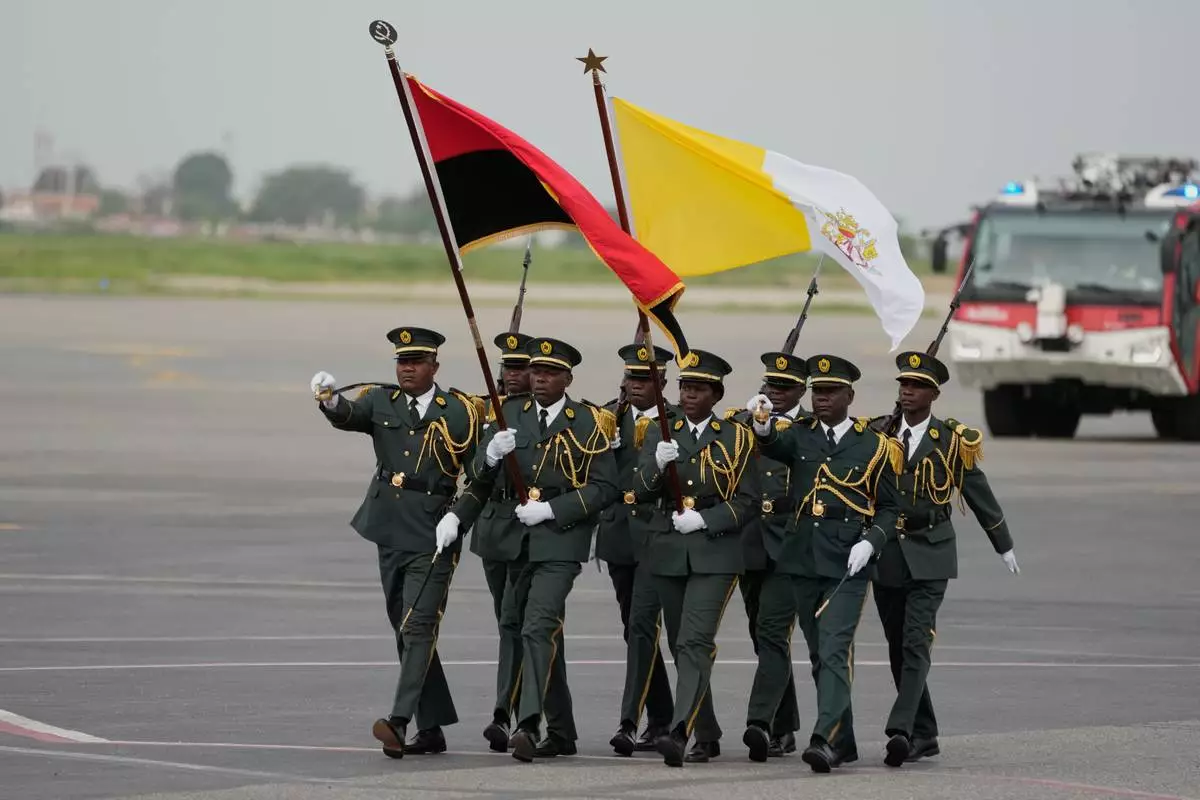
Soldiers march carrying the Vatican flag, right, and Angolan flag prior to Pope Leo XIV's departure for Equatorial Guinea, at the airport in Luanda, Angola, Tuesday, April 21, 2026. (AP Photo/Themba Hadebe)
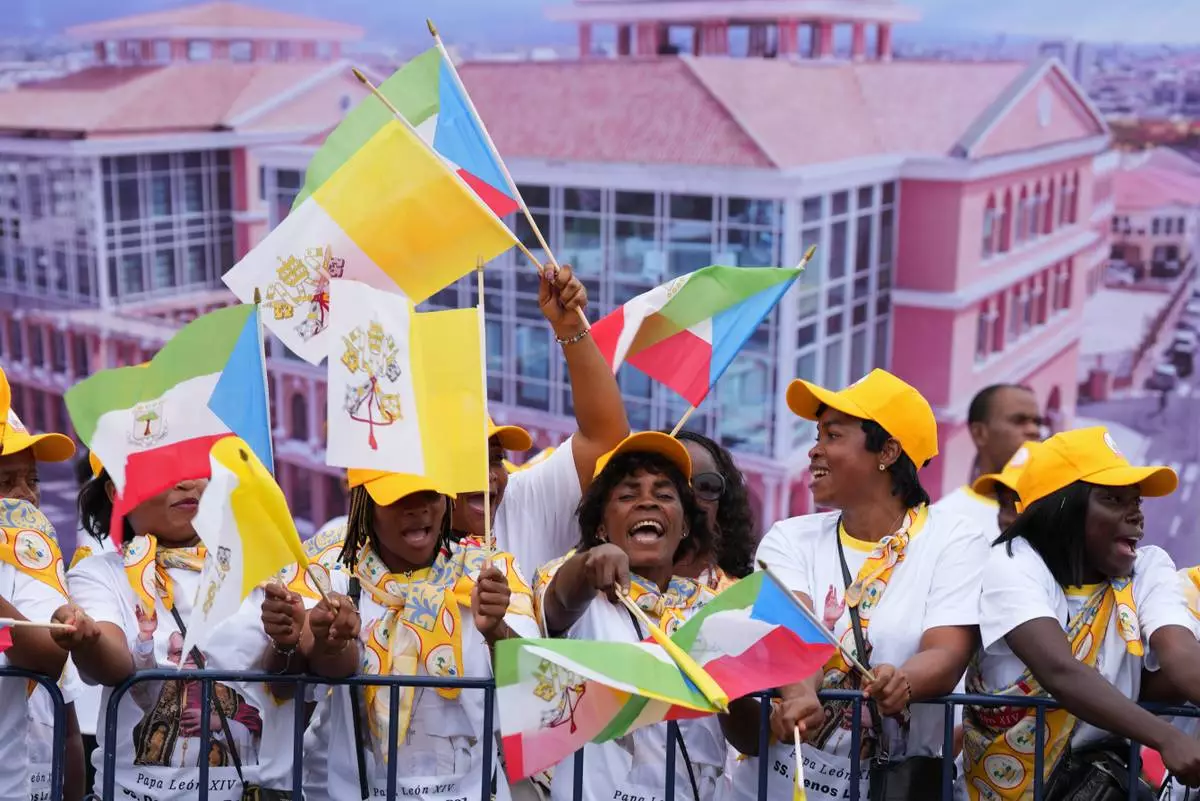
Faithful wait for the arrival of Pope Leo XIV at the airport in Malabo, Equatorial Guinea, Tuesday, April 21, 2026. (AP Photo/Misper Apawu)
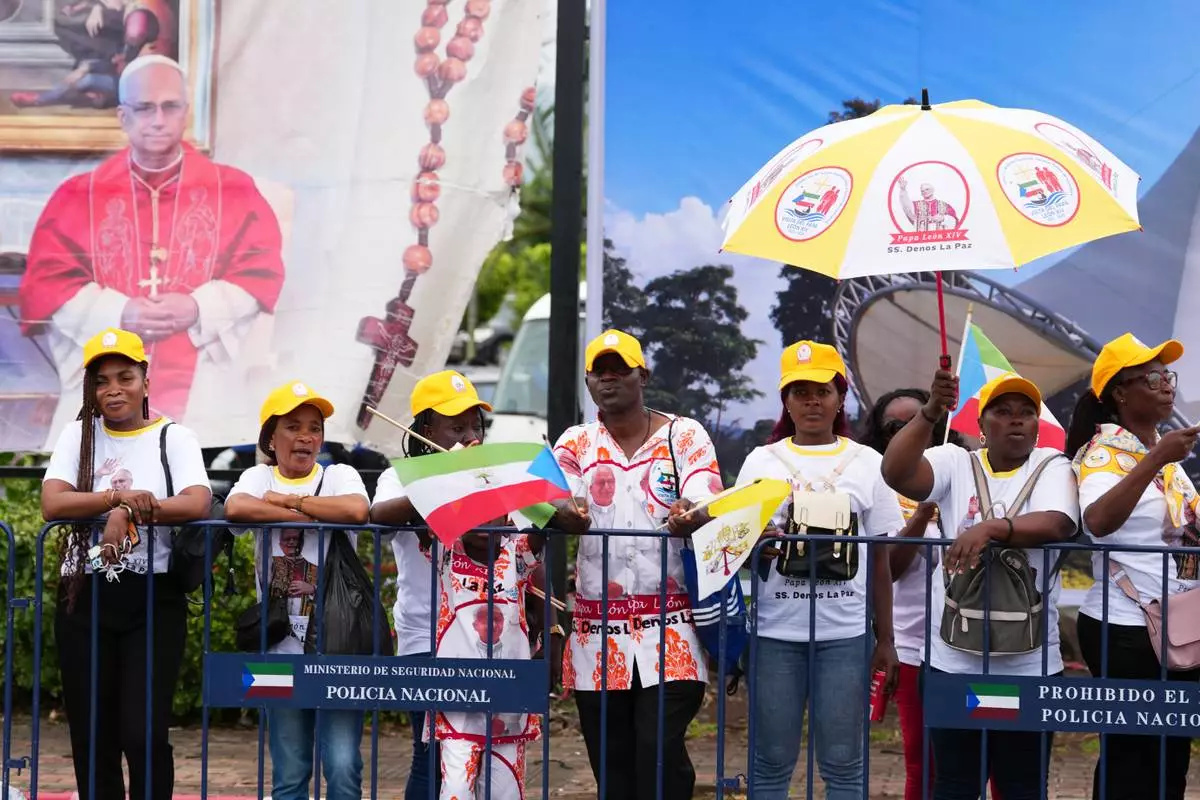
Faithful wait for the arrival of Pope Leo XIV at the airport in Malabo, Equatorial Guinea, Tuesday, April 21, 2026. (AP Photo/Misper Apawu)
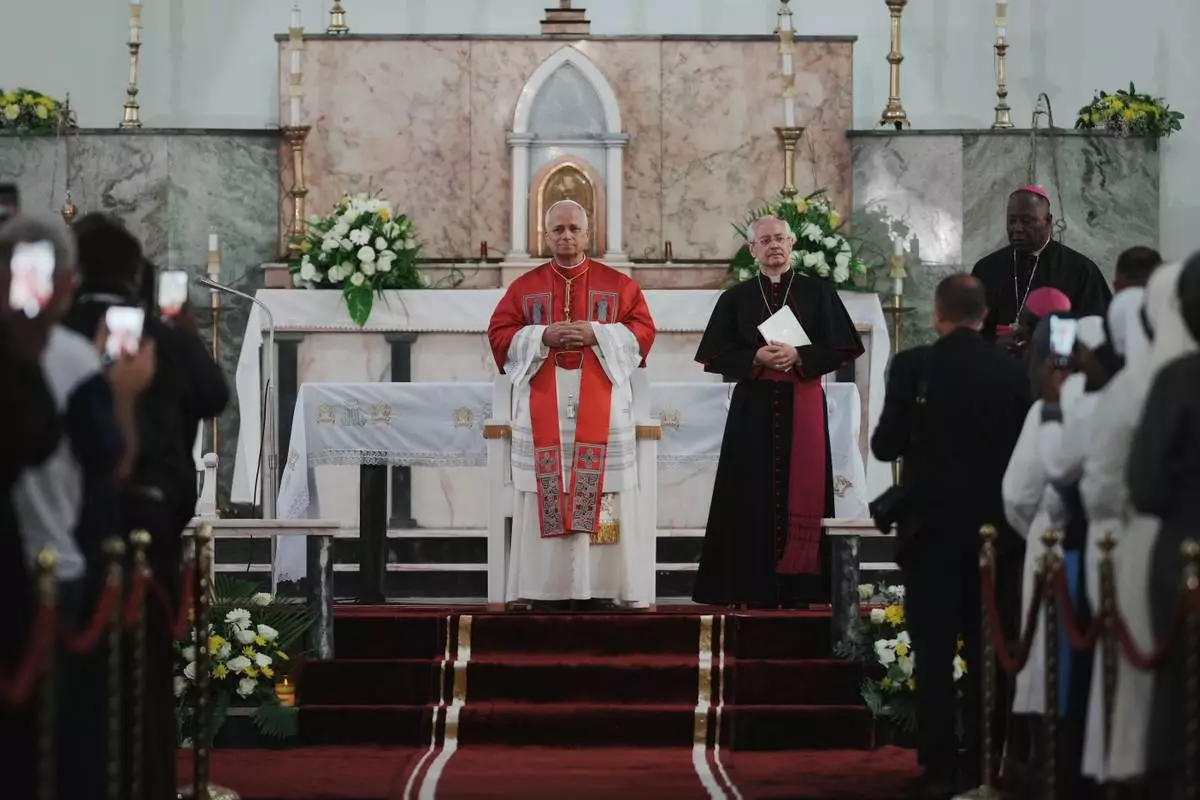
Pope Leo XIV arrives at the Parish of Our Lady of Fatima in Luanda, Angola, for a meeting with bishops, priests, consecrated men and women, and pastoral workers Monday, April 20, 2026, on the eighth day of an 11-day apostolic journey to Africa (AP Photo/Andrew Medichini)
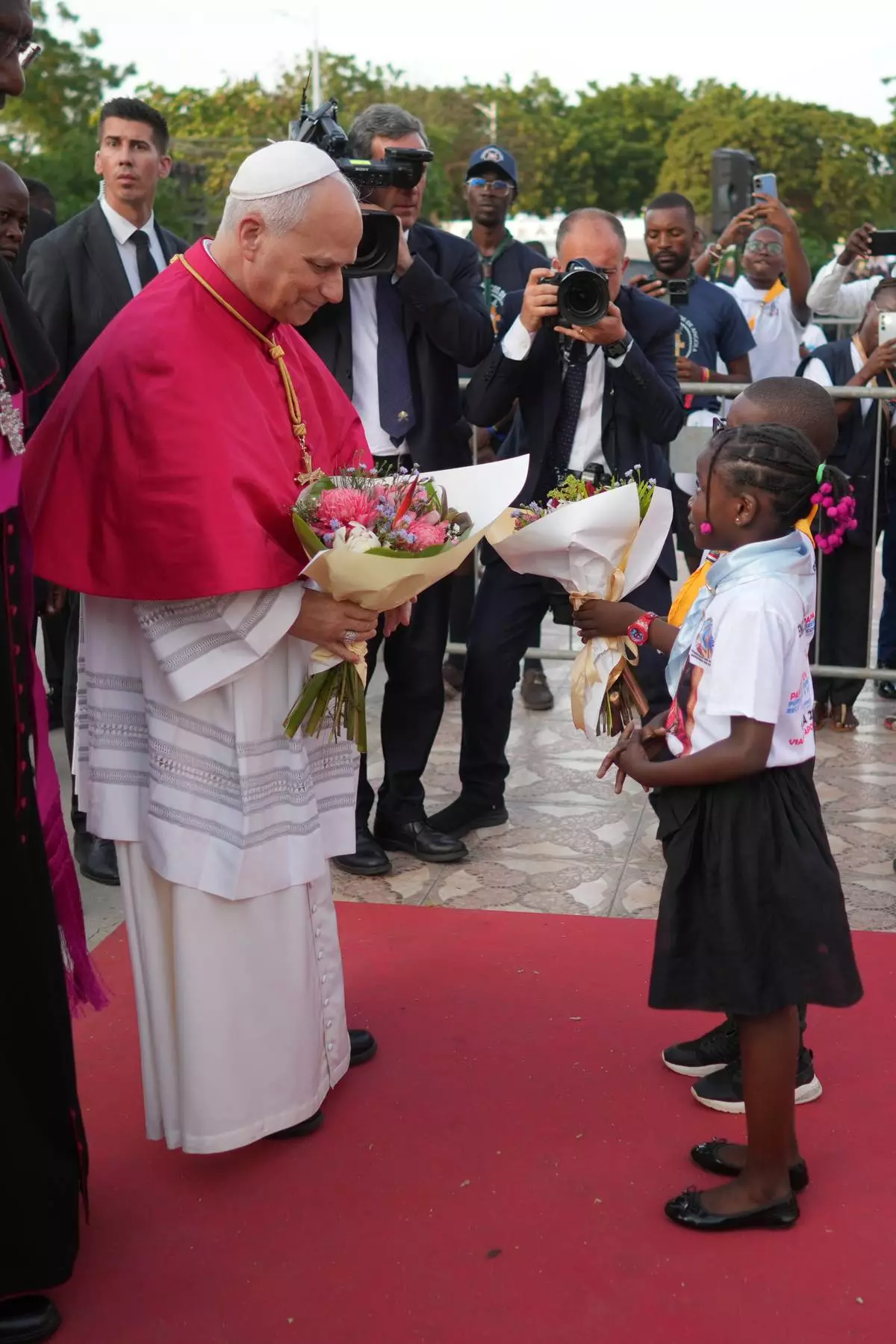
Pope Leo XIV arrives at the Parish of Our Lady of Fatima in Luanda, Angola, for a meeting with bishops, priests, consecrated men and women, and pastoral workers Monday, April 20, 2026, on the eighth day of an 11-day apostolic journey to Africa (AP Photo/Andrew Medichini)
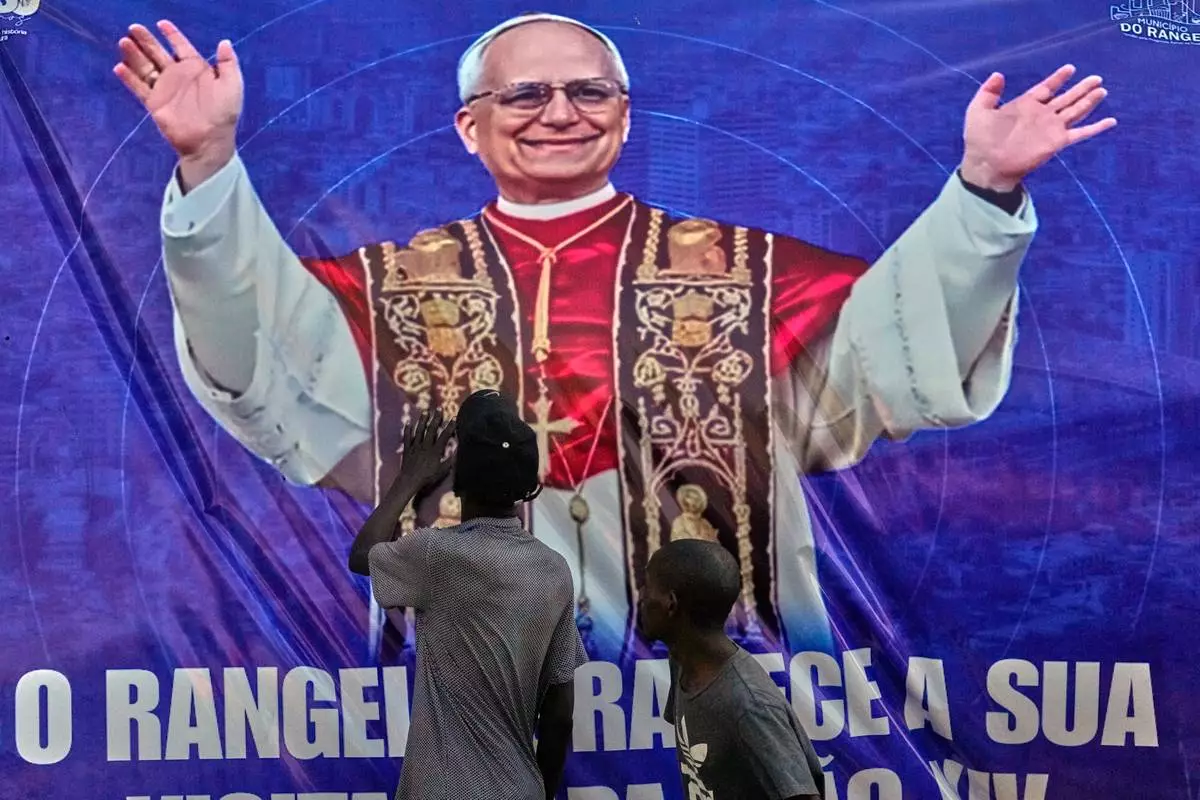
People touch a banner bearing an image of Pope Leo XIV in Luanda, Angola, Monday, April 20, 2026. (AP Photo/Themba Hadebe)
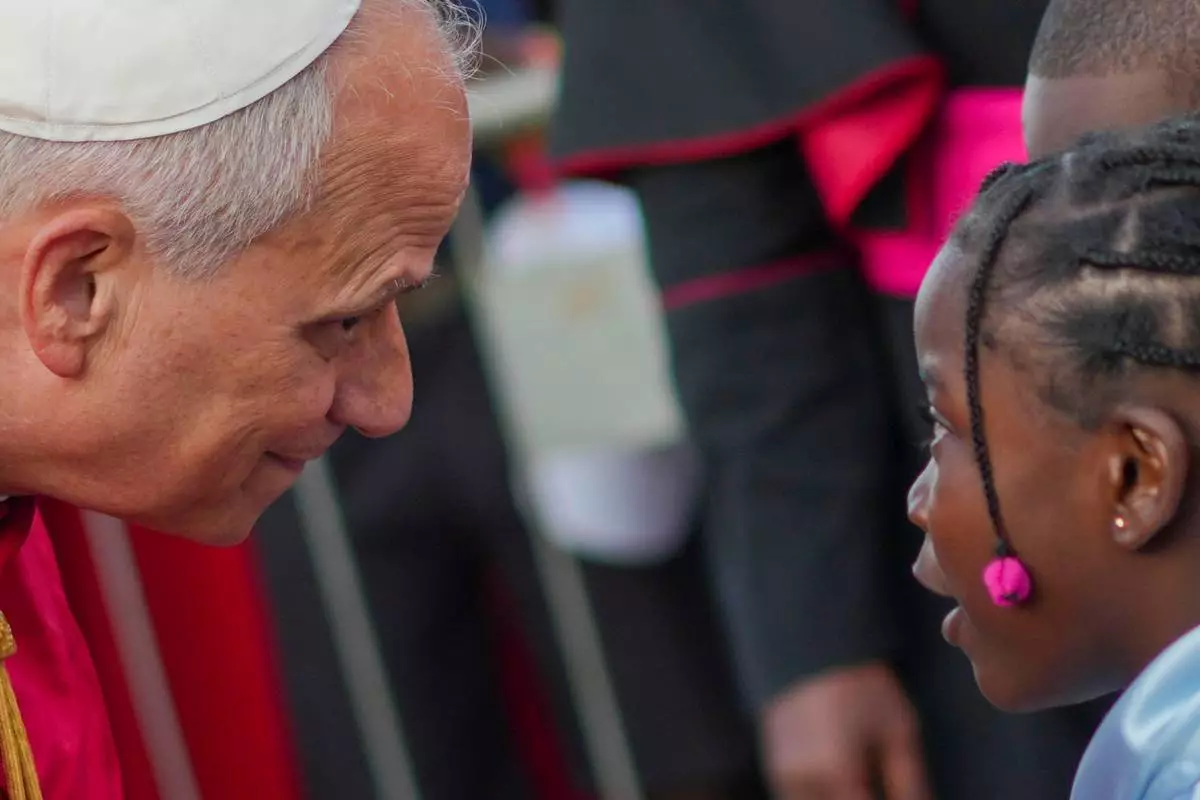
Pope Leo XIV listens to a girl as he arrives at the Parish of Our Lady of Fatima in Luanda, Angola, for a meeting with bishops, priests, consecrated men and women, and pastoral workers Monday, April 20, 2026, on the eighth day of an 11-day apostolic journey to Africa (AP Photo/Andrew Medichini)