BOSTON (AP) — Don’t overfish. Don’t trawl the seabed. Keep aquaculture healthy for the fish as well as the ocean.
Some aspects of sustainable seafood are obvious and well-trod, even if the how-to intricacies likely are lost on most consumers.
But sustainability today is complicated terrain, as much about business as bycatch, and why, for your next clam chowder, human rights matter as much as healthy habitats.
Advocates now want you considering issues of labor abuses, the rights of indigenous populations to use traditional fishing practices, the carbon footprint of a salmon fillet relative to a filet mignon, even whether the fishing boats offer free, high-speed Wi-Fi.
All of this is certified, rated and labeled by a tapestry of competing and overlapping groups.
For the already seafood-averse consumer -- Americans have a notoriously limited appetite for seafood -- it all can be a bit overwhelming.
“I’m an expert and I still sometimes struggle to look through some of the systems to figure out which product in the store actually matches which rating, and which label is different,” said Robert Jones, global director of aquatic foods for The Nature Conservancy.
For several decades, the most recognizable expression of seafood sustainability was Monterey Bay Aquarium’s Seafood Watch program, which encouraged or admonished consumption of specific species with cards labeled green, yellow and red.
Driven largely to preserve seafood populations -- eat the abundant Arctic char, but take a pass on the tenuous tuna -- the simplicity resonated.
Twenty-five years ago, that was the right focus, said Jennifer Kemmerly, vice president of global ocean conservation for Monterey Bay. Overseas fisheries, the source of much of the seafood consumed in the U.S., might be immune to American regulations, but would respond if enough consumers demanded sustainable choices.
But the simple, traffic-light ratings also created a guilty-until-proven-innocent aura that lingers, said Barton Seaver, a seafood sustainability expert with National Geographic. Rather than tease out whether farmed or wild salmon is better (the answer has changed over the years), many people just opt for chicken.
“The entire category had to be exonerated,” he said. “Yes, (the information) was more easily digestible, but the end result was fear, trepidation and a general lack of participation.”
Seafood Watch eventually fell silent, partly a victim of pandemic pressures. By then, the definition of sustainable had broadened dramatically. Safeguarding endangered stocks still matters, of course. But a host of other issues -- treatment of workers, regenerative practices, local vs. corporate ownership of the fleet -- can mitigate that.
And plenty of people in and outside the industry argue that any test of sustainability also must weigh the impact of seafood against the alternatives.
“When we do so across five very important metrics -- greenhouse gas, land-use alteration, feed conversion, freshwater and antibiotics -- seafood just comes out on top in the animal-protein conversation,” said Seaver.
“If you want the sustainable option for dinner, the yellow-list or even red-list seafood might be the better environmental option than chicken or beef,” he said.
The result is an equation too complex for most consumers. It doesn’t help that many of the newer sustainability issues simply aren’t intuitive to the consumer. That on-ship Wi-Fi, for example? A lifeline for workers to report labor abuses while at sea for months at a time.
The monoculture-like beef, pork and poultry industries easily align on methods and messaging (after all, everyone knows what’s for dinner and which is the other white meat.) But seafood is inherently complex, comprised of thousands of species, regions and regulations.
“The biggest loser here is the American consumer,” said celebrity chef Andrew Zimmern, whose documentary “Hope in the Water” highlighted efforts to make seafood more sustainable.
Despite the information overload, Kemmerly sees the complexity as a sign of success.
“These big companies who 25 years ago made a sustainability commitment thinking it was just the environmental piece are now also on the hook -- no pun intended -- for reporting on environmental, social and governance issues,” she said.
The way forward, many say, is to sell confidence in American seafood. Zimmern wants to see all the players -- from fishermen and wholesalers to watchdog groups -- agree on regularly updated standards. It puts the onus for good choices on the industry and frees the consumer to feel good about whatever they purchase.
That may not be as wishful as it sounds. The Alaskan seafood industry benefits from a sustainability halo because regulations mandating good practices are written into the state constitution.
“We’ve always said, if you choose Alaska, it’s the easy choice from a sustainability standpoint. There’s not a single one of our fisheries that isn’t sustainably managed,” said Jeremy Woodrow, executive director of the Alaska Seafood Marketing Institute. “We’ve tried to simplify that for them.”
The best way to support the industry, Seaver said, is to let chefs and consumers focus on what tastes good. And Seafood Watch seems to agree. The program is in the midst of a relaunch that will focus on educating chefs about making sustainable choices.
So what’s a befuddled seafood shopper to do? The consensus seems to be: Buy American, local when possible. Though hardly perfect, the U.S. seafood industry is highly regulated and works with retailers who insist on sustainability standards.
“When you go to Whole Foods, you trust that they’ve done the job for you. And that’s the case for a lot of large grocery chains these days,” Woodrow said. “Consumers should feel confident when they go to the freezer case or the fresh case that that fish is going to be coming from a responsible fishery.”
J.M. Hirsch is a longtime food writer who was food editor of The Associated Press for nearly a decade until 2016.
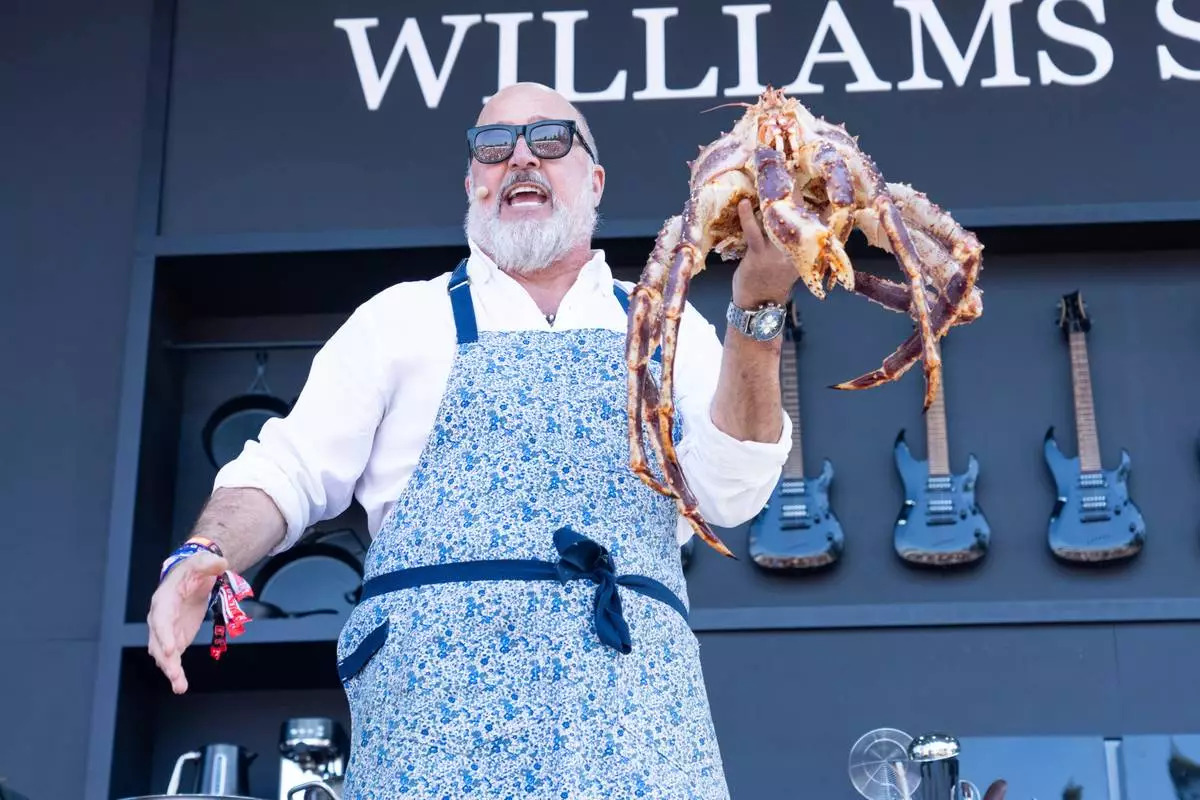
FILE - Andrew Zimmern appears on the Williams Sonoma Culinary Stage at the 2025 BottleRock Napa Valley at Napa Valley Expo in Napa, Calif., on May 24, 2025. (Photo by Amy Harris/Invision/AP, File)
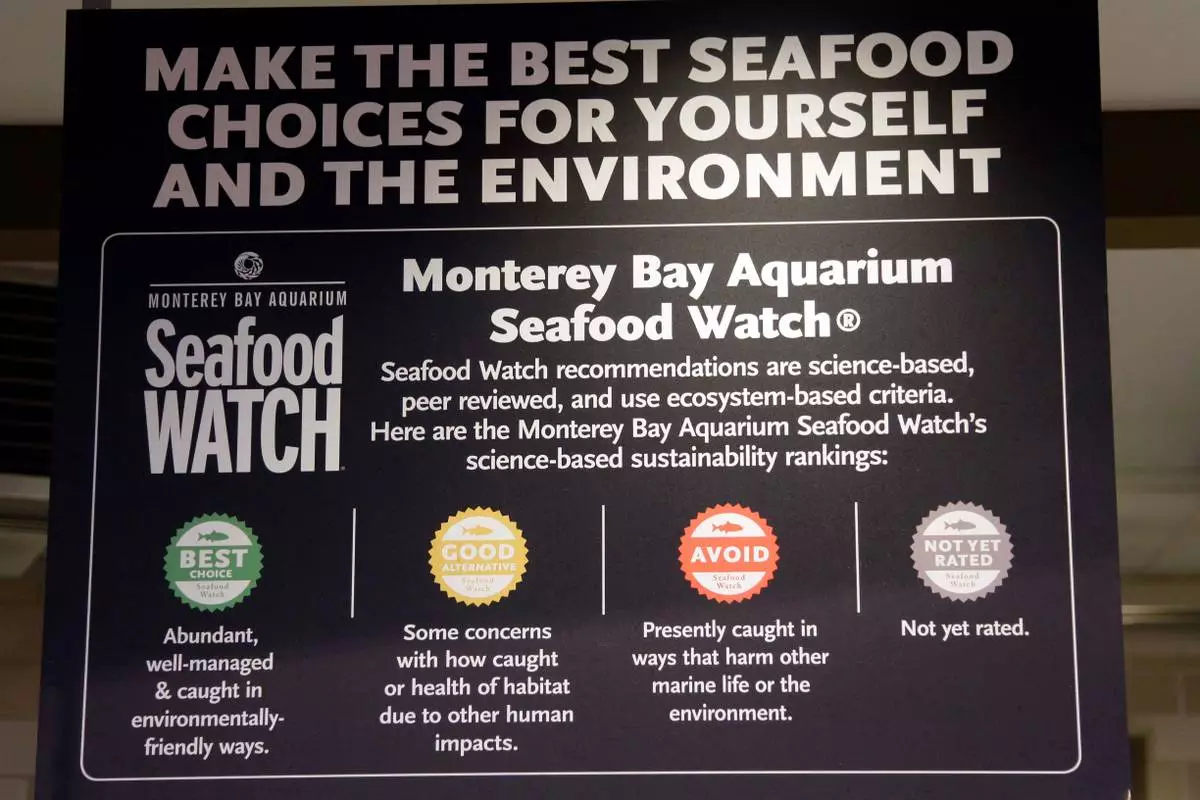
FILE - A "Seafood Watch" sign with a color-coded rating program hangs over the seafood counter in Whole Foods in Hillsboro, Ore., on Sept. 10, 2010. (AP Photo/Rick Bowmer, File)
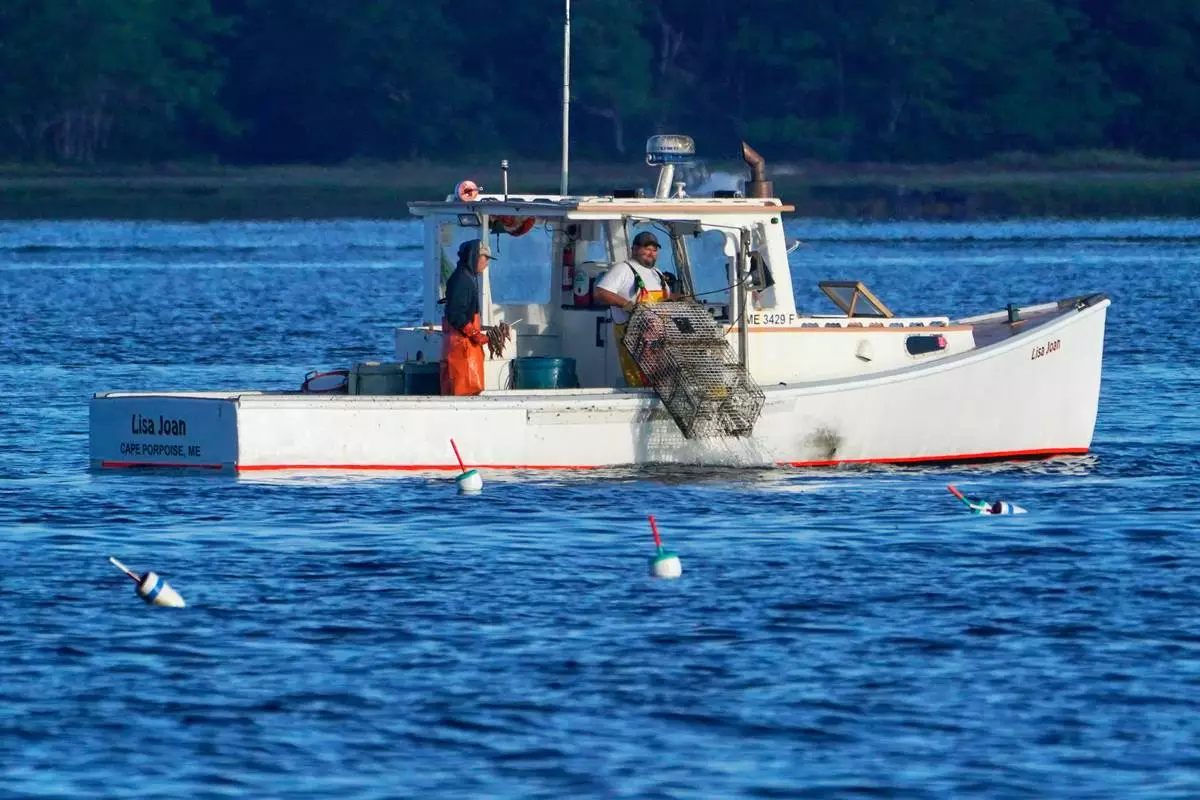
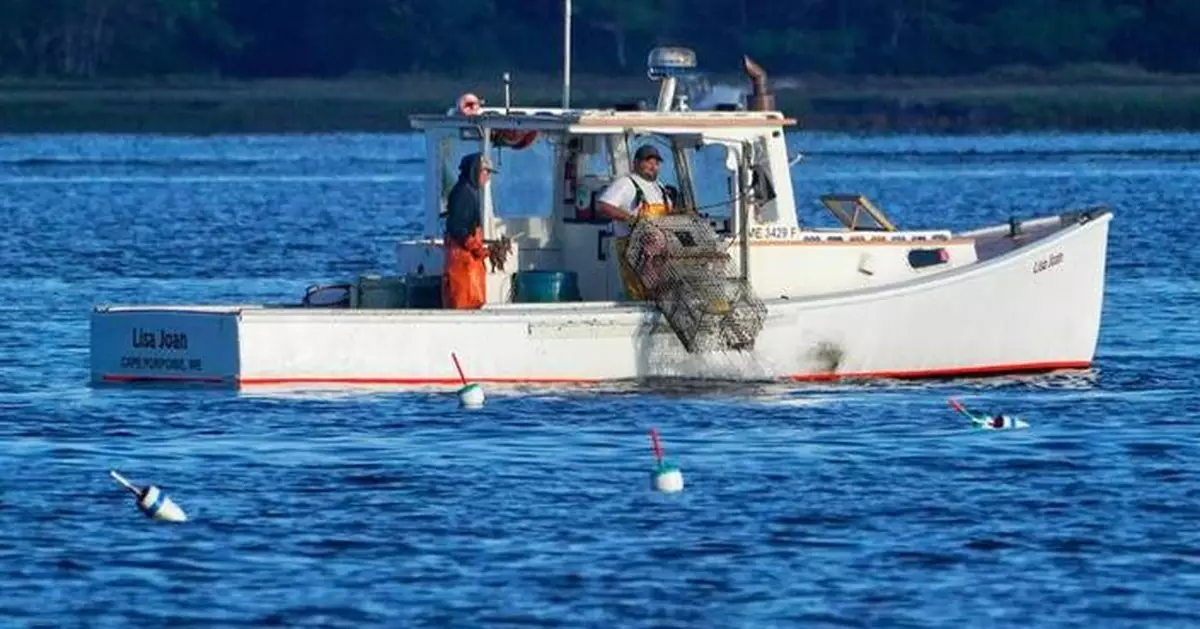
FILE - A lobster fisherman hauls a trap, Sept. 8, 2022, off of Kennebunkport, Maine. (AP Photo/Robert F. Bukaty, file)
MALABO, Equatorial Guinea (AP) — Pope Leo XIV arrived in Equatorial Guinea on Tuesday on the fourth and final leg of his Africa journey, and denounced the “colonization” of Africa's minerals and the “lust for power” in a country whose repressive leader has been in office since 1979.
Adoring crowds in the largely Catholic country lined the road from the airport into the capital, Malabo, cheering the first pope to visit since St. John Paul II in 1982. Wearing his formal red mozzetta cape, Leo thrilled the flag-waving masses by arriving at the presidential palace in his open-sided popemobile.
“There is a lot of joy today because we waited 44 years for the pope to come,” said Diosdado Marques, a senior Catholic official in the country. “It’s a blessing for the country, we hope many things will change and we will deepen our faith.”
The former Spanish colony on Africa’s western coast is run by the continent's longest-serving president, Teodoro Obiang Nguema Mbasogo, who has been accused of widespread corruption and authoritarianism.
The discovery of offshore oil in the mid-1990s transformed Equatorial Guinea’s economy virtually overnight, with oil now accounting for almost half of its GDP and more than 90% of exports, according to the African Development Bank.
Yet more than half of the country’s nearly 2 million people live in poverty. And rights groups including Human Rights Watch — as well as court cases in France and Spain — have documented how revenues have enriched the ruling Obiang family rather than the broader population.
Leo, who arrived from Angola, met with Obiang at the presidential palace and then addressed government authorities, diplomats and civil service representatives. Noting that the encounter occurred on the first anniversary of Pope Francis’ death, Leo quoted the late pope in denouncing income inequalities that he said had been exacerbated by a global economy focused on the pursuit of profit at all cost.
“Such an economy kills,” Leo said. “In fact, it is even more evident today than in years past that the proliferation of armed conflicts is often driven by the colonization of oil and mineral deposits, occurring with no regard for international law or the self-determination of peoples.”
The Trump administration, which has announced plans to create a minerals trading bloc with its allies, has been racing to get access to Africa’s regions rich in critical minerals and to beat competition from China in a region where Beijing has long dominated.
Last year, as the administration emerged as a key broker for a peace deal to end the fighting in Congo’s mineral-rich but conflict-battered eastern region, it was also signing a partnership with Congo that would allow American companies access to those conflict minerals.
The U.S. is also investing funds in the Lobito Corridor, a major rail project in Africa that would facilitate export of minerals from mineral-rich regions in Zambia and Congo through Lobito in Angola. At the same time, the U.S. has also backed a South Africa project aimed at extracting rare earth minerals from industrial waste. The project developer has said it can extract key metals used in electronics and defense systems.
The pope's meetings took place in the old presidential palace. The government has built a new capital on the mainland, named Ciudad de la Paz, or City of Peace, but the transfer of government buildings hasn’t been completed yet.
Authorities have said the decision to build the new capital was strategic, given the potential for expansion of the city carved out in the middle of a tropical forest. But critics said the relocation of the capital would exacerbate existing inequalities and give further opportunities for the presidential circle to enrich themselves
Leo referred to the new capital by citing to the famous work of St. Augustine, “City of God,” in which the 5th-century philosopher interpreted humanity through two models: The “earthly city” where people live temporarily, and the eternal “city of God,” characterized by God’s unconditional love and love of one another, especially the poor.
Leo didn't call out the corruption associated with the Obiang family or the criticism of the new capital. But he suggested Equatorial Guinea should look to the “City of God” as a model.
“The earthly city is centered upon the proud love of self, on the lust for power and worldly glory that leads to destruction,” he said. “It is essential to discern the difference between that which lasts and that which passes, remaining free from the pursuit of unjust wealth and the illusion of dominion.”
Equatorial Guinea is officially a secular country, but about 75% of its population is Catholic, making it one of the most Catholic countries in Africa.
Church leaders “are very much interconnected intrinsically with the government,” said Tutu Alicante, a U.S.-based activist who runs the EG Justice rights group. “Part of it is the fear the government has instilled in everyone, including the church, and part of it is the monetary gains that the church derives from this government.”
The Rev. Fortunatus Nwachukwu, No. 2 in the Vatican’s missionary evangelization office, said the Catholic Church is present in difficult civil spaces and knows how to operate in them to carry out its mission.
“Should the church go to war against the government? Surely no,” Nwachukwu said. “Should the church swallow everything as if it were normal? No. The church has to continue preaching justice, always in defense of life, human dignity and the common good.”
In addition to official corruption, the country’s government also faces rampant accusations of harassment, arrest and intimidation of political opponents, critics and journalists.
Equatorial Guinea is also one of several African nations that have been paid millions of dollars in controversial deals with the Trump administration to receive migrants deported from the U.S. to countries other than their own.
AP reporting shows that at least 29 such migrants with no ties to the country have been deported there. Some remain in detention in Malabo with restrictions on legal and medical support, while others have been forcibly returned to their countries where they face persecution.
Leo, who will visit a prison in the port city of Bata on Wednesday, has criticized the Trump administration’s overall migration deportation policy as “extremely disrespectful.”
Associated Press writers Monika Pronczuk in Malabo, Equatorial Guinea and Ope Adetayo in Lagos, Nigeria, contributed to the reporting.
Associated Press religion coverage receives support through the AP’s collaboration with The Conversation US, with funding from Lilly Endowment Inc. The AP is solely responsible for this content.
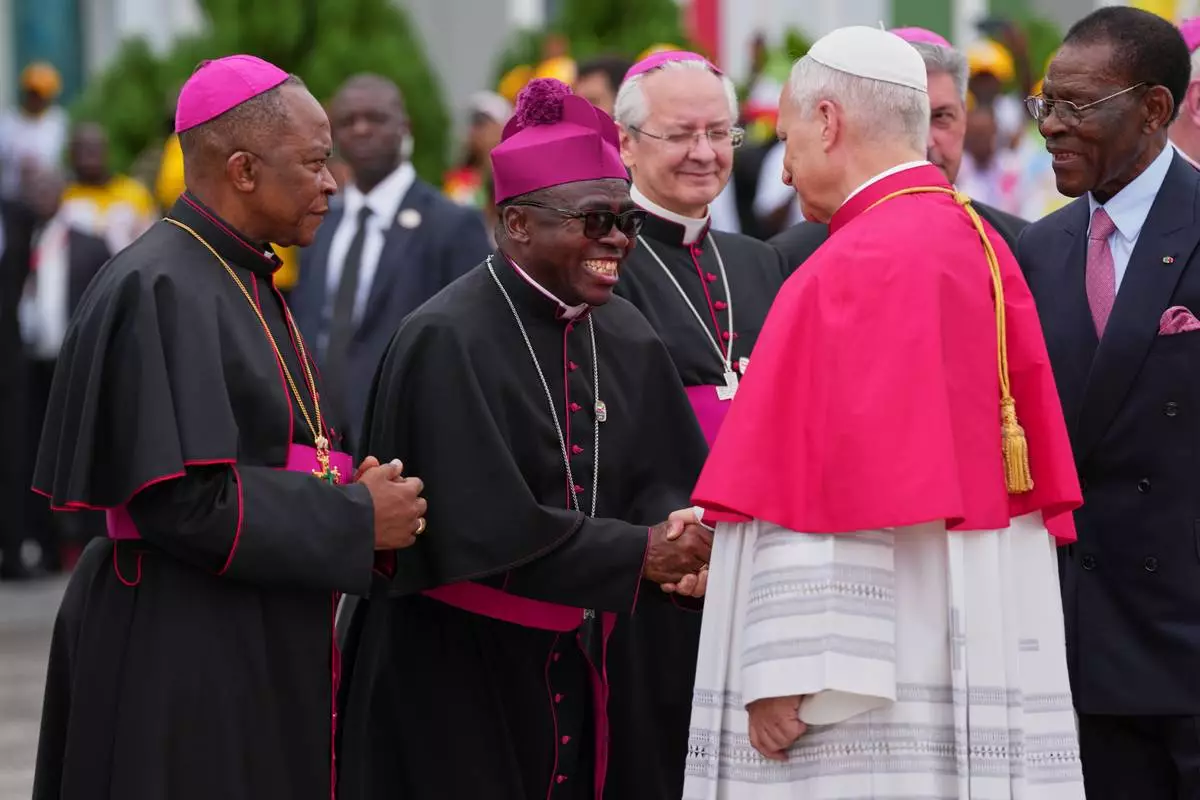
Pope Leo XIV, flanked by Equatorial Guinea's President Teodoro Obiang Nguema Mbasogo, right, is welcomed by Archbishop Juan Nsue Edjang Mayé, left, and Juan Domingo-Beka Esono Ayang upon his arrival at Malabo International Airport in Malabo, Equatorial Guinea, Tuesday, April 21, 2026. (AP Photo/Misper Apawu)
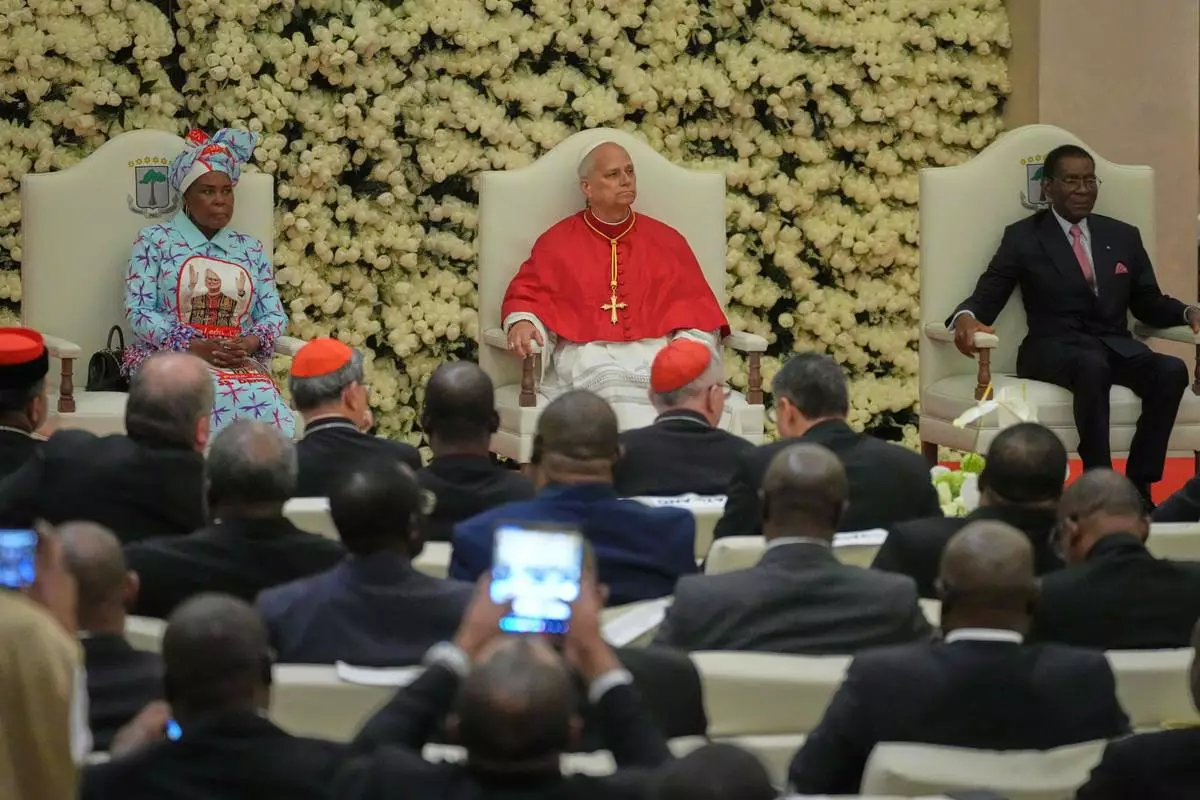
Pope Leo XIV, center, flanked by Equatorial Guinea's President Teodoro Obiang Nguema Mbasogo, left, President's wife Constancia Mangue, meets with the authorities, civil society and the diplomatic corps - epresentatives of the world of culture in Malabo, Equatorial Guinea, Tuesday, April 21, 2026, on the ninth day of his 11-day pastoral visit to Africa. (AP Photo/Andrew Medichini)
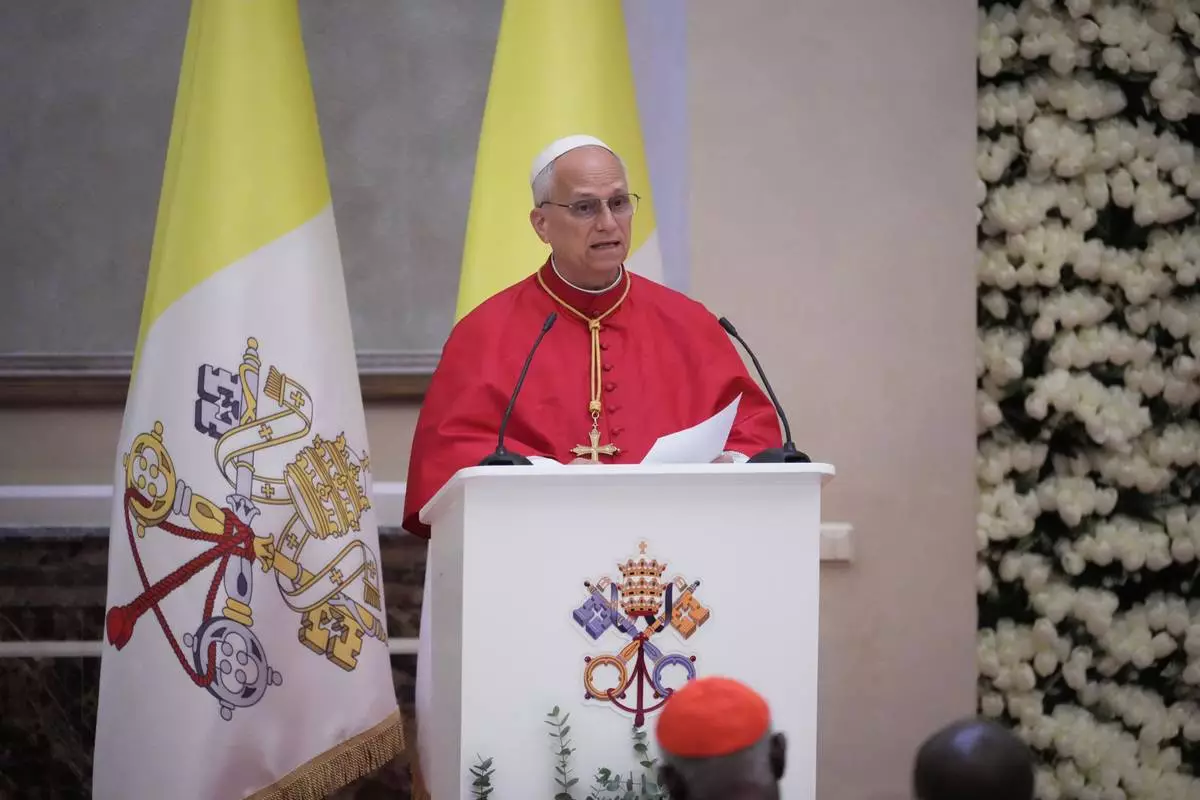
Pope Leo XIV delivers his speech as he meets with the authorities, civil society and the diplomatic corps in Malabo, Equatorial Guinea, Tuesday, April 21, 2026, on the ninth day of his 11-day pastoral visit to Africa. (AP Photo/Andrew Medichini)
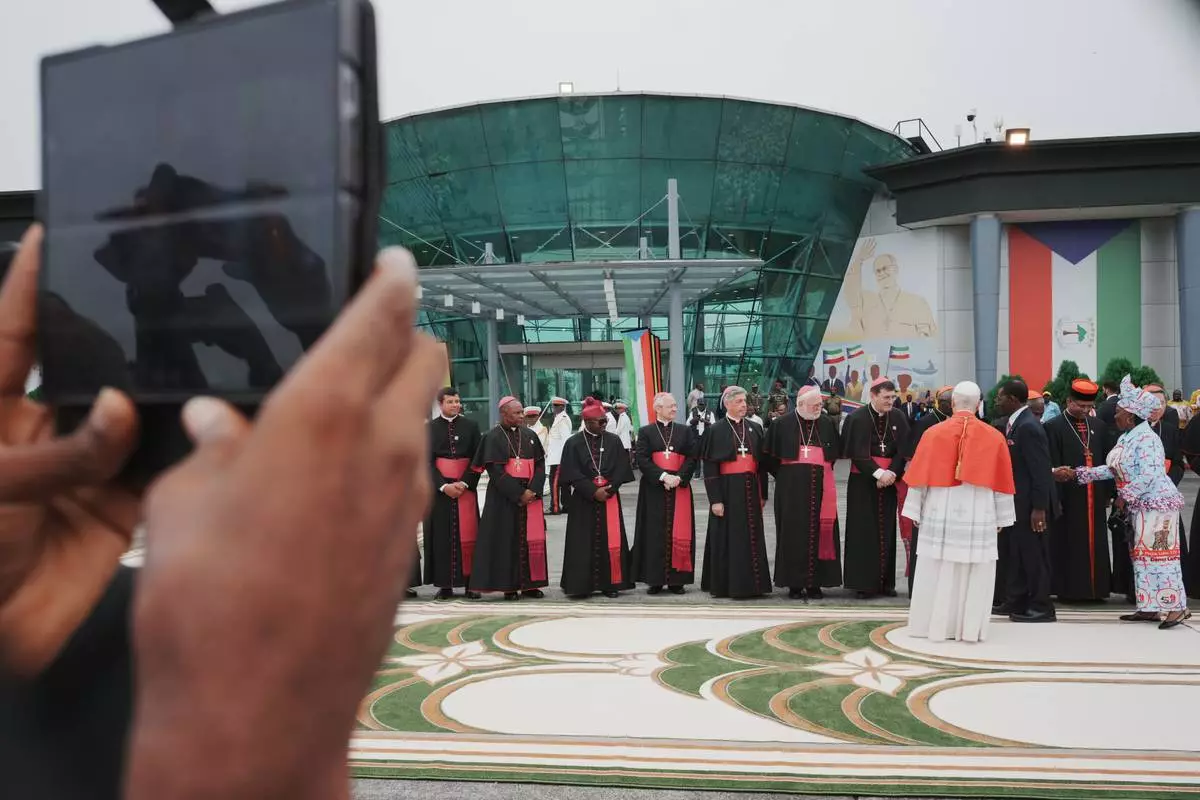
Pope Leo XIV is welcomed by Equatorial Guinea's President Teodoro Obiang Nguema Mbasogo, fifth from right, and his wife, second from right, Constancia Mangue de Obiang, upon his arrival at Malabo International Airport in Malabo, Equatorial Guinea, Tuesday, April 21, 2026, on the ninth day of his 11-day pastoral visit to Africa. (AP Photo/Andrew Medichini)
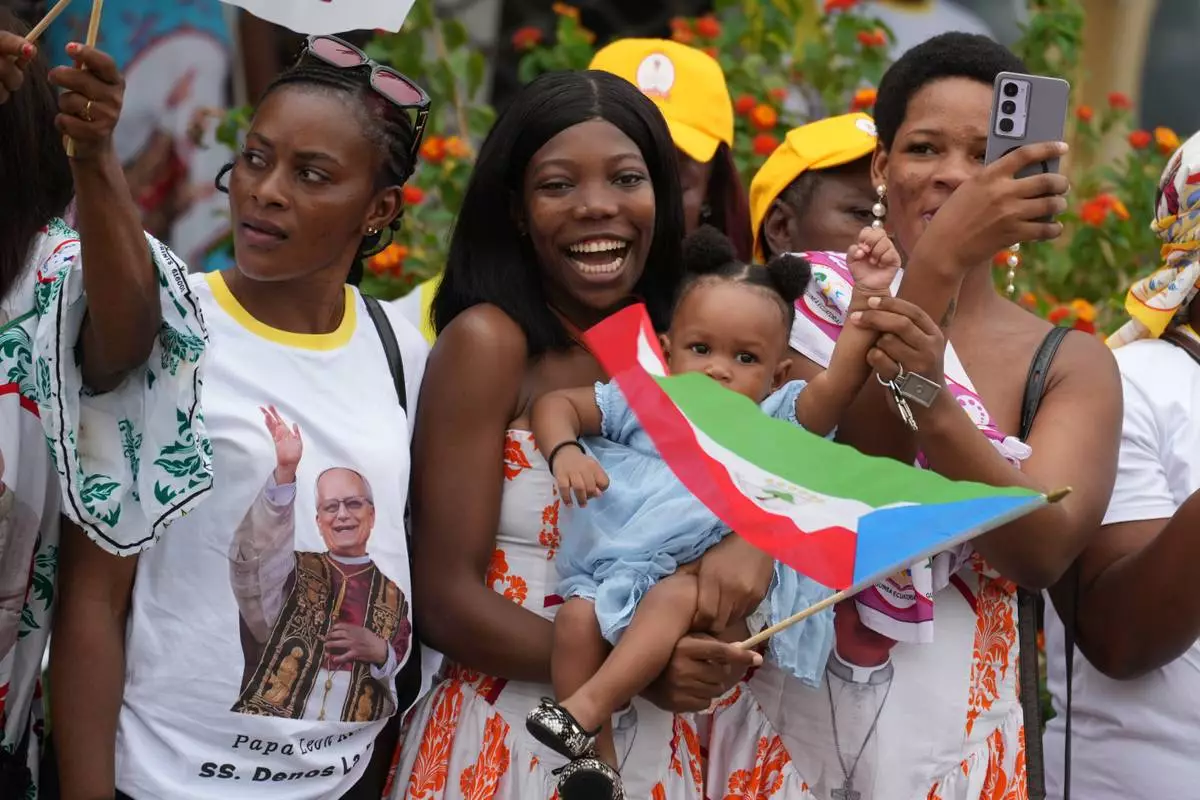
People wait for Pope Leo XIV in Malabo, Equatorial Guinea, Tuesday, April 21, 2026, on the ninth day of his 11-day pastoral visit to Africa. (AP Photo/Andrew Medichini)
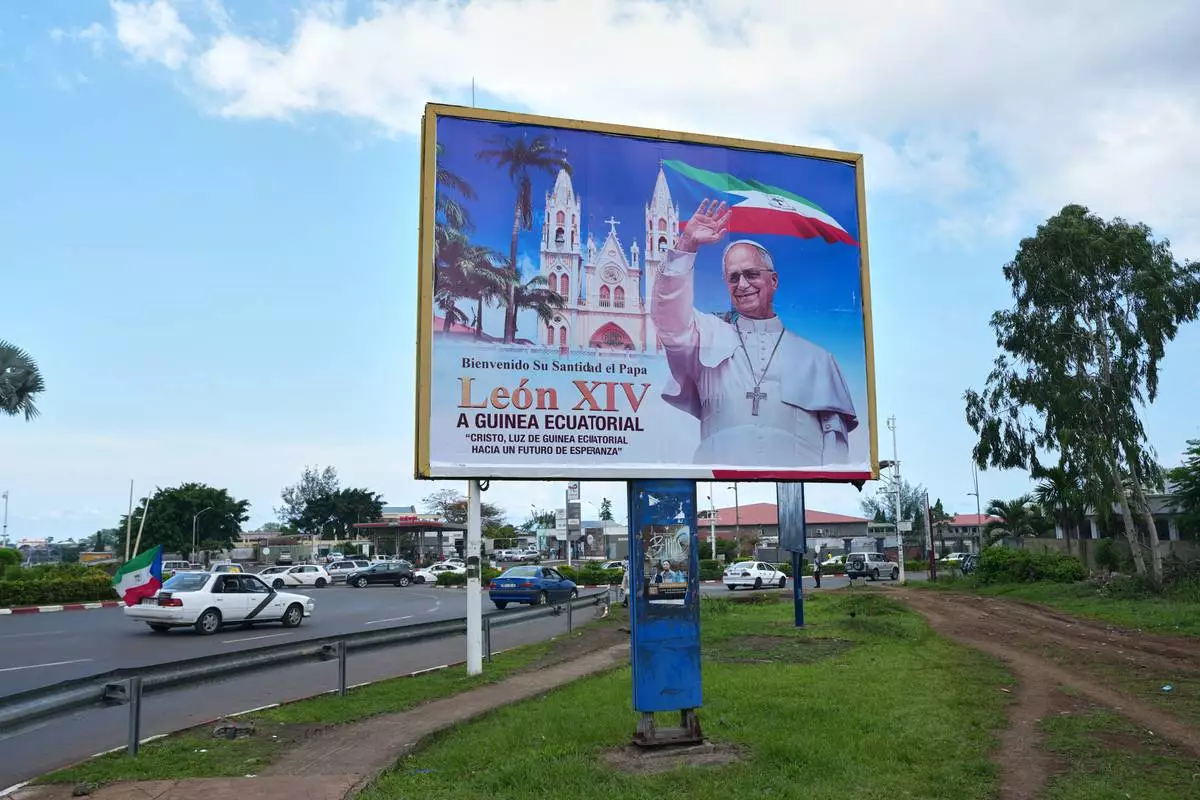
A billboard featuring Pope Leo XIV is seen ahead of his visit in Malabo, Equatorial Guinea, Friday, April 17, 2026. (AP Photo/Misper Apawu)
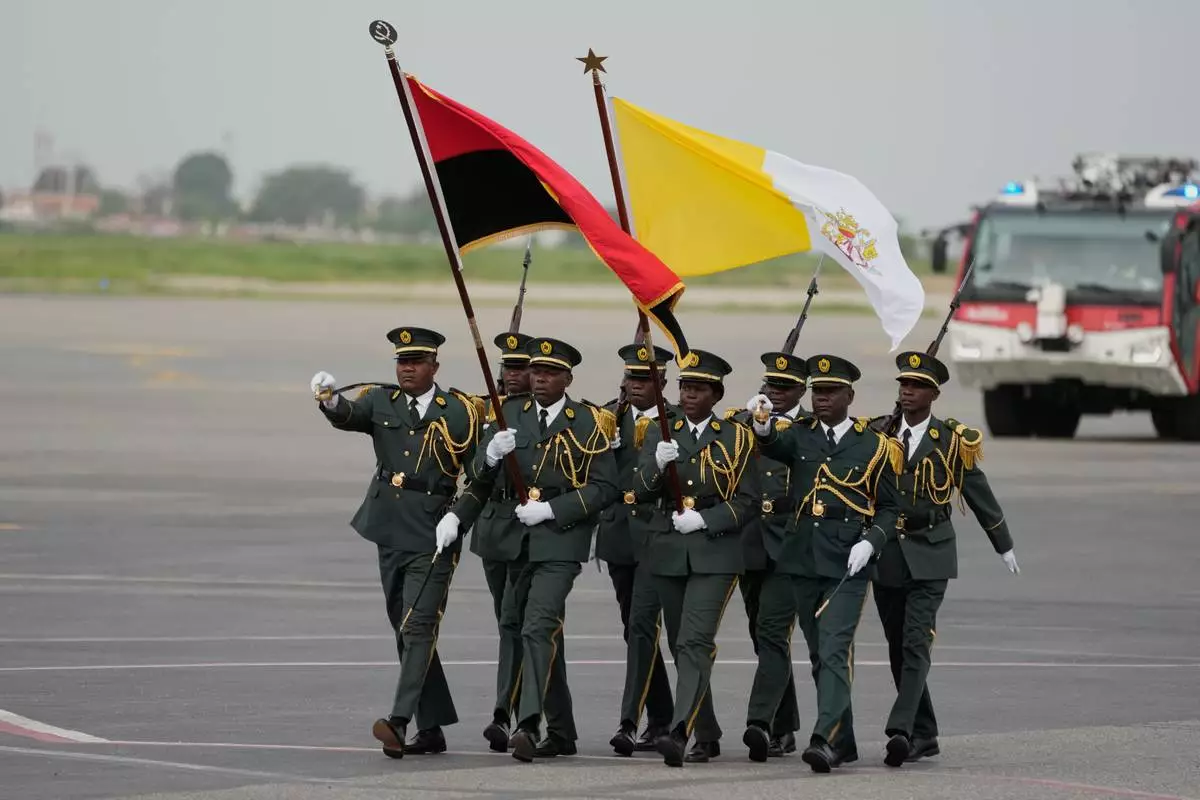
Soldiers march carrying the Vatican flag, right, and Angolan flag prior to Pope Leo XIV's departure for Equatorial Guinea, at the airport in Luanda, Angola, Tuesday, April 21, 2026. (AP Photo/Themba Hadebe)
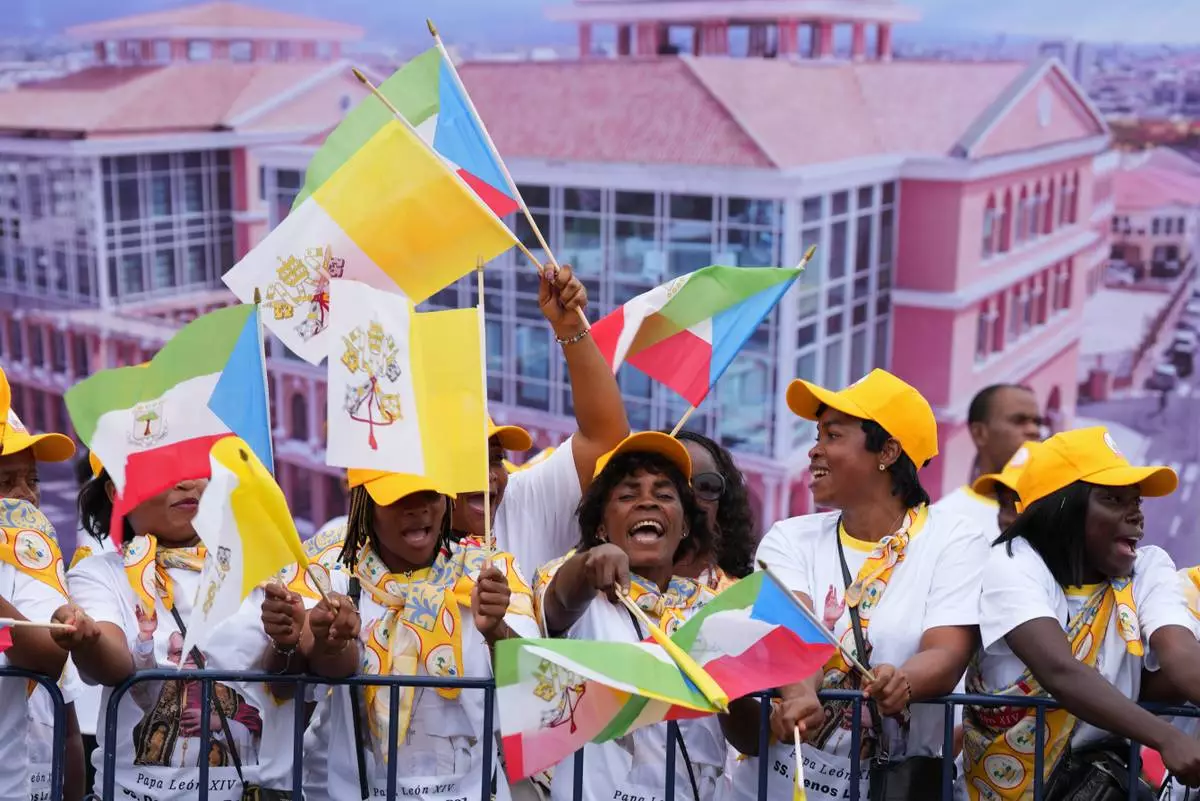
Faithful wait for the arrival of Pope Leo XIV at the airport in Malabo, Equatorial Guinea, Tuesday, April 21, 2026. (AP Photo/Misper Apawu)
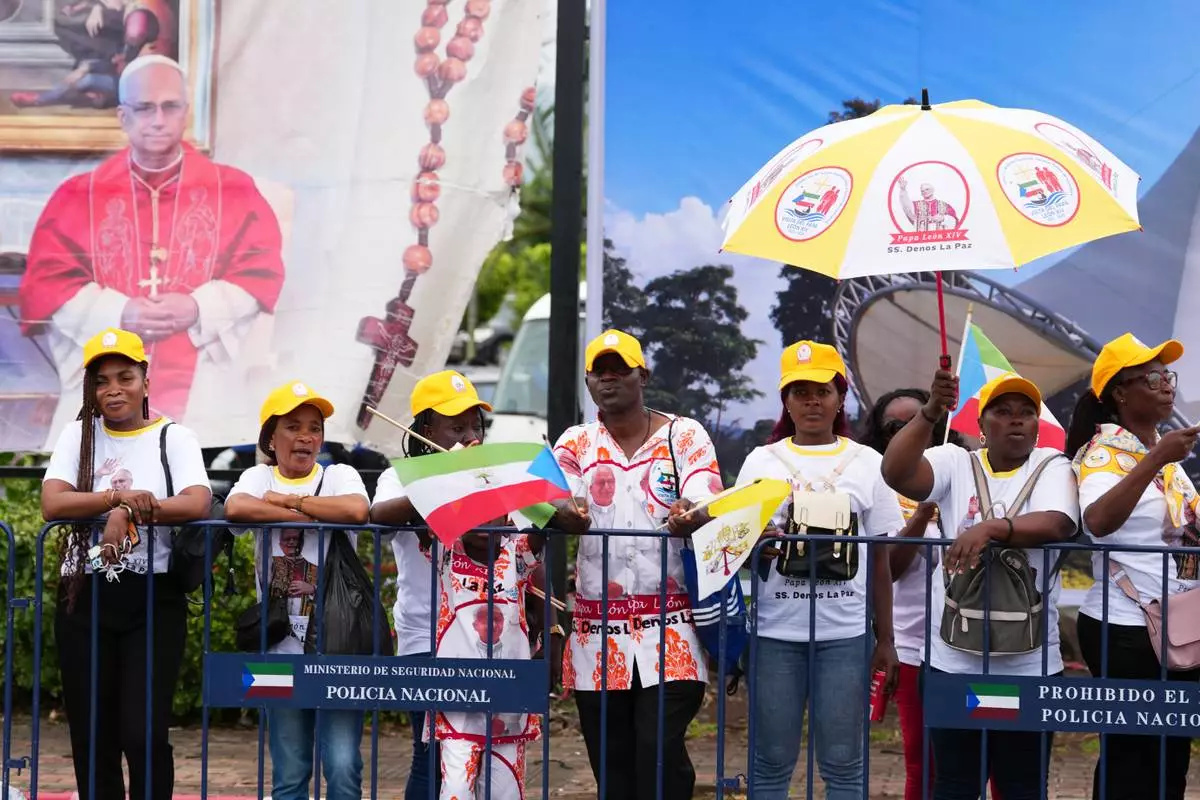
Faithful wait for the arrival of Pope Leo XIV at the airport in Malabo, Equatorial Guinea, Tuesday, April 21, 2026. (AP Photo/Misper Apawu)
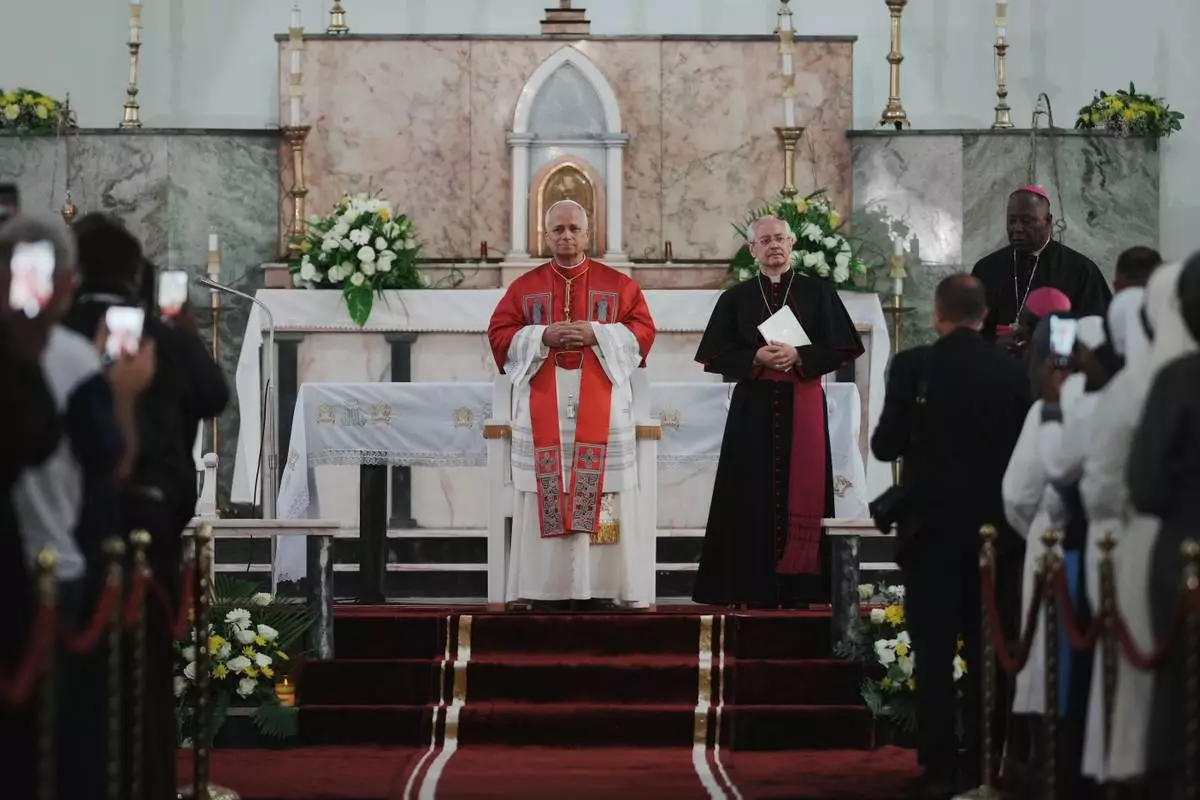
Pope Leo XIV arrives at the Parish of Our Lady of Fatima in Luanda, Angola, for a meeting with bishops, priests, consecrated men and women, and pastoral workers Monday, April 20, 2026, on the eighth day of an 11-day apostolic journey to Africa (AP Photo/Andrew Medichini)
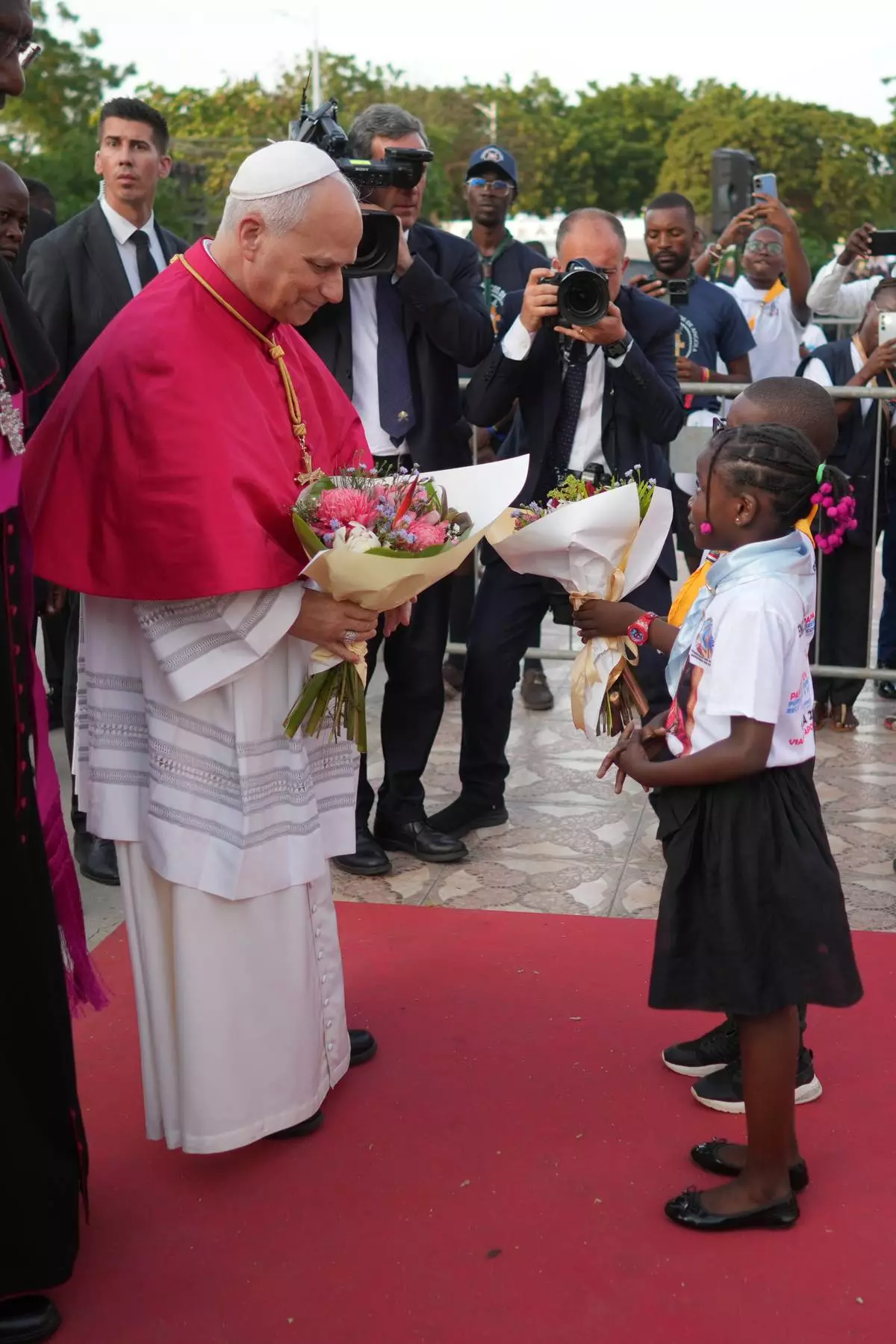
Pope Leo XIV arrives at the Parish of Our Lady of Fatima in Luanda, Angola, for a meeting with bishops, priests, consecrated men and women, and pastoral workers Monday, April 20, 2026, on the eighth day of an 11-day apostolic journey to Africa (AP Photo/Andrew Medichini)
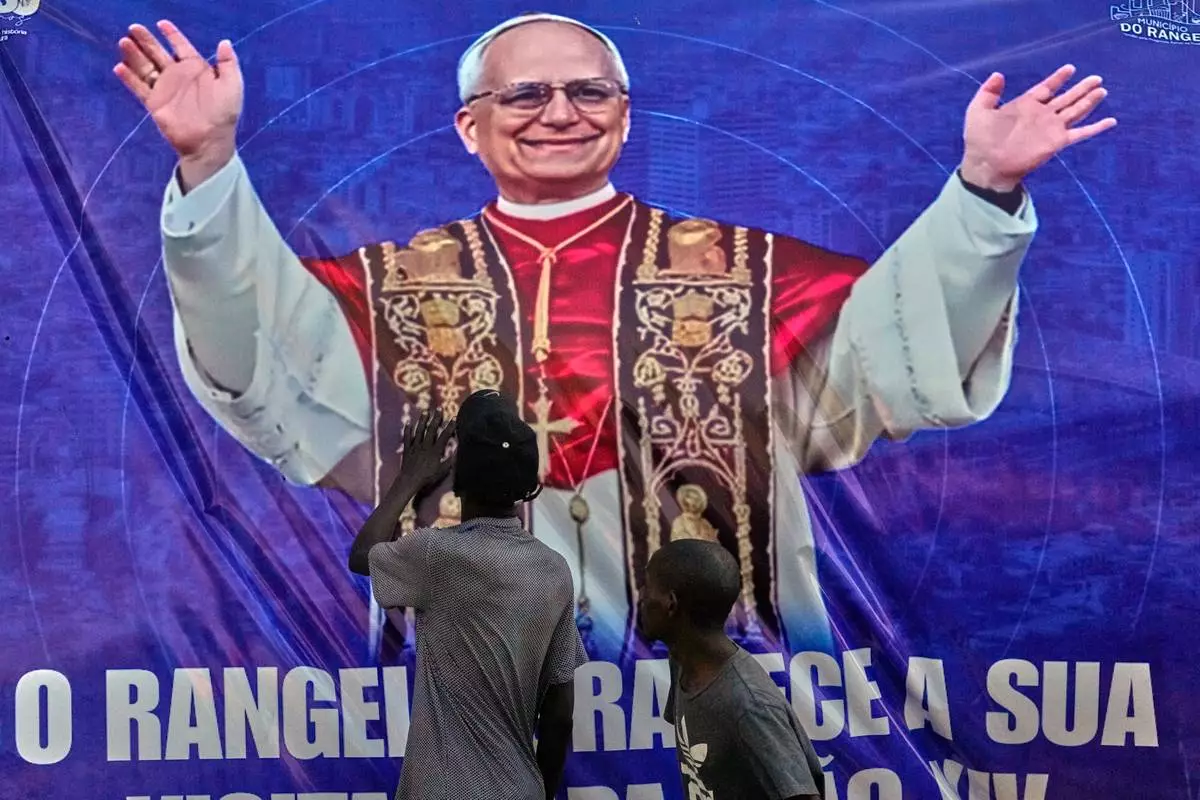
People touch a banner bearing an image of Pope Leo XIV in Luanda, Angola, Monday, April 20, 2026. (AP Photo/Themba Hadebe)
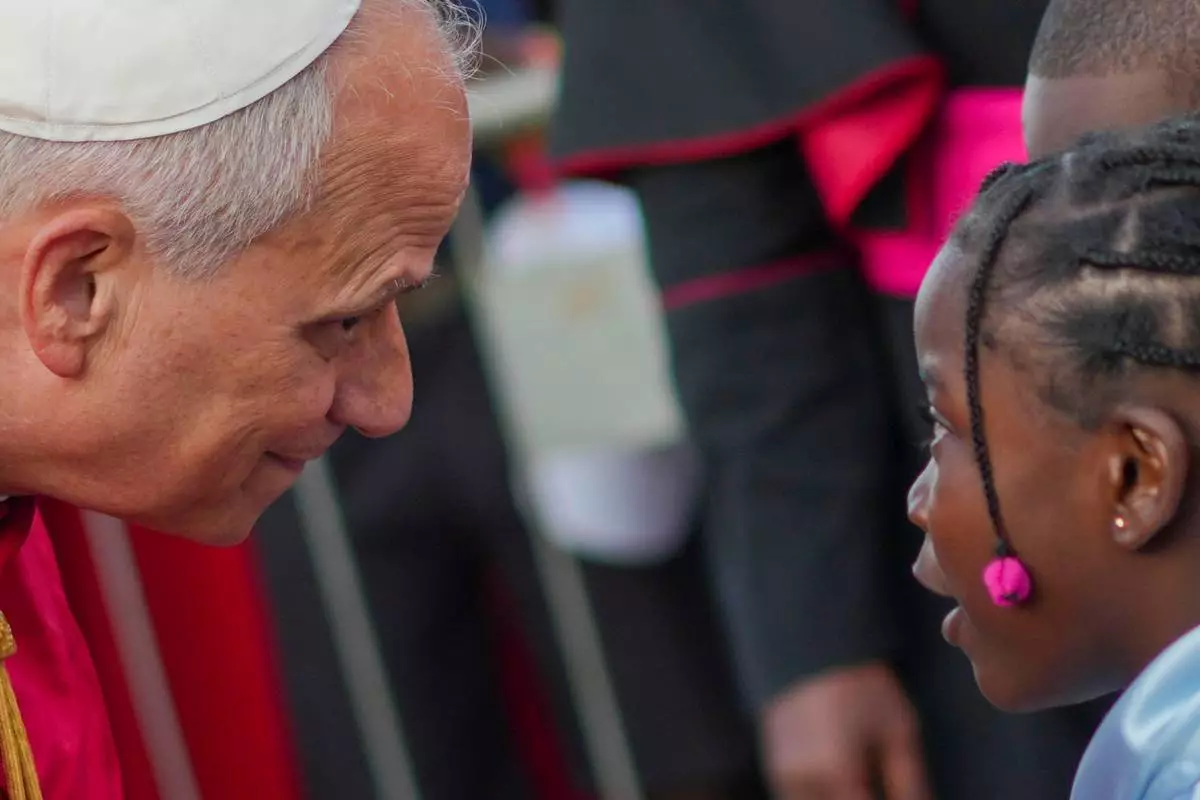
Pope Leo XIV listens to a girl as he arrives at the Parish of Our Lady of Fatima in Luanda, Angola, for a meeting with bishops, priests, consecrated men and women, and pastoral workers Monday, April 20, 2026, on the eighth day of an 11-day apostolic journey to Africa (AP Photo/Andrew Medichini)