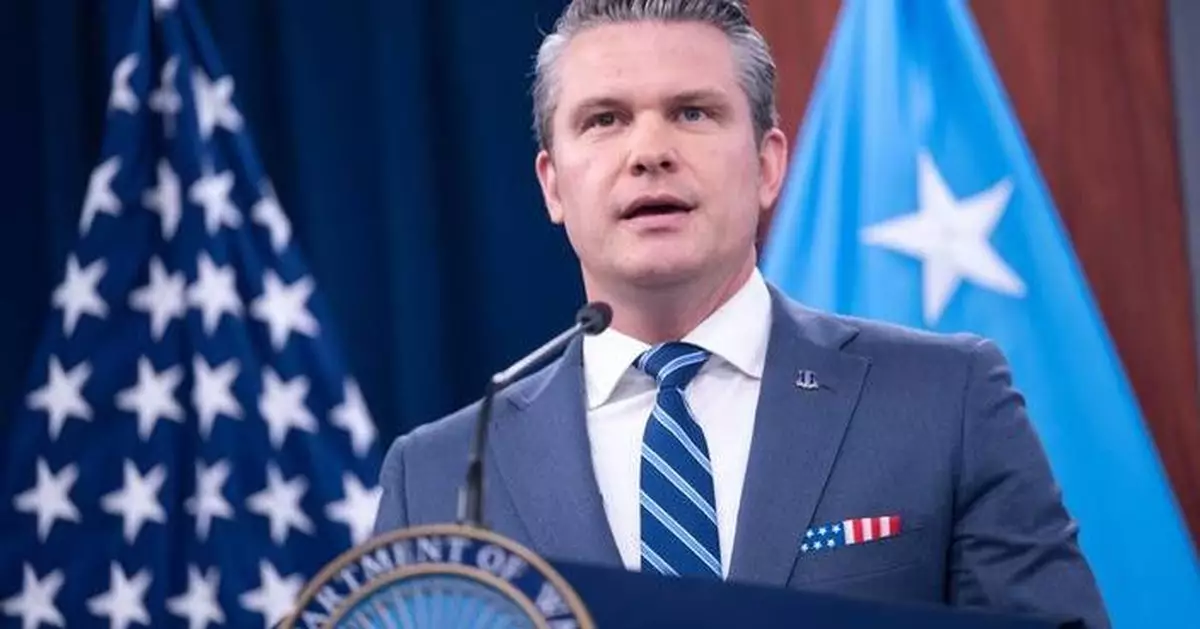
WASHINGTON (AP) — Defense Secretary Pete Hegseth announced Tuesday that the U.S. military will no longer require all American troops to get the flu vaccine, citing “medical autonomy” and religious freedom.
“The notion that a flu vaccine must be mandatory for every service member, everywhere, in every circumstance at all times is just overly broad and not rational,” Hegseth said in a video posted on social media.
He said American service members are free to get the flu vaccine but will not be forced to “because your body, your faith and your convictions are not negotiable.”
Hegseth’s directive does allow for the military services to request to keep the vaccine requirement in place, according to a memo enacting the policy posted online. It says the services have 15 days to make those requests.
Vaccination programs in the U.S. military date back to the American Revolution. But they became a contentious political issue during the coronavirus pandemic, when more than 8,400 troops were forced out of the military for refusing to obey the 2021 mandate for the COVID-19 vaccine. Thousands of others sought religious and medical exemptions.
Congress agreed to rescind the mandate, which the Pentagon dropped in January 2023, after roughly 99% of active duty troops in the Navy, Air Force and Marine Corps had gotten the vaccine, and 98% of those in the Army. The Guard and Reserve rates are lower but generally are more than 90%.
The Trump administration then spent months crafting a policy to allow service members who refused to take the mandatory COVID-19 vaccine to reenter service with back pay. While only a tiny fraction have taken the Pentagon up on the new policy, Hegseth’s team has spent the past several months personally highlighting them.
The Pentagon stated in March that 153 service members who were separated under the COVID-19 mandate had been reinstated or "re-accessed."
The dropping of the flu vaccine mandate follows what health officials said was a particularly severe flu season when U.S. infections surged. Public health experts recommend that everyone 6 months and older get an annual influenza vaccine.
The Trump administration has been working to dial back vaccine recommendations. It stated earlier this year that it will no longer recommend flu shots and some other types of vaccines for all children, saying it’s a decision parents and patients should make in consultation with their doctors. A federal judge has temporarily blocked that effort as a lawsuit plays out.
The Congressional Research Service listed eight mandatory vaccines for service members in a 2021 report. They included vaccines for the flu, polio and tetanus as well as the measles and hepatitis A and B.
Service members could request to opt out of a vaccine requirement for religious reasons, the report stated. But the unit commander was required to seek input from medical and religious representatives, while also counseling the service member on the potential impact on their ability to deploy. A military physician also had to counsel the service member on the benefits and risks of forgoing a required vaccination.
The Congressional Research Service noted that the military instituted its first vaccination program in 1777 when Gen. George Washington directed the inoculation of the Continental Army to protect personnel from smallpox.
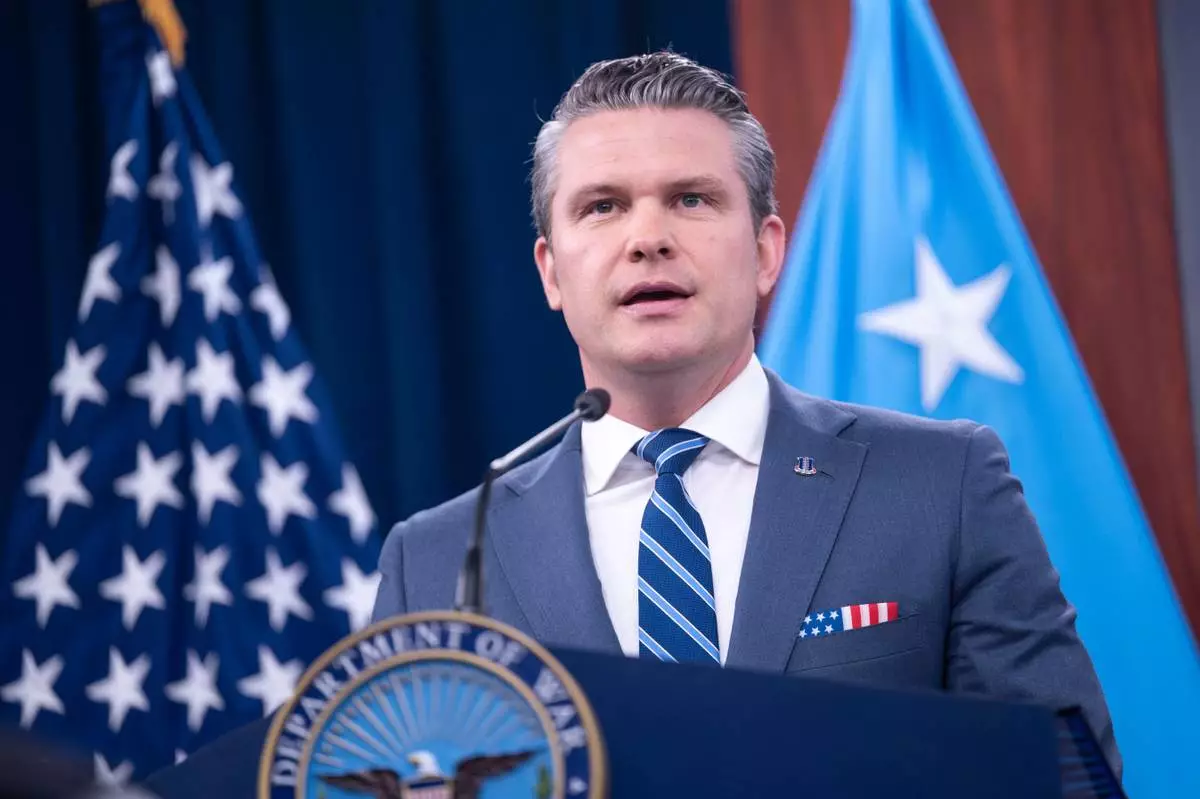
Defense Secretary Pete Hegseth speaks to members of the media during a press briefing at the Pentagon, Thursday, April 16, 2026 in Washington. (AP Photo/Kevin Wolf)
NEW YORK (AP) — U.S. stocks are wavering Tuesday as Wall Street weighs the latest round of profit reports from big companies with the lingering risks from the ongoing war between the U.S. and Iran.
UnitedHealth Group and other big companies showed they’re making even bigger profits than analysts expected. Oil prices, meanwhile, remained relatively stable as optimism seems to be sticking in financial markets that the United States and Iran will avoid a worst-case scenario for the economy, even with their war ongoing.
The S&P 500 fell 0.3%, coming off just its second drop in 14 days, and is hovering below its all-time high. The Dow Jones Industrial Average was down 85 points, or 0.2%, as of 12:39 p.m. Eastern time, and the Nasdaq composite was down 0.2%.
UnitedHealth helped lead the market with a jump of 8.2% after reporting stronger profit and revenue for the beginning of the year than analysts expected. It also raised its forecast for profit over the full year of 2026.
That’s big because stock prices tend to follow the path of corporate profits over the long term. It’s a double-plus for investors when companies not only top earnings estimates but also forecast even better growth ahead.
Quest Diagnostics rose 5.1% after it likewise joined the fattening list of companies topping expectations for profit and revenue during the latest quarter. It also raised its forecast for profit for the full year.
They helped offset an 10.9% drop for Tractor Supply, whose profit and revenue for the latest quarter fell short of expectations.
Other signals are also indicating the U.S. economy may be doing OK despite sharp up-and-down swings for oil prices because of the war with Iran. A report on Tuesday morning showed that U.S. retailers made more money in March, the first full month of the war, than analysts expected.
Growth was even relatively stable for retail sales when not including those from gasoline stations.
“It’s become cliched to say that the economic hit will depend on the duration of the Middle East conflict, but that cliché does ring true,” according to Brian Jacobsen, chief economic strategist at Annex Wealth Management.
The price for a barrel of Brent crude oil, the international standard, rose 2.8% to $98.15 ahead of Wednesday's scheduled expiration for a U.S.-Iran ceasefire agreement. Both sides are continuing to talk tough, but hope remains after both have signaled they will hold a new round of ceasefire talks in Pakistan.
Much of the tension in financial markets has focused on what will happen to the Strait of Hormuz, a narrow waterway off Iran’s coast that oil tankers use to exit the Persian Gulf. A long-term closure would keep crude oil pent up in the gulf and away from customers worldwide.
The price for a barrel of Brent oil has gone from roughly $70 before the war to $119 at times as worries have risen and fallen about a long-term closure for the strait.
On Wall Street, Apple fell 2.8% after Tim Cook said he’ll step down as CEO on Sept. 1 and become the iPhone maker’s executive chairman. He’s handing control over to John Ternus, a company veteran who rose through Apple's hardware engineering ranks.
Amazon rose 1.6% after Anthropic said it signed a new agreement and is committing more than $100 billion over the next 10 years to AWS technologies to train and run its Claude chatbot.
In stock markets abroad, indexes were lower in Europe following a stronger finish in Asia. South Korea’s Kospi rose 2.7% for one of the world’s biggest moves.
In the bond market, Treasury yields gained ground. The yield on the 10-year Treasury rose to 4.3% from 4.26% late Monday.
Kevin Warsh, President Donald Trump's nominee to chair the Federal Reserve, appeared on Capitol Hill Tuesday. He's facing a tightrope walk, as investors want to see if he would maintain the Fed's independence from political meddling. During the hearing, he pledged to fight inflation even though Trump has been pushing hard for lower interest rates. Higher inflation typically leads the Fed to raise rates, or at least keep them unchanged, rather than cut them.
AP Business Writers Matt Ott and Elaine Kurtenbach contributed to this report.
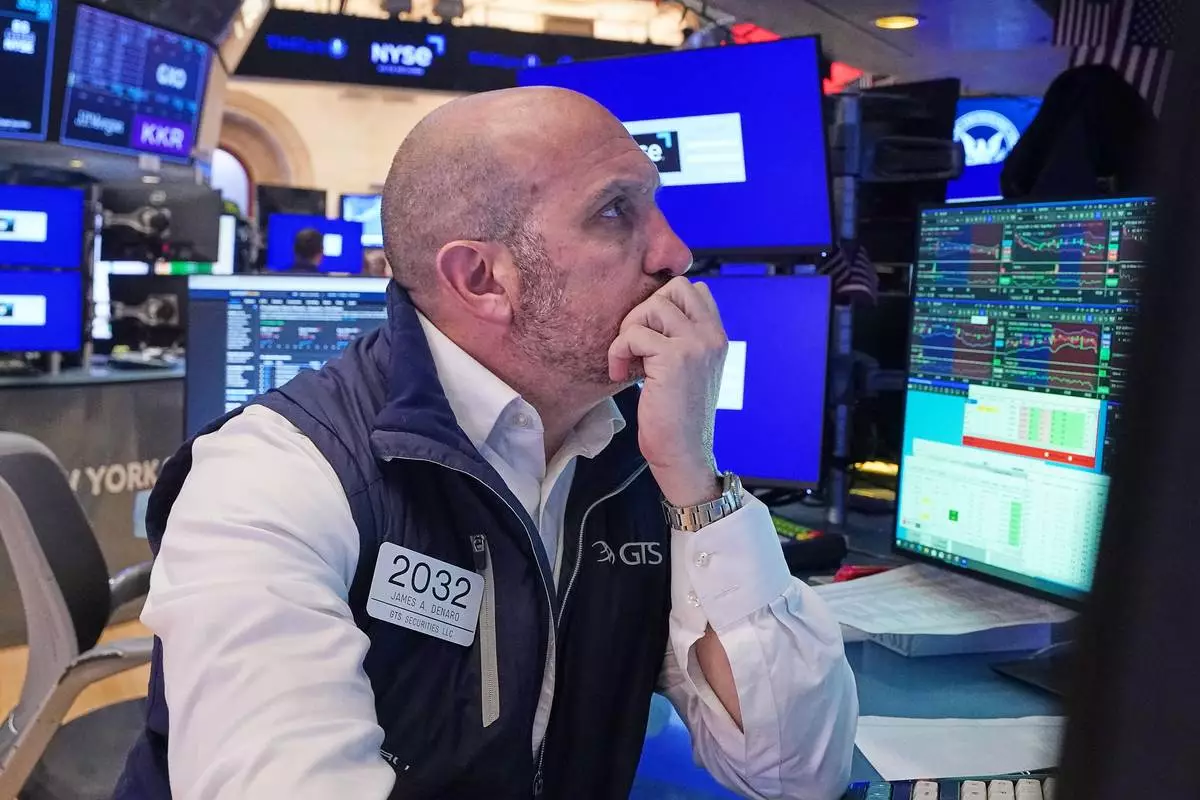
Specialist James Denaro works at his post on the floor of the New York Stock Exchange, Monday, April 20, 2026. (AP Photo/Richard Drew)
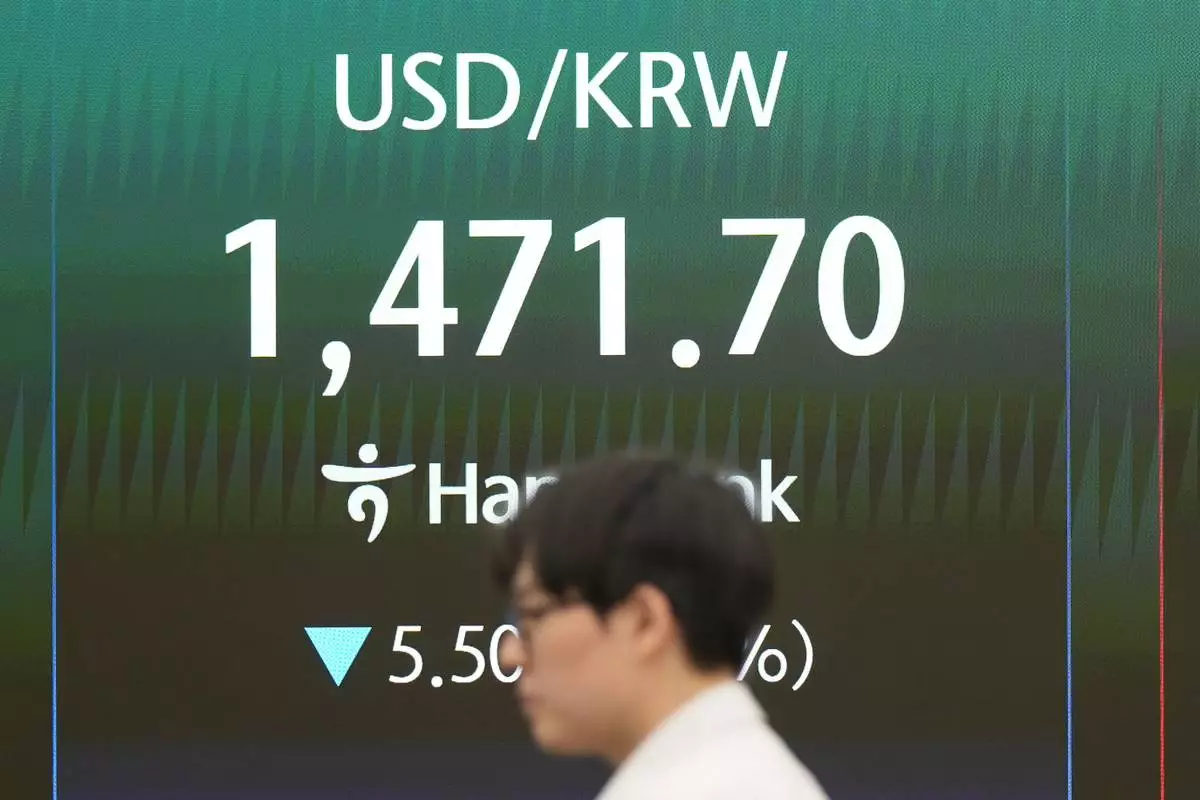
A dealer walks past the screen showing the foreign exchange rate between U.S. dollar and South Korean won at a dealing room of Hana Bank in Seoul, South Korea, Tuesday, April 21, 2026. (AP Photo/Lee Jin-man)
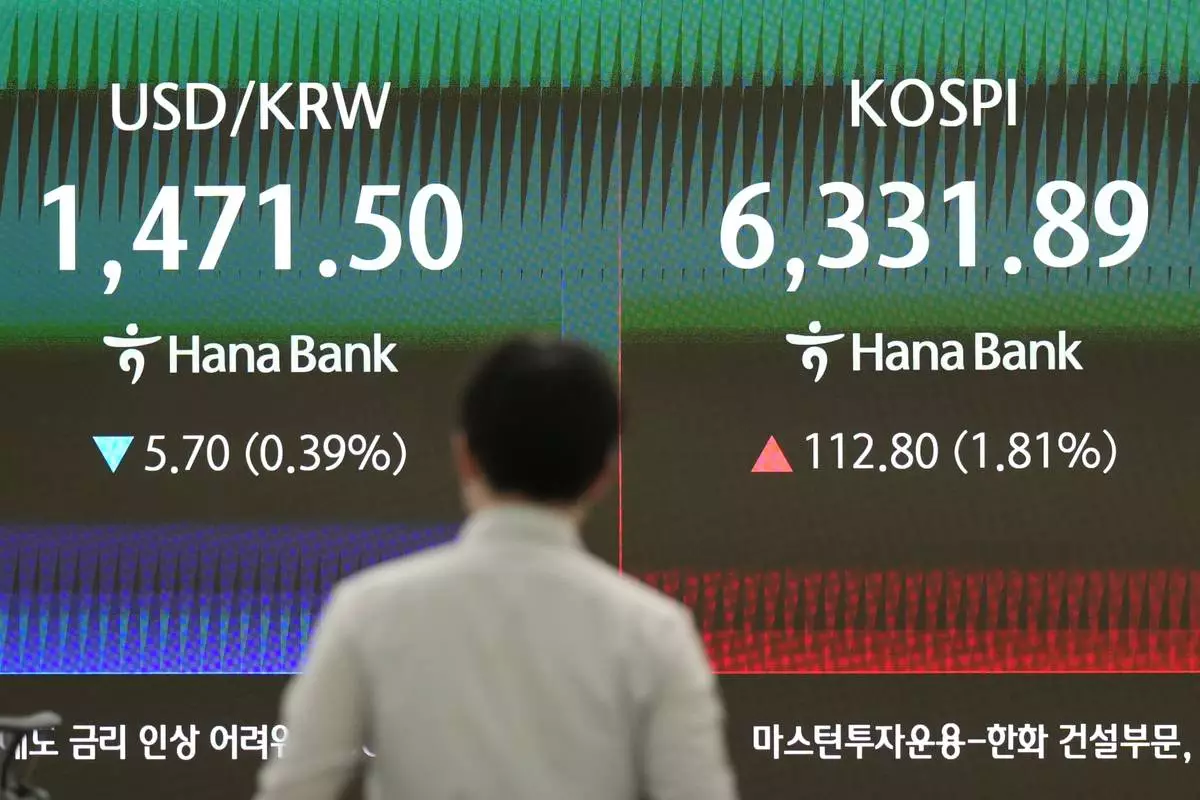
A dealer walks past the screens showing the Korea Composite Stock Price Index (KOSPI) and the foreign exchange rate between U.S. dollar and South Korean won at a dealing room of Hana Bank in Seoul, South Korea, Tuesday, April 21, 2026. (AP Photo/Lee Jin-man)
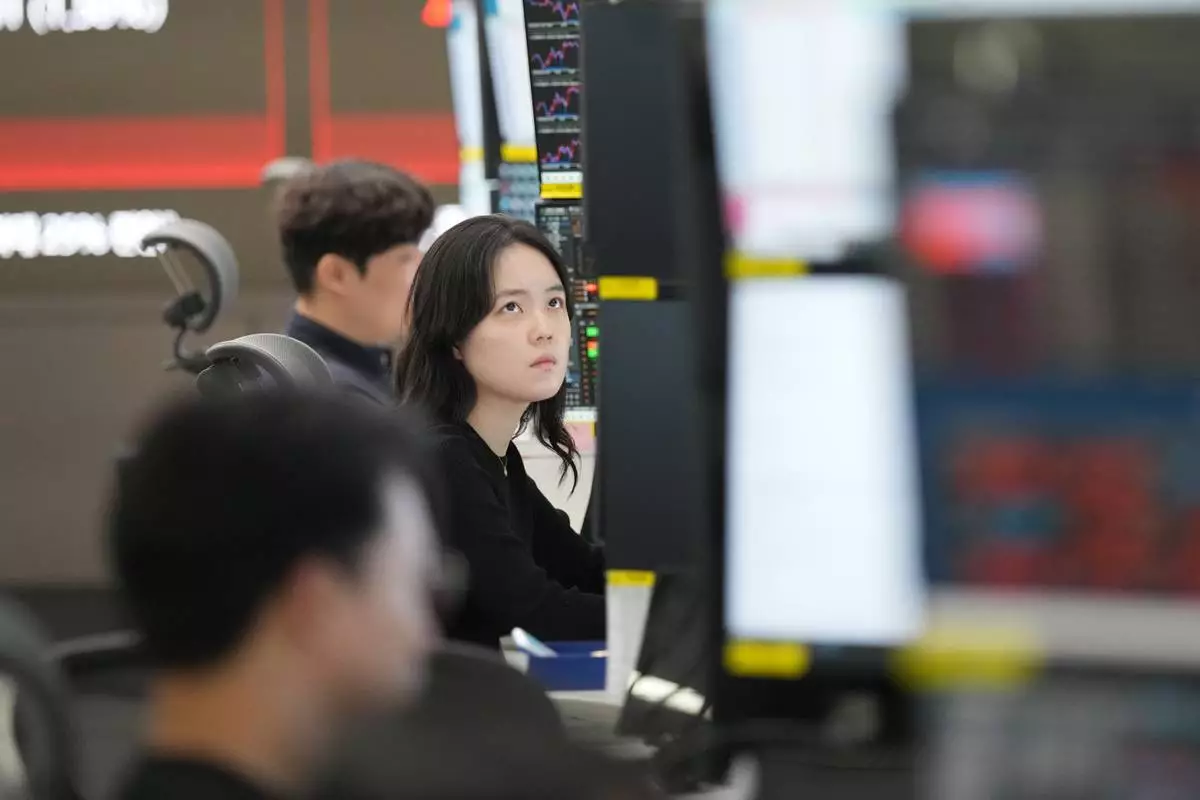
A dealer watches computer monitors at a dealing room of Hana Bank in Seoul, South Korea, Tuesday, April 21, 2026. (AP Photo/Lee Jin-man)
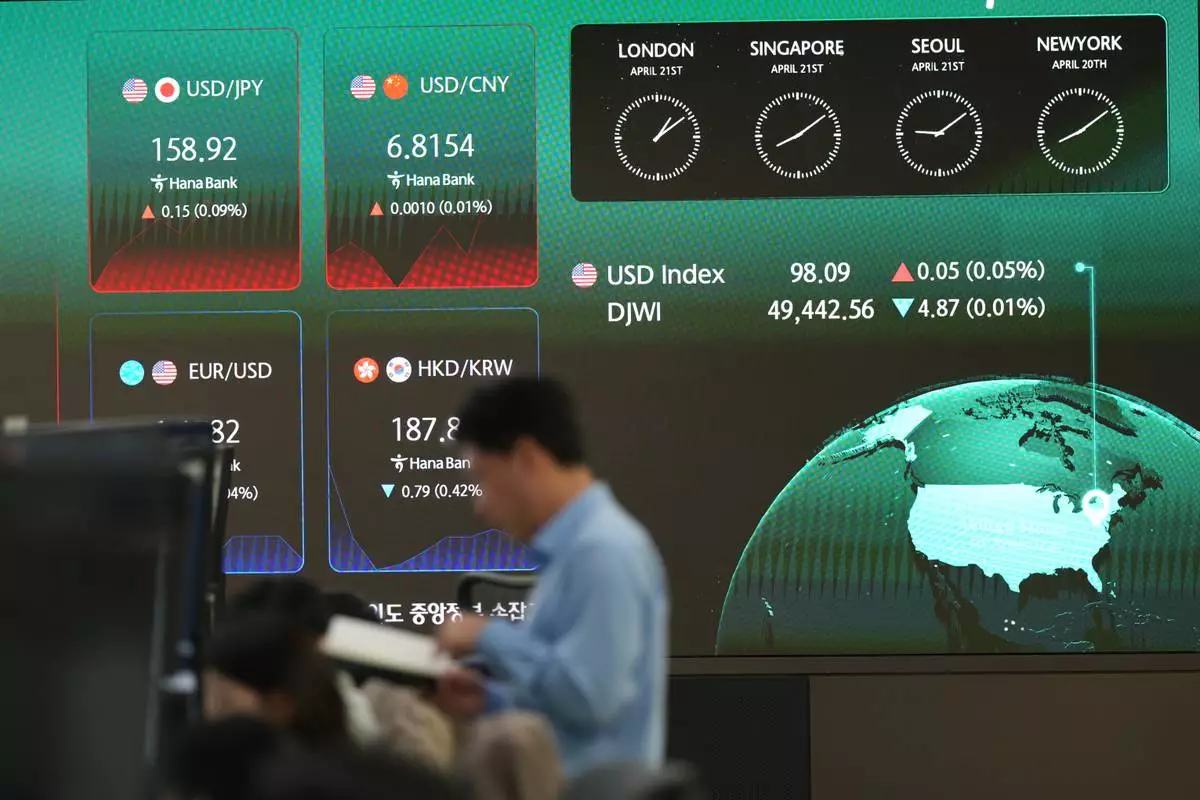
A dealer stands near the screens showing the foreign exchange rates at a dealing room of Hana Bank in Seoul, South Korea, Tuesday, April 21, 2026. (AP Photo/Lee Jin-man)
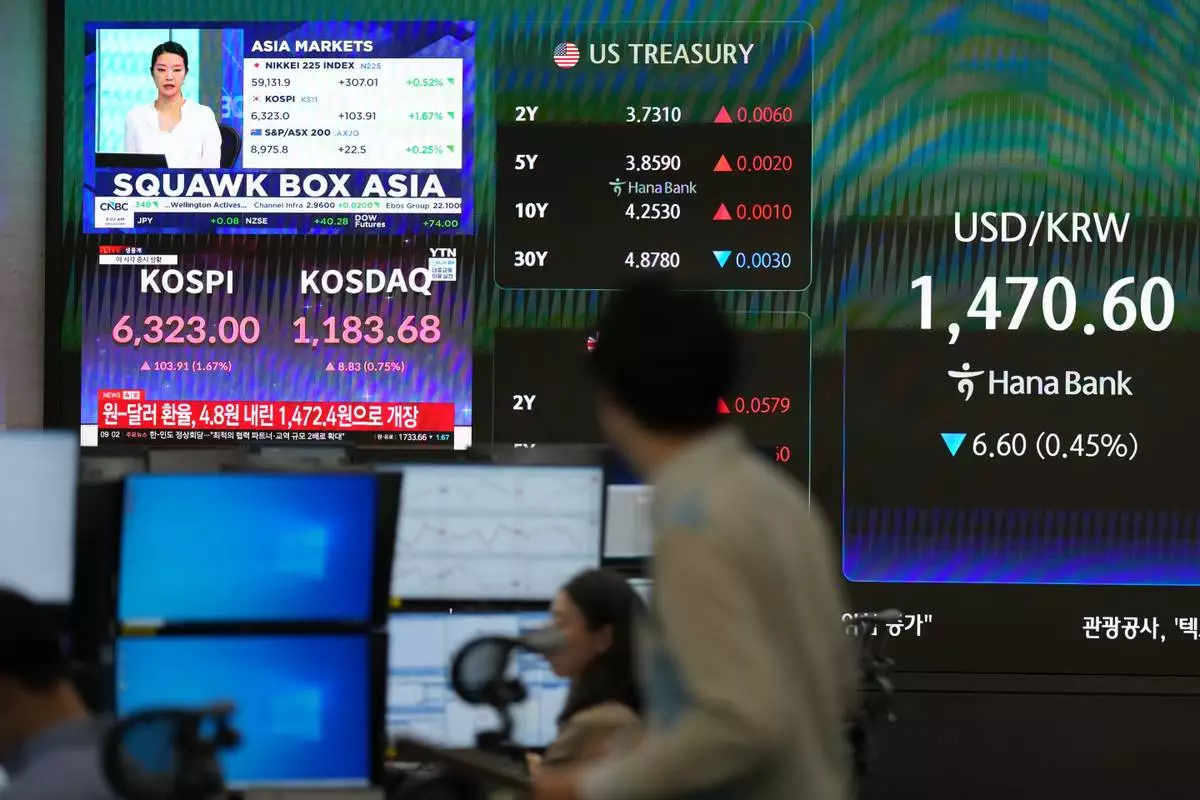
A dealer walks past the screens showing the foreign exchange rate between U.S. dollar and South Korean won at a dealing room of Hana Bank in Seoul, South Korea, Tuesday, April 21, 2026. (AP Photo/Lee Jin-man)
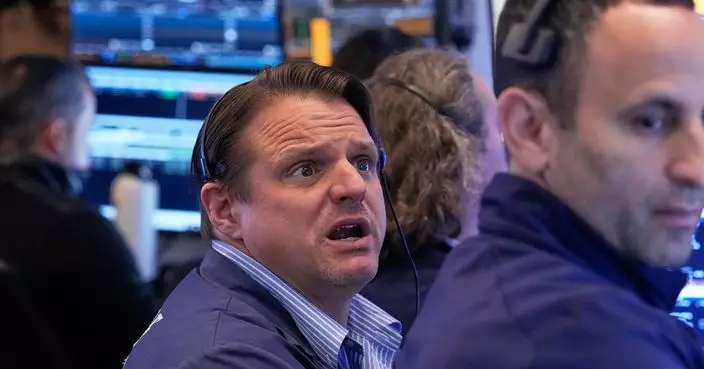
Trader Michael Milano, left, works on the floor of the New York Stock Exchange, Monday, April 20, 2026. (AP Photo/Richard Drew)