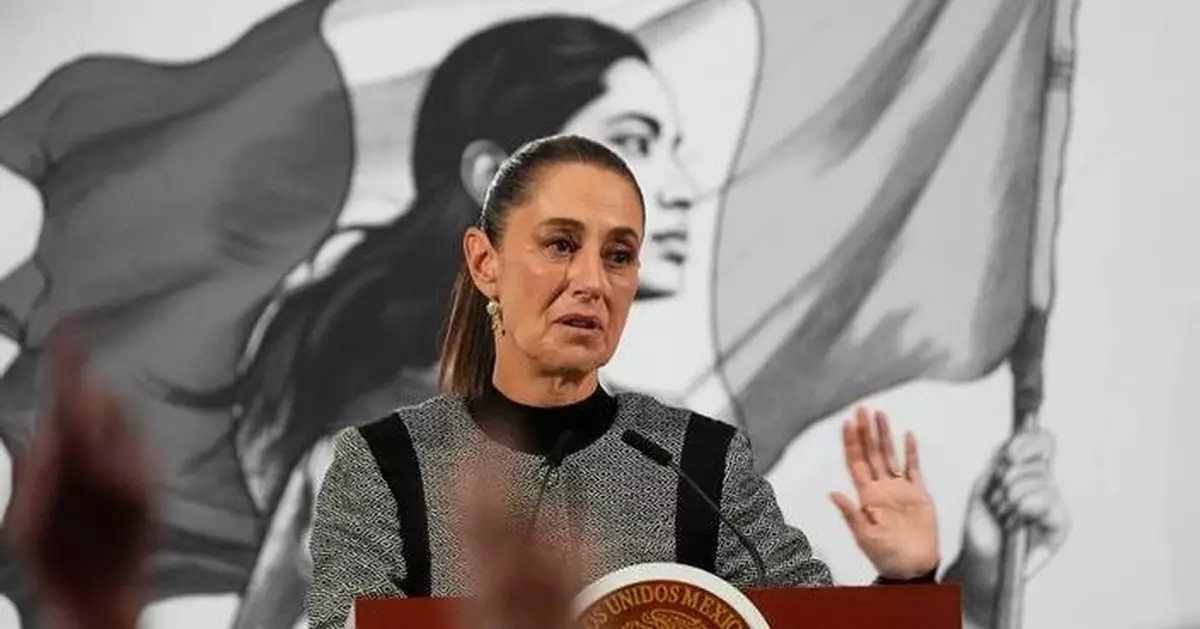
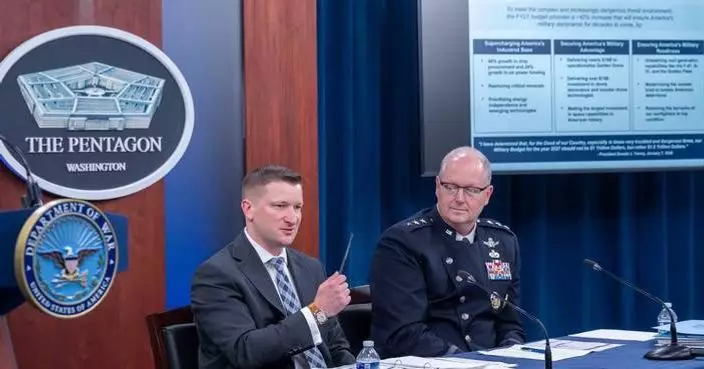
WASHINGTON (AP) — Two U.S. officials killed in a vehicle crash as they returned from destroying a clandestine drug lab in a rugged region of Mexico over the weekend were working for the CIA, according to a U.S. official and two other people familiar with matter.
Two Mexican investigators also were killed in the crash, which Mexican authorities said occurred while the officials were returning from an operation to destroy drug labs of criminal groups.
The CIA's involvement was confirmed Tuesday by a U.S. official and two people with knowledge of the crash who spoke on the condition of anonymity to discuss sensitive intelligence matters. The identity of the two Americans as CIA officers was earlier reported by The Washington Post.
Confirmation of the CIA’s involvement comes after days of contradictions from Mexican and U.S. authorities about the role U.S. officials played in an operation to bust a narco-laboratory in northern Chihuahua.
The lack of clarity by authorities reignited a debate over the extent of U.S. involvement in Mexican security operations at a moment when Mexican President Claudia Sheinbaum has come under extreme pressure by President Donald Trump's administration to crack down on cartels.
The U.S. Embassy has declined to identify who the U.S. officials were or which entity of the U.S. government they worked for but said the officials were “supporting Chihuahua state authorities’ efforts to combat cartel operations.”
On Tuesday, it did not comment on reports that the officials were with the CIA. The CIA also declined to comment about the identities of the Americans killed in the crash.
Local Mexican officials originally claimed that they were working together with U.S. officials, then later walked those comments back.
Sheinbaum said she knew nothing of a joint operation between Chihuahua’s government and the U.S., despite reports that the Mexican army was also involved in the raid on the lab.
On Tuesday, the president maintained in her morning press briefing that she didn’t know if the officials were part of the CIA, but she admitted that state officials and the U.S. “were working together.”
It’s a sensitive issue for the Mexican leader as she walks a careful line with the Trump administration, working to maintain a strong relationship to offset threats of U.S. intervention on cartels and tariffs while also underscoring Mexico’s sovereignty.
The CIA has recently expanded its collaboration with Mexican authorities, part of the Trump administration’s effort to stop the flow of illicit drugs. Last year, Sheinbaum said that U.S. drone surveillance flights over her country were being done at her request.
Janetsky reported from Mexico City. AP writer Zeke Miller contributed to this report.
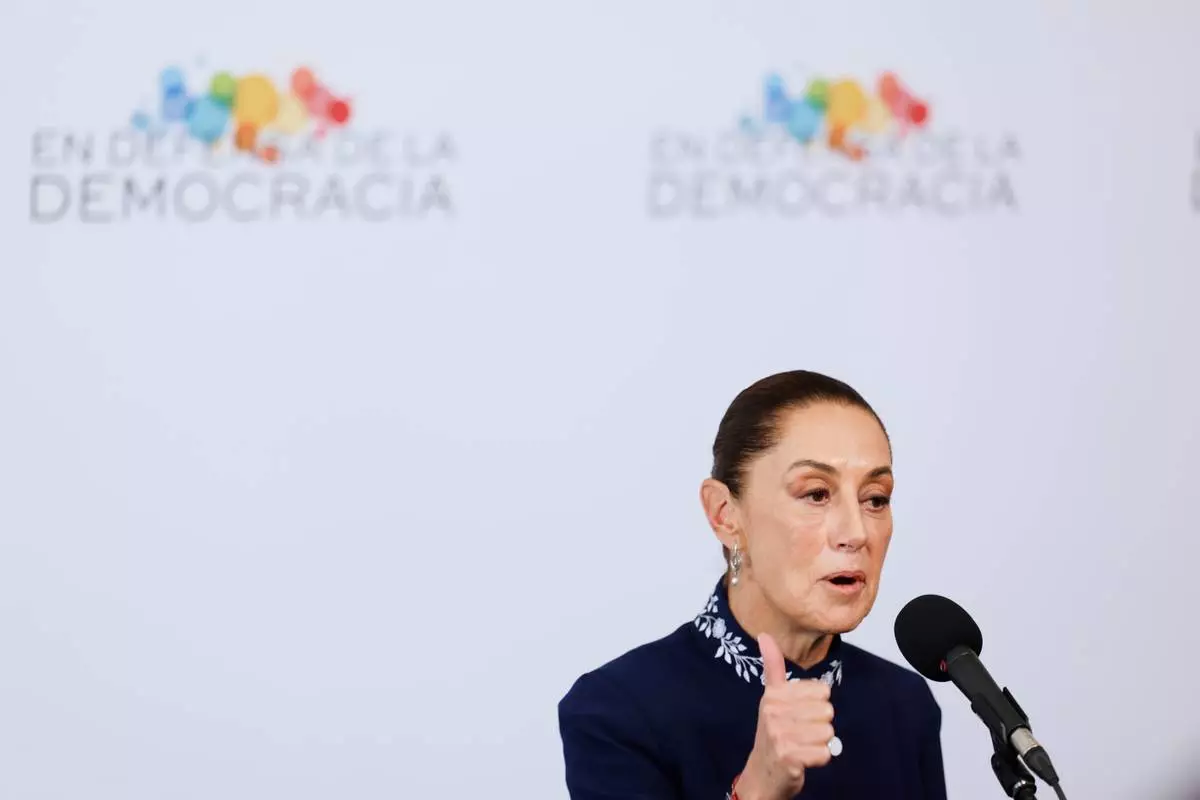
Mexican President Claudia Sheinbaum addresses the media at the Meeting in Defence of Democracy summit, in Barcelona, Spain, Saturday, April 18, 2026. (AP Photo/Joan Monfort)
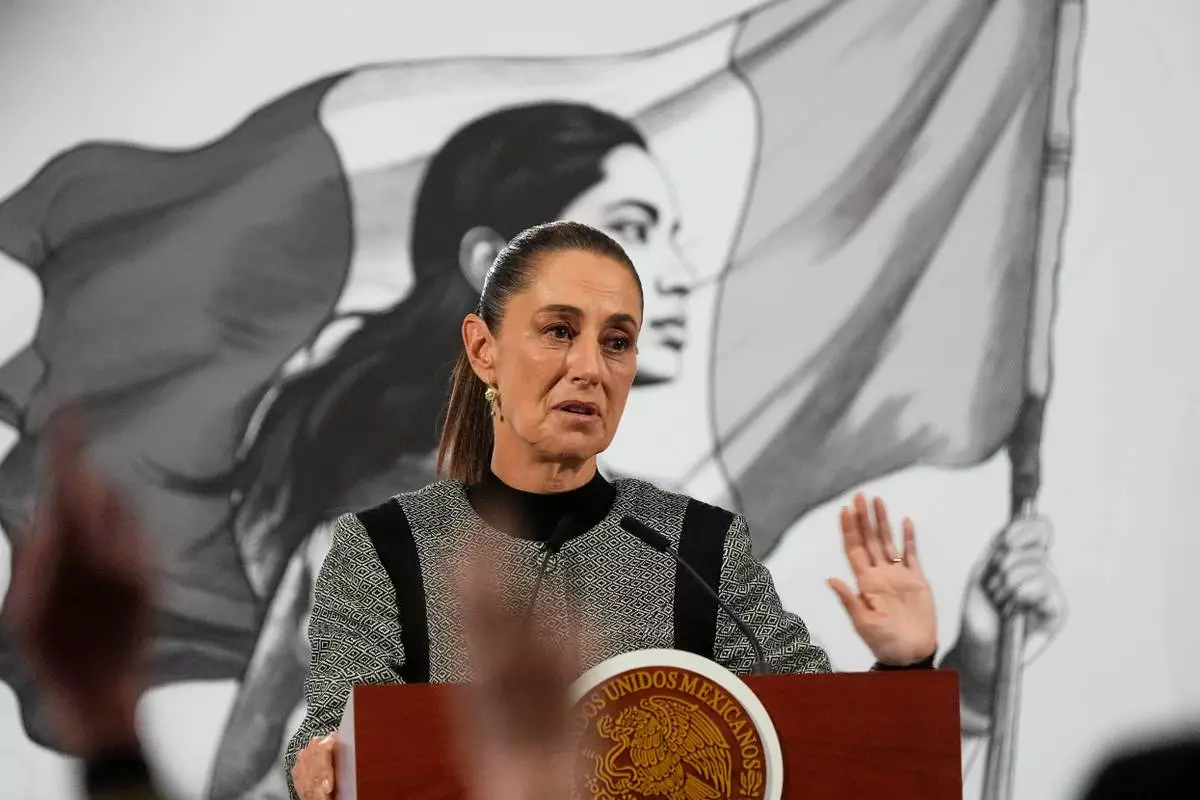
FILE - Mexican President Claudia Sheinbaum speaks during her daily morning press conference at the National Palace in Mexico City, Nov. 28, 2025. (AP Photo/Marco Ugarte, File)
LUXEMBOURG (AP) — Buoyed by the election of a new leader in Hungary, Europe's top diplomats are meeting in Luxembourg to forge plans of action on multiple crises from the ongoing war in Ukraine, Russian hybrid attacks, and economic instability as the war in Iran drives up energy prices worldwide.
But it is the European Union's policy toward Israel — and how to pressure Israeli Prime Minister Benjamin Netanyahu as security deteriorates in the Palestinian territories of Gaza and the occupied West Bank, as well as in Lebanon — that is dividing EU members, stymieing strong action, and frustrating many in the 27-nation bloc.
The EU’s foreign policy chief, Kaja Kallas, said there was no clear political agreement in Luxembourg to ramp up pressure on Israel.
“We didn’t see that today, but these discussions will continue,” she said.
One of the loudest voices within the EU blocking sharper pressure on Israel is shortly leaving office — Hungary’s outgoing Prime Minister Viktor Orbán routinely obstructed EU action on issues ranging from support for Ukraine in its war against Russia’s invasion to sanctions on Israelis accused of violent extremism.
Kallas said that Orbán’s defeat by pro-European opposition leader Péter Magyar in Hungary’s recent election could accelerate action.
“A lot of issues ... have been blocked” by Hungary, she said. “We are reopening the discussions and hope that we get a positive result.”
The EU has an Association Agreement, signed in 2000, that regulates trade and cooperation with Israel. Spain, Slovenia and Ireland have proposed completely suspending it, a move that doesn't have the required unanimous support among EU nations.
However, a partial suspension targeting just the trade aspects could have enough political support, said Spanish Foreign Minister José Albares.
“The European Union has to say today very clearly to Israel that a change is needed,” he said.
The EU has found indications Israel had violated the agreement with the bloc in its military campaign in Gaza.
“The attacks on the values that underpin that agreement are now too serious to ignore,” said Belgian Foreign Minister Maxime Prevot, adding that Belgium would support at least a partial suspension of the deal.
Irish Foreign Minister Helen McEntee said the expansion of Israeli settlements in the West Bank, Israel's recent adoption of the death penalty for some Palestinians, and ongoing fighting in Lebanon should push EU nations to ramp up pressure on Israel.
“We need to act. We need to make sure that our fundamental values are protected,” McEntee said.
Swedish Foreign Minister Maria Malmer Stenergard said France and Sweden have brought forward a plan to curtail trade with Israeli settlements in the West Bank.
Amnesty International condemned EU's lack of action to pressure Israel over its actions. Erika Guevara-Rosas, a director for the human rights organization, said “each delay only further entrenches impunity and paves the way for further grave human rights violations” by Israel.
Lebanon’s Prime Minister Nawaf Salam spoke at the meeting in Luxembourg about the fragile ceasefire between Lebanon and Israel, difficulties in disarming the Hezbollah militant group, and the need for EU assistance for the war-torn nation.
“Lebanon today needs its European partners more than ever,” Salam posted on X on Tuesday.
While now mainly headquartered in Brussels, EU institutions are also spread out in northern Europe like the European Court of Justice in Luxembourg, the European Central Bank in Frankfurt, Germany and the European Parliament in Strasbourg, France. Lawmakers, diplomats and officials regularly move between the cities for meetings.
The Luxembourg meeting comes a day after 60 nations sent representatives to a Palestinian peace conference in Brussels with Palestinian Prime Minister Mohamed Mustafa and Bulgarian diplomat Nikolay Mladenov, who heads the Board of Peace set up by U.S. President Donald Trump.
The EU diplomats gathered in Luxembourg called for diplomacy on Iran as a ceasefire struck between Tehran and Washington that began April 8 was to expire Wednesday.
Kallas, the foreign policy chief, warned that if the fighting resumes, "it will come at a very large cost for all.”
She also announced that EU foreign ministers agreed Tuesday on new sanctions on Iranian officials responsible for obstructing freedom of navigation in the Persian Gulf.
“Freedom of navigation is non-negotiable. Daily U-turns where the Strait of Hormuz is open or closed, are reckless. Transit through the strait must remain free of charge,” Kallas said.
She did not elaborate on the sanctions or name the targeted officials.
Germany’s foreign minister called on Iran to send negotiators to Islamabad to meet with U.S. negotiators.
“Iran should now take this outstretched hand in the interest of its own people,” Johann Wadephul said.
The war in Iran has throttled global oil and gas markets and rattled the EU as a major importer of energy.
Also Tuesday, EU transportation ministers discussed in a video conference how to protect consumers at home and at the pump after the head of the International Energy Agency warned that Europe has “ maybe six weeks ” supply left of jet fuel.
Since the latest war in the Middle East started, fighting has killed at least 3,375 people in Iran and more than 2,290 in Lebanon. Additionally, 23 people have died in Israel and more than a dozen in Gulf Arab states. Fifteen Israeli soldiers in Lebanon and 13 U.S. service members throughout the region have been killed.
McNeil reported from Brussels.

A man holds the flag of Luxembourg and a placard as he demonstrates outside a meeting of EU foreign ministers at the European Council building in Luxembourg, Tuesday, April 21, 2026. (AP Photo/Virginia Mayo)
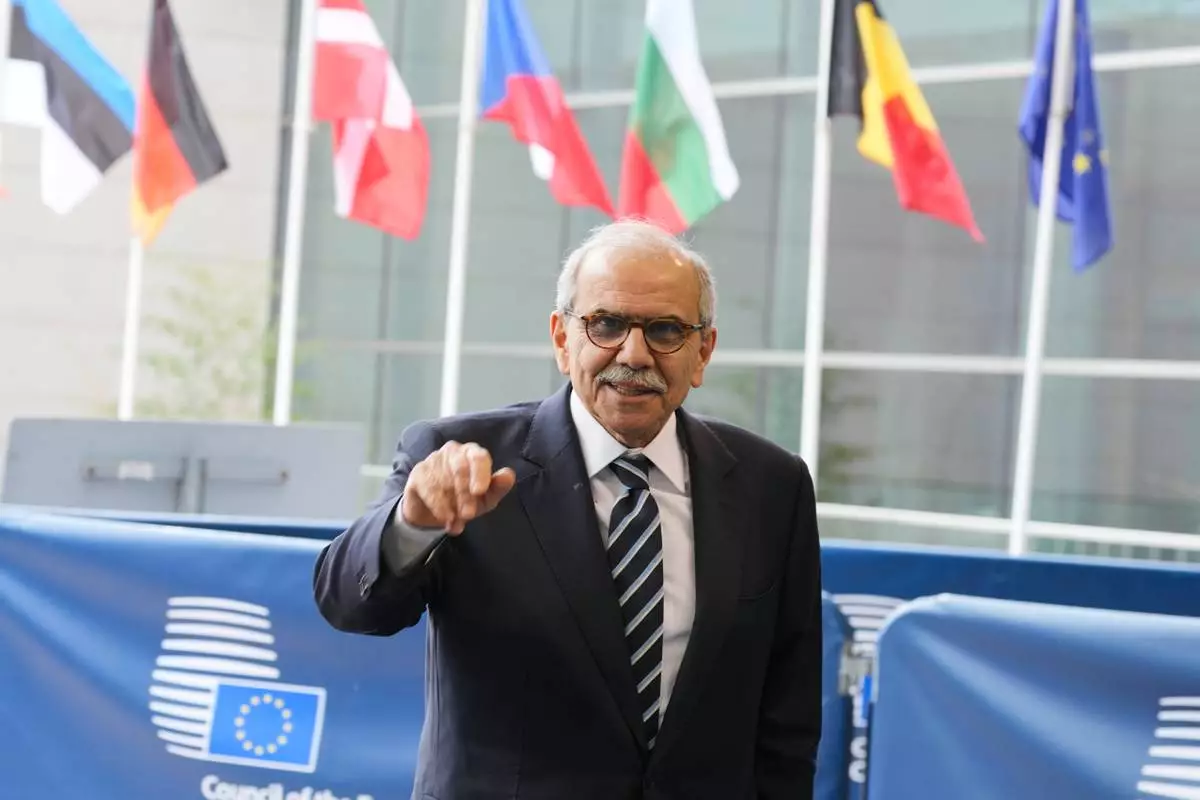
Lebanon's Prime Minister Nawaf Salam arrives for a meeting of EU foreign ministers at the European Council building in Luxembourg, Tuesday, April 21, 2026. (AP Photo/Virginia Mayo)
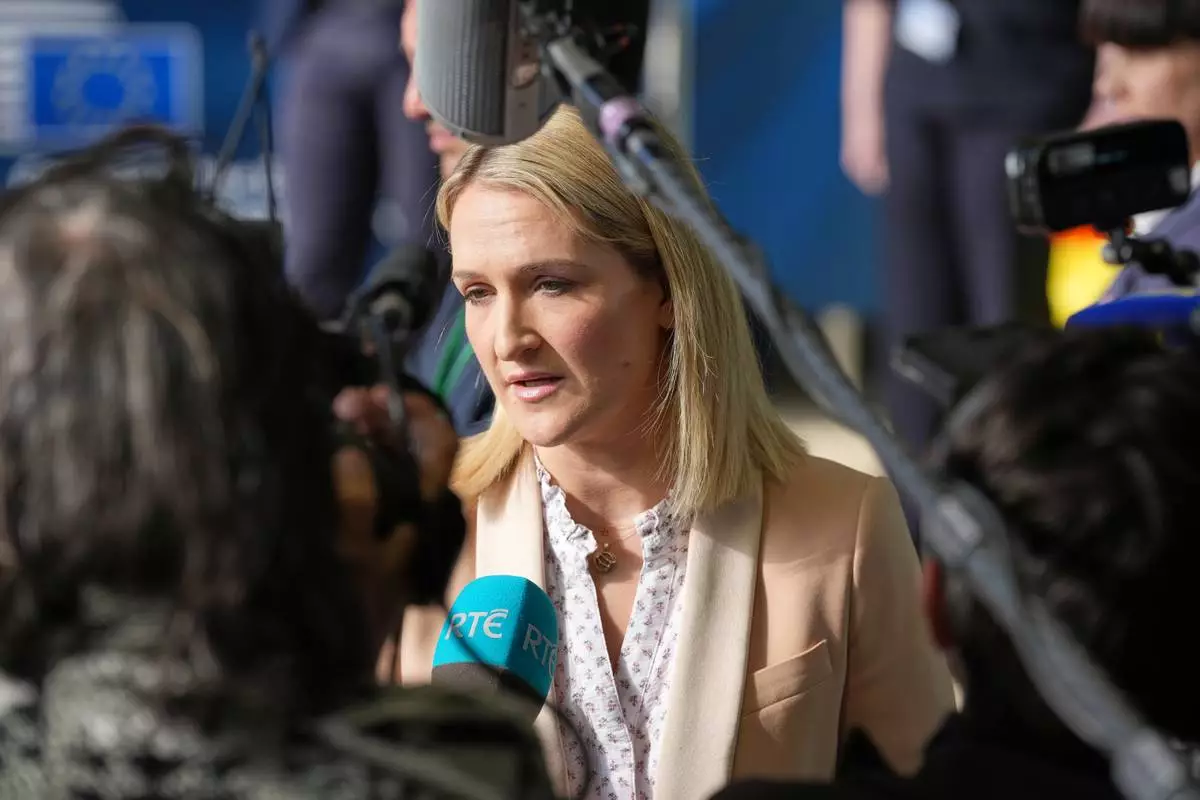
Ireland's Foreign Minister Helen McEntee speaks with the media as she arrives for a meeting of EU foreign ministers at the European Council building in Luxembourg, Tuesday, April 21, 2026. (AP Photo/Virginia Mayo)
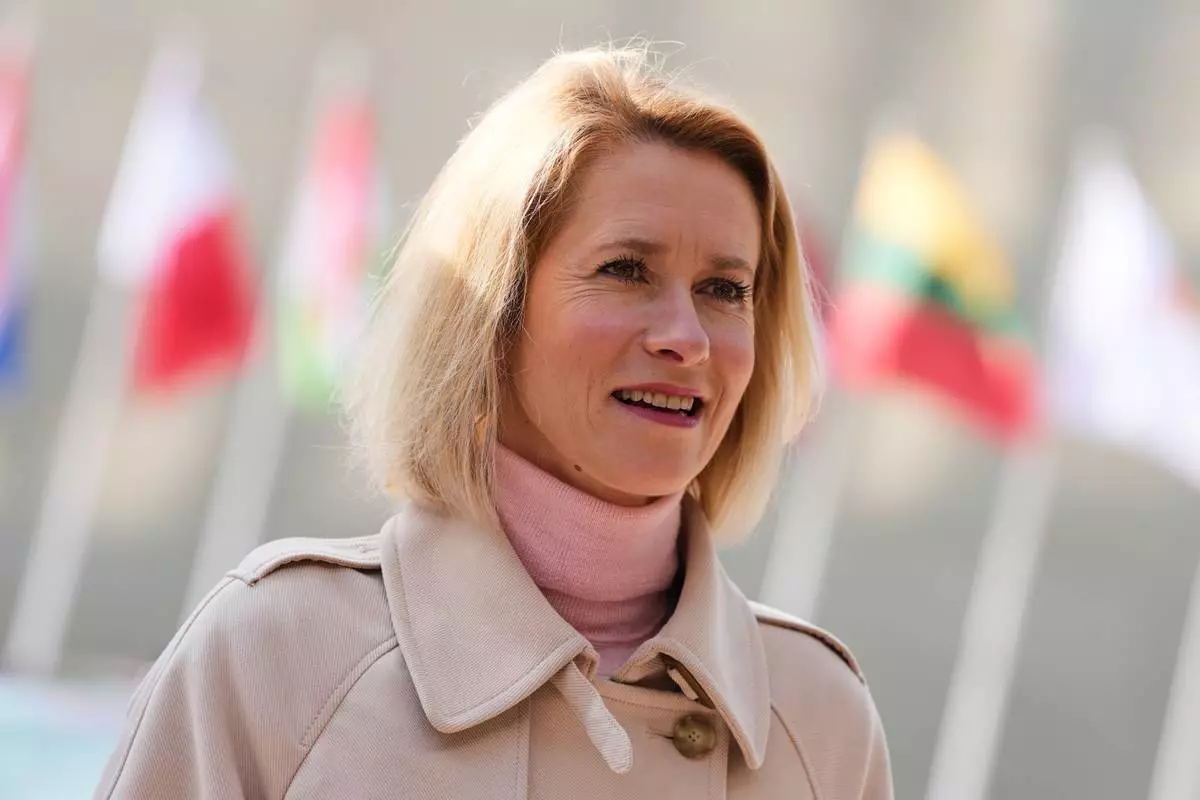
European Union foreign policy chief Kaja Kallas arrives for a meeting of EU foreign ministers at the European Council building in Luxembourg, Tuesday, April 21, 2026. (AP Photo/Virginia Mayo)