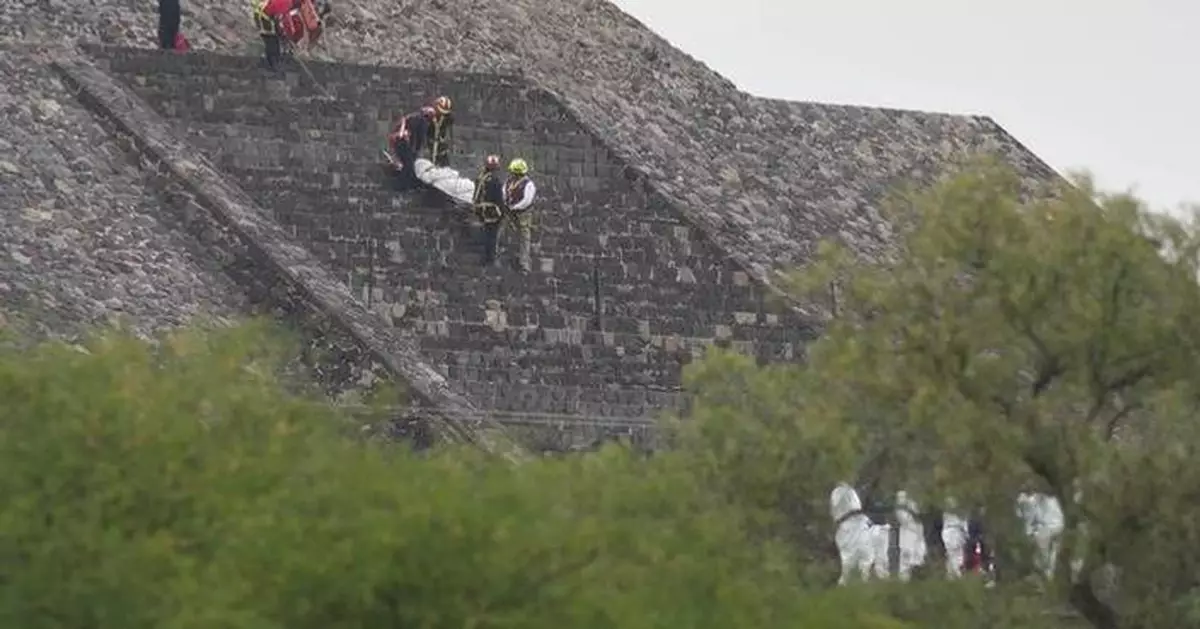
MEXICO CITY (AP) — The gunman who opened fire on tourists at Mexico’s iconic Teotihuacan pyramids carried materials that were apparently related to the 1999 shooting at Columbine High School, authorities said Tuesday, a day after the attack that killed a Canadian woman and left at least 13 people injured.
Although officials did not mention Columbine by name, they referred to several books and handwritten notes that belonged to the gunman and referenced attacks in the United States in April 1999. Monday marked the 27th anniversary of the massacre in Colorado.
Click to Gallery
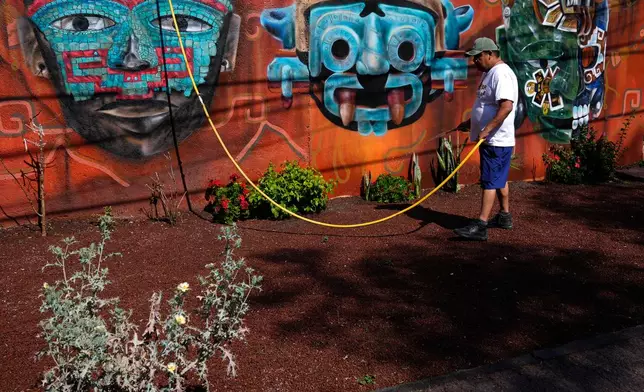
A man waters plants outside a handicrafts shop near the Teotihuacan pyramids, which remained closed a day after a gunman opened fire on tourists at the archaeological site outside Mexico City, Tuesday, April 21, 2026. (AP Photo/Marco Ugarte)
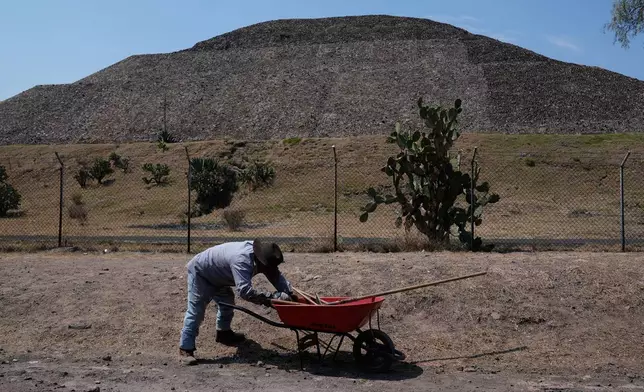
A worker pushes a wheelbarrow at the Teotihuacan pyramids, which remained closed a day after a gunman opened fire on tourists at the archaeological site on the outskirts of Mexico City, Tuesday, April 21, 2026. (AP Photo/Marco Ugarte)
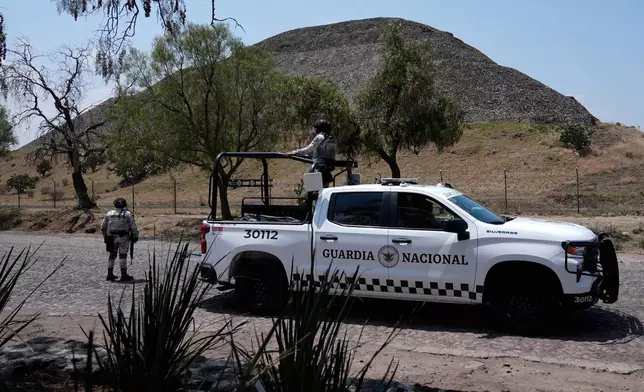
National Guard troops patrol the Teotihuacan pyramids, which remained closed a day after a gunman opened fire on tourists at the archaeological site outside Mexico City, Tuesday, April 21, 2026. (AP Photo/Marco Ugarte)
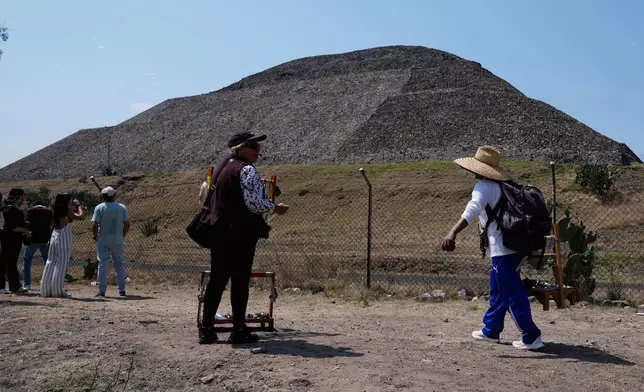
Handicraft vendors and tourists stand outside the Teotihuacan pyramids, which remained closed a day after a gunman opened fire on tourists at the archaeological site on the outskirts of Mexico City, Tuesday, April 21, 2026. (AP Photo/Marco Ugarte)
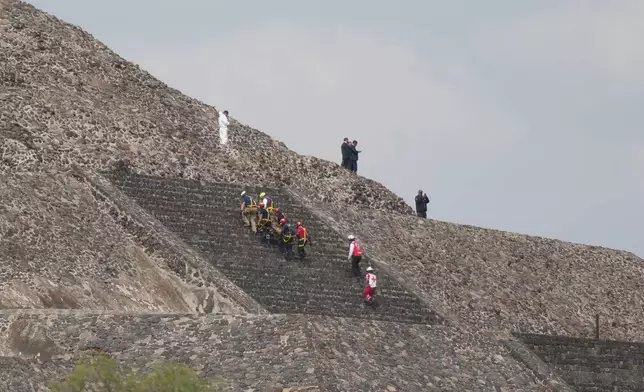
Forensic workers remove a victim's body from a pyramid after authorities said a gunman opened fire in Teotihuacan, Mexico, Monday, April 20, 2026. (AP Photo/Eduardo Verdugo)
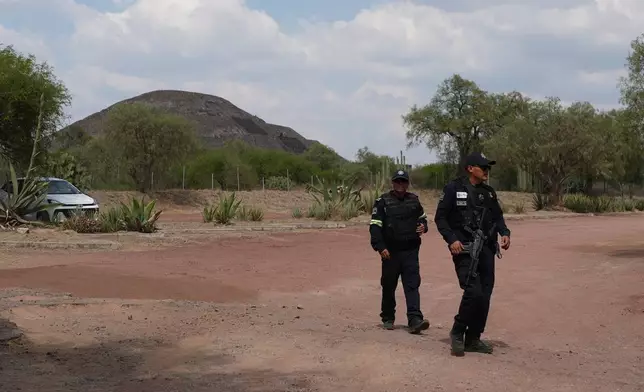
Police patrol the pyramids after authorities said a gunman opened fire in Teotihuacan, Mexico, Monday, April 20, 2026. (AP Photo/Eduardo Verdugo)
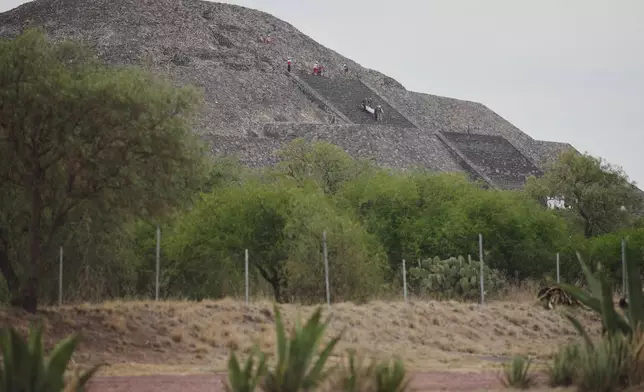
Forensic experts carry the body of a victim down a pyramid after authorities said a gunman opened fire, in Teotihuacan, Mexico, Monday, April 20, 2026. (AP Photo/Eduardo Verdugo)
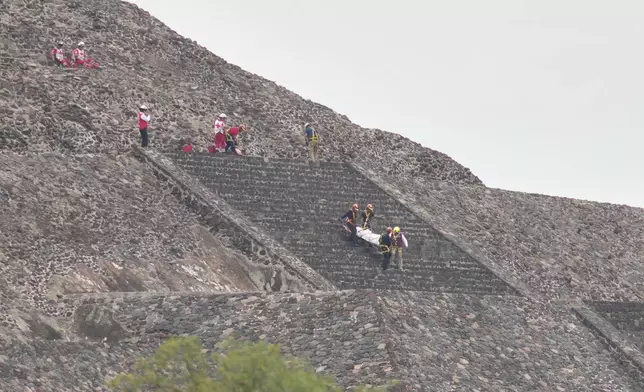
Forensic experts carry the body of a victim down a pyramid after authorities said a gunman opened fire in Teotihuacan, Mexico, Monday, April 20, 2026. (AP Photo/Eduardo Verdugo)
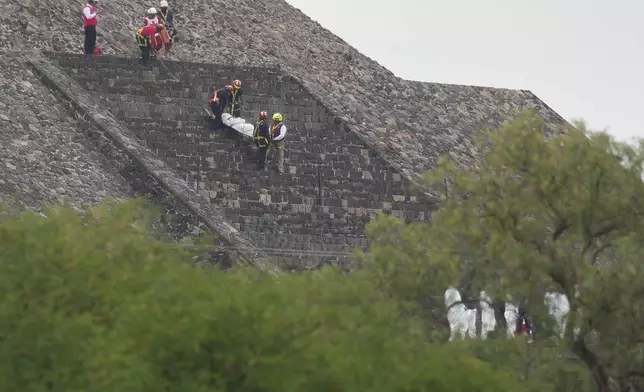
Forensic workers carry the body of a victim down a pyramid after authorities said a gunman opened fire, in Teotihuacan, Mexico, Monday, April 20, 2026. (AP Photo/Eduardo Verdugo)
Seven people were wounded by gunshots at the archaeological site north of the Mexican capital, the local government said. The nature of the other injuries was not disclosed, but some people fell when the shooting started, including some who were climbing on the pyramids.
The assailant, who acted alone, shot and killed himself, authorities said, and security officials found a gun, a knife and ammunition at the scene.
The attack happened less than two months before Mexico co-hosts the 2026 FIFA World Cup soccer tournament. Mexico's security secretary, Omar García Harfuch, said major tourist destinations would see a heightened presence of both ground forces and digital “cyber patrols” to prevent threats.
“Yesterday’s attack highlights the urgent need to strengthen our security protocols,” Mexican President Claudia Sheinbaum said. She also noted the importance of analyzing “external influences” that may provoke such violence within the country.
Taken to hospitals were six people from the U.S., three from Colombia, one from Russia, one from Brazil, one from the Netherlands and one from Canada, the local government said. The youngest person who was hurt was 6; the oldest was 61, Mexican authorities said.
In an update Tuesday morning, Mexico's security cabinet said the injured patients were being treated at a clinic after spending the night in stable condition.
Authorities identified the attacker as 27-year-old Julio César Jasso Ramírez, a native of Guerrero, Mexico, who, they said, had carefully scouted the pyramids before opening fire.
The assailant carried a tactical-style backpack containing an analog cellphone and bus tickets, said José Luis Cervantes Martinez, the attorney general of the state of Mexico, which includes Teotihuacan.
Cervantes Martinez also noted the presence of “literature, images and manuscripts" that related to "violent incidents known to have occurred in the United States in April 1999,” a likely reference to the Columbine attack in which 12 students and a teacher were killed.
Investigators built "a psychopathic profile" of the suspect that was "characterized by a tendency to copy situations that occurred in other places, at other times and involving other figures,’” the prosecutor added.
Greg Magadini, of Boise, Idaho, was with a tour group on top of the pyramid when he heard a loud crack followed by screaming. The gunman was about 40 feet (12 meters) away on the same platform with roughly 60 tourists, he said.
Magadini jumped down a ledge and scrambled for cover while two of his friends stayed on the platform above trying to hide.
Shots seemed to ring out every five seconds, Magadini said, as he and the others jumped down more ledges to reach the ground. Then they ran through a field behind the pyramid, carrying one of his friends who badly injured her ankle on one of the jumps.
Magadini, who came away with scrapes and cuts, said he did not see the shooter, but his friends said the gunman seemed to fire randomly in all directions. “Everyone was a target,” he said.
Later at the hospital, they talked with other tourists, who said the shooter at one point played strange music and taunted them, saying he hated tourists, Magadini said.
The Teotihuacan pyramids, a UNESCO World Heritage Site, are a series of ancient structures on the outskirts of Mexico City. As one of Mexico’s most important tourist destinations, the site drew more than 1.8 million international visitors last year, according to government figures.
The shooting took place shortly after 11:30 a.m. Monday, when dozens of tourists were at the top of the Pyramid of the Moon. The gunman fired upward, according to a tour guide who was at the scene and spoke to The Associated Press on condition of anonymity for safety reasons.
“Some people, because they were scared ... threw themselves face-down on the ground, and the rest of us started to go down,” the guide said, recounting how the shooter began firing as tourists descended the pyramid’s steps.
Another group of visitors lay motionless on the pyramid to avoid being targeted.
Canadian Prime Minister Mark Carney offered condolences to the family and friends of the Canadian tourist who was killed. He said Canadian authorities were working with those in Mexico.
“It’s a terrible circumstance,” Carney said.
Associated Press writers Megan Janetsky in Mexico City and John Seewer in Toledo, Ohio, contributed to this report.
Follow AP’s coverage of Latin America and the Caribbean at https://apnews.com/hub/latin-america
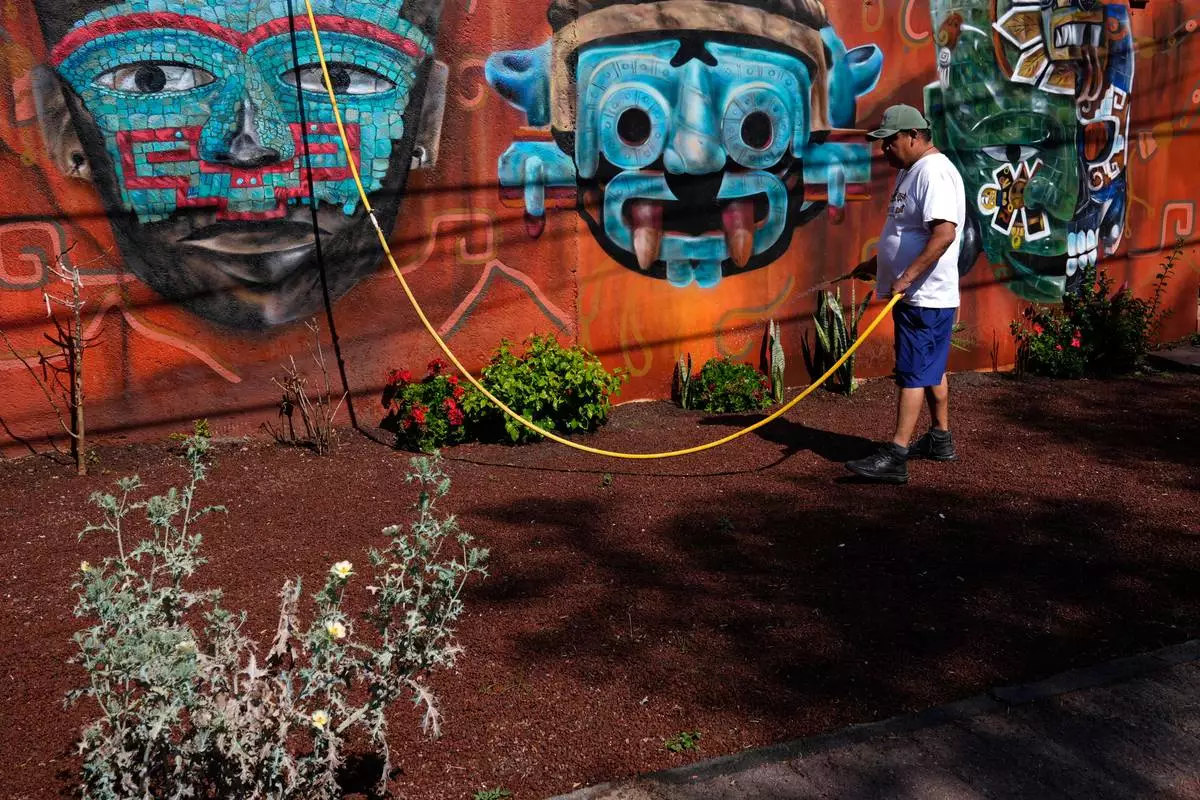
A man waters plants outside a handicrafts shop near the Teotihuacan pyramids, which remained closed a day after a gunman opened fire on tourists at the archaeological site outside Mexico City, Tuesday, April 21, 2026. (AP Photo/Marco Ugarte)
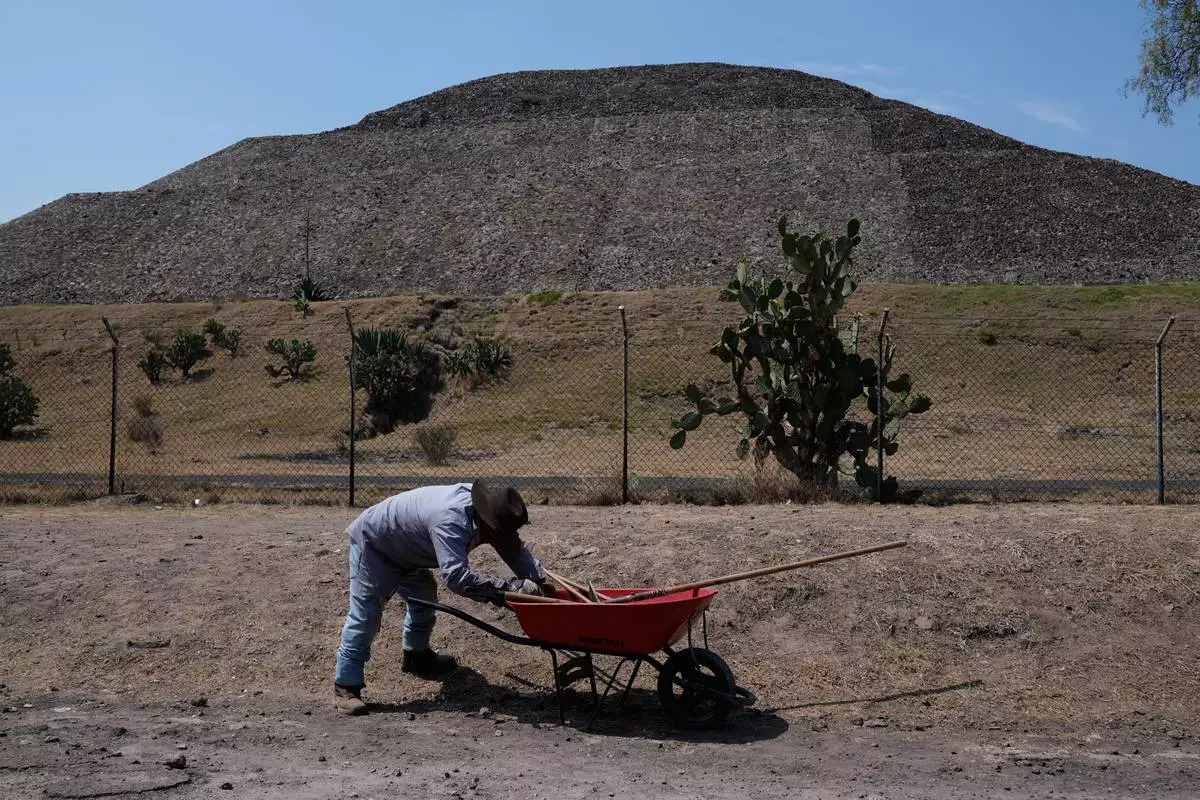
A worker pushes a wheelbarrow at the Teotihuacan pyramids, which remained closed a day after a gunman opened fire on tourists at the archaeological site on the outskirts of Mexico City, Tuesday, April 21, 2026. (AP Photo/Marco Ugarte)
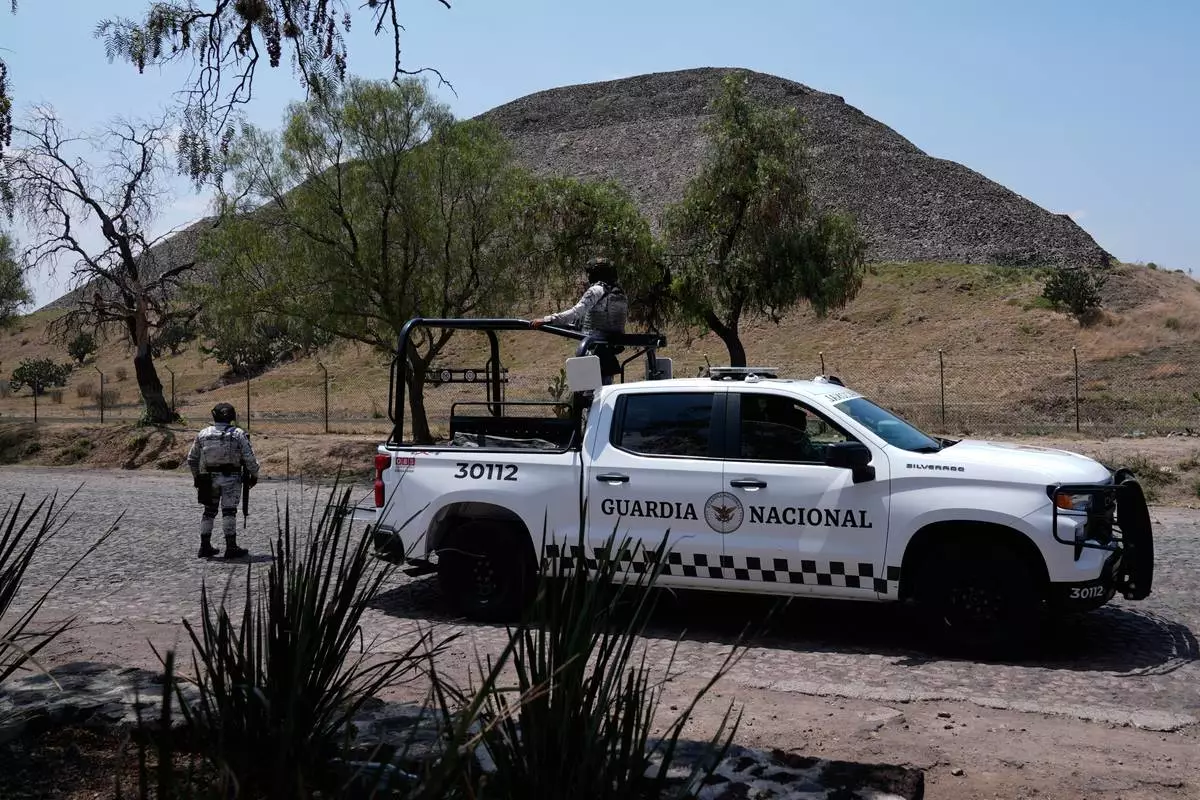
National Guard troops patrol the Teotihuacan pyramids, which remained closed a day after a gunman opened fire on tourists at the archaeological site outside Mexico City, Tuesday, April 21, 2026. (AP Photo/Marco Ugarte)
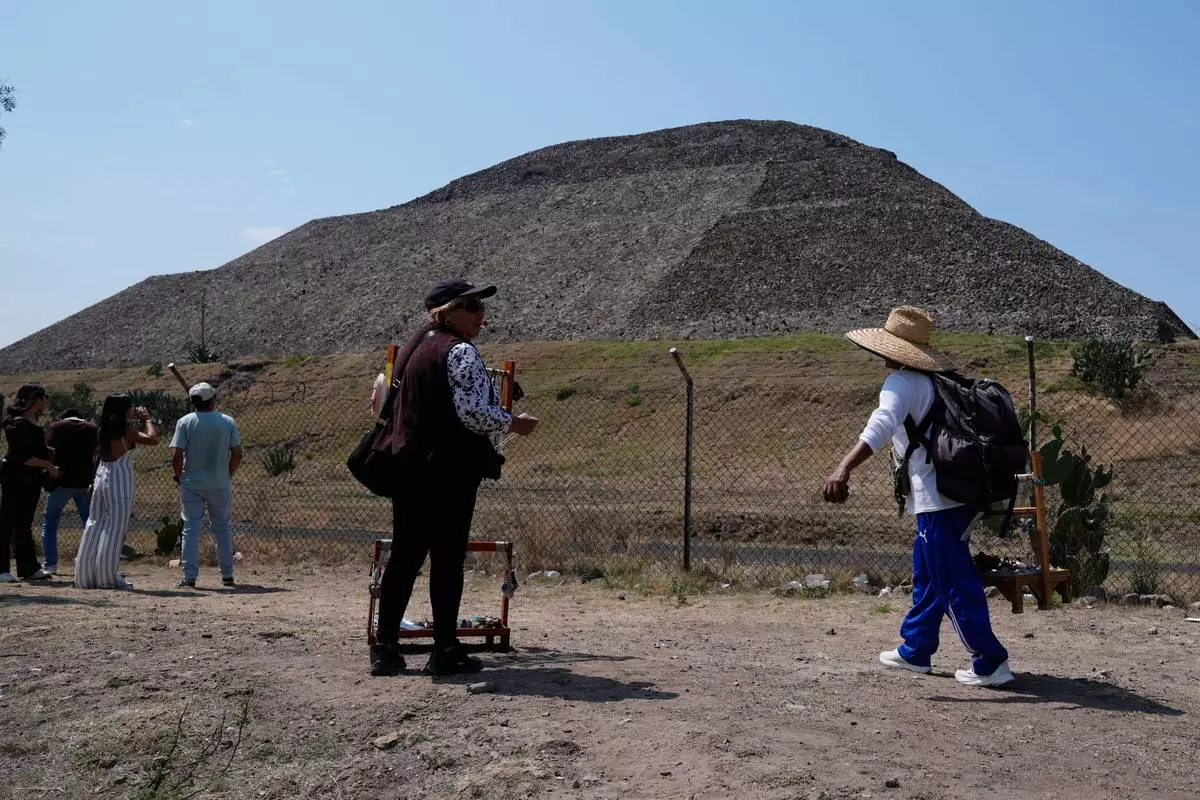
Handicraft vendors and tourists stand outside the Teotihuacan pyramids, which remained closed a day after a gunman opened fire on tourists at the archaeological site on the outskirts of Mexico City, Tuesday, April 21, 2026. (AP Photo/Marco Ugarte)
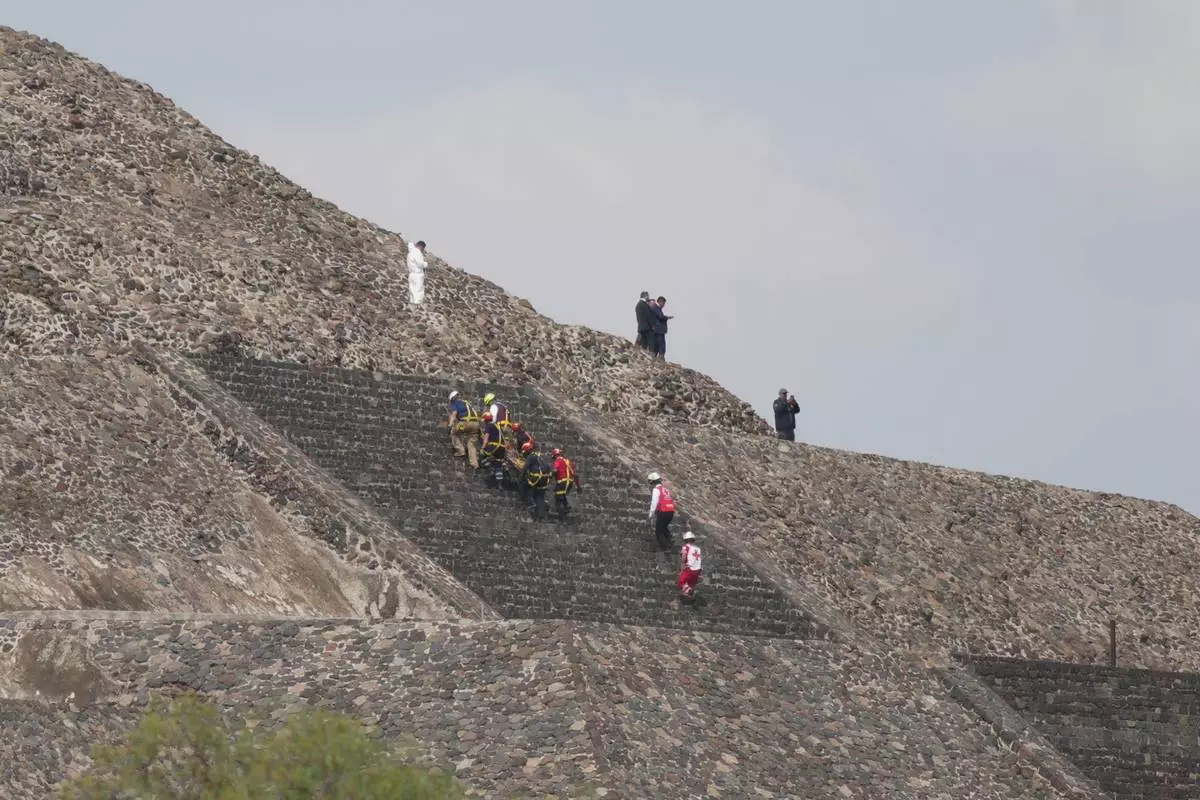
Forensic workers remove a victim's body from a pyramid after authorities said a gunman opened fire in Teotihuacan, Mexico, Monday, April 20, 2026. (AP Photo/Eduardo Verdugo)
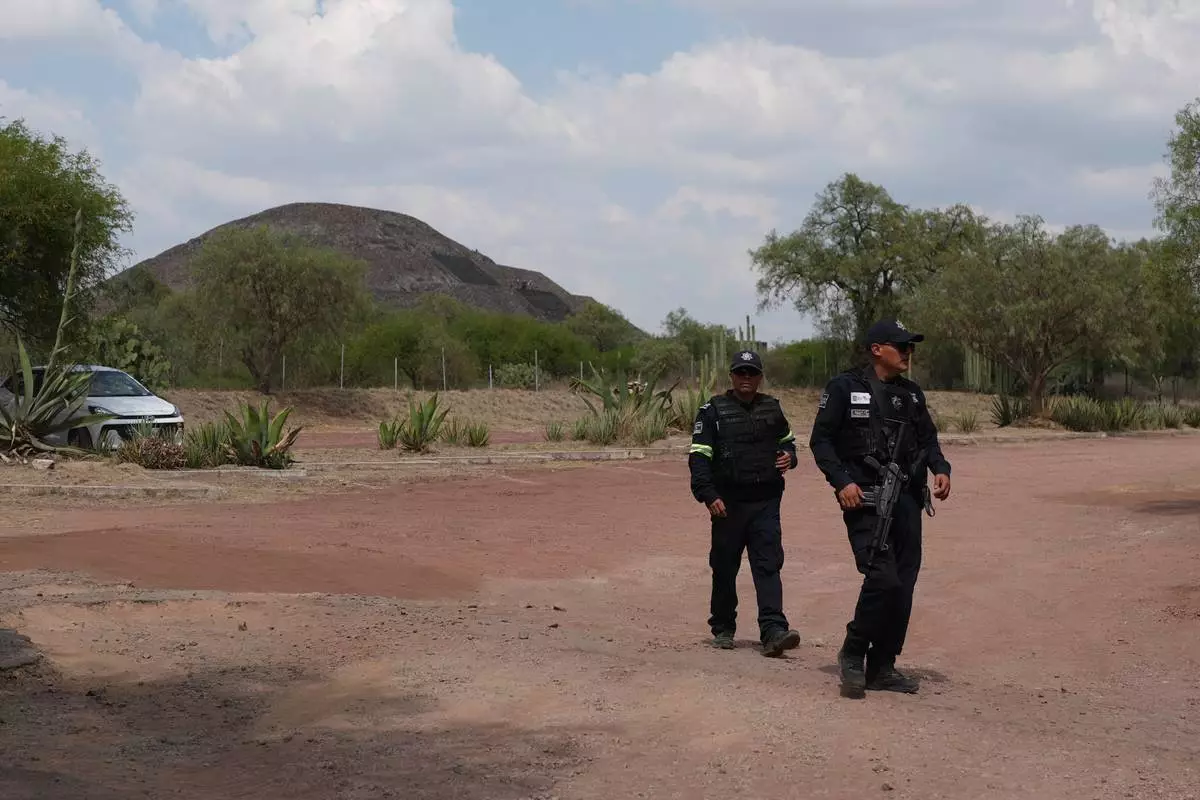
Police patrol the pyramids after authorities said a gunman opened fire in Teotihuacan, Mexico, Monday, April 20, 2026. (AP Photo/Eduardo Verdugo)
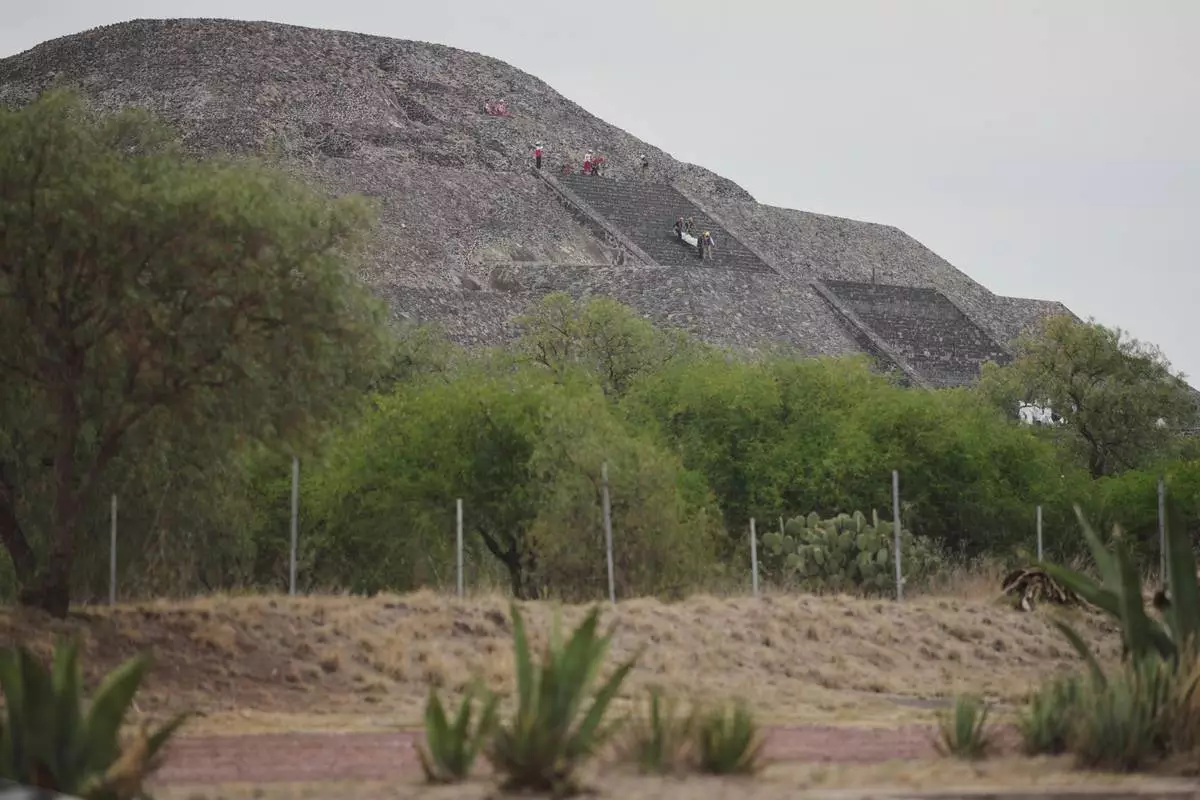
Forensic experts carry the body of a victim down a pyramid after authorities said a gunman opened fire, in Teotihuacan, Mexico, Monday, April 20, 2026. (AP Photo/Eduardo Verdugo)
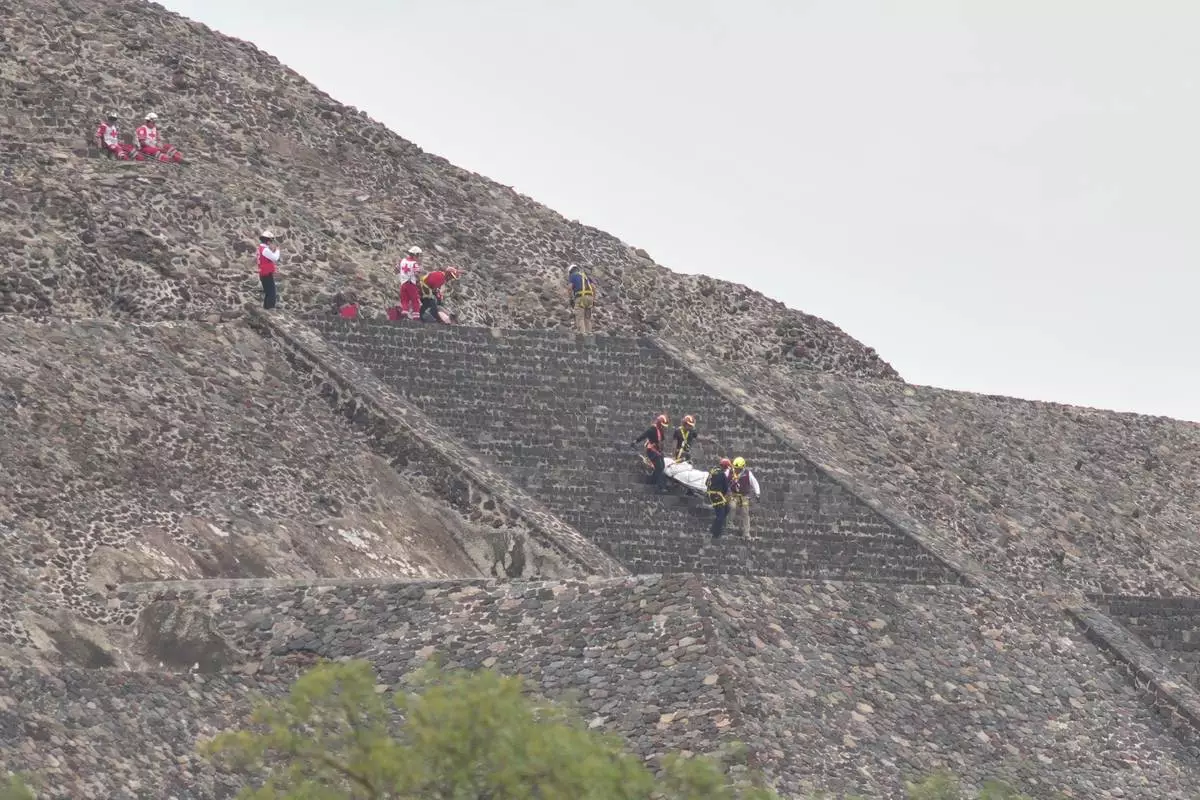
Forensic experts carry the body of a victim down a pyramid after authorities said a gunman opened fire in Teotihuacan, Mexico, Monday, April 20, 2026. (AP Photo/Eduardo Verdugo)
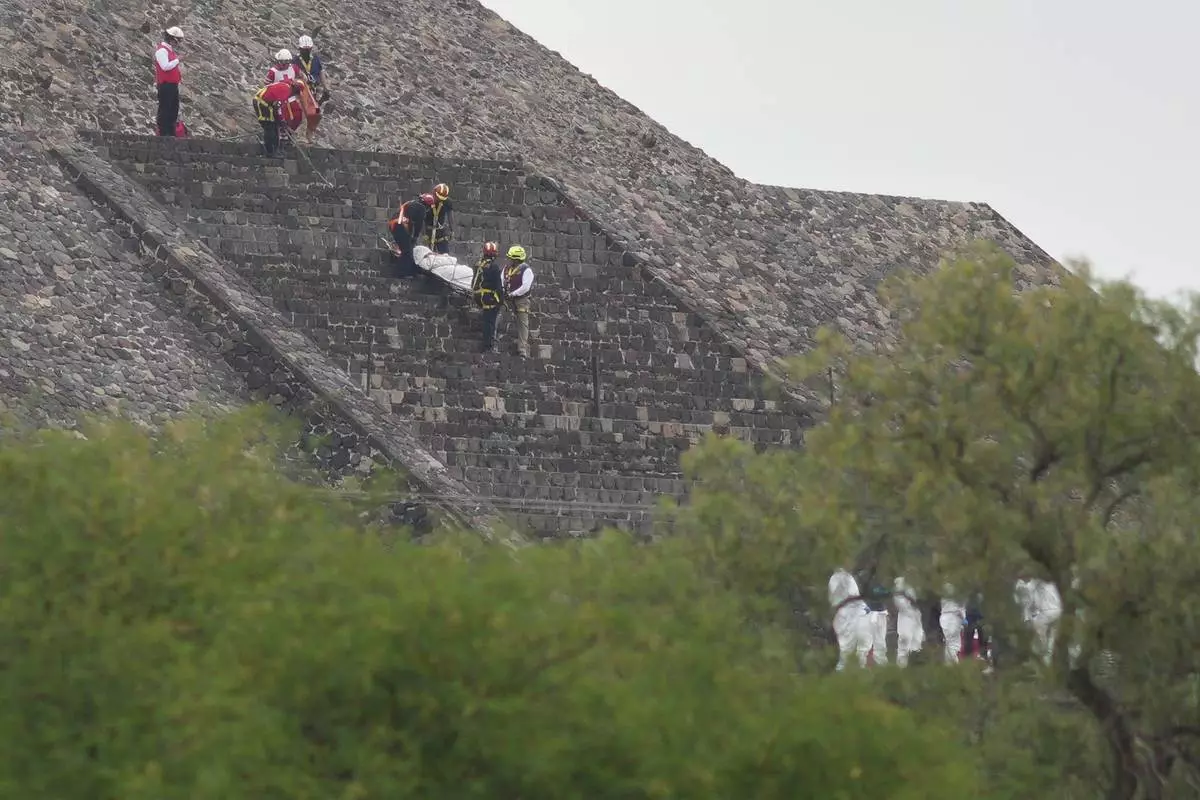
Forensic workers carry the body of a victim down a pyramid after authorities said a gunman opened fire, in Teotihuacan, Mexico, Monday, April 20, 2026. (AP Photo/Eduardo Verdugo)