Skip to Content Facebook Feature Image

What to know about the Southern Poverty Law Center

News

What to know about the Southern Poverty Law Center
News

News

What to know about the Southern Poverty Law Center

2026-04-22 04:55 Last Updated At:05:00

The Southern Poverty Law Center is in the spotlight after the civil rights group announced Tuesday that it is the subject of a U.S. Justice Department criminal investigation because of its past use of paid informants.

The center previously used the informants to infiltrate extremist groups, and now faces possible charges over that practice, its CEO Bryan Fair said. The organization has faced credible threats of violence, Fair said, and the information gathered by informants helped saved lives. That information was also frequently shared with the FBI and other law enforcement agencies, he said.

The Justice Department had no immediate comment.

Here are some things to know about the Southern Poverty Law Center's history and controversies:

Alabama lawyer Morris Dees founded the organization in 1971, starting a civil rights-focused law practice for people who were poor or disenfranchised. At the time, federal laws and U.S. Supreme Court rulings designed to end Jim Crow-era segregation were still fairly new, and widespread resistance to desegregation persisted in the South.

People who faced continued discrimination often struggled to find attorneys who were willing to represent them in court; lawyers were reluctant to bring the first lawsuits to test the civil rights laws.

Dees and another attorney, Joe Levin, took on some of those cases, representing their clients for free. Some of those earliest cases resulted in the desegregation of recreational facilities, the integration of the Alabama state trooper force and other reforms, according to the center's website.

By the 1980s, the civil rights group was monitoring white supremacist organizations in the U.S. The effort, initially called “Klanwatch” and focused on the Ku Klux Klan, was later renamed the “Intelligence Project,” and expanded to include other extremist groups.

Many of the groups did not appreciate being called out, monitored and sometimes sued by the center. Members of the KKK tried to burn down the center's Montgomery offices on July 28, 1983, in retaliation for lawsuits filed against Klan groups.

The fire damaged the building, office equipment, the center's law library and files. More than a year later, three KKK members were arrested in connection with the blaze, and all three plead guilty and were sentenced to prison.

The center previously used paid informants to infiltrate extremist groups and gather information on their activities, often sharing it with local and federal law enforcement, Fair said. They were used to monitor threats of violence, he said, adding that the program was kept quiet to protect the safety of informants.

The nonprofit organization gets most of its funding from donor contributions, and those contributions have added up. Its endowment had just under $732 million in hand as of last October, according to the center.

The center's “Intelligence Project” has grown over the years, and the organization has faced criticism for some of the groups it has added to the tracker. Conservatives have said adding some groups unfairly maligns them because of their viewpoints. The conservative religious organization Focus on the Family was added in part because of its anti LGBTQ+ rhetoric, for instance.

That criticism escalated after the September 2025 assassination of conservative activist Charlie Kirk at a college campus in Utah. That brought renewed attention to the center's inclusion of Kirk's group, Turning Point USA.

The center included a section on Turning Point in a report titled “The Year in Hate and Extremism 2024” that described the group as “A Case Study of the Hard Right in 2024.”

A month after Kirk's death, FBI Director Kash Patel announced that the bureau would sever its relationship with the center, asserting that the organization had been turned into a “partisan smear machine” and criticizing it for its use of a “hate map.”

That move marked a dramatic rethinking of longstanding FBI partnerships with prominent civil rights groups.

Other nonprofit groups also have sent people undercover or used confidential informants to get information. For instance, the nonprofit conservative group Project Veritas, founded in 2010, is best known for conducting hidden camera stings that have embarrassed news outlets, labor organizations and Democratic politicians.

The anti-abortion organization Center for Medical Progress was behind secretly recorded videos of Planned Parenthood executives in California. The videos were then edited in a way to falsely suggest that the executives were selling fetal remains. The videos triggered several investigations, and Planned Parenthood was cleared of any wrongdoing but two of the activists with Center for Medical Progress were ultimately convicted of illegally recording someone without consent.

Fair says the organization began working with informants to monitor threats of violence during a time of increased risk, and the program was kept quiet to protect informants' safety.

“When we began working with informants, we were living in the shadow of the height of the Civil Rights Movement, which had seen bombings at churches, state-sponsored violence against demonstrators, and the murders of activists that went unanswered by the justice system,” Fair said. “There is no question that what we learned from informants saved lives.”
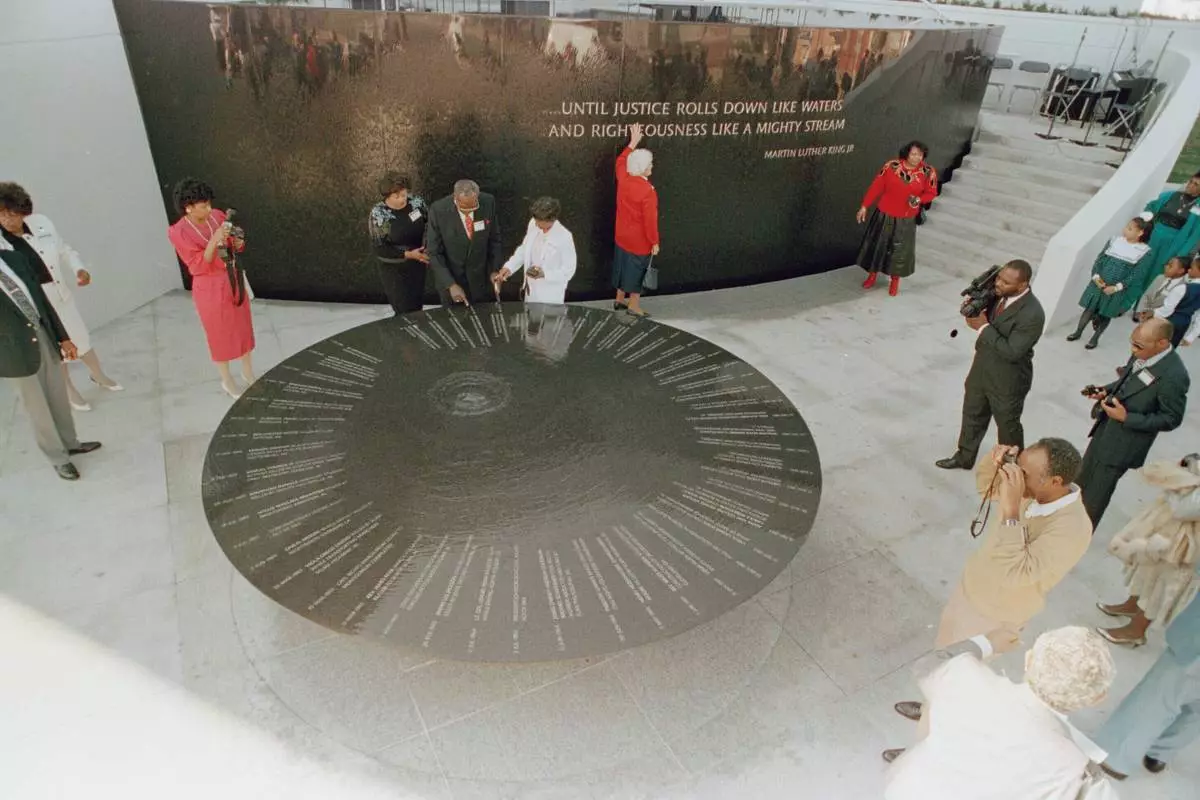
FILE - Family members of fallen civil rights activists view the Civil Rights Memorial at the Southern Poverty Law Center during a private family viewing, Nov. 5, 1989, in Montgomery, Ala. (AP Photo/Dave Martin, File)
FILE - Family members of fallen civil rights activists view the Civil Rights Memorial at the Southern Poverty Law Center during a private family viewing, Nov. 5, 1989, in Montgomery, Ala. (AP Photo/Dave Martin, File)

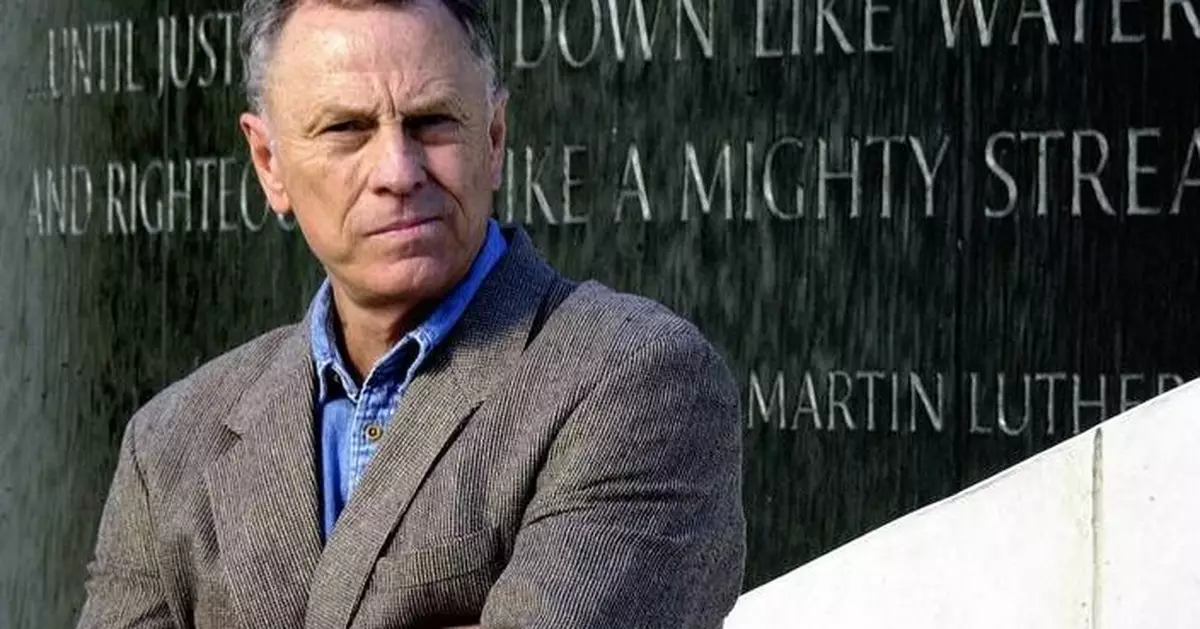
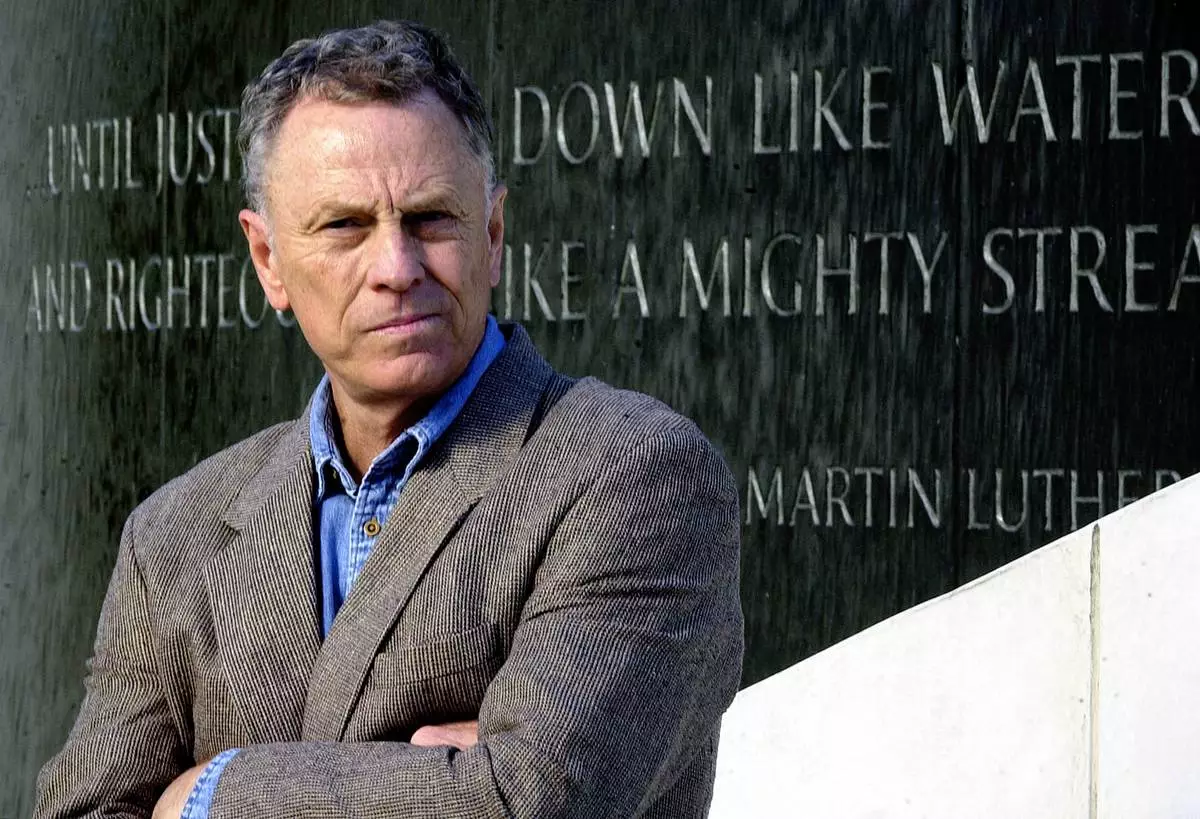
FILE - Southern Poverty Law Center Director Morris Dees attends a news conference Nov. 18, 2002, at the Civil Rights Memorial at the Southern Poverty Law Center in Montgomery, Ala. (AP Photo/Dave Martin, File)
FILE - Southern Poverty Law Center Director Morris Dees attends a news conference Nov. 18, 2002, at the Civil Rights Memorial at the Southern Poverty Law Center in Montgomery, Ala. (AP Photo/Dave Martin, File)
JERUSALEM (AP) — President Donald Trump has announced an extension of the ceasefire in the Iran war, giving mediators additional time to arrange a new round of face-to-face talks between the U.S. and Iran.

Trump said he made the move, just hours before the current ceasefire was to expire, at Pakistan's request as he waits for a “unified proposal” from Iran.

The announcement averted a resumption of fighting for the time being. But gaps between the sides remain wide, a planned trip to Pakistan by Vice President JD Vance to lead the American negotiating team remains on hold and a U.S. blockade of Iran remains in place.

Here’s what to know about where the ceasefire stands, the possible talks in Pakistan and other issues surrounding the war:

Two regional officials told The Associated Press on Tuesday that the United States and Iran had signaled they will hold a new round of talks. Pakistan-led mediators received confirmation that top negotiators, Vance and Iran’s parliament speaker Mohammad Bagher Qalibaf, were expected to lead their teams.

But late Tuesday, Iran's Foreign Ministry spokesman said there was no “final decision” on whether to attend. The spokesman, Esmail Baghaei, told state TV that the lack of a decision was because of “contradictory messages" and “unacceptable actions” from the Americans, in particular the U.S. naval blockade of Iran.

Vance, meanwhile, called off a trip to Pakistan, as Pakistani leaders raced to try to salvage the talks. With a 0000 GMT deadline looming, Trump announced that the ceasefire would be extended indefinitely.

Trump said he had taken the step at Pakistan's request, and blamed what he described as Iran's “seriously fractured” leadership for indecision. He said Pakistan had asked him to wait until Iran's leaders “can come up with a unified proposal.” Still, he said the U.S. blockade would continue.

Even if Pakistan can arrange a meeting, serious challenges remain on the future of the Strait of Hormuz, Iran's nuclear program and the blockade. Iran targeted ships in the strait over the weekend. The U.S. also attacked and boarded one Iranian vessel that tried to outrun the American naval blockade in the strait — signaling that the situation remains volatile.

The U.S. and Israel launched the war on Feb. 28, opening a six-week war that has sent oil prices rising and shaken the global economy.

The current truce between Iran, Israel and the United States began April 8 after multiple deadlines posed by Trump that threatened Iran’s very “civilization” at one point. Last Friday, a ceasefire between Israel and the Iran-backed Hezbollah militant group in Lebanon also took effect. Both ceasefires have broadly held.

An earlier round of negotiations between Iran and the U.S. was held in Pakistan from April 11 into the early morning the following day. Vance took part in the highest-level talks between America and Iran since the 1979 Islamic Revolution, which ended without an agreement.

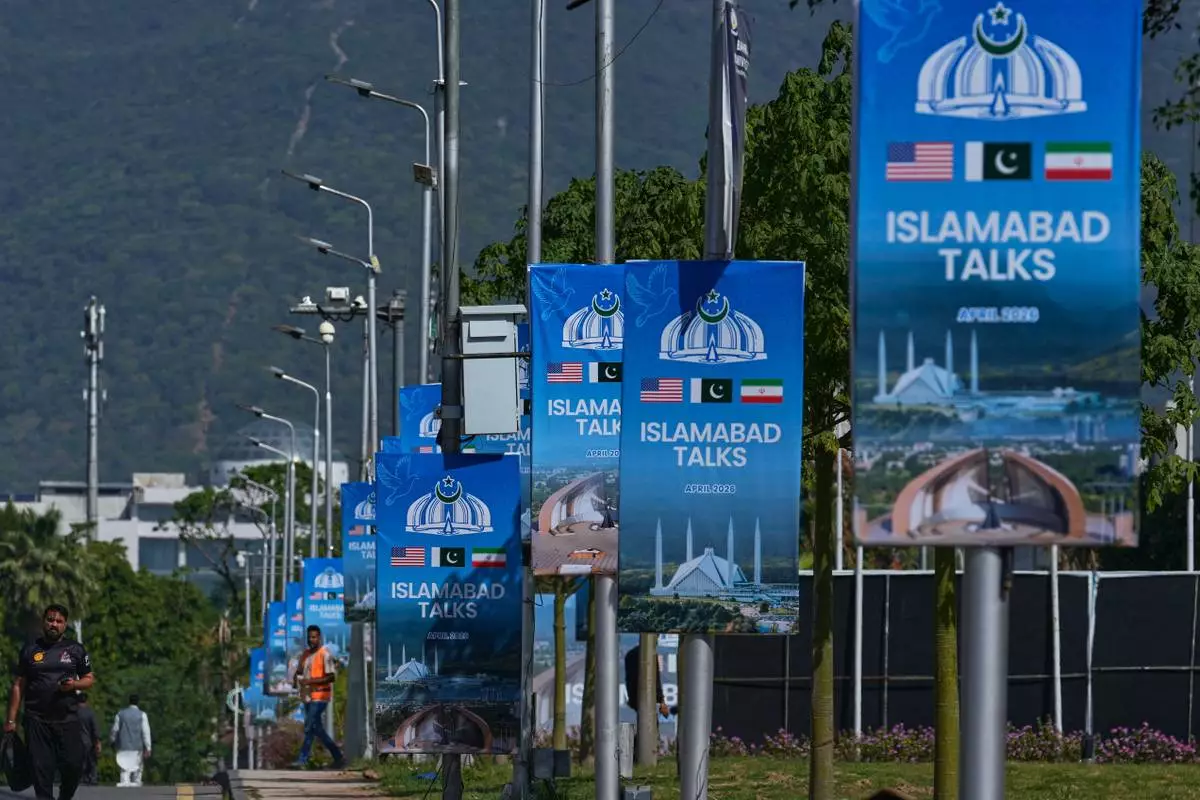
Since this weekend, authorities in Islamabad have made preparations similar to those that accompanied the first talks, suggesting another round loomed.

The Strait of Hormuz, the narrow mouth of the Persian Gulf through which 20% of all natural gas and oil passes, remains effectively closed over Iranian attacks in the waterway. That included some attacks Saturday. There's also a fear that Iran mined a portion of the strait used by transiting ships during peacetime. Since the war, Iran reportedly has been charging as much as $2 million a vessel to allow them to pass. Opening the strait remains a key focus of negotiations and Tehran's strongest leverage against Washington, particularly as countries around the world have begun rationing energy and warning of shortages of jet fuel.

The United States, meanwhile, has begun blocking ships from Iranian ports. The U.S. Navy attacked an Iranian container ship that tried to run through the U.S. blockade this weekend, with Marines rappelling onto it from helicopters. Iran has condemned the incident as “piracy” and a violation of international law.

All of Iran’s highly enriched uranium remains in the country, likely entombed at enrichment sites bombed by the U.S. during a 12-day war last June. Iran hasn’t enriched since then but maintains it has the right to do so for peaceful purposes and denies seeking nuclear weapons. Trump, along with Israel, has called for Iran to completely dismantle its nuclear program and give up its stockpile. Iran rejected that in its 10-point proposal for ending the war.

__ AP reporters Jon Gambrell in Dubai, United Arab Emirates, Aamer Madhani in Washington, Samy Magdy in Cairo and Munir Ahmed in Islamabad contributed reporting.

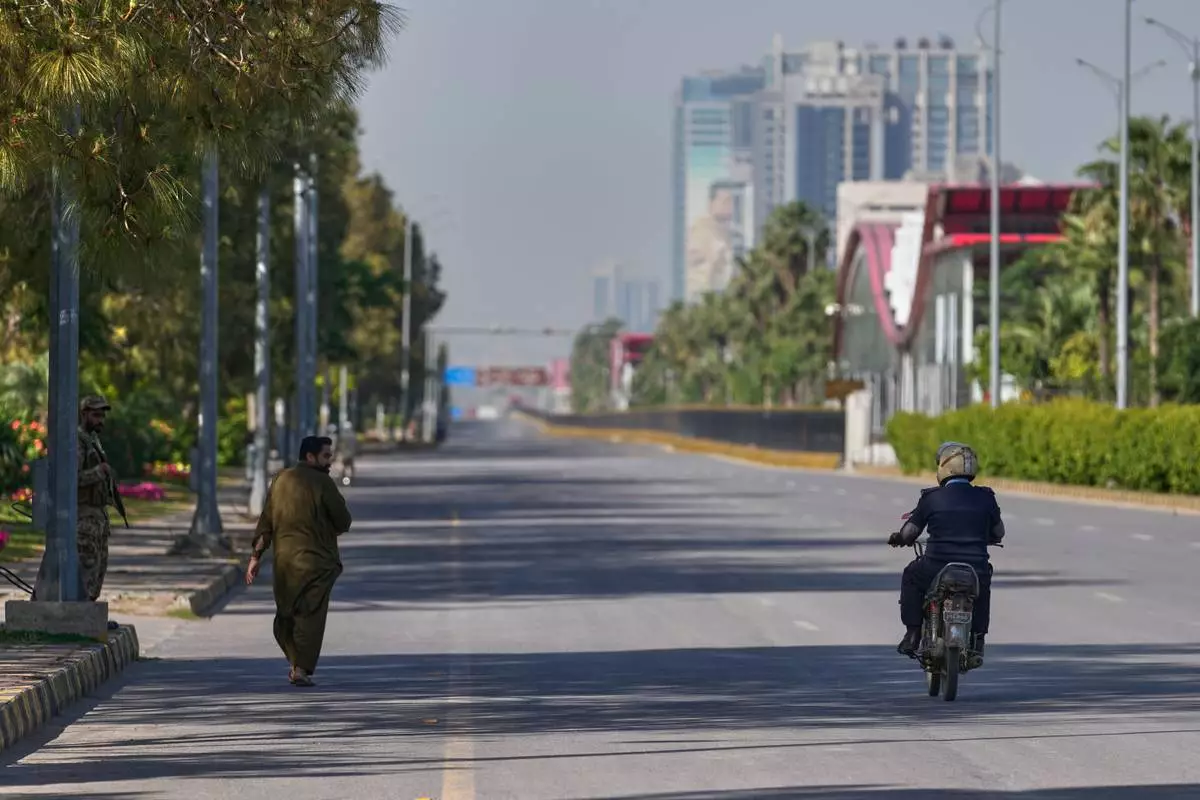
An army soldier, left, walks as police officer drives motorcycle on an empty road ahead of second round of negotiations between the U.S. and Iran, in Islamabad, Pakistan, Monday, April 20, 2026. (AP Photo/Anjum Naveed)

An army soldier, left, walks as police officer drives motorcycle on an empty road ahead of second round of negotiations between the U.S. and Iran, in Islamabad, Pakistan, Monday, April 20, 2026. (AP Photo/Anjum Naveed)

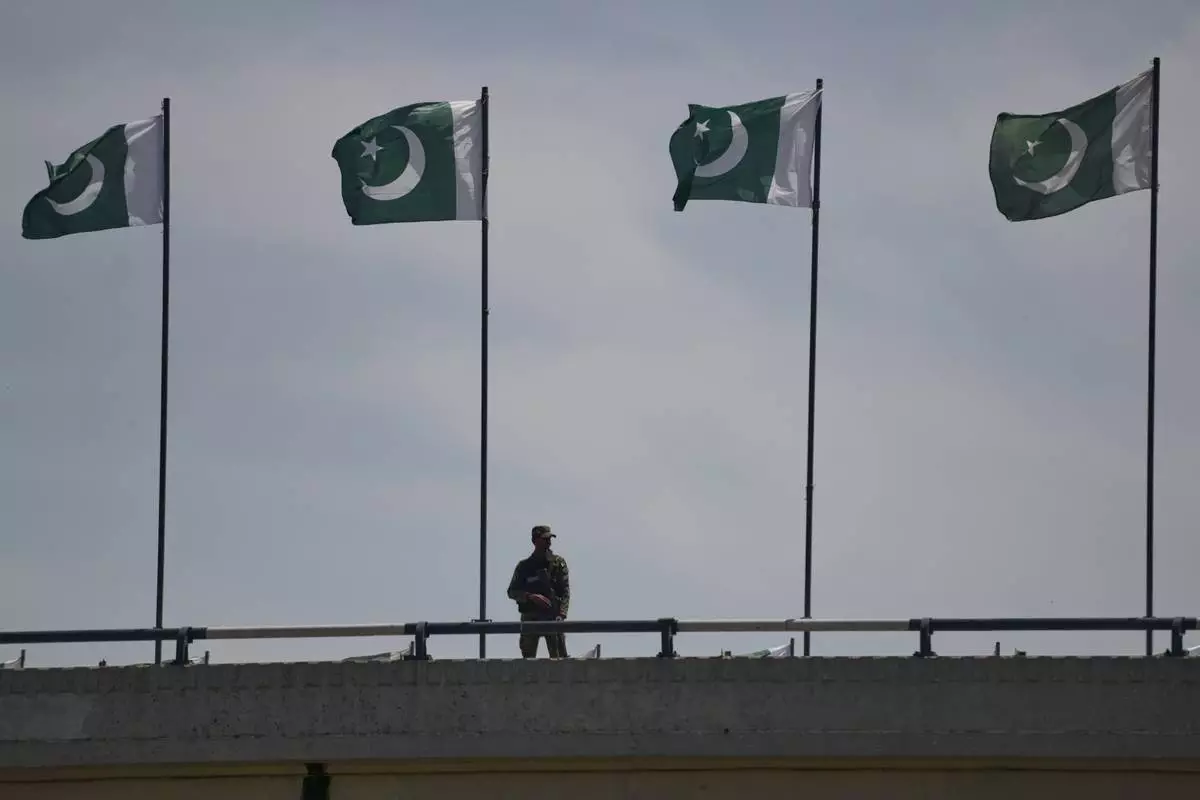
A soldier stands guard on a bridge ahead of second round of negotiations between the U.S. and Iran, in Islamabad, Pakistan, Monday, April 20, 2026. (AP Photo/M.A. Sheikh)

A soldier stands guard on a bridge ahead of second round of negotiations between the U.S. and Iran, in Islamabad, Pakistan, Monday, April 20, 2026. (AP Photo/M.A. Sheikh)

Workers walk past billboards near the Serena Hotel ahead of the second round of negotiations between the U.S. and Iran, in Islamabad, Pakistan, Monday, April 20, 2026. (AP Photo/Anjum Naveed)

Workers walk past billboards near the Serena Hotel ahead of the second round of negotiations between the U.S. and Iran, in Islamabad, Pakistan, Monday, April 20, 2026. (AP Photo/Anjum Naveed)

Recommended Articles