WASHINGTON (AP) — A federal judge in Massachusetts on Tuesday struck down several Trump administration actions slowing down development of clean energy, including a requirement that all solar and wind energy projects on federal lands and waters be personally approved by Interior Secretary Doug Burgum.
Chief Judge Denise J. Casper of the U.S. District Court for the District of Massachusetts ruled that a coalition of plaintiffs representing wind and solar developers were likely to succeed on the merits of their claims that the administration's actions violate federal statute and will cause irreparable harm if the court did not intervene.
She issued a preliminary injunction to stop the administration from implementing the policies, which clean energy advocates said would hamstring projects that need to get underway quickly to qualify for expiring federal tax credits.
The Interior Department in July said that all solar and wind energy projects on federal lands and waters must be personally approved by Burgum, a layer of enhanced oversight that officials said was needed to end what they said was preferential treatment for these technologies under the Biden administration. Burgum's order authorized him to conduct “elevated review” of renewable projects, from proposed leases to rights of way, construction and operational plans, grants and biological opinions.
A coalition of regional wind and solar developers sued Burgum and other federal officials in December, saying his actions had the “goal and effect of destroying solar and wind energy” proposals in the United States. They accused Burgum of favoring fossil fuels such as oil and natural gas and said he had intentionally changed longstanding agency processes and legal determinations to delay and prevent the permitting and construction of wind and solar facilities. The lawsuit challenged six final agency actions that it says place wind and solar technologies into “second-class status.”
An Interior spokesperson said Tuesday the department does not comment on litigation, but added: “America sets the global standard for energy production. We do it cleaner, safer, and more reliably than anywhere in the world.”
In his second term, President Donald Trump has focused U.S. energy production on fossil fuels, which he says will lower costs for families, increase reliability and help the U.S. maintain global leadership in artificial intelligence. Critics say that change continues U.S. dependence on more polluting energy sources and sets the country apart from a world transitioning toward cleaner energy.
A law approved last year by the Republican-controlled Congress phases out tax credits for wind, solar and other renewable energy while enhancing federal support for coal, oil and natural gas. Three days after signing the law, Trump issued an executive order that further restricts subsidies for what he called “expensive and unreliable energy policies from the Green New Scam.”
The plaintiffs said in a joint statement Tuesday that the ruling is the first of many steps to bring more affordable energy options to people across the country.
“Clean energy is fast, affordable and here to stay,” the statement said. “We look forward to getting back to work and restarting the impacted wind and solar projects nationwide.”
The plaintiffs are: the Alliance for Clean Energy New York, MAREC Action, Southern Renewable Energy Association, Clean Grid Alliance, Interwest Energy Alliance, Renewable Northwest, Carolinas Clean Energy Business Association, RENEW Northeast and Green Energy Consumers Alliance.
Kit Kennedy, managing director for power at the Natural Resources Defense Council, said the Trump administration keeps trying new ways to block the clean energy projects needed to power the grid, and the courts keep striking them down.
“The administration should take the hint and stop these illegal attacks on projects that will help meet surging electricity demand and bring down costs for consumers,” Kennedy said in a statement.
McDermott reported from Providence, R.I.
The Associated Press’ climate and environmental coverage receives financial support from multiple private foundations. AP is solely responsible for all content. Find AP’s standards for working with philanthropies, a list of supporters and funded coverage areas at AP.org.
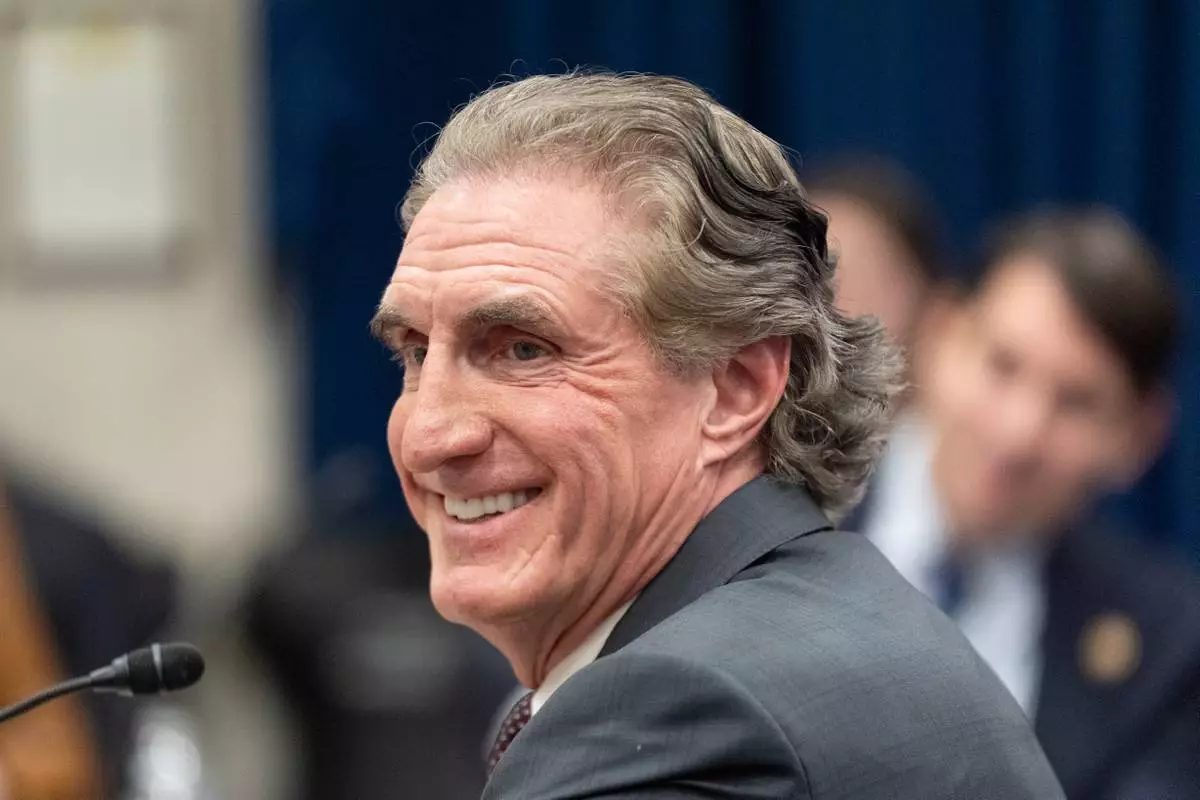
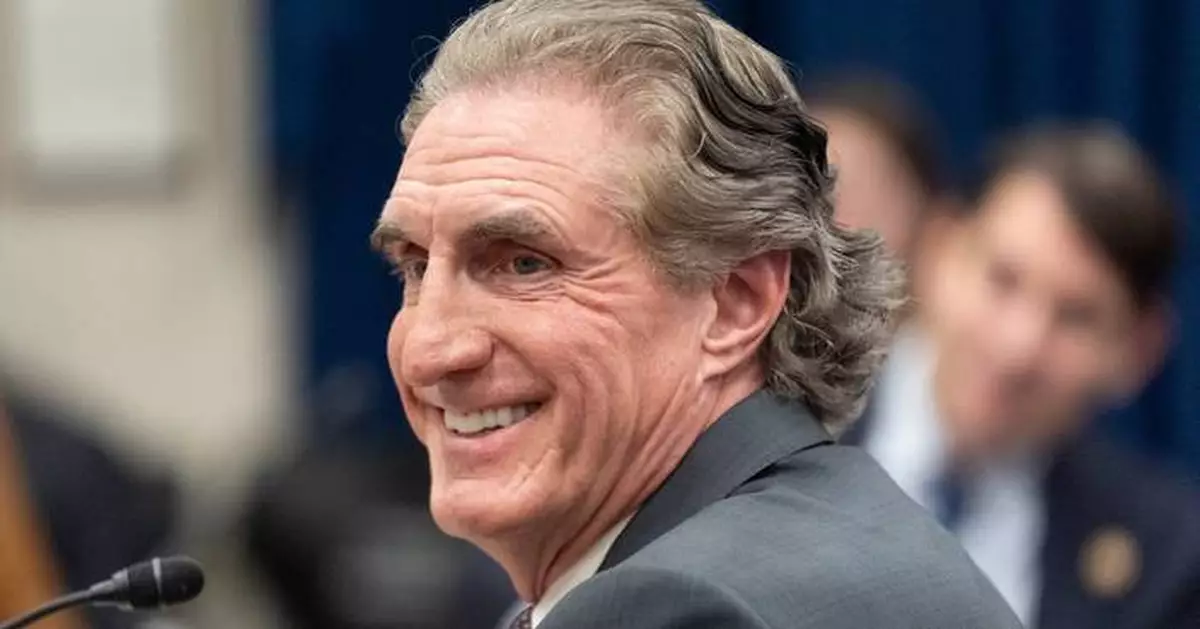
Department of Interior Secretary Doug Burgum, testifies before the House Appropriations Committee's budget hearing on Capitol Hill, Monday, April 20, 2026, in Washington. (AP Photo/Manuel Balce Ceneta)
NEW YORK (AP) — The Washington Wizards selected forward AJ Dybantsa, who led the nation in scoring in his one season at BYU, with the No. 1 pick in the NBA draft on Tuesday night.
Dybantsa averaged 25.5 points, highlighted by a 43-point effort that broke BYU's freshman scoring record. He was the first of eight straight college freshman taken to begin the draft.
At 6-foot-9 and 217 pounds, Dybantsa has drawn comparisons to Kevin Durant, who happens to be his favorite player. Durant grew up in the Washington area, and Wizards fans can only hope Dybantsa can live up to the comparisons.
They certainly hope he will be better than center Kwame Brown, the pick Washington made in 2001, the first time it had the No. 1 selection after the NBA changed draft formats to eliminate territorial picks in 1966. The Wizards took John Wall in 2010 the other time, and he did turn into an All-Star.
He appeared to say a quick prayer after his name was announced, then went on stage to greet Commissioner Adam Silver and slipped on a black Wizards hat that matched nicely with his black suit.
Dybantsa beat out fellow freshman Darryn Peterson of Kansas, who was taken at the No. 2 pick by Utah. While some thought Peterson had the most talent in the class, the guard missed 11 games during the season because of injuries and illness, potentially creating some questions that Dybantsa didn't have.
Cameron Boozer, the college player of the year in his one season at Duke, was taken at No. 3 by Memphis. Caleb Wilson, another freshman forward from rival North Carolina, went to Chicago with the next pick.
Those players were the expected top four throughout the pre-draft process, though there was certainly a case for Peterson to go first with his promise. Or for Boozer, with his body of work after he put up 22.5 points, 10.2 rebounds and 4.1 assists per game for Duke, where his father, Carlos, also played before becoming a two-time NBA All-Star.
The uncertainty was expected to begin at No. 5. The Los Angeles Clippers acquired the rights to it after a trade with the Indiana Pacers and used it on Illinois guard Keaton Wagler. The host Brooklyn Nets then went with Louisville guard Mikel Brown Jr.
Darius Acuff Jr. to Sacramento at No. 7 and Kingston Flemings to Atlanta at No. 8 continued the run of scoring guards before Dallas went back to the bigs — and created a reunion in the process — by taking Morez Johnson Jr. from Michigan. Johnson was congratulated by national champion Michigan teammates Yaxel Lendeborg and Aday Mara, who were also in the green room, and then hugged his old and new coach. Dusty May left the Wolverines to coach the Mavericks on the eve of the draft.
Lendeborg and Mara didn't have to wait long for their turn. The Golden State Warriors took Lendenborg with the No. 11 pick and the Oklahoma City Thunder followed by going for the 7-3 Mara.
The draft is always a celebration, when all teams have hope, but the cheers seemed even more frequent than usual. They began when Silver opened his remarks by hailing the NBA champion Knicks and NBA Finals MVP Jalen Brunson, with a number of fans in Barclays Center wearing Knicks jerseys. Nets fans, who endured a miserable season watching the home team in the arena, applauded the selection of Brown, who had a 45-point performance to highlight his season that was cut short by a back injury.
The Milwaukee Bucks, who are losing two-time NBA MVP Giannis Antetokounmpo, picked up two rookies. They took Arizona guard Brayden Burries with the No. 10 pick and are acquiring the rights to Tennessee forward Nate Ament, who was taken at No. 13 by Miami but is part of the package the Heat are sending to Milwaukee in the trade for Antetokounmpo that was agreed to Monday.
AP NBA: https://apnews.com/nba
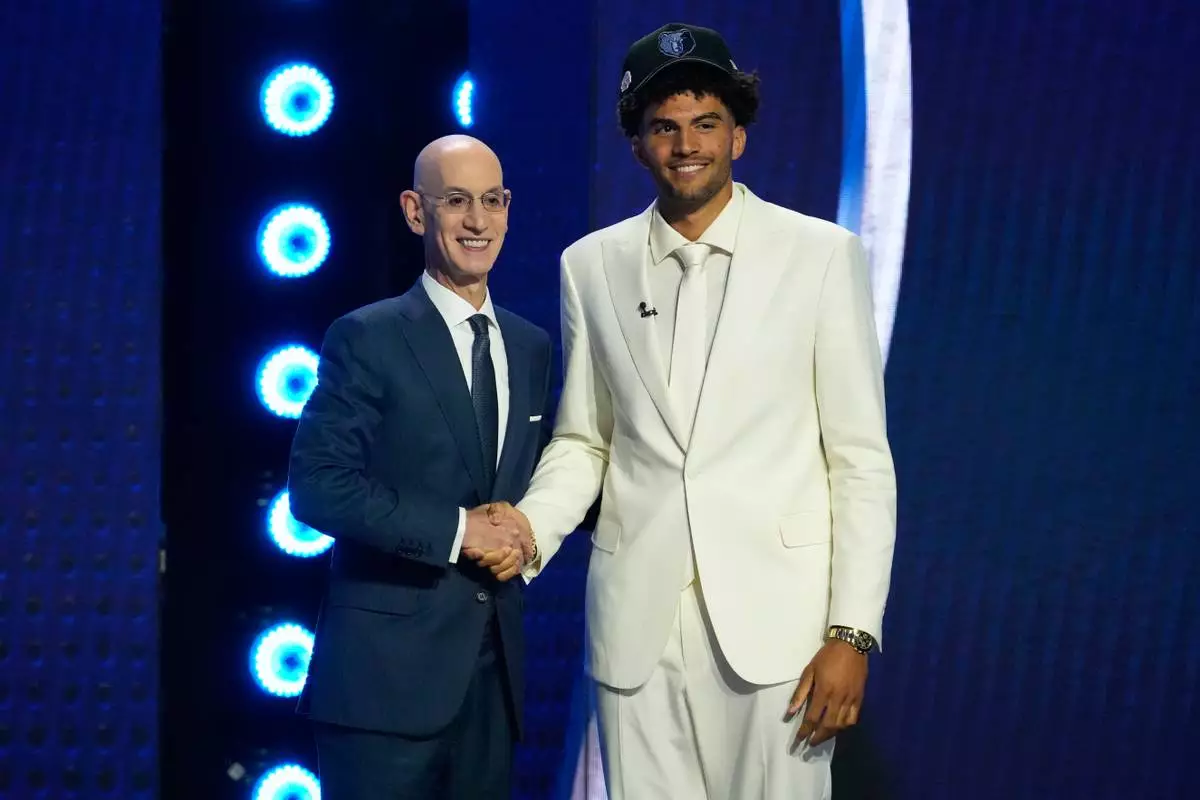
Cameron Boozer, right, poses for a photo with Adam Silver, left, NBA Commissioner, after being selected by the Memphis Grizzlies in the first round of the NBA basketball draft, Tuesday, June 23, 2026, in New York. (AP Photo/Yuki Iwamura)
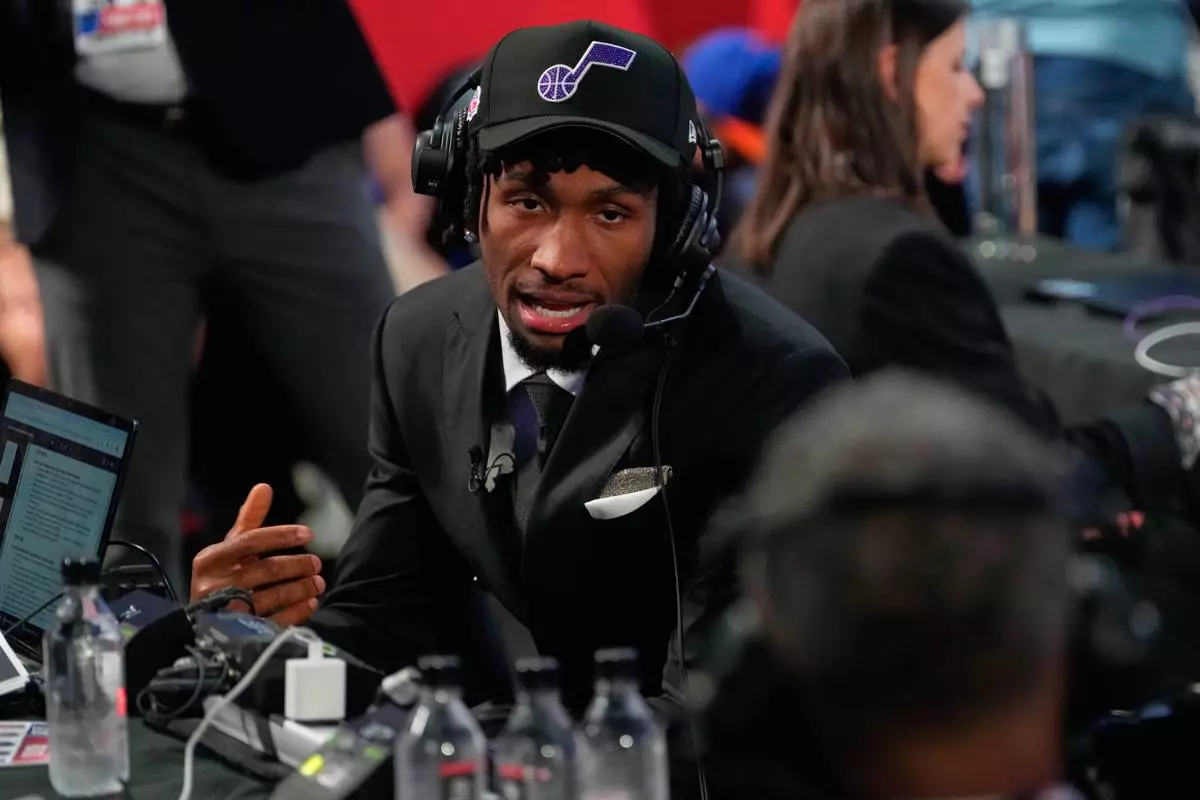
Darryn Peterson is interviewed after being chosen by the Utah Jazz in the first round of the NBA basketball draft, Tuesday, June 23, 2026, in New York. (AP Photo/Yuki Iwamura)
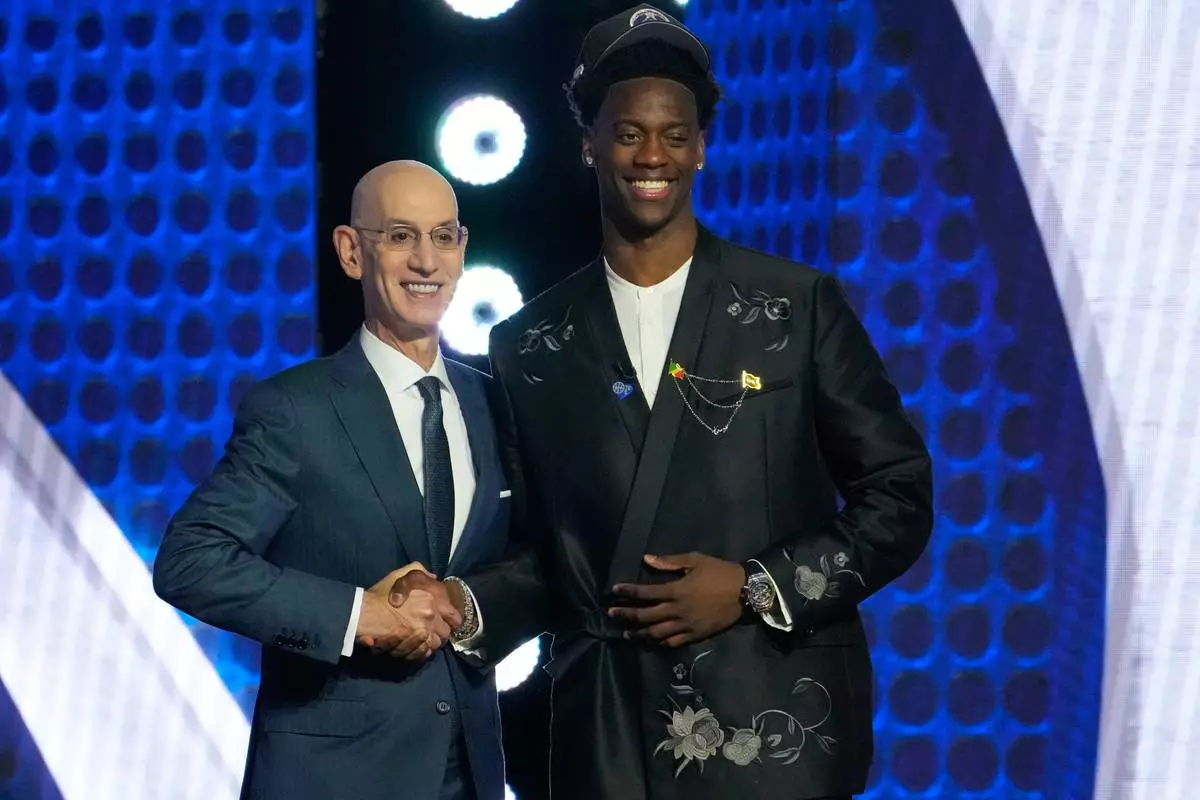
AJ Dybantsa, right, poses for a photo with NBA commissioner Adam Silver, left, after being selected by the Washington Wizards as the first pick in the first round of the NBA basketball draft, Tuesday, June 23, 2026, in New York. (AP Photo/Yuki Iwamura)
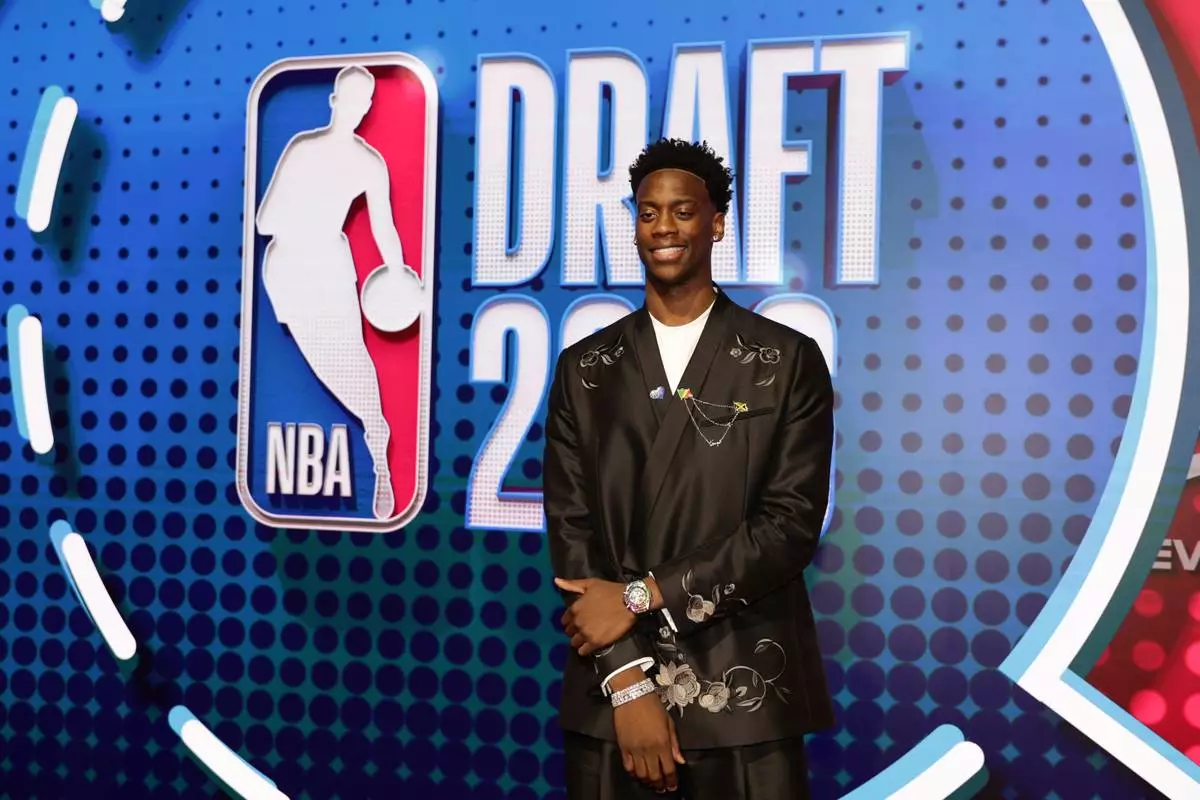
AJ Dybantsa arrives for the first round of the NBA basketball draft Tuesday, June 23, 2026, in New York. (AP Photo/Adam Hunger)
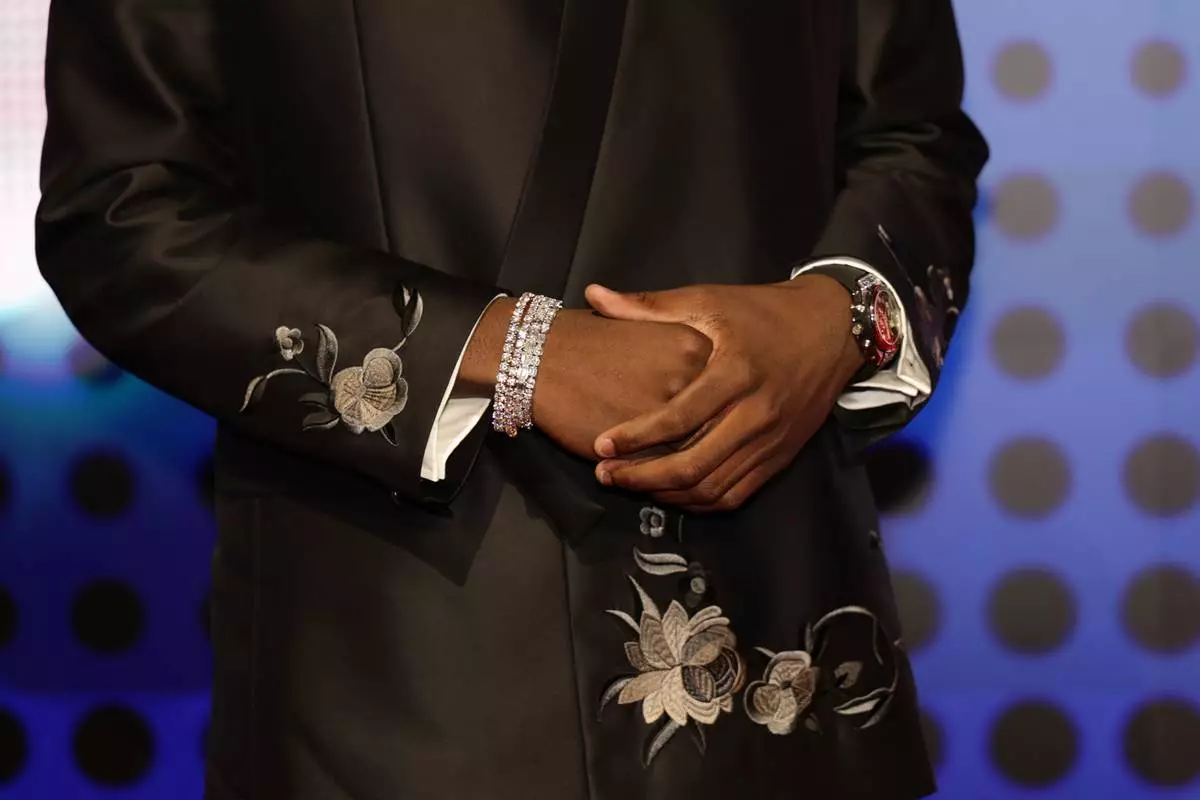
AJ Dybantsa arrives for the first round of the NBA basketball draft Tuesday, June 23, 2026, in New York. (AP Photo/Adam Hunger)
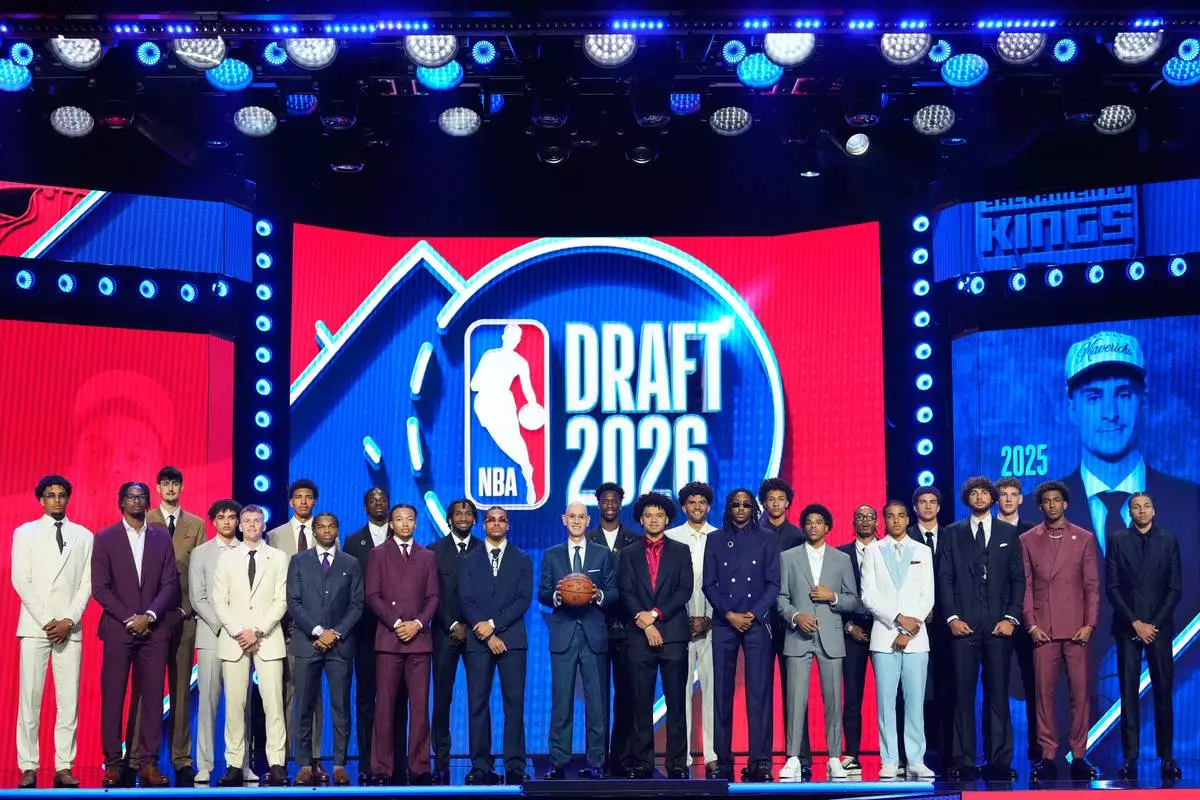
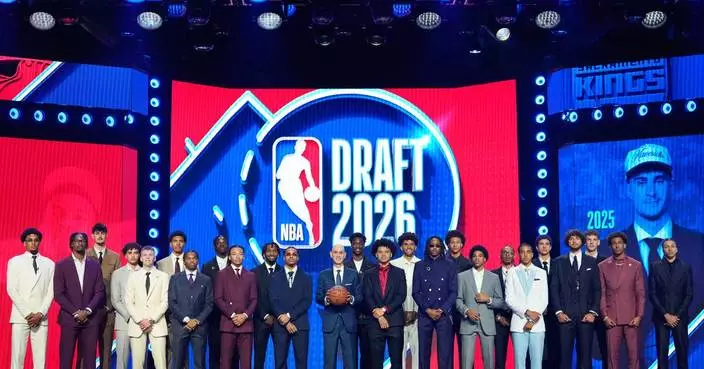
Prospective draftees pose for a group photo with NBA Commissioner Adam Silver, center, before the first round of the NBA basketball draft, Tuesday, June 23, 2026, in New York. (AP Photo/Yuki Iwamura)
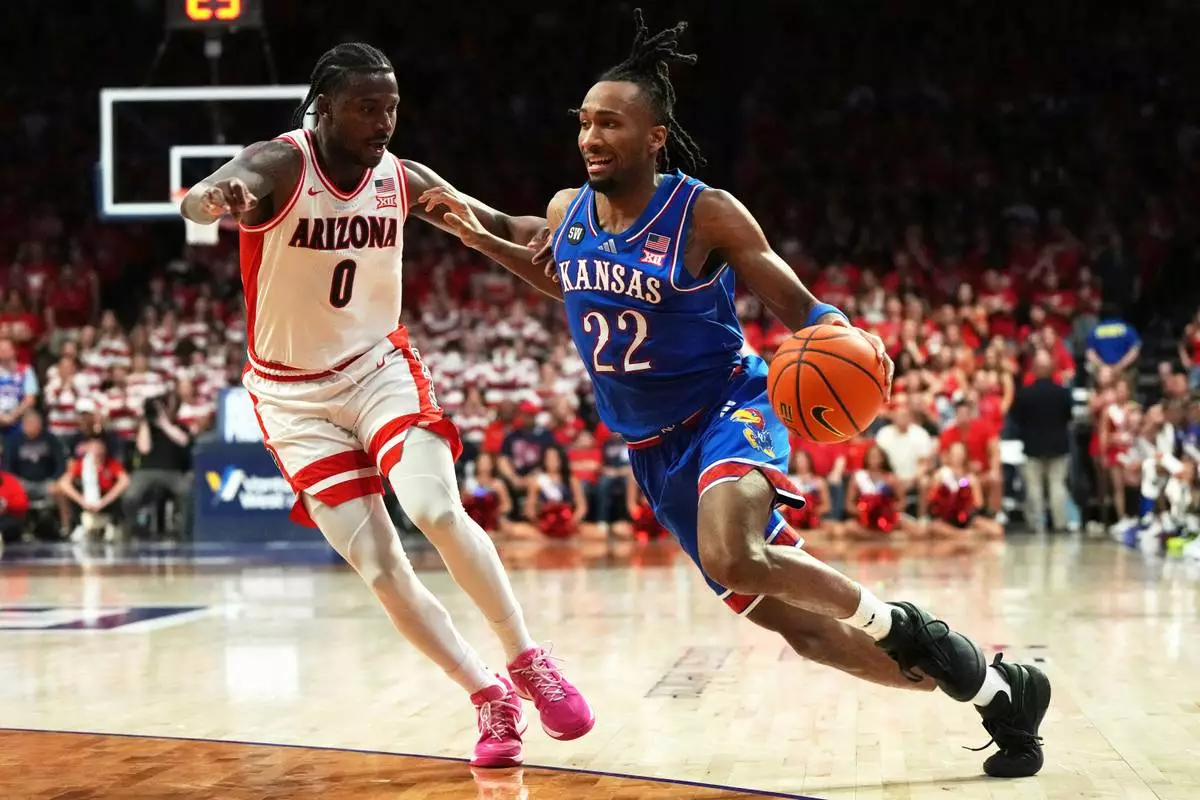
FILE - Kansas guard Darryn Peterson (22) works against Arizona guard Jaden Bradley (0) during the first half of an NCAA college basketball game against Arizona, Feb. 28, 2026, in Tucson, Ariz. (AP Photo/Rick Scuteri, File)