SAN SALVADOR (AP) — Prosecutors in El Salvador opened a massive, joint trial of nearly 500 alleged members of the MS-13 gang on charges that include homicide, extortion and arms trafficking.
The trial, which opened Monday in San Salvador, is the latest in a practice that has been criticized by human rights groups as an infringement on the right of the accused to defend themselves. Such trials form part of President Nayib Bukele's iron-fist approach against criminal groups in El Salvador, which has been under a state of emergency for four years to fight organized crime.
“These mass trials lack basic guarantees of due process and thus they increase the risk of convicting innocent people who have nothing to do with the gangs that have terrorized the country for decades,” Juan Pappier, Americas deputy director for Human Rights Watch, told The Associated Press.
The 486 defendants are accused of being members of MS-13, or Mara Salvatrucha, and accused of ordering more than 47,000 crimes from 2012 to 2022, according to the Salvadoran government. The charges also include femicide and enforced disappearances.
"For years, this structure has operated systematically, causing fear and mourning among Salvadoran families,” Attorney General Rodolfo Delgado said on social media.
El Salvador once had one of the highest homicide rates in the world, with 103 killings per 100,000 inhabitants in 2015. Since Bukele took office in 2019, government statistics show a drastic drop in that number. But human rights groups say Bukele's approach has violated due process.
Mass trials “raise serious questions about compliance with due process guarantees, including the right to an individualized defense, the presumption of innocence and access to adequate legal representation,” Irene Cuéllar, researcher for Central America at Amnesty International, said Tuesday in a statement.
The gang leaders are being tried in an open hearing at an Organized Crime Court under a 2023 reform of El Salvador’s penal code.
The country's “state of exception" since March 2022 has suspended fundamental rights, including the right to be informed of the reasons for detention and the right to legal counsel. Security forces can also intercept telecommunications without a court order, and detention without a preliminary hearing is extended from 72 hours to 15 days.
In a statement Tuesday, the Inter-American Commission on Human Rights said it “maintains serious worries about the impact on human rights by the unjustified and excessive prolongation of the state of exception in El Salvador” and called on the government to end the measure.
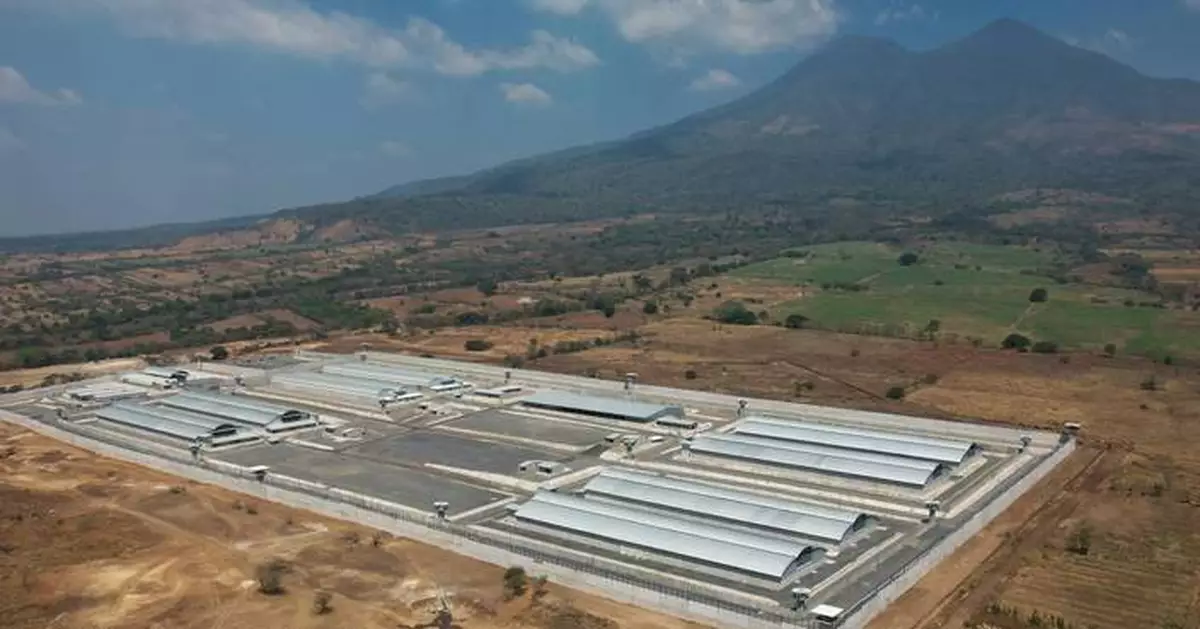
Of the defendants, 413 are being held at the Terrorism Confinement Center, a maximum-security prison that Bukele ordered built that has become a symbol of his controversial security policies. Many defendants watched the proceedings virtually from the prison.
Another 73 alleged gang members are being prosecuted in absentia, according to the Attorney General's office.
In March 2025, in the first such collective trial, 52 members of the Barrio 18 gang were sentenced to prison, with the longest sentence amounting to 245 years.
In another collective trial in November 2025, a court found 45 members of a rival faction, Barrio 18 Sureños, guilty of several crimes and handed down a 397-year prison sentence to one leader.
Since the state of emergency began, authorities say they have arrested 91,300 people allegedly belonging or tied to gangs.
Human rights organizations say thousands have been arbitrarily detained and that they have registered more than 6,000 complaints filed by victims under the state of emergency. At least 500 people have died in state custody.
Bukele has acknowledged that at least 8,000 innocent people were arrested under the measure and have since been released.
"Justice is not only about punishing those responsible," said Cuéllar of Amnesty International. “It is also about protecting innocent people from being wrongly accused or convicted.”
Associated Press reporter Anna-Catherine Brigida reported from Mexico City.
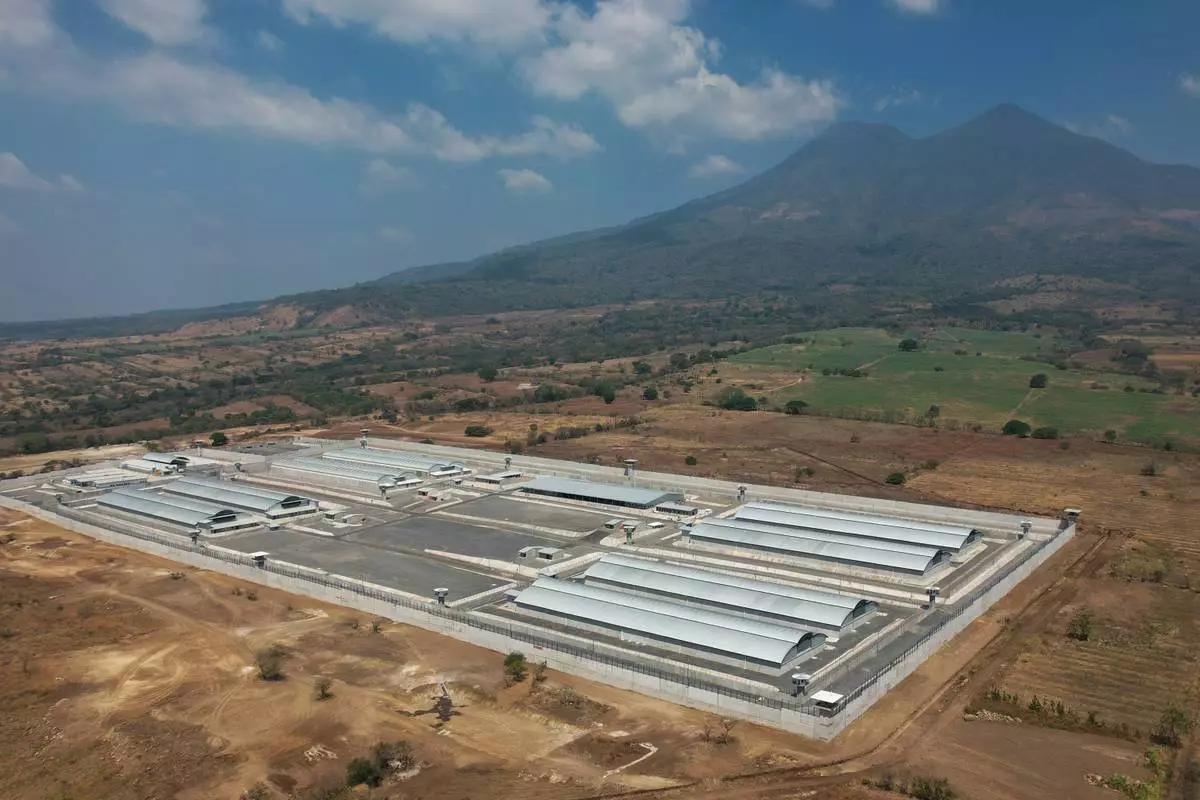
FILE - The Terrorism Confinement Center (CECOT) stands in Tecoluca, El Salvador, March 5, 2023. (AP Photo/Salvador Melendez, File)
WASHINGTON (AP) — The Southern Poverty Law Center was indicted Tuesday on federal fraud charges alleging it improperly raised millions of dollars to secretly pay leaders of the Ku Klux Klan and other hate groups for inside information, acting Attorney General Todd Blanche said.
The Justice Department alleges the civil rights group defrauded donors by using their money to fund the very extremism it claimed to be fighting, with more than $3 million paid to informants through a now-defunct program to infiltrate white supremacist and other extremist groups. Prosecutors allege some of the money was used by extremists to carry out other crimes, but court papers did not include specific examples.
“The SPLC was not dismantling these groups. It was instead manufacturing the extremism it purports to oppose by paying sources to stoke racial hatred,” Blanche said.
The civil rights group faces charges of wire fraud, bank fraud and conspiracy to commit money laundering in the case brought in the federal court in Alabama, where the organization is based.
The indictment came shortly after the SPLC revealed the existence of a criminal investigation into its disbanded informant program to gather intelligence on extremist group activities. The group said the program was used to monitor threats of violence and the information was often shared with local and federal law enforcement.
The SPLC said it “will vigorously defend ourselves, our staff, and our work" against what it described as false allegations. The group said its informant program saved lives.
“Taking on violent hate and extremist groups is among the most dangerous work there is, and we believe it is also among the most important work we do,” interim CEO and president Bryan Fair said in a statement. “The actions by the DOJ will not shake our resolve to fight for justice and ensure the promise of the Civil Rights Movement becomes a reality for all."
The Justice Department alleges the SPLC made false statements to banks in order to set up accounts used to funnel money to informants. The group created bank accounts for fictitious entities such as “Fox Photography” and “Rare Books Warehouse” that were used to send money from donors to informants, in a scheme to conceal the money’s actual purpose, the indictment alleges.
Prosecutors say the group never disclosed to donors details of the informant program.
“They’re required to under the laws associated with a nonprofit to have certain transparency and honesty in what they’re telling donors they’re going to spend money on and what their mission statement is and what they’re raising money doing,” Blanche said.
The indictment includes details on at least nine unnamed informants were paid by the SPLC through a secret program that prosecutors say began in the 1980s. Within the SPLC, they were known as field sources or “the Fs,” according to the indictment.
One informant was paid more than $1 million between 2014 and 2023 while affiliated with the neo-Nazi National Alliance, the indictment said. Prosecutors say another informant was a member of the “online leadership chat group” that planned the 2017 white nationalist “Unite the Right” rally in Charlottesville, Virginia. The informant attended the rally at the direction of the SPLC, according to the indictment, and helped coordinate transportation for several others. That person was allegedly paid more than $270,000 between 2015 and 2013.
The SPLC said the program was kept quiet to protect the safety of informants.
“When we began working with informants, we were living in the shadow of the height of the Civil Rights Movement, which had seen bombings at churches, state-sponsored violence against demonstrators, and the murders of activists that went unanswered by the justice system,” Fair said. “There is no question that what we learned from informants saved lives.”
The SPLC, which is based in Montgomery, Alabama, was founded in 1971 and used civil litigation to fight white supremacist groups. The nonprofit has become a popular target among Republicans who see it as overly leftist and partisan.
The investigation could add to concerns that Trump's Republican administration is using the Justice Department to go after conservative opponents and his critics. It follows a number of other investigations into Trump foes that have raised questions about whether the law enforcement agency has been turned into a political weapon.
The SPLC has faced intense criticism from conservatives, who have accused it of unfairly maligning right-wing organizations as extremist groups because of their viewpoints. The center regularly condemns Trump’s rhetoric and policies around voting rights, immigration and other issues.
The center came under fresh scrutiny after the assassination last year of conservative activist Charlie Kirk brought renewed attention to its characterization of the group that Kirk founded and led. The center included a section on that group, Turning Point USA, in a report titled “The Year in Hate and Extremism 2024” that described the group as “A Case Study of the Hard Right in 2024.”
FBI Director Kash Patel said last year that the agency was severing its relationship with the center, which had long provided law enforcement with research on hate crime and domestic extremism. Patel said the center had been turned into a “partisan smear machine,” and he accused it of defaming “mainstream Americans” with its “hate map” that documents alleged anti-government and hate groups inside the United States.
Boone reported from Boise, Idaho.
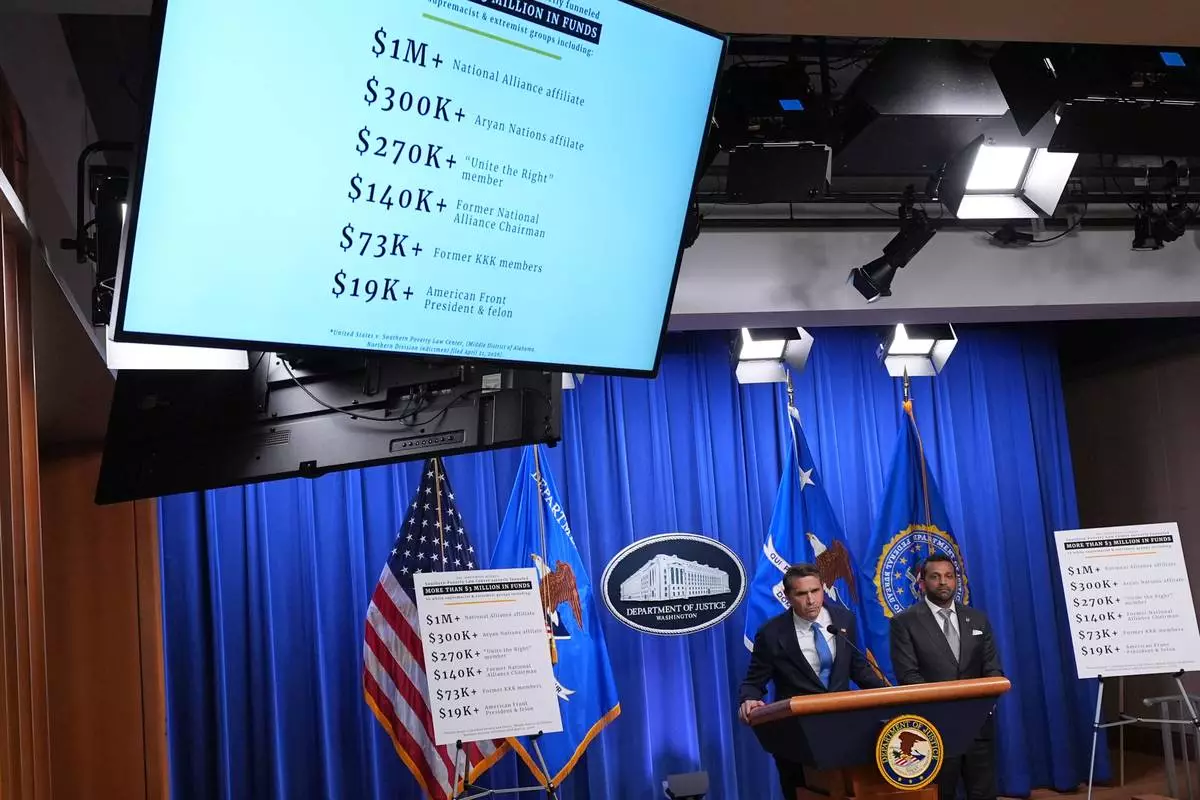
Acting Attorney General Todd Blanche speaks as FBI Director Kash Patel listens during a news conference at the Justice Department, Tuesday, April 21, 2026, in Washington. (AP Photo/Jacquelyn Martin)
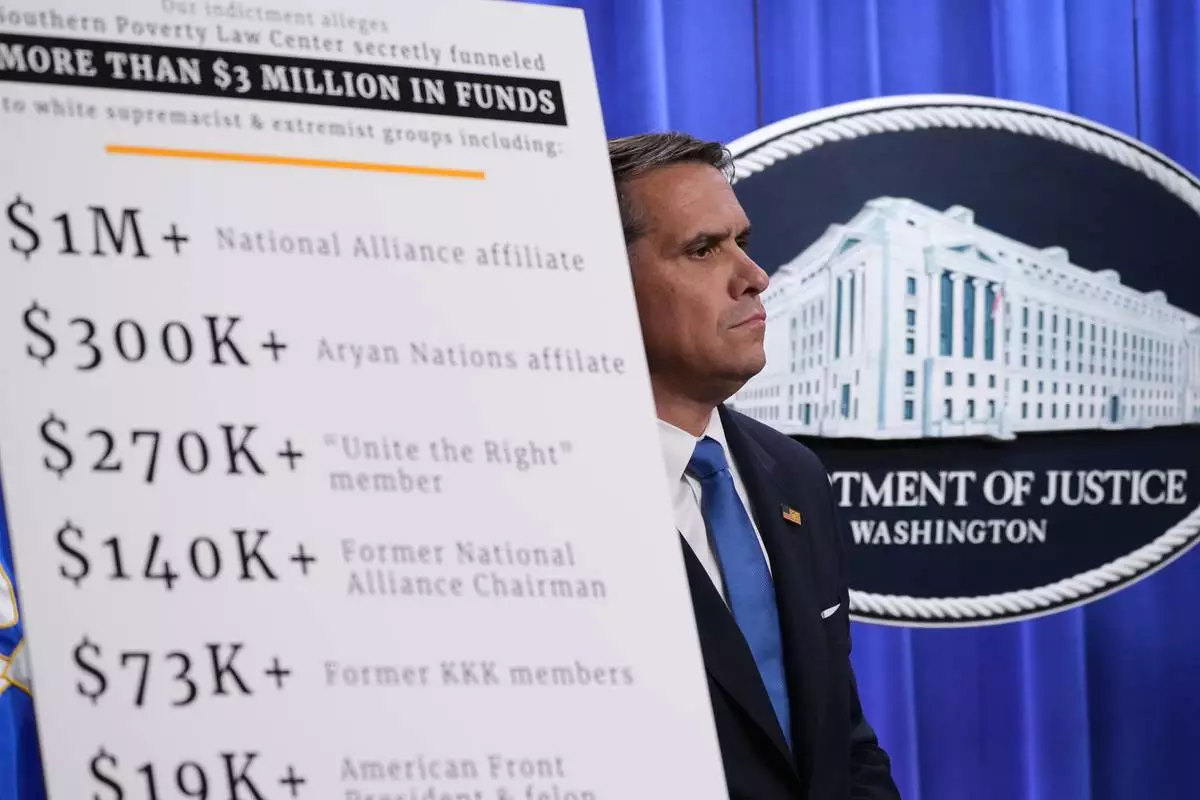
Acting Attorney General Todd Blanche listens during a news conference at the Justice Department, Tuesday, April 21, 2026, in Washington. (AP Photo/Jacquelyn Martin)
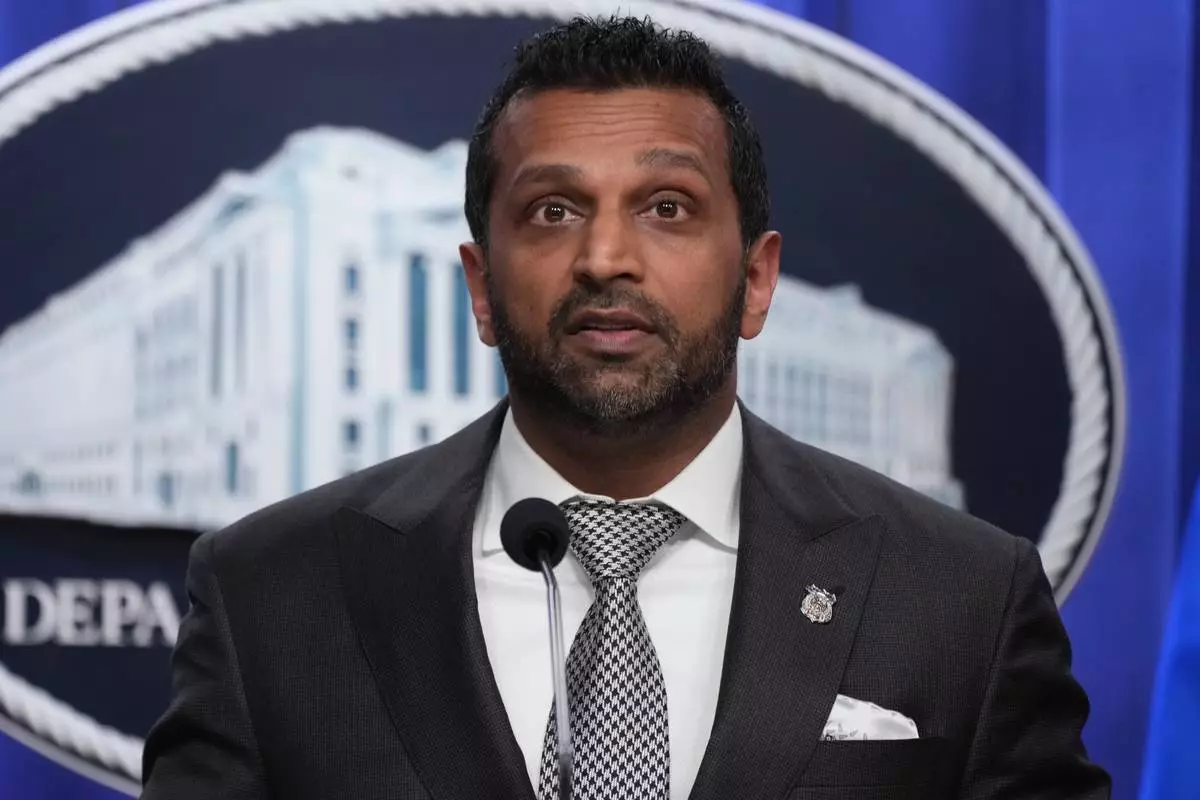
FBI Director Kash Patel speaks during a news conference at the Justice Department, Tuesday, April 21, 2026, in Washington. (AP Photo/Jacquelyn Martin)
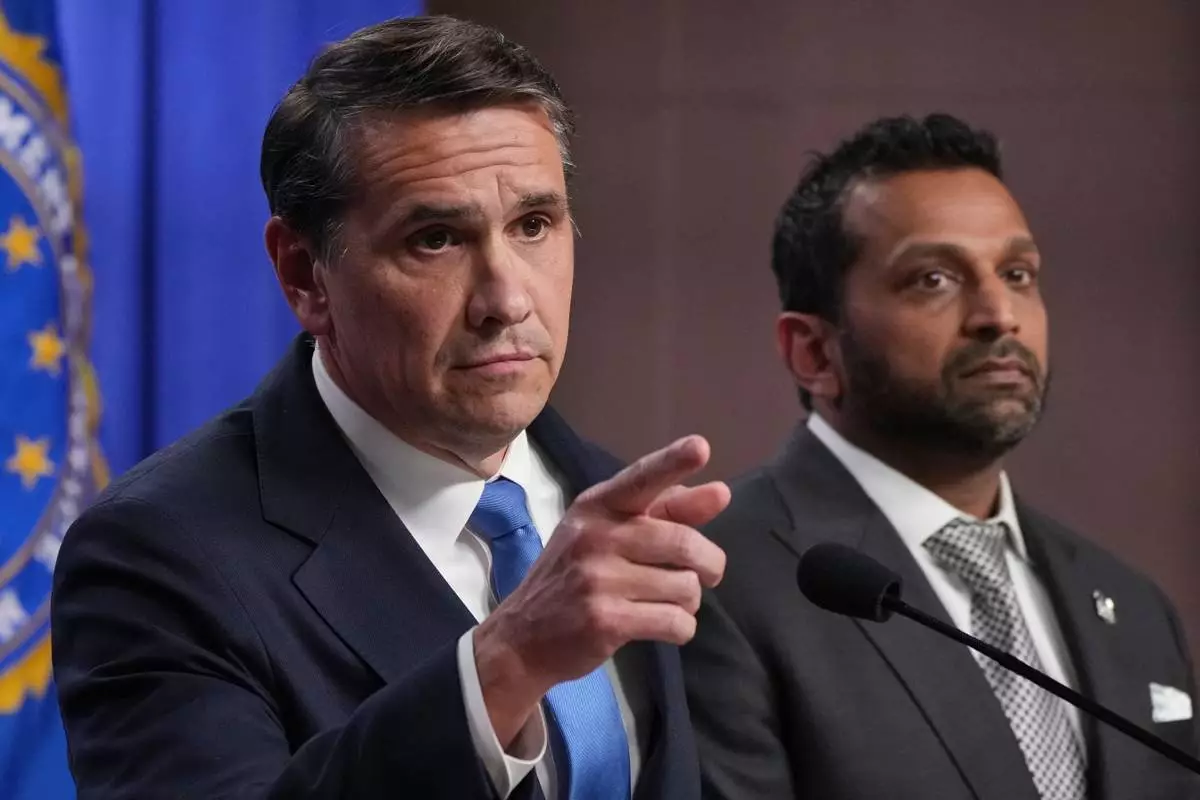
Acting Attorney General Todd Blanche speaks as FBI Director Kash Patel listens during a news conference at the Justice Department, Tuesday, April 21, 2026, in Washington. (AP Photo/Jacquelyn Martin)
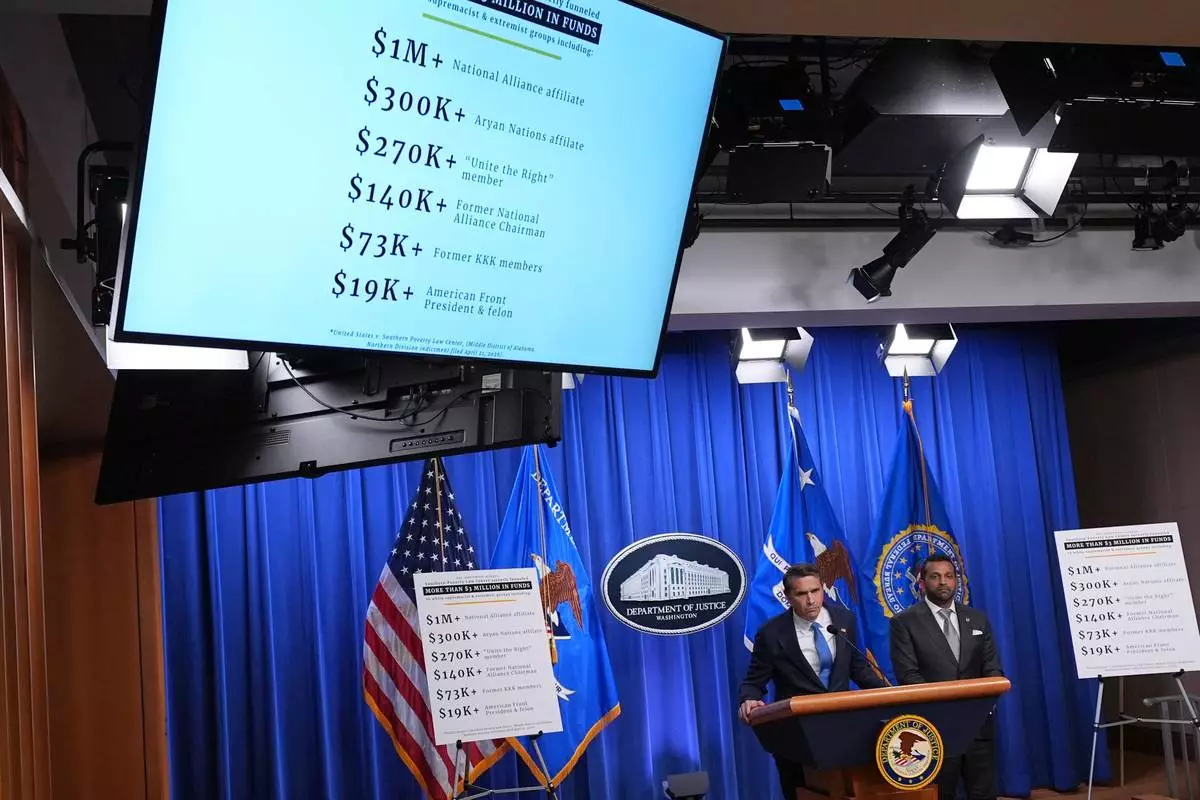
Acting Attorney General Todd Blanche speaks as FBI Director Kash Patel listens during a news conference at the Justice Department, Tuesday, April 21, 2026, in Washington. (AP Photo/Jacquelyn Martin)
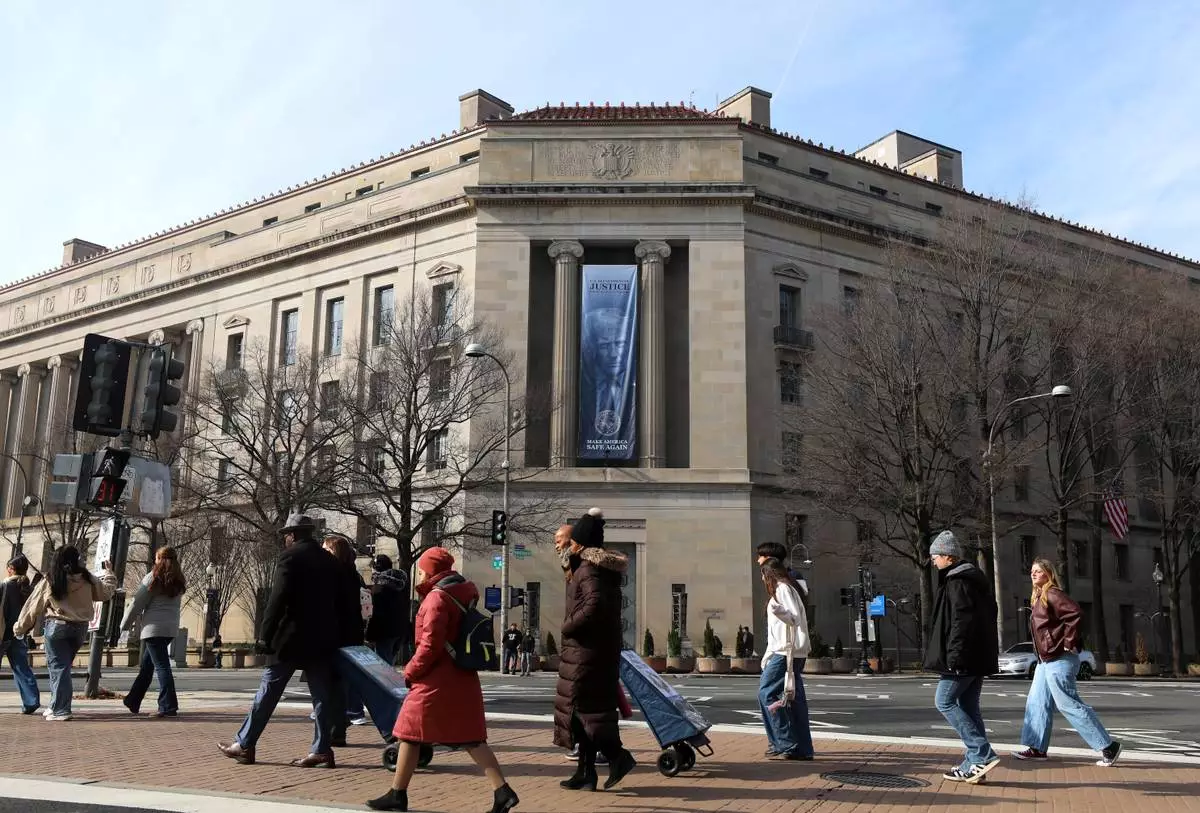
FILE - Tourists walk past a banner with President Donald Trump hanging on the Department of Justice, Feb. 27, 2026, in Washington. (AP Photo/Rahmat Gul, File)