CAIRO (AP) — An armed group in Libya helped the transfer of former Colombian military personnel to fight with the Rapid Support Forces paramilitary group against the Sudanese military, according to a United Nations report released days after the third anniversary of the start of the war in Sudan.
Libya's Subul al-Salam Battalion facilitated the transfer of recruits, including Colombian mercenaries, weapons and fuel across the border to support the RSF, adding to the chaos of the devastating conflict.
Click to Gallery
A street vendor sells fuel in Omdurman, Sudan, on the outskirts of Khartoum, Tuesday, April 21, 2026. (AP Photo/Bernat Armangue)
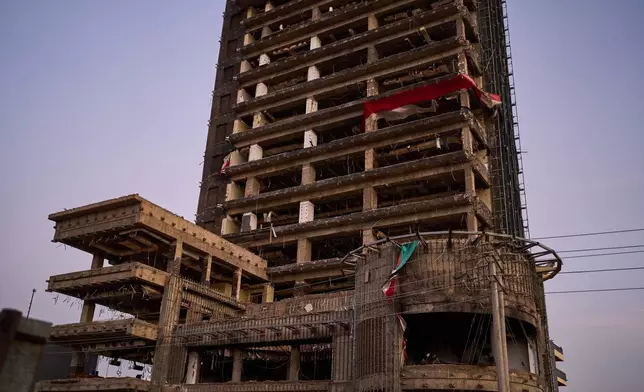
The remains of Sudanese flags flutter on a war-damaged building, in Khartoum, Sudan, Tuesday, April 21, 2026. (AP Photo/Bernat Armangue)
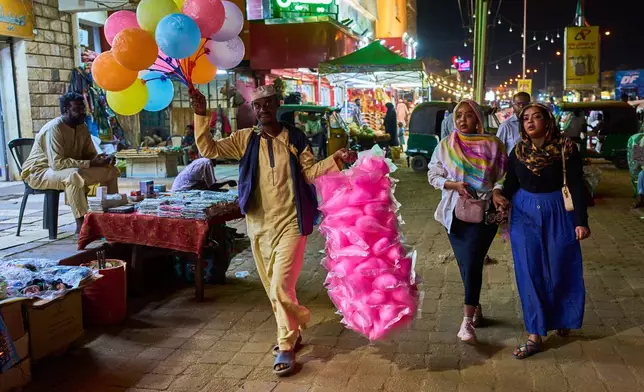
A street vendor sells candy and balloons in Omdurman, Sudan, on the outskirts of Khartoum, Tuesday, April 21, 2026. (AP Photo/Bernat Armangue)
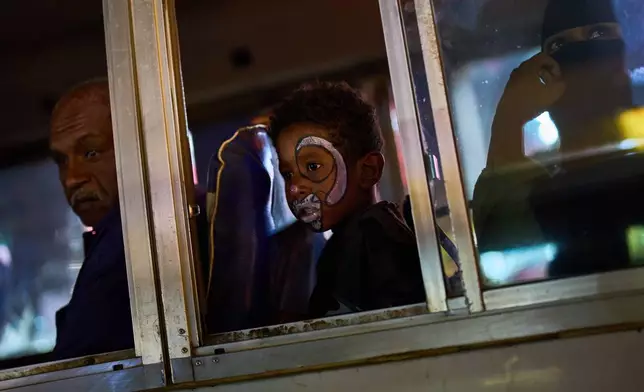
A child sits inside a bus, in Omdurman, Sudan, on the outskirts of Khartoum, Tuesday, April 21, 2026. (AP Photo/Bernat Armangue)
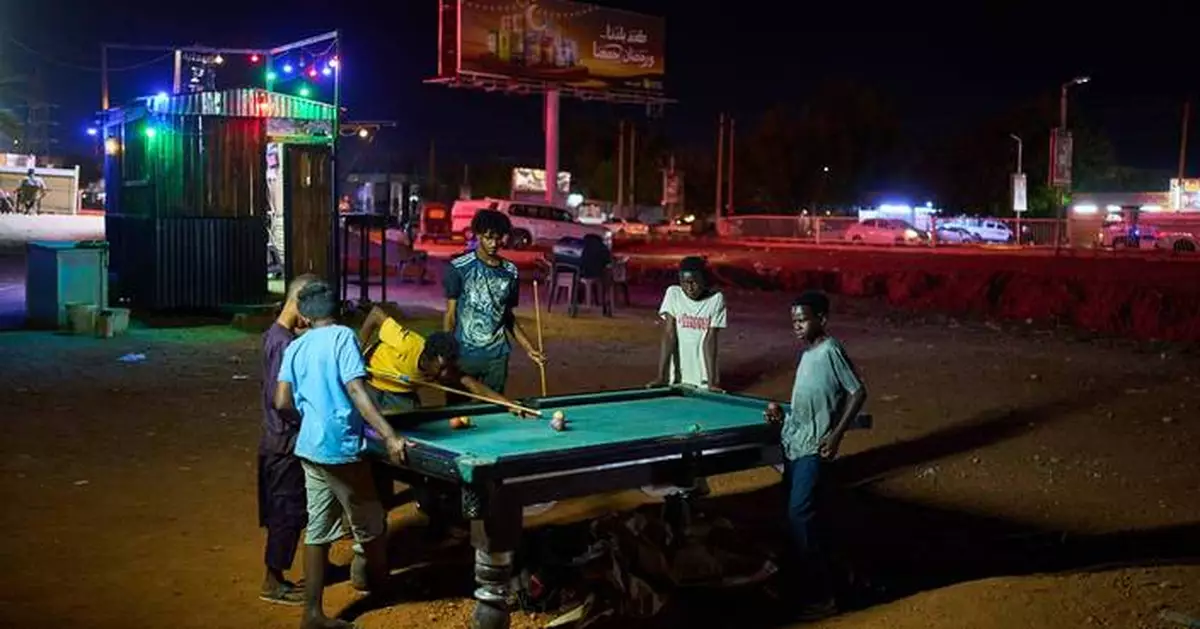
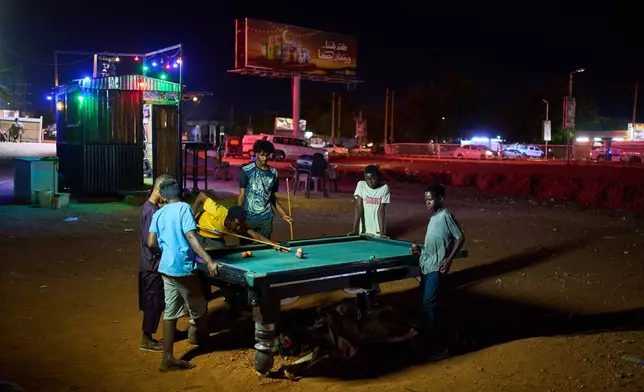
Children play pool in Omdurman, Sudan, on the outskirts of Khartoum, Tuesday, April 21, 2026. (AP Photo/Bernat Armangue)
The battalion was part of the self-styled Libyan National Army, commanded by powerful Gen. Khalifa Hifter, that runs eastern and southern parts of chaos-stricken Libya. It activities centered in the southern town of Kufra, which borders Sudan, Chad and Egypt. It controls crucial facilities, including an airport, which helped transfer arms and fighters to the RSF, the experts said.
The report of the U.N.'s Panel of Experts on Libya, which covered October 2024 to February 2026, was released on Sunday.
The war in Sudan broke out on April 15, 2023, when a power struggle between the military and RSF exploded into open fighting in the capital of Khartoum and elsewhere in the sprawling country.
The U.N. report detailed the benefits the RSF obtained through Libya, including a rear base about 75 kilometers (46.6 miles) southwest of Kufra.
The Sudanese paramilitary group also benefited from an airbase in Kufra and other facilities that were used as transit points for Colombian fighters and as sites for the modification of vehicles imported through Libya, the experts found.
The U.N. experts said the battalion supported RSF operations in June 2025 through deploying units on the ground, providing fighters and “escorting them across Libyan territory and facilitating access to fuel and spare vehicle parts.”
Its support helped the RSF to advance on the Uwaynat area, a border triangle where Sudan, Egypt and Libya meet, but “weakened border security in southern Libya,” the report said.
A spokesperson for RSF did not immediately respond to a request for comment. The Subul al-Salam Battalion was not reachable for comment.
The RSF said in June that controlled the triangle zone after the Sudanese military said it evacuated the area as part of “its defensive arrangements to repel aggression.” The miliary has accused Hifter’s forces of aiding the RSF’s attack on the area — a claim denied by the Libyan commander.
Both Hifter’s forces and the RSF received support from the United Arab Emirates, according international rights groups. The UAE has long denied the accusations.
In recent months, the miliary also sought to disrupt the RSF, Libya-originated supply route. It launched airstrikes in November that targeted shipments of vehicles and foreign fighters inside Libya, which were heading to the paramilitaries, the report said.
The U.S. imposed sanctions on Colombian firms and individuals over alleged links to the deployment of former Colombian officers to fight alongside the RSF in Sudan into famine and created the world’s largest humanitarian crisis.
The war has killed at least 59,000 people, according to the Armed Conflict Location & Event Data Project, a U.S.-based war tracking group that says its toll is almost certainly an undercut given difficulties in reporting.
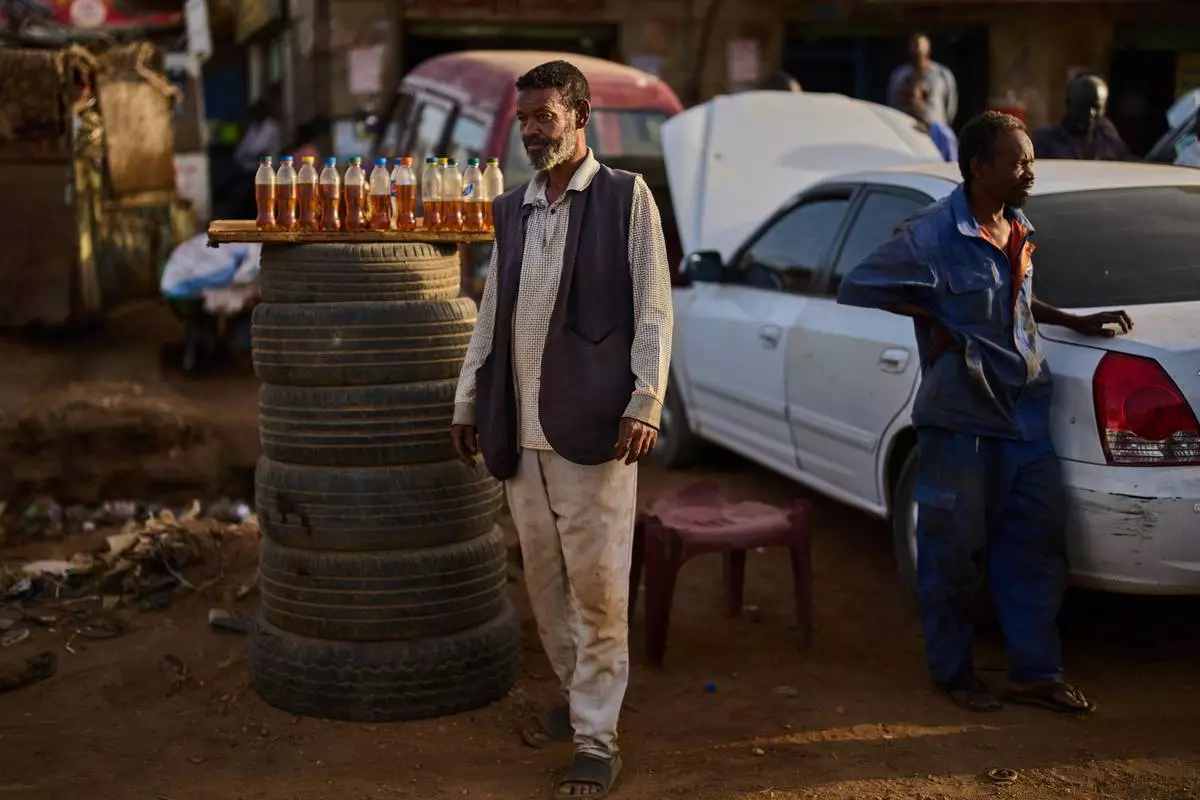
A street vendor sells fuel in Omdurman, Sudan, on the outskirts of Khartoum, Tuesday, April 21, 2026. (AP Photo/Bernat Armangue)
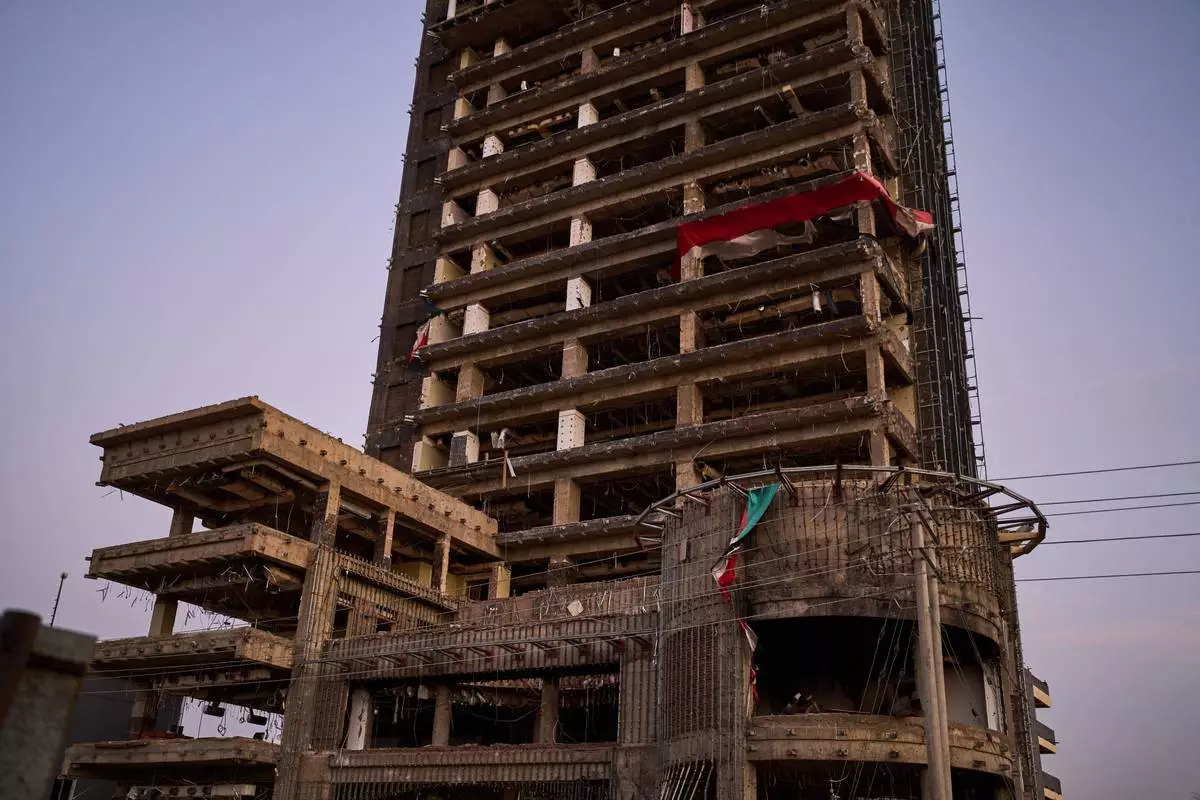
The remains of Sudanese flags flutter on a war-damaged building, in Khartoum, Sudan, Tuesday, April 21, 2026. (AP Photo/Bernat Armangue)
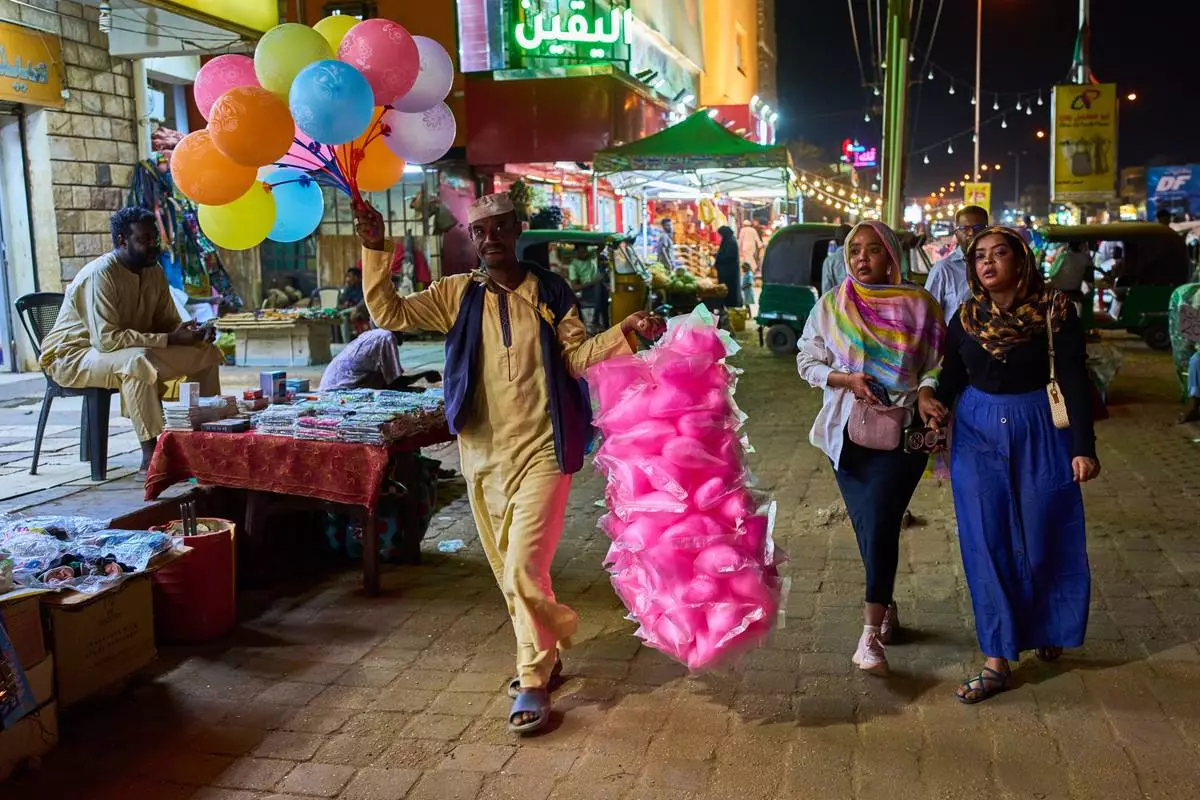
A street vendor sells candy and balloons in Omdurman, Sudan, on the outskirts of Khartoum, Tuesday, April 21, 2026. (AP Photo/Bernat Armangue)
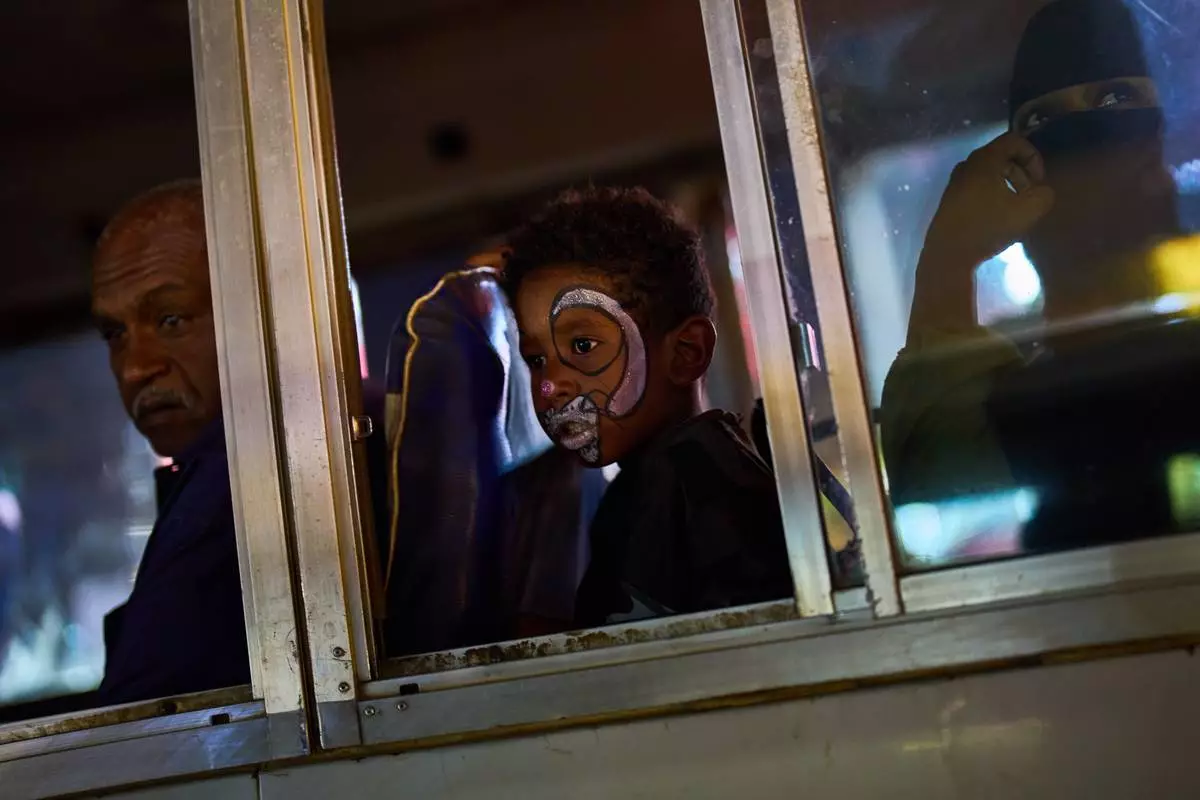
A child sits inside a bus, in Omdurman, Sudan, on the outskirts of Khartoum, Tuesday, April 21, 2026. (AP Photo/Bernat Armangue)
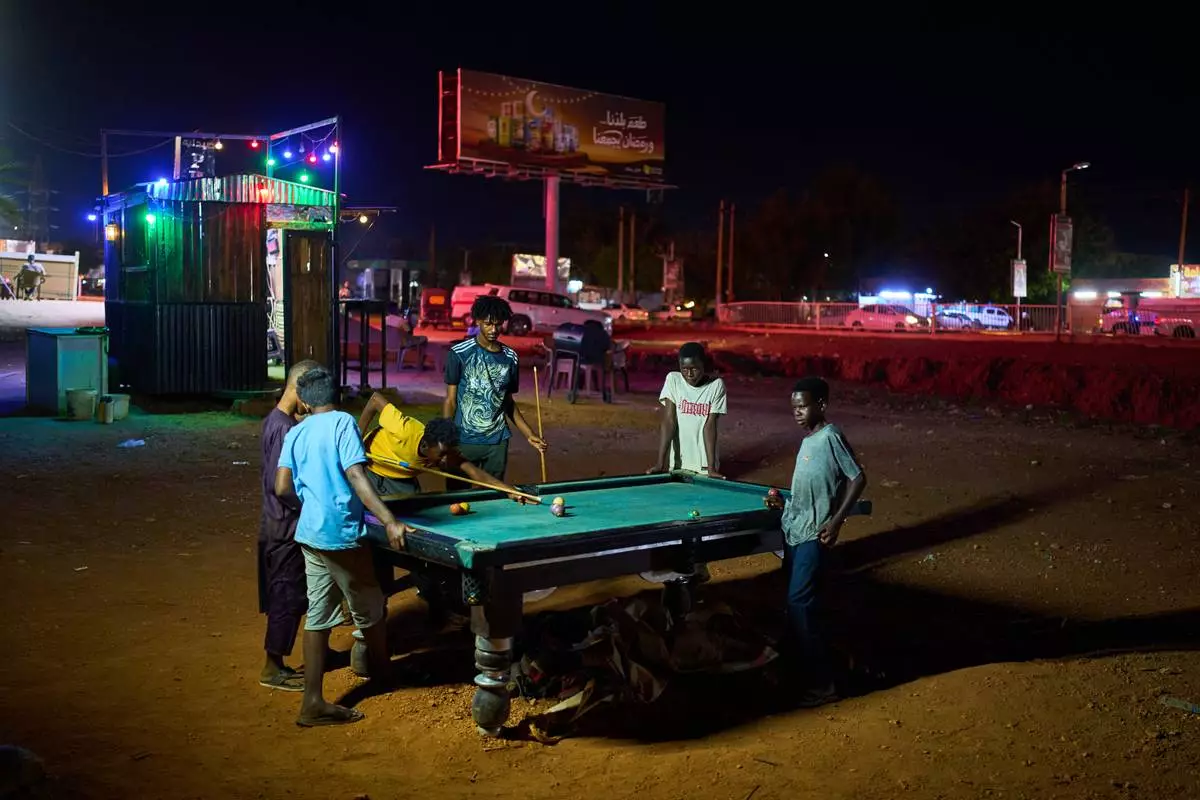
Children play pool in Omdurman, Sudan, on the outskirts of Khartoum, Tuesday, April 21, 2026. (AP Photo/Bernat Armangue)
Virginia voters approved a mid-decade redistricting plan Tuesday that could boost Democrats’ chances of winning four additional U.S. House seats in November’s midterm elections that will decide control of the closely divided Congress.
The constitutional amendment narrowly backed by voters bypasses a bipartisan redistricting commission to allow the use of new districts drawn by Virginia’s Democratic-led General Assembly. But the public vote may not be the final word. The state Supreme Court is considering whether the plan is illegal in a case that could make the referendum results meaningless.
The Virginia redistricting referendum marked a setback for President Donald Trump, who kicked off a national redistricting battle last year by urging Republican officials in Texas to redraw districts. The goal was to help Republicans win more seats in the November elections and hold on to a narrow House majority in the face of political headwinds that typically favor the party out of power during midterm elections.
But the Virginia redistricting referendum could help nullify Republican gains elsewhere.
“Virginia just changed the trajectory of the 2026 midterms,” Democratic state House Speaker Don Scott said in a celebratory statement. “At a moment when Trump and his allies are trying to lock in power before voters have a say, Virginians stepped up and leveled the playing field for the entire country.”
The redistricting in Texas led to a burst of redistricting nationwide. So far, Republicans believe they can win up to nine more House seats in newly redrawn districts in Texas, Missouri, North Carolina and Ohio. Democrats think they can win up to five more seats in California, where voters approved a similar mid-decade redistricting effort last November, and one more seat under new court-imposed districts in Utah.
Democrats hope to offset the rest of that gap in Virginia, where they decisively flipped 13 seats in the state House and won back the governor’s office last year.
Tuesday’s narrow victory for Democrats contrasted with the vote in California last fall, where voters approved a Democratic redistricting plan by a nearly 29-point margin.
“As we saw in California, when voters have a say, they are rejecting Republicans’ attempt to rig the system,” said U.S. Rep. Suzan DelBene, of Washington state, who is chair of the Democratic Congressional Campaign Committee.
Republicans pledged to continue the battle over Virginia's new map in court.
“This close margin reinforces that Virginia is a purple state that shouldn’t be represented by a severe partisan gerrymander,” said U.S. Rep. Richard Hudson, of North Carolina, who is chair of the National Republican Congressional Committee.
The back-and-forth redistricting battle also could continue in Florida, where the Republican-led Legislature is to convene April 28 for a special session that could result in more favorable congressional districts for Republicans.
The campaign over Virginia’s redistricting referendum focused heavily on fairness.
Republicans argued that it was unfair to gerrymander Virginia’s districts to Democrats’ advantage. But Democrats argued that they were creating a fairer election landscape nationally by counteracting Republican gerrymandering elsewhere.
Matt Wallace, of Alexandria, said he voted for the Democratic redistricting amendment “to help balance the scales a bit until things get back to normal.”
But Ruth Ann McCartney, who voted in the town of South Hill just a few miles north of the North Carolina border, said she cast her ballot against the amendment.
“I look at it more as we don’t have the population as northern Virginia,” she said. “And as a rural area, we just need to be heard.”
In Virginia, Democrats currently hold six of the 11 U.S. House seats under districts that were imposed by the state Supreme Court in 2021 after a bipartisan commission failed to agree on a map based on the latest census data.
The new plan could help Democrats win as many as 10 seats. Five seats are anchored in the Democratic stronghold of northern Virginia, including one stretching out like a lobster to consume Republican-leaning rural areas. Revisions to four other districts across Richmond, southern Virginia and Hampton Roads dilute the voting power of conservative blocs in those areas. And a reshaped district in parts of western Virginia lumps together three Democratic-leaning college towns to offset other Republican voters.
Democrats portrayed the Virginia redistricting as a response to Trump. It is “pushing back against what other states have done in trying to stack the deck for Donald Trump in those congressional elections,” Democratic Gov. Abigail Spanberger said during an online rally last week.
Ads for the “yes to redistricting” campaign featuring former President Barack Obama flooded the airwaves.
But opponents of the redistricting also distributed campaign materials citing statements from Obama and Spanberger, who had both criticized gerrymandering in the past.
Congressional redistricting typically is done once a decade after each census.
In 2020, Virginia voters approved a constitutional amendment meant to diminish political gamesmanship by shifting redistricting responsibilities away from the legislature.
But lawmakers endorsed a new constitutional amendment allowing mid-decade redistricting last fall, then passed it again in January as part of a two-step process that requires an intervening election in order for an amendment to be placed on the ballot. The measure allows lawmakers to redistrict until returning the task to a bipartisan commission after the 2030 census.
In February, they passed a new U.S. House map to take effect pending the outcome of the redistricting referendum.
Republicans have filed multiple legal challenges against the redistricting effort.
A Tazewell County judge ruled that the redistricting push was illegal for several reasons. Circuit Court Judge Jack Hurley Jr. said lawmakers failed to follow their own rules for adding the redistricting amendment to a special session. He ruled that their initial vote failed to occur before the public began casting ballots in last year’s general election and thus didn’t count toward the two-step process. And he ruled that the state failed to publish the amendment three months before that election, as required by law.
If the state Supreme Court agrees with the lower court, the referendum results could be rendered moot.
Associated Press writers Allen G. Breed in South Hill, Virginia, Gary Fields in Alexandria, Virginia, and Lisa Mascaro in Washington contributed to this report.
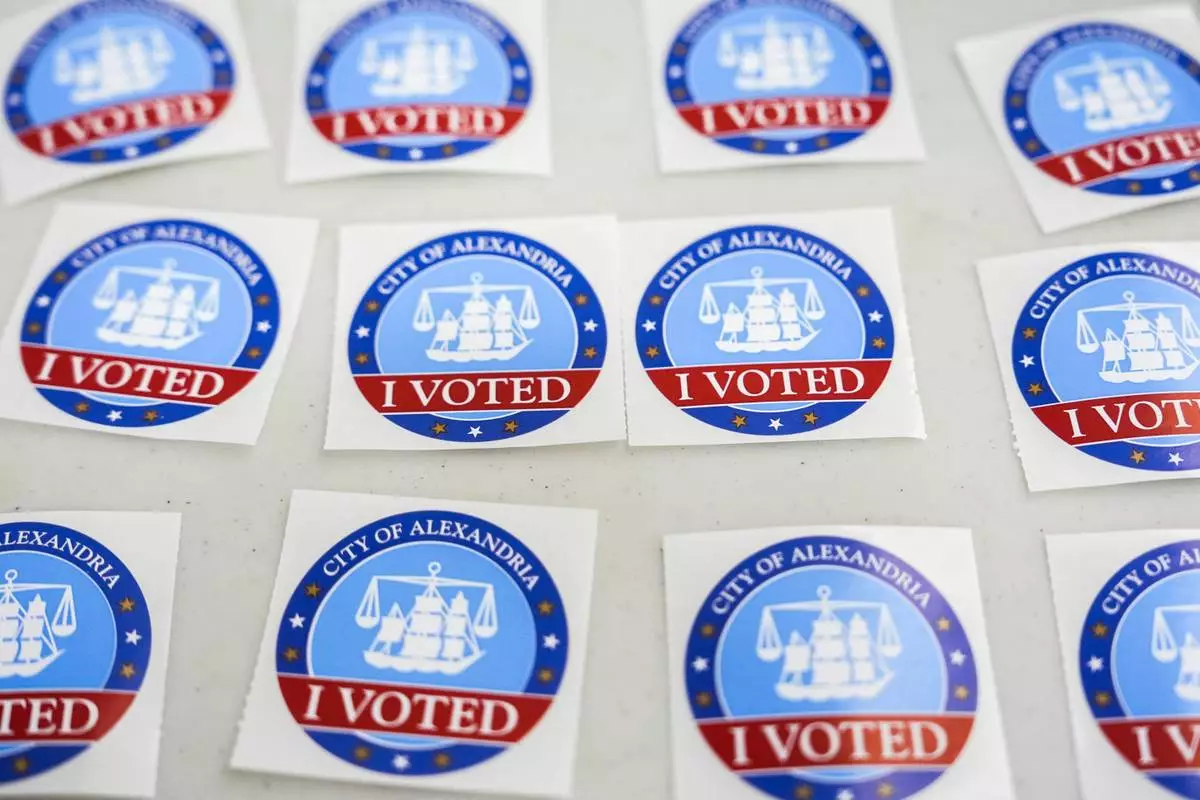
"I Voted" stickers are laid out on a table at Lyles-Crouch Traditional Academy on election day for the Virginia redistricting referendum, Tuesday, April 21, 2026, in Alexandria, Va. (AP Photo/Julia Demaree Nikhinson)
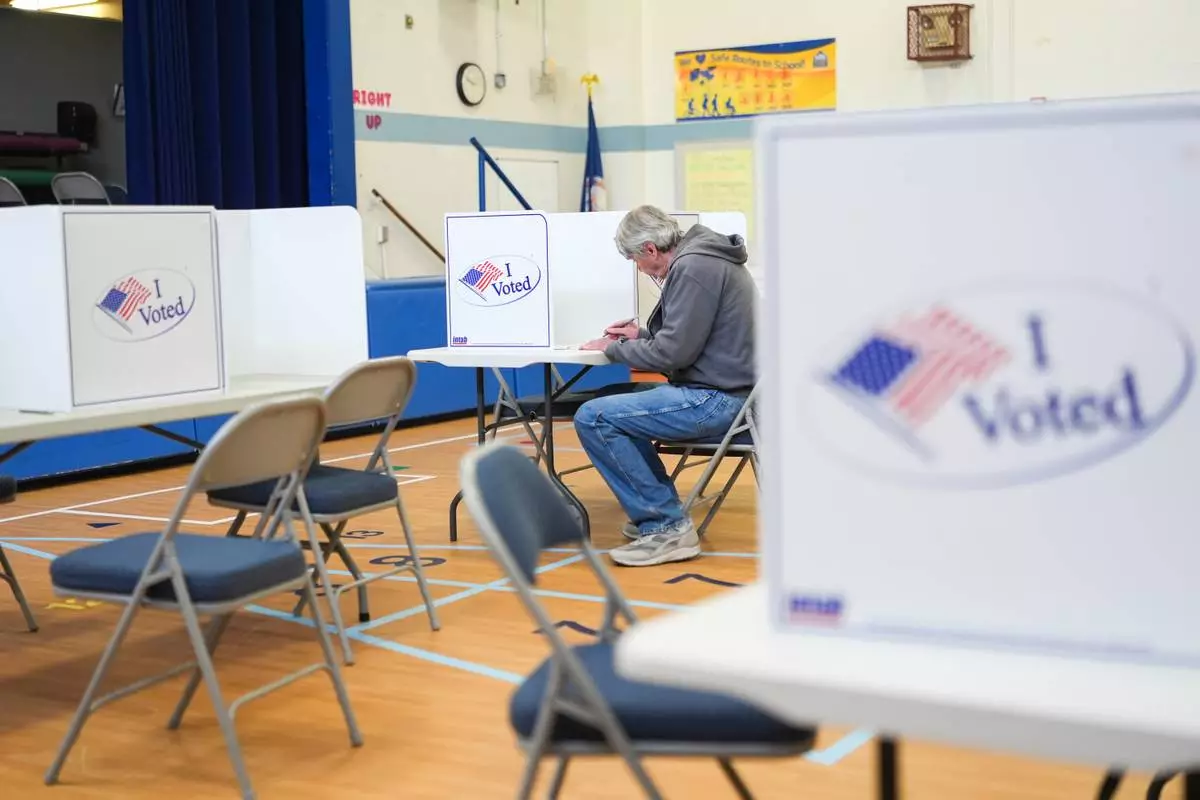
A person votes in the Virginia redistricting referendum at Lyles-Crouch Traditional Academy, Tuesday, April 21, 2026, in Alexandria, Va. (AP Photo/Julia Demaree Nikhinson)
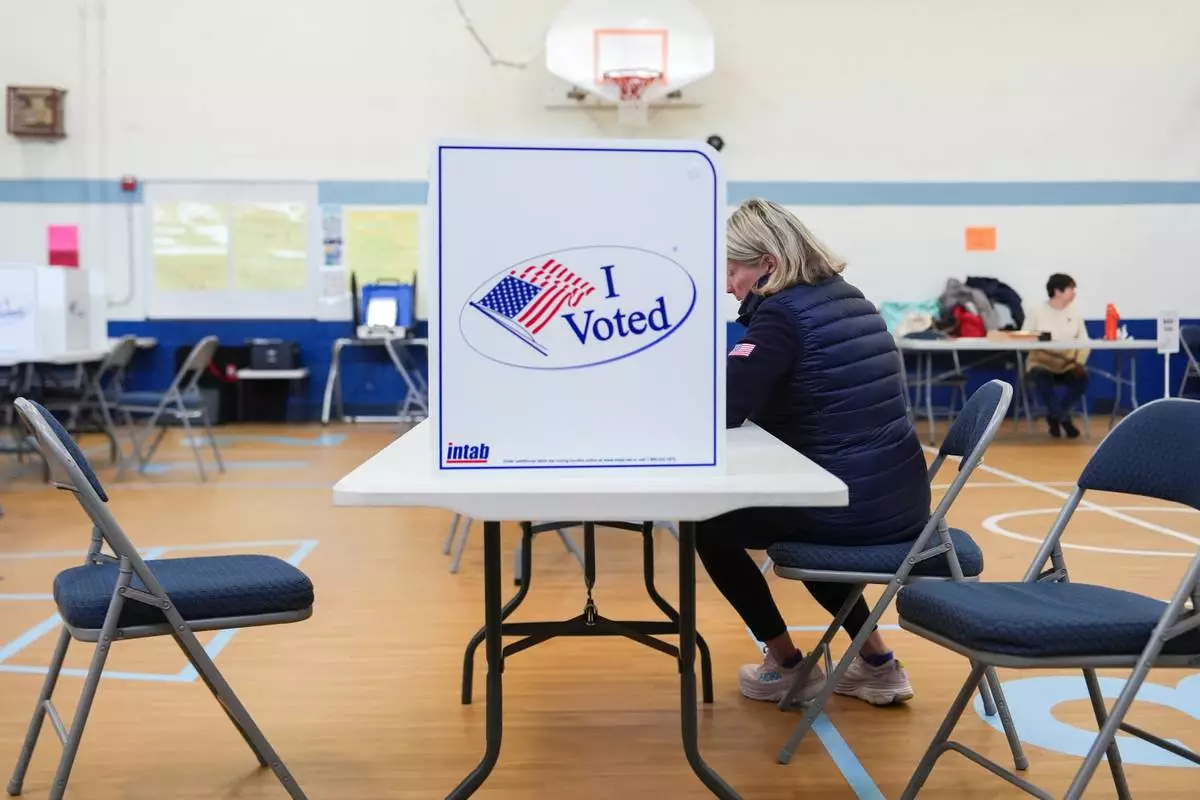
A person votes in the Virginia redistricting referendum at Lyles-Crouch Traditional Academy, Tuesday, April 21, 2026, in Alexandria, Va. (AP Photo/Julia Demaree Nikhinson)
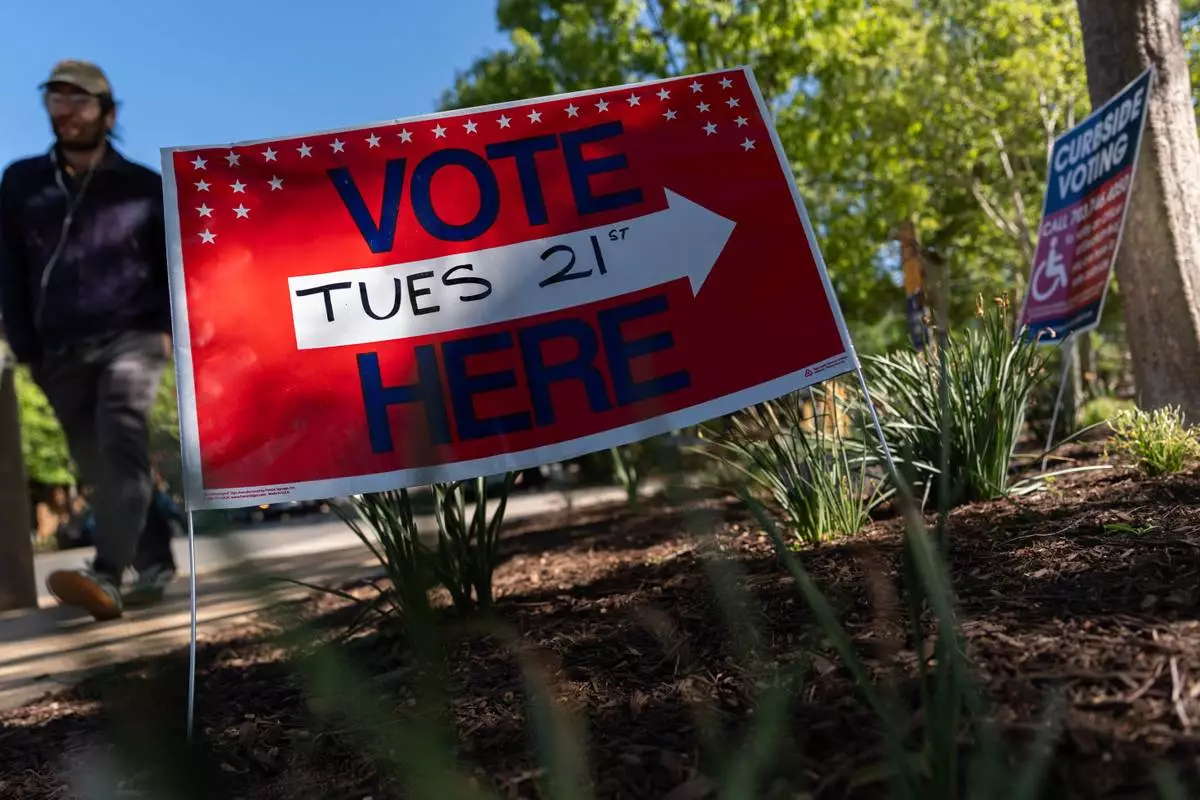
A person walks to vote in the Virginia redistricting referendum at Lyles-Crouch Traditional Academy, Tuesday, April 21, 2026, in Alexandria, Va. (AP Photo/Julia Demaree Nikhinson)