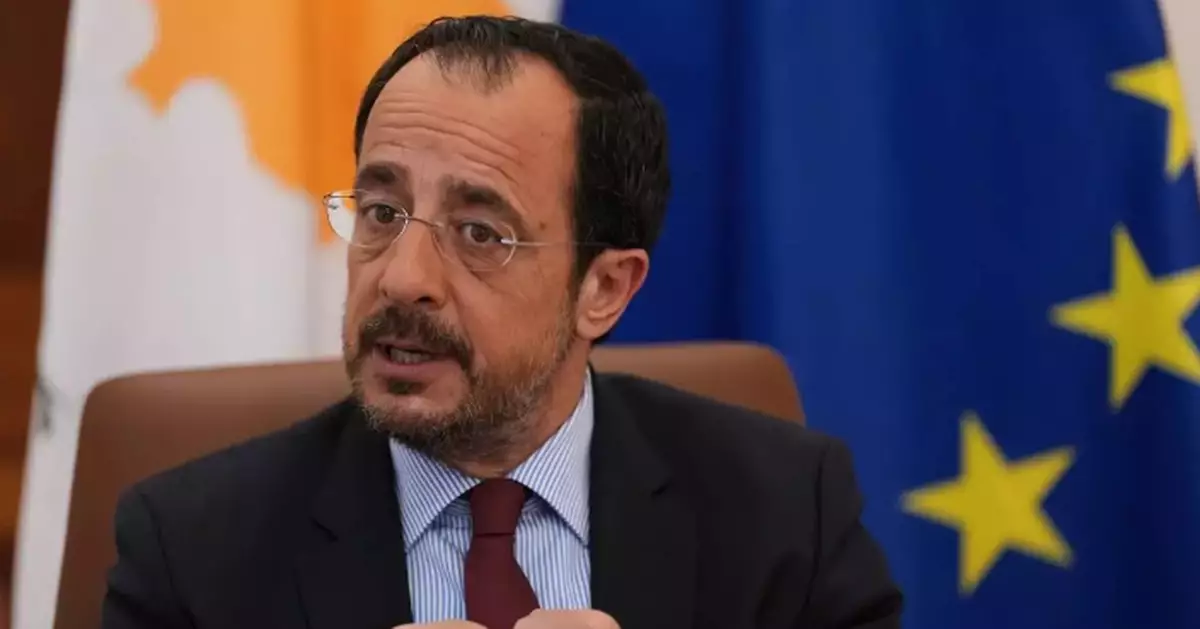
NICOSIA, Cyprus (AP) — European Union leaders meeting in Cyprus need to start preparing a playbook on what should happen if an EU country under attack puts out a call for help from bloc partners, the president of Cyprus said.
In an exclusive interview with The Associated Press on Tuesday, President Nikos Christodoulides said EU leaders will discuss “giving substance” to Article 42.7 of the bloc’s treaties, which oblige all 27 member states to assist each other in times of crisis.
Click to Gallery
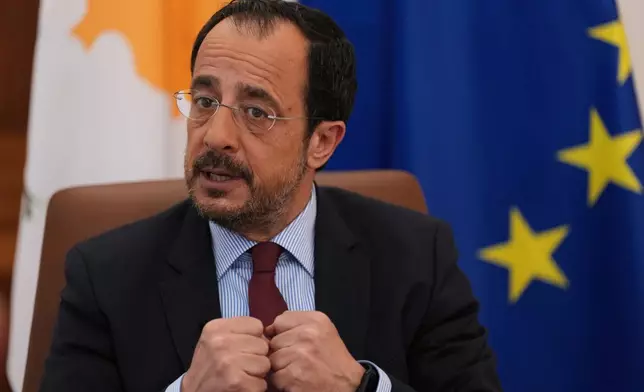
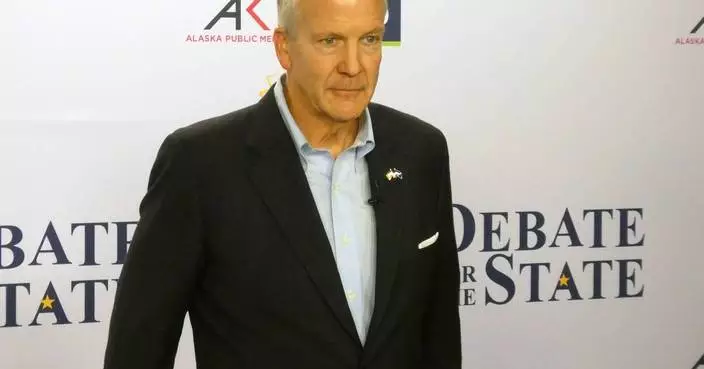
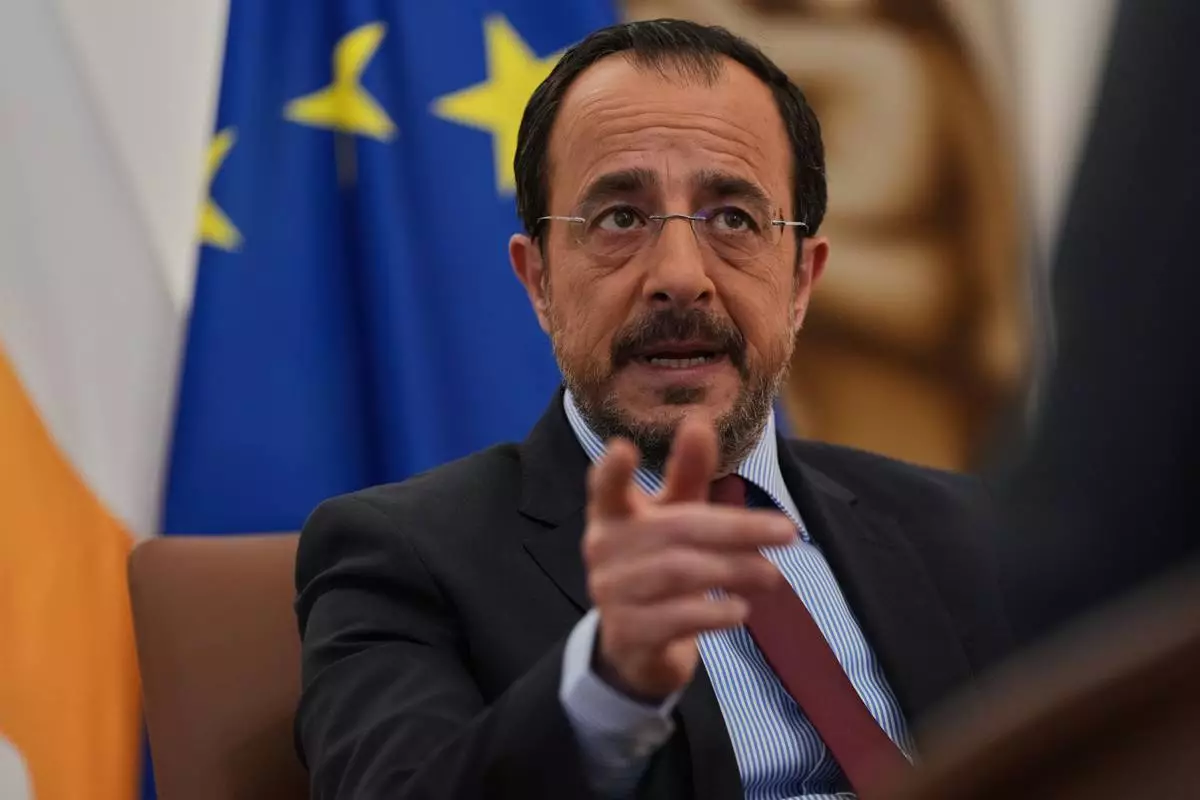
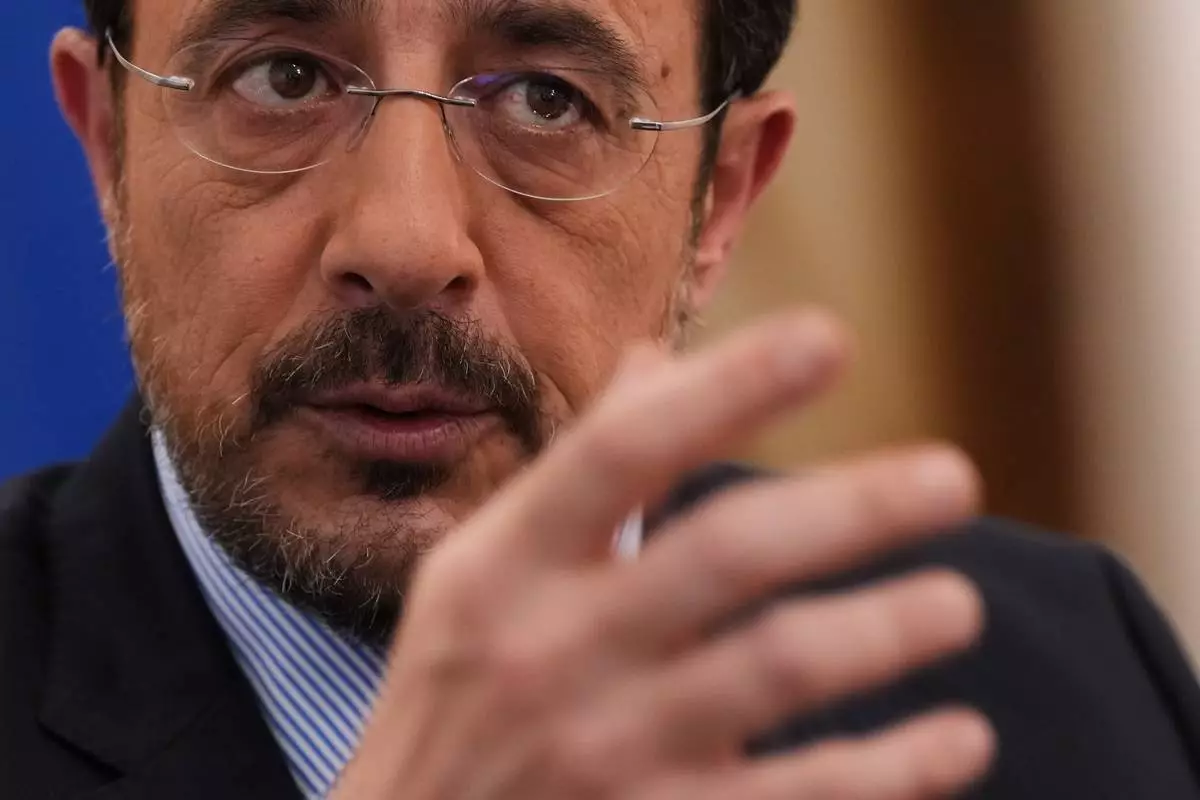
Cypriot President Nikos Christodoulides gestures as he speaks during an Associated Press interview ahead of this week's major EU-Middle East summit, at the presidential palace in the capital Nicosia, Cyprus, Tuesday, April 21, 2026. (AP Photo/Petros Karadjias)
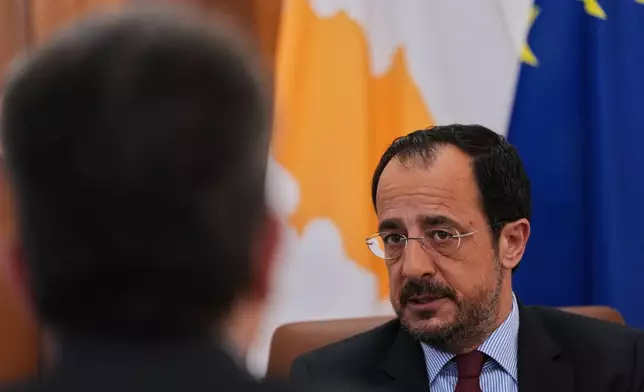
Cypriot President Nikos Christodoulides speaks during an Associated Press interview ahead of this week's major EU-Middle East summit, at the presidential palace in the capital Nicosia, Cyprus, Tuesday, April 21, 2026. (AP Photo/Petros Karadjias)
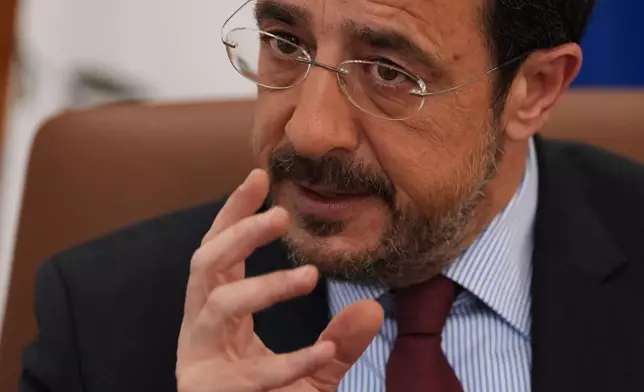
Cypriot President Nikos Christodoulides gestures as he speaks during an Associated Press interview ahead of this week's major EU-Middle East summit, at the presidential palace in the capital Nicosia, Cyprus, Tuesday, April 21, 2026. (AP Photo/Petros Karadjias)
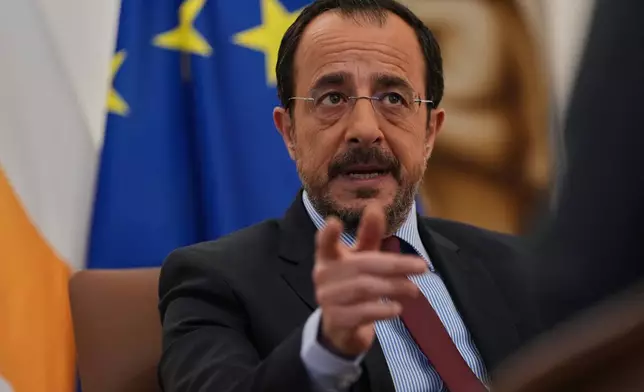
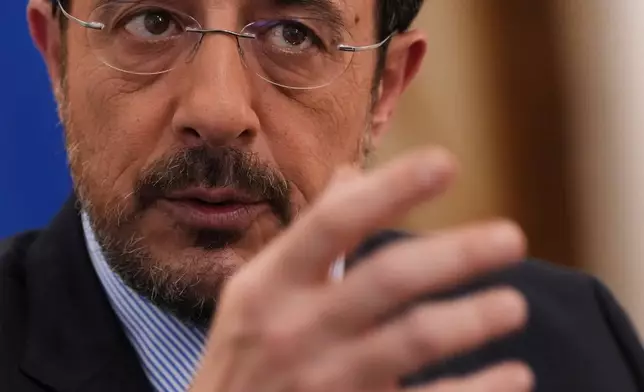
The article states that if a nation is the victim of armed aggression on its territory, its partners should provide “aid and assistance by all the means in their power.” It has never been used before so there’s no hard and fast rules on how EU members should respond to any call for assistance.
“We have Article 42.7 and we don’t know what is going to happen if a member state triggers this article,” Christodoulides said ahead of an EU-Mideast summit he is also hosting later this week, expected to focus on the Iran war and its fallout. “So we’re going to have a discussion and prepare, let’s say, an operational plan of what is going to happen in case a member state triggers this article, and there are a number of issues.”
The issue resonates particularly with Christodoulides, who appealed for help from fellow EU countries last month when a Shahed drone struck a British air base on the island’s southern coastline. Cypriot officials said the drone was launched from Lebanon whose capital is just 207 kilometers (129 miles) away from Cyprus’ southern coast. Greece, France, Spain, The Netherlands and Portugal dispatched ships with anti-drone capabilities to help defend the island.
Christodoulides said since many EU countries are also members of NATO, the playbook should clarify how those countries would respond to a call for help from an EU partner without conflicting with their obligations under the military alliance.
NATO’s own security guarantee, Article 5, states an attack on one ally is deemed an attack on them all, requiring a collective response.
“So what is going to happen in this situation if a member state is both NATO member state and an EU member state? What is going happen?” Christodoulides said.
Another issue that needs to be addressed under the Article 47.2 is whether a response would be a collective one in the NATO mold or just one for states neighboring the country in distress. There’s also the issue of what means would need to be used to deal with varying types of crises.
Christodoulides said he’s pleased to see that fellow EU leaders now “understand the importance” of bringing the bloc closer to the Middle East with such initiatives as the Mediterranean Pact that implements specific projects on a range of issues including health, education and energy in Middle Eastern countries.
Closer EU ties to the Middle East has been a key priority for Cyprus’ EU presidency, which Christodoulides said offers a “very good opportunity ... to give substance” to that objective. Attending the informal EU leaders’ summit later this week will be the leaders of Egypt, Lebanon, Syria and Jordan, affording the opportunity “not just to exchange ideas but to see in action how we elevate our cooperation in a strategic level.”
“We can represent the interest of the countries of the Greater Middle East to Brussels, but at the same time, and this is very, very important, the countries in the region, they trust Cyprus to represent them in the European Union," he said.
Christodoulides is a strong proponent of the India-Middle East-Europe Economic Corridor (IMEC), a trade, energy and digital connectivity corridor that would link the continent with the world's largest democracy and is hoped to usher peace and stability in the Middle East.
Christodoulides said under the Cypriot EU presidency, a “Friends of IMEC” group has been set up to promote the initiative, which still lacks what he said are more specific projects. One such project is the Great Seas Interconnector, an electricity cable connecting the power grids of Greece and Cyprus and eventually Israel that has been plagued by delays.
“We can work together with the Americans, with the U.S. Government, with President Trump in order to give substance because it will be a win-win situation for both the European Union and the United States" with additional concrete projects, Christodoulides said.
The Iran war again brought the need for the EU to diversify its energy source into sharp relief. Christodoulides said he’s in talks with the EU’s executive arm on how Cyprus’ own offshore natural gas deposits can help the bloc find alternative energy sources and routes.
He said Commission President Ursula von der Leyen will unveil on Friday “very specific proposals” regarding energy costs and how the bloc can become more energy independent.
The Cypriot president said the EU has made significant strides in hastening its decision on making mechanisms but has failed to deliver on its pledge to add new members in the last two years, diminishing the trust that prospective member nations have in the union.
“So we have a strong geopolitical tool that we are losing mainly because of our mistakes. The situation today is much better. We are deciding in a much faster, let’s say, pace,” said Christodoulides. “And enlargement is one of the geopolitical tools that, as a European Union, we need pretty soon to have specific decisions.”
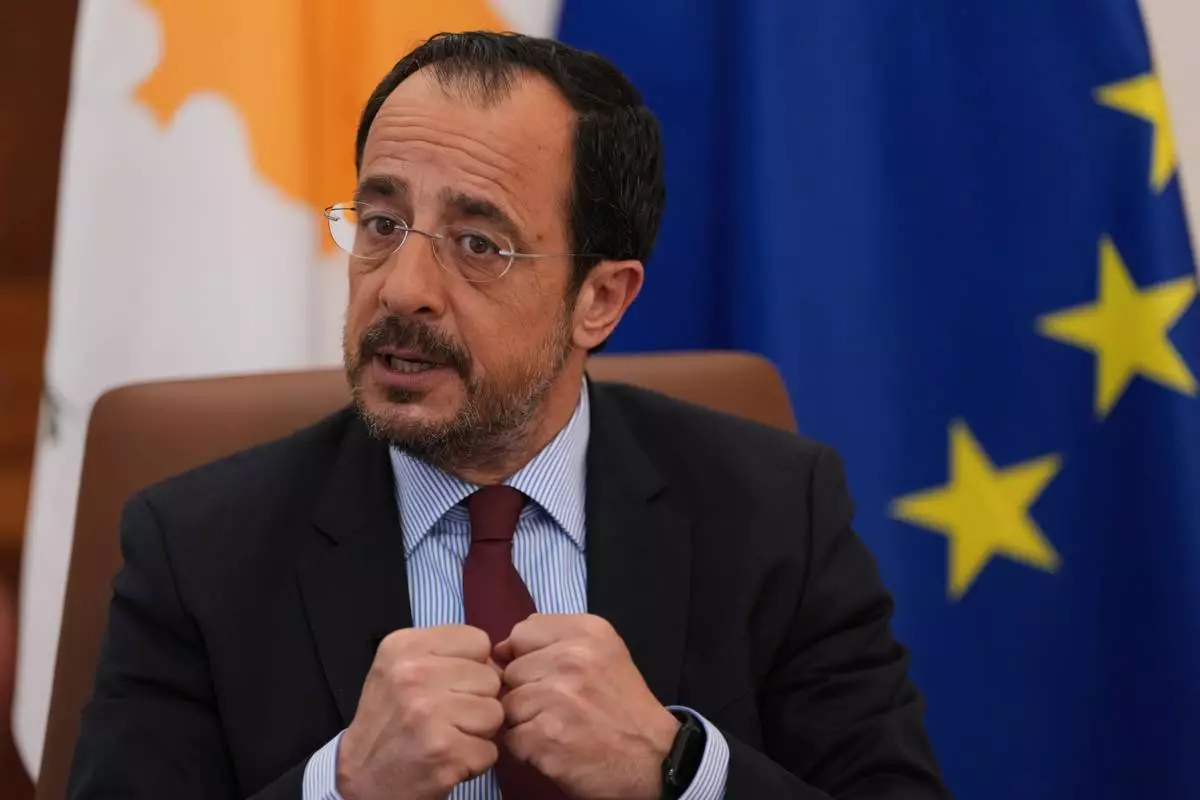
Cypriot President Nikos Christodoulides gestures as he speaks during an Associated Press interview ahead of this week's major EU-Middle East summit, at the presidential palace in the capital Nicosia, Cyprus, Tuesday, April 21, 2026. (AP Photo/Petros Karadjias)
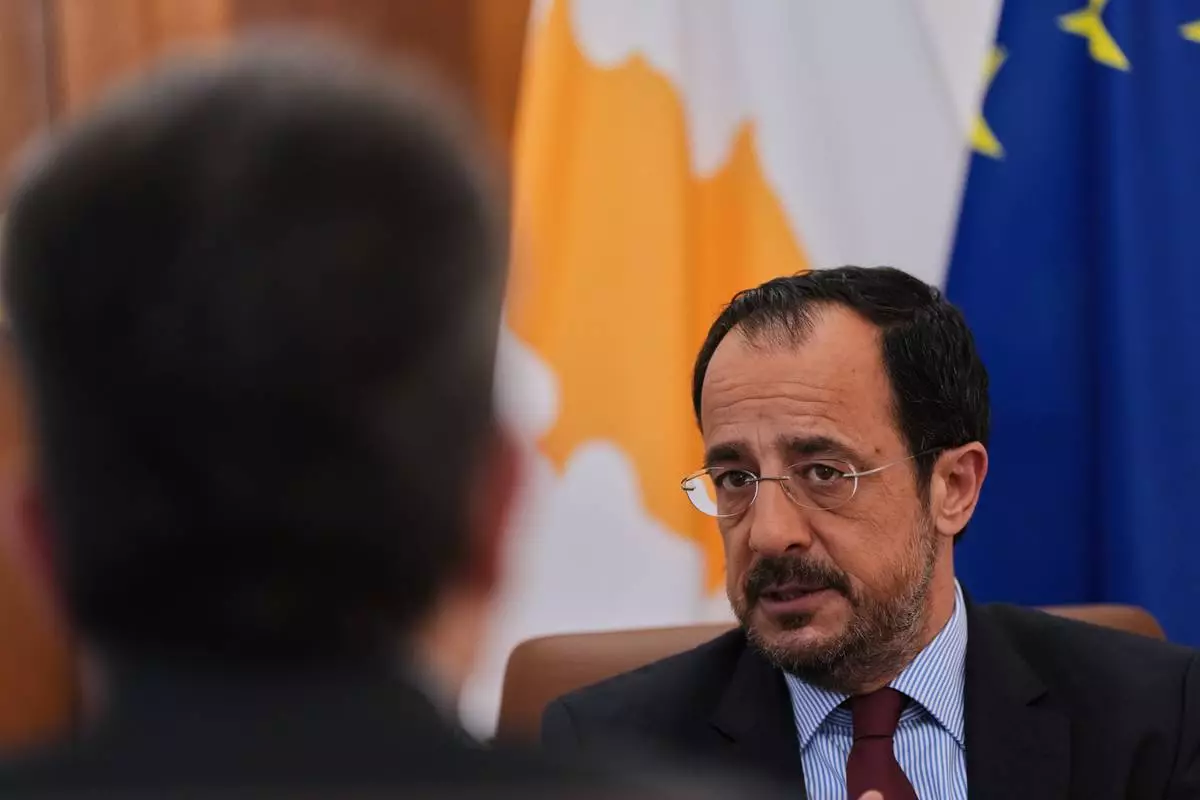
Cypriot President Nikos Christodoulides speaks during an Associated Press interview ahead of this week's major EU-Middle East summit, at the presidential palace in the capital Nicosia, Cyprus, Tuesday, April 21, 2026. (AP Photo/Petros Karadjias)
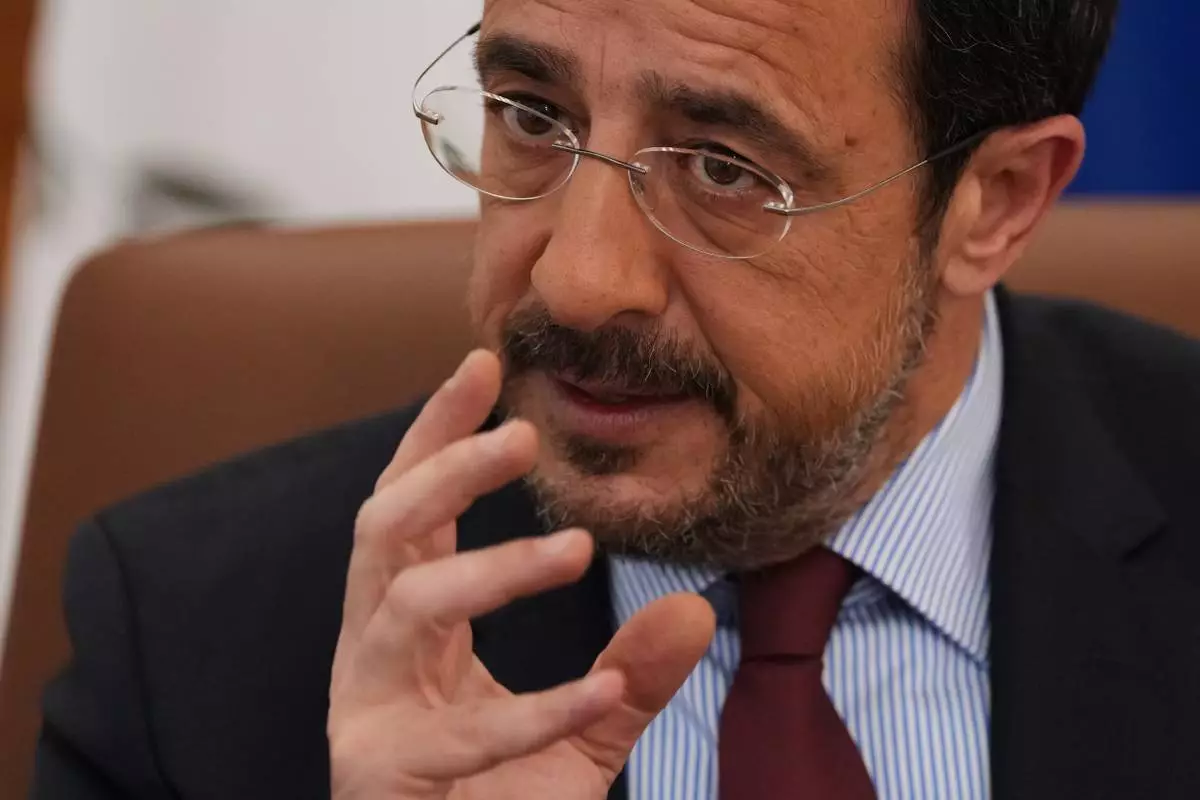
Cypriot President Nikos Christodoulides gestures as he speaks during an Associated Press interview ahead of this week's major EU-Middle East summit, at the presidential palace in the capital Nicosia, Cyprus, Tuesday, April 21, 2026. (AP Photo/Petros Karadjias)

TEHRAN, Iran (AP) — Iran's top officials and brothers of the new supreme leader emerged into public view Sunday to attend funeral prayers for Ayatollah Ali Khamenei. Their appearance projected unity, defiance and confidence in their safety as Iran pushes back on U.S. demands in negotiations to permanently end the war.
Crowds of hundreds of thousands chanted “Death to America” and “Death to Israel,” as they called for revenge over the Feb. 28 attack that killed the 86-year-old supreme leader and other top officials, triggering the war. Some hard-liners called for the assassination of U.S. President Donald Trump.
Iran’s new supreme leader, Ayatollah Mojtaba Khamenei, has yet to make an appearance in the funeral ceremonies, which are unfolding over several days. He is believed to be in hiding after reportedly being wounded in the airstrike that killed his father.
At the height of the war, before an April ceasefire, Israel had targeted top leaders, in at least one case likely using their public appearance to fix their position. It has also threatened to kill the younger Khamenei.
The U.S. is meanwhile pressing ahead with negotiations with Iran aimed at fully reopening the Strait of Hormuz, rolling back its disputed nuclear program and reaching a permanent end to the war. Talks appear to be on hold until after the burial.
Ziba Naderi, a nurse attending the funeral Sunday, said Iran needed to heed Mojtaba Khamenei's commands. “I heard the call for revenge, but our leader should say what we need to do,” she said. “And we must listen to him.”
Ayatollah Jafar Sobhani, a 97-year-old Shiite cleric, led the prayers at Tehran's Grand Mosalla for the late Khamenei and his family members killed in the strike.
On hand were Khamenei’s other sons, Masoud, Meysam and Mostafa, who had not been seen since the war. Revolutionary Guard head Gen. Ahmad Vahidi, who was photographed for the first time since the war on Thursday, could be seen in the crowd by Associated Press journalists, flanked by plainclothes security forces and wearing a black baseball cap.
Iran’s President Masoud Pezeshkian, Parliament speaker Mohammad Bagher Qalibaf — who has led the negotiations with the U.S. — and Esmail Qaani, who leads the elite Quds Force of the paramilitary Revolutionary Guard, also attended.
The crowd had grown from the day before. Mourners dressed in black carried banners and flags honoring Khamenei.
Posters and graffiti at the Grand Mosalla called for the killing of Trump and Israeli Prime Minister Benjamin Netanyahu.
“Why is the biggest bastard in the world still alive?” Mohammad Rasouli, a poet who emceed the event before the prayers, said to the crowd over loudspeakers, referring to Trump. “The world is no longer a good place” for Trump, he added as the crowd cheered.
“I came here to shout and seek revenge,” said Gholamreza Sabooni, a 29-year-old man who works in a grocery. “They killed our imam. We should kill their leader, Trump.”
The U.S. president was giving a speech at the same time across the world in Washington, D.C., for the 250th anniversary of America’s founding.
“We’ve had tremendous success,” Trump said about the U.S. military. “You look at Venezuela, you look at Iran. We wiped it out, wiped out their military.”
U.S. federal authorities have been tracking Iranian threats against Trump and other administration officials for years. The threats stem from Trump ordering the 2020 killing of Gen. Qassem Soleimani, who had led the Quds Force. Iran repeatedly has denied plotting to kill Trump, though hard-line propaganda footage long has suggested Trump was in Tehran's crosshairs.
Trump meanwhile promised to destroy Iran's civilization during the war, among other threats.
Khamenei’s body will be transported to cities in Iran and neighboring Iraq, with authorities planning to drive his casket and others through the streets of Tehran on Monday. Authorities have shut down streets, airspace and daily life for the mourning, which will end Thursday as he is buried at the Imam Reza shrine in Mashhad, Khamenei’s place of birth.
Authorities offered no attendance count for the event Saturday and Sunday. Other cities across Iran also held mourning ceremonies.
The funeral was in part a show of unity as Iran demands a measure of control over the Strait of Hormuz, a vital waterway for global energy that it shut down during the war. The U.S. has rejected those demands, and the sides are divided on other key issues, including Iran's nuclear program and the conflict between Israel and the Iran-backed Hezbollah in Lebanon.
The U.S. assisted 70 transits of the Strait of Hormuz over the past 72 hours, including 18 on Saturday, a multinational maritime body overseen by the U.S. Navy said Sunday. It called traffic steady along routes near Oman and Iran but still below prewar levels. The threat level remained “substantial” and mine clearance and surveying work continued.
“Our foreign policy should not be shaped in a way that allows our martyred leader’s blood to be dishonored,” mourner Mohammad Reza Sharifi said. He said he expected a “serious response” from Iran's government.
Gambrell reported from Dubai, United Arab Emirates. Associated Press writer Cara Anna in Lowville, New York, contributed.
A man weeps during funeral ceremonies for slain Iranian Supreme Leader Ayatollah Ali Khamenei and members of his family at the Imam Khomeini Mosalla Grand Mosque in Tehran, Iran, Sunday, July 5, 2026. (AP Photo/Altaf Qadri)
A little girl raises her fist from atop a man's shoulders as mourners gather during funeral ceremonies for slain Iranian Supreme Leader Ayatollah Ali Khamenei and members of his family at the Imam Khomeini Mosalla Grand Mosque in Tehran, Iran, Sunday, July 5, 2026. (AP Photo/Altaf Qadri)
A man bows over a portrait of Ayatollah Ruhollah Khomeini, founder of the Islamic Republic, and the late Supreme Leader Ayatollah Ali Khamenei next to a wall covered with messages at the Imam Khomeini Mosalla Grand Mosque during funeral ceremonies for the slain Iranian Supreme Leader Ayatollah Ali Khamenei and members of his family in Tehran, Iran, Sunday, July 5, 2026. (AP Photo/Altaf Qadri)
A woman weeps at the Imam Khomeini Mosalla Grand Mosque during funeral ceremonies for the slain Iranian Supreme Leader Ayatollah Ali Khamenei and members of his family in Tehran, Iran, Sunday, July 5, 2026. (AP Photo/Altaf Qadri)
A boy holds a picture of Iran's new Supreme Leader, Mojtaba Khamenei, holding a machine gun at the Imam Khomeini Mosalla Grand Mosque during funeral ceremonies for the slain Iranian Supreme Leader Ayatollah Ali Khamenei and members of his family in Tehran, Iran, Sunday, July 5, 2026. (AP Photo/Altaf Qadri)
In this photo released by Iran's Supreme Leader's office, the brothers of Iran's new Supreme Leader, from left, Meysam, Masoud and Mostafa Khamenei, attend funeral prayers over the coffins of the late Ayatollah Ali Khamenei and members of his family at the Imam Khomeini Mosalla Grand Mosque in Tehran, Iran, Sunday, July 5, 2026. (Office of the Iranian Supreme Leader via AP)
A banner depicting President Donald Trump is held aloft as mourners gather during funeral prayers held as part of the dayslong funeral ceremonies for the slain Iranian Supreme Leader Ayatollah Ali Khamenei and members of his family outside the Imam Khomeini Mosalla Grand Mosque in Tehran, Iran, Sunday, July 5, 2026. (AP Photo/Altaf Qadri)
Motorcycles drive past a billboard showing the late Iranian Supreme Leader Ayatollah Ali Khamenei in Islamic Revolution Square in Tehran, Iran, Sunday, July 5, 2026. (AP Photo/Vahid Salemi)
Mourners pray during funeral prayers held as part of the dayslong funeral ceremonies for the slain Iranian Supreme Leader Ayatollah Ali Khamenei and members of his family at the Imam Khomeini Mosalla Grand Mosque in Tehran, Iran, Sunday, July 5, 2026. (AP Photo/Altaf Qadri)
Mourners attend funeral prayers held as part of the dayslong funeral service for the slain Iranian Supreme Leader Ayatollah Ali Khamenei and members of his family at the Imam Khomeini Mosalla Grand Mosque in Tehran, Iran, Sunday, July 5, 2026. (AP Photo/Altaf Qadri)
Mourners pray during funeral prayers held as part of the dayslong funeral ceremonies for the slain Iranian Supreme Leader Ayatollah Ali Khamenei and members of his family at the Imam Khomeini Mosalla Grand Mosque in Tehran, Iran, Sunday, July 5, 2026. (AP Photo/Altaf Qadri)
A man carries a child holding a red Shiite religious flag outside the Imam Khomeini Mosalla Grand Mosque during the funeral ceremonies for slain Iranian Supreme Leader Ayatollah Ali Khamenei and members of his family in Tehran, Iran, Saturday, July 4, 2026. (AP Photo/Altaf Qadri)
Mourners write messages on a wall, including one in English that reads "We will kill Trump," during the funeral ceremonies for slain Iranian Supreme Leader Ayatollah Ali Khamenei and members of his family at the Imam Khomeini Mosalla Grand Mosque in Tehran, Iran, Saturday, July 4, 2026. (AP Photo/Altaf Qadri)
Mourners walk through the grounds of the Imam Khomeini Mosalla Grand Mosque during the funeral ceremonies for slain Iranian Supreme Leader Ayatollah Ali Khamenei and members of his family in Tehran, Iran, Saturday, July 4, 2026. (AP Photo/Altaf Qadri)
A mourner holds a portrait of the late Iranian Supreme Leader Ayatollah Ali Khamenei as he walks past a wall bearing messages, including one in English that reads "We will kill Trump," during the funeral ceremonies for Khamenei and members of his family at the Imam Khomeini Mosalla Grand Mosque in Tehran, Iran, Saturday, July 4, 2026. (AP Photo/Altaf Qadri)
Mourners gather beneath a portrait of the late Iranian Supreme Leader Ayatollah Ali Khamenei during the funeral ceremonies for Khamenei and members of his family at the Imam Khomeini Mosalla Grand Mosque in Tehran, Iran, Saturday, July 4, 2026. (AP Photo/Altaf Qadri)