EDINBURGH, Scotland & LONDON & MANCHESTER, England--(BUSINESS WIRE)--Apr 22, 2026--
Hampden Bank broke through £1 billion of client deposits during 2025, with deposits at the UK private bank increasing to £1.12 billion in the financial year to 31st December 2025, up 13 per cent on 2024.
This press release features multimedia. View the full release here: https://www.businesswire.com/news/home/20260422507371/en/
Loans and advances were also up in 2025, at £640 million against £586 million in the previous year, an increase of over 9 per cent. Total income rose to £31.5 million from £30.3 million, with profit before tax of £7 million, slightly down on £8.2 million in 2024 due to organisational change, strategic investment, and earlier than forecast falls in Bank of England base rates. Adjusting for these factors, 2025 profitability would have surpassed that of 2024. Having paid its first full dividend in 2025, the bank has proposed a 5 per cent increase for the 2026 payment.
The bank marked its 10th anniversary last year, whilst launching a new North and Midlands base in Manchester and moving to new offices in Edinburgh and London. Additionally, several key executive hires were made during 2025, with the appointment of Chief Operating Officer, Angela Dowd and Chief Banking Officer Greig Townsend announced in the second half of the year.
The bank grew its client base by over 7 per cent during the year to almost 6,500 and enjoys a retention rate of over 99 per cent. In 2025, the bank achieved a Net Promoter Score of 79, one of the highest recorded across the UK private banking sector. Both figures reflect the dedication of 162 colleagues across the UK, working to deliver an exceptional client experience.
Hampden Bank’s CEO Tracey Davidson said: “Our strategy sets out a vision for a sustainable, growing private bank, recognised for the quality of its client relationships, the strength of its risk management, and the professionalism of its people, all of which are vital to deliver on our strategic ambition to generate in excess of £20 million of annual profit before tax by 2030.”
“In a market increasingly shaped by commoditisation and digitisation, we continue to believe in the value of a personal relationship-led approach to private banking, one where technology enhances rather than replaces the human experience. Our new team covering the North and Midlands demonstrates our belief that clients value connecting in person, and this new base enables us to expand the Bank outside our existing locations of Scotland and the South of England.”
Tracey Davidson added: “Whilst economic and geopolitical uncertainties are likely to persist, the bank enters its next phase of growth from a position of strength. We have a clear strategic direction, a resilient business model, a growing and loyal client base, and a committed team of talented colleagues.”
David Huntley, who became Chair of Hampden Bank in September, replacing Simon Miller on his retirement, commented: “The year witnessed several important milestones, including the bank’s first decade in business, surpassing £1 billion in deposits, expansion into the North and Midlands with the addition of a new banking team and significant new office upgrades in both Edinburgh and London.”
David Huntley added: “Our chief executive officer Tracey Davidson completed her first full year in post, leading a review of the bank’s strategy, investing in the executive team, and driving numerous transformational projects. The board is confident that the bank’s strategic direction and pace of delivery position it well for success in a fast-changing market.”
For further information please visit https://www.hampdenbank.com/

Tracey Davidson, CEO, Hampden Bank
EAST LANSING, Mich. (AP) — There’s a surprising amount of science in a bag of potato chips.
Researchers have spent decades developing potatoes for chip makers that can grow in all kinds of climates, avoid diseases and pests, sit in storage for months and still deliver a satisfying crunch. They've also kept an eye on consumer trends; a shift to snack-size portions has increased the demand for smaller chipping potatoes, for example.
“The potato industry is dynamic," said David Douches, a Michigan State University professor who leads the school’s Potato Breeding and Genetics Program. “The needs change, the costs, the pressures that they have, and the markets change. So we have to adapt to that with our varieties.”
Douches has developed five new potato varieties for chips in the the last 15 years. His latest breakthrough is a bioengineered potato that can maintain a proper sugar balance when stored at colder temperatures, which can help keep potatoes from rotting. He is currently growing seeds for commercial testing of the potato, which is not yet on the market.
Douches' work helps fight world hunger; he has developed disease-resistant varieties for farmers in Nigeria, Kenya, Rwanda and Bangladesh. But he's also helping U.S. chip makers, grateful snackers and Michigan's $2.5 billion potato industry. While Idaho leads the U.S. in potato production, Michigan is the top producer of potatoes for chips.
There are around 50 unique potato varieties grown for chips in the U.S. right now, according to the National Chip Program, a cooperative that brings together Michigan State and 11 other university breeding programs with growers, companies that make chips, and the U.S. Department of Agriculture.
Efforts to improve those varieties are constant. The National Chip Program evaluates around 225 new potato varieties each year and selects 100 for further trials, said Tim Rendall, the director of production research at Potatoes USA, a trade group that oversees the chip program.
The close partnership between researchers, farmers and potato chip companies is unusual in the food industry, said Phil Gusmano, the vice president of purchasing at Better Made Snack Foods, which has produced potato chips in Detroit since 1930. Better Made worked closely with Douches when he was developing two of the varieties the company uses now, Gusmano said.
“We were able talk about size profile and different needs that make a really good chip,” Gusmano said. “And the great thing is, they’re willing to listen to what we have to say, because if they put together a potato that doesn’t really meet the needs for the end processor, it doesn’t do them any good.”
Breeding a new type of potato can take up to 15 years, Douches said. The simple potato has a surprisingly complicated genetic structure, with four chromosomes in each cell compared to two in most species, including humans. That makes it harder to predict which traits that cross-bred plants will inherit, he said.
“We’re never able to fix a trait and carry that over to the next generation, so it’s very difficult to find a potato that has all the traits that we want,” Douches said.
Douches became fascinated with potato breeding and genetics while in graduate school. At Michigan State, he focuses on chipping potatoes, since Michigan is a leading producer. Around 70% of the state’s potato crop is destined for chip processing, according to the Michigan Ag Council. The trade group estimates that one of every four bags of potato chips produced in the U.S. contains Michigan potatoes.
Breeding potatoes that can sit in storage for nearly a year has been one of the biggest challenges in Douches' 40-year career. Historically, farmers harvested potatoes and then stored them in huge piles at around 50 degrees Fahrenheit (10 degrees Celsius). Temperatures any colder cause sugar levels to rise in the root vegetables, and higher sugar content leads to darker potato chips. But warmer storage conditions can lead to rot.
“You think they’re just these inanimate objects, but they actually are respiring and breathing,” Douches said. “When you do that to them, you’ve got, like, a two- to three-day window where they’re happy.”
His Manistee variety, which was released in 2013, can be safely stored until July at 45 F (7.2 C) degrees. His new bioengineered potato can be stored at 40 F (4.4 C).
Gusmano said Better Made used to source potatoes from outside of Michigan for half the year because the Michigan potatoes it harvested in the fall only could be stored until February. The company now uses newer varieties, like Douches' Mackinaw potato, which can be stored until July and is resistant to several common diseases.
“We’re not shipping potatoes from all over the country to be fried here in Michigan,” Gusmano said. “Instead, they’re being shipped from an hour and a half away all year long.”
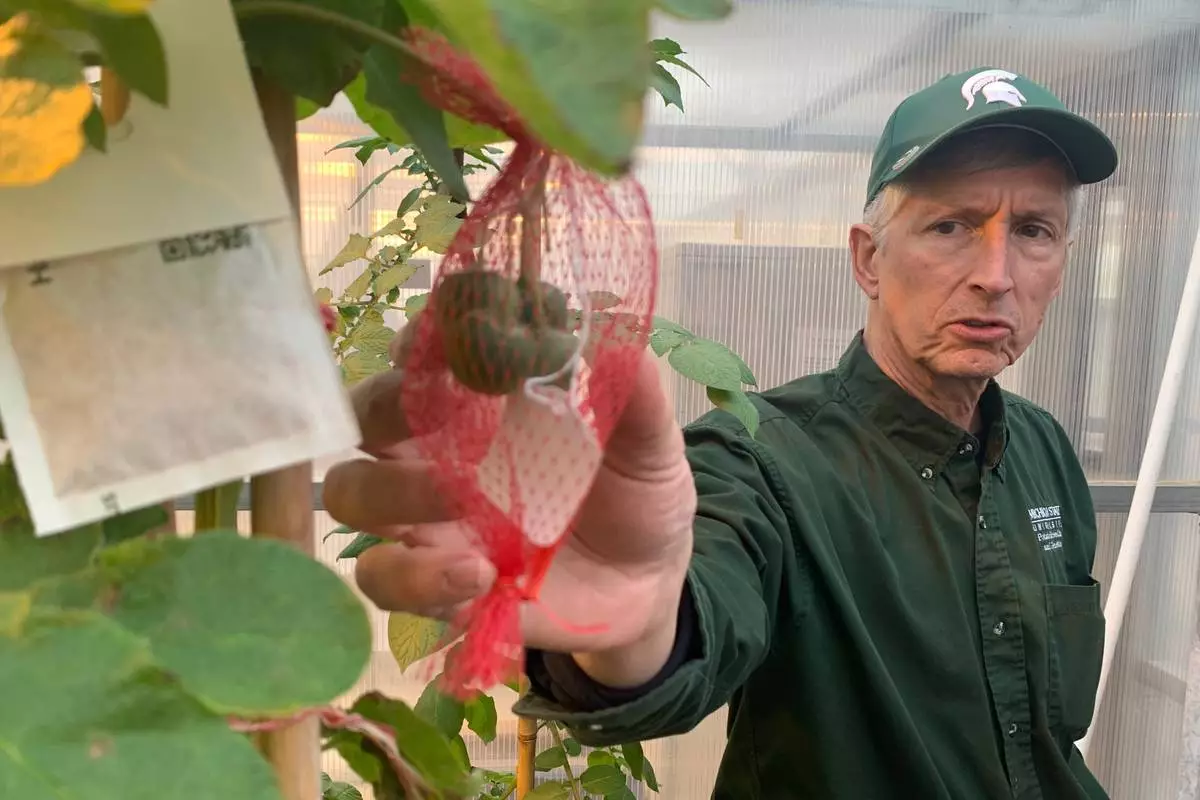
David Douches, a Michigan State University professor who leads the school's Potato Breeding and Genetics Program, inspects some items at a campus greenhouse in East Lansing, Mich., on Tuesday, March 24, 2026 (AP Photo/Mike Householder)
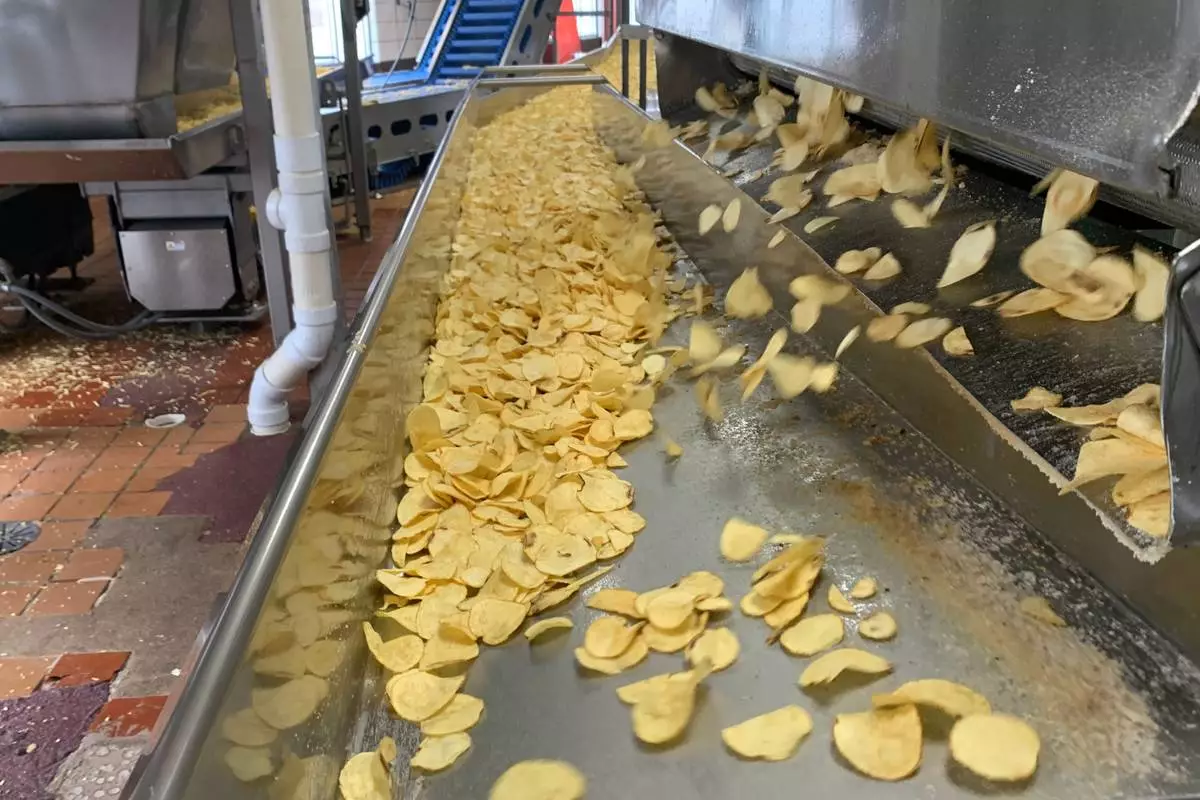
Potato chips move along a conveyor at a Better Made Snack Foods processing facility in Detroit, on Thursday, April 2, 2026 (AP Photo/Mike Householder)
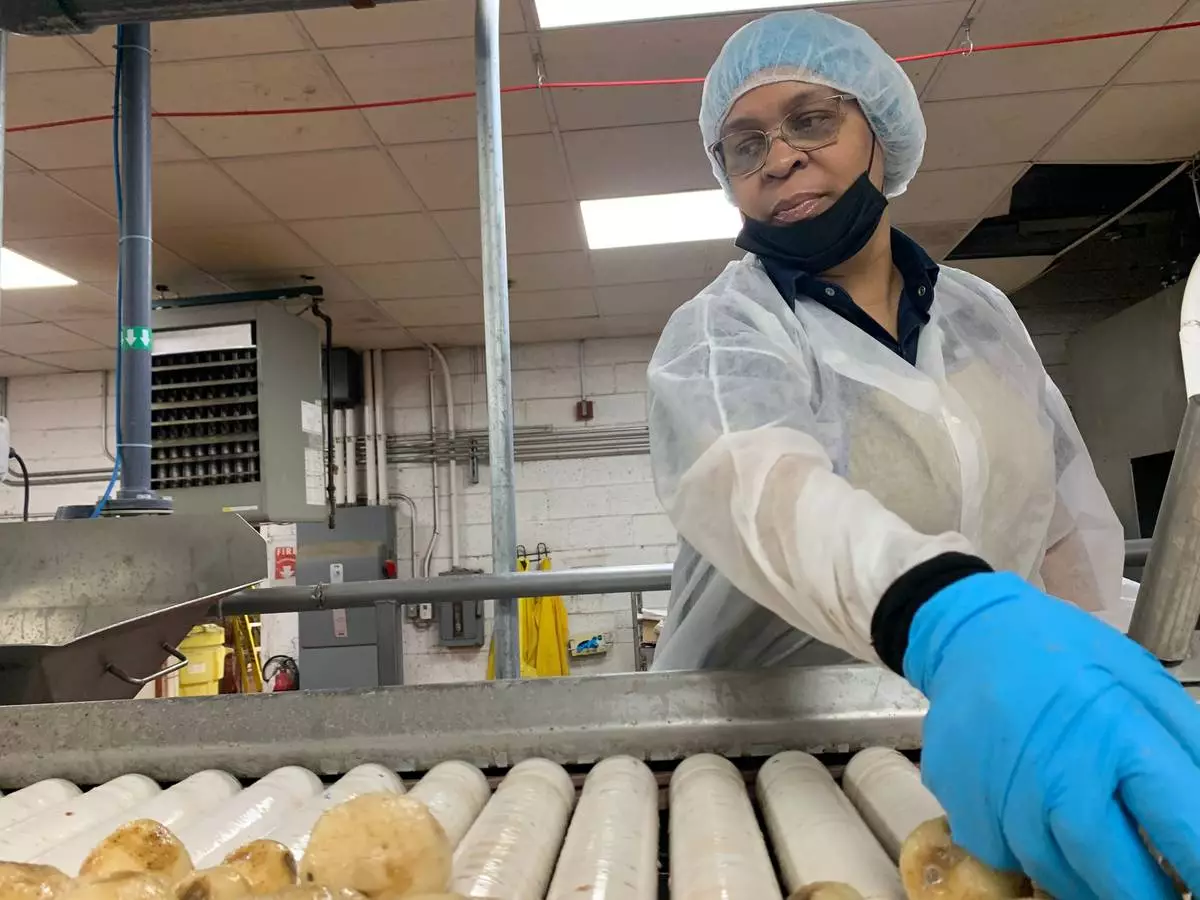
Better Made Snack Foods worker Tonya Tinsleydoes quality control checks on potatoes at a processing facility in Detroit, on Thursday, April 2, 2026 (AP Photo/Mike Householder)
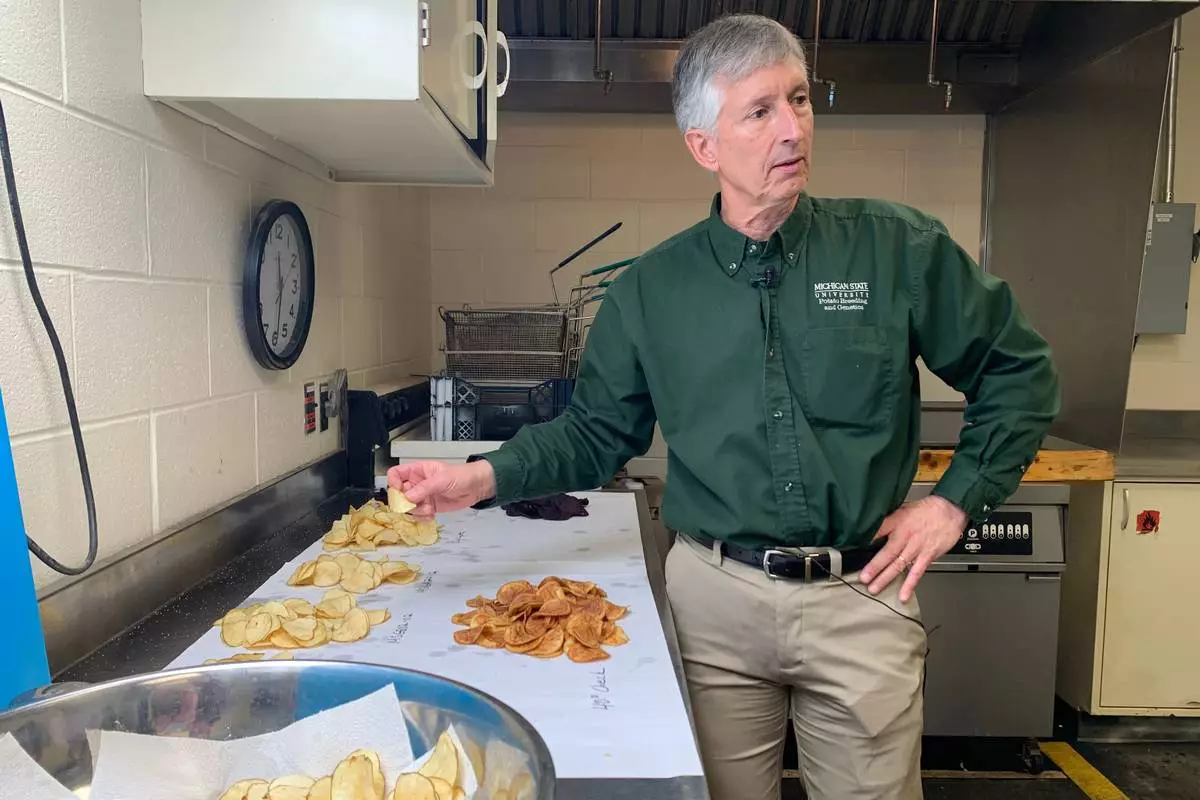
David Douches, a Michigan State University professor who leads the school's Potato Breeding and Genetics Program, holds a potato chip in his hand during a taste testing in East Lansing, Mich., on Tuesday, March 24, 2026 (AP Photo/Mike Householder)