Skip to Content Facebook Feature Image

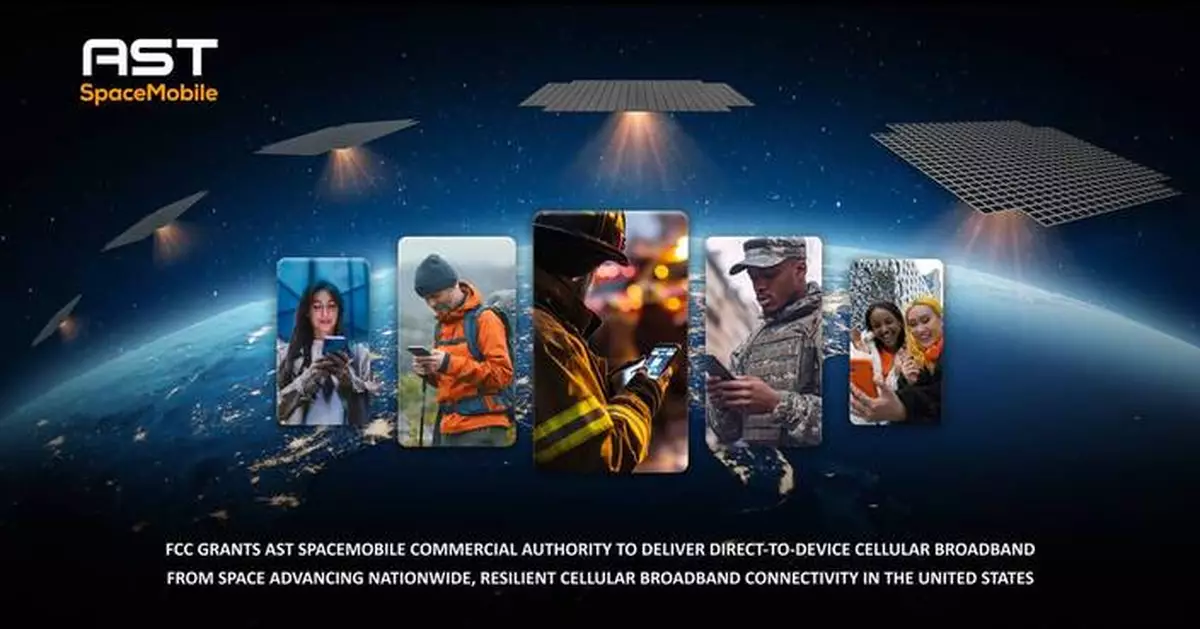
FCC Grants AST SpaceMobile Commercial Authority to Deliver Direct-to-Device Cellular Broadband from Space Advancing Nationwide, Resilient Cellular Broadband Connectivity in the United States

Business

FCC Grants AST SpaceMobile Commercial Authority to Deliver Direct-to-Device Cellular Broadband from Space Advancing Nationwide, Resilient Cellular Broadband Connectivity in the United States
Business

Business

FCC Grants AST SpaceMobile Commercial Authority to Deliver Direct-to-Device Cellular Broadband from Space Advancing Nationwide, Resilient Cellular Broadband Connectivity in the United States

2026-04-22 19:30 Last Updated At:19:40

MIDLAND, Texas--(BUSINESS WIRE)--Apr 22, 2026--

AST SpaceMobile, Inc. (“AST SpaceMobile”) (NASDAQ: ASTS), the company building the first and only space-based cellular broadband network accessible directly by everyday smartphones, designed for both commercial and government applications, today announced that the Federal Communications Commission (FCC) has granted its application to modify its authorization to launch and operate its SpaceMobile non-geostationary orbit (NGSO) satellite system in low Earth orbit (LEO).

This press release features multimedia. View the full release here: https://www.businesswire.com/news/home/20260422147378/en/

The authorization enables AST SpaceMobile to deploy and operate an NGSO constellation of up to 248 satellites to deliver Supplemental Coverage from Space (SCS) directly to unmodified mobile devices across the United States, using premium low-band spectrum - 700 MHz and 800 MHz - which offers superior penetration and coverage characteristics, in coordination with its mobile network operators strategic partners Verizon, AT&T, and FirstNet.

By integrating directly with partner mobile network operator infrastructure, the AST SpaceMobile network enhances network resilience, supports critical communications for first responders, government agencies, enterprises and consumers, and enables users to access space-based cellular broadband using standard, unmodified smartphones.

The grant reflects the Commission’s recognition of AST SpaceMobile’s ability to operate alongside existing terrestrial networks while managing interference and complying with applicable technical requirements, further validating the company’s unique technology and system design. It also supports the broader regulatory framework for AST SpaceMobile’s global deployment, enabling country-by-country authorizations across multiple frequency bands.

AST SpaceMobile system is designed to operate across a broad range of frequency bands supporting feeder links, telemetry, tracking, and command (TT&C), and service links globally, with updated technical parameters designed to enhance performance and efficiency, including

Today marks an important step as we continue scaling our network and moving closer to commercial service,” said Abel Avellan, Founder, Chairman, and CEO of AST SpaceMobile. “We are accelerating deployment of our constellation, advancing integration with leading mobile network operators, and preparing to deliver seamless, space-based cellular broadband directly to everyday smartphones, bringing us closer to connecting people everywhere.”

AST SpaceMobile is approximately 95% vertically integrated with its primary manufacturing hub in Texas, has over 500,000 square feet and over 2000 employees globally, and keeps all major manufacturing processes under U.S. control. The company continues to invest in expanding its U.S. facilities and advancing its manufacturing capabilities, providing the foundation for the American leadership in space-based cellular broadband connectivity.

About AST SpaceMobile

AST SpaceMobile is building the first and only global cellular broadband network in space to operate directly with standard, unmodified mobile devices based on our extensive IP and patent portfolio, and designed for both commercial and government applications. Our engineers and space scientists are on a mission to enable 4G and 5G space-based cellular broadband to every device, everywhere, for today’s nearly 6 billion mobile subscribers globally. For more information, follow AST SpaceMobile on YouTube, X (Formerly Twitter), LinkedIn and Facebook. Watch this video for an overview of the SpaceMobile mission.

Forward-Looking Statements

This communication contains “forward-looking statements” that are not historical facts, and involve risks and uncertainties that could cause actual results of AST SpaceMobile to differ materially from those expected and projected. These forward-looking statements can be identified by the use of forward-looking terminology, including the words “believes,” “estimates,” “anticipates,” “expects,” “intends,” “plans,” “may,” “will,” “would,” “potential,” “projects,” “predicts,” “continue,” or “should,” or, in each case, their negative or other variations or comparable terminology. These forward-looking statements involve significant risks and uncertainties that could cause the actual results to differ materially from the expected results. Most of these factors are outside AST SpaceMobile’s control and are difficult to predict.

Factors that could cause such differences include, but are not limited to: (i) expectations regarding AST SpaceMobile’s strategies and future financial performance, including AST’s future business plans or objectives, expected functionality of the SpaceMobile Service, anticipated timing of the launch of the Block 2 BlueBird satellites, anticipated demand and acceptance of mobile satellite services, prospective performance and commercial opportunities and competitors, the timing of obtaining regulatory approvals, ability to finance its research and development activities, commercial partnership acquisition and retention, products and services, pricing, marketing plans, operating expenses, market trends, revenues, liquidity, cash flows and uses of cash, capital expenditures, and AST SpaceMobile’s ability to invest in growth initiatives; (ii) the negotiation of definitive agreements with mobile network operators relating to the SpaceMobile Service that would supersede preliminary agreements and memoranda of understanding and the ability to enter into commercial agreements with other parties or government entities; (iii) the ability of AST SpaceMobile to grow and manage growth profitably and retain its key employees and AST SpaceMobile’s responses to actions of its competitors and its ability to effectively compete; (iv) changes in applicable laws or regulations; (v) the possibility that AST SpaceMobile may be adversely affected by other economic, business, and/or competitive factors; (vi) the outcome of any legal proceedings that may be instituted against AST SpaceMobile; and (vii) other risks and uncertainties indicated in the Company’s filings with the Securities and Exchange Commission (SEC), including those in the Risk Factors section of AST SpaceMobile’s Form 10-K filed with the SEC on March 2, 2026.

AST SpaceMobile cautions that the foregoing list of factors is not exclusive. AST SpaceMobile cautions readers not to place undue reliance upon any forward-looking statements, which speak only as of the date made. For information identifying important factors that could cause actual results to differ materially from those anticipated in the forward-looking statements, please refer to the Risk Factors in AST SpaceMobile’s Form 10-K filed with the SEC on March 2, 2026. AST SpaceMobile’s securities filings can be accessed on the EDGAR section of the SEC’s website at www.sec.gov. Except as expressly required by applicable securities law, AST SpaceMobile disclaims any intention or obligation to update or revise any forward-looking statements whether as a result of new information, future events or otherwise.
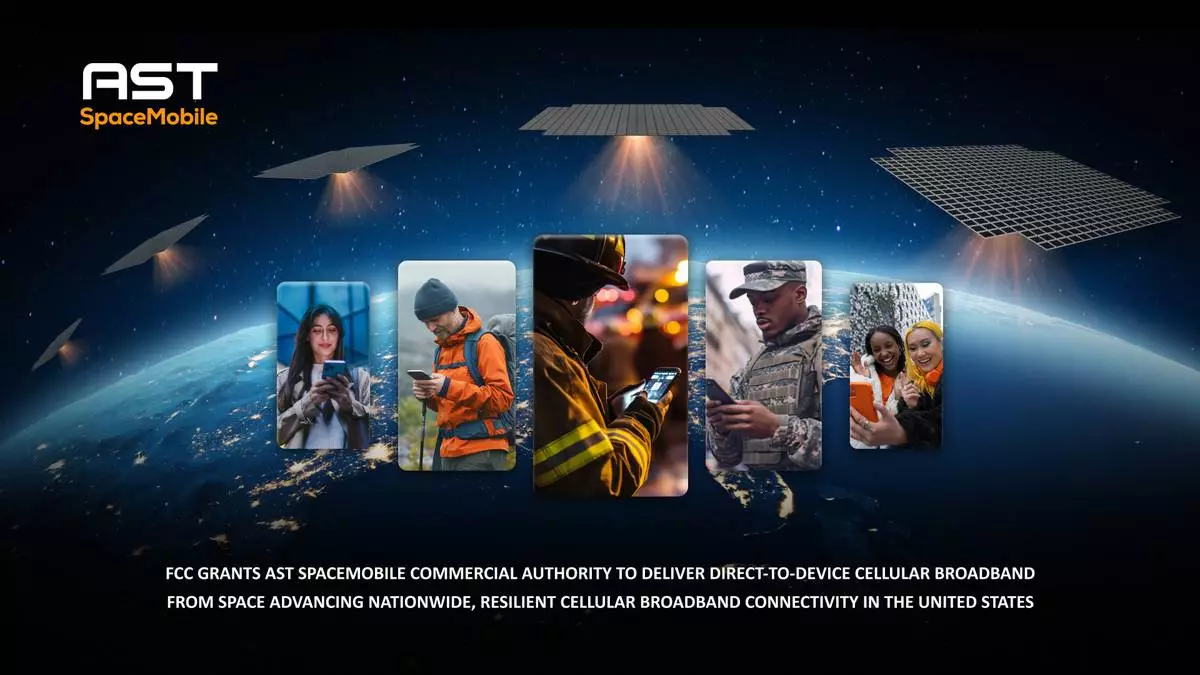
FCC Grants AST SpaceMobile Commercial Authority to Deliver Direct-to-Device Cellular Broadband from Space Advancing Nationwide, Resilient Cellular Broadband Connectivity in the United States
FCC Grants AST SpaceMobile Commercial Authority to Deliver Direct-to-Device Cellular Broadband from Space Advancing Nationwide, Resilient Cellular Broadband Connectivity in the United States
EAST LANSING, Mich. (AP) — There’s a surprising amount of science in a bag of potato chips.

Researchers have spent decades developing potatoes for chip makers that can grow in all kinds of climates, avoid diseases and pests, sit in storage for months and still deliver a satisfying crunch. They've also kept an eye on consumer trends; a shift to snack-size portions has increased the demand for smaller chipping potatoes, for example.

“The potato industry is dynamic," said David Douches, a Michigan State University professor who leads the school’s Potato Breeding and Genetics Program. “The needs change, the costs, the pressures that they have, and the markets change. So we have to adapt to that with our varieties.”

Douches has developed five new potato varieties for chips in the the last 15 years. His latest breakthrough is a bioengineered potato that can maintain a proper sugar balance when stored at colder temperatures, which can help keep potatoes from rotting. He is currently growing seeds for commercial testing of the potato, which is not yet on the market.

Douches' work helps fight world hunger; he has developed disease-resistant varieties for farmers in Nigeria, Kenya, Rwanda and Bangladesh. But he's also helping U.S. chip makers, grateful snackers and Michigan's $2.5 billion potato industry. While Idaho leads the U.S. in potato production, Michigan is the top producer of potatoes for chips.

There are around 50 unique potato varieties grown for chips in the U.S. right now, according to the National Chip Program, a cooperative that brings together Michigan State and 11 other university breeding programs with growers, companies that make chips, and the U.S. Department of Agriculture.

Efforts to improve those varieties are constant. The National Chip Program evaluates around 225 new potato varieties each year and selects 100 for further trials, said Tim Rendall, the director of production research at Potatoes USA, a trade group that oversees the chip program.

The close partnership between researchers, farmers and potato chip companies is unusual in the food industry, said Phil Gusmano, the vice president of purchasing at Better Made Snack Foods, which has produced potato chips in Detroit since 1930. Better Made worked closely with Douches when he was developing two of the varieties the company uses now, Gusmano said.

“We were able talk about size profile and different needs that make a really good chip,” Gusmano said. “And the great thing is, they’re willing to listen to what we have to say, because if they put together a potato that doesn’t really meet the needs for the end processor, it doesn’t do them any good.”

Breeding a new type of potato can take up to 15 years, Douches said. The simple potato has a surprisingly complicated genetic structure, with four chromosomes in each cell compared to two in most species, including humans. That makes it harder to predict which traits that cross-bred plants will inherit, he said.

“We’re never able to fix a trait and carry that over to the next generation, so it’s very difficult to find a potato that has all the traits that we want,” Douches said.

Douches became fascinated with potato breeding and genetics while in graduate school. At Michigan State, he focuses on chipping potatoes, since Michigan is a leading producer. Around 70% of the state’s potato crop is destined for chip processing, according to the Michigan Ag Council. The trade group estimates that one of every four bags of potato chips produced in the U.S. contains Michigan potatoes.

Breeding potatoes that can sit in storage for nearly a year has been one of the biggest challenges in Douches' 40-year career. Historically, farmers harvested potatoes and then stored them in huge piles at around 50 degrees Fahrenheit (10 degrees Celsius). Temperatures any colder cause sugar levels to rise in the root vegetables, and higher sugar content leads to darker potato chips. But warmer storage conditions can lead to rot.

“You think they’re just these inanimate objects, but they actually are respiring and breathing,” Douches said. “When you do that to them, you’ve got, like, a two- to three-day window where they’re happy.”

His Manistee variety, which was released in 2013, can be safely stored until July at 45 F (7.2 C) degrees. His new bioengineered potato can be stored at 40 F (4.4 C).

Gusmano said Better Made used to source potatoes from outside of Michigan for half the year because the Michigan potatoes it harvested in the fall only could be stored until February. The company now uses newer varieties, like Douches' Mackinaw potato, which can be stored until July and is resistant to several common diseases.

“We’re not shipping potatoes from all over the country to be fried here in Michigan,” Gusmano said. “Instead, they’re being shipped from an hour and a half away all year long.”

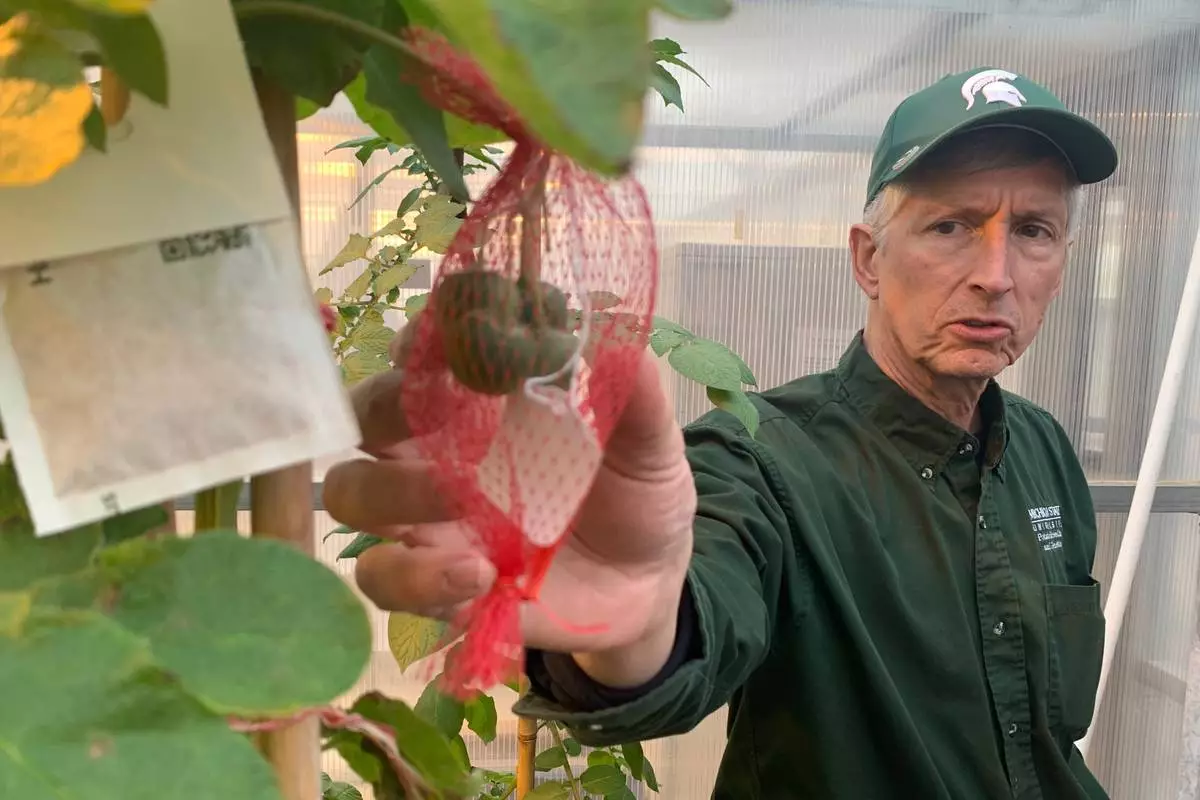
David Douches, a Michigan State University professor who leads the school's Potato Breeding and Genetics Program, inspects some items at a campus greenhouse in East Lansing, Mich., on Tuesday, March 24, 2026 (AP Photo/Mike Householder)

David Douches, a Michigan State University professor who leads the school's Potato Breeding and Genetics Program, inspects some items at a campus greenhouse in East Lansing, Mich., on Tuesday, March 24, 2026 (AP Photo/Mike Householder)

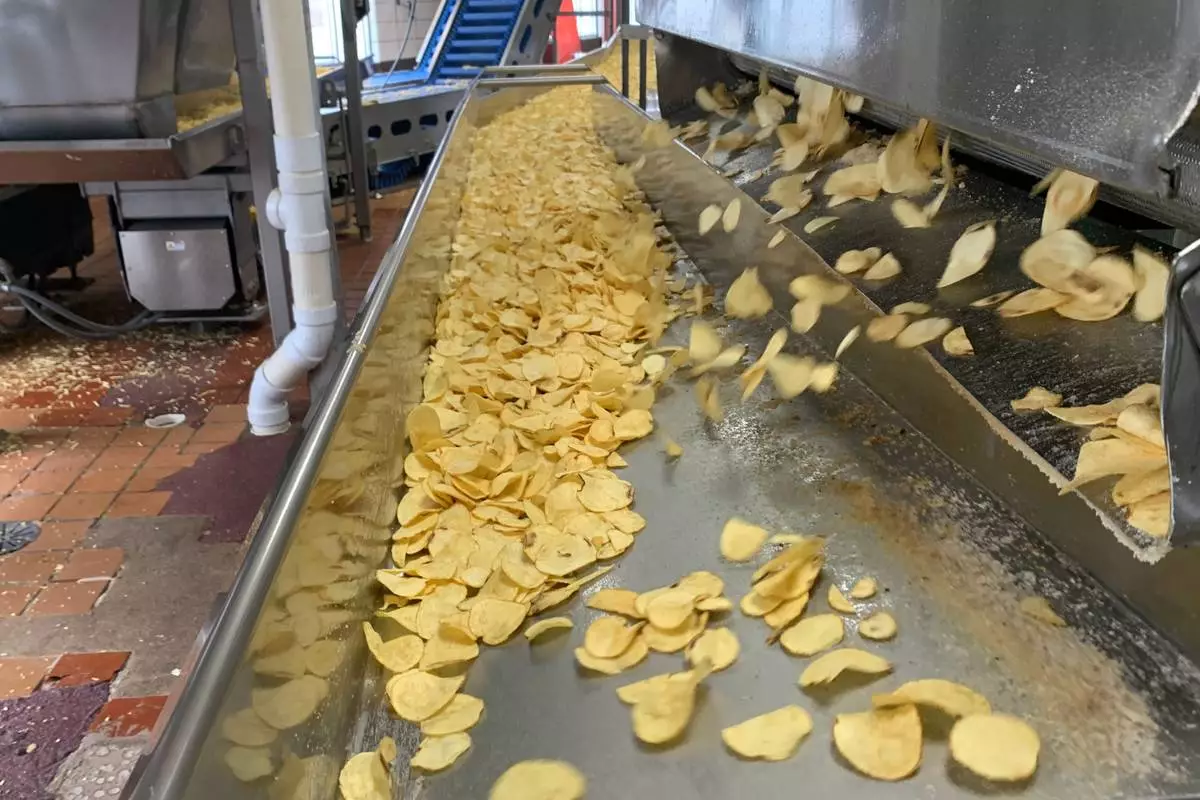
Potato chips move along a conveyor at a Better Made Snack Foods processing facility in Detroit, on Thursday, April 2, 2026 (AP Photo/Mike Householder)

Potato chips move along a conveyor at a Better Made Snack Foods processing facility in Detroit, on Thursday, April 2, 2026 (AP Photo/Mike Householder)

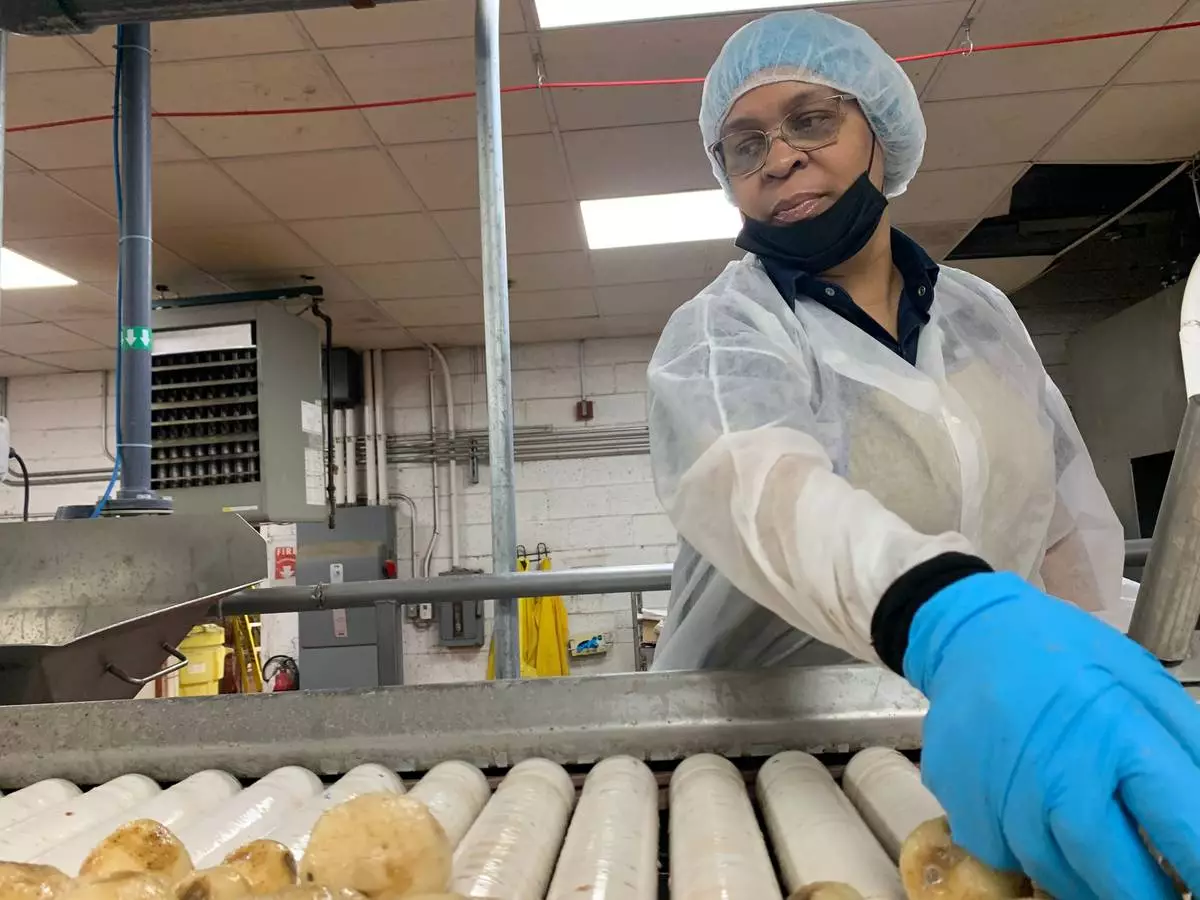
Better Made Snack Foods worker Tonya Tinsleydoes quality control checks on potatoes at a processing facility in Detroit, on Thursday, April 2, 2026 (AP Photo/Mike Householder)

Better Made Snack Foods worker Tonya Tinsleydoes quality control checks on potatoes at a processing facility in Detroit, on Thursday, April 2, 2026 (AP Photo/Mike Householder)

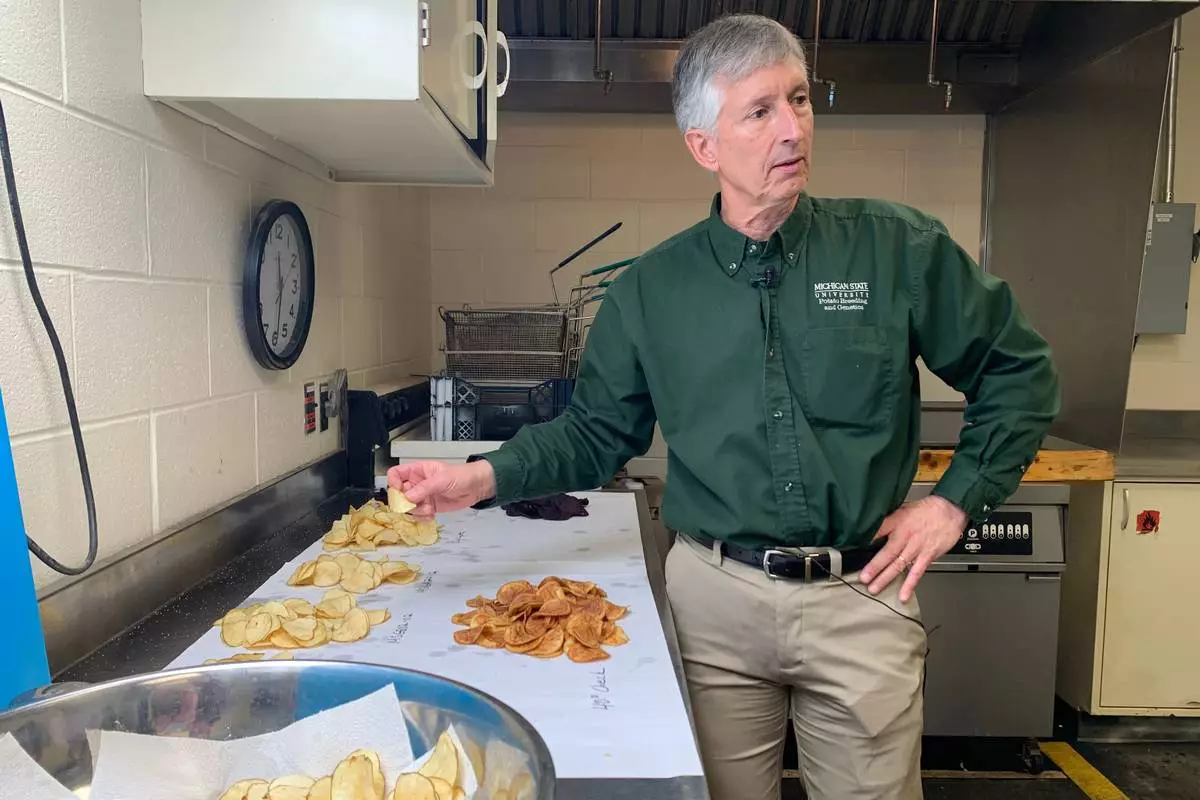
David Douches, a Michigan State University professor who leads the school's Potato Breeding and Genetics Program, holds a potato chip in his hand during a taste testing in East Lansing, Mich., on Tuesday, March 24, 2026 (AP Photo/Mike Householder)

David Douches, a Michigan State University professor who leads the school's Potato Breeding and Genetics Program, holds a potato chip in his hand during a taste testing in East Lansing, Mich., on Tuesday, March 24, 2026 (AP Photo/Mike Householder)

Recommended Articles