Skip to Content Facebook Feature Image

New study finds 'alarming' high flood risk for 17 million Americans on Atlantic and Gulf coasts

News

New study finds 'alarming' high flood risk for 17 million Americans on Atlantic and Gulf coasts
News

News

New study finds 'alarming' high flood risk for 17 million Americans on Atlantic and Gulf coasts

2026-04-23 02:03 Last Updated At:02:11

WASHINGTON (AP) — More than 17 million people along the U.S. Atlantic and Gulf coasts are at the highest risk of being affected by flooding, with New York and New Orleans standing out, according to one of the most comprehensive studies ever of flood risk.

Researchers at the University of Alabama used 16 different factors including the geographic hazards, the population and infrastructure exposed and the vulnerability of people living there. They then brought in past damages from the Federal Emergency Management Agency's database and applied three different artificial intelligence tools to figure out flood risks from Texas to Maine, calculating that 17.5 million people were at “very high” risk and an additional 17 million were at “high" risk, the next level.

The authors looked at all sizes of flooding and examined separately what FEMA considers the most extreme, which are the top 1% of events. The study found 4.3 million people along the coasts to be at the highest level of risk of extreme flooding, but 20.5 million to be at high risk, the second highest level.

They found a lot of vulnerability, highlighting eight different cities from Houston, which flooded in 2017’s Hurricane Harvey, to New York, which was inundated in 2012’s Superstorm Sandy.

Wednesday's study in the journal Science Advances found that New York City has 4.75 million people at the two highest risk levels for all flooding, with more than 200,000 buildings likely to be damaged.

And while the number of people at risk in New Orleans is far lower, about 380,000, it involves 99% of the city's population. That doesn't mean 99% of the people will be affected in the next hurricane or nontropical flood, but that they might be depending on the storm's individual path and rain pattern, said study co-author Wanyun Shao, a climate scientist at the University of Alabama.

“Just look at the magnitude,” Shao said. “Those numbers are shocking, are alarming.”

“When the next big storm hits New York City, when the next Hurricane Katrina -like hurricane makes landfall in New Orleans, people will get hurt, especially those socially vulnerable populations,” Shao said referring to the poor, the elderly, children and the uneducated.

Shao and outside experts said the numbers stunned them even though they were familiar with the worsening effects of climate change.

“New York is known to be susceptible to floods and it has the largest population. But the fact that New York has nearly an order of magnitude more flood-exposed population than any other city is surprising,” said Alex de Sherbinin, a geographer who directs Columbia University’s Center for Integrated Earth System Information. He wasn’t part of the study.

Flood problems are becoming more frequent in New York and New Orleans because of human-caused climate change, the study said.

Jacksonville has 679,000 people at high or very high risk of flooding, while Houston is just behind at just under 600,000. Other cities highlighted include Miami, Norfolk, Virginia, Charleston, South Carolina, Mobile, Alabama.

Shao and outside experts said what separates her study from others is the sheer comprehensiveness of all the factors it considers, including sinking land and pavement that doesn't allow water to seep into the ground, as well as incorporating human social vulnerability such as poverty and age.

“This could be applied to other places in the world, such as Manila,” said University of Virginia engineering professor Venkataraman Lakshmi, who heads the hydrology section of the American Geophysical Union, referring to the capital of the Philippines. He wasn't part of the study, but said the flooding problems it highlights will get more frequent and intense due to human-caused climate change.

Columbia University's Marco Tedesco, who wasn't part of the study, said "it reinforces the crucial concept that future flood disasters are not just about water—they are about where people live, how cities are built, and who is least protected.”

De Sherbinin said, "the analysis of the flood risk factors is important for local planners, emergency managers, and even highway crews and utility providers. We all know that low lying areas are more flood prone, but the data they have assembled provide more insights into flood risk, particularly for flash floods.”

Study lead author Hemal Dey, a geospatial scientist, said he hopes local officials look at not just building more dams and levees, but more natural infrastructure such as wetlands, grasslands, rain gardens and estuaries.

“The research is solid confirmation of what emergency managers have been saying for years. Realtors will hate it,'' said Craig Fugate, a former FEMA director who wasn't part of the study. "The harder question is what we’re actually going to do about it."

The Associated Press’ climate and environmental coverage receives financial support from multiple private foundations. AP is solely responsible for all content. Find AP’s standards for working with philanthropies, a list of supporters and funded coverage areas at AP.org.
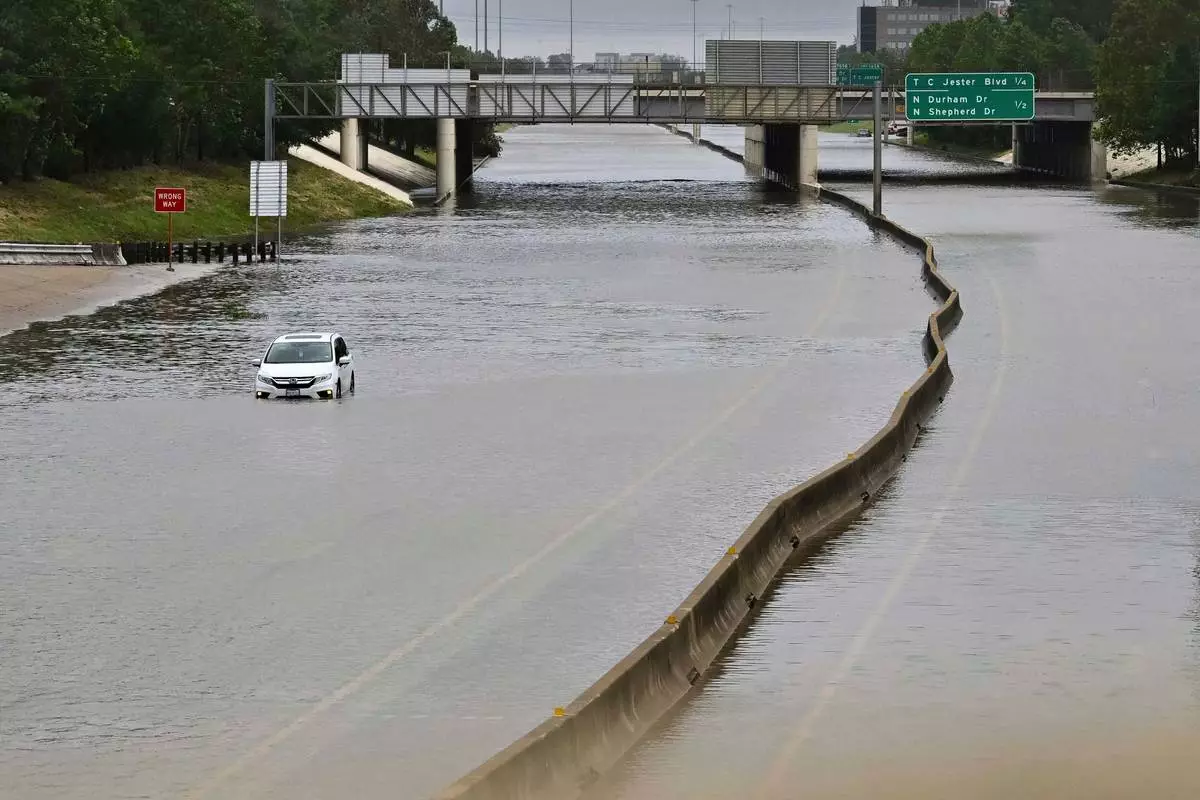
FILE - A vehicle is stranded in high waters on a flooded highway at Interstate 10 and Washington in Houston, July 8, 2024, after Hurricane Beryl came ashore. (AP Photo/Maria Lysaker, File)
FILE - A vehicle is stranded in high waters on a flooded highway at Interstate 10 and Washington in Houston, July 8, 2024, after Hurricane Beryl came ashore. (AP Photo/Maria Lysaker, File)

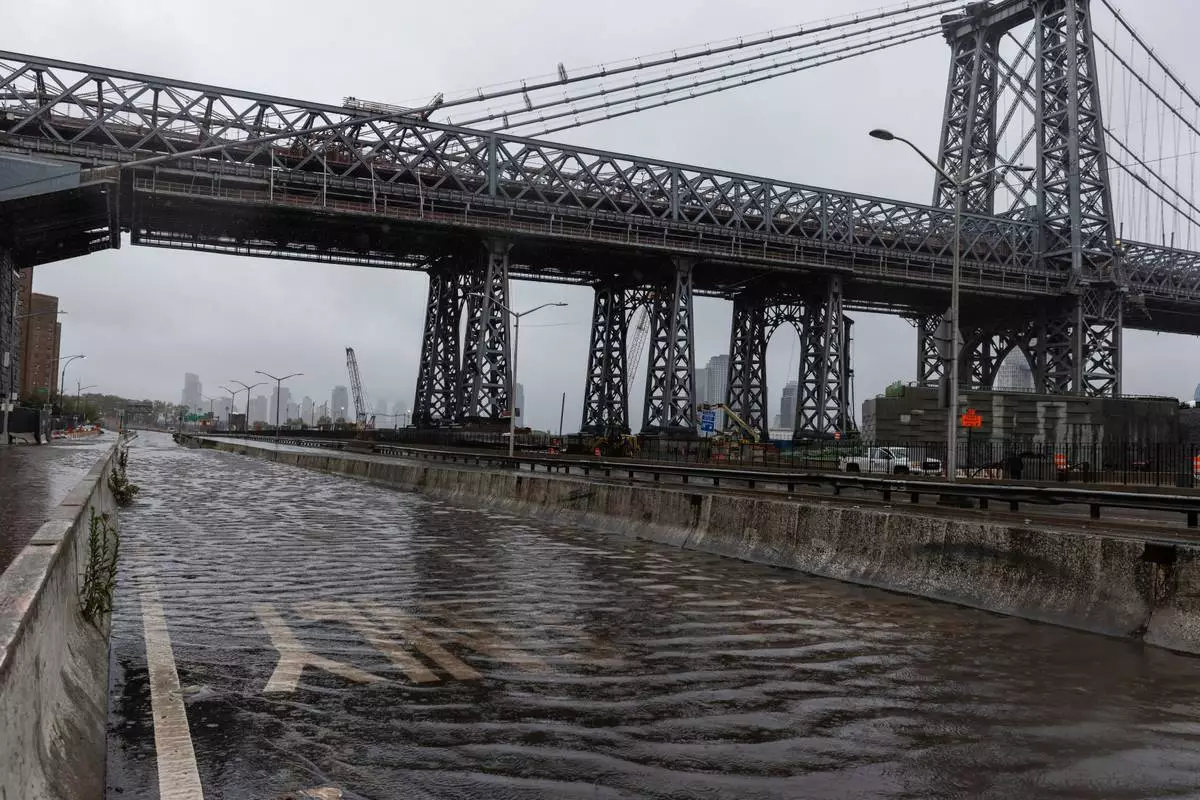
FILE - The FDR highway underneath the Williamsburg Bridge in the Lower East Side of Manhattan is closed due to flooding on Sept. 29, 2023, in New York. (AP Photo/Stefan Jeremiah, File)
FILE - The FDR highway underneath the Williamsburg Bridge in the Lower East Side of Manhattan is closed due to flooding on Sept. 29, 2023, in New York. (AP Photo/Stefan Jeremiah, File)

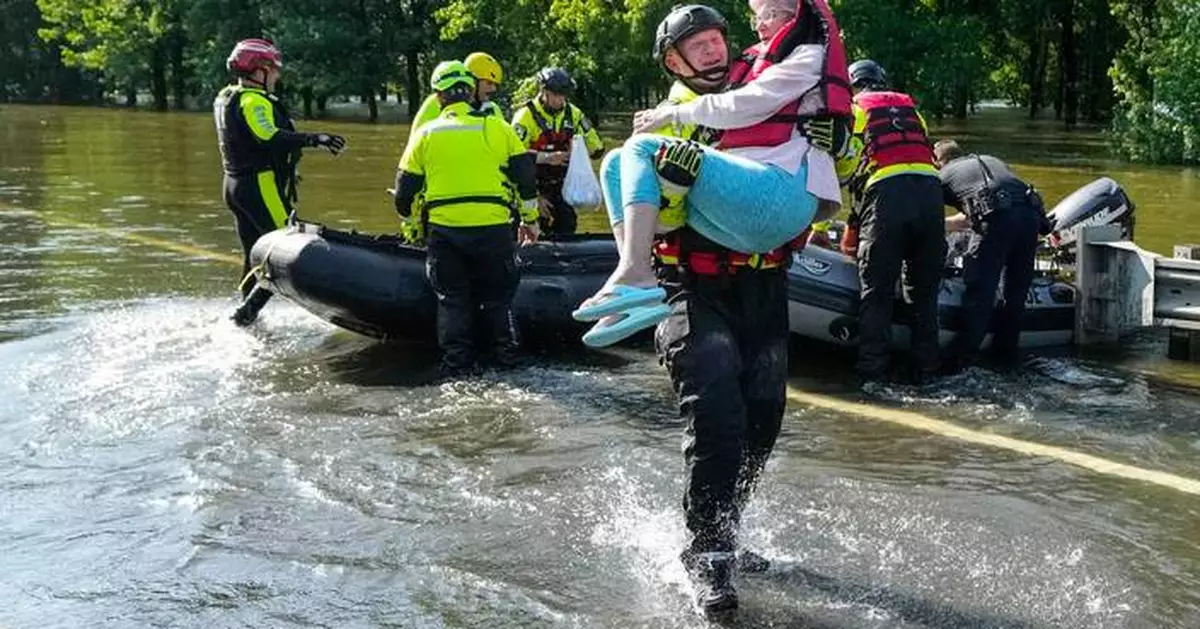
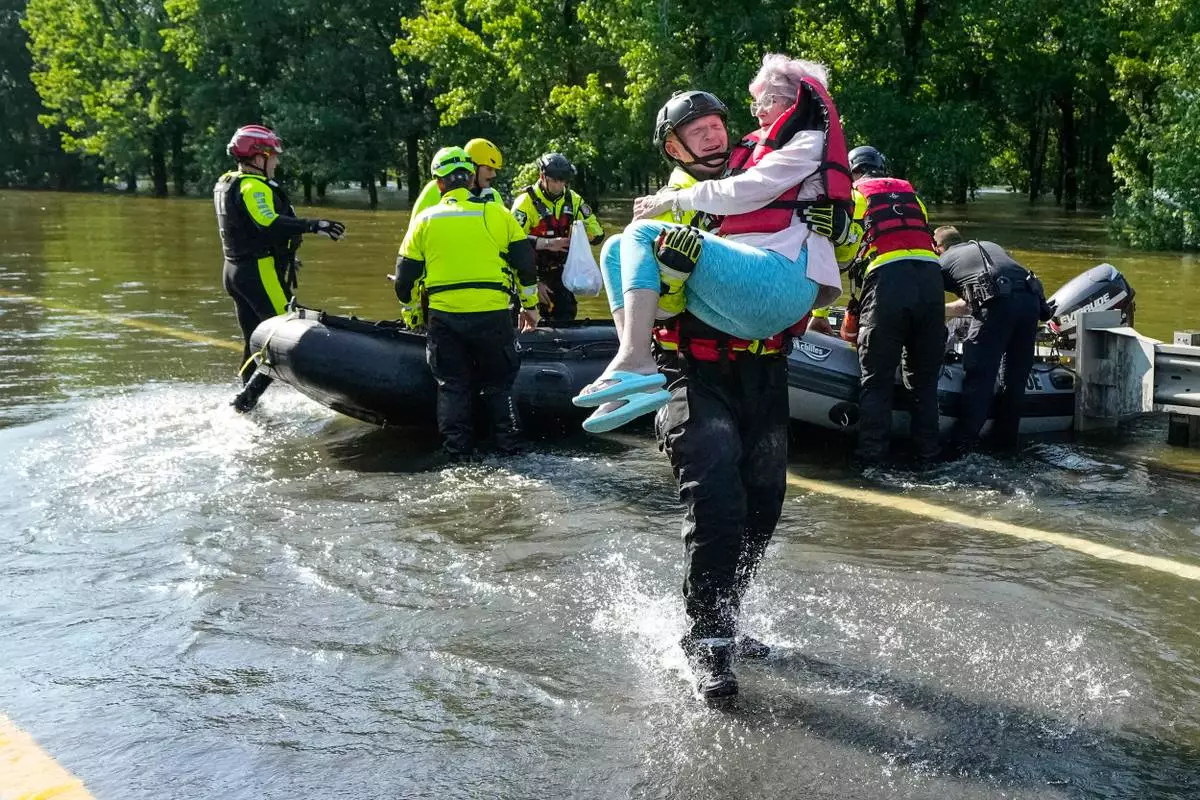
FILE - Conroe firefighter Cody Leroy carries a resident evacuated in a boat by the CFD Rapid Intervention Team from her flooded home in the aftermath of a severe storm May 2, 2024, in Conroe, Texas. (Brett Coomer/Houston Chronicle via AP)
FILE - Conroe firefighter Cody Leroy carries a resident evacuated in a boat by the CFD Rapid Intervention Team from her flooded home in the aftermath of a severe storm May 2, 2024, in Conroe, Texas. (Brett Coomer/Houston Chronicle via AP)
NEW YORK (AP) — A surge for Intel following a blowout profit report is leading technology stocks higher Friday, while oil prices keep swinging in the wait for what’s next with the Iran war.

The S&P 500 added 0.4% and inched above its all-time high set on Wednesday, even though the majority stocks within the index fell. The Dow Jones Industrial Average was down 168 points, or 0.3%, as of 11 a.m. Eastern time, and the Nasdaq composite was 1% higher.

Intel led the way and is potentially heading for its best day since 1987. It jumped 23.8% after reporting much stronger results for the first three months of the year than analysts expected. CEO Lip-Bu Tan said the next wave of artificial-intelligence technology is increasing the need for Intel’s chips and products, and the company’s forecast for profit in the spring topped analysts’ estimates.

Such strong profit reports have helped Wall Street rally to records, and the S&P 500 has leaped more than 12% in a little under a month. Hopes have also built in financial markets that the United States and Iran can find a way to avoid a worst-case scenario for the global economy because of their war.

A ceasefire is tenuously in place between the two, but tensions between them are still keeping oil tankers from passing through the Strait of Hormuz to deliver crude from the Persian Gulf to customers worldwide. Oil prices climbed this week on worries about the strait, but a potentially encouraging signal came Friday after Iran’s state-run IRNA news agency confirmed Iranian Foreign Minister Abbas Araghchi was heading to Pakistan for talks.

The price for a barrel of Brent crude to be delivered in June yo-yoed between roughly $103 and $107 in the morning and most recently was down less than 0.1% at $105.04. The price for Brent delivered in July, which is where more of the trading is happening in the market, fell 0.4% to $98.96.

On Wall Street, Procter & Gamble rose 3.9% after reporting stronger profit for the latest quarter than analysts expected. CEO Shailesh Jejurikar said it saw broad-based growth across regions and products, which include Bounty paper towels and Tide detergent.

That helped offset a drop of 22.5% for Charter Communications, whose profit for the latest quarter came in weaker than analysts expected. It lost 120,000 internet customers during the three months, more than some analysts expected.

Hartford Insurance Group fell 1% after reporting profit growth for the latest quarter that fell short of analysts’ expectations.

In the bond market, Treasury yields eased after a report said sentiment among U.S. consumers remains sour. A survey by the University of Michigan found weaker sentiment in April across political party, income, age, and education, though it improved a bit after the ceasefire in the war with Iran was announced earlier in the month.

The yield on the 10-year Treasury dipped to 4.30% from 4.34% late Thursday.

Investors are also betting again on the possibility that the Federal Reserve could resume its cuts to interest rates later this year. The path appeared to clear Friday for President Donald Trump's nominee to chair the Fed, Kevin Warsh, after the U.S. Justice Department ended its probe into the Fed's current chair, Jerome Powell.

Sen. Thom Tillis, a North Carolina Republican, has said he would oppose Warsh until the investigation was resolved, effectively blocking his confirmation. Warsh is the choice of Trump, who has been arguing loudly for lower interest rates.

In stock markets abroad, indexes were mixed across Europe and Asia. Japan’s Nikkei 225 rose 1%, and France’s CAC 40 fell 0.7% for two of the world’s bigger moves.

AP Business Writers Chan Ho-him and Matt Ott contributed to this report.

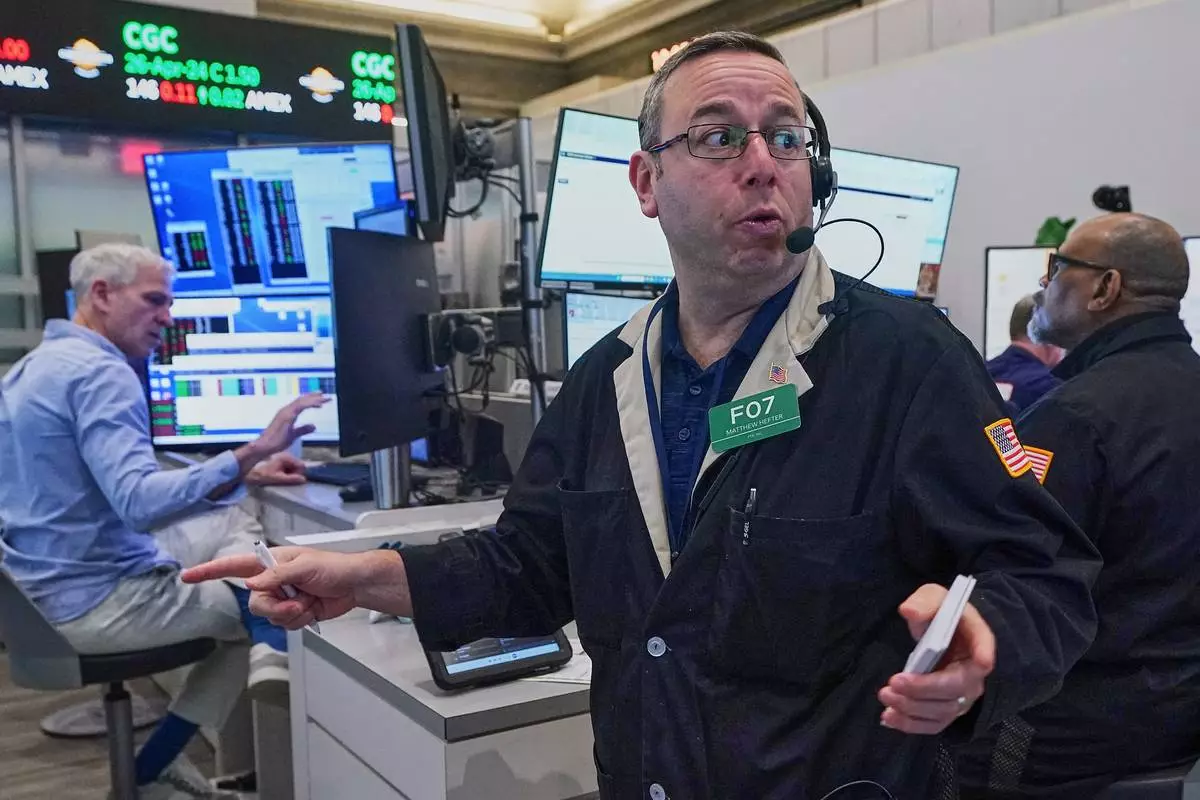
Options trader Matthew Hefter, center, works on the floor of the New York Stock Exchange, Thursday, April 23, 2026. (AP Photo/Richard Drew)

Options trader Matthew Hefter, center, works on the floor of the New York Stock Exchange, Thursday, April 23, 2026. (AP Photo/Richard Drew)

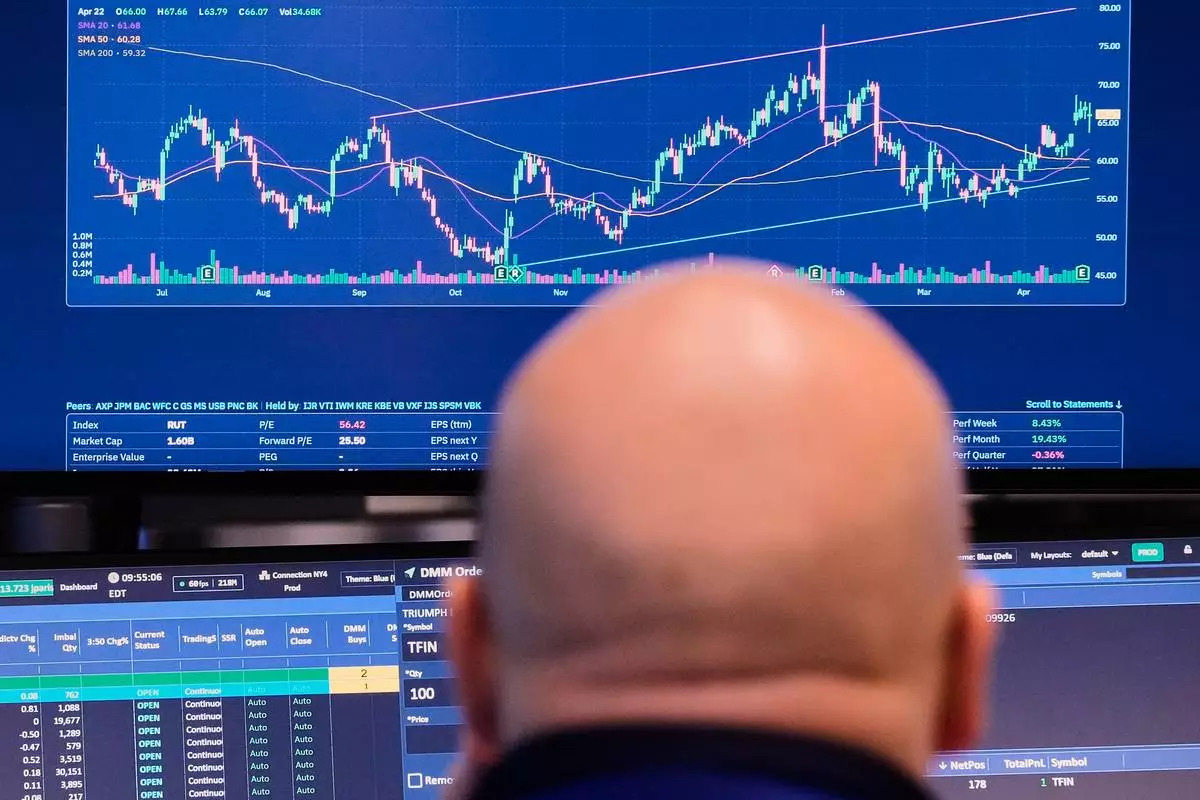
Specialist John Parisi works at his post on the floor of the New York Stock Exchange, Wednesday, April 22, 2026. (AP Photo/Richard Drew)

Specialist John Parisi works at his post on the floor of the New York Stock Exchange, Wednesday, April 22, 2026. (AP Photo/Richard Drew)

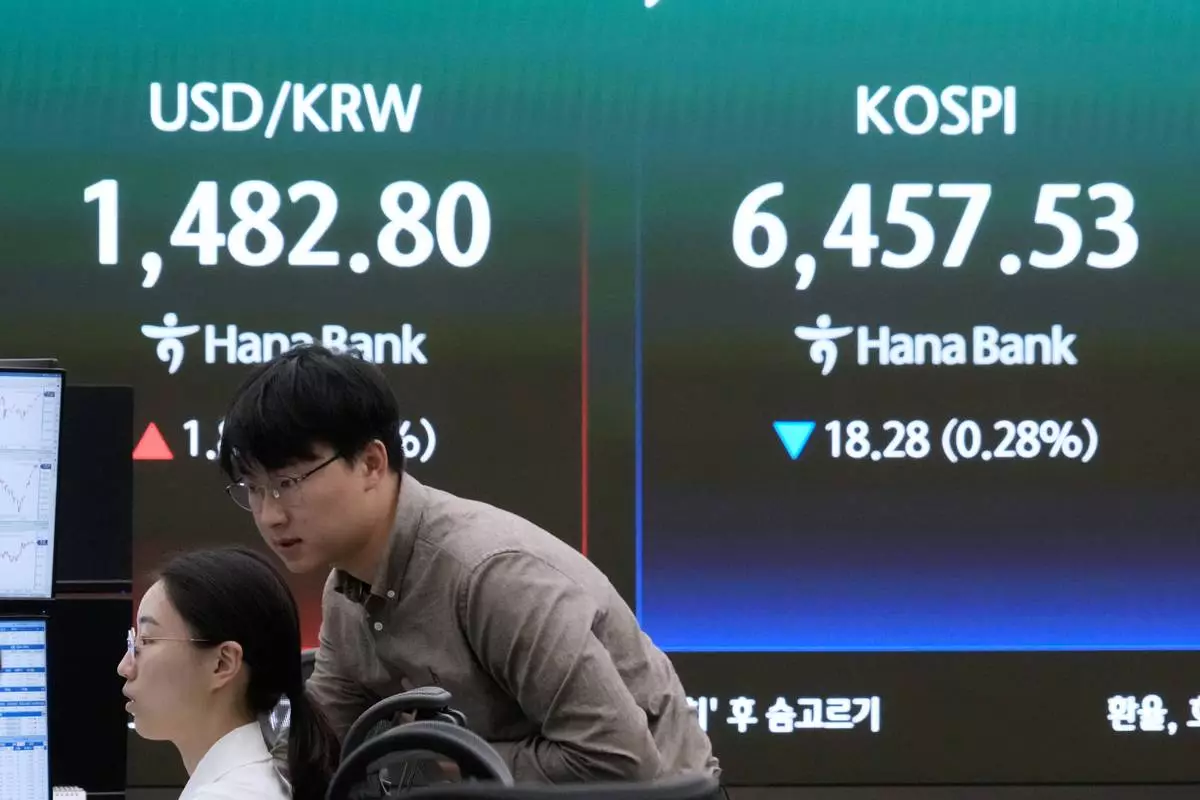
Currency traders watch monitors near a screen showing the Korea Composite Stock Price Index (KOSPI), top center, and the foreign exchange rate between U.S. dollar and South Korean won, top center left, at the foreign exchange dealing room of the Hana Bank headquarters in Seoul, South Korea, Friday, April 24, 2026. (AP Photo/Ahn Young-joon)

Currency traders watch monitors near a screen showing the Korea Composite Stock Price Index (KOSPI), top center, and the foreign exchange rate between U.S. dollar and South Korean won, top center left, at the foreign exchange dealing room of the Hana Bank headquarters in Seoul, South Korea, Friday, April 24, 2026. (AP Photo/Ahn Young-joon)

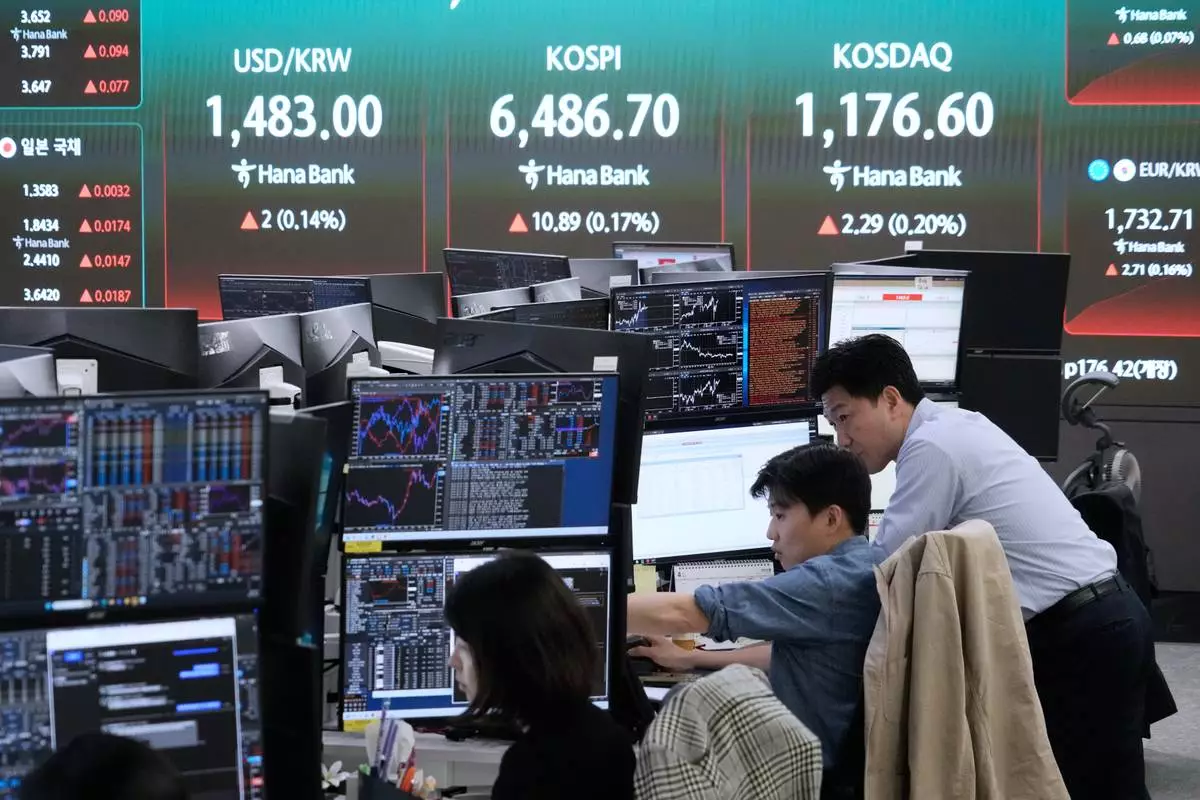
Currency traders work near a screen showing the Korea Composite Stock Price Index (KOSPI), right, and the foreign exchange rate between U.S. dollar and South Korean won at the foreign exchange dealing room of the Hana Bank headquarters in Seoul, South Korea, Friday, April 24, 2026. (AP Photo/Ahn Young-joon)

Currency traders work near a screen showing the Korea Composite Stock Price Index (KOSPI), right, and the foreign exchange rate between U.S. dollar and South Korean won at the foreign exchange dealing room of the Hana Bank headquarters in Seoul, South Korea, Friday, April 24, 2026. (AP Photo/Ahn Young-joon)

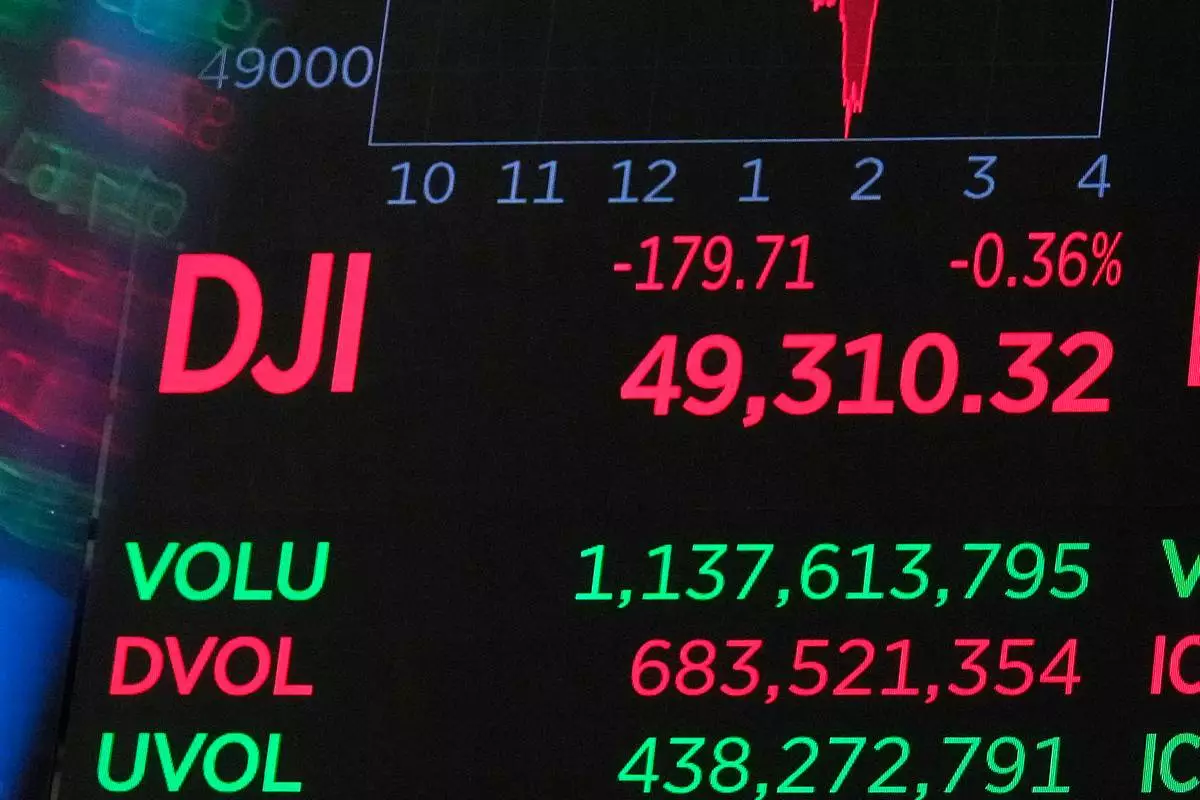
A board above the floor of the New York Stock Exchange displays the closing number for the Dow Jones industrial average, Thursday, April 23, 2026. (AP Photo/Richard Drew)

A board above the floor of the New York Stock Exchange displays the closing number for the Dow Jones industrial average, Thursday, April 23, 2026. (AP Photo/Richard Drew)

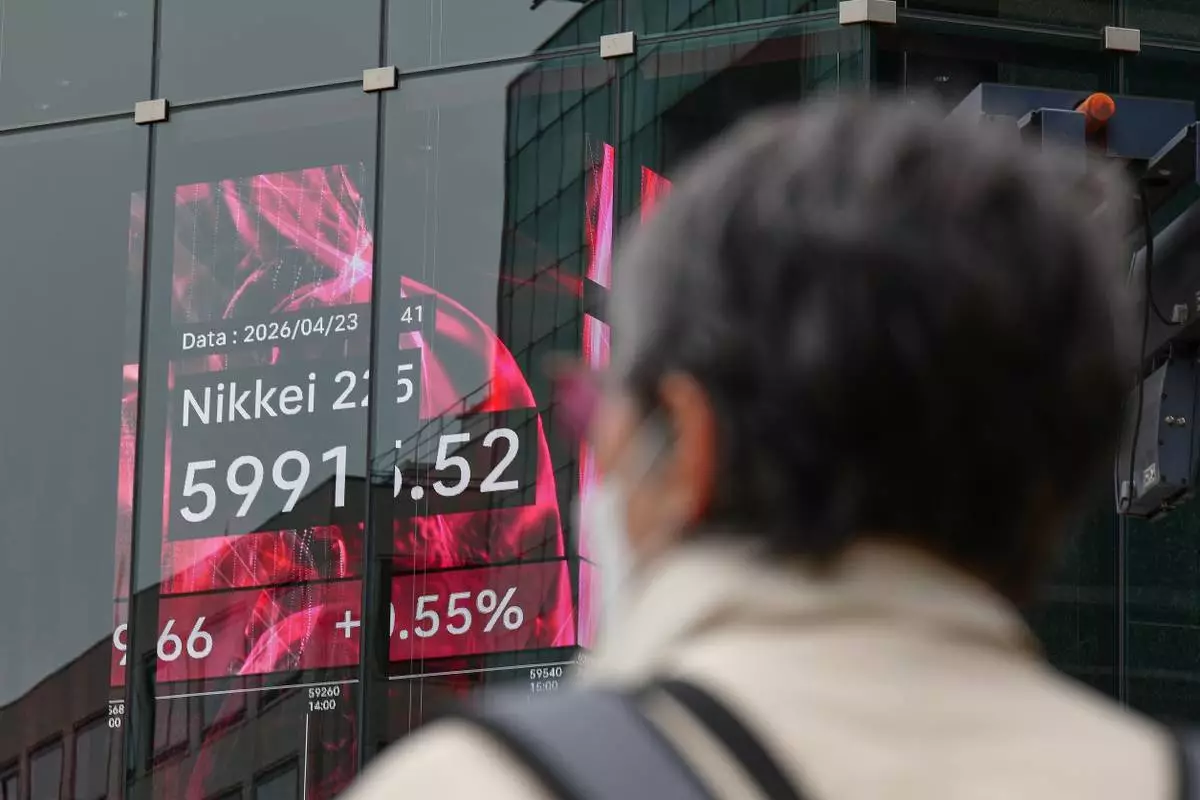
A person stands in front of an electronic stock board showing Japan's Nikkei index at a securities firm Thursday, April 23, 2026, in Tokyo. (AP Photo/Eugene Hoshiko)

A person stands in front of an electronic stock board showing Japan's Nikkei index at a securities firm Thursday, April 23, 2026, in Tokyo. (AP Photo/Eugene Hoshiko)

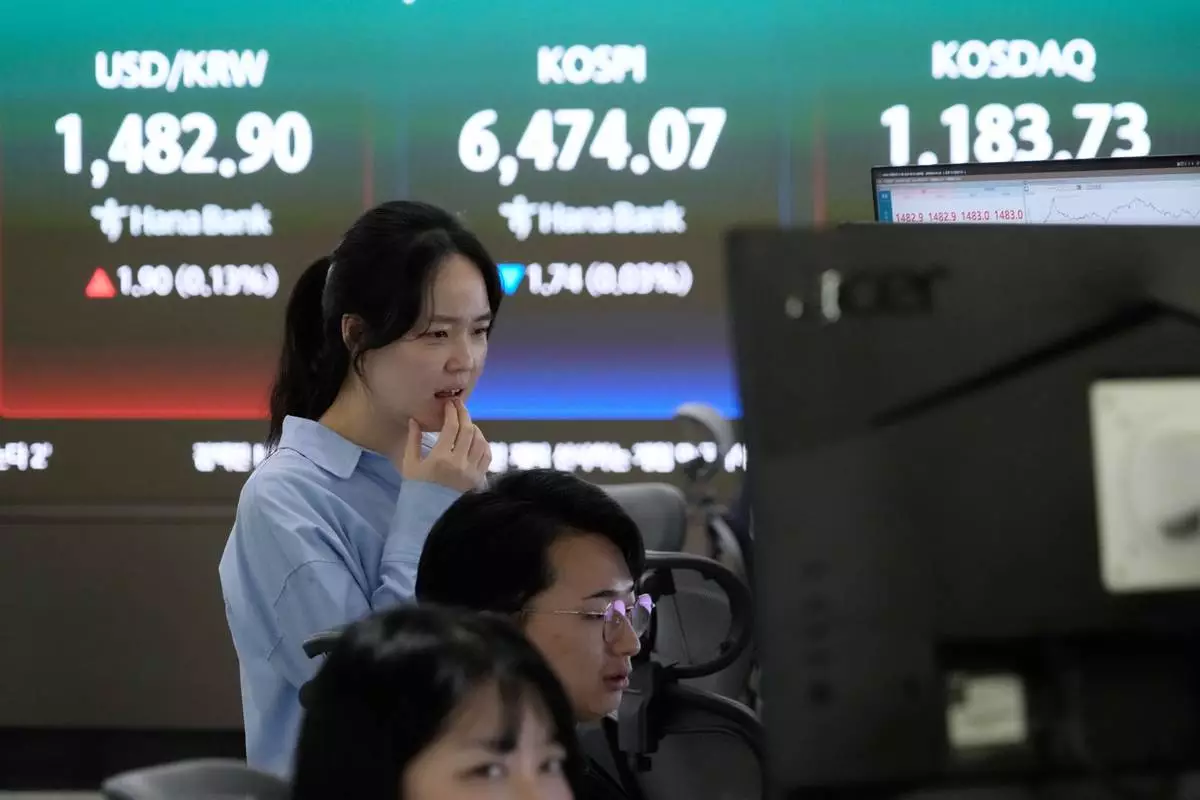
A currency trader watches monitors near a screen showing the Korea Composite Stock Price Index (KOSPI), top center, and the foreign exchange rate between U.S. dollar and South Korean won, top center left, at the foreign exchange dealing room of the Hana Bank headquarters in Seoul, South Korea, Friday, April 24, 2026. (AP Photo/Ahn Young-joon)

A currency trader watches monitors near a screen showing the Korea Composite Stock Price Index (KOSPI), top center, and the foreign exchange rate between U.S. dollar and South Korean won, top center left, at the foreign exchange dealing room of the Hana Bank headquarters in Seoul, South Korea, Friday, April 24, 2026. (AP Photo/Ahn Young-joon)

Recommended Articles