NICOSIA, Cyprus (AP) — Spanish Prime Minister Pedro Sánchez on Friday refused to be drawn into a dispute with the United States over reports that the Pentagon is weighing whether to punish members of NATO that fail to support American operations in the Iran war.
Among those in the firing line is Spain, which has refused to allow U.S. forces involved in the war to use bases on its territory or airspace. Spain says that U.S.-Israeli actions in the Iran war contravenes international law.
Click to Gallery
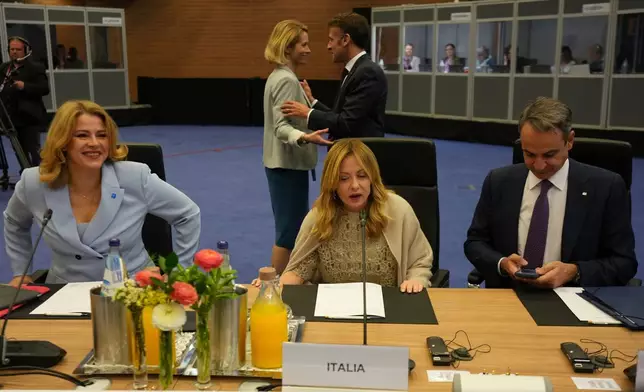
European Union foreign policy chief Kaja Kallas, background left, speaks with French President Emmanuel Macron, as Latvia's Prime Minister Evika Silina, foreground left, Italy's Prime Minister Giorgia Meloni, center, and Greece's Prime Minister Kyriakos Mitsotakis prepare for a roundtable meeting pf the EU Summit in Nicosia, Cyprus, Friday, April 24, 2026. (AP Photo/Petros Karadjias)
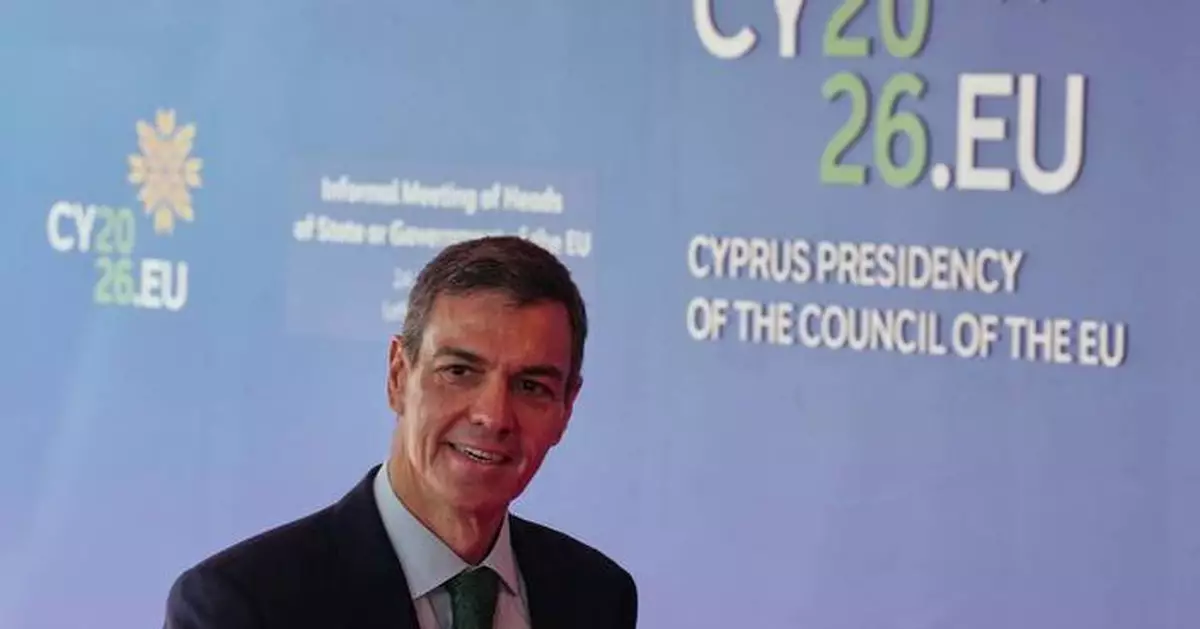
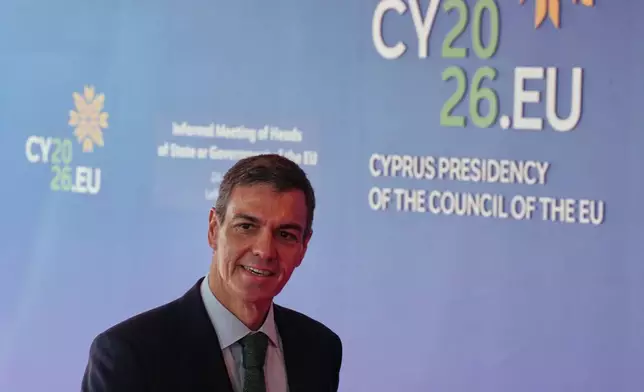
Spain's Prime Minister Pedro Sanchez attends the EU Summit in Nicosia, Cyprus, Friday, April 24, 2026. (AP Photo/Petros Karadjias)
French President Emmanuel Macron arrives for the EU Summit in Nicosia, Cyprus, Friday, April 24, 2026. (Yves Herman, Pool Photo via AP)
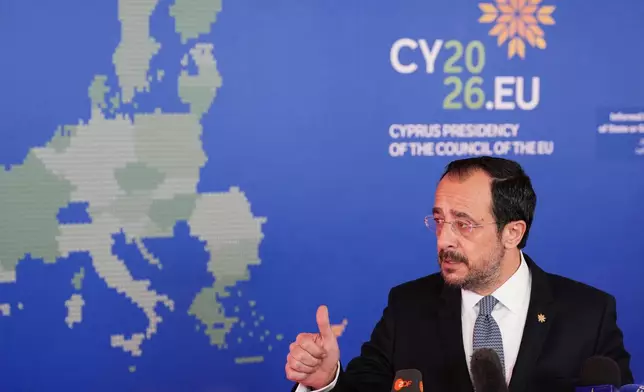
Cypriot President Nikos Christodoulides speaks with the media as he arrives for the EU Summit in Nicosia, Cyprus, Friday, April 24, 2026. (AP Photo/Petros Karadjias)
European Union foreign policy chief Kaja Kallas, background left, speaks with French President Emmanuel Macron, as Latvia's Prime Minister Evika Silina, foreground left, Italy's Prime Minister Giorgia Meloni, center, and Greece's Prime Minister Kyriakos Mitsotakis prepare for a roundtable meeting pf the EU Summit in Nicosia, Cyprus, Friday, April 24, 2026. (AP Photo/Petros Karadjias)
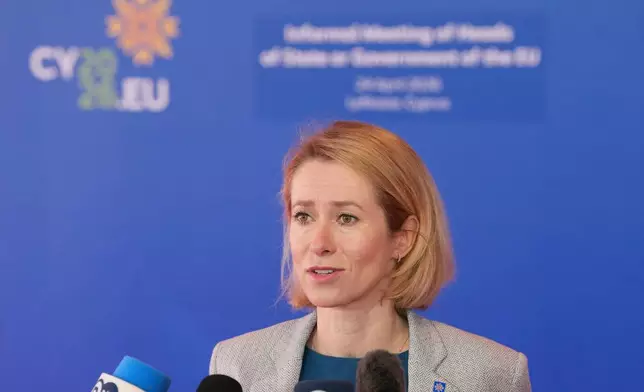
European Union foreign policy chief Kaja Kallas speaks with the media as she arrives for the EU Summit in Nicosia, Cyprus, Friday, April 24, 2026. (AP Photo/Petros Karadjias)
Spain's Prime Minister Pedro Sanchez arrives for the EU Summit in Nicosia, Cyprus, Friday, April 24, 2026. (AP Photo/Petros Karadjias)
France and the U.K. also refuse to give U.S. forces free rein to use their territory for the bombing campaign.
The Pentagon is reported to be mulling whether to suspend Spain from NATO, according to an unidentified U.S. official referring to a U.S. Defense Department email, and quoted by the Reuters news agency.
“Well, we do not work with emails," Sánchez told reporters at a European Union summit in Cyprus. "We work with official documents and positions taken, in this case, by the government of the United States.”
“The position of the government of Spain is clear: absolute collaboration with the allies, but always within the framework of international legality,” he said.
The email also suggested reassessing U.S. support for the United Kingdom's claim to the Falkland Islands, near Argentina, which are also known as Islas Malvinas.
Dave Pares, a spokesman for Prime Minister Keir Starmer, said the U.K. position on the islands is “longstanding and it’s unchanged: Sovereignty rests with the U.K., and the islanders’ right to self-determination is paramount.”
Pares noted “the Falkland Islands have previously voted overwhelmingly in favor of remaining a U.K. overseas territory.”
NATO operates by consensus, and all 32 member countries must agree for it to act.
The trans-Atlantic alliance's founding treaty has no mechanism for suspending or ejecting any of the members, although nations may leave of their own accord one year after notifying the other allies. As an organization, NATO has no direct role in the Iran war except to defend its own territory.
U.S. President Donald Trump has been angered by what he sees as the failure of some NATO members to back American actions in the Iran war and to help police the Strait of Hormuz, a major trade route. He has questioned the purpose of U.S. membership in the military organization.
EU foreign policy chief Kaja Kallas appeared perplexed by the U.S. criticism, given that the United Kingdom and France are leading an effort to help secure trade in the strait once the war is over.
“When we have had contacts with the American counterparts, then actually their asks for us have been exactly what we are able to offer after the cessation of hostilities,” she said. “Demining, escorting of ships, all of this that we have been discussing.”
But the United States has “long-standing arrangements and agreements with European allies on overflight, on basing” that should be respected, NATO Secretary-General Mark Rutte has said, in implicit criticism of some allies like Spain, but also France.
While Spain restricted U.S. military activity related to the Iran war, U.S. warplanes have flown over other NATO allies’ airspace and used U.S. bases in other NATO countries for war-related operations.
Trump has even threatened to cut trade with Spain over its refusal to allow the use of its bases and airspace. More broadly, Spain has also disappointed its allies by failing to commit to spend as much as they plan to do on defense.
As the reality sinks in that the U.S. commitment to NATO and Europe’s security under Trump has waned, the EU leaders debated how best to use European laws to come to each other’s aid should one of them come under attack.
Cypriot President Nikos Christodoulides, whose country holds the bloc’s presidency until July, said that the leaders had tasked the European Commission to “prepare a blueprint on how we respond” should a member seek help under Article 42.7 of the EU treaties.
It's only ever been used once, by France after the Paris terror attacks in 2015.
EU envoys and ministers are set next month to conduct “table-top exercises” to game out how the treaty article might be used, drawing on the bloc’s military capacities, but also other assets not available to NATO, like trade, border and visa policies.
Lorne Cook reported from Brussels. Jill Lawless in London contributed.
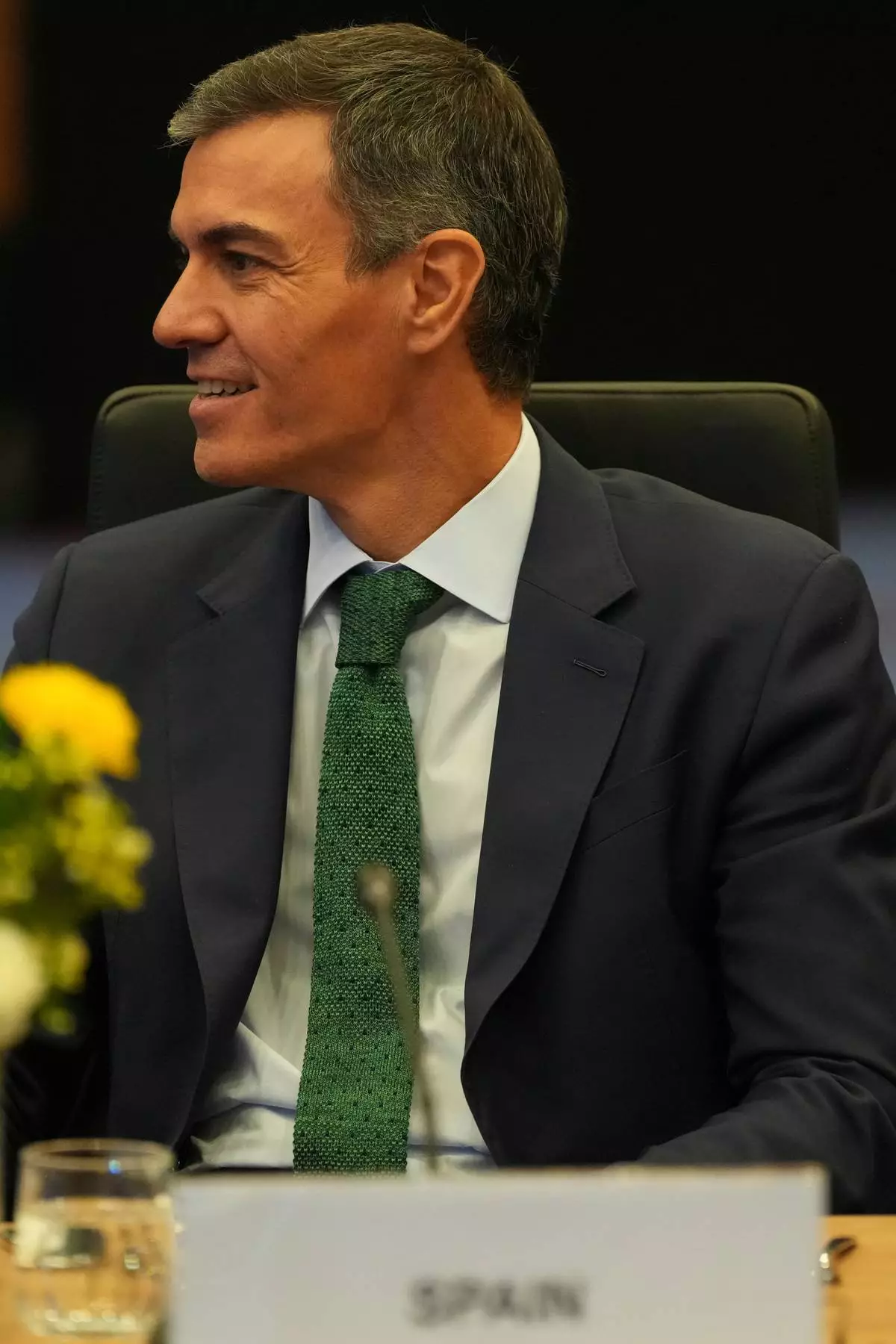
Spain's Prime Minister Pedro Sanchez attends the EU Summit in Nicosia, Cyprus, Friday, April 24, 2026. (AP Photo/Petros Karadjias)
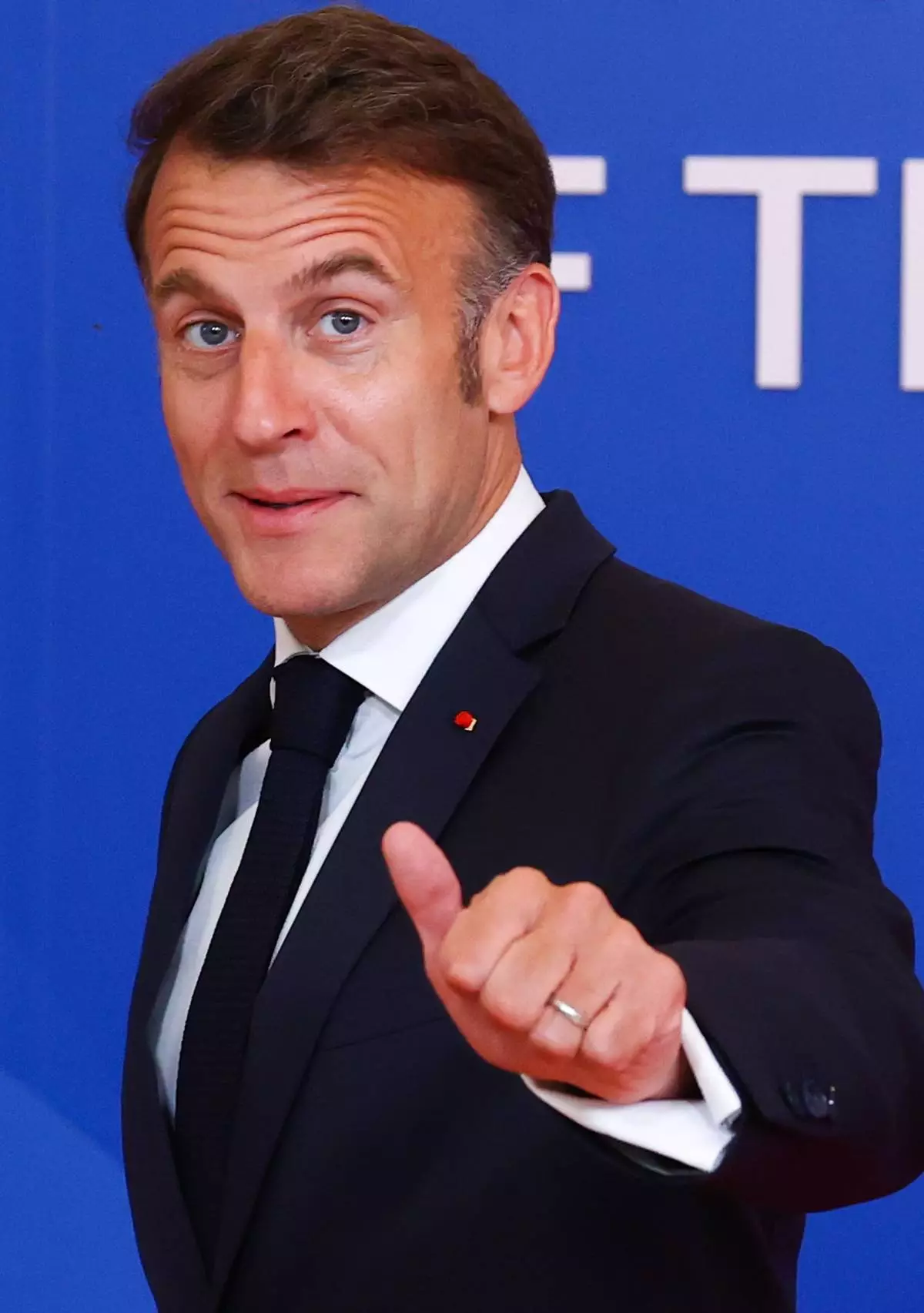
French President Emmanuel Macron arrives for the EU Summit in Nicosia, Cyprus, Friday, April 24, 2026. (Yves Herman, Pool Photo via AP)
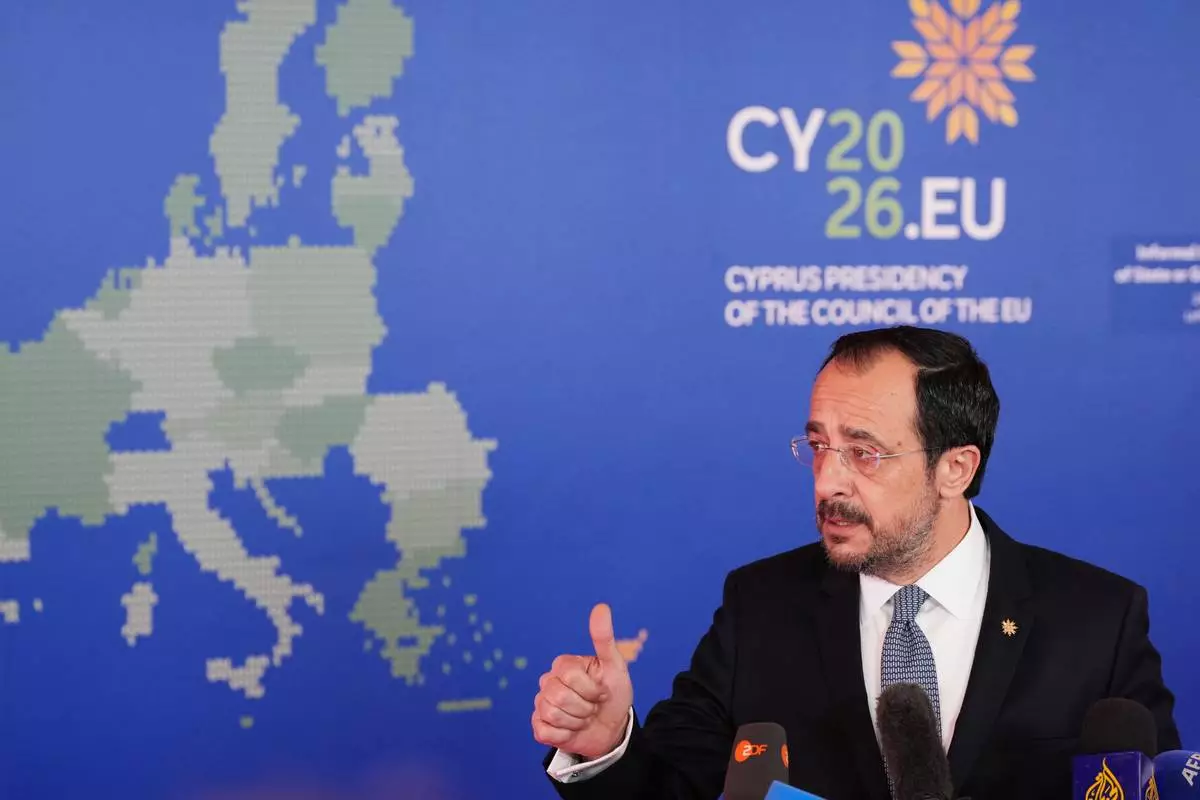
Cypriot President Nikos Christodoulides speaks with the media as he arrives for the EU Summit in Nicosia, Cyprus, Friday, April 24, 2026. (AP Photo/Petros Karadjias)
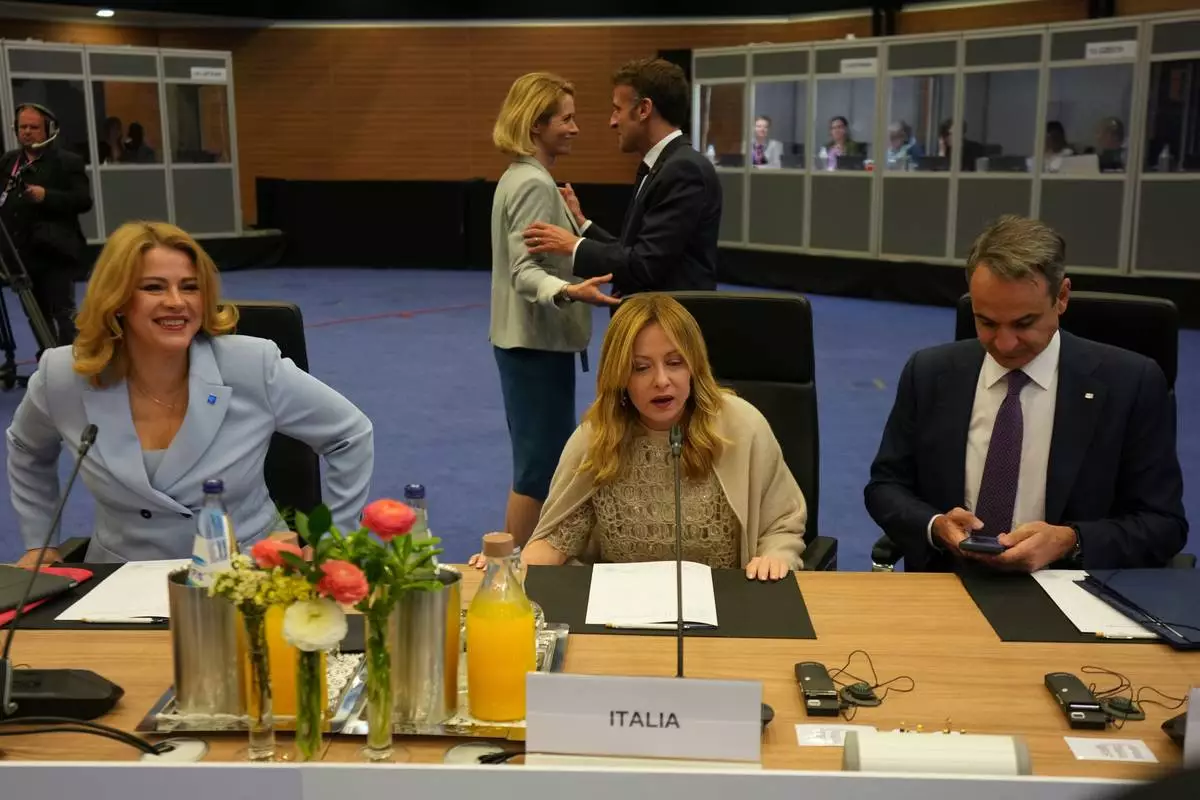
European Union foreign policy chief Kaja Kallas, background left, speaks with French President Emmanuel Macron, as Latvia's Prime Minister Evika Silina, foreground left, Italy's Prime Minister Giorgia Meloni, center, and Greece's Prime Minister Kyriakos Mitsotakis prepare for a roundtable meeting pf the EU Summit in Nicosia, Cyprus, Friday, April 24, 2026. (AP Photo/Petros Karadjias)
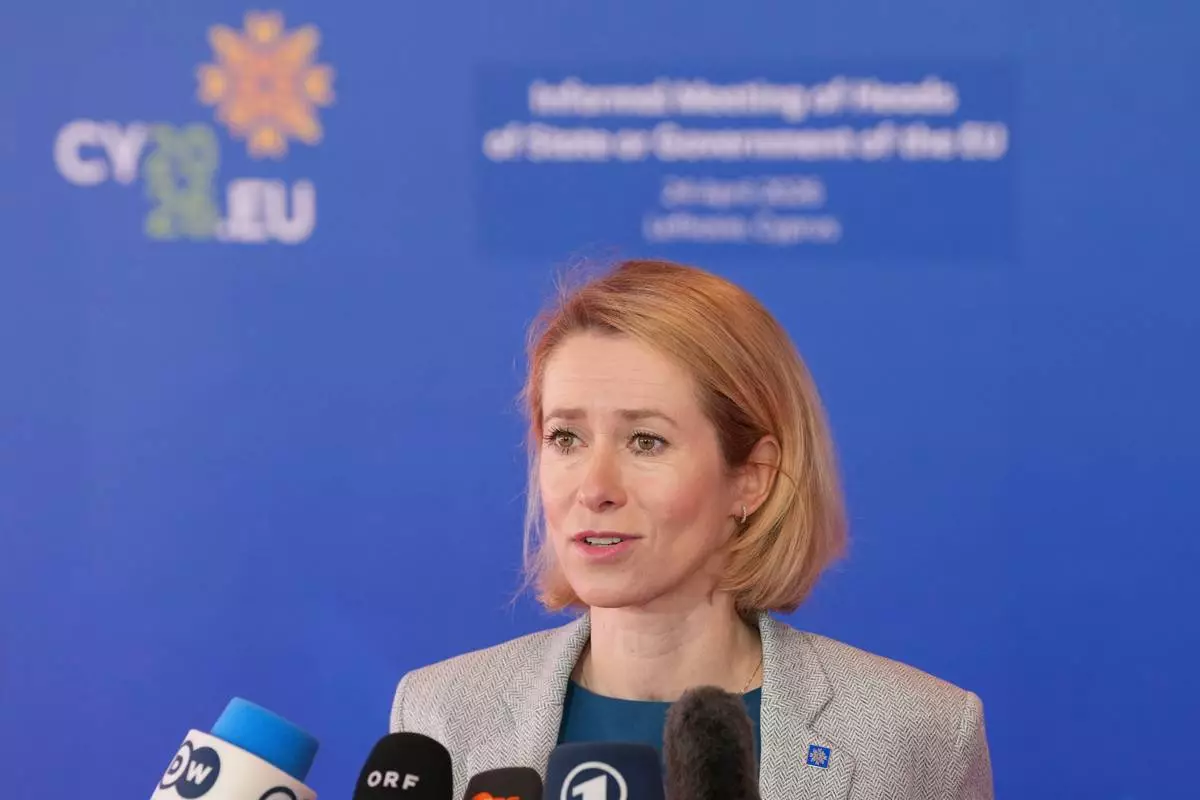
European Union foreign policy chief Kaja Kallas speaks with the media as she arrives for the EU Summit in Nicosia, Cyprus, Friday, April 24, 2026. (AP Photo/Petros Karadjias)
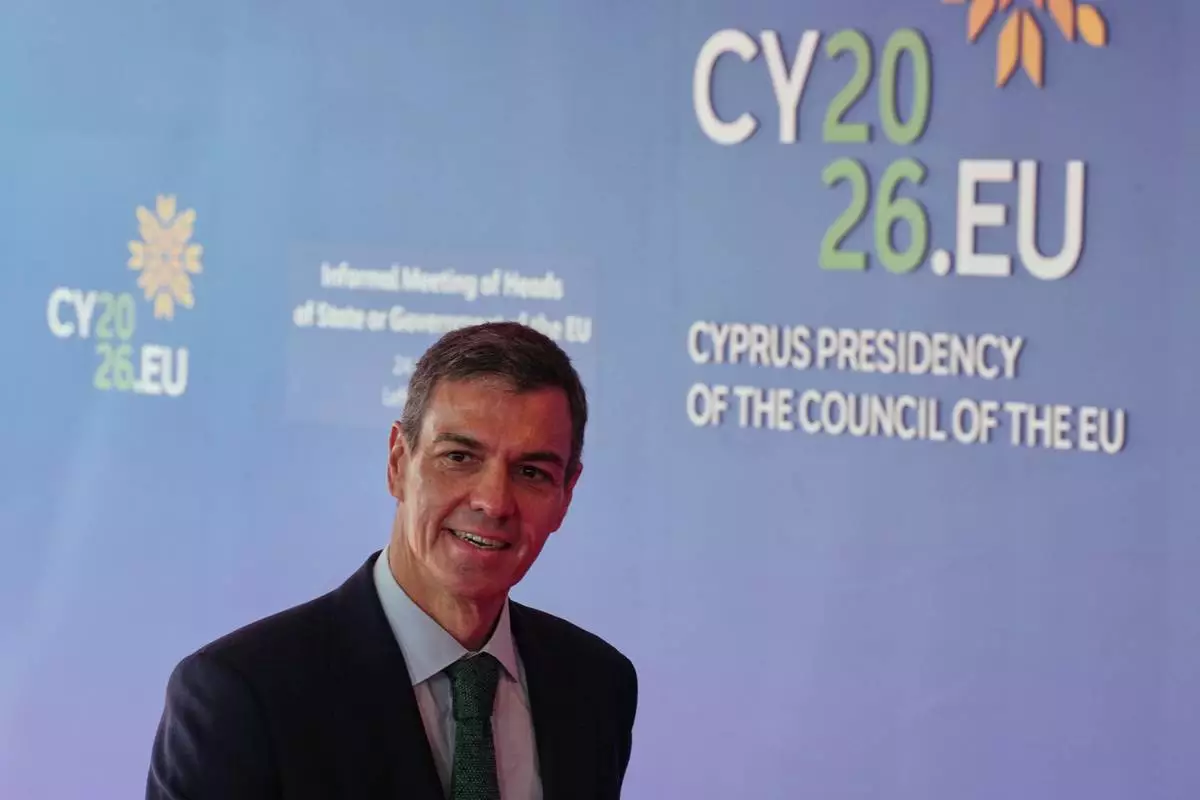
Spain's Prime Minister Pedro Sanchez arrives for the EU Summit in Nicosia, Cyprus, Friday, April 24, 2026. (AP Photo/Petros Karadjias)
Tensions in the standoff between the U.S. and Iran over the Strait of Hormuz intensified Friday after U.S. President Donald Trump said he ordered the U.S. military to “shoot and kill” Iranian small boats in the strait, while Iran pushed back on Trump's claim there was a leadership rift in the Islamic Republic.
“In Iran there are no ‘hard-liners’ or ‘moderates’. We are all Iranians and revolutionaries,” Iran’s President Masoud Pezeshkian and Speaker of Parliament Mohammad Bagher Qalibaf wrote in almost identical social media statements.
Since the killing of Supreme Leader Ali Khamenei in the first strike of the war on Feb. 28, it has been unclear who in Iran wields ultimate authority over its collection of civilian figures and powerful generals who appear to be in charge.
On Friday two Pakistani officials told The Associated Press that Iran’s top diplomat is expected to travel to Pakistan by this weekend for talks. Pakistan has been trying to restart ceasefire negotiations between Iran and the United States, but details have been scant so far.
The standoff between the U.S. and Iran has effectively choked off nearly all exports through the Strait of Hormuz, where 20% of the world’s traded oil passes in peacetime, with no end in sight.
Trump also said Thursday evening that Israel and Lebanon agreed to extend a ceasefire between Israel and Hezbollah by three weeks after talks at the White House.
Here is the latest:
The White House said that Trump issued a 90-day extension to the Jones Act waiver, making it easier for non-American vessels to transport oil and natural gas in the wake of the Iran War.
Trump first announced a 60-day waiver in mid-March and the move has been seen as helping to stabilize energy prices and making it easier for more ships to travel to the U.S. following the effective closure of the Strait of Hormuz.
The post on social media by a White House press aide said: “New data compiled since the initial waiver was issued revealed that significantly more supply was able to reach U.S. ports faster.”
Two Pakistani officials told The Associated Press on Friday about the visit by Iranian Foreign Minister Abbas Araghchi. They declined to provide any other details, other than to say he would be accompanied by a small government delegation and could arrive as soon as Friday.
Pakistan has been trying to restart ceasefire talks between Iran and the United States.
The officials spoke on condition of anonymity because they were not authorized to speak to the media.
Iran did not immediately acknowledge Araghchi’s trip.
The U.N. peacekeeping force deployed in southern Lebanon, or UNIFIL, says Corporal Rico Pramudia, 31, died at a Beirut hospital after he was critically wounded following a projectile explosion in his base in Adchit al-Qusayr, southern Lebanon, on March 29.
The attack in Adchit al-Qusayr also killed an Indonesian peacekeeper.
Two other Indonesian peacekeepers were also killed in southern Lebanon shortly after.
Kuwait says explosive drones launched from Iraq have struck two sites on the northern land border Friday morning.
The Kuwait army said on X that the drones caused material damage, but that there were no reports of casualties.
A weeklong, lockdown-like security clampdown in Pakistan’s capital Islamabad and nearby Rawalpindi has sparked frustration among residents, who urged authorities to ease restrictions so they can resume normal commutes.
Roads leading into Islamabad’s heavily guarded Red Zone have appeared deserted at times, with concrete barricades, barbed wire and security personnel dominating normally busy corridors. The absence of routine traffic has added to a sense of disruption in the twin cities.
“We were happy that Pakistan is hosting these talks to end the war between America and Iran. But now almost a week has passed, and it takes me one to two hours instead of 30 minutes, depending on traffic, to reach home from Islamabad to Rawalpindi,” said Sher Khan, a lift operator at a shopping plaza.
There is still no official word on exactly when the talks will take place.
Authorities have deployed thousands of police and paramilitary troops since last weekend.
While Pakistan is still trying to secure Iran’s participation, there has been no confirmation yet on when Tehran will send its delegation. The visit by the U.S. delegation is also on hold.
Some residents in Beirut believe south Lebanon should be included in a ceasefire between Israel and militant group Hezbollah.
They said a deal will not be sustainable without a lasting truce between Iran and the United States.
“It is not related to Hezbollah and Israel, but to Iran and the US. If they reach an agreement, the whole of the Middle East will be calm, but if not, there will be escalation in Lebanon and the rest of the world,” Joe Ghafari said.
Diala Ammar said it is “unfair” for the south to stay at war while the rest of the country “lives normally.”
Israeli forces occupying a strip of territory extending several miles into southern Lebanon have continued strikes, while Hezbollah has attacked Israeli forces there.
Pakistan completed repayment of $3.45 billion in deposits to the United Arab Emirates, returning a final $1 billion tranche, Pakistan’s central bank said Friday.
Pakistan had to arrange $3 billion in fresh financing from Saudi Arabia to support its foreign reserves.
The UAE placed the deposits with Pakistan in 2018 to bolster foreign exchange reserves.
The repayment comes weeks after the UAE asked Pakistan to return the funds without publicly explaining the reason for the abrupt request.
Media reports in Pakistan suggested the UAE’s request was linked to geopolitical differences over regional developments, though the government in Islamabad has downplayed such claims, maintaining that bilateral ties remain strong..
Iran’s top diplomat has called Pakistani officials over the ceasefire in the war with the United States and Israel.
A statement Friday said Iranian Foreign Minister Abbas Araghchi spoke with Pakistan’s Foreign Minister Ishaq Dar and Field Marshal Asim Munir, Pakistan’s army chief.
Araghchi’s statement said the men spoke about “regional developments and issues related to the ceasefire,” without elaborating.
Hours later, a statement on behalf of Dar acknowledged the call, saying “both sides exchanged views on regional developments, the ceasefire, and ongoing diplomatic efforts being pursued by Islamabad in the context of U.S.-Iran engagement.”
Pakistan has been trying to get American and Iranian officials back to the negotiating table in Islamabad, where they had hoped to have talks earlier this week that didn’t materialize.
European Union foreign policy chief Kaja Kallas said peace negotiations between the United States and Iran are at risk of forging a “weaker” agreement than one struck a decade ago.
“If the talks are only about the nuclear (issue) and there are no nuclear experts around the table, then we will end up with an agreement that is weaker than the JCPoA was,” Kallas said Friday in Cyprus, referring to a 2015 deal struck during the Obama administration that Trump pulled the U.S. out of in 2018.
Kallas said if negotiators do not table Iran’s “missile programs, their support to proxies, and also hybrid and cyber activities in Europe” there is a possibility “we will end up with a more dangerous Iran.”
A medical aid convoy left Turkey headed for Iran, an official told Turkey’s state-run Anadolu news agency on Friday.
The six trucks departed Van in eastern Turkey to pass through the Gurbulak border crossing, Van Health Director Muhammed Tosun said.
“The materials include medicines and medical supplies,” Tosun said.
“We previously sent three trucks. With today’s trucks, a total of nine trucks of aid materials will have been delivered to our Iranian colleagues to serve their citizens,” he said.
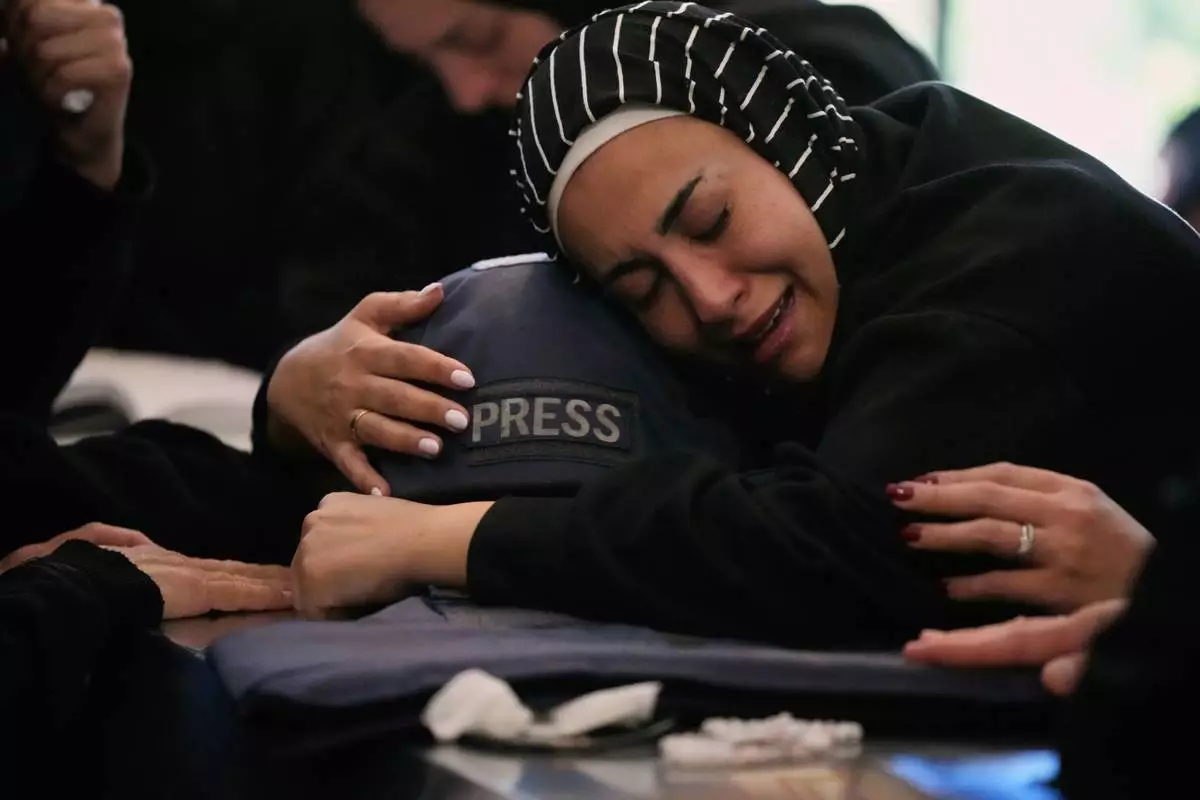
Zainab, the sister of Lebanese journalist Amal Khalil, who was killed on Wednesday in an Israeli airstrike, hugs her helmet as she mourns over her coffin in the village of Baysariyeh, southern Lebanon, Thursday, April 23, 2026. (AP Photo/Mohammed Zaatari)
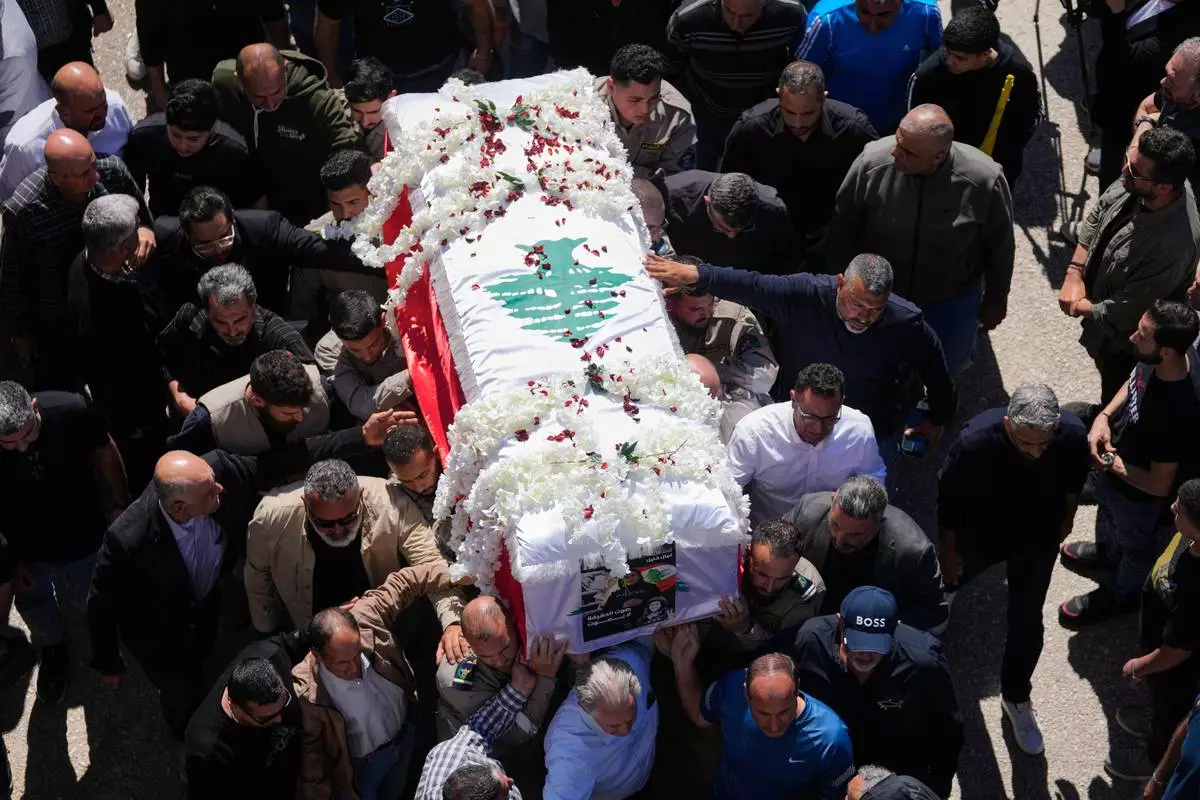
Mourners carry the coffin of Lebanese journalist Amal Khalil, who was killed Wednesday in an Israeli airstrike, during her funeral procession in the village of Baysariyeh in southern Lebanon on Thursday, April 23, 2026. (AP Photo/Mohammed Zaatari)
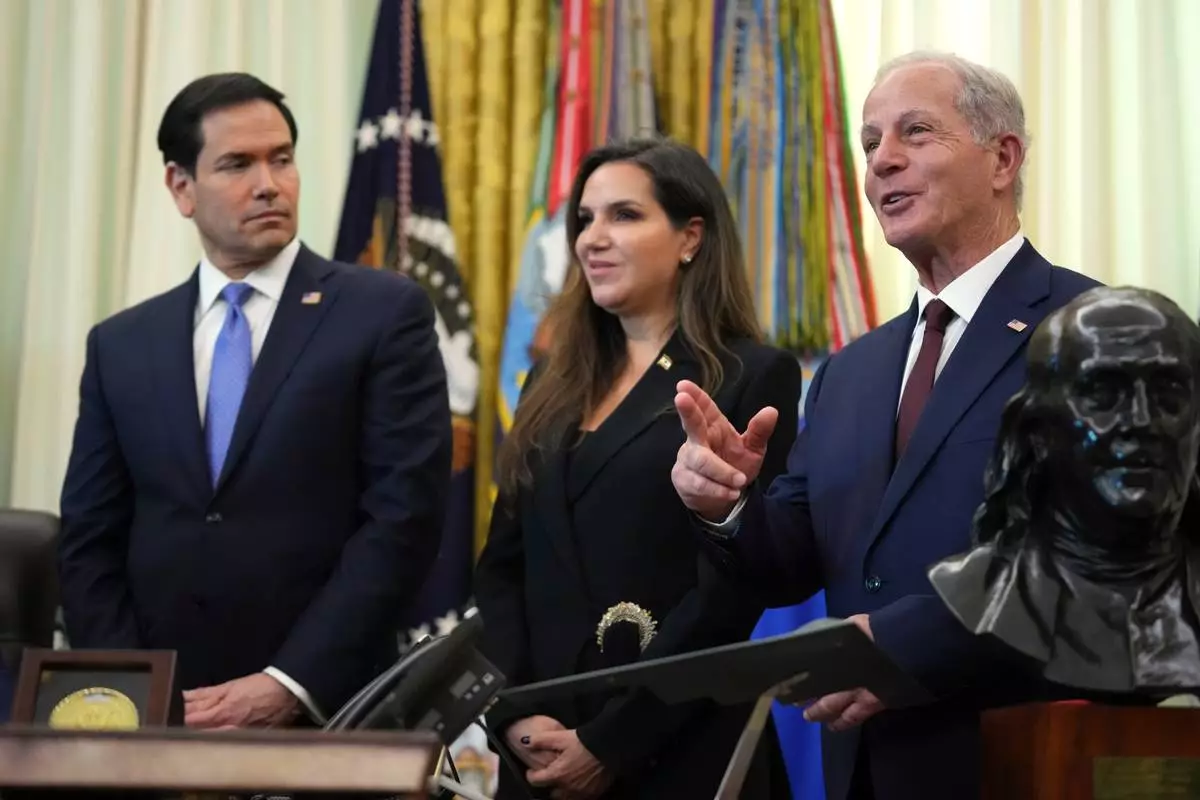
U.S. Ambassador to Lebanon Michel Issa, right, speaks as Secretary of State Marco Rubio and Lebanese Ambassador to the U.S. Nada Hamadeh Moawad, listen during a meeting between the ambassadors of Israel and Lebanon in the Oval Office at the White House, Thursday, April 23, 2026, in Washington. (AP Photo/Mark Schiefelbein)
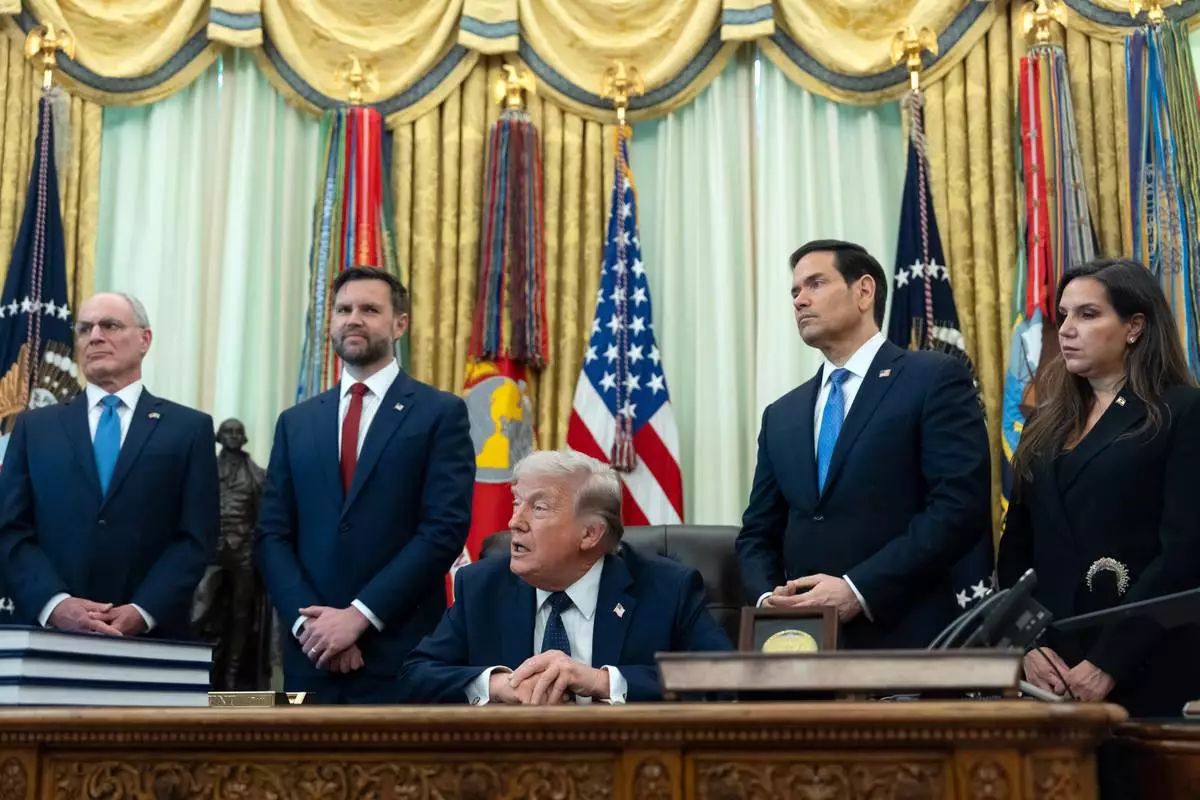
From left, Israeli Ambassador to the U.S. Yechiel Leiter, Vice President JD Vance, Secretary of State Marco Rubio, and Lebanese Ambassador to the U.S. Nada Hamadeh Moawad, listen to President Donald Trump speak in the Oval Office at the White House, Thursday, April 23, 2026, in Washington. (AP Photo/Mark Schiefelbein)
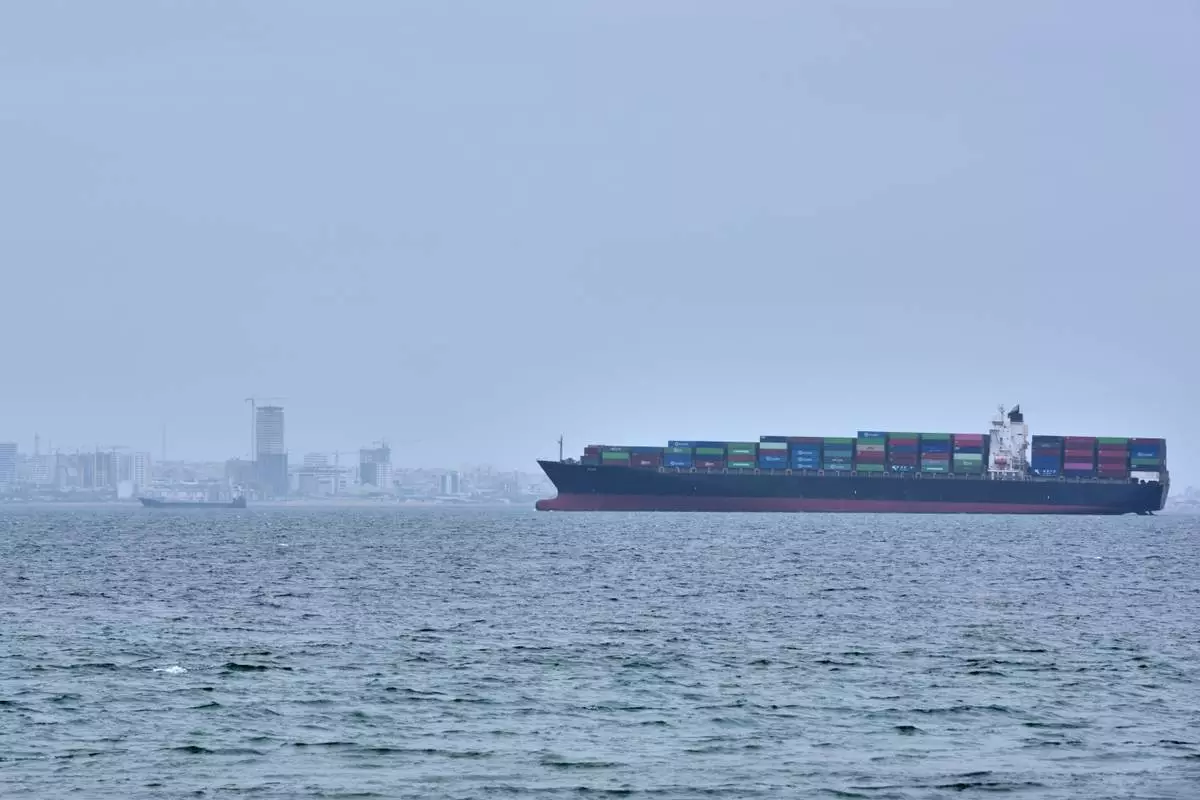
A container ship is seen in the Strait of Hormuz off the coast of Qeshm Island, Iran, Saturday, April 18, 2026. (AP Photo/Asghar Besharati)