ISTANBUL (AP) — The Turkish Grand Prix is back on the Formula 1 calendar next season for the first time since 2021, on a five-year agreement.
After an initial announcement Friday by the Turkish government and President Recep Tayyip Erdogan, there was confirmation from F1 and its governing body.
Erdogan said the deal would be for “at least five years”.
The Istanbul Park circuit outside the city first hosted F1 from 2005 through 2011, and next year's race would be the first since Turkey returned to the calendar in 2020 and 2021 during disruption caused by the COVID-19 pandemic. Valtteri Bottas won the most recent race for Mercedes.
“Many memorable moments have been made in our sport’s history at Istanbul Park and I’m excited to begin the next chapter of our partnership, giving fans the opportunity to experience even more incredible racing in a truly fantastic location,” Formula 1 chief executive Stefano Domenicali said.
Hosting F1 would “demonstrate to the world that our country is the safe haven of its region,” Erdogan said.
The news comes after the Iran war caused widespread disruption to sports in the region and forced F1 to call off races in Bahrain and Saudi Arabia scheduled for this month.
That left a large gap in this year’s schedule. The Miami Grand Prix next week will be the first F1 race since the Japanese Grand Prix on March 29.
F1’s return to Istanbul had been widely expected since Domenicali said in February that it was a candidate to return.
He added venues like Istanbul Park and the Portimão circuit, which will host the returning Portuguese Grand Prix next year, show F1 is not focusing too much on street races in glamorous locations.
Those can be some of F1's most lucrative events, like the Las Vegas Grand Prix, but are generally less popular with drivers than purpose-built race tracks.
“Turkey is not 100% confirmed. Stay tuned on Turkey, let me put it this way,” Domenicali said at the time. “This is also to answer to the people that were saying there were too many street races. The new ones that are coming are tracks, not street races.”
The return of Turkey and Portugal next year will come as the Dutch Grand Prix, four-time champion Max Verstappen's home race, leaves the schedule after six years. The Belgian Grand Prix and the second Spanish race at the Circuit de Barcelona-Catalunya will host in alternate years from 2027, freeing up another slot.
F1 estimated Friday it has 19 million fans in Turkey, and FIA President Mohammed Ben Sulayem called the race's return “a powerful reflection of the continued global growth and appeal of our sport.”
The Istanbul Park track was generally popular with drivers and its long, high-speed turn eight was often ranked as one of the most challenging corners in the world.
Felipe Massa is the most successful driver at the Turkish Grand Prix with three wins in a row for Ferrari from 2006 through 2008, while Lewis Hamilton has won the race twice.
AP auto racing: https://apnews.com/hub/auto-racing
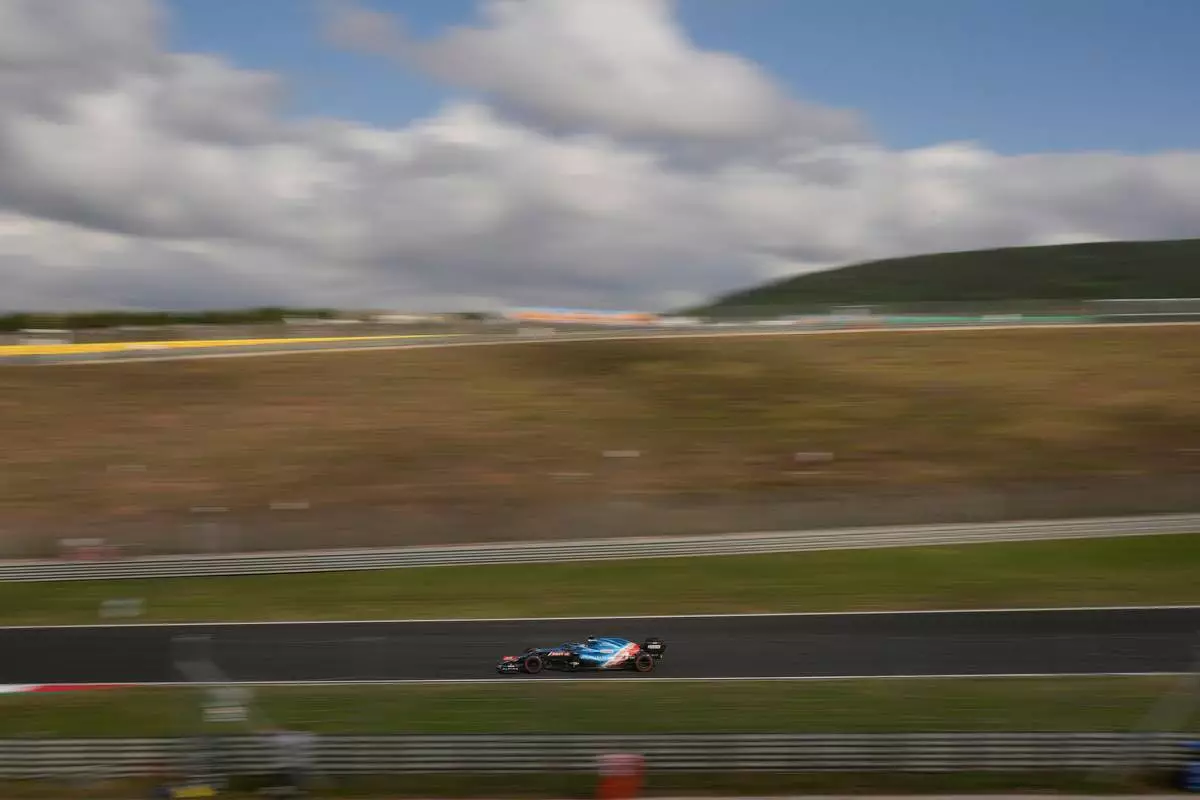
FILE - Alpine driver Fernando Alonso of Spain steers his car during the first practice session ahead of Sunday's Formula One Turkish Grand Prix at the Intercity Istanbul Park circuit in Istanbul, Turkey, Friday, Oct. 8, 2021.(AP Photo/Francisco Seco, file)
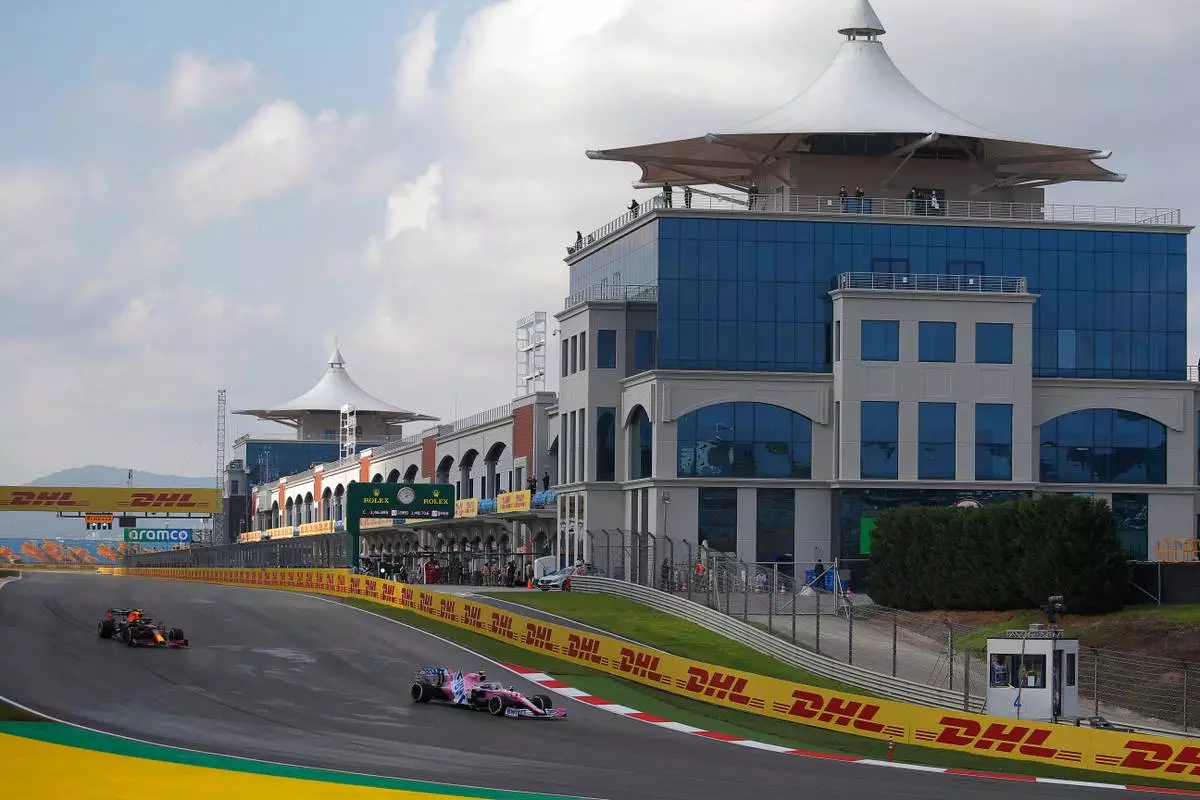
FILE - Formulas One drivers steer their cars during a practice session at the Istanbul Park circuit racetrack in Istanbul, Friday, Nov. 13, 2020. The Formula One Turkish Grand Prix will take place on Sunday. (AP Photo/Kenan Asyali, file)
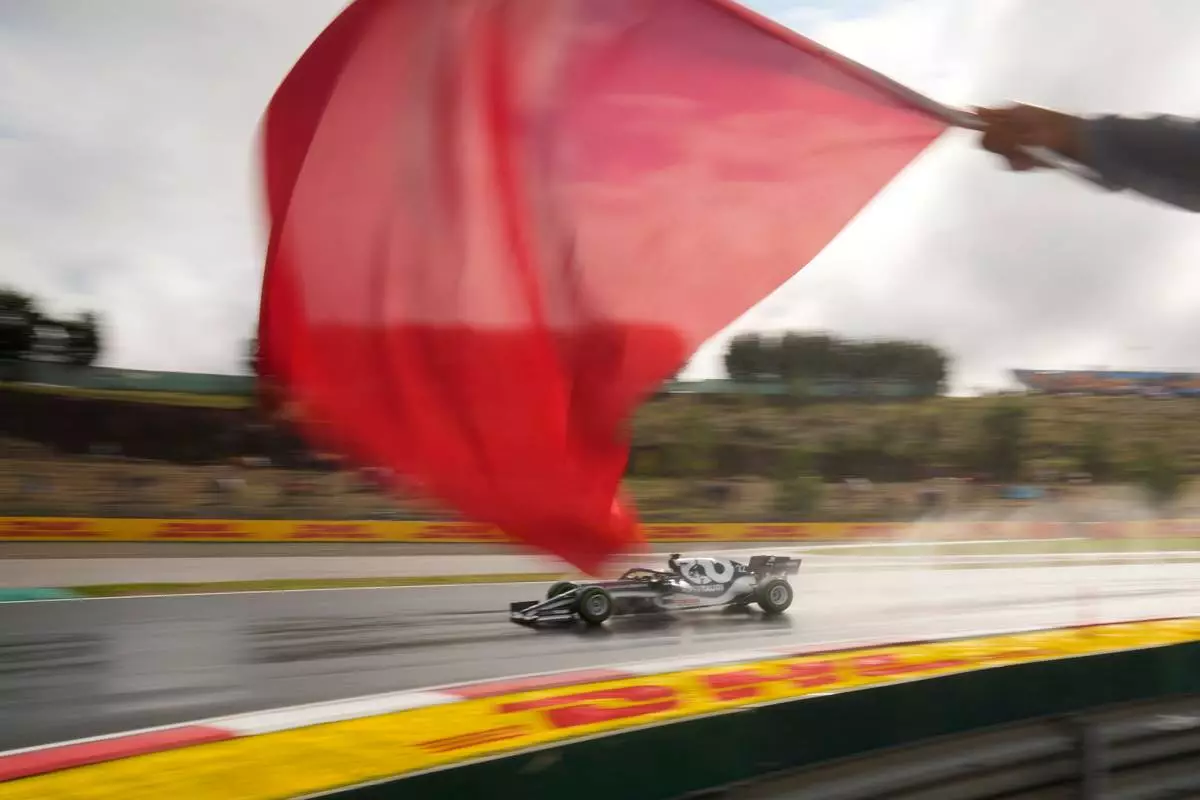
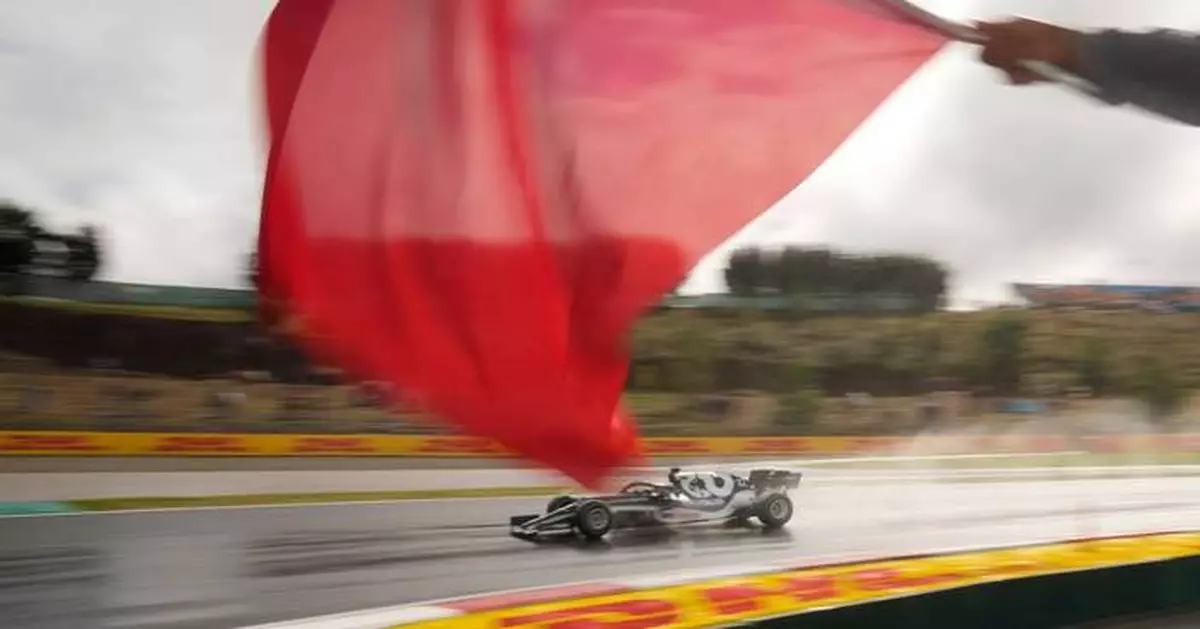
FILE - AlphaTauri driver Yuki Tsunoda of Japan steers his car on a wet track as a safety marshal waves a red flag during practice for Sunday's Formula One Turkish Grand Prix at the Intercity Istanbul Park circuit in Istanbul, Turkey, Saturday, Oct. 9, 2021. (AP Photo/Francisco Seco, file)
NICOSIA, Cyprus (AP) — Spanish Prime Minister Pedro Sánchez on Friday refused to be drawn into a dispute with the United States over reports that the Pentagon is weighing whether to punish members of NATO that fail to support American operations in the Iran war.
Among those in the firing line is Spain, which has refused to allow U.S. forces involved in the war to use bases on its territory or airspace. Spain says that U.S.-Israeli actions in the Iran war contravenes international law.
France and the U.K. also refuse to give U.S. forces free rein to use their territory for the bombing campaign.
The Pentagon is reported to be mulling whether to suspend Spain from NATO, according to an unidentified U.S. official referring to a U.S. Defense Department email, and quoted by the Reuters news agency.
“Well, we do not work with emails," Sánchez told reporters at a European Union summit in Cyprus. "We work with official documents and positions taken, in this case, by the government of the United States.”
“The position of the government of Spain is clear: absolute collaboration with the allies, but always within the framework of international legality,” he said.
The email also suggested reassessing U.S. support for the United Kingdom's claim to the Falkland Islands, near Argentina, which are also known as Islas Malvinas.
Dave Pares, a spokesman for Prime Minister Keir Starmer, said the U.K. position on the islands is “longstanding and it’s unchanged: Sovereignty rests with the U.K., and the islanders’ right to self-determination is paramount.”
Pares noted “the Falkland Islands have previously voted overwhelmingly in favor of remaining a U.K. overseas territory.”
NATO operates by consensus, and all 32 member countries must agree for it to act.
The trans-Atlantic alliance's founding treaty has no mechanism for suspending or ejecting any of the members, although nations may leave of their own accord one year after notifying the other allies. As an organization, NATO has no direct role in the Iran war except to defend its own territory.
U.S. President Donald Trump has been angered by what he sees as the failure of some NATO members to back American actions in the Iran war and to help police the Strait of Hormuz, a major trade route. He has questioned the purpose of U.S. membership in the military organization.
EU foreign policy chief Kaja Kallas appeared perplexed by the U.S. criticism, given that the United Kingdom and France are leading an effort to help secure trade in the strait once the war is over.
“When we have had contacts with the American counterparts, then actually their asks for us have been exactly what we are able to offer after the cessation of hostilities,” she said. “Demining, escorting of ships, all of this that we have been discussing.”
But the United States has “long-standing arrangements and agreements with European allies on overflight, on basing” that should be respected, NATO Secretary-General Mark Rutte has said, in implicit criticism of some allies like Spain, but also France.
While Spain restricted U.S. military activity related to the Iran war, U.S. warplanes have flown over other NATO allies’ airspace and used U.S. bases in other NATO countries for war-related operations.
Trump has even threatened to cut trade with Spain over its refusal to allow the use of its bases and airspace. More broadly, Spain has also disappointed its allies by failing to commit to spend as much as they plan to do on defense.
As the reality sinks in that the U.S. commitment to NATO and Europe’s security under Trump has waned, the EU leaders debated how best to use European laws to come to each other’s aid should one of them come under attack.
Cypriot President Nikos Christodoulides, whose country holds the bloc’s presidency until July, said that the leaders had tasked the European Commission to “prepare a blueprint on how we respond” should a member seek help under Article 42.7 of the EU treaties.
It's only ever been used once, by France after the Paris terror attacks in 2015.
EU envoys and ministers are set next month to conduct “table-top exercises” to game out how the treaty article might be used, drawing on the bloc’s military capacities, but also other assets not available to NATO, like trade, border and visa policies.
Lorne Cook reported from Brussels. Jill Lawless in London contributed.
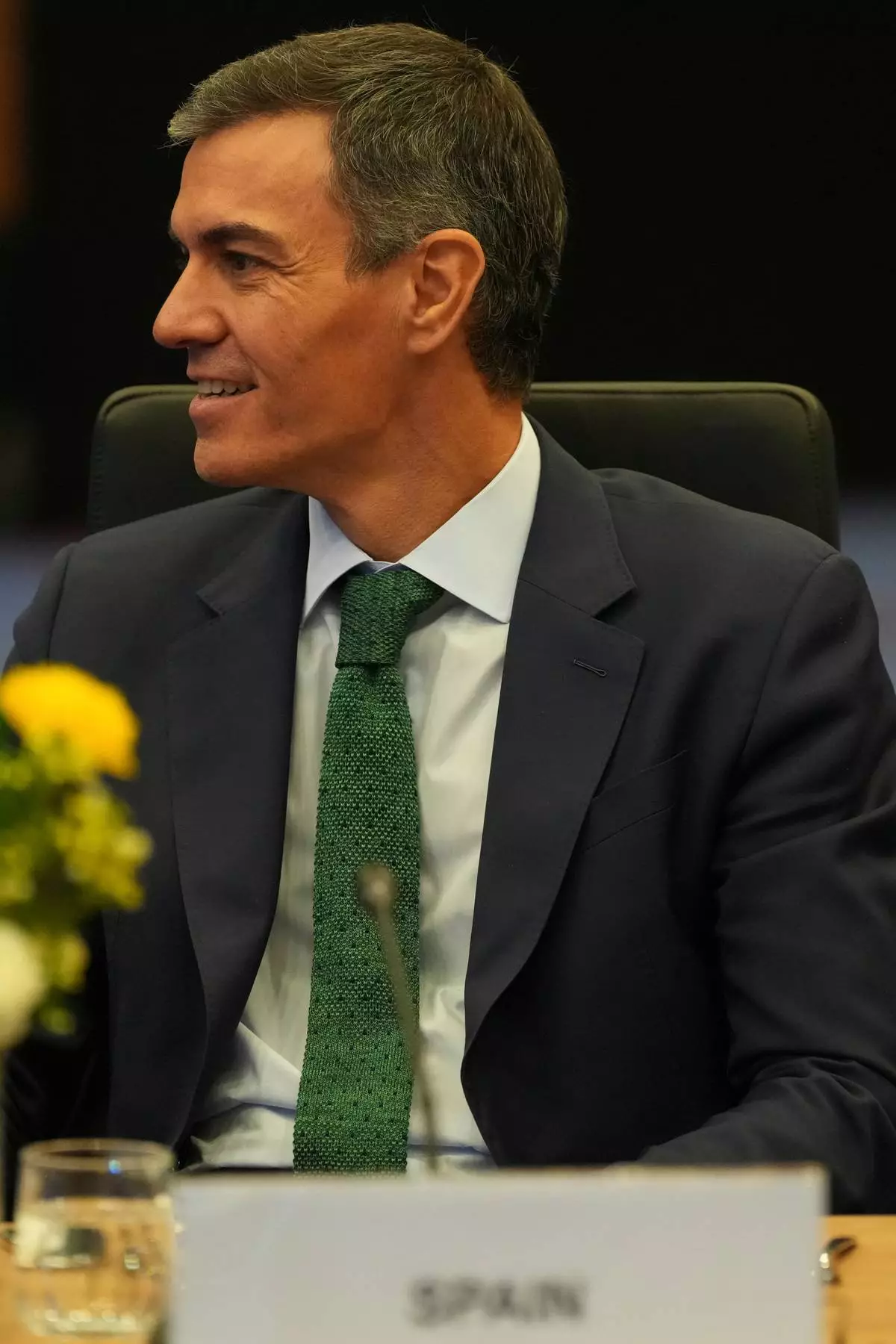
Spain's Prime Minister Pedro Sanchez attends the EU Summit in Nicosia, Cyprus, Friday, April 24, 2026. (AP Photo/Petros Karadjias)
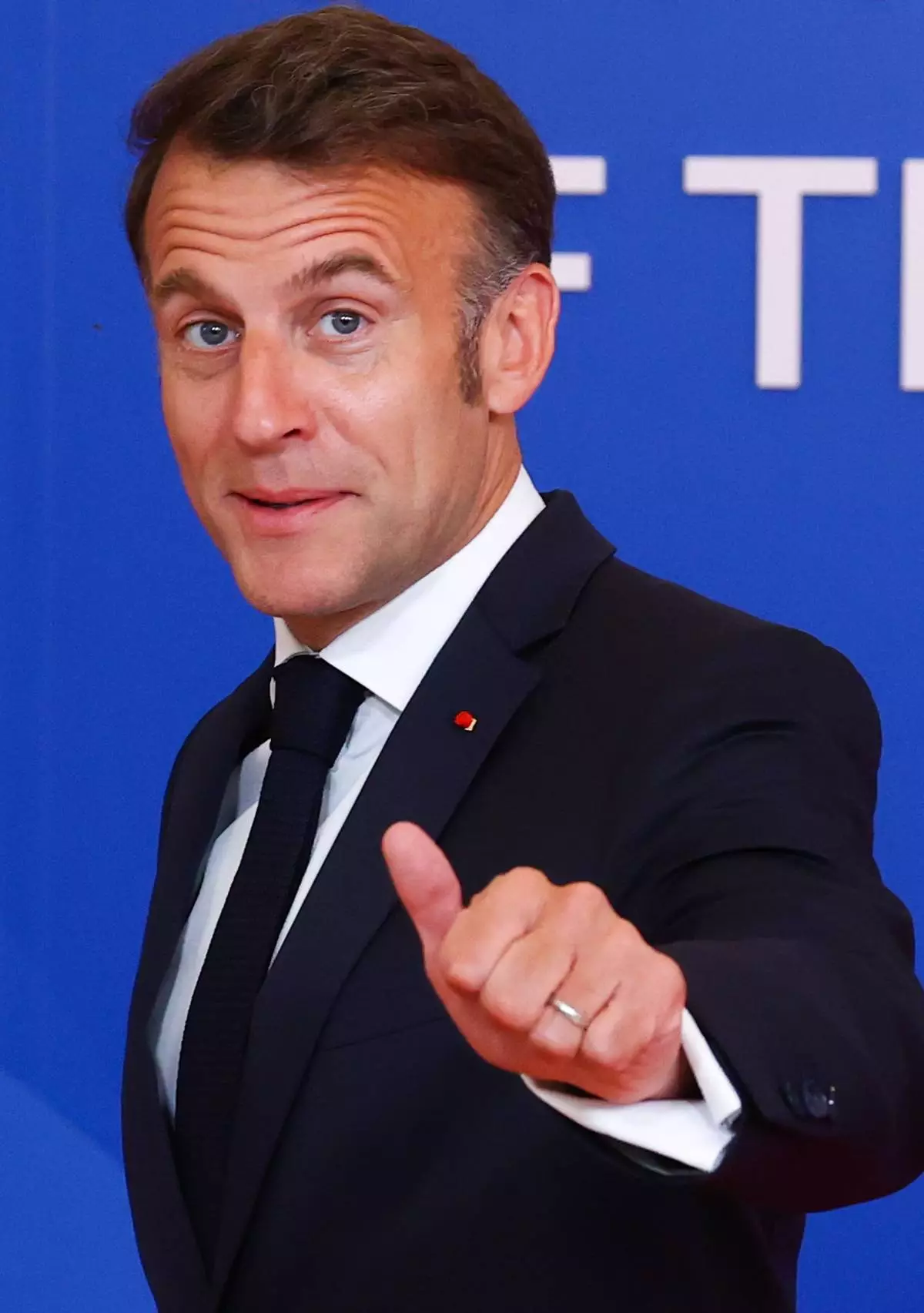
French President Emmanuel Macron arrives for the EU Summit in Nicosia, Cyprus, Friday, April 24, 2026. (Yves Herman, Pool Photo via AP)
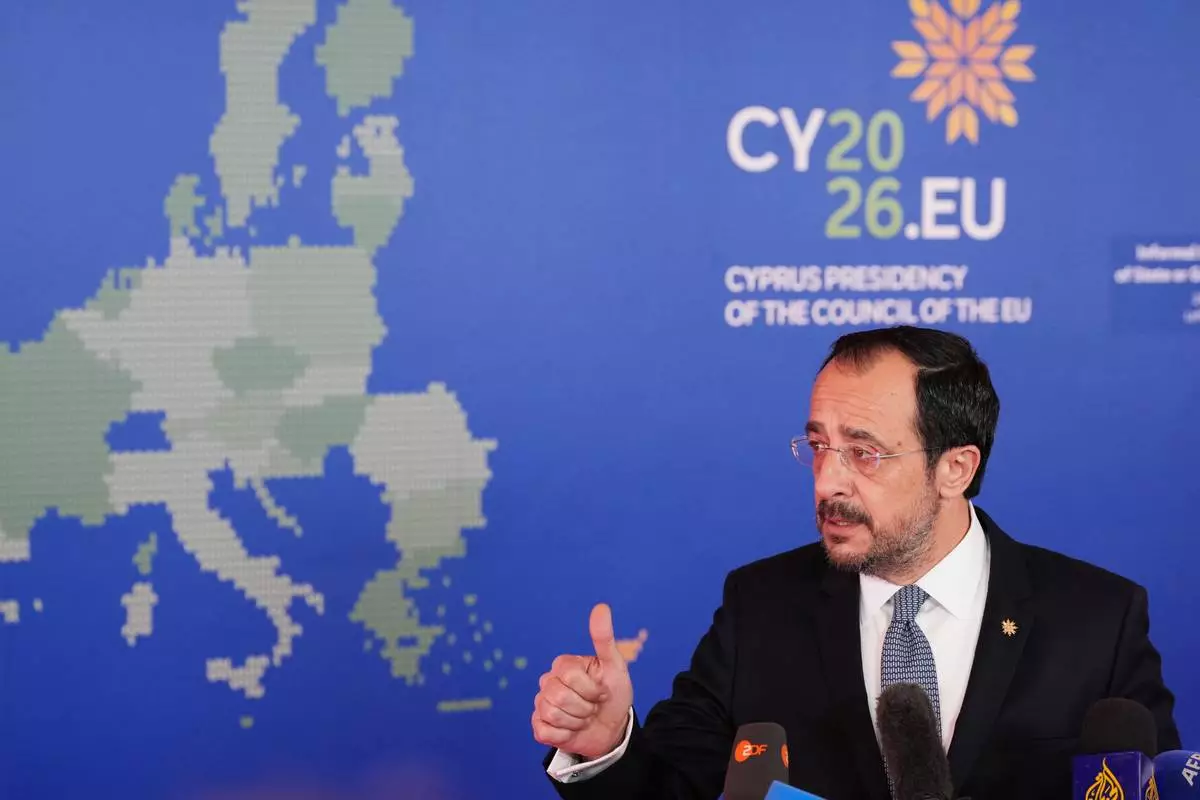
Cypriot President Nikos Christodoulides speaks with the media as he arrives for the EU Summit in Nicosia, Cyprus, Friday, April 24, 2026. (AP Photo/Petros Karadjias)
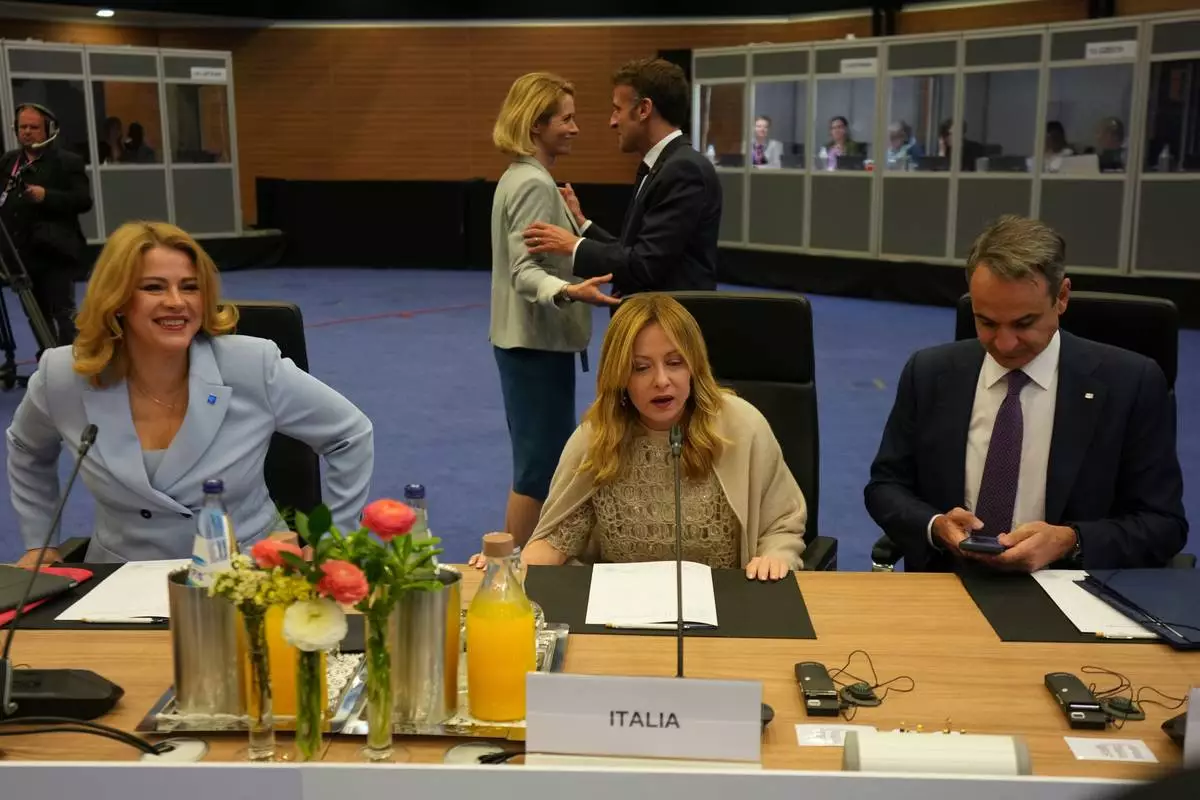
European Union foreign policy chief Kaja Kallas, background left, speaks with French President Emmanuel Macron, as Latvia's Prime Minister Evika Silina, foreground left, Italy's Prime Minister Giorgia Meloni, center, and Greece's Prime Minister Kyriakos Mitsotakis prepare for a roundtable meeting pf the EU Summit in Nicosia, Cyprus, Friday, April 24, 2026. (AP Photo/Petros Karadjias)
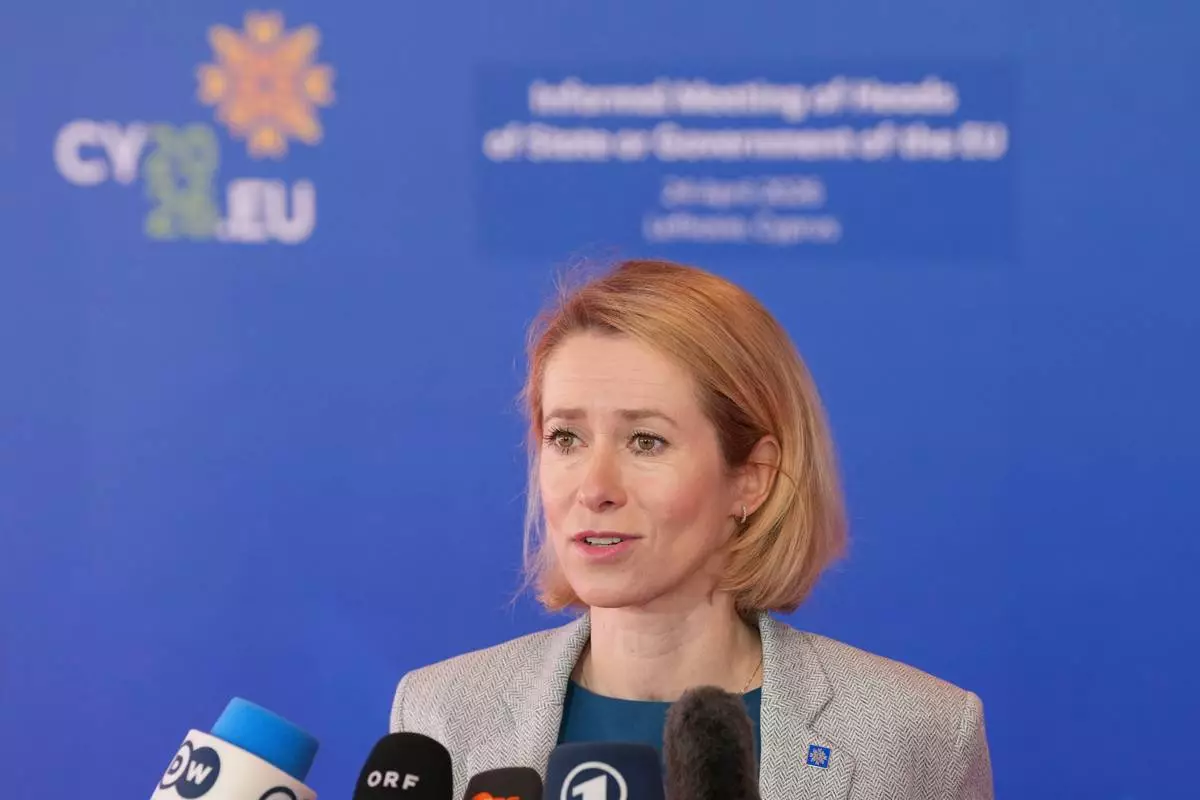
European Union foreign policy chief Kaja Kallas speaks with the media as she arrives for the EU Summit in Nicosia, Cyprus, Friday, April 24, 2026. (AP Photo/Petros Karadjias)
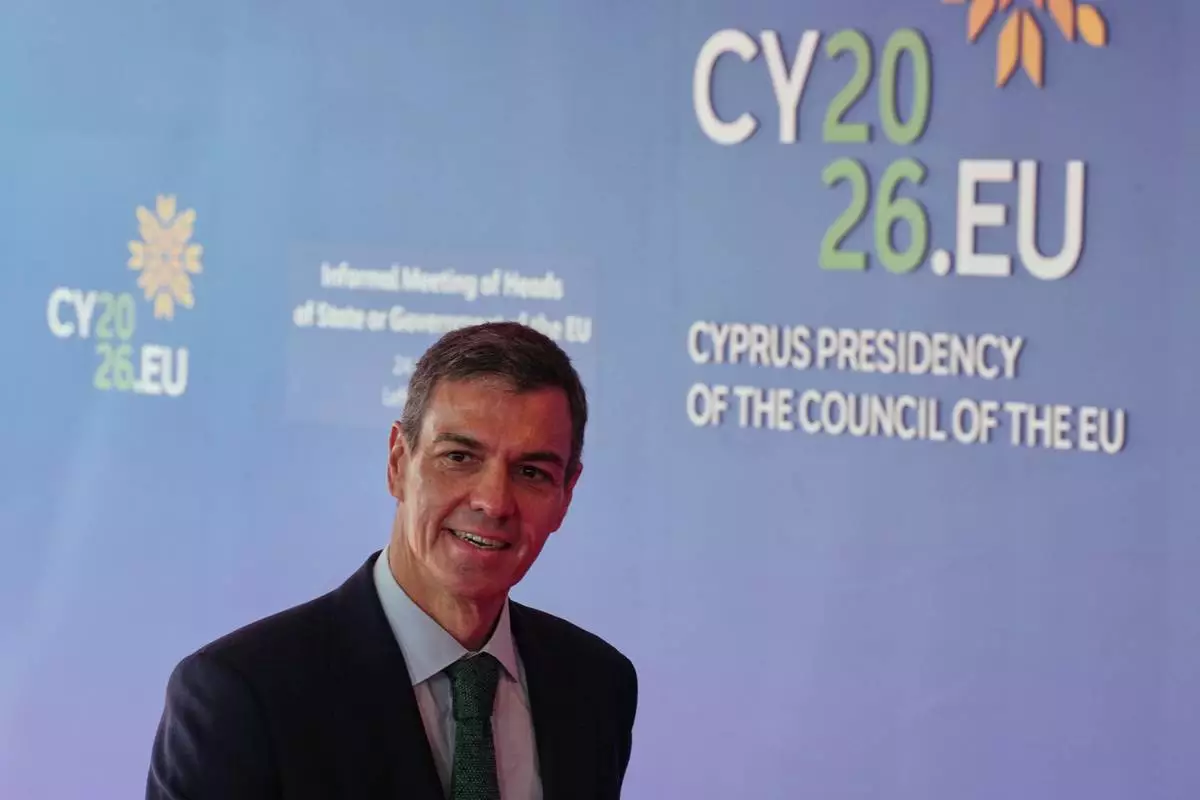
Spain's Prime Minister Pedro Sanchez arrives for the EU Summit in Nicosia, Cyprus, Friday, April 24, 2026. (AP Photo/Petros Karadjias)