Skip to Content Facebook Feature Image

More confusion looms over Strait of Hormuz after Iran attacks three ships near waterway

News

More confusion looms over Strait of Hormuz after Iran attacks three ships near waterway
News

News

More confusion looms over Strait of Hormuz after Iran attacks three ships near waterway

2026-04-23 02:38 Last Updated At:02:50

Confusion deepened Wednesday in the Strait of Hormuz as Iran attacked three ships near the crucial waterway whose closure has plunged the world into an energy crisis after tankers carrying a fifth of the world’s oil were blocked from using the channel.

The attacks unfolded just a day after U.S. President Donald Trump said he would extend the two-week ceasefire with Iran. The Islamic Republic said it fired on three outbound ships and seized two, calling it retaliation for the American naval blockade of Iranian ports and for the U.S. firing on and seizing an Iranian ship that did not stop when hailed by a vessel enforcing the blockade.

Attacks on shipping dwindled starting in mid-March as Iran imposed effective control over the strait. The mere risk of attack was enough to deter ships from trying to get through, while a few ships used an Iranian-approved lane near the coast. Iran demanded details on cargo, ownership and crew and, on at least some occasions, imposed a $1 per barrel tax on oil and oil products — or $2 million for a large tanker.

Here is a look at what’s known, and not known, about the situation in the strait:

Iran’s semiofficial news agencies reported that the paramilitary Revolutionary Guard attacked a third ship Wednesday in the strait. Nour News, Fars and Mehr all reported the attack by the Guard on a vessel called the Euphoria. They said the vessel had become “stranded” on the Iranian coast, without elaborating. The Guard seized the other two ships that were attacked, Iranian state television separately reported.

That incident followed two ship attacks on Saturday that ended a lull that began in mid-March.

The seized ships were the Liberia-flagged Epaminondas and the Panama-flagged MSC Francesca, both container ships. It was not clear under what terms the ships were trying to pass the strait. The MSC shipping company did not answer an email asking about the vessel.

The attacks follow a sudden reversal in the Iranian stance over the weekend, as the Iranian foreign minister announced Friday that the strait was open, only to be contradicted the next day by the Revolutionary Guard. Six cruise ships stuck in the Persian Gulf since late February took advantage of the narrow window and slipped through the strait. But since then, traffic has dried up.

The resumption of attacks reflects in part “genuine confusion ... about when passage is permitted," said Torbjorn Soltvedt, principal Middle East analyst at risk intelligence company Verisk Maplecroft.

Conflicting statements emerged from Trump about a full reopening and from the Iranian foreign minister about a limited reopening. Then things “shifted very quickly” Saturday when the Guard said the strait was closed.

Additionally, Soltvedt said, it's in Iran's interest to keep insurance premiums high with sporadic attacks. “Their main leverage in negotiations with the U.S. is being able to restrict shipping through the Strait of Hormuz, and insurance is a big part of that.”

Some vessels have passed the Iranian vetting system, and some have relied on diplomatic requests from home governments. But hundreds of ships and thousands of crew members are still stuck.

The U.S. Navy boarded and seized a large tanker carrying Iranian oil south of the Bay of Bengal in the Indian Ocean, some 2,000 miles from the strait. That underlined the U.S. power to seize vessels that violate the blockade well after they have left the vicinity of the strait.

The U.S. military, which is enforcing the blockade in the Gulf of Oman and the Arabian Sea, well way from Iranian drones and speedboats, says it has turned around 20 Iran-linked vessels.

However, shipping intelligence companies say that a number of ships carrying Iranian oil have passed the blockade. Lloyd’s List Intelligence says “a steady flow of shadow fleet traffic” has passed in and out of the gulf, including 11 tankers with Iranian cargo that have left the gulf outside the strait since April 13.

“The dilemma for the U.S. is: The tighter the blockade, the greater the pain is in the global oil market, so there are conflicting priorities there, and it seems there is a policy of not intercepting every single shipment of Iranian oil,” Soltvedt said.

Additionally, almost all that oil is going to China, and the U.S. has to manage that relationship as well, with Trump planning to visit from May 14 to 15.

Capt. Tim Hawkins, the spokesman for U.S. Central Command, confirmed Wednesday that the military blockade is against all Iranian ships entering or leaving Iranian ports. However, he said humanitarian shipments, including food, medical supplies and other goods essential for civilians, are being permitted subject to inspection.

Hawkins pushed back on outside reports of ships getting past the U.S. dragnet and pointed to remarks by the head of U.S. Central Command, Adm. Brad Cooper, who claimed Friday that “no ship has evaded U.S. forces.”

Ship owners and insurers will need more than a simple announcement of a peace deal to venture through the strait as they did before the war.

Even when the war ends, analytical and data firm Rystad Energy says, it will take six to eight weeks just to reposition the world’s tanker network. Ship owners and insurer would need two to five weeks to get comfortable with a new operating environment and to resume normal activity.

Ship owners will want “something that's a bit more concrete than what we have now,” Soltvedt said. “What is needed is something more comprehensive” than an informal truce with the two sides far apart on key issues such as Iran's nuclear and ballistic missile programs.

“Even then, shipping companies will have the long-term threat hanging over them" given Iran's missile and drone capabilities, he said. “They can play this card again in the future."

Associated Press Writer Konstantin Toropin contributed to this report.
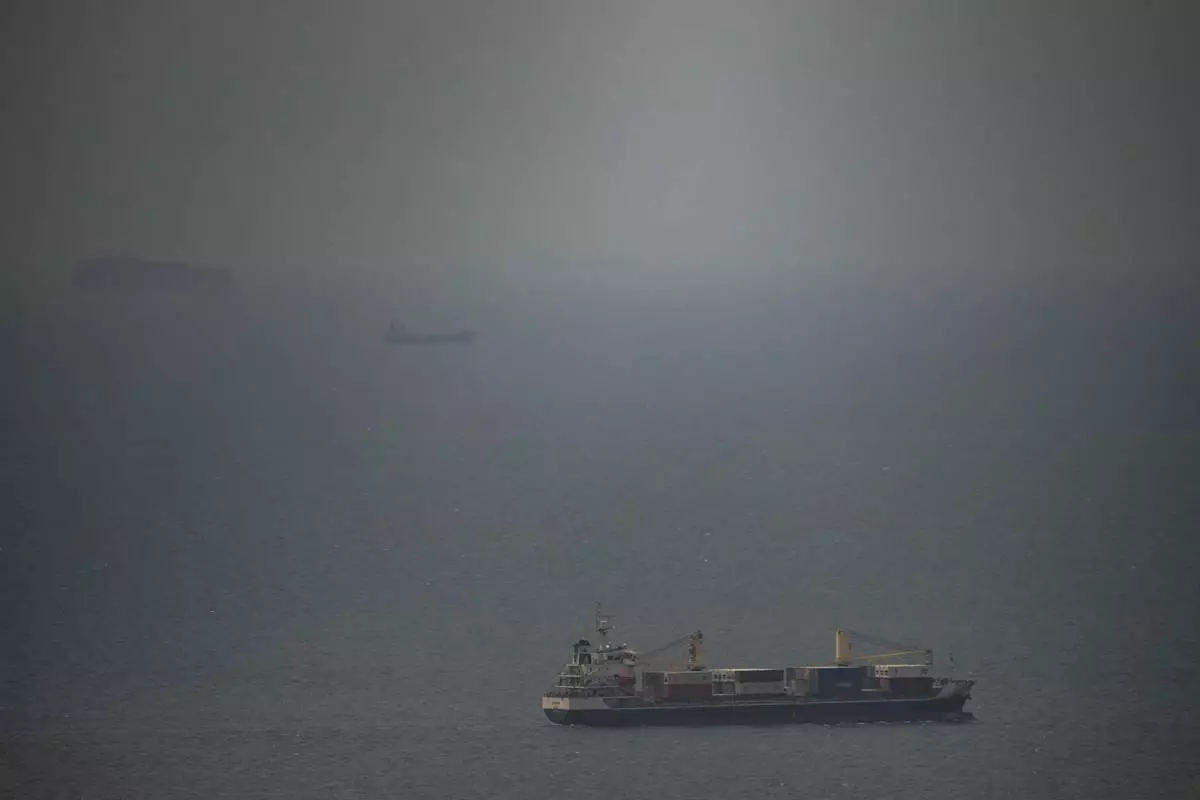
A cargo ship sails in the Persian Gulf toward the Strait of Hormuz, Wednesday, April 22, 2026. (AP Photo)

A cargo ship sails in the Persian Gulf toward the Strait of Hormuz, Wednesday, April 22, 2026. (AP Photo)
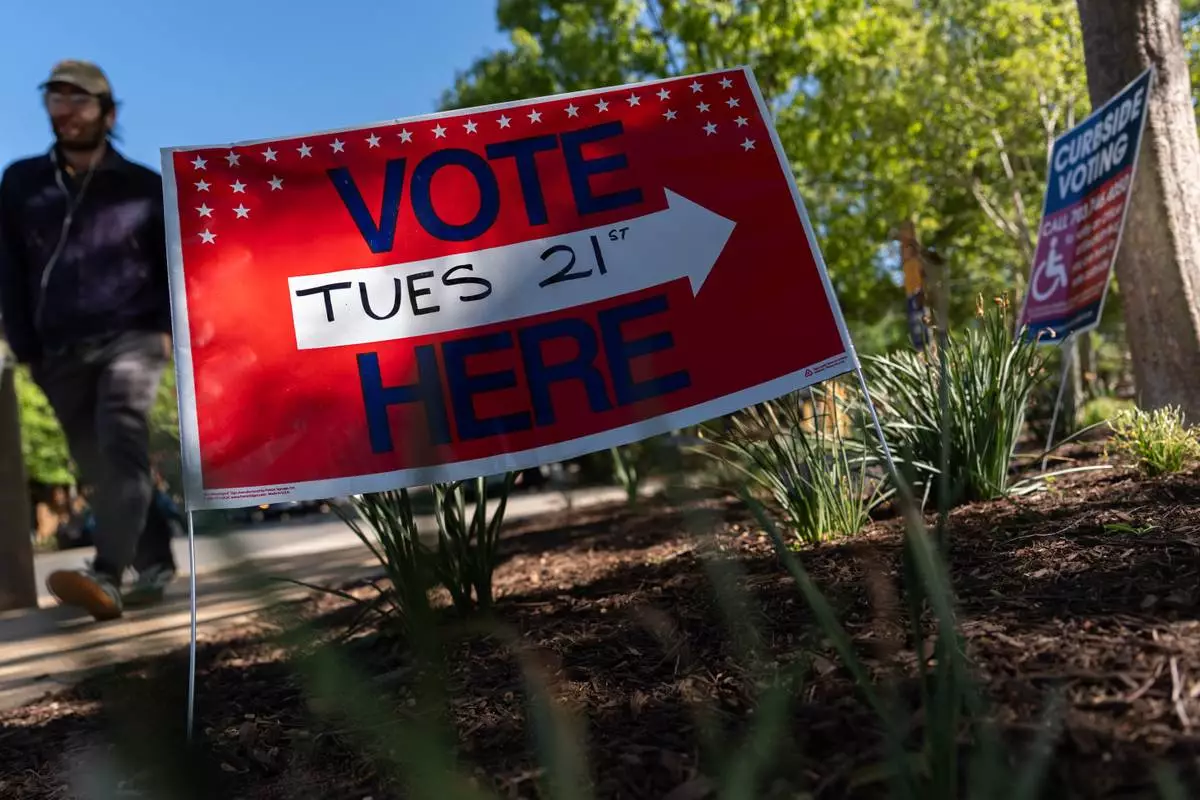
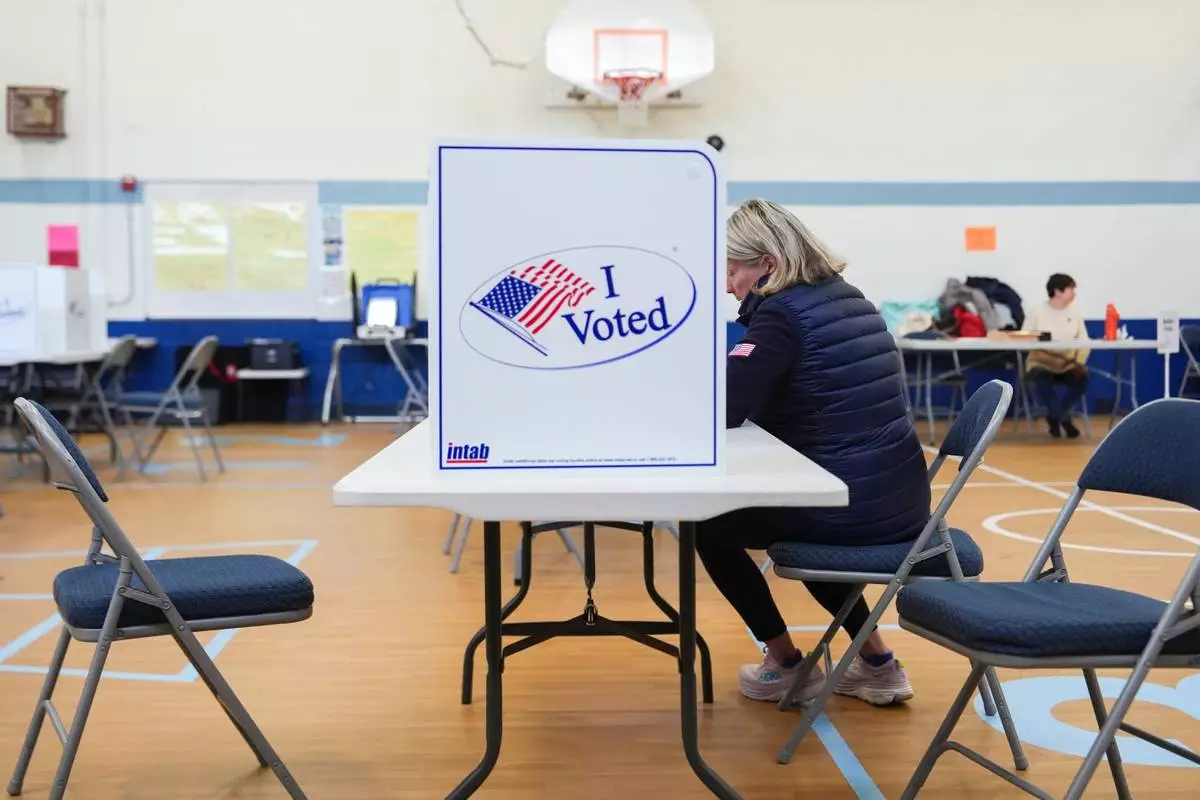
The gerrymandering of House districts is becoming more rampant across the U.S.

The word “gerrymander” was coined in America more than 200 years ago as an unflattering way to describe the political manipulation of boundaries for legislative voting districts by those in charge of drawing them.

The word has stood the test of time, in part because American politics remain fiercely competitive. And with time and technology, politicians have become even more adept at drafting voting districts that benefit their political party.

In many states, the legislature is responsible for drawing U.S. House districts, subject to the approval or veto of the governor. District maps must be redrawn every decade, after each census, to make sure that each district has about the same number of voters.

But in certain states, nothing prevents legislatures from redistricting more often.

Some states entrust redistricting to special commissions composed of citizens or bipartisan panels of politicians in an effort to limit gerrymandering.

If a political party controls the legislature and governor’s office — or has such a large legislative majority that it can override vetoes — it can effectively draw districts to its advantage.

One common method of gerrymandering is for a majority party to draw voting districts that dilute the power of an opposing party’s voters by spreading them among multiple districts. Another is for the majority party to pack voters who support the opposing party into a few districts, thus allowing the majority party to win a greater number of surrounding districts.

The term dates to 1812, when Massachusetts Gov. Elbridge Gerry signed a bill redrawing state Senate districts to benefit the Democratic-Republican Party. Some thought an oddly shaped district looked like a salamander. A newspaper illustration dubbed it “The Gerry-mander” — a term that later came to describe any district drawn for political advantage. Gerry lost reelection as governor in 1812 but won election that same year as vice president to President James Madison.

Though Gerry’s name was pronounced with a hard “G” — like Gary — his namesake redistricting method is pronounced with a soft “G” — like Jerry.

Not under the U.S. Constitution.

The Supreme Court, in a 2019 case originating from North Carolina, ruled that federal courts have no authority to decide whether partisan gerrymandering goes too far. Chief Justice John Roberts wrote: “The Constitution supplies no objective measure for assessing whether a districting map treats a political party fairly.”

The court noted that partisan gerrymandering claims could continue to be decided in state courts under their own constitutions and laws. Some state courts, including the North Carolina Supreme Court, have ruled they also have no authority to decide partisan gerrymandering claims.

The urge to gerrymander can become stronger when more is at stake. For example, the 2024 elections resulted in a very slim Republican majority in the U.S. House. To try to maintain that majority in the 2026 elections, President Donald Trump urged Republican officials in Texas to redraw their congressional districts to their advantage to win additional seats. Democrats who control California’s government countered by redrawing their congressional districts to try to win more seats — a move ratified by California voters. The gerrymandering in the nation’s two most populous states led officials in other states to also redraw House districts to try to gain their parties an edge.

Statisticians and political scientists have developed a variety of ways to try to quantify the partisan advantage that may be attributable to gerrymandering.

Republicans, who control redistricting in more states than Democrats, used the 2010 census data to create a strong gerrymander. An Associated Press analysis of that decade’s redistricting found that Republicans enjoyed a greater political advantage in more states than either party had in the past 50 years.

Democrats responded to match Republican gerrymandering after the 2020 census. An AP analysis of the 2024 elections showed a significant political tilt in one-third of the states’ congressional districts, an indicator of potential gerrymandering. But the overall number of U.S. House seats won by Republicans and Democrats aligned almost perfectly with what would have been expected based on the share of the vote that each party received in districts across the U.S.

A person votes in the Virginia redistricting referendum at Lyles-Crouch Traditional Academy, Tuesday, April 21, 2026, in Alexandria, Va. (AP Photo/Julia Demaree Nikhinson)

A person votes in the Virginia redistricting referendum at Lyles-Crouch Traditional Academy, Tuesday, April 21, 2026, in Alexandria, Va. (AP Photo/Julia Demaree Nikhinson)

A person walks to vote in the Virginia redistricting referendum at Lyles-Crouch Traditional Academy, Tuesday, April 21, 2026, in Alexandria, Va. (AP Photo/Julia Demaree Nikhinson)

A person walks to vote in the Virginia redistricting referendum at Lyles-Crouch Traditional Academy, Tuesday, April 21, 2026, in Alexandria, Va. (AP Photo/Julia Demaree Nikhinson)

An election worker tears off "I Voted" stickers during the Virginia redistricting referendum at Fairfax Government Center, Tuesday, April 21, 2026, in Fairfax, Va. (AP Photo/Julia Demaree Nikhinson)

An election worker tears off "I Voted" stickers during the Virginia redistricting referendum at Fairfax Government Center, Tuesday, April 21, 2026, in Fairfax, Va. (AP Photo/Julia Demaree Nikhinson)

Recommended Articles