LOS ANGELES (AP) — A federal appeals court issued an order Wednesday blocking a California law passed in 2025 requiring federal immigration agents to wear a badge or some form of identification.
The Trump administration filed a lawsuit in November challenging the law, arguing that it would threaten the safety of officers who are facing harassment, doxing, and violence and that it violated the constitution because the state was directly seeking to regulate the federal government.
A three-judge panel of the 9th U.S. Circuit Court of Appeals issued an injunction pending appeal. It had already granted a temporary administrative injunction to block the implementation of the law while the appeal took place.
The measure was one of two major pieces of legislation enacted last fall aimed at reining in federal immigration agents after a sweeping crackdown on illegal immigration in Southern California in June. Advocates have raised concerns about masked agents conducting workplace raids or arresting people on the street, often without showing identification.
The other law would have banned most law enforcement officers from wearing masks, neck gaiters, and other facial coverings. It was blocked by a federal judge in February, who said that it discriminated against the federal government because it did not apply to state troopers. The law made exceptions for undercover agents, protective equipment like N95 respirators or tactical gear, and other situations where not wearing a mask would jeopardize the operation.
At a hearing March 3, Justice Department lawyers argued that the California identification requirement law sought to regulate the federal government, violating the Supremacy Clause of the Constitution.
The appeals court agreed unanimously, saying the law “attempts to directly regulate the United States in its performance of governmental functions,” in an opinion written by Judge Mark J. Bennett. The panel was composed of two Trump appointees, Bennett and Daniel P. Collins, and Obama appointee Jacqueline H. Nguyen.
California lawyers argued that the law applied equally to all law enforcement officers without discriminating against the U.S. government, and that states could apply “generally applicable” laws federal agents. They also argued that the law was important to address public safety concerns.
People are more likely to attack officers in self-defense if there's no visible identification letting the public know they are law enforcement, California lawyers said in a brief opposing the injunction.
“This confusion has resulted in federal law enforcement officials being mistaken for criminals and vice versa, creating serious risk of harm to peace officers and members of the public,” they wrote.
In October 2025, the Federal Bureau of Investigation issued a report warning that the increase in U.S. Immigration and Customs Enforcement activity had spurred “criminal actors impersonating ICE agents to commit violent crime," California attorneys noted.
The appeals court judges said they did not consider the public safety factors because the federal government has demonstrate its constitutional rights would be violated by the legislation, and “all citizens have a stake in upholding the Constitution,” it ruled, quoting previous case law.
First Assistant U.S. Attorney Bill Essayli called it a “huge legal victory” in a post on X.
California Attorney General Rob Bonta's office said they are reviewing the order.
“Transparency and accountability are the foundation of good law enforcement,” the office said in a statement. “The Trump Administration has stepped well outside the boundaries of normal practice, deploying masked and unidentified agents to carry out immigration enforcement, despite the risks these tactics pose to public safety and basic civil liberties.”
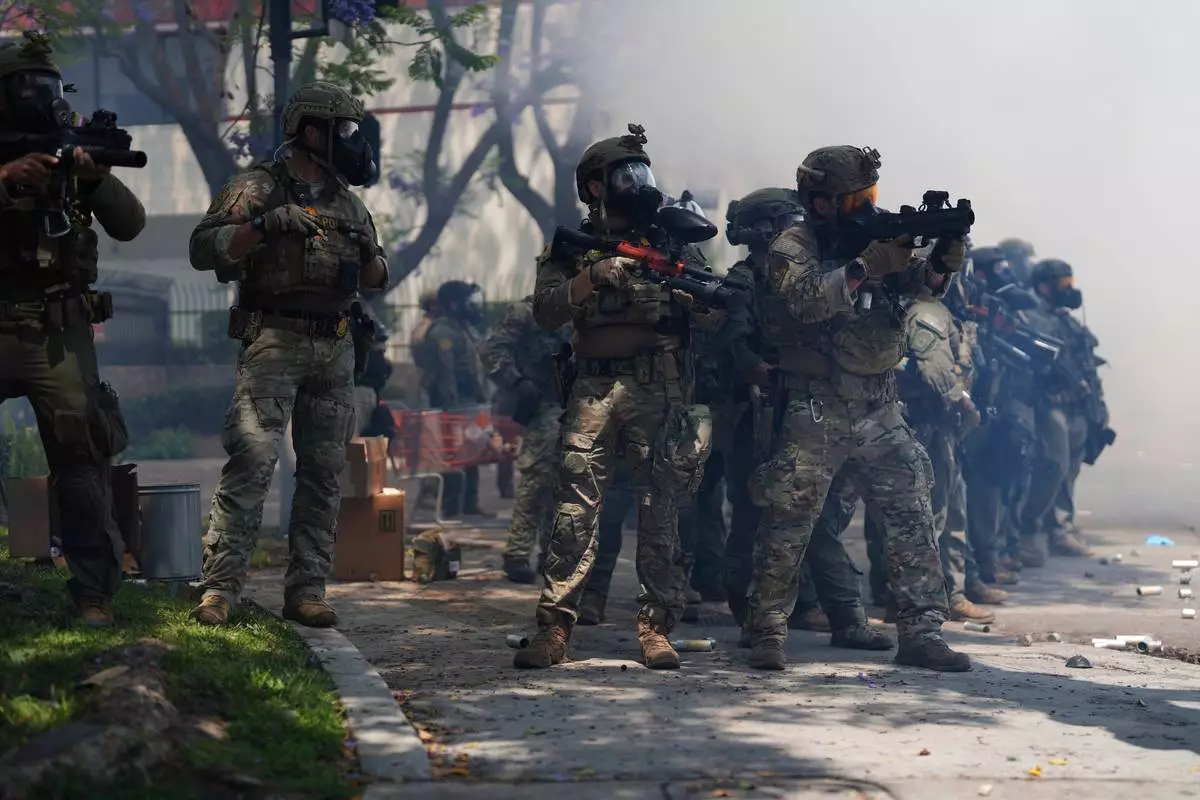
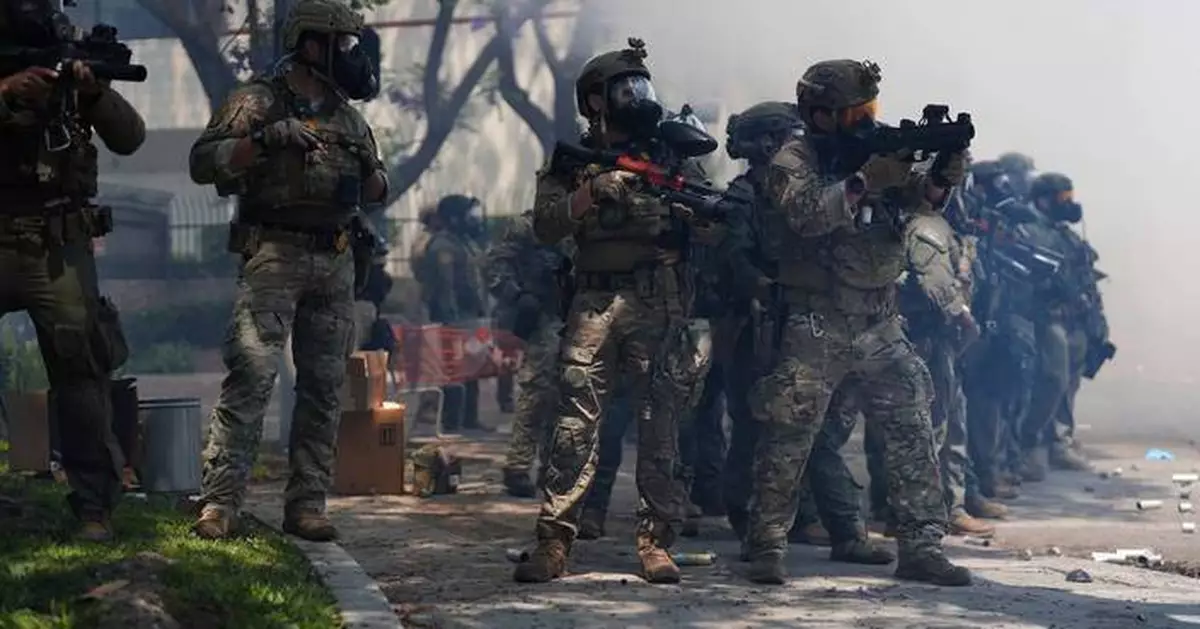
FILE - Law enforcement respond to protesters after federal immigration authorities conducted operations, June 7, 2025, in Paramount, Calif. (AP Photo/Eric Thayer, File)
NAHUNTA, Ga. (AP) — Wildfires burning across the southeastern U.S. forced more people to flee Wednesday after destroying nearly 50 homes in Georgia and causing some schools closings as drought and winds fueled flames.
Some of the biggest blazes were near Georgia’s coast while others were popping up in northern Florida, a state facing one of its worst fire seasons in decades.
It was not yet clear how the wildfires started, but the bottom half of Georgia is perilously dry and the conditions prompted the state's forestry commission to issue a burn ban for the first time in its history. Southeastern Georgia has seen just 11 inches (28 centimeters) of rain since the beginning of September — almost 15 inches (38 centimeters) below normal, the National Weather Service said.
The fires spread so quickly in southern Georgia that residents received no warnings or alerts.
“I wish that I had knew something more,” said Brianna Elliott, who left home Tuesday only to find her route back blocked by the fires 90 minutes later. “I would have turned around in that moment and gone home and got my animals before anything.”
She now fears that her home and her dogs are gone.
Georgia’s two biggest wildfires together have burned more than 31 square miles (80 square kilometers), and at least four other smaller fires have been reported in the state.
The fast-moving Brantley County fire was threatening roughly 1,000 homes Wednesday after destroying almost 50 a day earlier.
That fire grew in size by roughly six times in just a half day Tuesday, said Joey Cason, the county manager. There were fires erupting “in the backyard and people taking off in the front yard,” he said Wednesday.
So far, no major injuries have been reported, Cason said.
The rural county is roughly midway between Georgia's coastal beaches and the Okefenokee Swamp and is dotted with livestock and fruit farms as well as thick stands of planted pines grown for timber.
Crews were working to create fire breaks and stop flames from reaching populated areas. The biggest concern was the gusting winds that could easily spread embers.
Authorities said rain was desperately needed. The area with the worst fires is in exceptional or extreme drought, the most dire levels, according to the U.S. Drought Monitor.
“If you could start praying for that right now, we’d be grateful,” Cason said.
Pine and hardwood forests in the region are helping charge the fires, said Seth Hawkins, a spokesperson for the Georgia Forestry Commission. Swampy lowlands with thick layers of leaves and woody debris are “super flammable” when they dry out, he said.
The commission's 30-day burn ban is for the southern part of the state.
Georgia Gov. Brian Kemp declared a state of emergency Wednesday for more than half of the state's counties.
Brantley County Sheriff Len Davis warned residents to be ready to evacuate because the winds could shift rapidly and unexpectedly.
More people were told to evacuate Wednesday afternoon, on top of the 800 evacuations that had already taken place in the county. Five shelters have opened, the Federal Emergency Management Agency said.
A large fire that started in Clinch County also prompted evacuations.
In Florida, firefighters were battling 131 wildfires that had burned 34 square miles (88 square kilometers), mostly in the state’s northern half.
“Florida has got one of the worst fire seasons in maybe the last 30 or 40 years or it’s turning out to be that way,” Florida Commissioner of Agriculture Wilton Simpson said. “We’ve been in drought for 18 months now all across the state.”
A wildfire disrupted Amtrak train service Monday in the northeast part of the state. Service was back to normal Wednesday, according to Amtrak spokeswoman Beth Toll.
A dangerous combination of low humidity and breezy winds will keep the fire danger elevated Wednesday, the National Weather Service said.
Smoke drifted to Atlanta, Savannah, Georgia, and Jacksonville, Florida. The air quality in parts of south Georgia declined to the unhealthy category Wednesday, meaning all residents might feel health effects.
Smoky conditions were expected to linger throughout the Atlanta area on Wednesday, according to the Atlanta-Fulton County Emergency Management Agency. The worst fires were burning more than 200 miles (322 kilometers) southeast of the city.
The high fire risk was expected to continue each afternoon through Friday due to the very dry conditions, the weather service said.
Martin reported from Atlanta. Associated Press reporters Jeff Amy and Kate Brumback in Atlanta, Mike Schneider in Orlando, Florida, and John Seewer in Toledo, Ohio, contributed.
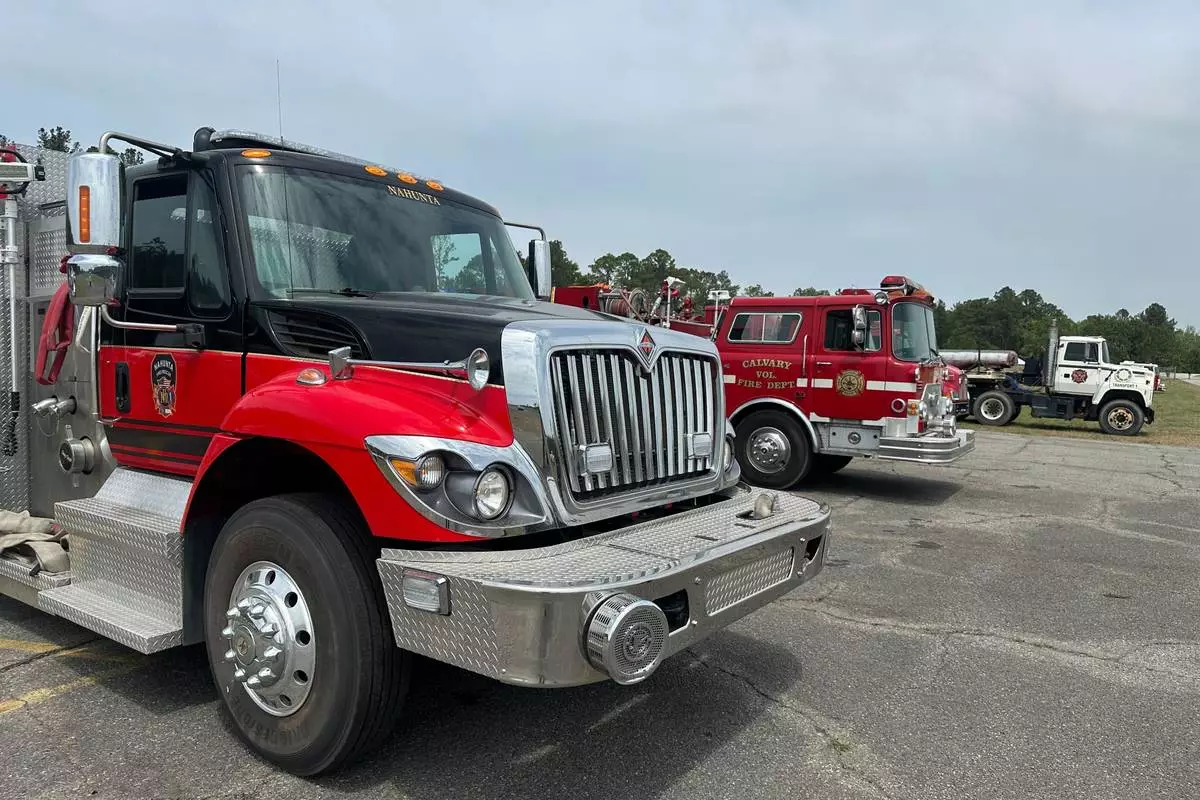
Fire trucks are staged outside the command center in Nahunta, Ga., where officials are coordinating the fight against a wildfire Wednesday, April 22, 2026.(AP Photo/Russ Bynum)
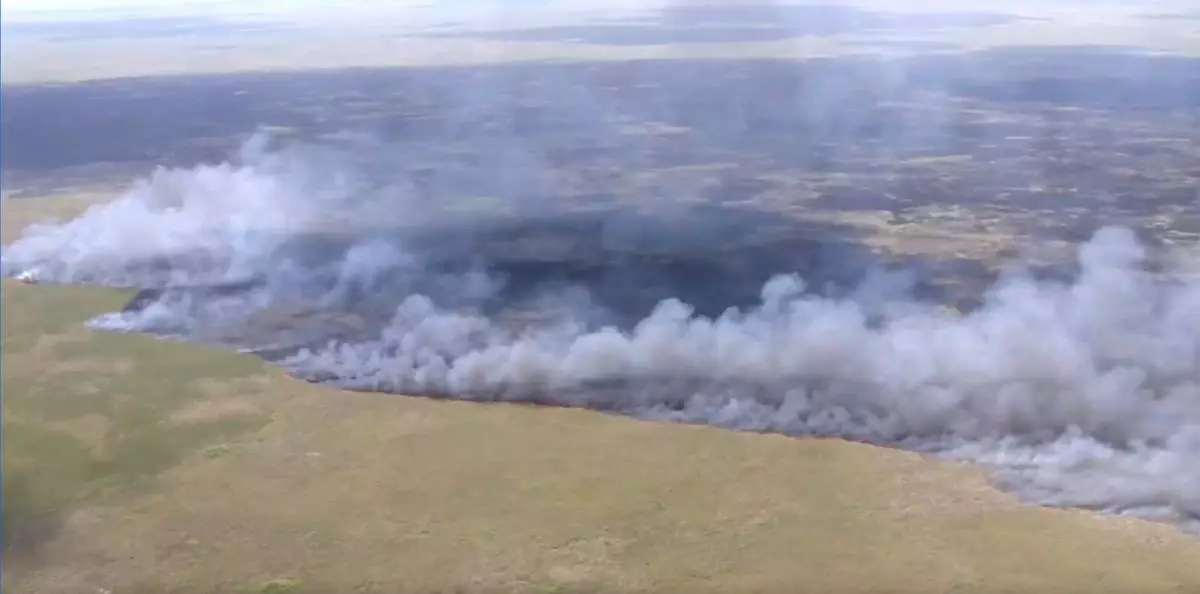
This image taken from a WSVN video a wildfire burning Wednesday, April 22, 2026, in Broward County, Fla. (WSVN/ABC Miami via AP)
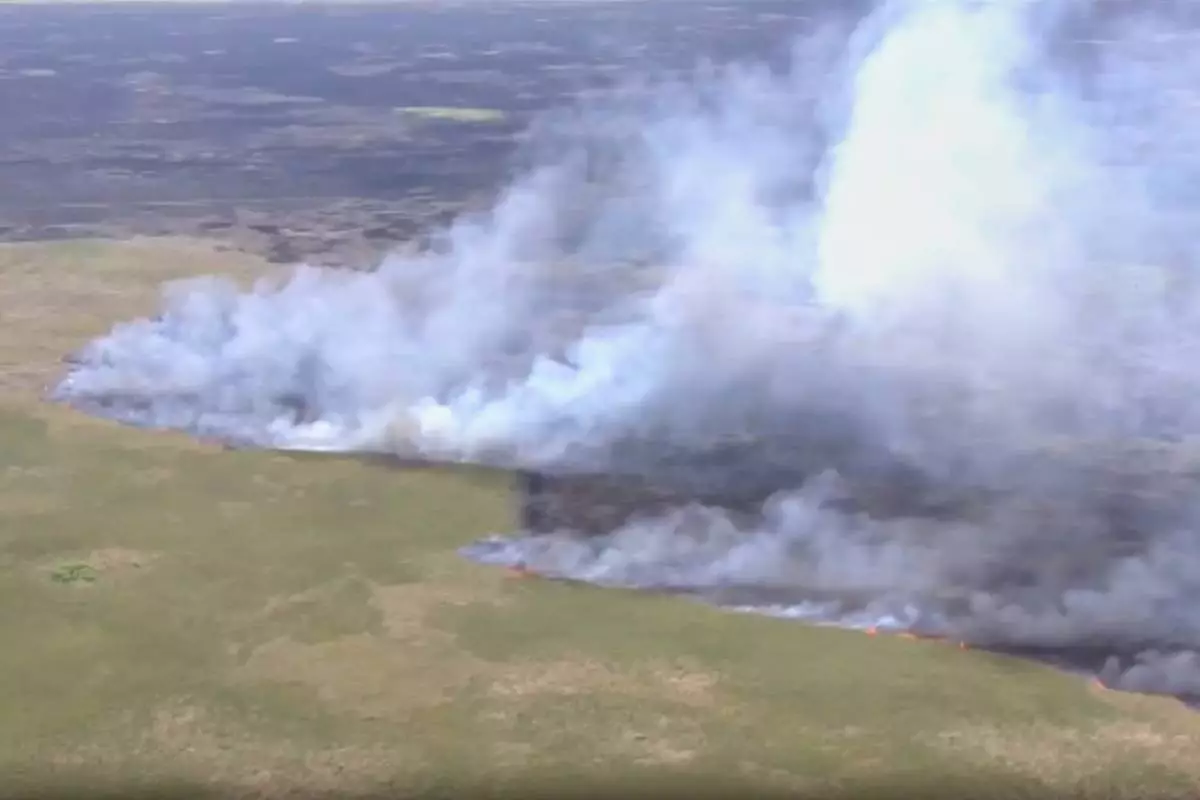
This image taken from a WSVN video a wildfire burning Wednesday, April 22, 2026, in Broward County, Fla. (WSVN/ABC Miami via AP)
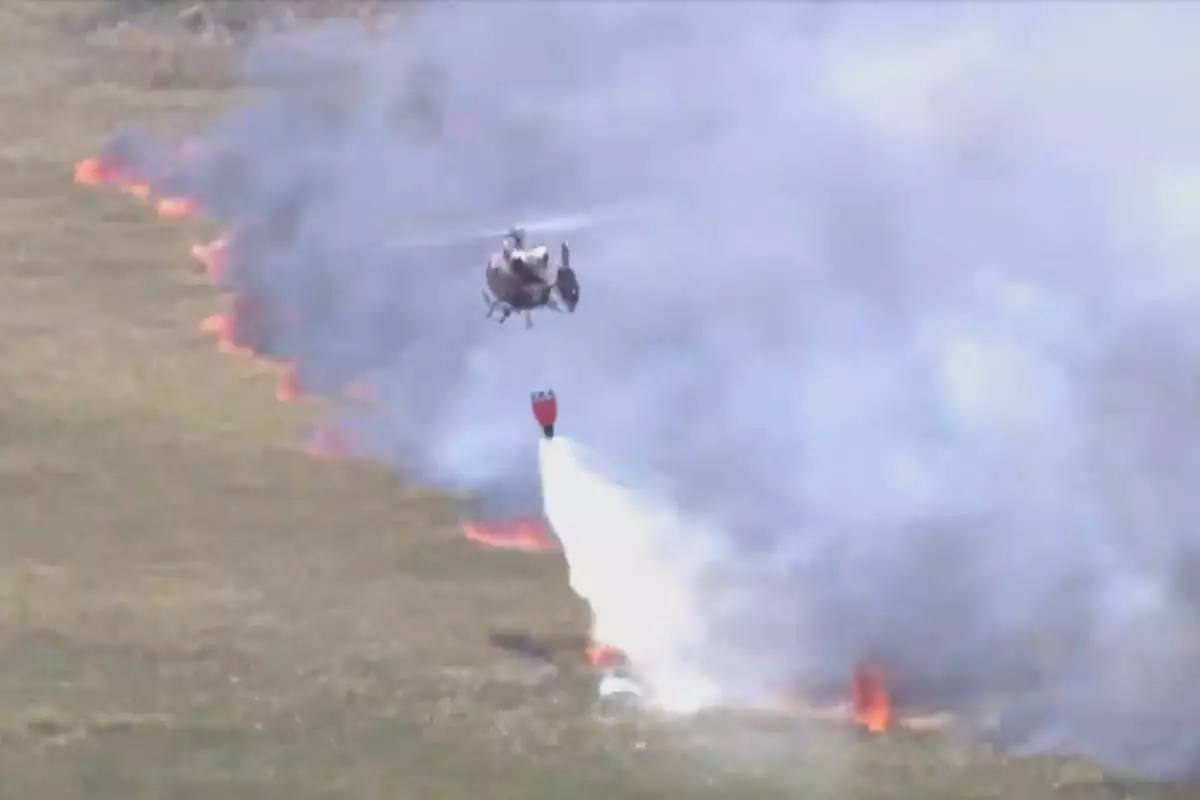
This image taken from a WSVN video shows firefighters battling a wildfire Wednesday, April 22, 2026, in Broward County, Fla. (WSVN/ABC Miami via AP)