Skip to Content Facebook Feature Image

Fifth Third Stakes Claim in Texas with First Branch Opening

Business

Fifth Third Stakes Claim in Texas with First Branch Opening
Business

Business

Fifth Third Stakes Claim in Texas with First Branch Opening

2026-04-23 04:16 Last Updated At:04:20

CINCINNATI--(BUSINESS WIRE)--Apr 22, 2026--

Fifth Third (Nasdaq: FITB) today opened its first Texas financial center in Frisco, launching a broader expansion that builds on Comerica’s existing presence and represents more than $700 million in planned investment across the state. Following the conversion of Comerica branches on September 8, Fifth Third will operate 108 locations in Texas and plans to grow to more than 250 financial centers by 2029, securing a top‑five footprint in Dallas, Austin, and Houston.

More Images
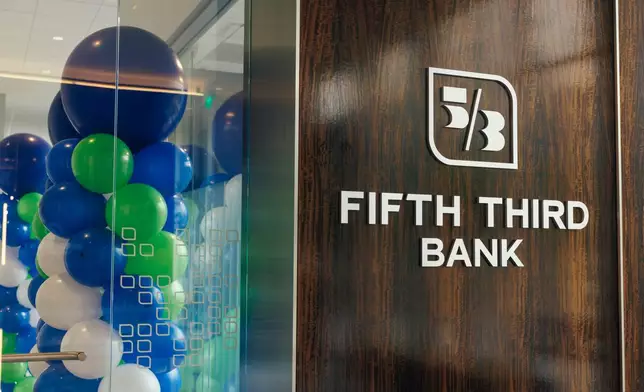
Signage at Fifth Third's first Texas financial center.
Signage at Fifth Third's first Texas financial center.

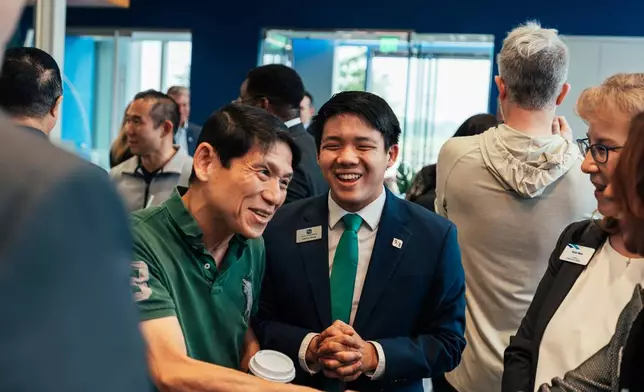
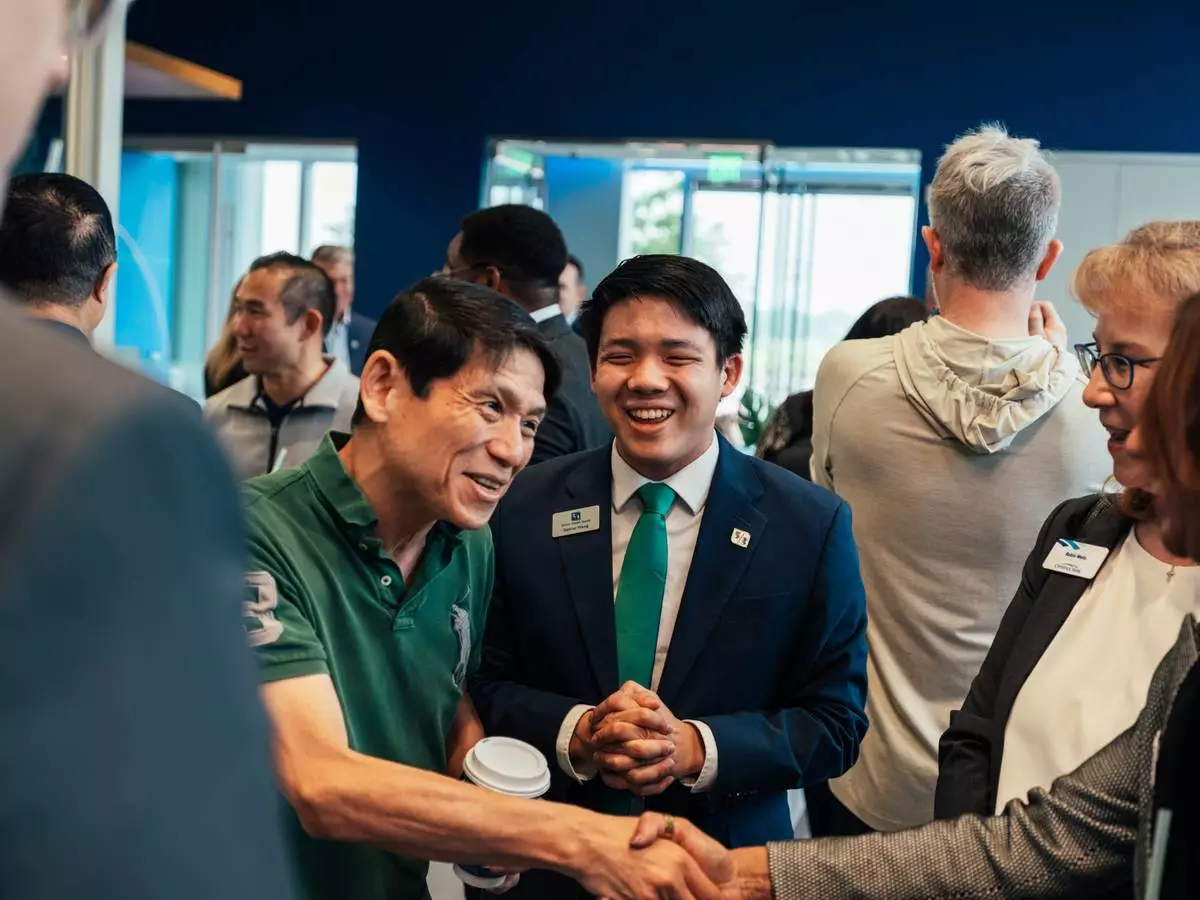
Gabriel Wang, Fifth Third Financial Center Manager, celebrates with the crowd at the opening of Fifth Third's first Texas branch.
Gabriel Wang, Fifth Third Financial Center Manager, celebrates with the crowd at the opening of Fifth Third's first Texas branch.

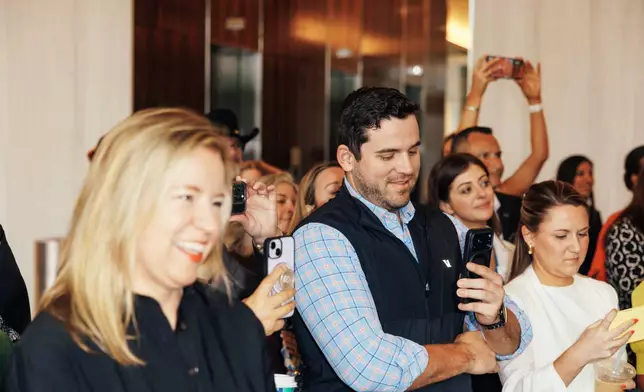
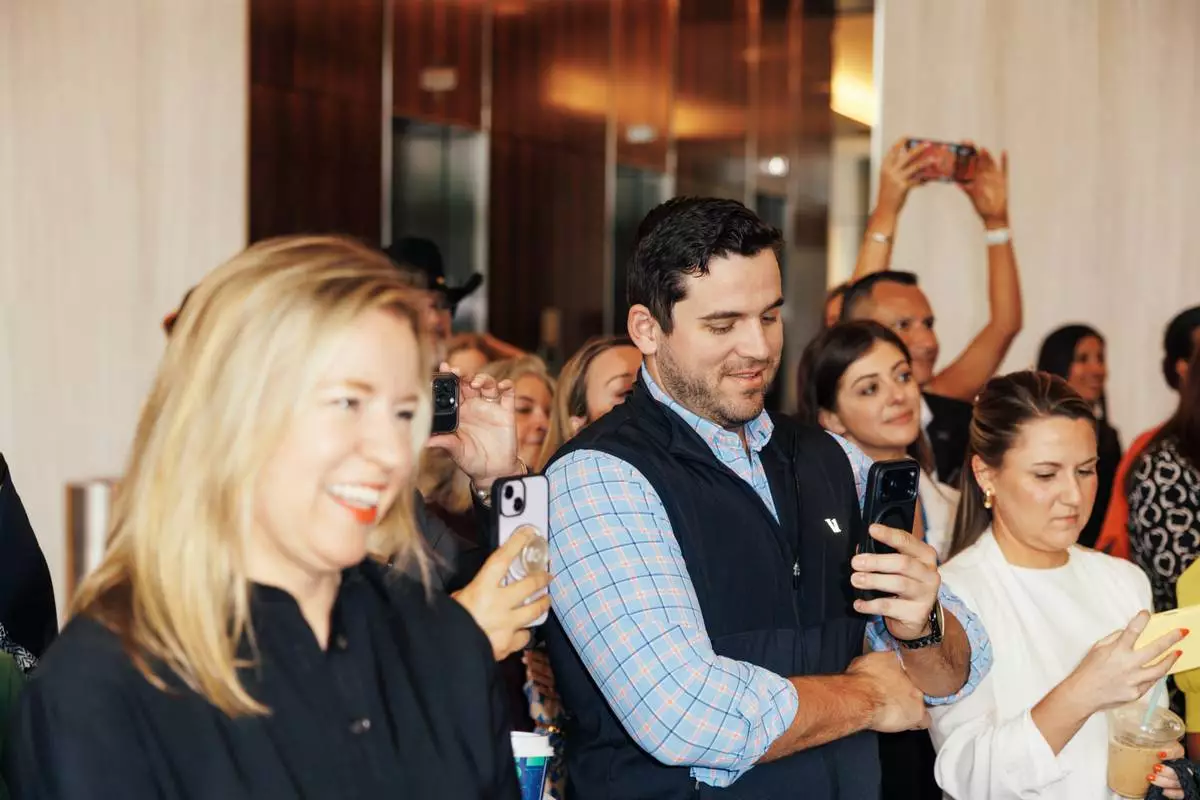
Christal Howard, President and CEO of the Frisco Chamber of Commerce watches with the crowd as the new Fifth Third signage is unveiled at Cowboys Way.
Christal Howard, President and CEO of the Frisco Chamber of Commerce watches with the crowd as the new Fifth Third signage is unveiled at Cowboys Way.

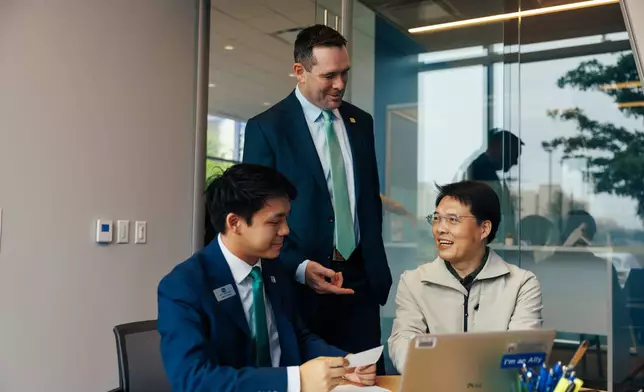
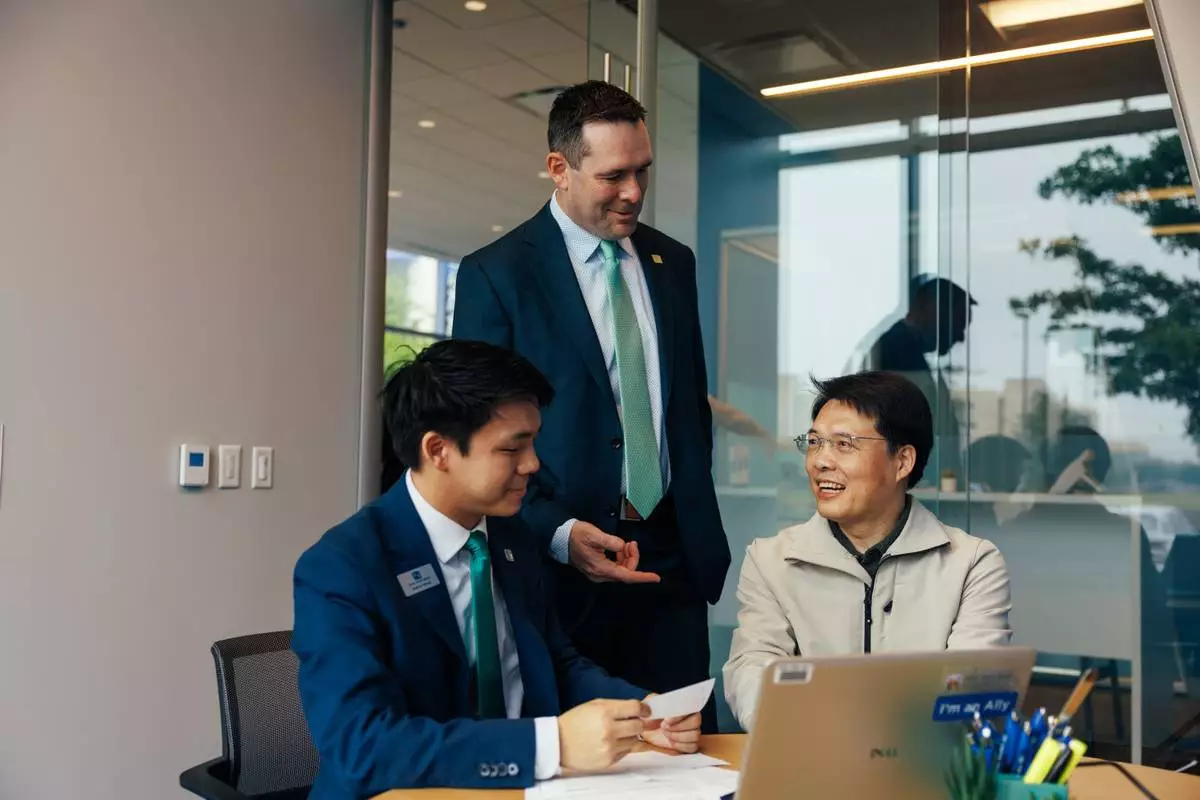
Brian Enzler, Fifth Third North Texas Region President, and Gabriel Wang, Fifth Third Financial Center Manager helping Kuang Zhang, owner of Sweet Hut Bakery & Cafe, open the first Fifth Third account in Texas.
Brian Enzler, Fifth Third North Texas Region President, and Gabriel Wang, Fifth Third Financial Center Manager helping Kuang Zhang, owner of Sweet Hut Bakery & Cafe, open the first Fifth Third account in Texas.

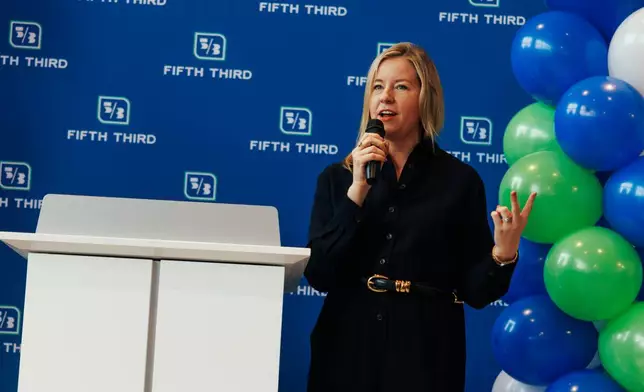
Christal Howard, President and CEO of the Frisco Chamber of Commerce speaking at the opening of Fifth Third's first Texas financial center.
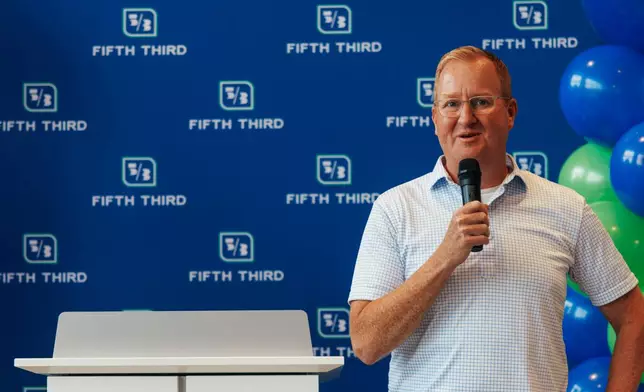
Christal Howard, President and CEO of the Frisco Chamber of Commerce speaking at the opening of Fifth Third's first Texas financial center.

Mayor Jeff Cheney speaks at the opening of Fifth Third's first Texas branch.
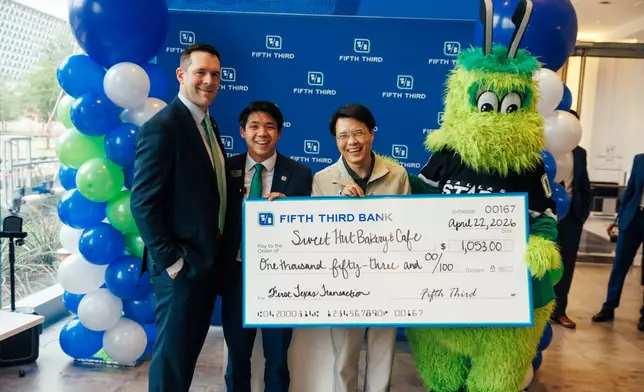
Mayor Jeff Cheney speaks at the opening of Fifth Third's first Texas branch.

Brian Enzler, Fifth Third North Texas Region President, Gabriel Wang, Fifth Third Financial Center Manager present a donation to Kuang Zhang, owner of Sweet Hut Bakery & Cafe.
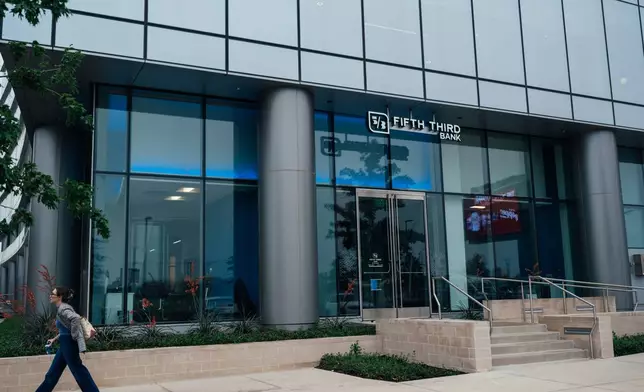
Brian Enzler, Fifth Third North Texas Region President, Gabriel Wang, Fifth Third Financial Center Manager present a donation to Kuang Zhang, owner of Sweet Hut Bakery & Cafe.

Fifth Third's new Cowboys Way branch in Frisco, Texas.
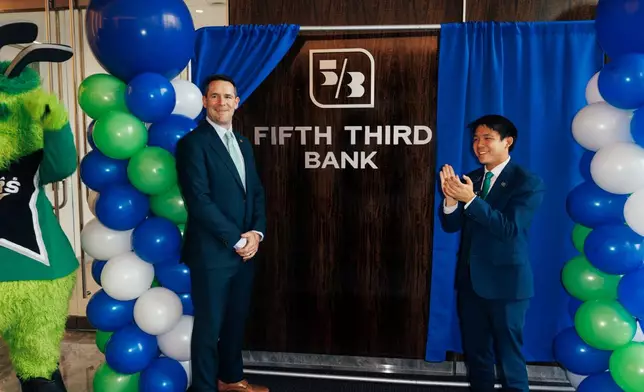
Fifth Third's new Cowboys Way branch in Frisco, Texas.

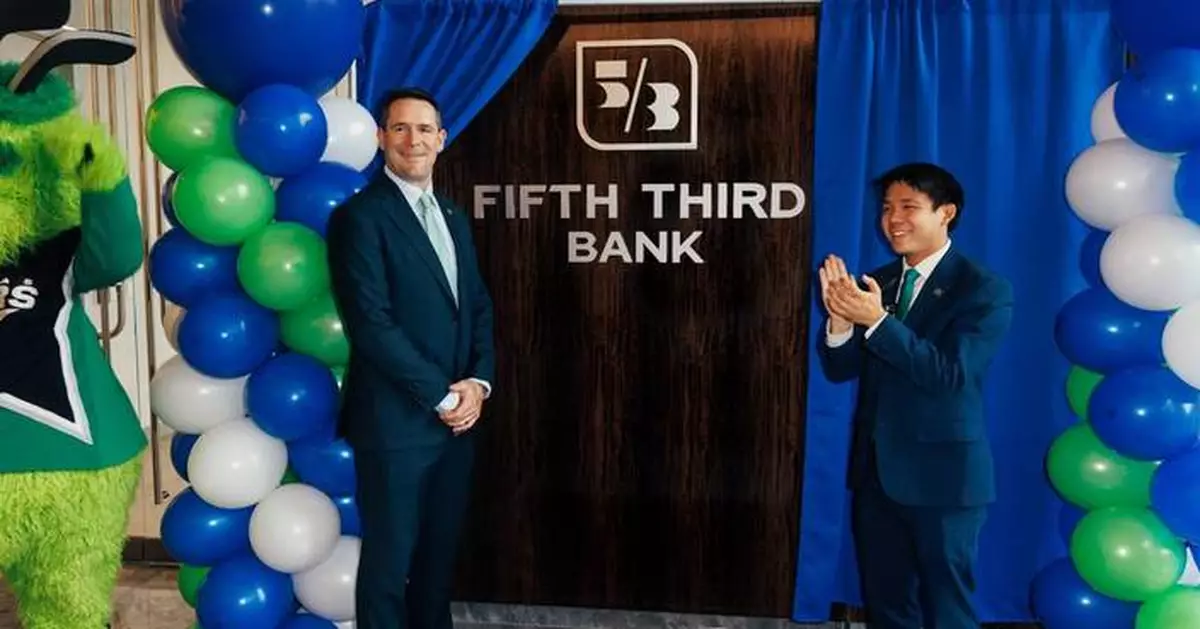
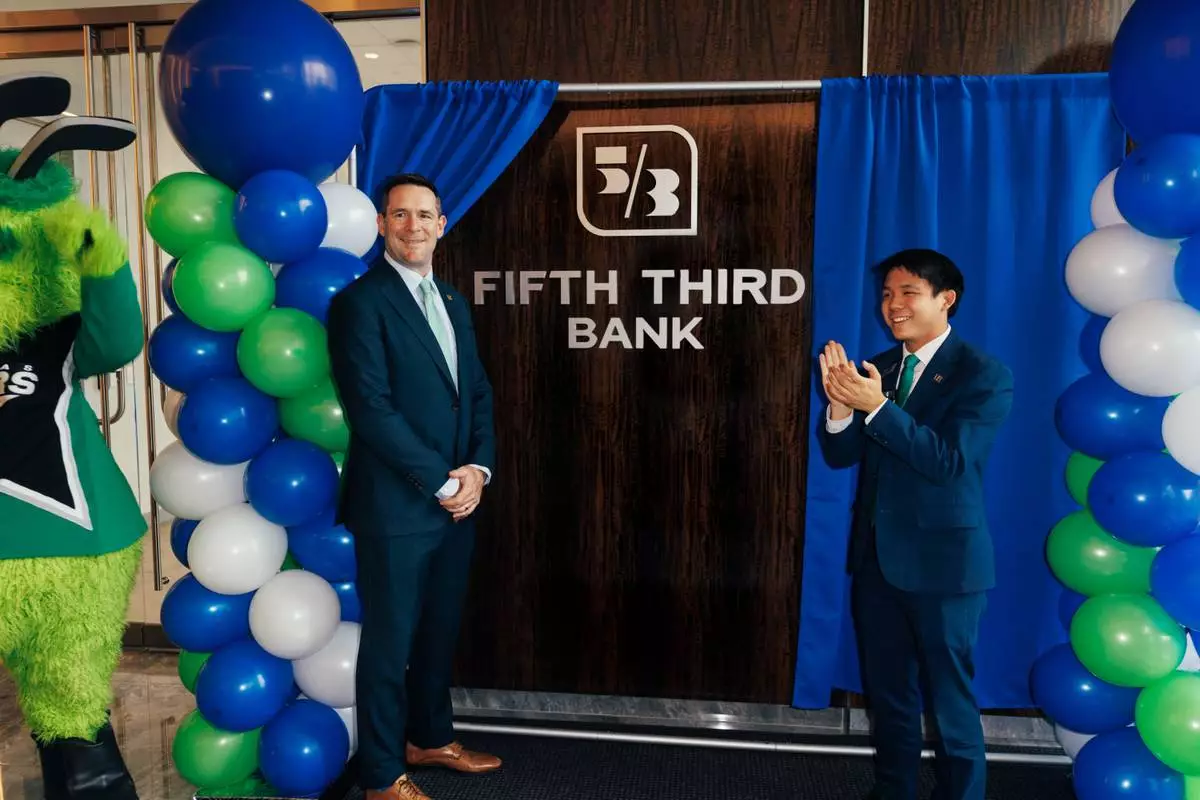
Brian Enzler, Fifth Third North Texas Region President and Gabriel Wang, Fifth Third Financial Center Manager, reveal the new Fifth Third signage at Cowboys Way.

Brian Enzler, Fifth Third North Texas Region President and Gabriel Wang, Fifth Third Financial Center Manager, reveal the new Fifth Third signage at Cowboys Way.

This press release features multimedia. View the full release here: https://www.businesswire.com/news/home/20260422249510/en/

“Our goal is always to show up in a way that makes life easier for customers and strengthens the communities we join,” said Shawn Niehaus, Head of Consumer Banking at Fifth Third. “As we begin opening locations in Texas, we’re bringing a banking experience designed to meet people where they are and support their ambitions.”

Frisco is one of the fastest-growing cities in the country, with an average of 24 people moving to the area every day, according to the U.S. Census Bureau. A major corporate hub with a thriving job market and a growing center for technology, Frisco is a premier, family friendly destination featuring highly regarded schools and extensive entertainment options.

“Frisco is a city defined by its momentum — a place where innovation isn’t just encouraged, it’s expected,” remarked Brian Enzler, Fifth Third North Texas Region President. “That spirit perfectly aligns with Fifth Third’s commitment to delivering modern, intuitive, and technology forward banking experiences. As the community continues to grow and set new standards for what a vibrant, future focused city can be, we’re excited to deepen our presence here. Our new Frisco branch reflects our belief in the city’s trajectory and our dedication to bringing customers smarter, more innovative ways to bank.”

Today’s opening is the first of 60 financial centers planned in North Texas over the next three years, laying the foundation for a strong market presence and top tier deposit share. Fifth Third’s entrance into Texas is part of a national expansion strategy that will grow the Bank’s retail presence to approximately 1,750 locations by 2030 across 17 of the 20 fastest-growing large markets in the U.S.

Over the last decade, Fifth Third has developed and refined a rapid deployment model for identifying, securing, and opening new locations. Powered by advanced data intelligence and industry leading innovation, the Bank is building density in the nation’s fastest growing markets and delivering its award-winning customer experiences with speed and precision. Fifth Third de novos opened in 2024 and 2025 averaged $25 million in deposits in their first 12 months—achieving 200% of targeted deposit growth and reaching profitability in just 36 months.

Data-Driven Expansion Strategy

Fifth Third’s expansion is informed by proprietary digital tools and analytics. The Bank’s Market Strength Index (MSI) and geospatial heatmaps—drawing on trillions of calculations and thousands of data points, including anonymized cellphone data—pinpoint optimal branch locations in high growth areas. This methodology has enabled Fifth Third to secure all 200 Southeast locations planned through 2028, and have letters of intent in place or in progress for approximately half of its future Texas sites.

Innovative Branch Design

Fifth Third’s new financial centers are designed to reflect how consumers want to bank today—blending digital convenience with personalized, in person service. The financial centers feature open layouts and welcoming meeting spaces. For everyday banking needs, customers can rely on Fifth Third’s award-winning mobile app and Fifth Third Momentum Banking® platform. This integrated model empowers customers to manage transactions quickly or engage in deeper financial conversations in private, comfortable settings.

Fifth Third’s first Texas location is at 17 Cowboys Way in Frisco, anchoring the first floor of the Frisco Business & Innovation Hub.

About Fifth Third

Fifth Third is a bank that’s as long on innovation as it is on history. Since 1858, we’ve been helping individuals, families, businesses and communities grow through smart financial services that improve lives. Our list of firsts is extensive, and it’s one that continues to expand as we explore the intersection of tech-driven innovation, dedicated people and focused community impact. Fifth Third is one of the few U.S.-based banks to have been named among Ethisphere’s World’s Most Ethical Companies ® for several years. With a commitment to taking care of our customers, employees, communities and shareholders, our goal is not only to be the nation’s highest performing regional bank, but to be the bank people most value and trust.

Fifth Third Bank, National Association is a federally chartered institution. Fifth Third Bancorp is the indirect parent company of Fifth Third Bank and its common stock is traded on the NASDAQ ® Global Select Market under the symbol "FITB." Investor information and press releases can be viewed at www.53.com. Deposit and credit products provided by Fifth Third Bank, National Association. Member FDIC.
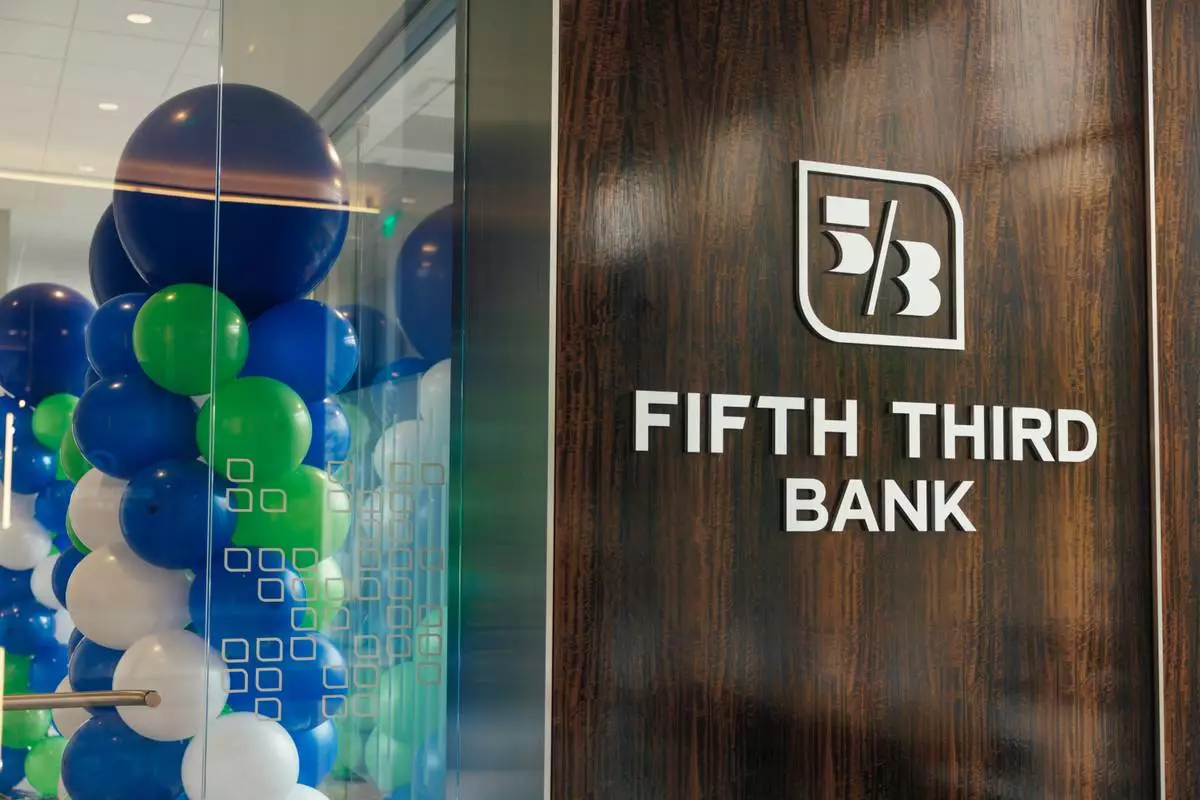
Signage at Fifth Third's first Texas financial center.
Signage at Fifth Third's first Texas financial center.

Gabriel Wang, Fifth Third Financial Center Manager, celebrates with the crowd at the opening of Fifth Third's first Texas branch.
Gabriel Wang, Fifth Third Financial Center Manager, celebrates with the crowd at the opening of Fifth Third's first Texas branch.

Christal Howard, President and CEO of the Frisco Chamber of Commerce watches with the crowd as the new Fifth Third signage is unveiled at Cowboys Way.
Christal Howard, President and CEO of the Frisco Chamber of Commerce watches with the crowd as the new Fifth Third signage is unveiled at Cowboys Way.

Brian Enzler, Fifth Third North Texas Region President, and Gabriel Wang, Fifth Third Financial Center Manager helping Kuang Zhang, owner of Sweet Hut Bakery & Cafe, open the first Fifth Third account in Texas.
Brian Enzler, Fifth Third North Texas Region President, and Gabriel Wang, Fifth Third Financial Center Manager helping Kuang Zhang, owner of Sweet Hut Bakery & Cafe, open the first Fifth Third account in Texas.

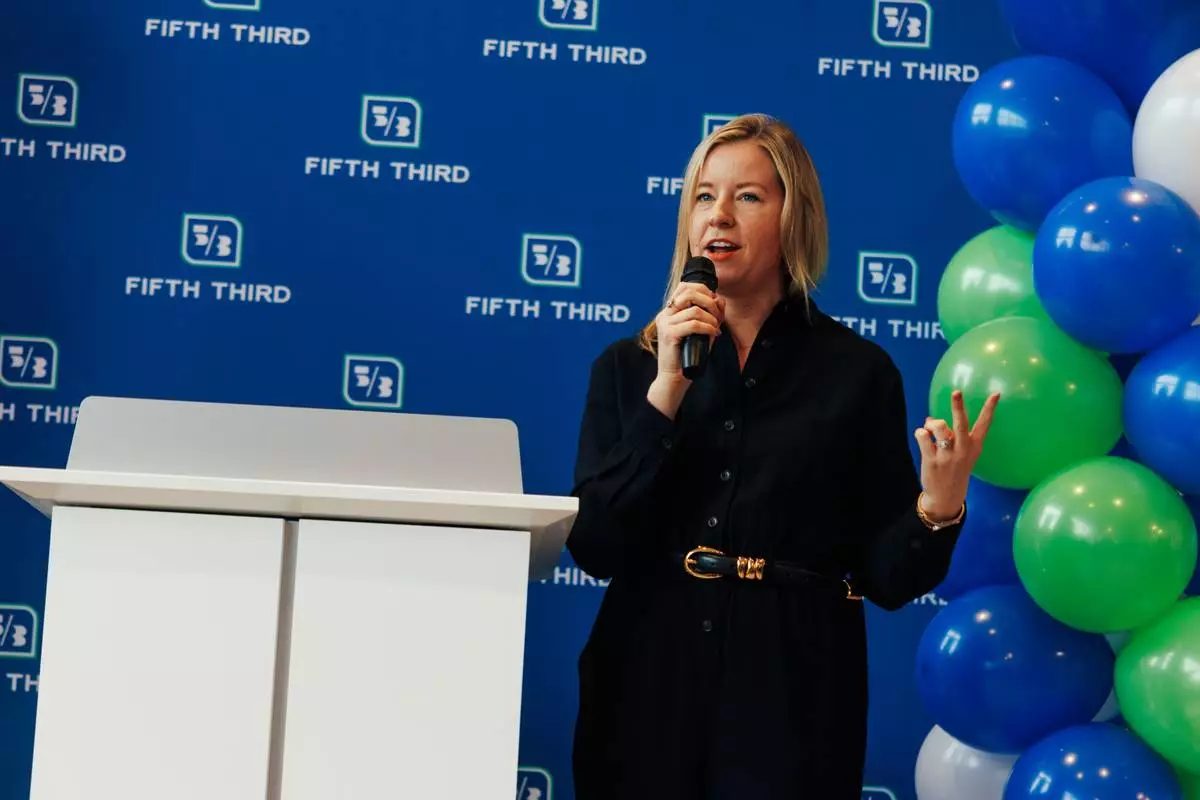
Christal Howard, President and CEO of the Frisco Chamber of Commerce speaking at the opening of Fifth Third's first Texas financial center.
Christal Howard, President and CEO of the Frisco Chamber of Commerce speaking at the opening of Fifth Third's first Texas financial center.

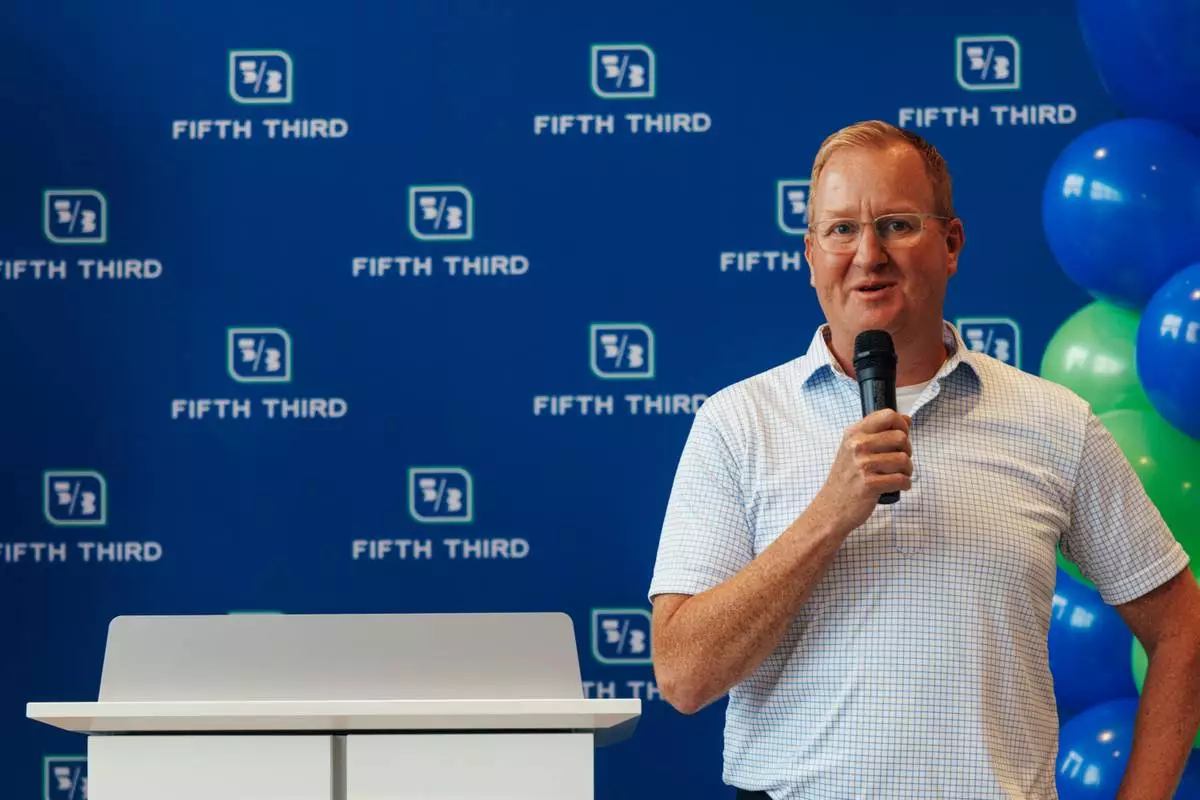
Mayor Jeff Cheney speaks at the opening of Fifth Third's first Texas branch.
Mayor Jeff Cheney speaks at the opening of Fifth Third's first Texas branch.

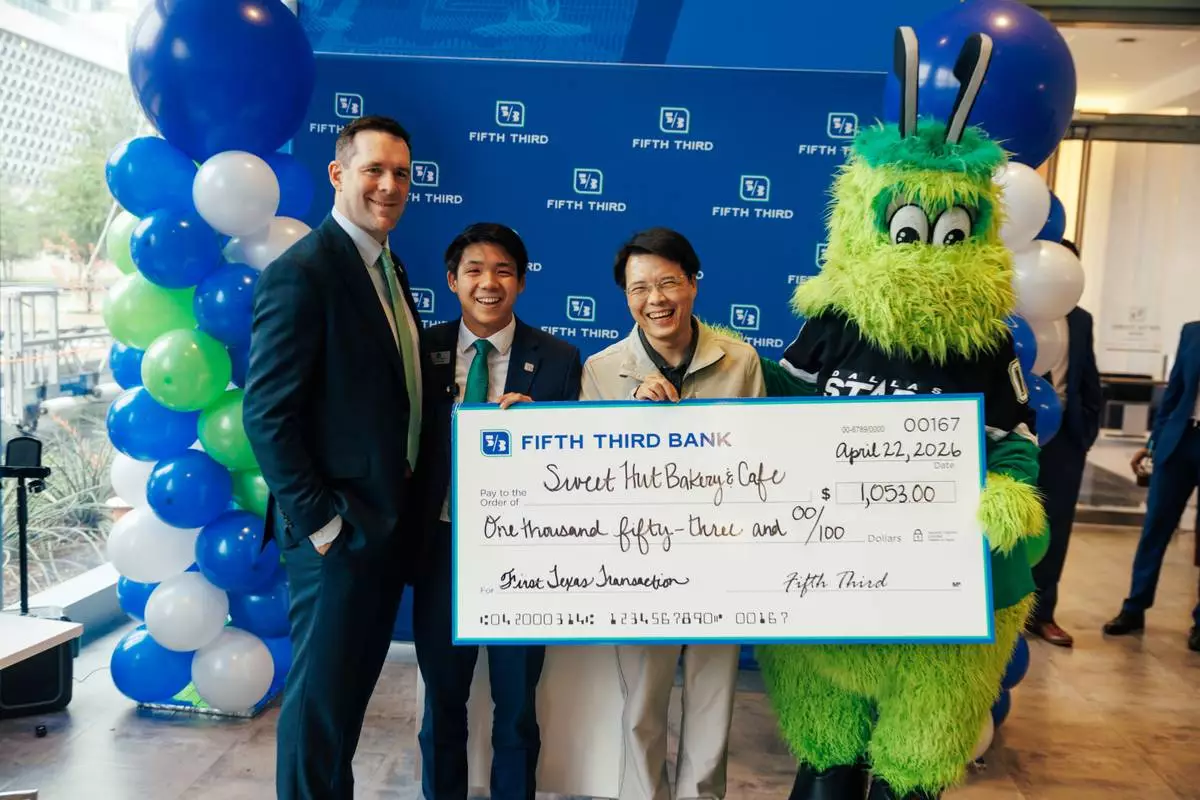
Brian Enzler, Fifth Third North Texas Region President, Gabriel Wang, Fifth Third Financial Center Manager present a donation to Kuang Zhang, owner of Sweet Hut Bakery & Cafe.
Brian Enzler, Fifth Third North Texas Region President, Gabriel Wang, Fifth Third Financial Center Manager present a donation to Kuang Zhang, owner of Sweet Hut Bakery & Cafe.

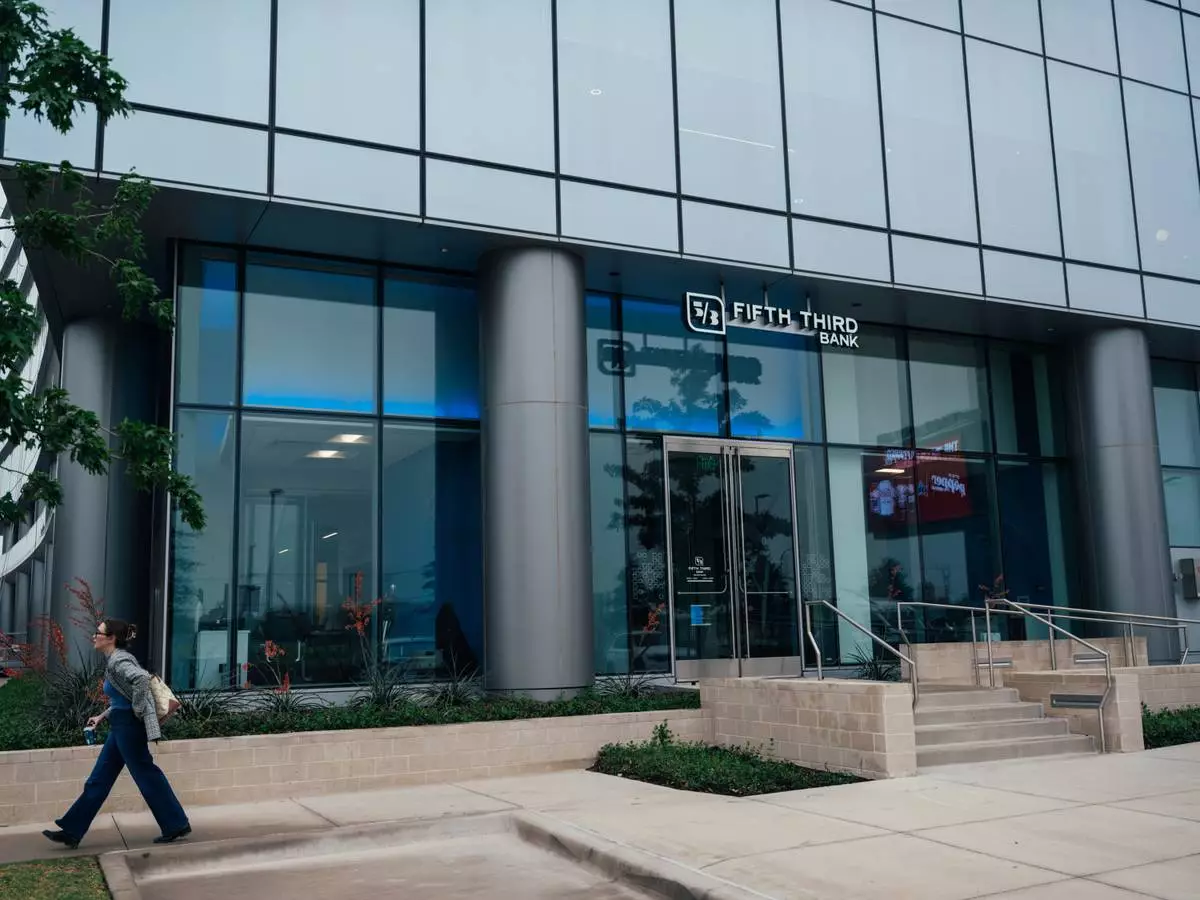
Fifth Third's new Cowboys Way branch in Frisco, Texas.
Fifth Third's new Cowboys Way branch in Frisco, Texas.

Brian Enzler, Fifth Third North Texas Region President and Gabriel Wang, Fifth Third Financial Center Manager, reveal the new Fifth Third signage at Cowboys Way.

Brian Enzler, Fifth Third North Texas Region President and Gabriel Wang, Fifth Third Financial Center Manager, reveal the new Fifth Third signage at Cowboys Way.
Democrats on Wednesday celebrated an election win in Virginia that could put them slightly ahead in the national redistricting competition that President Donald Trump triggered in an attempt to preserve his party's House majority in this year's midterms, but it will not be the final round.

The Virginia Supreme Court will now decide whether Democratic lawmakers violated procedural rules when they referred a constitutional amendment to the ballot authorizing the new U.S. House districts that could help Democrats win as many as four additional seats in the state. If so, that could invalidate the map voters narrowly approved Tuesday.

What happens next in Florida also will matter.

The state's Republican-controlled Legislature is to meet in a special session next week that GOP Gov. Ron DeSantis called in part to draw a new map to expand the party's congressional majority there. The U.S. Supreme Court is scheduled to issue an opinion by the end of June in a Louisiana case that could overturn a key provision of the Voting Rights Act and lead to redrawn political maps across the South, though almost all of those could not happen until 2028.

After voters passed the Virginia amendment, Democrats could tentatively claim that they netted 10 seats nationally from the mid-decade redistricting, compared with the nine that Republicans claim. Even if things swing again in the GOP's favor, the net result of Trump's campaign would be at best an incremental increase in the number of GOP-leaning House seats at a time when his approval rating is dropping and Republican anxiety over losing control of Congress in November is rising.

“We have successfully blunted Trump’s attempt to completely hijack the midterms," said John Bisognano, president of the National Democratic Redistricting Committee.

Many Republicans agreed.

“The GOP will now lose net seats across the country. If you’re going to pick a fight, at least win it,” Ari Fleischer, who was a spokesman for President George W. Bush, posted on the social media site X after the Virginia vote. “All this was foreseeable and avoidable. We should not have started this fight.”

Adam Kincaid, executive director of the National Republican Redistricting Trust, argued that it is too soon to declare one party a victor.

“It's an ongoing process with many legal challenges pending, and it's far too early for sweeping statements on the final outcome,” he said.

Trump on Wednesday tried to undermine the Virginia result by leveling groundless accusations of fraud similar to ones he made after losing the 2020 presidential election. He called the Virginia vote “RIGGED” and “Crooked” in a post on his social media site and added: “Let’s see if the Courts will fix this travesty of 'Justice.'”

Redistricting is typically done every 10 years after each census, unless ordered by a court. But last summer, Trump pushed a redrawing in Texas, prodding the state's Republican-controlled Legislature to add up to five winnable House seats for his party. Trump then began pressuring other Republican-run states to follow. Missouri, North Carolina and Ohio have since created more GOP-leaning seats in addition to Texas.

Democrats began to fight back, even though they were more constrained because several Democratic-controlled states had maps drawn by independent commissions rather than lawmakers and governors.

To counter Texas, California's Democratic governor, Gavin Newsom, pushed the Democratic-controlled Legislature to place a redistricting initiative on last fall's ballot. After voters overwhelmingly approved it, the measure will replace a commission-approved map with one that could gain Democrats five seats.

Democrats reclaimed the Legislature and governor's office in November in Virginia and swiftly moved to replicate California's move with an even more aggressive redistricting plan. It replaces a congressional map imposed by a court after the last census that had resulted in a 6-5 edge for Democrats with one that could allow Democrats to win as many 10 seats.

“We are not going to let anyone tilt the system without a response,” state Senate President L. Louise Lucas said at a news conference Wednesday.

In Washington, U.S. House Democratic leader Hakeem Jeffries of New York warned Florida Republicans, who have been openly nervous about redrawing their district boundaries and potentially spreading their core voters too thin before an election that appears to be trending against them.

“Our message to Florida Republicans right now is, ‘F around and find out,’” Jeffries said.

House Majority Forward, the nonprofit arm of the super political action committee aligned with House Democrats, has spent nearly $60 million to push back against Republicans' redistricting efforts. Some $40 million of that was on the Virginia campaign.

Another obstacle in Florida is an anti-gerrymandering constitutional amendment that was approved by state voters in 2010. It is likely that any new Florida map would trigger significant litigation, although six of the state Supreme Court's seven justices were appointed by Republicans.

Nicholas Stephanopolous, a Harvard law professor, said a challenge for DeSantis is that the Florida amendment forbids drawing lines for purely partisan purposes, so he has to find some other excuse for revising the map. “Even with that sort of acquiescent state supreme court, I don't think it's a done deal,” Stephanopolous said.

The Virginia move comes with its own legal issues. Republicans have challenged the process that Democrats used to place the measure on the ballot and the state Supreme Court opted to wait for the vote before even scheduling arguments in the case. It is unclear when a ruling could come.

“The ballot box was never the final word here,” Terry Kilgore, the Virginia House Republican leader, said in a statement after Tuesday's vote. “Serious legal questions remain about both the wording of this referendum and the process used to put it before voters.”

The biggest legal wild card is held by the U.S. Supreme Court. Its conservative majority could throw out a requirement under the Voting Rights Act that in areas with a large minority population, mapmakers draw districts that are more favorable to the election of minority candidates.

That provision has led to the creation of several majority-minority congressional seats, especially in the South. Without it, Republicans in conservative states could shrink the number of U.S. House seats winnable by Democrats even further.

But it's unlikely that any state other than Louisiana, which brought the lawsuit the high court will rule on, would be able to adjust its congressional lines in time for November even if the court eliminates that provision, known as Section Two. That's because the November election is already officially underway in most states and candidate filing deadlines — and, in some cases, primary elections — have already passed.

AP Congressional Correspondent Lisa Mascaro and Associated Press writer Leah Askarinam in Washington contributed to this report.

Signs are seen outside Fairfax Government Center during the Virginia redistricting referendum, Tuesday, April 21, 2026, in Fairfax, Va. (AP Photo/Julia Demaree Nikhinson)

Signs are seen outside Fairfax Government Center during the Virginia redistricting referendum, Tuesday, April 21, 2026, in Fairfax, Va. (AP Photo/Julia Demaree Nikhinson)

House Minority Leader Hakeem Jeffries, D-N.Y., speaks about Virginia's redistricting vote as Democratic Congressional Campaign Committee Chairman Suzan DelBene, D-Wash., right, looks on, at the Democratic National Committee headquarters in Washington, Wednesday, April 22, 2026. Virginia voters approved a congressional redistricting plan that could help Democrats win up to four additional U.S. House seats in this year's midterm elections.(AP Photo/Cliff Owen)

House Minority Leader Hakeem Jeffries, D-N.Y., speaks about Virginia's redistricting vote as Democratic Congressional Campaign Committee Chairman Suzan DelBene, D-Wash., right, looks on, at the Democratic National Committee headquarters in Washington, Wednesday, April 22, 2026. Virginia voters approved a congressional redistricting plan that could help Democrats win up to four additional U.S. House seats in this year's midterm elections.(AP Photo/Cliff Owen)

House Minority Leader Hakeem Jeffries, D-N.Y., left, looks on as House Democratic Whip Katherine Clark, D-Mass., speaks about Virginia's redistricting vote, at the Democratic National Committee headquarters in Washington, Wednesday, April 22, 2026. Virginia voters approved a congressional redistricting plan that could help Democrats win up to four additional U.S. House seats in this year's midterm elections. (AP Photo/Cliff Owen)

House Minority Leader Hakeem Jeffries, D-N.Y., left, looks on as House Democratic Whip Katherine Clark, D-Mass., speaks about Virginia's redistricting vote, at the Democratic National Committee headquarters in Washington, Wednesday, April 22, 2026. Virginia voters approved a congressional redistricting plan that could help Democrats win up to four additional U.S. House seats in this year's midterm elections. (AP Photo/Cliff Owen)

House Minority Leader Hakeem Jeffries, D-N.Y., speaks about Virginia's redistricting vote, at the Democratic National Committee headquarters in Washington, Wednesday, April 22, 2026. (AP Photo/Cliff Owen)

House Minority Leader Hakeem Jeffries, D-N.Y., speaks about Virginia's redistricting vote, at the Democratic National Committee headquarters in Washington, Wednesday, April 22, 2026. (AP Photo/Cliff Owen)

Recommended Articles