INSTITUTE, W.Va. (AP) — A chemical leak at a West Virginia silver recovery business on Wednesday killed two people and sent 19 others to the hospital, including one in critical condition, authorities said.
The leak occurred at the Catalyst Refiners plant in Institute as workers were preparing to shut down at least part of the facility, Kanawha County Commission Emergency Management Director C.W. Sigman said.
A chemical gas reaction occurred at the plant involving nitric acid and another substance, Sigman said at a news briefing. He added that there was "a violent reaction of the chemicals and it instantaneously overreacted.”
“Starting or ending a chemical reaction are the most dangerous times,” Sigman said.
The chemical reaction that was believed to have occurred during a cleaning process produced toxic hydrogen sulfide, Kanawha County Commission President Ben Salango said.
Among the injured were seven ambulance workers responding to the leak, officials said.
Other people were taken to the hospitals in private cars or even in one case a garbage truck, Sigman said.
One person was in critical condition, Salango said.
Vandalia Health Charleston Area Medical Center, one of several hospitals in the area, was treating multiple patients, some brought by ambulance, while members of the community were arriving Wednesday afternoon asking to be checked, hospital spokesman Dale Witte said.
Witte said patients were experiencing respiratory symptoms including cough, shortness of breath, sore throat and itchy eyes. They were being evaluated in the emergency room.
WVU Medicine Thomas Memorial Hospital in South Charleston said in a statement it has cared for a dozen patients, including eight who arrived by personal vehicle and were not at the scene but were in the area at the time. It said those injuries were not considered life-threatening.
A shelter-in-place order was issued for the surrounding area and lifted more than five hours later. Officials said all the deaths occurred on the plant site.
“You had to get really close to the facility to smell it,” Sigman said.
The leak required a large-scale decontamination operation in which people had to remove their clothes and be sprayed down, authorities said.
Catalyst Refiners works to remove silver from what remains of chemical processes and can find thousands of dollars of the precious metal just by vacuuming the floors in a plant's offices, Sigman said.
Ames Goldsmith Corp., the owner of Catalyst Refiners, said it is saddened by the deaths and its thoughts were with all those impacted and their families.
“This is an unfathomably difficult time,” company President Frank Barber said in a statement released at the briefing. “Our thoughts and prayers are with our colleagues and their families.”
Ames Goldsmith promised to work with local, state and federal officials as they investigate the leak. The federal Occupational Safety and Health Administration has opened an investigation into what happened, a spokesperson said, adding that the agency has six months to complete its examination.
Silver is in a number of items ranging from circuit boards and other electronics, photographic and X-Ray films and jewelry. Nitric acid is used to dissolve materials, leaving behind silver nitrate that can be processed to recover pure silver. Recovery businesses can also crush or sandblast items with silver and use magnets or differences in density to sort out the precious metal.
Sigman said Ames Goldsmith recovers silver from the various plants at the Institute complex "and they'll use it again. When they vacuum their carpets in their office, they recover so many thousands of dollars’ worth of silver out of it just vacuuming their carpets.”
The plant is located near Institute, a community about 10 miles (16 kilometers) west of Charleston, the state capital. The plant is in a region known as West Virginia’s “chemical valley,” although many plants that lined the area along the Kanawha River and produced hazardous materials have closed or changed ownership in the past several decades.
Jeffrey Collins in Columbia, South Carolina, and Gary Robertson in Raleigh, North Carolina, contributed to this report.
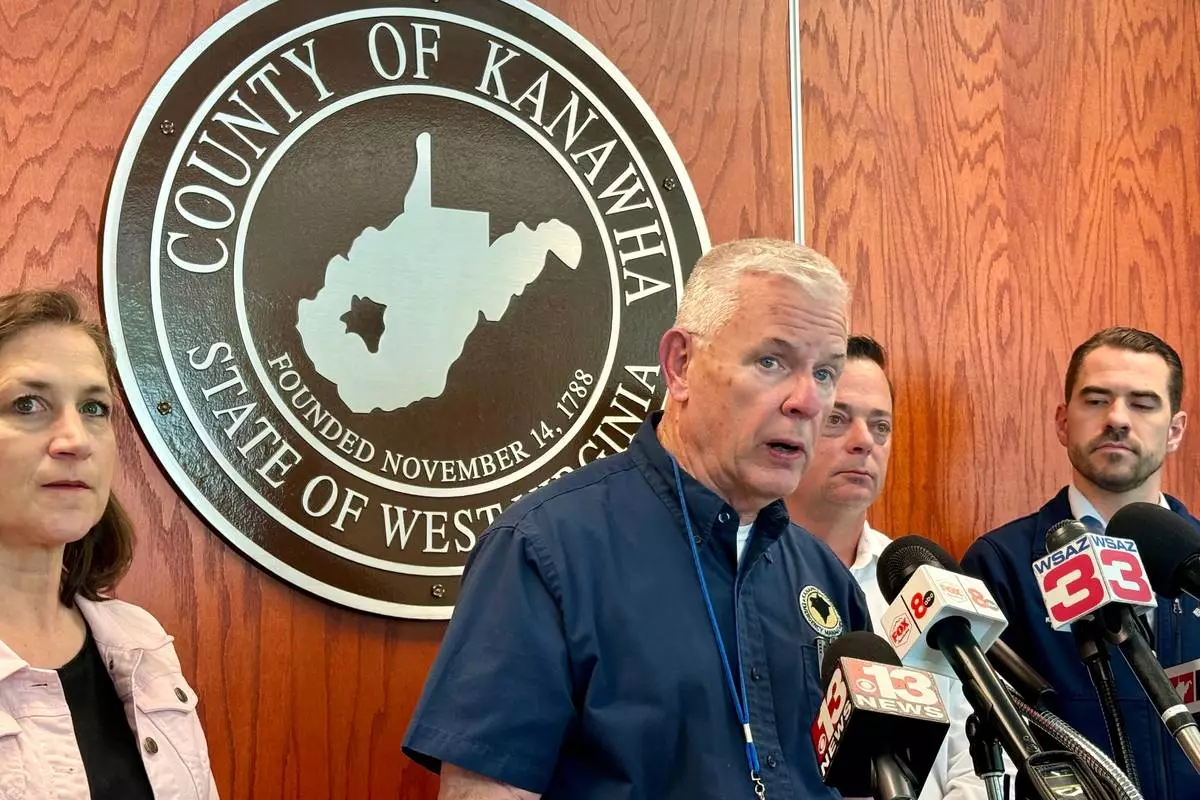
Kanawha County Commission Emergency Management Director C.W. Sigman speaks at a news conference Wednesday, April 22, 2026, in Charleston, W.Va. (AP Photo/John Raby)
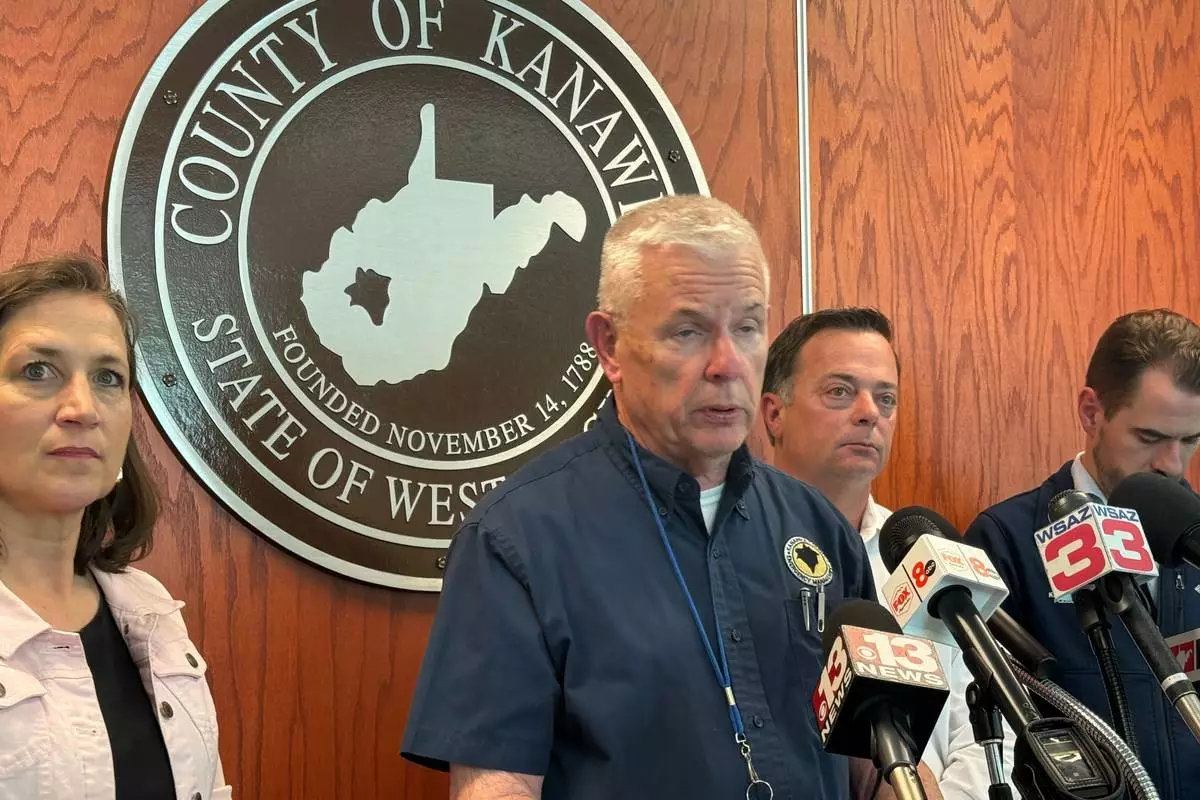
Kanawha County Commission Emergency Management Director C.W. Sigman speaks at a news conference Wednesday, April 22, 2026, in Charleston, W.Va. (AP Photo/John Raby)
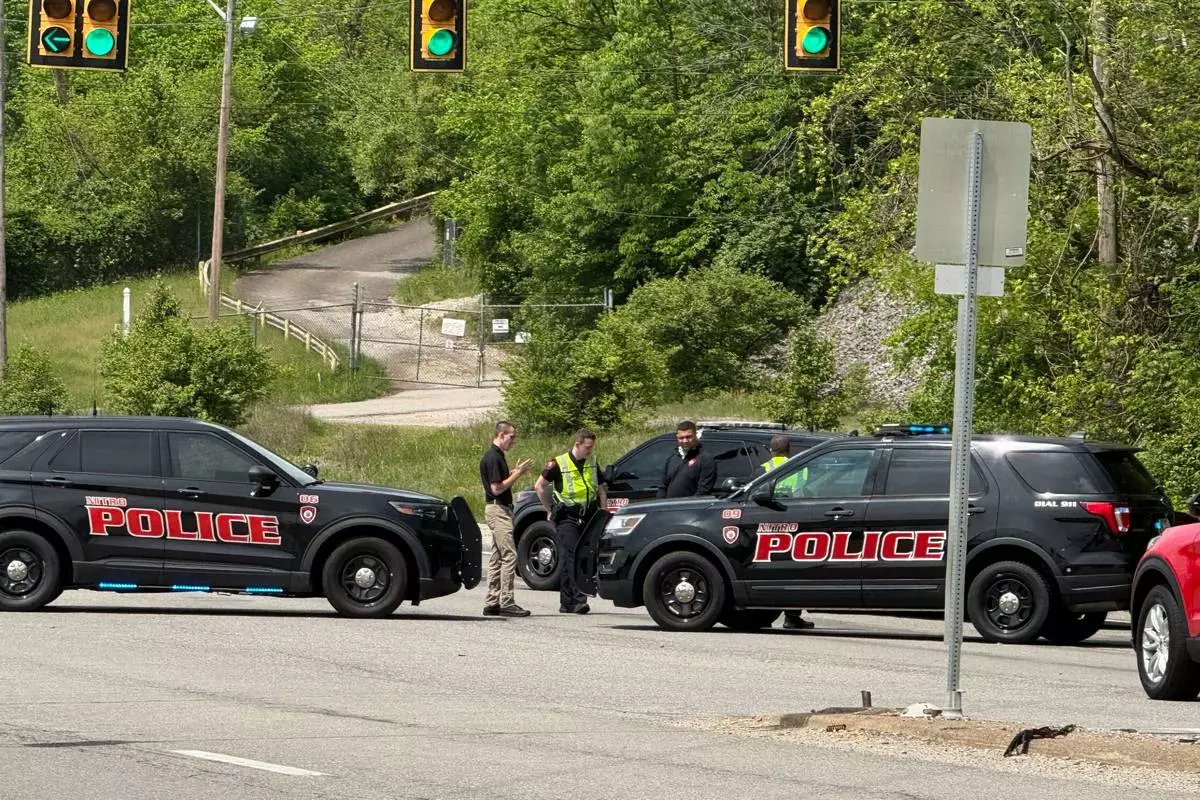
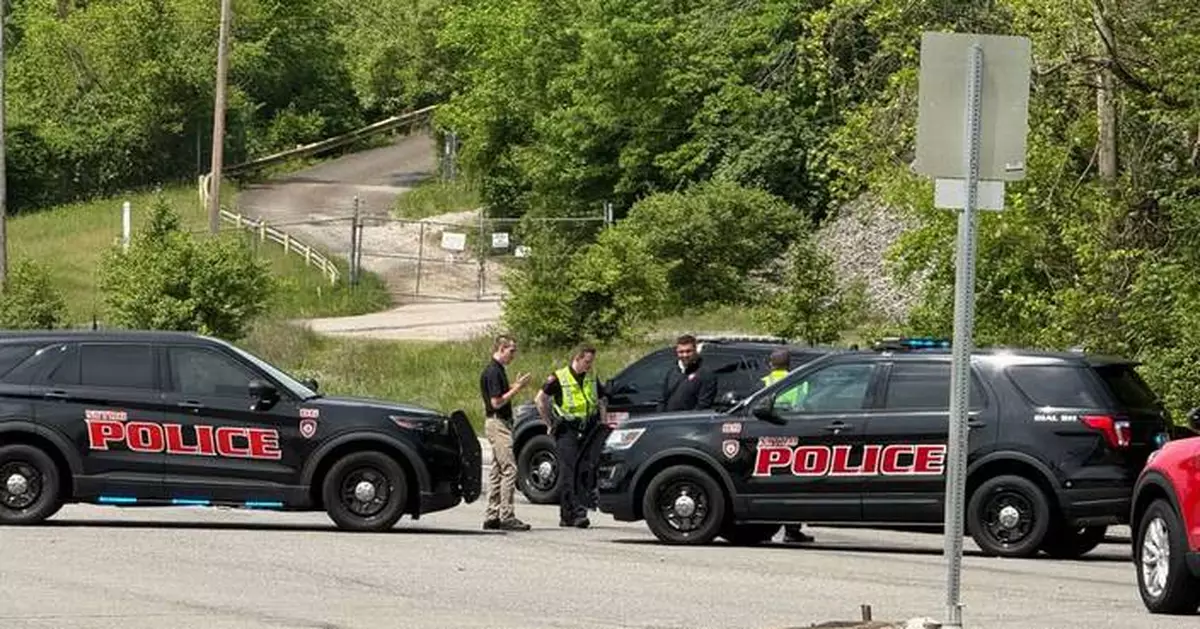
Police block a road near a chemical plant where a leak occurred Wednesday, April 22, 2026, in Institute, W.Va. (AP Photo/John Raby)
NAHUNTA, Ga. (AP) — Wildfires burning across the southeastern U.S. forced more people to flee Wednesday after destroying nearly 50 homes in Georgia and causing some schools closings as drought and winds fueled flames.
Some of the biggest blazes were near Georgia’s coast while others were popping up in northern Florida, a state facing one of its worst fire seasons in decades.
It was not yet clear how the wildfires started, but the bottom half of Georgia is perilously dry and the conditions prompted the state's forestry commission to issue a burn ban for the first time in its history. Southeastern Georgia has seen just 11 inches (28 centimeters) of rain since the beginning of September — almost 15 inches (38 centimeters) below normal, the National Weather Service said.
The fires spread so quickly in southern Georgia that residents received no warnings or alerts.
“I wish that I had knew something more,” said Brianna Elliott, who left home Tuesday only to find her route back blocked by the fires 90 minutes later. “I would have turned around in that moment and gone home and got my animals before anything.”
She now fears that her home and her dogs are gone.
Georgia’s two biggest wildfires together have burned more than 31 square miles (80 square kilometers), and at least four other smaller fires have been reported in the state.
The fast-moving Brantley County fire was threatening roughly 1,000 homes Wednesday after destroying almost 50 a day earlier.
That fire grew in size by roughly six times in just a half day Tuesday, said Joey Cason, the county manager. There were fires erupting “in the backyard and people taking off in the front yard,” he said Wednesday.
So far, no major injuries have been reported, Cason said.
The rural county is roughly midway between Georgia's coastal beaches and the Okefenokee Swamp and is dotted with livestock and fruit farms as well as thick stands of planted pines grown for timber.
Crews were working to create fire breaks and stop flames from reaching populated areas. The biggest concern was the gusting winds that could easily spread embers.
Authorities said rain was desperately needed. The area with the worst fires is in exceptional or extreme drought, the most dire levels, according to the U.S. Drought Monitor.
“If you could start praying for that right now, we’d be grateful,” Cason said.
Pine and hardwood forests in the region are helping charge the fires, said Seth Hawkins, a spokesperson for the Georgia Forestry Commission. Swampy lowlands with thick layers of leaves and woody debris are “super flammable” when they dry out, he said.
The commission's 30-day burn ban is for the southern part of the state.
Georgia Gov. Brian Kemp declared a state of emergency for more than half of the state's counties.
More people were told to evacuate from Brantley County on Wednesday afternoon, on top of the 800 evacuations that had already taken place there. Another large fire that started in nearby Clinch County also prompted evacuations.
Mike Reardon and his wife packed family photos and their dog, Molly Rose, along with new e-bikes before leaving their Brantley County home.
The fire was about a mile away and a shift in the wind would put flames “in our backyard in a matter of minutes,” he said.
The couple just built the home two years ago.
“It’s more than our house. It’s land that my dad bought years ago,” said Liz Reardon, fighting back tears. “It’s the most beautiful place in the world to me.”
In Florida, firefighters were battling 131 wildfires that had burned 34 square miles (88 square kilometers), mostly in the state’s northern half.
“Florida has got one of the worst fire seasons in maybe the last 30 or 40 years or it’s turning out to be that way,” Florida Commissioner of Agriculture Wilton Simpson said. “We’ve been in drought for 18 months now all across the state.”
A wildfire disrupted Amtrak train service Monday in the northeast part of the state. Service was back to normal Wednesday, according to Amtrak spokeswoman Beth Toll.
A dangerous combination of low humidity and breezy winds will keep the fire danger elevated Wednesday, the National Weather Service said.
Smoke drifted to Atlanta, Savannah, Georgia, and Jacksonville, Florida. The air quality in parts of south Georgia declined to the unhealthy category Wednesday, meaning all residents might feel health effects.
Smoky conditions were expected to linger throughout the Atlanta area on Wednesday, according to the Atlanta-Fulton County Emergency Management Agency. The worst fires were burning more than 200 miles (322 kilometers) southeast of the city.
The high fire risk was expected to continue each afternoon through Friday due to the very dry conditions, the weather service said.
Martin reported from Atlanta. Associated Press reporters Jeff Amy and Kate Brumback in Atlanta, Mike Schneider in Orlando, Florida, and John Seewer in Toledo, Ohio, contributed.
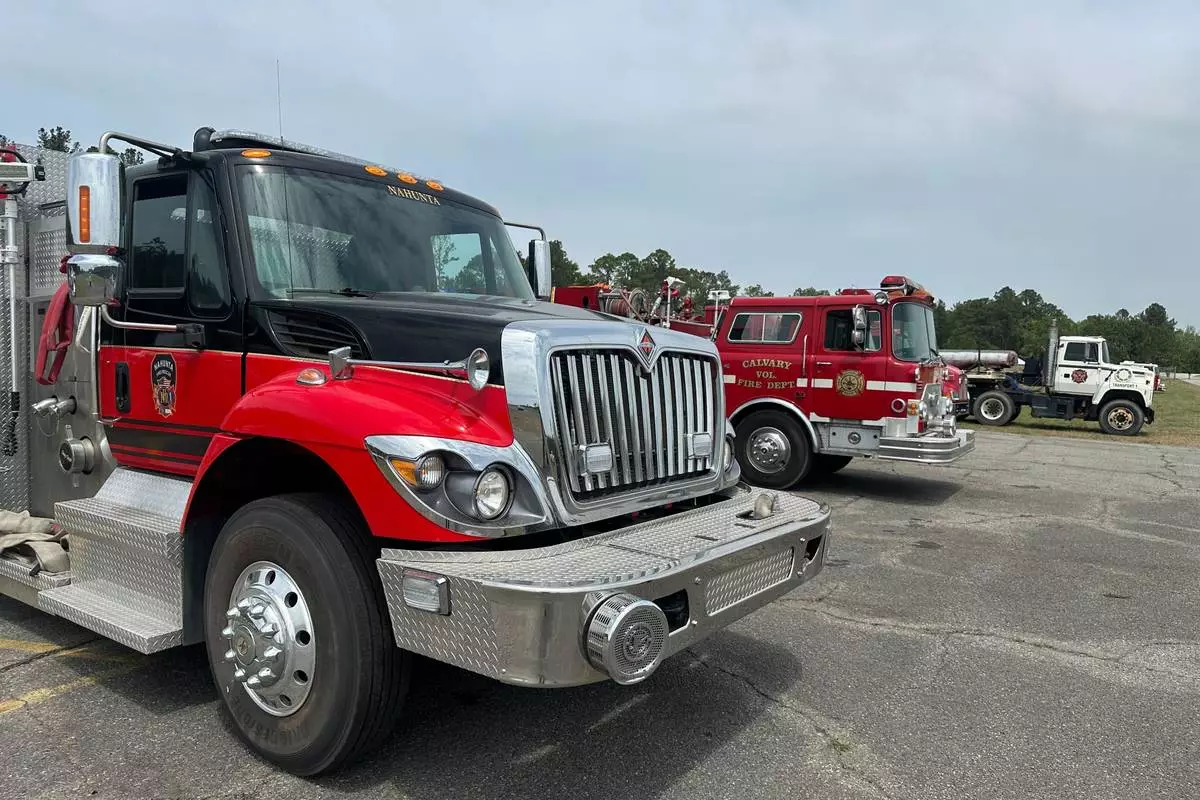
Fire trucks are staged outside the command center in Nahunta, Ga., where officials are coordinating the fight against a wildfire Wednesday, April 22, 2026.(AP Photo/Russ Bynum)
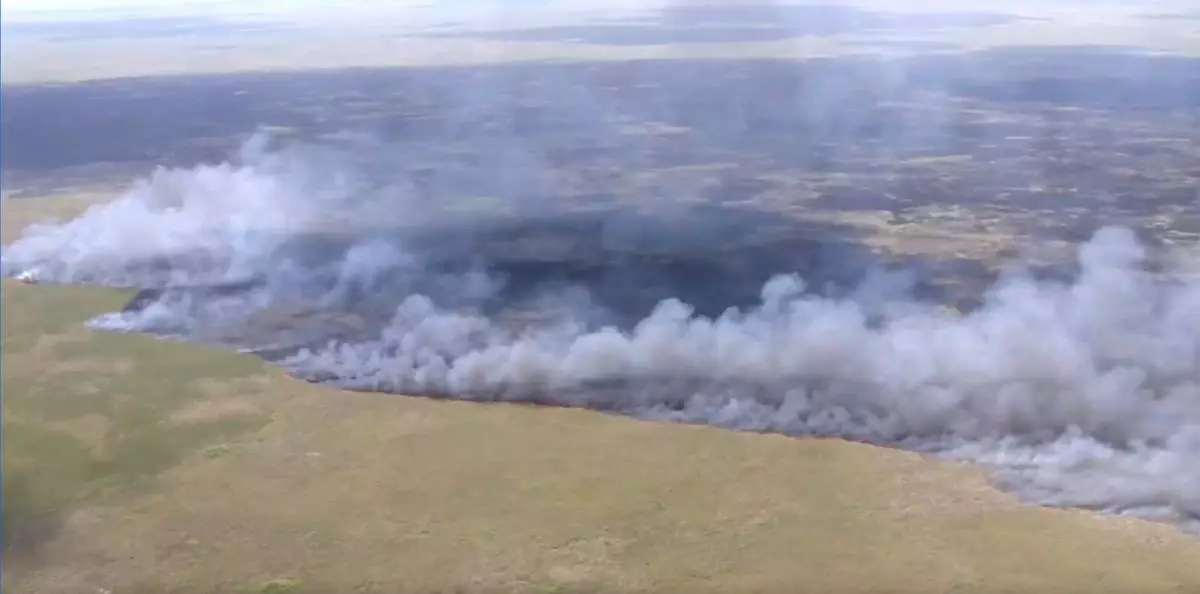
This image taken from a WSVN video a wildfire burning Wednesday, April 22, 2026, in Broward County, Fla. (WSVN/ABC Miami via AP)
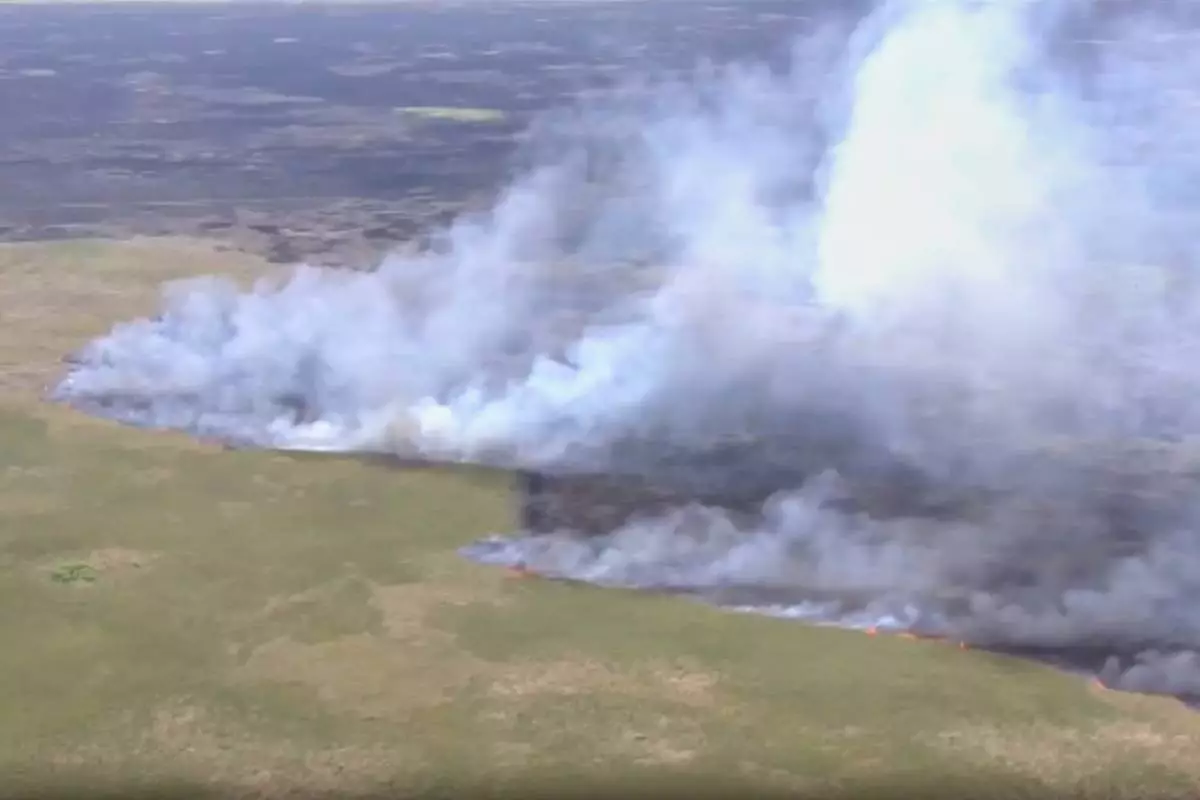
This image taken from a WSVN video a wildfire burning Wednesday, April 22, 2026, in Broward County, Fla. (WSVN/ABC Miami via AP)
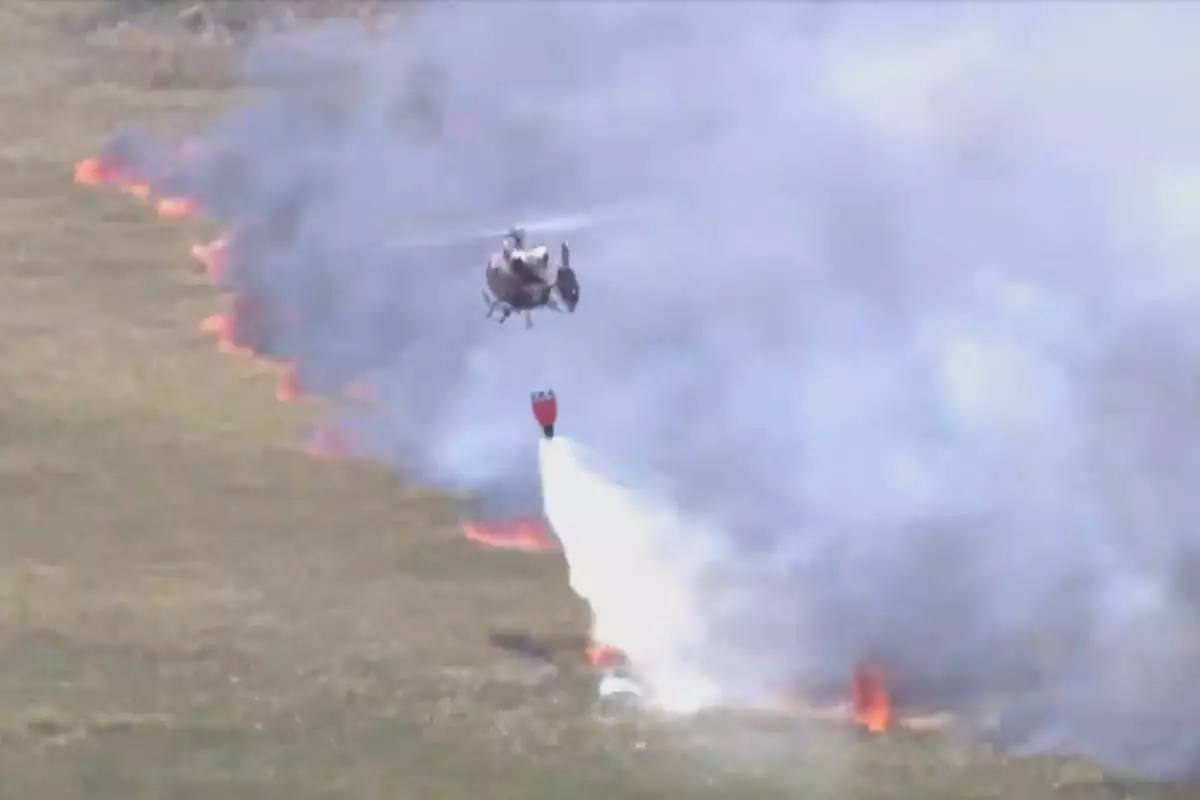
This image taken from a WSVN video shows firefighters battling a wildfire Wednesday, April 22, 2026, in Broward County, Fla. (WSVN/ABC Miami via AP)