Democrats on Wednesday celebrated an election win in Virginia that could put them slightly ahead in the national redistricting competition that President Donald Trump triggered in an attempt to preserve his party's House majority in this year's midterms, but it will not be the final round.
Now that it's been approved by voters, the new Virginia map will have to clear additional legal hurdles. On Wednesday, the state attorney general’s office said it would immediately appeal a ruling earlier in the day from a judge in rural southern Virginia who ordered that the results of Tuesday’s vote not be certified.
Click to Gallery
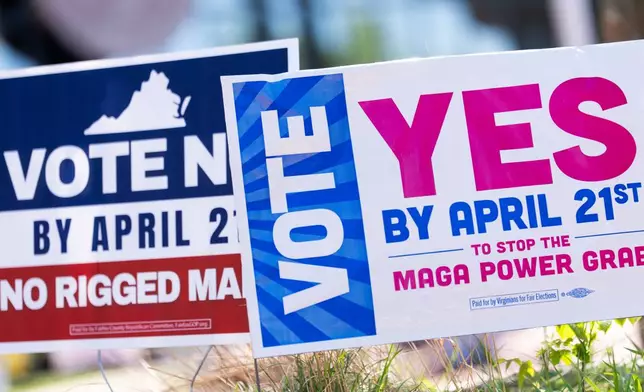
Signs are seen outside Fairfax Government Center during the Virginia redistricting referendum, Tuesday, April 21, 2026, in Fairfax, Va. (AP Photo/Julia Demaree Nikhinson)
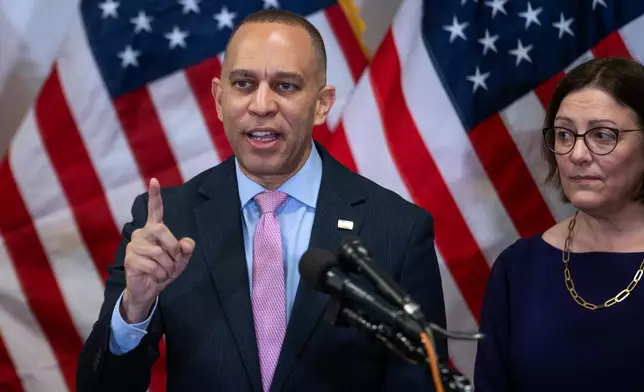
House Minority Leader Hakeem Jeffries, D-N.Y., speaks about Virginia's redistricting vote as Democratic Congressional Campaign Committee Chairman Suzan DelBene, D-Wash., right, looks on, at the Democratic National Committee headquarters in Washington, Wednesday, April 22, 2026. Virginia voters approved a congressional redistricting plan that could help Democrats win up to four additional U.S. House seats in this year's midterm elections.(AP Photo/Cliff Owen)
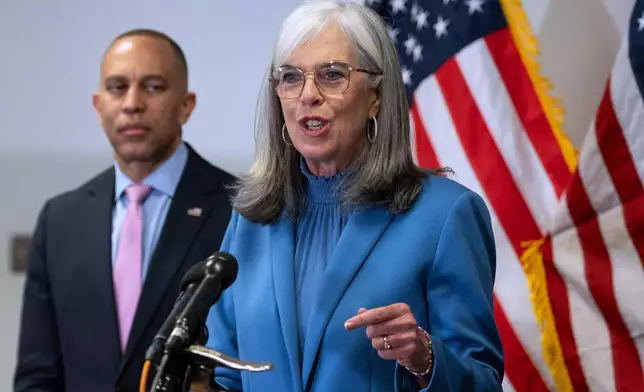
House Minority Leader Hakeem Jeffries, D-N.Y., left, looks on as House Democratic Whip Katherine Clark, D-Mass., speaks about Virginia's redistricting vote, at the Democratic National Committee headquarters in Washington, Wednesday, April 22, 2026. Virginia voters approved a congressional redistricting plan that could help Democrats win up to four additional U.S. House seats in this year's midterm elections. (AP Photo/Cliff Owen)

House Minority Leader Hakeem Jeffries, D-N.Y., speaks about Virginia's redistricting vote, at the Democratic National Committee headquarters in Washington, Wednesday, April 22, 2026. (AP Photo/Cliff Owen)
Ultimately, the Virginia Supreme Court will decide whether Democratic lawmakers violated procedural rules when they referred a constitutional amendment to the ballot authorizing the new U.S. House districts that could help Democrats win as many as four additional seats in the state. If so, that could invalidate the map voters narrowly approved Tuesday.
What happens next in Florida also will matter.
The state's Republican-controlled Legislature is to meet in a special session next week that GOP Gov. Ron DeSantis called in part to draw a new map to expand the party's congressional majority there. The U.S. Supreme Court is scheduled to issue an opinion by the end of June in a Louisiana case that could overturn a key provision of the Voting Rights Act and lead to redrawn political maps across the South, though almost all of those could not happen until 2028.
After voters passed the Virginia amendment, Democrats could tentatively claim that they netted 10 seats nationally from the mid-decade redistricting, compared with the nine that Republicans claim. Even if things swing again in the GOP's favor, the net result of Trump's campaign would be at best an incremental increase in the number of GOP-leaning House seats at a time when his approval rating is dropping and Republican anxiety over losing control of Congress in November is rising.
“We have successfully blunted Trump’s attempt to completely hijack the midterms," said John Bisognano, president of the National Democratic Redistricting Committee.
Many Republicans agreed.
“The GOP will now lose net seats across the country. If you’re going to pick a fight, at least win it,” Ari Fleischer, who was a spokesman for President George W. Bush, posted on the social media site X after the Virginia vote. “All this was foreseeable and avoidable. We should not have started this fight.”
Adam Kincaid, executive director of the National Republican Redistricting Trust, argued that it is too soon to declare one party a victor.
“It's an ongoing process with many legal challenges pending, and it's far too early for sweeping statements on the final outcome,” he said.
Trump on Wednesday tried to undermine the Virginia result by leveling groundless accusations of fraud similar to ones he made after losing the 2020 presidential election. He called the Virginia vote “RIGGED” and “Crooked” in a post on his social media site and added, “Let’s see if the Courts will fix this travesty of 'Justice.'”
Redistricting is typically done every 10 years after each census, unless ordered by a court. But last summer, Trump pushed a redrawing in Texas, prodding the state's Republican-controlled Legislature to add up to five winnable House seats for his party. Trump then began pressuring other Republican-run states to follow. Missouri, North Carolina and Ohio have since created more GOP-leaning seats in addition to Texas.
Democrats began to fight back, even though they were more constrained because several Democratic-controlled states had maps drawn by independent commissions rather than lawmakers and governors.
To counter Texas, California's Democratic governor, Gavin Newsom, pushed the Democratic-controlled Legislature to place a redistricting initiative on last fall's ballot. After voters overwhelmingly approved it, the measure will replace a commission-approved map with one that could gain Democrats five seats.
Democrats reclaimed the Legislature and governor's office in November in Virginia and swiftly moved to replicate California's move with an even more aggressive redistricting plan. It replaces a congressional map imposed by a court after the last census that had resulted in a 6-5 edge for Democrats with one that could allow Democrats to win as many as 10 seats.
“We are not going to let anyone tilt the system without a response,” state Senate President L. Louise Lucas said at a news conference Wednesday.
In Washington, U.S. House Democratic leader Hakeem Jeffries of New York warned Florida Republicans, who have been openly nervous about redrawing their district boundaries and potentially spreading their core voters too thin before an election that appears to be trending against them.
“Our message to Florida Republicans right now is, ‘F around and find out,’” Jeffries said.
House Majority Forward, the nonprofit arm of the super political action committee aligned with House Democrats, has spent nearly $60 million to push back against Republicans' redistricting efforts. Some $40 million of that was on the Virginia campaign.
Another obstacle in Florida is an anti-gerrymandering constitutional amendment that was approved by state voters in 2010. It is likely that any new Florida map would trigger significant litigation, although six of the state Supreme Court's seven justices were appointed by Republicans.
Nicholas Stephanopolous, a Harvard law professor, said a challenge for DeSantis is that the Florida amendment forbids drawing lines for purely partisan purposes, so he has to find some other excuse for revising the map. “Even with that sort of acquiescent state supreme court, I don't think it's a done deal,” Stephanopolous said.
The Virginia move comes with its own legal issues. Republicans have challenged the process that Democrats used to place the measure on the ballot and the state Supreme Court opted to wait for the vote before even scheduling arguments in the case. It is unclear when a ruling could come.
Wednesday's ruling stopping certification came from a separate case that Republicans filed with the same lower court judge, whose initial ruling against the initiative was put on hold by the state supreme court.
“The ballot box was never the final word here,” Terry Kilgore, the Virginia House Republican leader, said in a statement after Tuesday's vote. “Serious legal questions remain about both the wording of this referendum and the process used to put it before voters.”
The biggest legal wild card is held by the U.S. Supreme Court. Its conservative majority could throw out a requirement under the Voting Rights Act that in areas with a large minority population, mapmakers draw districts that are more favorable to the election of minority candidates.
That provision has led to the creation of several majority-minority congressional seats, especially in the South. Without it, Republicans in conservative states could shrink the number of U.S. House seats winnable by Democrats even further.
But it's unlikely that any state other than Louisiana, which brought the lawsuit the high court will rule on, would be able to adjust its congressional lines in time for November even if the court eliminates that provision, known as Section Two. That's because the November election is already officially underway in most states and candidate filing deadlines — and, in some cases, primary elections — have already passed.
AP Congressional Correspondent Lisa Mascaro and Associated Press writer Leah Askarinam in Washington contributed to this report.
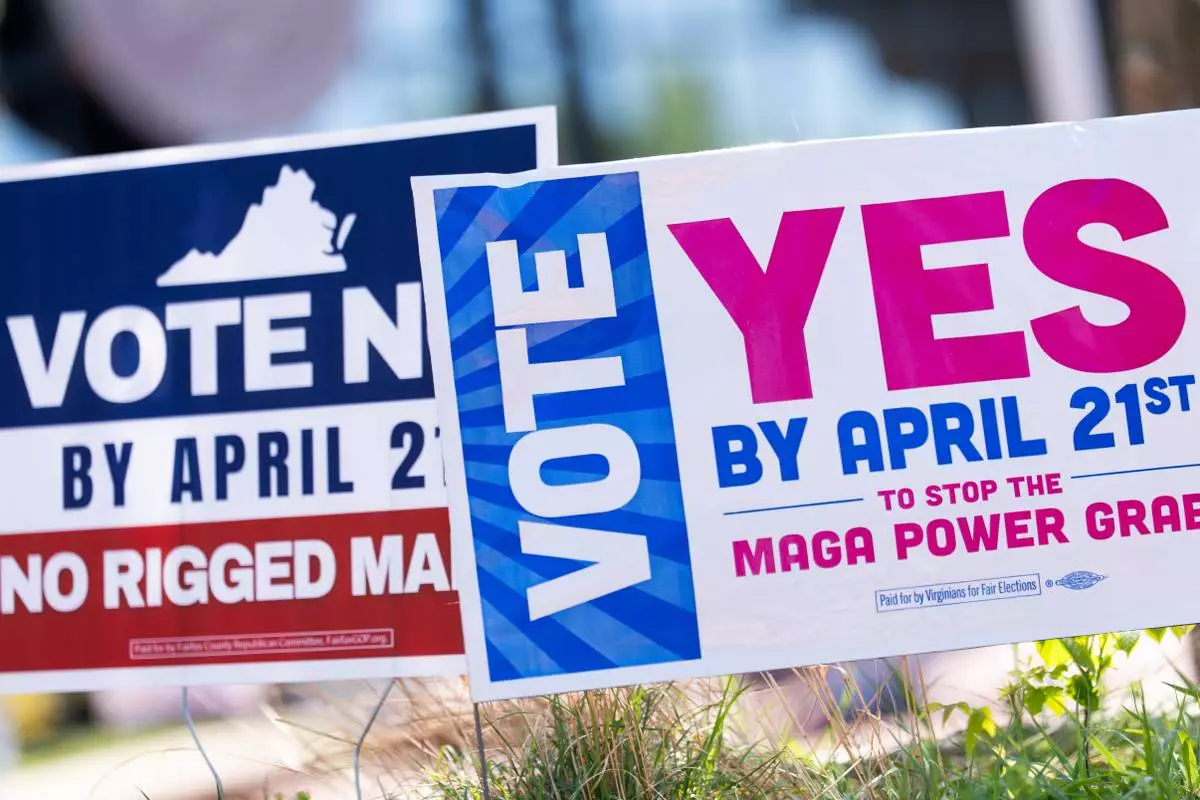
Signs are seen outside Fairfax Government Center during the Virginia redistricting referendum, Tuesday, April 21, 2026, in Fairfax, Va. (AP Photo/Julia Demaree Nikhinson)
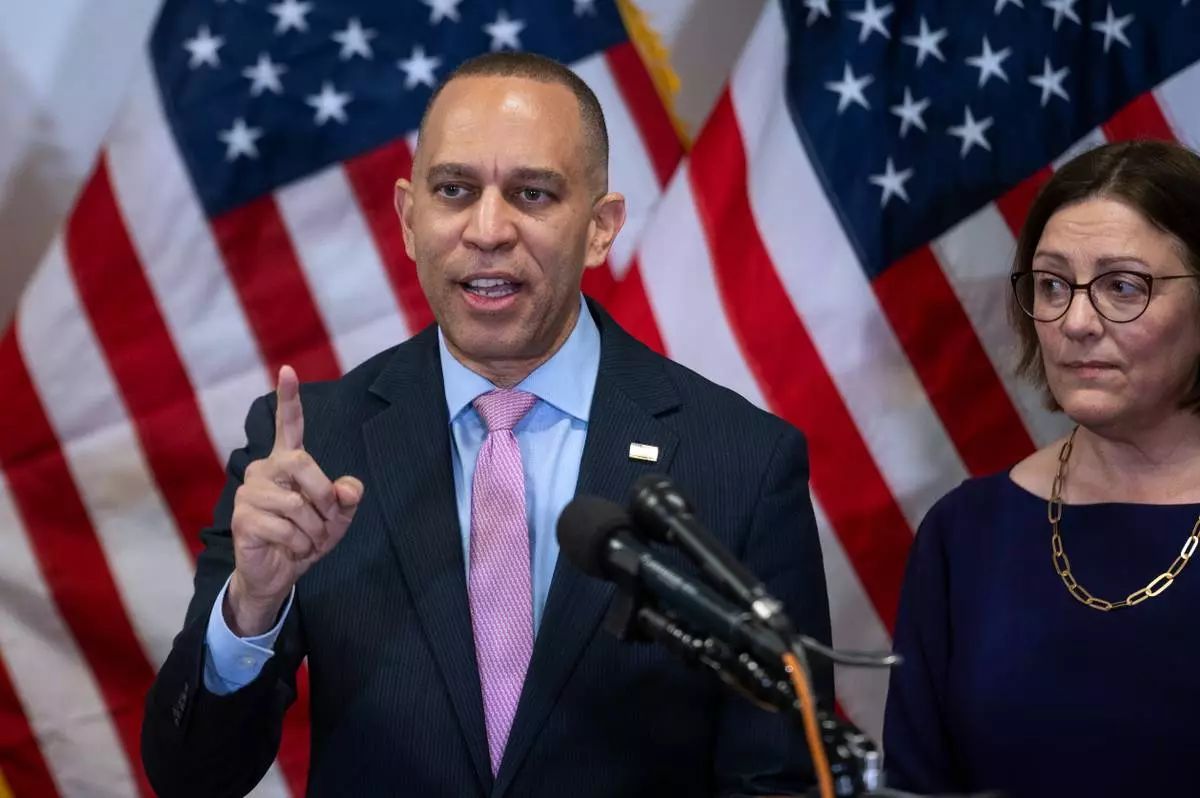
House Minority Leader Hakeem Jeffries, D-N.Y., speaks about Virginia's redistricting vote as Democratic Congressional Campaign Committee Chairman Suzan DelBene, D-Wash., right, looks on, at the Democratic National Committee headquarters in Washington, Wednesday, April 22, 2026. Virginia voters approved a congressional redistricting plan that could help Democrats win up to four additional U.S. House seats in this year's midterm elections.(AP Photo/Cliff Owen)
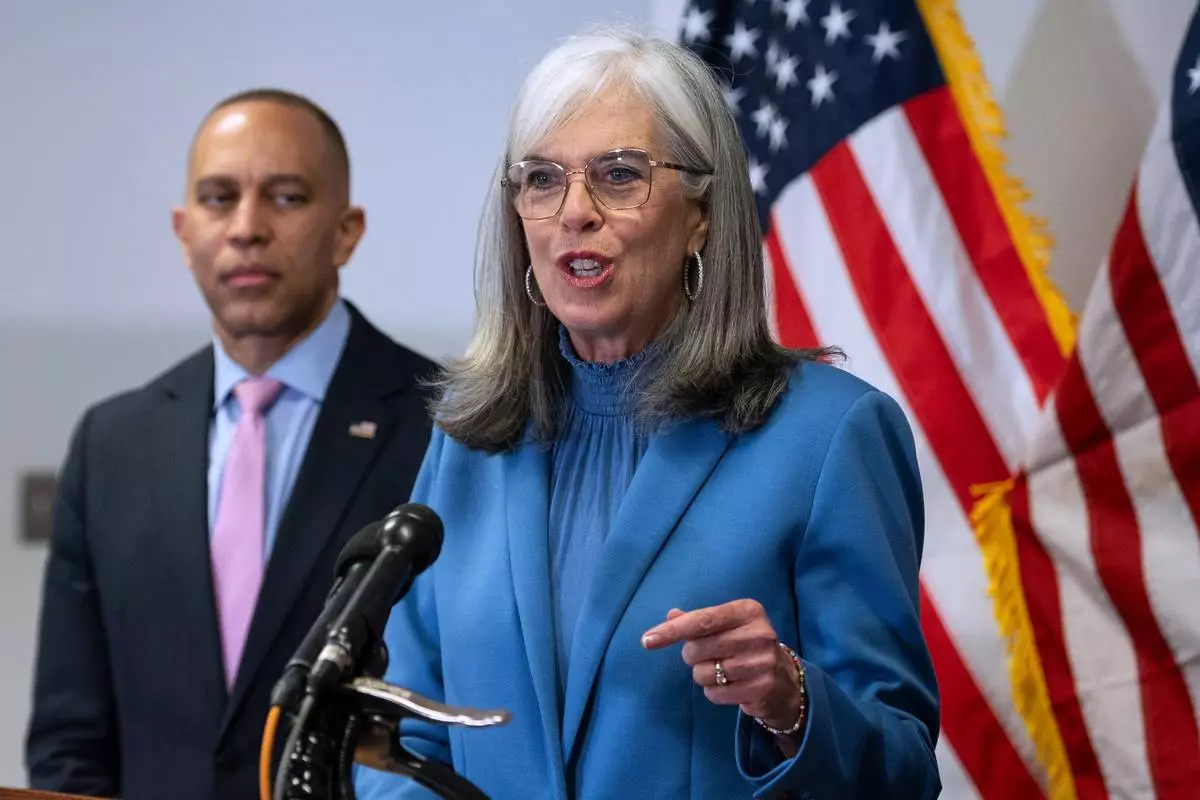
House Minority Leader Hakeem Jeffries, D-N.Y., left, looks on as House Democratic Whip Katherine Clark, D-Mass., speaks about Virginia's redistricting vote, at the Democratic National Committee headquarters in Washington, Wednesday, April 22, 2026. Virginia voters approved a congressional redistricting plan that could help Democrats win up to four additional U.S. House seats in this year's midterm elections. (AP Photo/Cliff Owen)

House Minority Leader Hakeem Jeffries, D-N.Y., speaks about Virginia's redistricting vote, at the Democratic National Committee headquarters in Washington, Wednesday, April 22, 2026. (AP Photo/Cliff Owen)