Skip to Content Facebook Feature Image

Vaccines, budget cuts and affordability: Takeaways from RFK Jr’s gauntlet of congressional hearings

News

Vaccines, budget cuts and affordability: Takeaways from RFK Jr’s gauntlet of congressional hearings
News

News

Vaccines, budget cuts and affordability: Takeaways from RFK Jr’s gauntlet of congressional hearings

2026-04-23 06:16 Last Updated At:06:20

Health Secretary Robert F. Kennedy Jr. on Wednesday concluded a marathon series of hearings with federal lawmakers, during which he deflected blame for measles outbreaks and dwindling vaccination rates across the country and touted several initiatives he says are making health care more affordable.

In his testimony to various committees in both the Senate and the House over multiple days this week and last, Kennedy was tasked with defending President Donald Trump’s proposed 2027 budget, which would boost defense spending while cutting more than 12% of funding from Kennedy’s Department of Health and Human Services.

With lawmakers of both parties raising concerns about programs and research funding being reduced or eliminated, Kennedy acknowledged the cuts were “painful” but said they were necessary to address the federal government’s record $39 trillion deficit.

When Democrats came out swinging, Kennedy became more defiant, even at times screaming his rebuttals — though some of them didn’t align with the facts. He accused multiple Democratic lawmakers of grandstanding, making things up and seeking sound bites over meaningful responses.

Here are takeaways from Kennedy’s gauntlet of budget hearings:

One of the central fights shaping Kennedy’s interactions with Democratic lawmakers was over who bears responsibility for the decline in childhood vaccination rates and measles outbreaks that have ripped across the country over the past year, threatening the country’s measles elimination status. Kennedy’s refrain was consistent: It’s not my fault.

“It has nothing to do with me,” Kennedy said Tuesday of the uptick in measles across the country over the past year. He noted there is a global rise in measles cases, including in other countries like Canada, Mexico and the United Kingdom.

Kennedy, who spent years as an anti-vaccine crusader before entering politics and in 2021 said he urged people to “resist” CDC guidelines on when kids should get vaccines, disputed accusations that he is anti-vaccine, saying he is “pro-science.”

Throughout the hearings, he sought to focus on HHS’s initiatives unrelated to vaccines — part of a broader administration pivot toward less controversial health topics like nutritious eating.

Kennedy argued that fewer Americans are vaccinating because they lost trust in government recommendations during the COVID-19 pandemic. He said he was working to restore that trust. In fact, surveys show trust in federal health agencies has continued to decline during Kennedy’s tenure.

Rep. Kim Schrier, a Democrat from Washington, argued Kennedy’s vaccine views have caused a “spillover effect” that has led to mothers not giving their babies vitamin K injections common at birth to prevent brain bleeding.

“I’ve never said anything about vitamin K,” Kennedy said.

“That’s exactly the point,” Schrier replied.

Kennedy did get credit, however, from Republican Sen. Tim Scott of South Carolina, who said his work was crucial in helping the state manage a troubling measles outbreak over the past year.

“We would not be on the right side of this outbreak without your leadership,” Scott told Kennedy.

Nearly every time Democrats brought up the nearly $1 trillion in Medicaid cuts over the next decade largely being created through new work requirements for enrollees, Kennedy lashed back to argue there are no cuts to Medicaid.

“Only in Washington is it considered a cut,” Kennedy told New Mexico Sen. Ben Ray Luján, a Democrat, on Wednesday.

Kennedy cited a Congressional Budget Office report showing that Medicaid outlays are estimated to increase by about 47% over the next decade. But experts say his analysis of that report is disingenuous, politicized framing and that the increased spending reflects factors like inflation and a growing population.

“This is an old, sort of tired argument that’s been used by conservatives to justify spending cuts by saying, well, if spending is still growing in nominal terms, somehow there wasn’t a cut,” said Edwin Park, a research professor at Georgetown University. “The federal government is spending nearly a trillion dollars less than it otherwise would have in the absence of the legislation.”

A major concern for voters in the 2026 midterm elections is affordability — including skyrocketing costs for health care and health insurance. That wasn’t lost on those questioning Kennedy, as lawmakers from both parties raised the issue.

On Tuesday, Rep. Cliff Bentz, a Republican from Oregon, shared the story of his brother who pays $26,000 per year for his health coverage.

“What in the world can I go back to him and say? ‘Hey, the administration is working on trying to drive these prices down?’” he asked Kennedy.

Kennedy, for his part, cited several Trump administration initiatives to lower prices, including the White House's TrumpRx website for discounted drugs and Trump’s so-called most favored nations deals with pharmaceutical companies.

Pressed by senators, Kennedy pledged to provide details of those deals that didn’t include proprietary information or trade secrets. Some Democrats wanted him to do more.

“Why don’t you do an agreement yourself? he said in a jab to Sen. Ron Wyden, an Oregon Democrat. “You’ve had power to do that for 20 years and haven’t done it.”

To achieve a more than 12% cut of the more than $100 billion HHS budget, the Trump administration is proposing slashing some $5 billion from the National Institutes of Health and cutting a bevy of other programs and initiatives, including a low-income home energy assistance program.

Several senators asked Kennedy why different areas were being cut. NIH cuts, in particular, raised bipartisan outcry.

“There’s an argument to be made that we’re handing China our lunch,” said Republican Sen. Thom Tillis of North Carolina.

Kennedy was candid that neither he nor others at his agency wanted to see the cuts, which he called “painful.”

“There’s a lot of cuts to the agency that nobody wants,” he said.
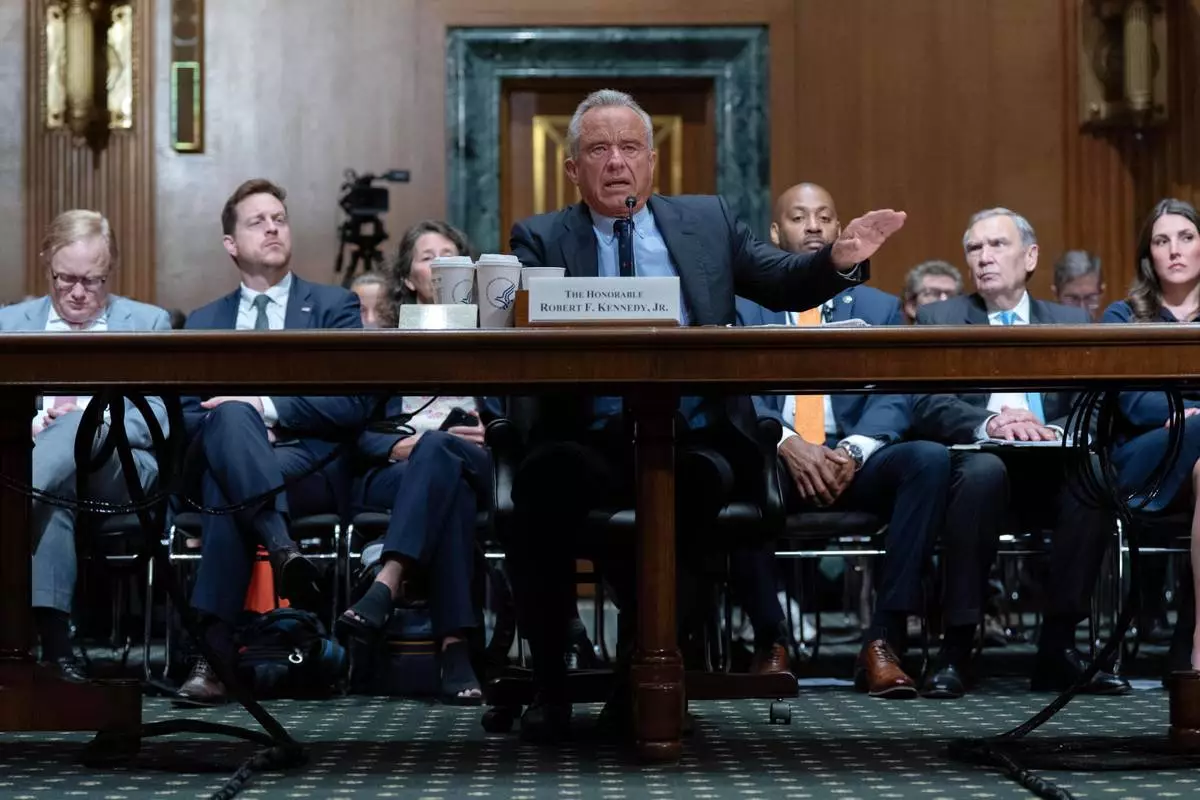
Health and Human Services Secretary Robert F. Kennedy Jr. testifies before the Senate Committee on Finance hearing to examine the President's proposed budget request for fiscal year 2027 for the Department of Health and Human Services on Capitol Hill, Wednesday, April 22, 2026, in Washington. (AP Photo/Jose Luis Magana)

Health and Human Services Secretary Robert F. Kennedy Jr. testifies before the Senate Committee on Finance hearing to examine the President's proposed budget request for fiscal year 2027 for the Department of Health and Human Services on Capitol Hill, Wednesday, April 22, 2026, in Washington. (AP Photo/Jose Luis Magana)
WASHINGTON (AP) — To President Donald Trump, the Kennedy Center is a “tired, broken, and dilapidated” building in urgent need of repair. To artists like Jane Fonda and Billy Porter, it’s a protest site symbolizing the administration’s effort to reshape the nation’s cultural institutions.

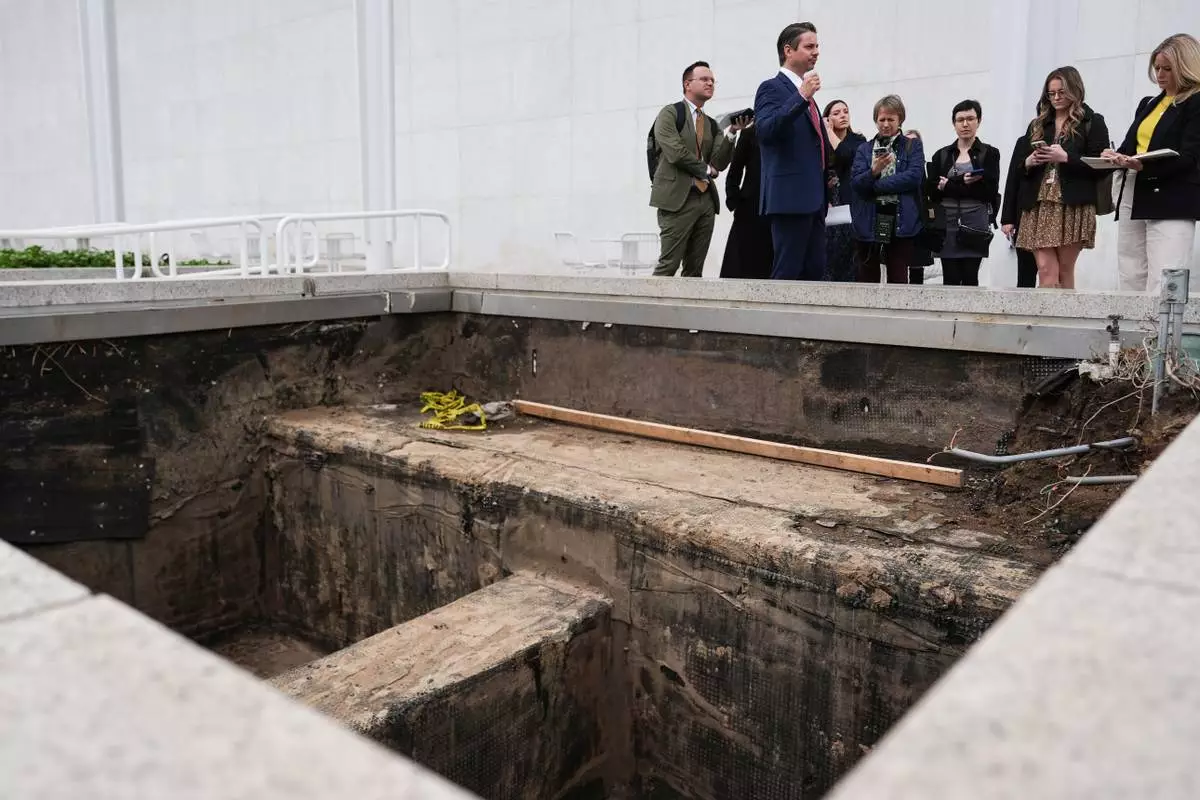
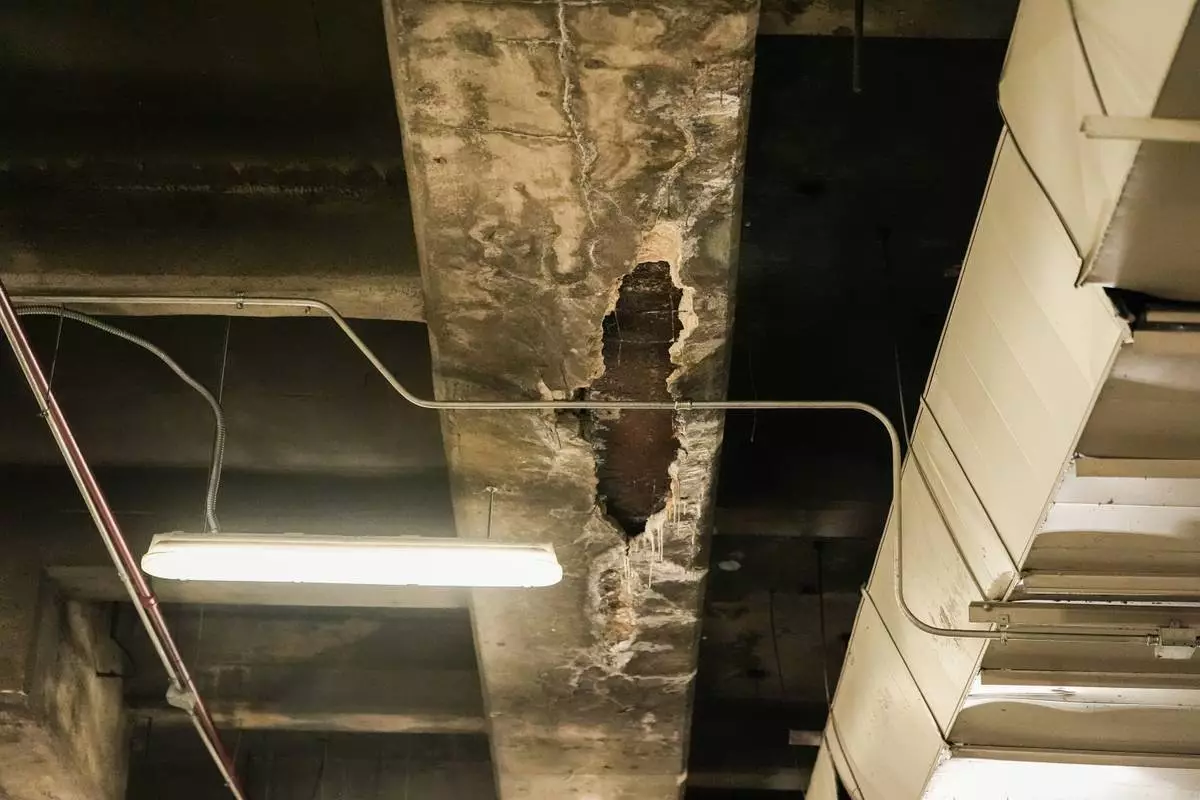
For the Kennedy Center’s new leadership, it’s a gargantuan structure corroded by water damage so severe that steel in some places is tissue-thin.

Away from the political controversy that has consumed the iconic performing arts venue for the better part of Trump’s second term, Matt Floca, the Kennedy Center’s new executive director and chief operating officer, guided a group of journalists through the building on Wednesday. They viewed the outdoor terrace overlooking the Potomac River, along with parking decks, loading docks, an electrical vault and the Opera House stage.

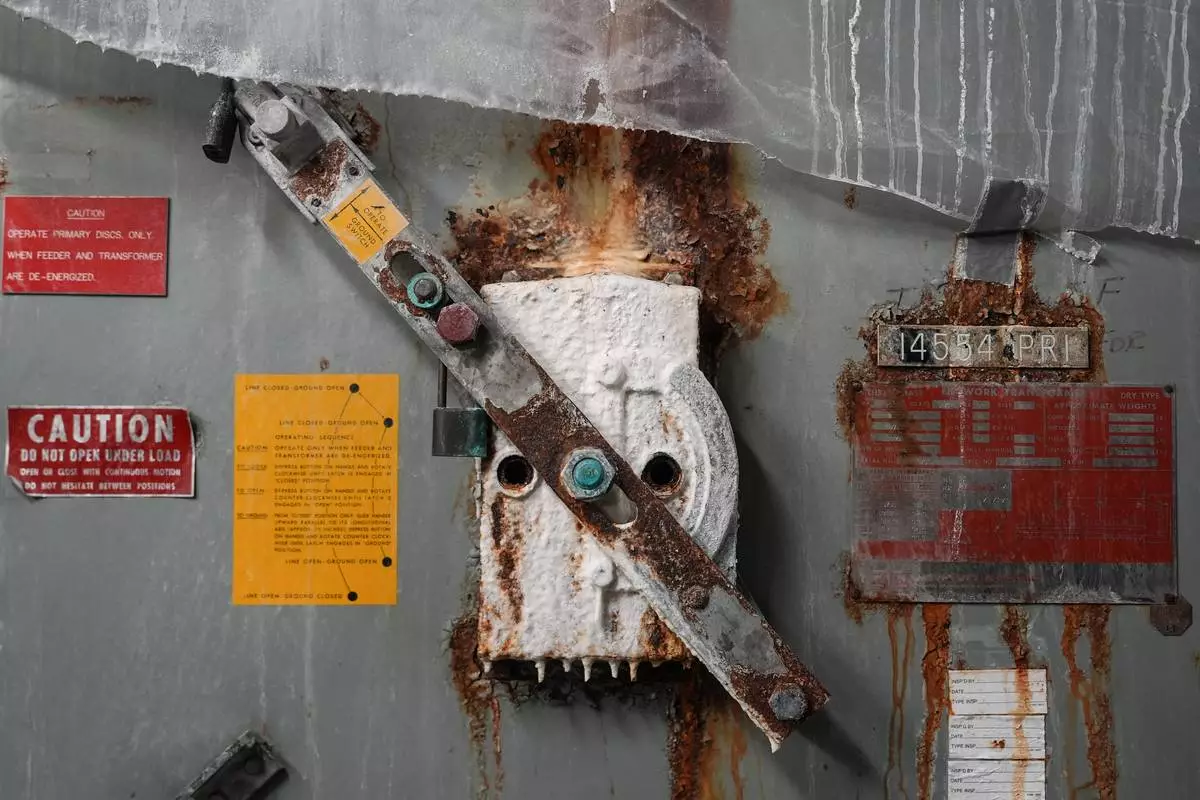
A theme emerged at virtually every stop: The water damage was real, apparent in some places through discoloration and pooling. Some pieces of equipment, including several 800-ton chillers that help cool the building, are decades old and in need of replacement.

And the building is so massive — sprawling across more than 1.5 million square feet — that repairs will require time to finish.

Two years of time, in fact.

Trump plans to shutter the building for a massive renovation slated to begin in July, supported by nearly $257 million provided by Congress to fund repairs. The institution is expected to turn to private donors to help support refurbishing some of the building's more exclusive areas, such as lounges.

The Kennedy Center is hardly the first fixture of the Washington skyline to undergo lengthy renovations. The Smithsonian Castle, one of the most recognizable buildings along the National Mall, has been closed for renovations since 2023. The Washington Monument was shrouded in scaffolding from 1998 to 2001 and covered again at points in 2013 and 2014 to repair earthquake damage.

None of those changes, however, were guided so closely by a sitting president.

Trump, who is also trying to build a ballroom on the grounds of the former East Wing of the White House and is pushing for the construction of a triumphal arch near Arlington Cemetery, is deeply involved in the Kennedy Center plans. That's in line with the far more hands-on approach he's taken to the institution during his second term, ousting its previous leadership and replacing it with a handpicked board that named him chairman.

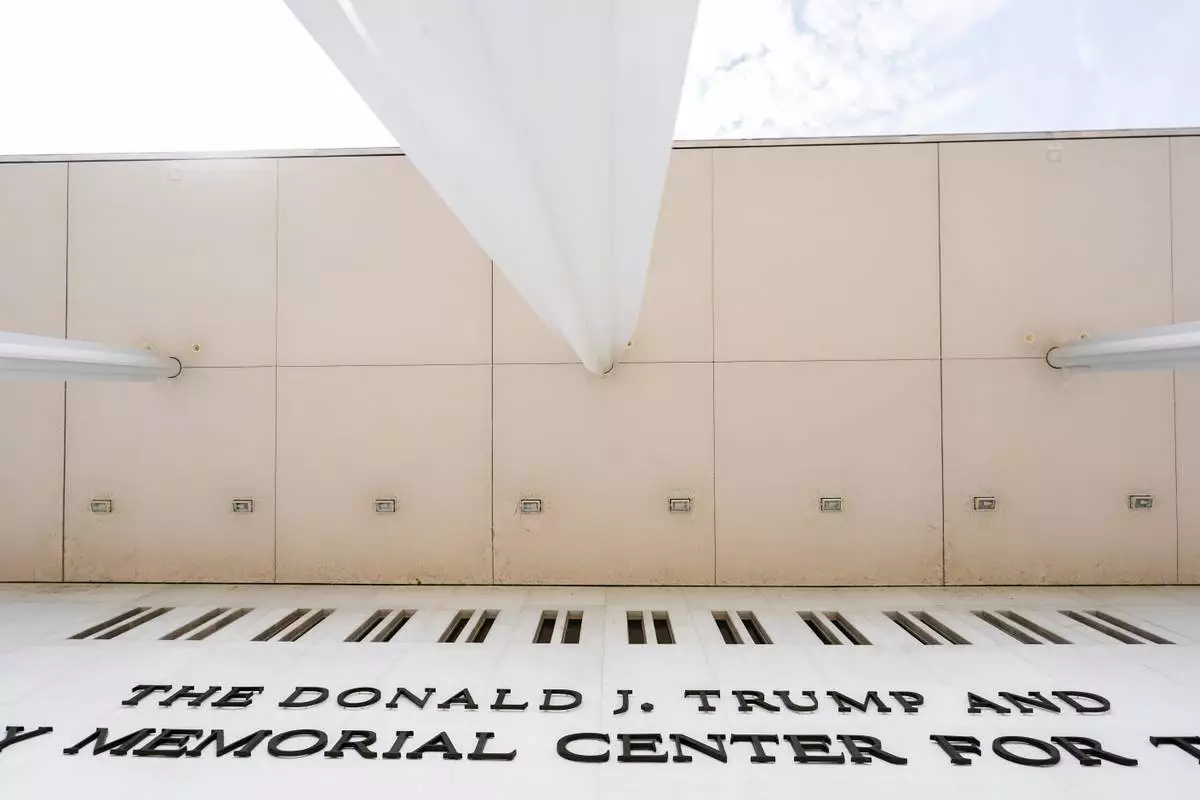
His name is now bolted to the building's facade along with that of John F. Kennedy, the slain president that the venue memorializes.

“It’s a public building, and I completely acknowledge that, but the president is really great at this, and I think his input is invaluable,” Floca said. “He’s in the details, and it’s amazing. I really respect the input he’s given.”

As Trump tightened his grip on the building, artists abandoned the institution in droves, prompting concern that the closure is more of an effort to cover for plunging sales. The Kennedy Center hasn't released sales figures.

Floca considered doing the repairs individually but insisted it was his recommendation to Trump to close the building and move forward with the renovation all at once.

“When the President asked: ‘How do you make these projects the best? How do you make them really excellent and deliver them efficiently?’ my recommendation was you close the building and you do everything over a definite period of time, two years,” he said.

He acknowledged that once the building is closed, staffing will be “pretty bare bones.”

“We’re working on all of those plans now and exactly what those numbers will be after July,” he said. "And we will staff up before reopening.”

Still, the tour offered the institution something of a reset opportunity after more than a year of tumult, demonstrating the need for repairs while easing some fears. A bipartisan group of lawmakers and their staff, along with representatives for Washington Mayor Muriel Bowser and some corporate and individual donors, have received a similar walk-through.

There will be scaffolding around the building but the construction won't be so dramatic that someone could see through the building. That's notable considering Trump has suggested the steel supporting the structure could be “ fully exposed.”

It's not entirely clear how much change will be apparent to the general public once the Kennedy Center reopens. Much of the structural repair, which will unfold during the renovation's first year, will happen in the building's private core.

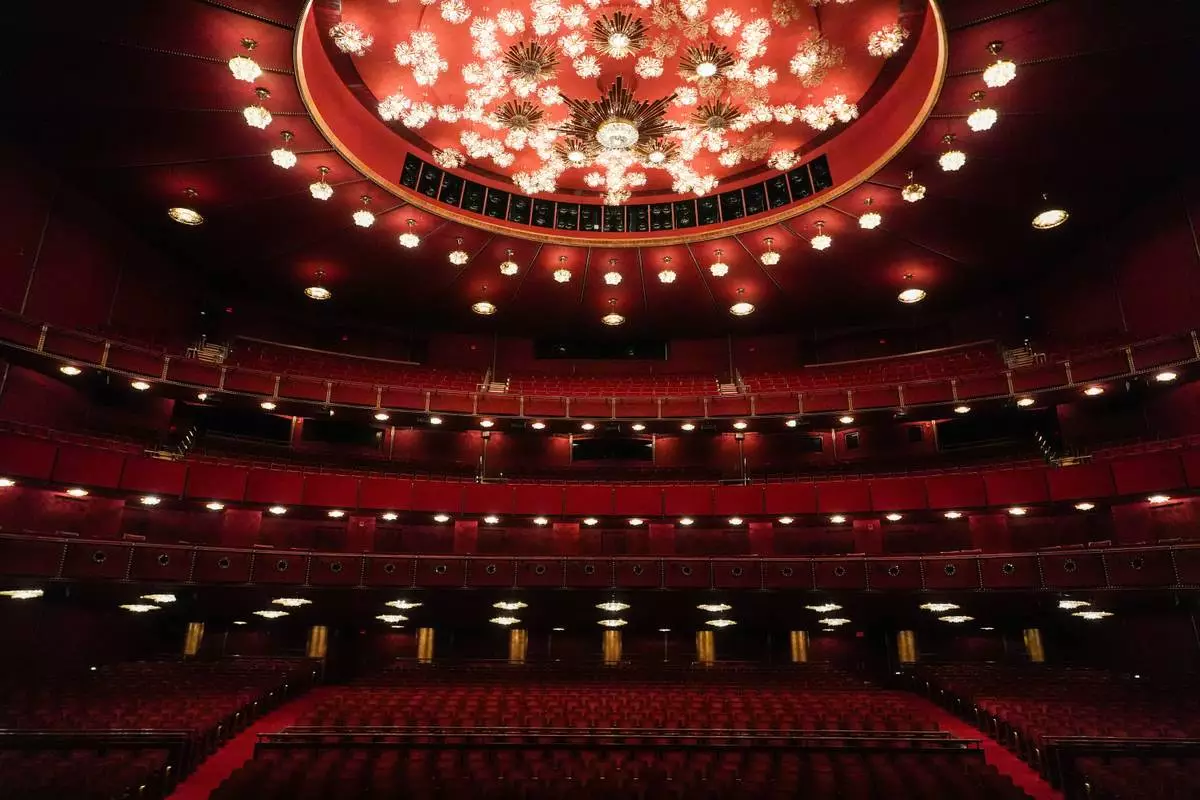
The venue's more public elements, including the red-on-red decor of the Opera House, are expected to be maintained, though with some updating. There aren't plans at the moment to change the presidential boxes.

Quotes attributed to Kennedy will stay on the building's walls and the famous bust of the former president that sits outside the Opera House will be there again when the building reopens.

“I can’t think of any JFK changes,” Floca said.

It’s unclear, however, whether there will be additional tributes to Trump, who will be in the final months of his presidency when the public can return to the building.

Matt Floca, the John F. Kennedy Center for the Performing Arts' new executive director and chief operating officer, shows an expansion joint during a media tour intended to show building damage, Wednesday, April 22, 2026, in Washington. (AP Photo/Julia Demaree Nikhinson)

Matt Floca, the John F. Kennedy Center for the Performing Arts' new executive director and chief operating officer, shows an expansion joint during a media tour intended to show building damage, Wednesday, April 22, 2026, in Washington. (AP Photo/Julia Demaree Nikhinson)

Structural damage is seen at the John F. Kennedy Center for the Performing Arts during a media tour, Wednesday, April 22, 2026, in Washington. (AP Photo/Julia Demaree Nikhinson)

Structural damage is seen at the John F. Kennedy Center for the Performing Arts during a media tour, Wednesday, April 22, 2026, in Washington. (AP Photo/Julia Demaree Nikhinson)

Water damage in the concert hall electric room is seen at the John F. Kennedy Center for the Performing Arts during a media tour, Wednesday, April 22, 2026, in Washington. (AP Photo/Julia Demaree Nikhinson)

Water damage in the concert hall electric room is seen at the John F. Kennedy Center for the Performing Arts during a media tour, Wednesday, April 22, 2026, in Washington. (AP Photo/Julia Demaree Nikhinson)

The John F. Kennedy Center for the Performing Arts Opera House is seen during a media tour intended to show building damage, Wednesday, April 22, 2026, in Washington. (AP Photo/Julia Demaree Nikhinson)

The John F. Kennedy Center for the Performing Arts Opera House is seen during a media tour intended to show building damage, Wednesday, April 22, 2026, in Washington. (AP Photo/Julia Demaree Nikhinson)

The John F. Kennedy Center for the Performing Arts is seen following a media tour intended to show building damage, Wednesday, April 22, 2026, in Washington. (AP Photo/Julia Demaree Nikhinson)

The John F. Kennedy Center for the Performing Arts is seen following a media tour intended to show building damage, Wednesday, April 22, 2026, in Washington. (AP Photo/Julia Demaree Nikhinson)

Recommended Articles