Skip to Content Facebook Feature Image

Russian oil to Slovakia resumes flowing through pipeline that crosses Ukraine

News

Russian oil to Slovakia resumes flowing through pipeline that crosses Ukraine
News

News

Russian oil to Slovakia resumes flowing through pipeline that crosses Ukraine

2026-04-23 16:29 Last Updated At:16:30

BRATISLAVA, Slovakia (AP) — The flow of Russian oil to Slovakia through the Druzhba pipeline that crosses Ukraine has resumed, Slovak Economy Minister Denisa Saková said Thursday, a breakthrough in an issue that has caused a major diplomatic spat in Europe.

The development is expected to unblock a large financial assistance package for war-ravaged Ukraine.

Populist Slovak Prime Minister Robert Fico welcomed the development, calling it “good news.”

“Let’s hope a serious relation between Ukraine and the European Union has been established,” Fico said. He thanked all those involved in solving the issue, including the European Commission and Hungary.

Hungary and Slovakia were locked in a feud with Ukraine since Russian oil deliveries to Hungary and Slovakia through the pipeline were halted in January after the pipeline was damaged.

Ukrainian officials blamed the damage on Russian drone attacks.

Hungary’s nationalist Prime Minister Viktor Orbán, who was recently defeated in an election, accused Ukraine of deliberately delaying repairs — an allegation that Ukrainian President Volodymyr Zelenskyy denied.

Fico said Thursday he still didn’t believe the pipeline was damaged at all and alleged that the pipeline and oil “were used in the current geopolitical battle.”

Ukraine and most of its European backers oppose imports of Russian oil which have helped to fund Russian President Vladimir Putin’s war against Ukraine, now in its fifth year. But unlike the rest of the European Union, Hungary and Slovakia still depend on Russia for their energy needs.

For two months, the two countries have accused Ukraine of failing to repair the damaged pipeline. Citing the issue, Hungary blocked a massive EU loan to Ukraine while Slovakia refused to endorse new sanctions against Russia until the supplies resumed.

The flow resumed after three months at 2 a.m. Thursday, the Slovak economy ministry said, lifting a major obstacle to approving the EU funds for Ukraine later Thursday, just as EU leaders gather for a summit in Cyprus.

Ukraine desperately needs the 90 billion euro ($106 billion) loan package, originally agreed in December, to prop up its war-ravaged economy and help keep Russian forces at bay for the next two years.

The 27-nation EU had originally intended to use frozen Russian assets as collateral for the loan. But that option was blocked by Belgium, where the bulk of the frozen assets are held.

In December, the Czech Republic, Hungary and Slovakia agreed not to stop their EU partners from borrowing the money on international markets as long as the three countries did not have to take part in the scheme.

But Orbán, who has repeatedly blocked EU aid to Ukraine, angered the other 24 countries by later reneging on that deal over the pipeline dispute and as campaigning heated up ahead of the April 12 election that he lost in a landslide.

The EU has also been trying since February to push through a new raft of sanctions against Russia, which Hungary and Slovakia have blocked due to the oil feud.

Fico said he expected both issues to be solved on Thursday.
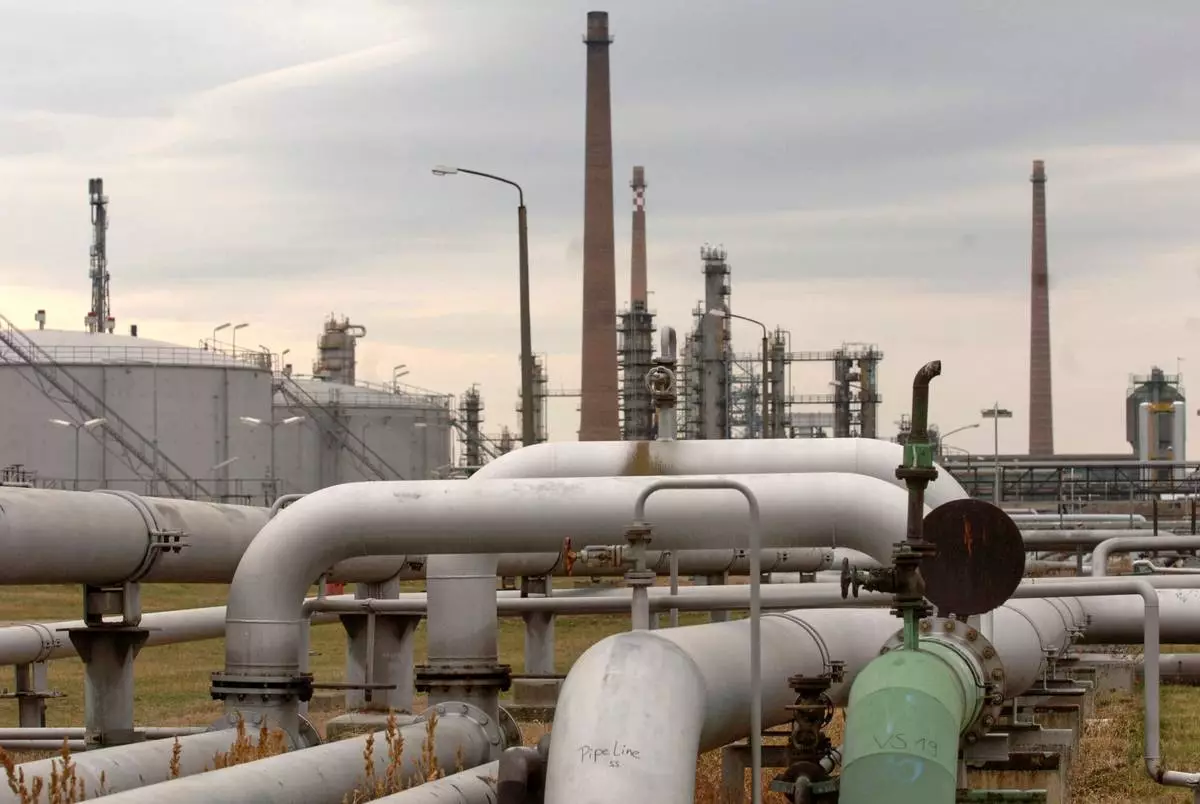
FILE - A general view of a pumping station at the end of the Druzhba oil pipeline in the east German refinery PCK in Schwedt, Jan. 10, 2007. (AP Photo/Sven Kaestner, File)

FILE - A general view of a pumping station at the end of the Druzhba oil pipeline in the east German refinery PCK in Schwedt, Jan. 10, 2007. (AP Photo/Sven Kaestner, File)

ISTANBUL (AP) — Turkish lawmakers passed a bill late Wednesday that includes restricting access to social media platforms for children under 15, state media reported.

The legislation is the latest in a global trend to protect young people from dangerous online activity.

Its passage comes a week after a 14-year-old boy killed nine students and a teacher at a middle school in Kahramanmaras, southern Turkey, in a gun attack. Police are investigating the online activity of the perpetrator, who also died, in a bid to uncover his motivation for the attack.

The bill will force social media platforms to install age‑verification systems, provide parental control tools and require companies to rapidly respond to content deemed harmful, the state-run Anadolu news agency said.

Turkish President Recep Tayyip Erdogan must now accept the bill within 15 days for it to pass into law. He spoke in the wake of the Kahramanmaras killings of the need for to mitigate the online risks to children’s safety and privacy.

“We are living in a period where some digital sharing applications are corrupting our children's minds and social media platforms have, to put it bluntly, become cesspools,” he said in a televised address Monday.

The main opposition party — the Republican People’s Party, or CHP — has criticized the proposal, saying children should be protected “not with bans but with rights-based policies.”

Under the law, digital platforms — such as YouTube, TikTok, Facebook, Instagram and others — would have to block children under 15 from opening accounts and introduce parental controls that would manage children’s access.

Online game companies will also be required to appoint a representative in Turkey to ensure they abide by the new regulations. Potential penalties include internet bandwidth reductions and fines imposed by Turkey’s communications watchdog.

The Turkish government has a recent record of restricting online platforms as they have grown as a means of expressing dissent. Online communications were widely restricted during last year’s protests in support of Istanbul’s jailed opposition mayor, Ekrem Imamoglu.

Restrictions on social media access for children under 16 first began in December in Australia, where social media companies revoked access to about 4.7 million accounts identified as belonging to children.

Last month, Indonesia began implementing a new government regulation banning children younger than 16 from access to digital platforms that could expose them to pornography, cyberbullying, online scams and addiction.

Some other countries — including Spain, France and the United Kingdom — are also taking or considering measures to restrict children’s access to social media amid growing concern that they are being harmed by exposure to unregulated social media content.

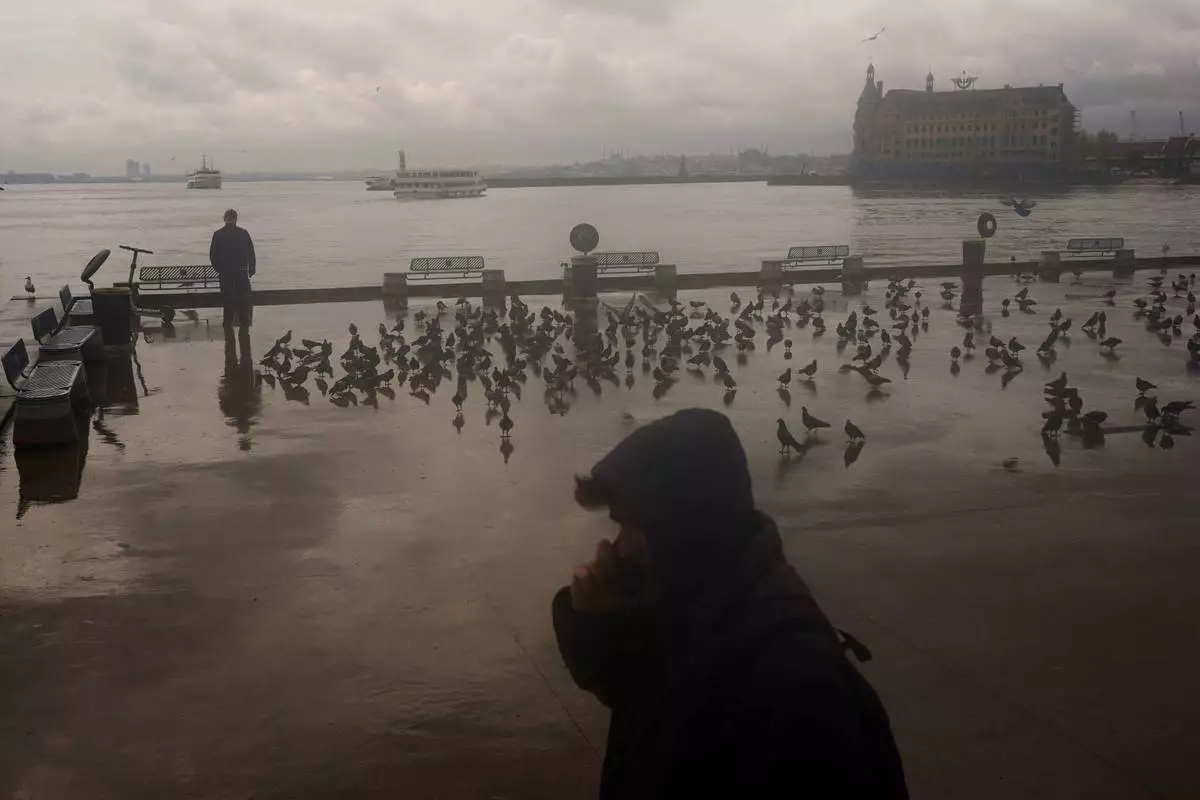
A man stands next to the Bosphorus at Kadikoy ferry terminal on a rainy day in Istanbul, Turkey, Wednesday, April 22, 2026. (AP Photo/Francisco Seco)

A man stands next to the Bosphorus at Kadikoy ferry terminal on a rainy day in Istanbul, Turkey, Wednesday, April 22, 2026. (AP Photo/Francisco Seco)

Recommended Articles