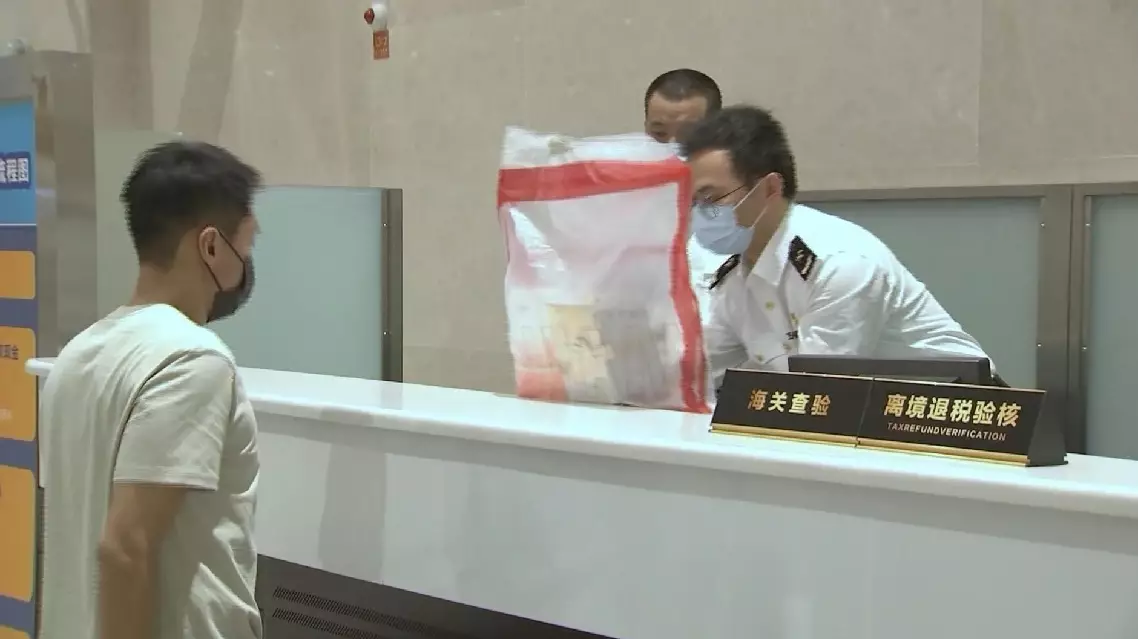
China’s inbound tourism is rebounding sharply as visa easing drives a surge in arrivals, with the country’s safety record noted by visitors as part of its appeal.
On social media, everyday scenes of safety and trust in China, from the Forbidden City in Beijing to the streets of Chengdu, from Shanghai’s Bund to Guangzhou’s parks, are being shared by foreign tourists as part of their travel experience.
"[We visited cities of] Xi'an, Suzhou, and Guilin. Safety is absolutely good here in China, no troubles at all," said Josep, a tourist from Spain.
According to the Ministry of Public Security, criminal cases nationwide dropped by 12.8 percent year on year in 2025, reaching their lowest level this century. Safety has become a standout "calling card" for China, which ranks among the safest countries in the world and boasts one of the lowest crime rates. Satisfaction with public safety has consistently remained above 98 percent for several years. International visitors often point to everyday details such as walking alone at night or leaving deliveries in public spaces as part of their experience.
"I lost my backpack. Three days later my friend went to the same place and found my backpack. I had a laptop, a tablet there or some books as well," said Alexander, a student from Russia.
"Girls in China can always walk in the night. They feel safe. If I go to a coffee store, I can place my laptop, I can place all my stuff. And if I go for two, three, four hours and I come back, it's there. They set it up even more nicer," said a student from the Netherlands.
"I have been in China for eight months. Day or night, I never have to worry about safety. China is a very safe, comfortable place, where you can truly enjoy life," said a student from the United States.
As "China Travel" gains in popularity, more foreigners are arriving, experiencing a "culture shock" that turns disbelief into a sense of real freedom and inspires a new understanding of the country.
"Safety is the foundation of human life. Patrolling police and well-lit streets are reassuring and creating a safe working and living environment for everyone. This is one of the reasons I can't leave China," said Ammar Albaadani, a Yemeni doctor who has lived and worked in China's Yiwu for some 11 years.
China now offers unilateral visa exemptions to 50 countries and 240-hour transit privileges to travelers from 55. Inbound visits under these visa‑free programs reached 30.08 million in 2025, a 49.5 percent increase year on year, accounting for nearly 73 percent of all foreign arrivals.

China inbound tourism surges as safety reputation, visa easing draw foreign visitors