Skip to Content Facebook Feature Image

Story of often overlooked Chinese laborers in Mississippi Delta

China

China

China

Story of often overlooked Chinese laborers in Mississippi Delta

2026-04-23 17:22 Last Updated At:20:57

The storied history of the Mississippi Delta deep in the heart of the American South is one that cannot be told solely in black and white, with many descendants seeking to draw attention to the often overlooked contribution of Chinese laborers to these communities.

Greenville, the most populous city in the Mississippi Delta, became the unlikely destination for Chinese migrants. After the American Civil War, cotton plantation owners, desperate to fill the void left by departing African American laborers, began recruiting workers from the Far East to toil in their fields.

The Chinese workers quickly discovered that cotton farming offered no long-term path to survival and pivoted towards a more sustainable business practice as they began to open up grocery stores in Black neighborhoods.

At its peak, Greenville - then a city of just around 40,000 people - was home to more than 50 of these Chinese-owned grocery stores, which became essential hubs of the community.

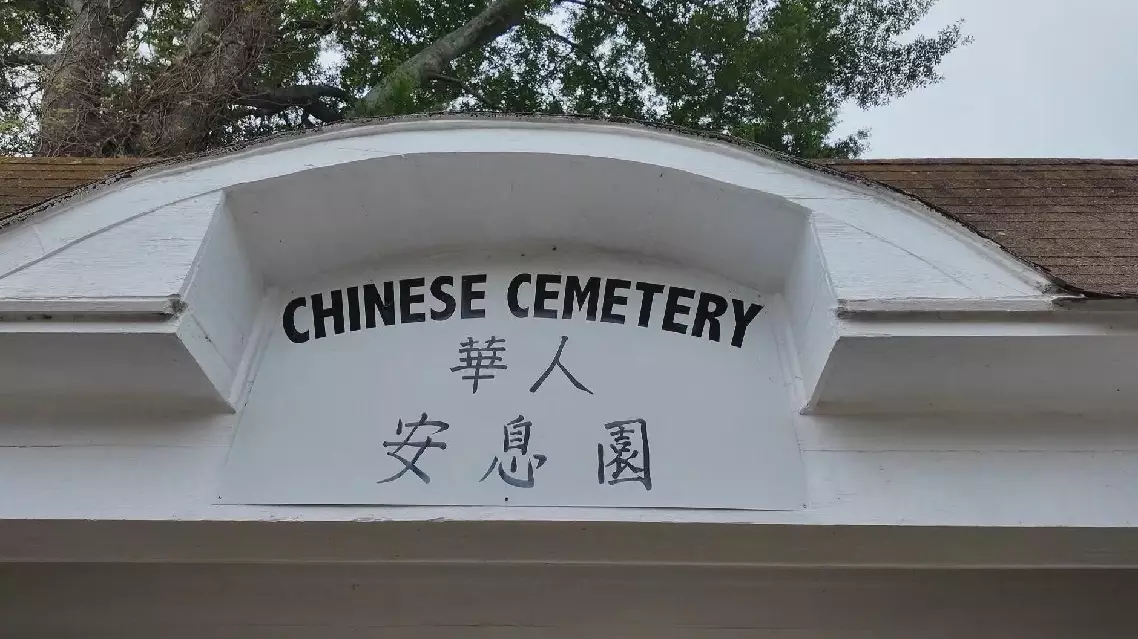
Today, a Chinese cemetery in Greenville, which dates back more than a century, stands as a silent testimony to that era, where some of the people who played their part in these communities can be remembered.

"My parents and that generation, I knew all of them having a grocery store. Back then there was segregation, so the whites did not like the Blacks or the Asians, Chinese. They didn't intermingle, nobody intermingled, they just found it more lucrative to be in a Black neighborhood. They gave them credit or just helped them out," said Cathy Wong, the person-in-charge of the Greenville Chinese Cemetery.

While the cemetery pays a quiet tribute, the stories are more vividly presented at the Delta State University in Mississippi, where a collection of archives holds a trove of documents chronicling the lives of early Chinese residents in the state.

A special heritage museum set up inside the Charles W. Capps Jr. Archives and Museum building recreates scenes from these past Chinese grocery stores in Greenville. It displays old photographs, signs and items, as well as recordings of the oral history - preserving the lesser-known stories of the Chinese-run groceries that were once dotted along nearly every small town from the Mississippi River to the Arkansas Delta.

On a land where racial segregation once drew rigid boundaries between the white and black population, the Chinese existed between the cracks, nearly invisible amid these wider divisions. But the museum and the precious artifacts it contains highlight the important role they played in everyday life during a past chapter of history.
Story of often overlooked Chinese laborers in Mississippi Delta


Story of often overlooked Chinese laborers in Mississippi Delta

Japan's House of Representatives approved a bill to establish a national intelligence committee on Thursday, prompting widespread public questions and concerns. In March, the Japanese government approved a resolution to submit the relevant bill to the Diet, proposing a new intelligence mechanism centered on a national intelligence council with the national intelligence committee serving as its executive body.

According to the bill, the new committee will be tasked with coordinating "important intelligence activities" in areas such as national security and counter-terrorism, as well as "overseas intelligence activities" involving foreign espionage.

The bill also states that the committee's secretariat will "comprehensively coordinate" intelligence work across government ministries and agencies, with the authority to request that they share information.

The bill now moves to the upper house for review.

The bill and a series of reckless moves by the Takaichi administration have fueled deep public concern. Protesters gathered to voice their opposition to the legislation before its passage.

"Right now, the Takaichi administration is trying to drag Japan into war, through actions like promoting weapons imports and exports, provoking China, and failing to offer the apologies it should have made afterward. Against this backdrop, opposition voices are actually quite strong, but these remarks will be regulated. Once such a bill passes, not even opposing voices will be able to speak out. This is something I do not want to see," said a protester.

These grave concerns were widely echoed by other rally attendees, who said they cannot accept a string of radical moves by the Japanese government and the Takaichi administration, including the lifting of the ban on lethal weapons exports and the relentless push to amend Japan's pacifist constitution.

"Takaichi is forcing all of these moves through. Promoting this bill and lifting the ban on arms exports mean heading towards war," said another rally participant.

"I believe amending the Constitution is completely unacceptable. The Constitution is not something that members of the National Diet can revise on a whim, and it should never be revised in the first place," said another protester.

Japanese lower house approves bill to establish national intelligence committee, sparking protests

Japanese lower house approves bill to establish national intelligence committee, sparking protests

Recommended Articles