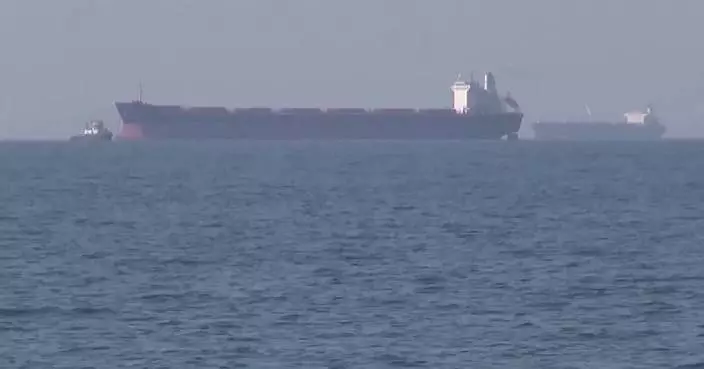
Syrian residents are starting to feel the brunt of the spillover effects of the U.S.-Israeli war on Iran, with the crisis straining the country's already tight natural gas supplies and driving up prices, leaving many locals struggling for a sufficient supply to go about their daily business.
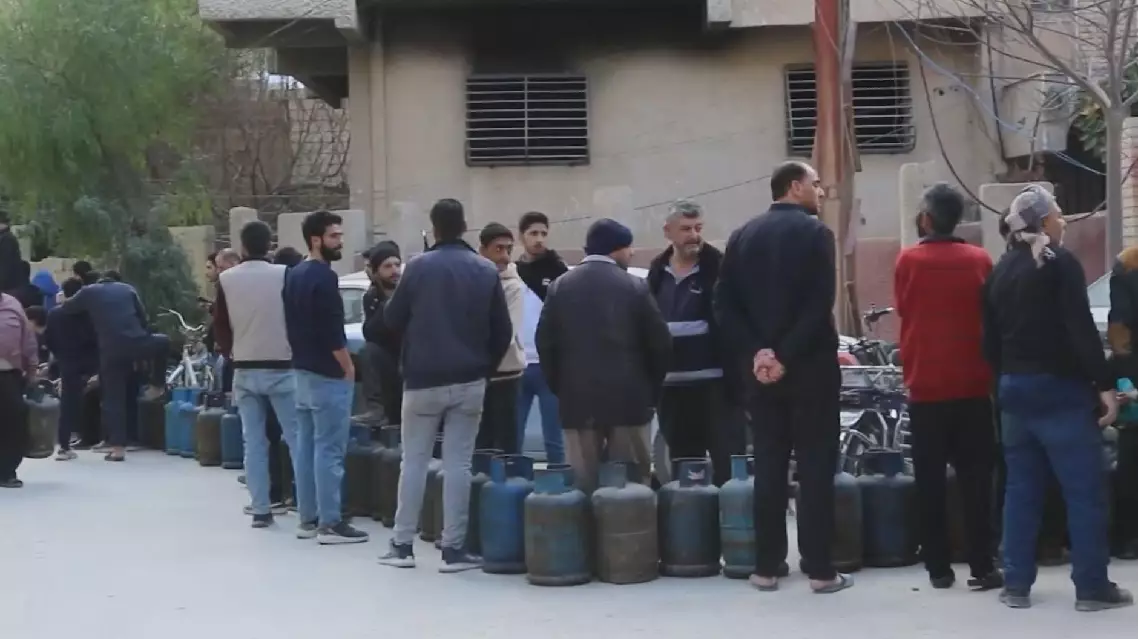
The worsening situation can be seen playing out on the streets of suburban Damascus, where long queues of residents already form in anticipation of a liquefied gas transport truck showing up to deliver supplies.
People are seen with their empty gas cylinders by their sides, awaiting refills. Some may patiently stand in these lines for hours, only to face the possibility of leaving empty-handed.
With supplies running short, many residents have been forced to purchase gas through private channels, where prices have been repeatedly marked up.
Businesses are also suffering, with staff at a popular eatery in downtown Damascus saying they are now under severe operating pressure. Its owner Ali said the price of natural gas has skyrocketed, and noted it is difficult to even obtain any at all.
"We are facing a very serious gas shortage. For ordinary families, it's a disaster. We now have to pay double the price," he said.
In rural areas, fears over the limited gas supplies means some families are struggling to cook meals at home. A housewife named Umm Muhammad said she has turned to using an electric stove when gas supplies are cut off. But this is not a foolproof solution as electricity is available for only a few hours a day and often not during mealtimes.
"The gas shortage crisis is extremely severe. We have to strictly control the amount of gas we use in order to afford it," she said.
Syria's energy system was already in a fragile state long before the recent unrest hit the region. Years of war in the country have damaged or halted domestic oil and gas fields, leaving civilian natural gas heavily dependent on imports from neighboring countries and making it particularly vulnerable to external shocks.
Analysts say the current war in the Middle East has directly disrupted regional energy supply chains. In late February, Israel halted natural gas supplies to Egypt, prompting Egypt to reduce its supply to Syria via Jordan, which directly triggered the current natural gas crisis in Syria.
"Egypt's natural gas network is connected to several other gas distribution networks. Other countries also supply natural gas to Syria through Egypt. The crux of the interruption in natural gas supply lies here," said a Syrian economist.
Gas shortages deepen in Syria as regional tensions disrupt energy supply routes