NEW YORK--(BUSINESS WIRE)--Apr 23, 2026--
Faruqi & Faruqi, LLP, a leading national securities law firm, is investigating potential claims against Medpace Holdings, Inc. (“Medpace” or the “Company”) (NASDAQ: MEDP) and reminds investors of the June 8, 2026 deadline to seek the role of lead plaintiff in a federal securities class action that has been filed against the Company.
This press release features multimedia. View the full release here: https://www.businesswire.com/news/home/20260423141501/en/
Faruqi & Faruqi is a leading national securities law firm with offices in New York, Pennsylvania, California and Georgia. The firm has recovered hundreds of millions of dollars for investors since its founding in 1995. See www.faruqilaw.com.
According to the complaint, defendants provided overwhelmingly positive statements to investors while, at the same time, disseminating false and misleading statements and/or concealing material adverse facts concerning the true state of Medpace's backlog cancellation rate. Defendants continuously touted "well behaved" cancellation rates. Furthermore, Medpace made clear that cancellations were not caused by weak business or a weak funding environment, providing investors with overly positive growth expectations that could not maintain the projected 1.15 book-to-bill ratio.
On February 9, 2026, Medpace issued a press release announcing the Company's fourth quarter 2025 book-to-bill ratio of 1.04, well below the guidance of 1. 15. Following this news, the price of Medpace's common stock declined dramatically. From a closing market price of $530.35 per share on February 9, 2026, Medpace's common stock price fell to $446. 05 per share on February 10, 2026, a decline of more than 15.9%.
The court-appointed lead plaintiff is the investor with the largest financial interest in the relief sought by the class who is adequate and typical of class members who directs and oversees the litigation on behalf of the putative class. Any member of the putative class may move the Court to serve as lead plaintiff through counsel of their choice, or may choose to do nothing and remain an absent class member. Your ability to share in any recovery is not affected by the decision to serve as a lead plaintiff or not.
Faruqi & Faruqi, LLP also encourages anyone with information regarding Medpace’s conduct to contact the firm, including whistleblowers, former employees, shareholders and others.
To learn more about the Medpace class action, go to www.faruqilaw.com/MEDP or call Faruqi & Faruqi partner Josh Wilson directly at 877-247-4292 or 212-983-9330 (Ext. 1310).
Follow us for updates on LinkedIn, on X, or on Facebook.
Attorney Advertising. The law firm responsible for this advertisement is Faruqi & Faruqi, LLP ( www.faruqilaw.com ). Prior results do not guarantee or predict a similar outcome with respect to any future matter. We welcome the opportunity to discuss your particular case. All communications will be treated in a confidential manner.

CLASS ACTION NOTICE: Faruqi & Faruqi, LLP Highlights Class Action Against Medpace Holdings and Upcoming Lead Plaintiff Deadline of June 8, 2026
BRUSSELS (AP) — The European Union on Thursday approved a 90-billion-euro ($106-billion) loan package to help Ukraine meet its economic and military needs for two years after oil began flowing through a key pipeline to Hungary and Slovakia, ending months of political deadlock.
The EU also approved a new raft of sanctions against Russia over its war on Ukraine. The measures were prepared early this year and had been set to be announced in February to mark the fourth anniversary of the conflict, but Hungary and Slovakia opposed the move.
Hungary and Slovakia have been locked in a feud with Ukraine since Russian oil deliveries to the two EU countries were halted in January after a pipeline was damaged. Ukrainian officials blamed the damage on Russian drone attacks. Both countries confirmed Thursday that deliveries have resumed.
Ukraine desperately needs the loan package to prop up its war-ravaged economy and help keep Russian forces at bay. Hungary angered its EU partners by reneging on a December deal to provide the funds. The loans are expected to be available in coming weeks and months.
“Promised, delivered, implemented,” European Council President António Costa posted on social media. A few hours later, as he arrived to chair a summit of EU leaders in Cyprus, Costa told reporters that the priority now must be to advance Ukraine's quest to join the bloc.
Standing alongside him, Ukrainian President Volodymyr Zelenskyy thanked his European partners for their support. “We will work to make sure the funds are delivered as soon as possible,” he said. “This will strengthen, of course first of all our army, Ukrainian forces, and allow us to boost production.”
The political greenlight for the loan package came after Russian oil began flowing to Hungary and Slovakia again through the Druzhba pipeline that crosses Ukraine. Populist Slovak Prime Minister Robert Fico welcomed that development as “good news.”
“Let’s hope a serious relation between Ukraine and the European Union has been established,” Fico said.
Hungarian energy group MOL said it had “received crude oil at the Fényeslitke and Budkovce pumping stations earlier Thursday. Crude oil deliveries via the Druzhba pipeline system have thus resumed to Hungary and Slovakia after a hiatus of nearly three months.”
Ukraine and most of its European backers oppose imports of Russian oil which have helped to fund Russian President Vladimir Putin’s war against Ukraine, now in its fifth year. But unlike the rest of the European Union, Hungary and Slovakia still depend on Russia for their energy needs.
Hungary’s nationalist Prime Minister Viktor Orbán, who was recently defeated in an election, had accused Ukraine of deliberately delaying repairs — an allegation that Zelenskyy denied.
Fico said Thursday he still didn’t believe the pipeline was damaged at all and alleged that the pipeline and oil “were used in the current geopolitical battle.”
The row has raised yet more troubling questions about decision-making in the EU, which can often be held hostage to national interests when unanimous votes are required. Several top officials have in recent months called for more majority voting.
The 27-nation bloc had originally intended to use frozen Russian assets as collateral for the loan. But that option was blocked by Belgium, where the bulk of the frozen assets are held.
In December, the Czech Republic, Hungary and Slovakia agreed not to stop their EU partners from borrowing the money on international markets as long as the three countries did not have to take part in the scheme.
But Orbán, who has repeatedly blocked EU aid to Ukraine, angered the other 24 countries by later reneging on that deal over the pipeline dispute and as campaigning heated up ahead of the April 12 election that he lost in a landslide.
The EU has also been trying since February to push through a new raft of sanctions against Russia to undermine its war effort, but Hungary and Slovakia were also blocking those measures over the oil feud.
More than 40 ships believed to be part of Russia’s shadow fleet illicitly transporting oil were targeted.
Oil revenue is the linchpin of Russia’s economy, allowing Putin to pour money into the armed forces without worsening inflation for everyday people and avoiding a currency collapse.
A number of banks were targeted, and a ban was imposed on Europeans using Russian crypto currency.
Asset freezes were slapped on around 60 more “entities” — often companies, government agencies, banks or other organizations — adding to a growing list of more than 2,600 Russian officials and entities already under sanctions, including Putin, his political associates, oligarchs, and dozens of lawmakers.
Spike reported from Budapest. Janicek reported from Prague.
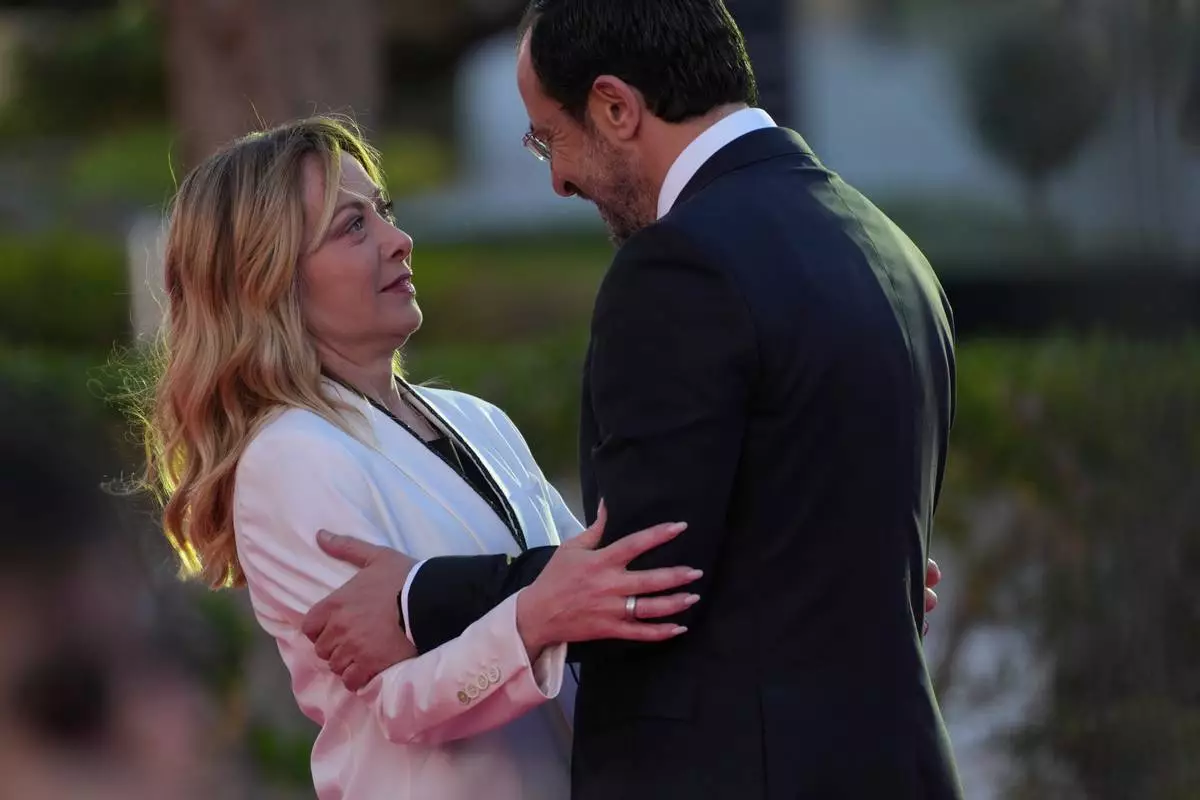
Italy's Prime Minister Giorgia Meloni, left, is welcomed by Cypriot President Nikos Christodoulides at the EU Summit in Ayia Napa, Cyprus, Thursday, April 23, 2026. (AP Photo/Petros Karadjias)
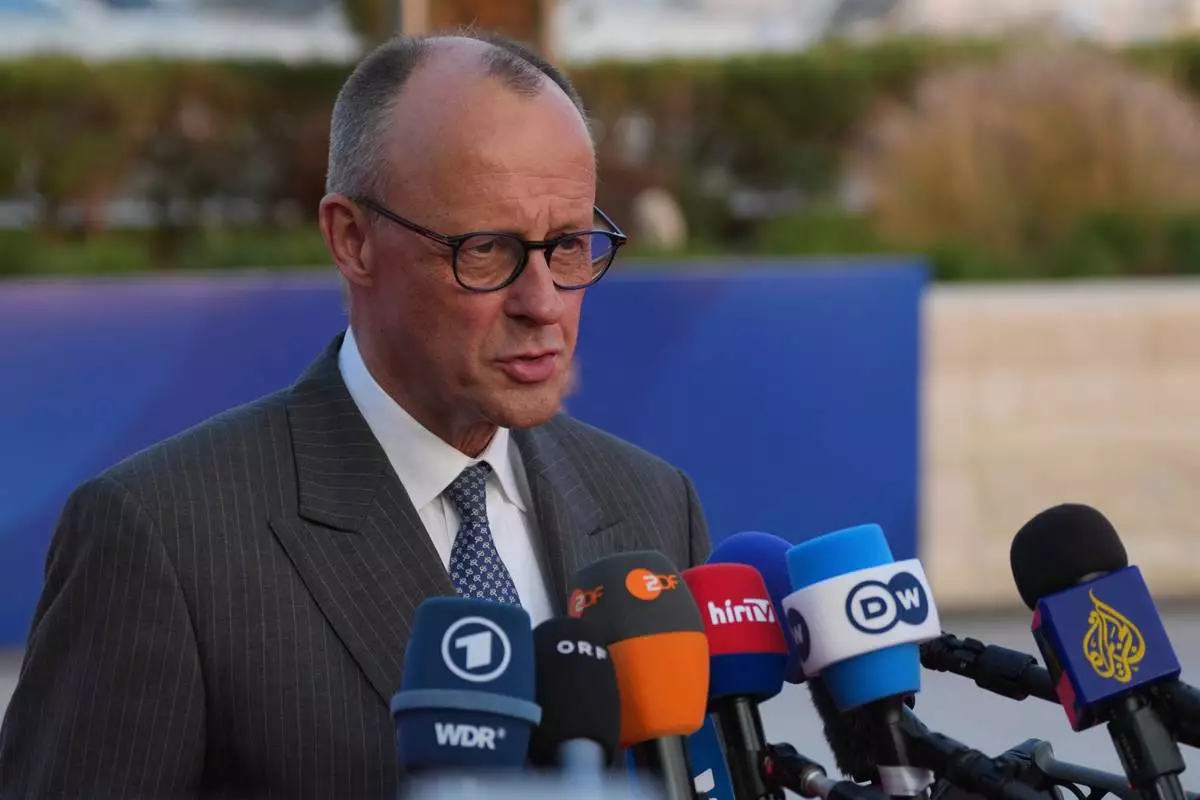
German Chancellor Friedrich Merz makes statements as he arrives for the EU Summit in Ayia Napa, Cyprus, Thursday, April 23, 2026. (AP Photo/Petros Karadjias)
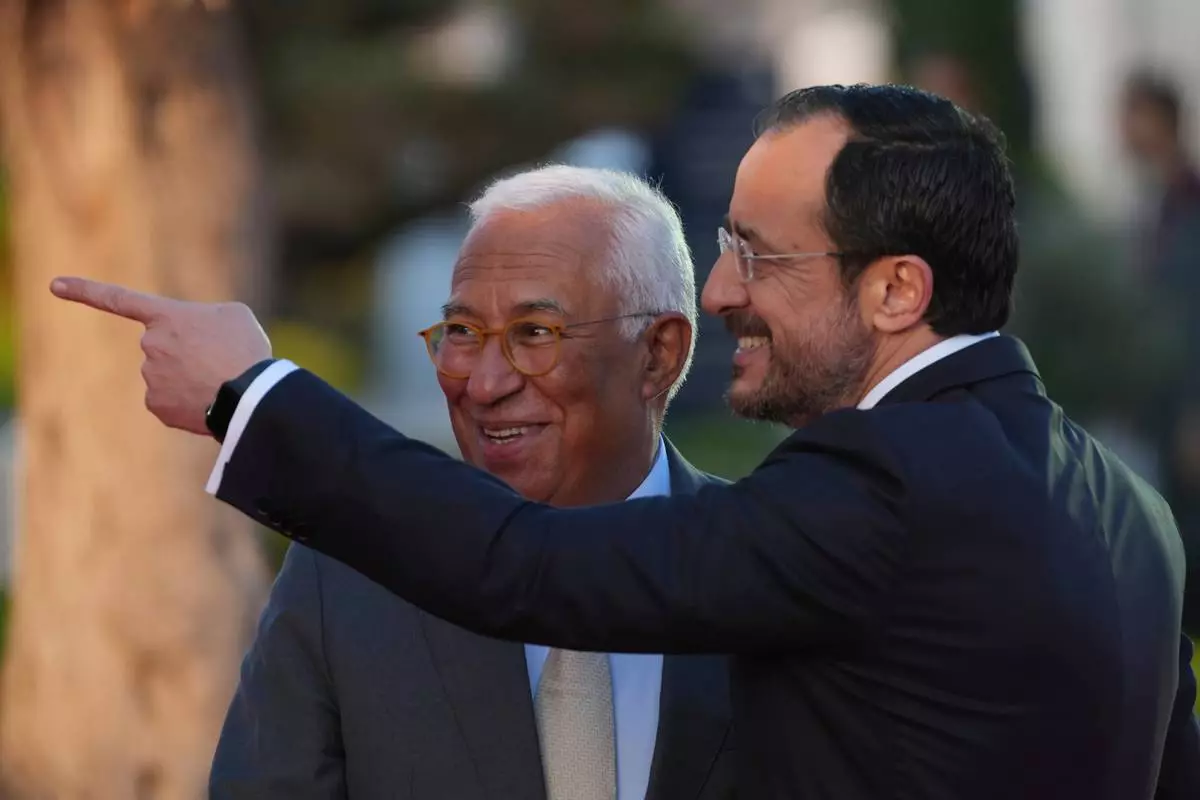
European Council President Antonio Costa, background, is welcomed by Cypriot President Nikos Christodoulides ahead of the EU Summit in Ayia Napa, Cyprus, Thursday, April 23, 2026. (AP Photo/Petros Karadjias)
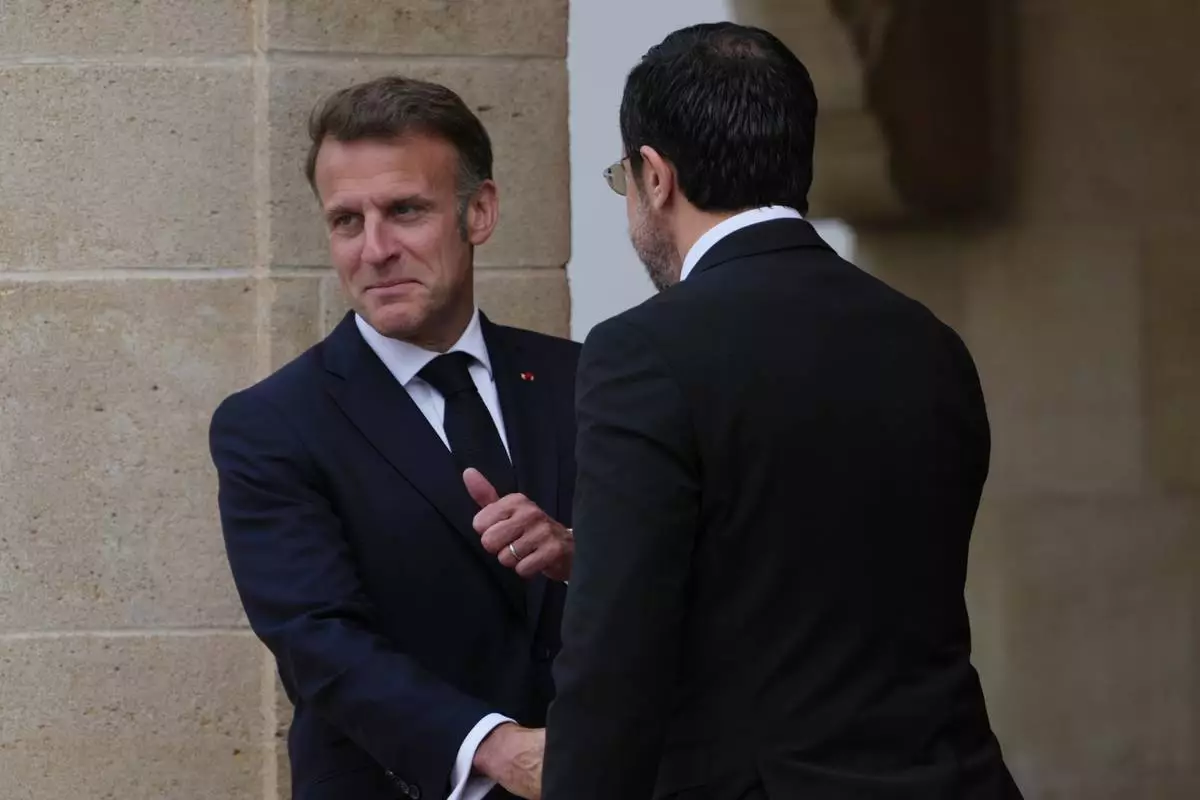
Cypriot President Nikos Christodoulides, right, and his French counterpart Emmanuel Macron shake hands at the presidential palace in Nicosia, Cyprus, Thursday, April 23, 2026. (AP Photo/Petros Karadjias)
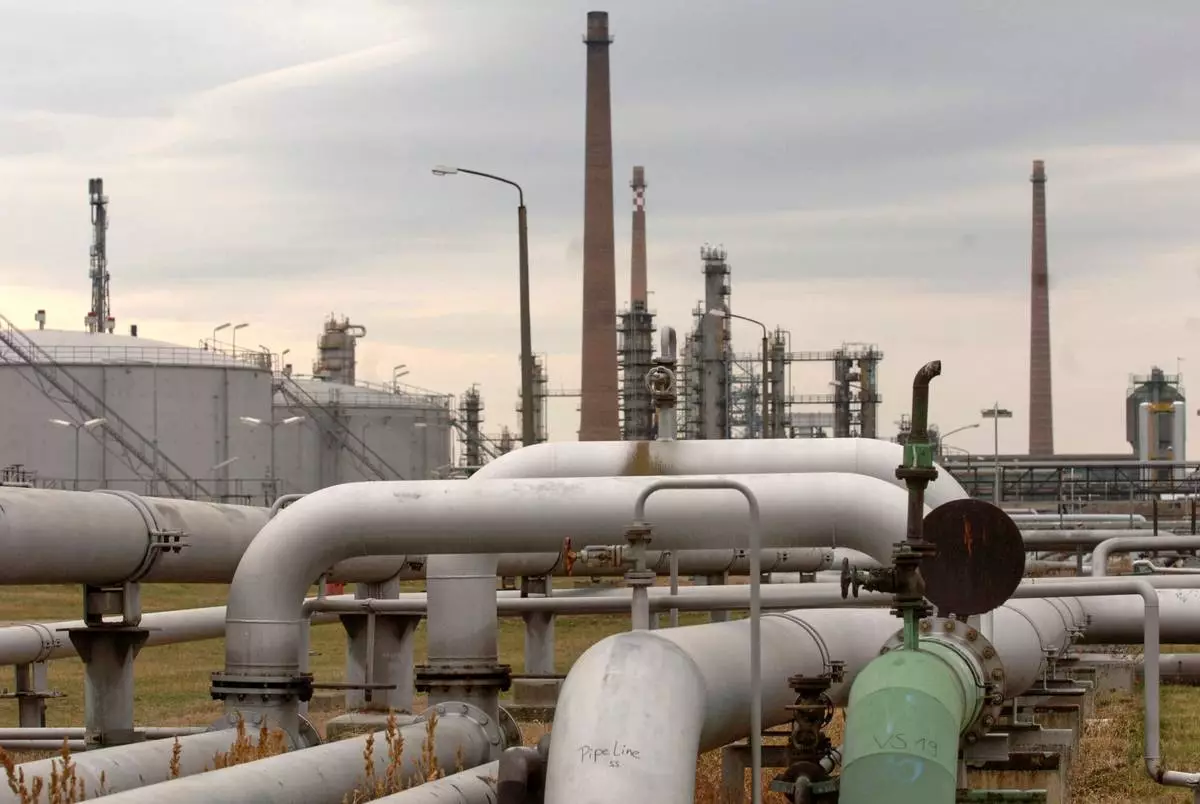
FILE - A general view of a pumping station at the end of the Druzhba oil pipeline in the east German refinery PCK in Schwedt, Jan. 10, 2007. (AP Photo/Sven Kaestner, File)