If you've missed rooting around in a cereal box for a toy, you're in luck.
WK Kellogg Co. said Thursday it's including toys with some of its breakfast cereals for the first time in more than a decade.
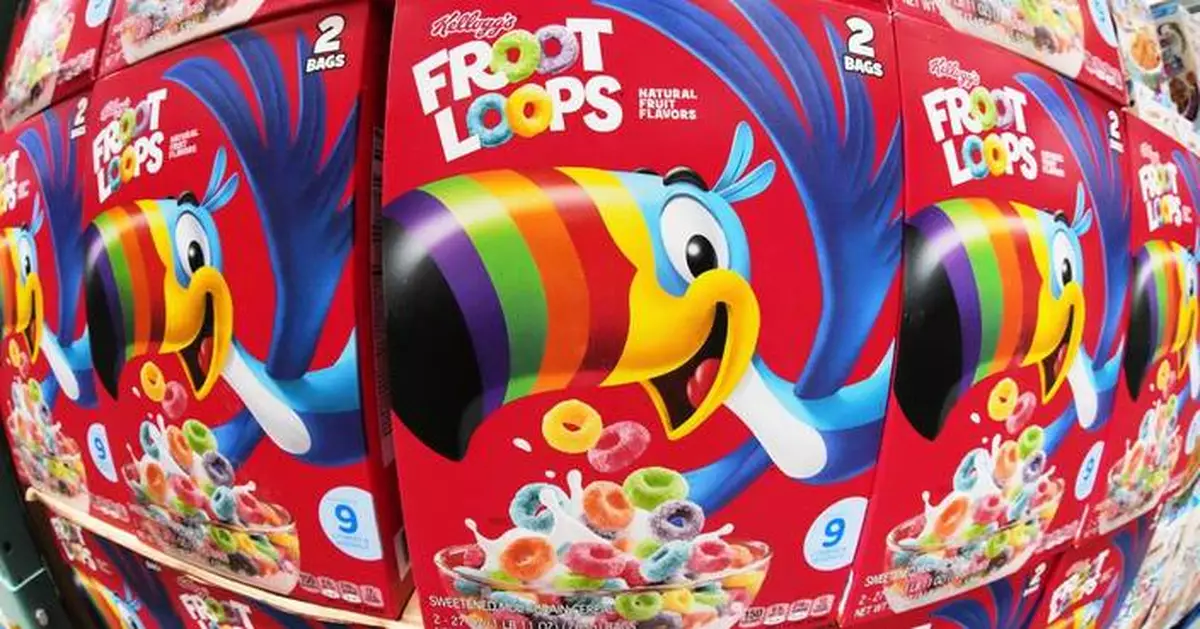
Starting on Sunday, special edition boxes of Frosted Flakes, Froot Loops, AppleJacks and Corn Pops will have plastic toys shaped like characters from Disney and Pixar's “Toy Story 5.” The movie is scheduled to hit theaters in June.
Plastic toys used to be a mainstay in breakfast cereal. On Ebay Thursday, collectors were selling a Batman coin bank from a 1989 box of Ralston cereal, a miniature stuffed bear from a 1980s box of Post Super Golden Crisp and even a tiny plastic “atomic submarine" from a 1950s box of Kellogg's Corn Flakes.
But the toys gradually disappeared as manufacturers tried to cut costs and consumers worried about choking and other hazards. Kellogg was criticized in 2004 for including Spider-Man watches with mercury batteries in its cereal boxes, for example. And in 1988, the company recalled “cool flute” and “binoculars” toys after the U.S. Consumer Product Safety Commission deemed them a choking hazard.
Toys do occasionally make a limited-time comeback. General Mills introduced a “Cereal Squad” set of toy figurines in 2020, for example.
Kellogg said it thought “Toy Story 5" was a good fit for the reintroduction, since it explores the role of toys in a tech-driven world.
“Bringing toys back inside the box reintroduces that sense of discovery through a simple, screen-free moment of play that parents can now share with their own kids,” said Laura Newman, a vice president of brand marketing at Kellogg.
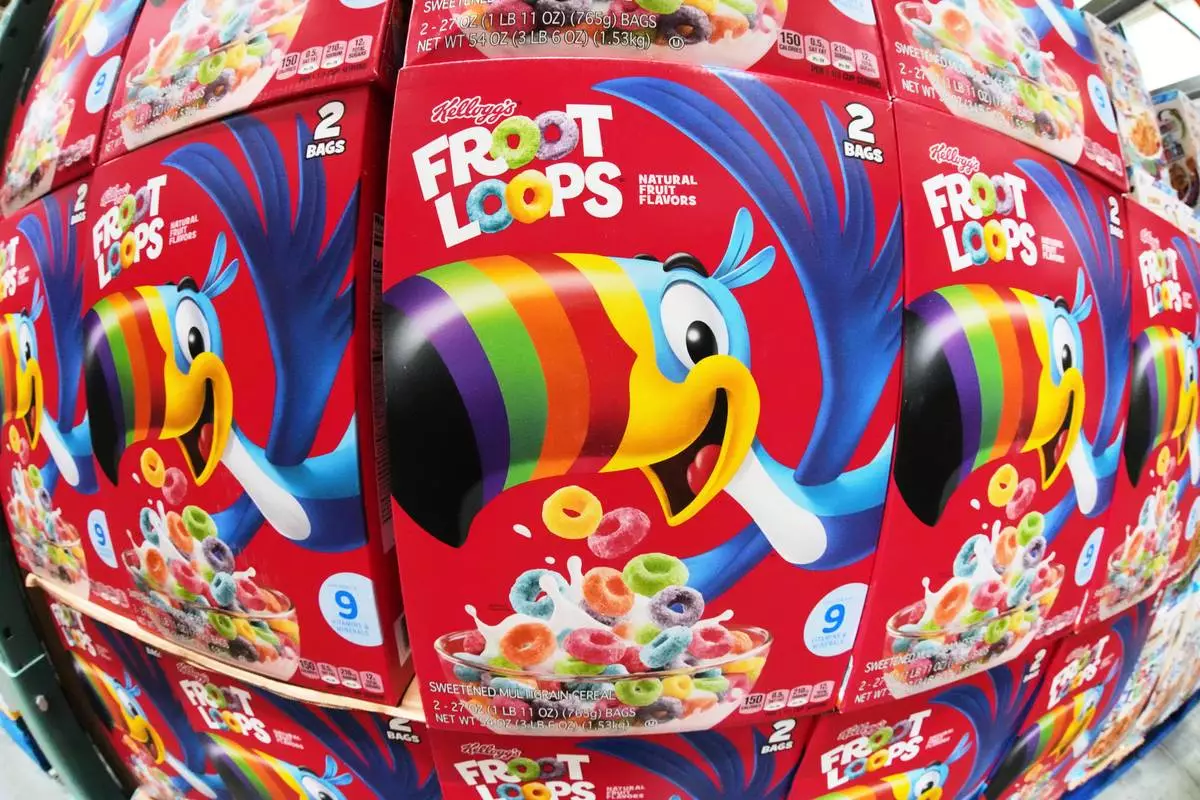
FILE - This is a display of Kellogg's Froot Loops in a Costco in Pittsburgh, Monday, July 14, 2025. (AP Photo/Gene J. Puskar, File)
After a school bus rolled on a West Virginia highway two years ago, forcing one boy to have his leg amputated and seriously injuring two other children aboard, police quickly discovered the driver was drunk.
But the National Transportation Safety Board then discovered something even more troubling: School bus drivers driving impaired was not an isolated problem.
That’s why the NTSB on Thursday recommended for the first time that all new school buses be equipped with alcohol detection systems that can disable the bus if they detect the driver might be impaired.
“There’s a higher expectation for school bus drivers than many other types of drivers,” said Kris Poland, deputy director of the NTSB’s Office of Highway Safety. “We expect that the drivers are attentive, not fatigued, not impaired and are driving as safely as possible.”
The agency didn’t estimate the cost of adding the detection systems to buses or say who would foot the bill. The kind of ignition interlock device that people charged with DUIs are routinely required to get costs about $75 to $150 to install and roughly $100 a month to monitor.
Federal regulators or states could require the technology, but Congress would have to pass legislation to ensure widespread adoption. The NTSB recommendation focuses on alcohol and not drugs because they determined that was the probable cause of this crash and there aren't similar tests available for other drugs like marijuana. There also aren't clear legal standards for exactly how much of other drugs is enough to impair a driver.
It follows a previous recommendation by NTSB that Congress adopted to require alcohol detection systems in all new passenger vehicles. But that rule has yet to be rolled out because it is still caught up in the rulemaking process.
The NTSB has long been concerned about drunken driving because alcohol is a factor in one-third of the roughly 37,000 traffic deaths each year. Investigators struggled to nail down exact stats on how common a problem this is among school bus drivers, but they found enough evidence to convince them that alcohol detection systems are needed.
A report by the news service Stateline.org in 2020 showed at least 118 school bus drivers had been accused of driving drunk over the five previous years, said Meg Sweeny, the primary author of the NTSB report on the West Virginia bus crash.
In that crash, the driver lost control of the bus after hitting a driveway culvert off the right side of a rural road. All 19 children aboard were hurt, but most had only minor injuries. The driver was sentenced last year to up to 110 years in prison.
Data from the National Highway Traffic Safety Administration shows that 407 school bus drivers were involved in fatal crashes between 2020 and 2024. Only two of those tested positive for alcohol, and only one of them had a blood alcohol level above the legal limit.
The number of drunken driving cases among bus drivers alarmed even though it remains a small portion of all drivers, Peter Kurdock, who is general counsel for Advocates for Highway and Auto Safety.
“Children going to and from the schoolhouse are America’s most precious passengers,” Kurdock said. “So we should be doing all we can to make the bus as safe as possible.”
But Kurdock predicted it will likely face pushback from the owners of the nation’s half-million school buses, much like the industry has opposed the NTSB’s longstanding recommendation to add seat belts to school buses.
Several states have required seat belts, but most school buses do not have them partly because the buses are regarded as quite safe already. But even when seat belts have been installed, the NTSB said students might not wear them, so they issued an urgent recommendation last fall after a Texas crash for districts to take steps to ensure their use.
None of the three biggest school bus companies that transport kids on some 80,000 buses each day or the primary bus manufacturers responded to phone calls and emails seeking comment about the NTSB recommendation. The National School Boards Association and two of the biggest busing trade groups didn’t immediately have comment.
Most school bus trips remain safe, the NTSB says.
Of the nearly 1,000 fatal crashes involving school buses in the decade leading up to 2023, 70% of the nearly 1,100 people who died were in other vehicles and not the buses, according to the National Highway Traffic Safety Administration’s latest statistics.
Only 113 school bus passengers were killed in that timeframe, showing how the massive yellow vehicles are generally safe as long as the children aren’t thrown out of their seats. That is where the NTSB believes installing seat belts and making sure kids are wearing them would make a significant difference.
Attorney Todd Spodek, whose New York law firm has handled tens of thousands of drunken driving cases, doesn't think the recommendation would violate the rights of bus drivers. He doesn’t think drivers would be able to make any argument that being screened for alcohol use is too onerous.
Spodek said the safety benefits of ensuring bus drivers are not impaired far outweighs any concerns about hassles for the drivers.
“If you’re in a position of control of something like that, you should be held to a higher scrutiny," Spodek said. “It’s a minor inconvenience with a tremendous upside."
AP Writer John Raby contributed to this report from Charleston, West Virginia.
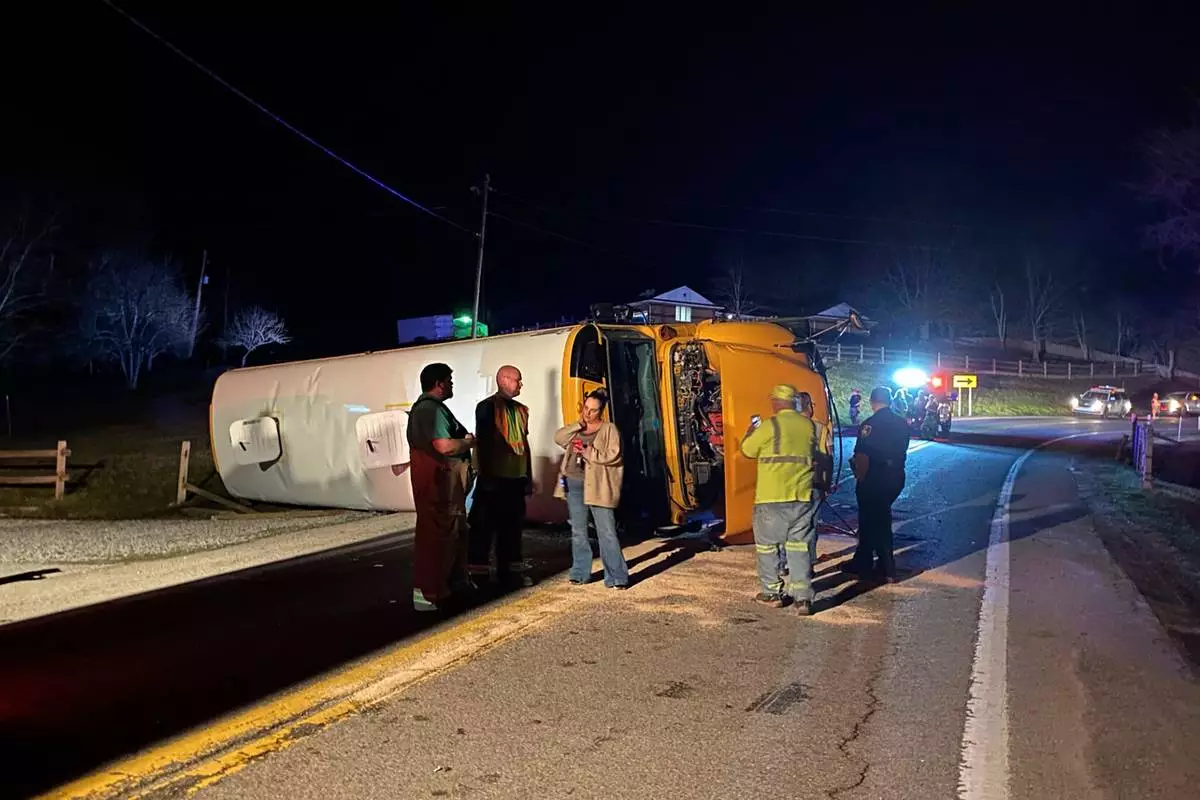
FILE - Emergency personnel respond to the scene of a bus crash, March 4, 2024, on West Virginia Route 16 in Calhoun County, W.Va. (WCHS TV via AP, File)