Senegal's Minister of Communication, Telecommunications and Digital Affairs Alioune Sall on Wednesday said cooperation with China and investment by Chinese firms have helped his country make "considerable advances" in the digital field.
Speaking to China Global Television Network (CGTN) on the sidelines of the Third High-Level Conference of the Forum on Global Action for Shared Development in Beijing, Sall pointed to a 2025 protocol aimed at training thousands of African engineers by 2027 and highlighted Huawei's role in building Senegal's data centers and digital infrastructure.
Hosted by the China International Development Cooperation Agency (CIDCA) under the theme "Action‑Oriented: Building a Global Community of Development for All," the forum convened representatives from more than 140 countries, international organizations and institutions. Participants joined both online and offline to discuss climate resilience, sustainable development financing and digital solutions for the high-quality development of the Global South.
This year also marks the fifth anniversary of the Global Development Initiative (GDI). According to CIDCA, China has already implemented over 1,800 concrete projects under this initiative. These projects have benefited many countries, including Senegal. Speaking about Senegal's digital development, Sall hailed the digital cooperation between China and his country at the national level.
"First, there is bilateral cooperation with China, with whom we have bilateral relations in the digital field. This involves the protocol signed in 2025, which aims to support African states in training thousands of engineers by 2027," he said.
The minister also praised the investments of Chinese companies in Senegal's digital field, particularly the contribution of tech giant Huawei to the development of digital infrastructure of his country.
"In the private sector, Senegal, since the diplomatic cooperation in 2025, has today made considerable advances in the digital field with the support of Chinese companies such as Huawei. Huawei today represents, I would not say the backbone, but the majority of digital infrastructures deployed in Senegal. This includes data centers, which have certainly benefited from the support of this company," said Sall.
The GDI was proposed by Chinese President Xi Jinping during his speech delivered via video link at the general debate of the 76th session of the United Nations General Assembly on September 21, 2021.
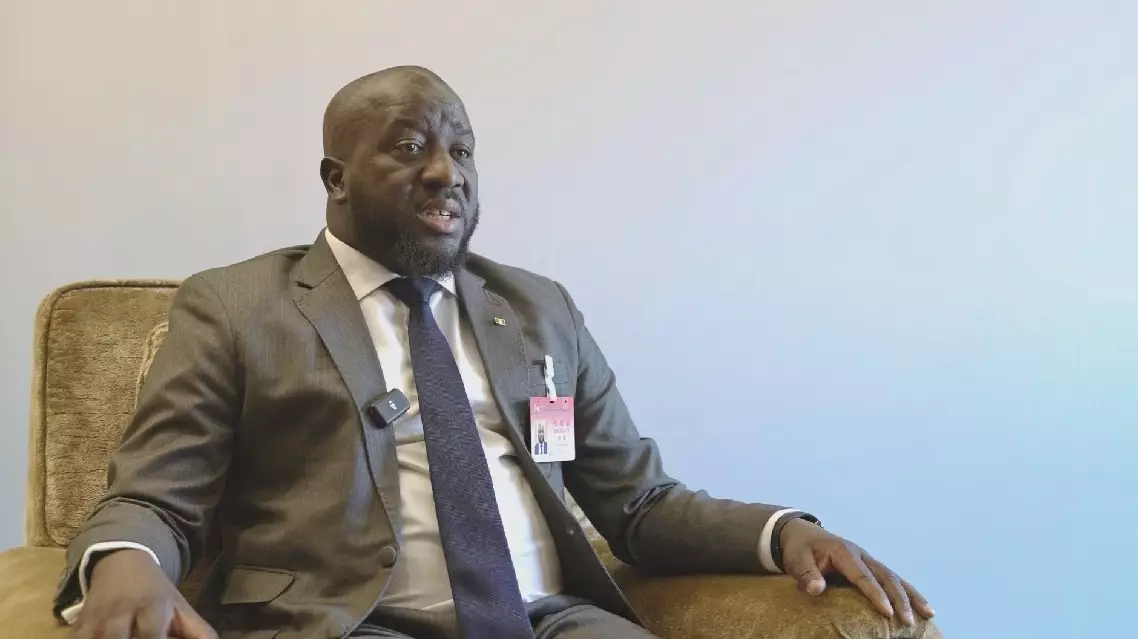
Senegalese official credits China cooperation, Huawei's role in digital advances